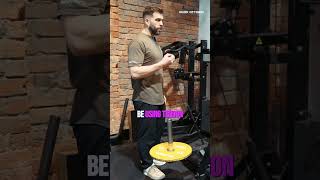
A trainer shows how to do seated calf raises with proper form: hands behind you for posture checks, full range of motion by rising onto the balls of your feet, and why it matters. Ankle mobility directly affects squat depth and overall leg development.
Chapters
We've got her hands grabbing the poles here forward. What we're going to do is we're going to get her to put the hands on the seat behind. That way you can see immediately her posture. She's up nice and tall. Now in training calves, she's going at a really nice pace here, just as she does, but we really want to get full range of motion. So we come down, and the cue I like to give is, so come down and then think of it as coming down again. Now come up, come up, and then think of it as coming up again. Really get up onto those tippy toes and the balls of your feet. We don't want to be using tendon strength as we do this. We want to use the actual muscle itself. The reason why our lower leg is so important in terms of our upper leg and our whole body development is because if we do have restrictions at the ankle, it's going to work out to have restrictions in terms of that knee flexion. So any ankle restriction is going to equate to that knee flexion. We're going to have less knee flexion. So even if you don't want to have huge calves, it is important that we take our ankles and our calves through a full range of motion so that way we can squat nicely.