Meal Prep for Muscle & Fat Loss (So Easy You Can't Fail)
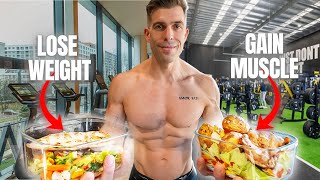
A high-protein meal-prep system for muscle gain or fat loss using just protein and vegetables, plus carbs and fats matched to your goals. Aim for 2 to 2.5 grams of protein per kilogram of body weight, eat chicken breast when cutting and chicken thigh when bulking, and match carb grams to your training needs rather than obsessing over calories.
Chapters
In this video, I'm going to show you the easiest way to meal prep. Whether you're looking to lose weight or build muscle, I'm going to show you my step-by-step methods that I've personally used to train hundreds of fitness competitors, Commonwealth Games gold medalists, and Olympic athletes. And the best part is you can do it too with minimal effort to get quick results. I'm talking in as little as 4 weeks. Here are the 2 major components of a weight loss plan: protein and fibrous vegetables. Now you might be thinking, I don't have time for this, or how could I eat like this every single day? Look, I get it. You need to choose a camp. People either have more time than money or money than time. And for the most part, if we're working towards a goal and want to hit our goals, we need to invest one of them. So we're either going to pay someone to do it for us, or we're going to find really easy ways to do it ourselves. Now there's going to be nothing more simple than the meal that I'm about to show you. So this is 200 grams of chicken breast that I prepared on a Weber, and this is frozen vegetables. Both of those things took me— well, one took me minutes to make. And while I was making my chicken, I made my vegetables. Super simple, super easy, and it's going to be a meal that's going to help you get the goal. So how do we lose weight? Well, losing weight is a function of being in a calorie deficit. You've probably heard this a thousand times before, that you need to eat less and move more. So how can we do that simply without weighing everything, counting calories, and just doing our heads in? It's to pay attention to the 5 major food groups— things that are hunted, fished, gathered, plucked, and farmed. But even more simple than that, if we look at hitting a protein goal first, and this is what this chicken breast does, is for 200 grams of chicken breast, we get 62 grams of protein. Now, protein is important for a variety of functions, but if you had two groups, one group hit their protein goal daily and the other group didn't, the person who hits their protein goal daily is going to have far better body composition than the person who doesn't. So as a priority in a weight loss plan, we want to prioritize our protein, and that's probably why you've seen in bodybuilding magazines, in fitness models, and on the web, people talking so much about protein is because protein is going to help our body composition. Then how do we fill ourselves up? Well, vegetables is going to be a great source of fuel, nutrition, also fiber. We want to be moving our bowels every day. Obviously that's super important, and vegetables are just plain and simply good for you, filled with nutrients. Now I know there's a lot of people online like the carnivore diet who say vegetables are bad, but if you look at the research, fiber is a double-edged sword. Too much fiber is going to cause you not to poop Not enough is going to cause you not to poop. So if you are having a high protein diet, which is a diet that's going to help you get in shape, get the body composition that you want, you want to make sure you have enough fiber. And that's why these two components are so critically important to your weight loss goals. So in talking about any body composition plan, we need to talk about protein. In fact, the word protein comes from the word proteus, which means of prime importance. Now, why is it so important? It's because researchers simply pointed out that if you don't equate for protein, then your body composition is absolutely going to suffer, and you are going to look a hell of a lot better if if you do equate for protein. So how do we equate for protein on a body composition plan? Well, here's a rough guide. It should be anywhere from 2 to 2.5 times your body weight in kilos. So what does that mean? It means that if you weigh 80 kilos, your protein goal is going to be anywhere from 160 grams of protein per day to 200 grams of protein per day. Now the next question is, how do I break that down in the course of my day and a meal plan? Well, it really depends on how many meals a day you can eat. So as an example, if you can only eat 4 meals a day and your goal is 200 grams of protein, well then you're going to have 50-gram servings of protein at each meal. If you're going to have 5 meals a day, then you're going to have 40-gram servings of protein at each meal. Now let's look at this, for example, right? The chicken breast that we have, this is approximately 200 grams of chicken breast. Now in 200 grams of chicken breast, we have about 62 grams of protein. In 100 grams of chicken breast, it's about 31 grams of protein per serve. So what does this say? It's not going to be an exact serving for the 40 grams or for the 50 grams, so we're going to look at about 180 grams of chicken. Per serve to hit that goal. And we're going to basically utilize that depending on what our goals are. So food sources can change, certainly. Like, when we look at protein food sources, you want to think of animal meats. Now, I know there's a lot of people who may be thinking, what about a vegetarian diet? Well, vegetarian sources will always be incomplete proteins. You're going to supplement with it. They are not superior. The jury is certainly out on that. You can be a vegan and still achieve really great body composition, but What you should know is a lot more work, and especially if you're going to include animal products, you've just got a lot more choice. It does become a lot more easier, and let's face it, in a world that is really time poor and when you have so many delicious options available to you, if you're looking for body composition, it's definitely one that includes animal sources. And in that, you obviously want to be selective about the animal sources, like organic is best, grass-fed, free-range. If you can buy local, absolutely buy local. Now obviously we can get things that are fished hunted. They're our main ones, and obviously farmed because cows are farmed. But we're looking at chicken, we're looking at turkey, we're looking at game meat. So if you're in Australia, things like kangaroo. If you're in America, things like buffalo or venison. So these are our proteins, so any type of animal. And then we're going to be selecting our food sources. So as a general guide for most people, it's 150 grams to 200 grams of food weight of that protein will generally hit them somewhere where they need to be in terms of their macro goal. And this is obviously a key factor because we don't have enough protein we're not going to build muscle. The other great thing about protein is that it has a thermogenic effect, which means that approximately 30% of what we eat, the calories of what we eat from protein, is just going to be utilized in terms of the digestion of that protein. So we absolutely need it as part of a body composition plan. The thing about carbohydrates and protein is carbohydrates are protein sparing, which means that if our carbohydrates do go up, we're not going to have to eat as much protein. But here's the kicker. On a weight loss plan, we're always going to eat more protein because we're eating less carbs. And most of our carbohydrates, you guessed it, is going to be made up of fibrous carbohydrates. Now, the reason why we do that is to keep our calories low. Take for example this. We have about 200 grams of vegetables here. Now, in this 200 grams of vegetables, we only have 90 calories. It's 15 grams of carbohydrates. It's absolutely nothing. So if we did want to eat a little more of this, it's not going to break the calorie bank by any stretch of the imagination, and it's going to fill us up. Now, there are a lot of people, the carnivores who might be watching this right now, that say vegetables are bad for you. Well, vegetables are not bad for you. They're not bad. Some people, the truth is, some people don't produce cellulase well, which is an enzyme that you make in your gut to digest vegetables. And for those people, you certainly just want to cook your vegetables much, much more. I'm one of those people. I can't have raw vegetables, so I'm chopping and changing the vegetables that I have. And when I have vegetables, I cook my vegetables very, very well so they break down easy. The best feedback you're going to get is your biofeedback. So are you regular? And that's where you want to fit in your vegetables, and it certainly is going to help your hunger levels— protein and vegetables— and it's also going to help just your well-being in terms of going to the toilet. And there are two things that you definitely want to look for and take care of. All of this is in my fitness user manual, which I'll give to you at the end of this video, which contains mindset hacks, meal prep hacks, a full shopping list, as well as supplement protocols to help you get on the fast track to your results. So now if you're looking to put on muscle, let's look at this meal. Starting with our protein, we have here our chicken thigh. Now chicken thigh— the difference between chicken thigh and chicken breast is chicken thigh per 200 grams, we have 40 grams of protein and 25 grams of fat. It might not seem like that much, but in the construct of our meal, if we only have 80 grams of fat to play with, we've got 25 grams of fat coming just from our protein source here and less protein per meal. So we're going to be able to eat more— we're going to need to eat more chicken thigh to to get the same amount of protein as chicken breast, but now we have the fat to contend with. And there's 25 grams of fat in our chicken thigh compared to 7 grams of fat in our chicken breast for the same serve. Fat is obviously nutritionally dense. We are looking to put on muscle. We want to bring up our calories and it can definitely be our friend in that as well. Also, fat is very, very important in terms of making cholesterol, in terms of making hormones, in terms of getting our testosterone optimal. The next part of this is we have our carbohydrates. So here we have 275 grams of white potato. In this 275 grams white potato, we get 50 grams of carbohydrates, and we're gonna finish it off with our salad, which again is packed full of fiber and only 50 calories. And really we're having this as a filler. We're getting the micronutrients out of this, the nutrients that we need from vegetables, and also the fiber that we need to make sure that we're pooping. What are alternatives for salad? Well, it really comes back to your imagination. It's easier in terms when it comes to vegetables and fibrous vegetables, it's actually easier for me to say what it's not. It's not corn, it's not pumpkin, it's not potato, and it's not any starchy carbohydrate. So what is it? It's broccoli, Brussels sprouts, lettuce, cos lettuce, tomato, capsicum, carrots, cucumber, turnips. It's pretty much everything. Think of the rainbow. It's just any vegetable that doesn't contain starch. Is going to be your fibrous vegetables. So now let's specifically talk about carbohydrates. As I was saying, we have here 275 grams of white potato, 50 grams of carbohydrates in this, and around 210 calories per serve. So why are carbohydrates needed? And a lot of people are scared of carbohydrates when they really shouldn't be. So one molecule of glucose equals 32 to 36 units of ATP energy. Now, what is ATP and why do we need it? Well, ATP is our primary energy source. Glucose is our primary energy source, which means that if we cut out our carbohydrates, that is our primary energy source, we are at the back foot in terms of producing energy to maximize our workouts and performance. So if you are looking at putting on weight, I'm going to assume, and probably safely assume, that you are weight training. You are in the process of tearing down muscle to build it back up. So we spoke before about glucose equaling ATP energy. So when you weight train the main functional— the main substrate of fuel is going to be your ATP energy. So if you take away the carbohydrates and you go try and do something that is anaerobic-based energy, such as lifting weights, you are going to find it much harder. So our carbohydrates are absolutely needed to fuel our workouts, but we obviously want a sweet spot. We don't need so much carbohydrates that we put on weight and get fat and a calorie surplus, but we want to eat enough carbohydrates that it's going fuel our workout. Also, inside of our muscle lives glycogen, and when we train, we deplete our glycogen. And when we deplete our glycogen, the muscle doesn't go. We deplete the energy stores, we deplete the substrates that fuel our muscle, and we need to fuel our muscle to break it down, to build it back up. So it's kind of a two double-prong approach when we're eating carbohydrates. We need carbohydrates both to fuel our workouts, and we need carbohydrates and protein both to rebuild our muscles, fill them back up with glycogen, and the protein to help repair. So think of it as like bricks, bricklayers, and the mortar that puts it all together in terms of the carbohydrates. So we absolutely need carbohydrates. Now, the only exception I would say going on a carbohydrate-free plan would be if you are epileptic. If you are epileptic, there is research that shows that those who had epilepsy, those who have seizures, do have problems metabolizing carbohydrates, specifically in the brain. And this is a fun fact, this is where the keto diet actually started really, has a lot of applications and originated from. So if you are an epileptic, keto diet, I would say all the way. For those who aren't epileptic and are interested in fueling their workouts for maximum muscle gain, carbohydrates, my friend, are your friend. This week I've dropped body weight by increasing the amount of carbohydrates I have. So not all carbs are bad and not all carbs are necessarily created equal. Some carbs will fill you up, The most important thing is that we equate to the carbohydrates that we're eating. Now, as mentioned at the start, I've already touched on the alternatives to the protein source. The only thing that I would add on a bulking or muscle building plan is just more fattier cuts of meat. So for me personally, I like Scotch fillet, I like ribeye on the bone, I like salmon, I like bacon, and I like full eggs. And sometimes I use combinations of these things in my cooking. Generally, fattier cuts of protein to get your calories up and fats are going to be your friend in a lot of ways, particularly as it relates to your hormone health. Now, carbohydrates, equivalencies, and alternatives. Look, I'm going to say the thing about carbohydrates, so long as you equate, most of the time you can get away with it. Now, what do I mean by that? This is 275 grams of potato. I could take this, or I could have 225 grams of rice, or I could take this and have 225 grams of sweet potato. I could take this and maybe have 50 grams of lollies. They are going to feel biochemically different on my appetite. So obviously if I eat the bag of lollies, I'm probably going to want to keep eating more lollies for the same amount of 50 grams. I'm not going to fill my stomach up, and also it's going to have a different glycemic response. So you do have high glycemic carbohydrates, which basically what that means is when you eat the carbohydrates, they raise your glucose very, very rapidly in your bloodstream, which means that this hormone secreted from your pancreas gets released that wrangles this blood sugar from the bloodstream down and causes you to crash, and that thing happens much faster. Whereas if you're having carbohydrates that are on the lower end or that medium end of that glucose load, those are going to slightly raise your blood sugar and they're going to sustain your energy for much longer because they have fiber in it, because there are other substrates as part of the meal. You're going to be able to eat more food. So if food volume is important to you, you want to consider your choices. And let's face it, food volume is important. You do want nutrients behind the carbohydrates that you're eating. But the most important thing with carbohydrates above all is that, well, one, you equate. So if it's 50 grams of carbohydrates, you have 50 grams of carbohydrates in the serving, but you also don't open the door to eating more of the wrong foods. And I gave the example about the lollies. If you change this 50 grams of carbohydrates and you just got it from lollies, and all you had was, let's say, 45 grams of lollies, those Coke lollies, which I absolutely love, and all you got was 45 grams, I guarantee you at the end of it you're probably going to want to eat another 45 grams of lollies. So it's not the best choice when it comes to sticking to a diet plan, although you may be able to include it in your diet plan without it having any effect on your body composition goals. There's the long and short of it in terms of you're building your body and being weight loss foods versus bulking foods versus building muscle foods. Now let's hit the gym. One of the questions that that often comes up is what exercises, what program should I do for a weight loss program versus a building muscle program. I'm going to give you the answer, but it's not what you expect because it's all bullshit for the most part of it. Determining your training plan is really a function of assessing and screening where you're at physically. Let me put it like this: I can give you a quote-unquote— and you've probably even done— weight loss program. What is the key variable? I can tell you what the key variable is. It always comes back to diet. So as in, you can do a weight loss specific training plan and not lose weight, and you can do a weight loss specific plan and then do a diet which is going to help facilitate. Because we need to acknowledge that the biggest factor is— comes back to calories in versus calories out. As in, you can lose weight doing a diet without exercise, but then you can also gain weight by training and doing a different diet. So what is the variable at play? The variable at play is always what we eat. So when it comes to training, I'll put it another, another way. Sprinters. Do sprinters do weight loss programs? No, they don't. But they are the leanest athletes all year round in the world because speed does not tolerate body fat percentage. Athletes don't do weight loss work. It is a function of them exercising and performing. So if a sprinter has a constraint around their sprinting, They don't go, well, I need to lose weight. They say, what is slowing me down? What work in the gym do I need to do? Is it my upper body is too weak? Is my acceleration and power from the floor? We are looking at the constraints of the physical body. So here is my model for all-round everyday athleticism. It is a bare minimum of a 1.5 times your body weight in kilos squat. So what does that mean? If you weigh 80 kilos, I want you to be able to perform a full depth bodyweight squat, full depth. So if you weigh 80 kilos, you want at least 120 kilos on the bar all the way down. And this doesn't matter whether you're male or female, it's 1.5. That is a very high level of athleticism. And that's right, get someone in the gym for the first time and I assess them and their bodies can be broken. They might not even— they might be squatting like this, might be doing these ones, right? Where everything is moving forward, their backs are bad, they're injured, they've got constraints. He's, oh, I need a weight loss plan. No, you don't need a weight loss plan. You need to learn how to move again. You need to be able to achieve a full bodyweight squat because this is going to add much more years to your life than focusing on some arbitrary plan that builds muscle and burns body fat at the same time. Because let's face it, if you put a performance plan in place, you are going to build muscle and burn body fat at the same time. But remember, The function is of the diet. So we need to focus on the diet and we're gonna build our plan around our constraints. So generally speaking, we start with an assessment and we see where we're at. Everyone, everyone who walks, eats, goes to the toilet, you wanna be able to achieve a full bodyweight squat, right? You wanna be able to maintain this position. And if you have dysfunction from either side, that's what we're gonna work on. If you bend over and you've only got this much range of motion or you put your hands on your back end, You know, you can only backbend this far. These are considerations, these are constraints for our everyday athletic movements that we want to address through our weights, our strength. This is where training is going to come in place. People just assume, you know, I'm going to do a deadlift and they hurt their backs. Again, in our screening and assessment, we should be able to pick these things up. We want people to have a nice hinge pattern. So for example, a tool that I often use to reprogram someone's hinge pattern is the kettlebell swing. And people falsely think I use the kettlebell swing as a weight loss movement. I don't use it as a weight loss movement. I use the kettlebell swing as a movement to help hardwire people into that hip hinge. Because again, if I get someone who can't deadlift or move their hips very well, I give them 5 sets, let's say 5 reps of deadlifts, and they do that once a week, that's only 25 times they've done a, done a hip hinge. Whereas if I get a kettlebell swing at a low load and give them 5 sets of let's say 30 reps, wow, How I could do that multiple times a week because it's a lot less neural taxing. And now we're really practicing that hinge so that when that becomes a hardwired movement of them moving their hips, they're getting to their deadlift and now they're moving their hips and hinging correctly, which is a pattern. So in our weight training, we look at patterns. Patterns produce power, patterns produce results, patterns produce muscle. When we're talking about weight loss, We're looking at our calories, we're looking at our diet, we're looking at protein, carbohydrates, and fat. Let's not conflate the two and confuse the two. We are always, always, always focusing on performance. Whether you've never been into the gym before or whether you're an Olympic athlete, let performance be your guide. Here's the link to my fitness user manual. Download it now. Packed full of mindset tips, how to prepare your food, calories, macros, meal plans, what you need to get your goals. Till next time, friends, train hard, eat well, and supplement smart.










