Stop Blaming Your Diagnosis (Scoliosis, Disc Bulges, Anterior Pelvic Tilt)

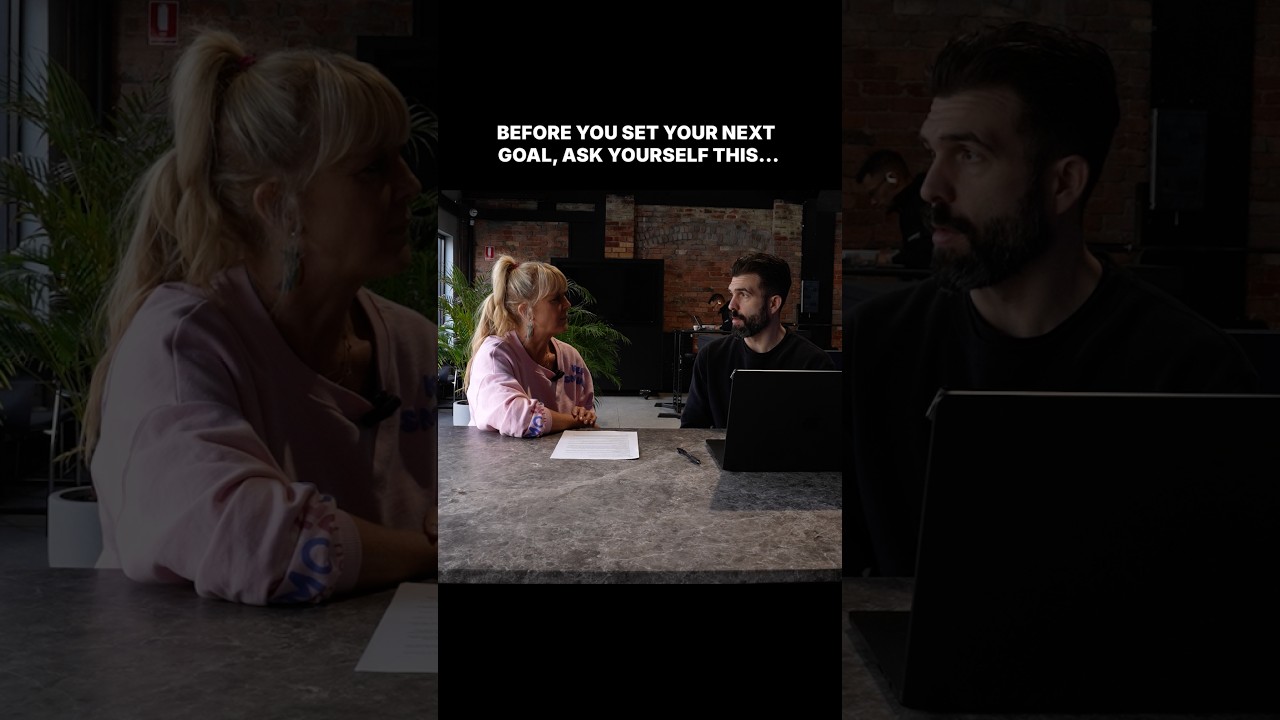
In this interview, Mark Ottobre and a clinician/coach discuss how to conduct assessments for clients who present with musculoskeletal complaints or performance plateaus. They emphasize starting with the client’s perceived problem, then probing beyond the diagnosis (e.g., scoliosis, disc bulge, anterior pelvic tilt) to uncover the functional goal and underlying movement dysfunction. The conversation highlights the importance of communication skills to obtain client buy‑in, reframing structural “labels” as neutral anatomical variants, and focusing on neurology‑driven movement patterns rather than static anatomy. A detailed walk‑through of the subjective‑objective assessment process is provided, including hypothesis formation, movement testing (neck, shoulder, thoracic extension, etc.), and using objective findings to confirm or adjust the hypothesis. Real‑world examples illustrate the approach: a powerlifter whose added muscle mass altered lat depression and deadlift mechanics, and athletes with scoliosis who still perform at elite levels. The coach stresses that the goal is to activate functional movement patterns, not isolated muscles, and that demonstrating rapid improvement during a session secures client belief that the issue is modifiable, not an immutable structural defect.
Chapters
How do you begin to think about assessments? What do you do? Can you run us through?
Okay. Assessment, the first part is subjective. Let's create a hypothetical scenario first, and then I can put you in that hypothetical scenario, put some context behind that. No one comes to see me because their life is great. No one. People come to see me because they have a problem. They have you know, some kind of injury, so they have some kind of movement deficiency. Or they're a powerlifter, they know that the weight is light, but there's a mechanical breakdown happening and they're not getting that last 20 kilos they want, right? Or there's a, you know, like a basketball athlete with their layup, they just can't get their layup right. Their coaches are giving them the right cue, but they just physically can't perform that function. Whatever that is, once they have recognized a problem, then they will come see me. So no one, like I said, they have no problems, no one comes to see me for that. So the first part of the assessment, the very first question is, what is your problem? I'm sure you heard that from Andrew. Then they will start with something, I've been diagnosed with, I'm like, you have been diagnosed with a symptom, that is a symptom. What is the problem? What is it that you're trying to do? What made you decide to come see me and what are you trying to get out of it? Meaning, what is your goal?
I just remember Andrew's favorite line, which was someone said, I've got scoliosis. And he would say, what do you do with it?
Yeah, so it's like, okay, I have L4-L5 disc bulge. I'm like, so do I. And I just deadlifted, you know, whatever I have deadlifted last week. Well, that is not your problem. You didn't come to see me because you have an L4 and L5 disc bulge. You came to see me because there's certain things you want to do. And there are certain things that are causing problem for you. And this comes with a little bit of a practice and a bit of an experience. experience where, as a clinician or a coach, you should have the ability to communicate that bit very clearly to the client, where you're not diminishing what they're saying, but you're showing more interest than what they have presented to you to get to the root cause of the problem. That's where you're going to get resistance if you do not have the personality or you do not have the skill or communication skill, should I say, to get that message across. Like, I'm actually trying to get to the bottom of your Do
you find clients— because what I find sometimes is clients are just so stuck on their problem. And sometimes I sit down with clients and it's, I have scoliosis.
Yeah.
And they just want to be kind of identity enforced. Yeah, you have scoliosis, that's the reason why your life sucks. You know, blame all— blame your scoliosis on everything not going your way. That's it. Thank you. Thanks for your time. Pay me. Great. That was the consult. That's kind of sometimes what people want to hear. Yeah. Is they want to point to something and for me to validate that that's why they suck rather than Do you get that? Do people?
Yes. So this is where, you know, somebody, they have, they have been given that information. And I don't actually blame the client. I blame the experience that they had before they come to see me, where that has been pushed so far, so intently towards them, that they have taken them as their identity. It's like my scoliosis is my identity, and that's the root cause of all my problems. And I explained to them, everybody has scoliosis. There's no such thing as perfectly beautiful spine. The one that you see in the pictures or the skeleton model that I have at home, that is a perfect model of a spine. Everybody has certain degree of curvature, whether it's the sagittal plane or the frontal plane. The perfect body does not exist, or even if it does, it's probably one in a billion, right? Like, your right hand is not the same size as your left hand. Right? Your right leg is not the same size or exactly the same. It's not a mirror image of that. So, we all have certain level of deviation. You're born with it. Your muscles and everything has grown around it. So, you never really had a problem during that. Certain things caused you problems. So, scoliosis may not have been your problem. And I also sometimes, you know, demonstrate to them like, you know, look at Usain Bolt. He has one of the biggest scoliosis that you'll find. The fastest man alive. So scoliosis is not a limitation for him. Or Lamar Gant, the first person to deadlift 5 times his body weight. He used scoliosis as a mechanical advantage to shorten himself to get to the bar and lift. So how is that possible for this person with a huge— like, it's like a little snake on the bottom.
Yeah, it's the thing of structure. Andrew puts it in his presentations. Yeah,
right. So the scoliosis is just a structure. Structure does not dictate function. It has influence on function, but it does not dictate function. What dictates function is your neurology, how all the muscles that they have been organized around it, and how you can control it. That's what influences your movement. And if you cannot control something, then there is a breakdown happening. You're overcompensating with other things, and that's where you're feeling the problem. Scoliosis is not the problem. And another one of my favourites that I get a lot, which is the anterior pelvic tilt, which is just an anatomical variant, right? It's not a pathology. So, and once I give that information enough, and this is where a little bit of a, you know, like I take a lot of time to talk to the person to see what my in or my buy-in is going to be. So my goal is like do the best I can to communicate that information. And I also tell them before I get to my objective and my intervention, it's like, Whatever we do, you will notice significant improvement at the end of it. So how about you just humour me until that point, hold on to your thought about scoliosis, but let's get to that endpoint where I can see significant improvement in that particular session, and then you can tell me whether the scoliosis is a problem or not. Right. Generally, I'm pretty good at getting that information across, and this is what I mean, that communication skill, it It's applicable in any aspect of life. How well you communicate the information that you're trying to get across is very, very important. And the more people you deal with from different backgrounds and different personalities, the better you get at it. My goal is like, how am I going to get a buy-in with this person? Like, what do I need to get this person to understand where they recognize, oh yeah, that's me, not my scoliosis, that's me, I got to do something about this. Not my scoliosis or my disc bulge or my bursitis. And by the end of the session, when they see the improvement, that's the perfect buy-in. Now they have experienced what it feels like to whatever the problem that they're experiencing before not being there anymore. Does that, does that answer?
Yeah, yeah. So coming back to like your assessment process, it starts with understanding who the client is.
Yeah, so that's the subjective part.
Yeah, what they're doing, we both follow a very similar path in the sense that obviously both being heavily influenced by Andrew. Where do you want to go? All right, you've told me about the problem. Yep, that's the, you know, we're driving down the freeway, that's the rearview mirror, right? It's the problem, but where are we going?
Okay, right, so in the subjective, once you have gathered enough information, the person will already give you some Pretty key parts to build your hypothesis. For example, every time I try to lean forward to play with my kid, my back hurts. Or, when I try to do deadlift, every time I reach for the bar, my deadlift hurts, my back hurts. In other cases, they'll be like, reaching for the bar is not a problem, but when I come out of it every single time, my back hurts. So you have created 2 different mechanisms. So I can already start seeing the pattern. I have an idea what's that going to happen, you know, what's that going to look like in my assessment. So the subjective will give you, depending on the task, what they're explaining and the problems that they're explaining, a good insight to what the problem is going to be. So from there onwards, I already have a hypothesis. Now I'm going to see if I can create a one-to-one match in my objective assessment, right? So if it's upper body assessment, I will start with the neck. Right? We always start from the center. So the neck, you cannot dissociate the neck from the shoulders, and you can't dissociate your hips from your low back. So we'll test both of them, right? So let's say for an upper body, I will start objective movement. Okay, let's just see how your neck movement is like. Look to your right, look to your left, tilt your head to your right, tilt your head to your left, look down, look up. Generally, in those cases, they will start telling you some You know, some things they're experiencing right there. And you can also, you know, have the information that you have gathered from your subjective, you can start putting it together. Okay, so if you're getting a lot of, you know, discomfort in that region whenever you're tilting your head to your right— to your left, and every time you reach your arm forward, your right shoulder hurts, okay, so there might be some overactive trap-dominant movement happening. So there's some overcompensation happening from the traps. Okay, so the trap is overcompensating because something is underperforming. Okay. So I'm going to start looking through the shoulder movements, right? So we've gone through the cervical rotation, lateral flexion, flexion, extension. From there onwards, I'm going to look at shoulder flexion, right? Just lift your arm up. Lift the other arm up. Lift both of them up. Again, what I'm looking for their flexion range, if there's any kind of compensation that I see between the shoulder blades and the humeral movement within those shoulder flexions. With both arms up, I'm also looking at the thoracic extension capacity, right? Because our thoracic extension allows for shoulder flexion at the end range. Okay. Then I'm going to look at their abduction on both sides, extension, Internal rotation and further internal rotation. That also gives us information about adduction. We're actually going to do the practical, so this will make more sense. And also I'm going to look at it with abduction, external and internal rotation in that abducted position as well. That has given me all the movement necessary that is going to be relatable to almost any sport. From there onwards, if I need to do some, you Further test, for example, a bit of a strength test. Let's see your extension strength. Push down on my arm, push down on my arm. You'll start noticing some discrepancies. Is it always necessary to get to that point? Not necessarily. Once you get really good at it, I know exactly what's going to happen. In certain cases, to do the buy-in, I will show that test. Do you see you can't even get your arm into extension? I'm literally holding my finger. You can't even push my finger. finger down, whereas that one, I need to have 2 hands up to push against it, and you can hold that tension. So that's another good way of buy-in, but that's also kind of like, you know, confirms my bias that I have created with my hypothesis. So from there onwards, you know, I'm writing down my notes. Okay, this is what's the dysfunction that I see, and to correct that dysfunction, I need to engage these muscle groups to create this function. And when I do my mentoring work, one thing I make very clear, I'm not trying to activate a muscle. I'm trying to activate a movement with the assistance of the muscles. It's the movement, because neurology drives movement. So for an example, your lats, it's an internal rotator, it's an adductor, it's an extensor, it's a depressor. It has multiple functions. I can't just do one and expect the other thing to get better if that is not the dysfunction. So I will use Patrick as an example. So he had a 340-kilo deadlift at under 100-kilo body weight. He's trying to go up in weight class, so he's about 105 now. So he's put on some serious size in his back, and he's completely lost his ability to create lat depression in his deadlift, where he's struggling with 305-kilo deadlift. He couldn't lift it off the floor because he just couldn't get his lats engagement in depression and he felt his back coming in and he just couldn't get the power. So I just got him to do some lat activation with depression focus and immediately he's like, yep, I got it. I know exactly what that feels like. I can really engage that in that depression.
What was the, 'cause I know there's a thing with mechanism-wise, you know, you get a 16-year-old who goes through a rapid growth period, becomes 20, like a teenage boy, in a man's body, that's 16, athletes go through this kind of thing at 16 to 21 where their bodies develop rapidly, particularly in sports like diving where you need to know where you are in space and time. And the Golgi semi-intending organ needs to catch up and, you know, 'cause there's so much mechanism at play. What was it? Was it just the fact that him going from 100 kilos to 105, which doesn't seem like that much, it's 5 kilos, right? But was it just simply that shifting body weight?
Anybody in bodybuilding will tell you 5 kilos, putting on 5 kilos of muscle mass, and he's maintaining the same body fat percentage, it's hard work.
Yeah.
It's a lot of muscle, 5 kilos of muscle.
Yeah, but the thing about it is— But it doesn't sound like a lot. It doesn't sound like a lot, right? It doesn't sound like something that would change the mechanism of something so simple like a deadlift. Yes. Right, but what you're saying is just him simply getting there, like the lat, the lats were too big and now his lats are forward. Yeah. Where he thinks he's here, but he's actually there.
Yeah.
And that was enough to throw him out of tilt though?
I did exactly what I just said. I did my movement assessments and I did an extension test. And I also watched him deadlift in front of me. And I could see all those things together. And we also sat down for 15 minutes beforehand and had our conversation. So, it's the same process. I started with my subjective. This is what's happening. Tell me what's happening. It started with like, I don't know, man. I just, I just can't handle 305 out of nowhere. I don't know what happened.
Mentally for him, that would have been a trip, eh? I've put on 5 kilos of muscle. I'm looking better, I'm bigger, what the hell?
Yeah, he's just like, I've done my hypertrophy phase perfect, I did exactly what he told me to do, my deadlift has just hit a wall out of nowhere.
Such a beautiful example of high-level problems. And that's a problem that, you've said that, obviously I haven't seen a problem like that where someone's just gone up by 5 kilos and it's changed the whole mechanism.
Yes.
They were doing so well prior and now they're—
Yeah, like I said, he had a 340-kilo deadlift. And he dropped 350. He doesn't like hearing that, but he dropped 300. He almost locked out. He just couldn't. His grip failed, right? So, imagine going from 340 to struggle where you can't even get 305 and you're bigger.
Yeah.
Right? But again, it started with that. It's like, man, I've done everything you told me. This is what's happening. I just, for some reason, I just hit a wall. I can't get my 305 off the floor. And in one session, we went from not being able to get 305 off the floor to 310. Easy. He's like, ah, fuck, this is like easy, right? And then I think yesterday he did like 300 for 3 sets of 4 or something like that.
So he's back on track.
He's back on track in 2 weeks.
Yeah, it's just getting the neural wiring to work.
I did not make him stronger. I just activated certain patterns based on my assessment that I did with him, exactly what I explained. I followed that protocol every single time. Show me this movement, show me this movement, show me this movement. Okay, now within the task, I have a mental image what that should look like, and I see that there's a breakdown happening. Great. And you tell me your feedback. So good athletes, they also have some internal feedback that they can give you. I'm like, okay, what, what do you just struggle with? Like, I don't know, man, I just can't get this. I'm like, okay, so lat depression, that's what you're struggling with. So when I tested your extension this way, you didn't have the same strength. Great, that's what we're gonna work on. So I just gave him literally one exercise focusing on lat dominant depression. So depression means imagine your armpit is going down to your hips, right?
I said tuck your armpit into your underpants.
Yeah, it's just like—
Pointing to the floor as hard as you can.
Yeah, yeah, that's it. That's the only thing he was struggling with, and that's something we added to the program, and he's on track going back to, you know, 340 again.
Amazing.
And he's gonna, you know, competition coming up in about 7, 8 weeks. We're expecting an 800-kilo total.