Why You're Still Fat (The Diet Mistake 90% of People Make)
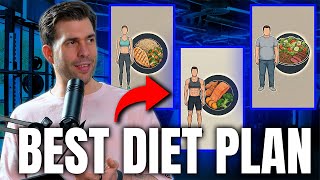
Mark and James explain why rigid meal plans fail: most people need flexible food systems where they choose proteins, fats, and carbs within portion guidelines, not prescriptive schedules. They cover ten principles for sustainable eating, from respecting hunger cues to the omega-6/omega-3 balance in fats, and how beginners need more structure while experienced lifters can handle more freedom.
Chapters
What is a meal plan?
Meal plan is you want to design it in a way that makes it very simple for somebody to follow.
Who do we think meal plans would be best suited for?
Depends on what the person's preference is.
So I was in LA airport, and at LA airport, the choices were burgers or pizza.
How would you then give them the amounts of foods that they're going to eat?
This is my favorite one of all the rules. Let's play diet matchmaker. There are a lot of diets out there, from calorie counting, figuring out your macros, meal plans, to food systems. So we're going to be uncovering and talking about the different ones and who they'll be suited for. James, let's talk about meal plans to begin with? Who do we think meal plans would be best suited for?
So for me, meal plans are those people who somewhat want to be told what to do.
Before we even go there, what is a meal plan?
So the way I look at a meal plan is you want to design it in a way that makes it very simple for somebody to follow.
So basically telling people exactly what to eat, what time, here are the foods, this is what you're eating, taking all the guesswork out of it. So it could be like a rotation meal plan, or it could be the same thing every day type of meal plan, right?
Exactly right.
Yeah.
And you can scale that however you want. When you say scale that, what do you mean in terms of how you piece it together? The measurements that you give people to utilize for different foods, different food groups. You may use weighing, so using scales to weigh your food. You might use teaspoon, tablespoon. You might use cups. Depends on what the person's preference is, but you can scale that to suit the individual and what is going to be the most convenient and easiest for them to follow, but ultimately they're still following meal 1 is protein, carbs, fats, vegetables.
Yeah, but with that said though, meal plan can be quite limited for a lot of people though. So if you just simply— because this is what I see online sometimes is people, you know, download a meal plan and the foods are like, you know, this smoothie that they have to make or this granola crunch that they have to piece together. And it can be quite time-consuming for some people, or they have to have salmon at 6 o'clock at night. And, and I feel like sometimes meal plans, if they're not designed with flexibility, they can be quite limiting for people at the same time. Although the benefit of a meal plan is that they eliminate all decisions.
I think it depends on the starting points of the individual. What I, what I mean by that is if somebody is willing to start with slightly more limitation to begin with it gives us the opportunity to educate them as the process moves forward. And what I always say to people is what we start with in week 1 is not going to be what we finish with in week 12. And that meal plan is going to scale and we're going to increase the options and the things that you can eat. But to begin with, if we have less options and you know this all too well, it means there's going to be less opportunity to make mistakes.
But you don't, you don't do meal plan the way the internet does meal plan.
Explain.
So you, you said it yourself when you opened that, right? You do meal plan the way I do meal plan. So that's why I just wanted to like create a delineation between this, is that when you go on like some fitness influencer's blog or Instagram and you download their meal plan, their meal plan says strictly like at 10 o'clock you eat this, at 11 o'clock you eat this, at dinner you eat this. There is— it really isn't much flexibility. Very rigid. Very rigid, like iron bars, right? And then they The next day it's completely different, and the next day it's completely different. Which then, I think for a lot of people, if they're following this meal plan, you know, if they have to buy salmon on Tuesday and kangaroo on Wednesday and turkey on Thursday, and they're changing their breakfast every day and to hit this exact meal plan that they've designed that's nutritionally balanced because they have to rotate their food all the time, I think a lot of people fall off.
The way I set it up for people is I like to give them foods that they can choose from but what they actually make with those foods is absolutely up to them.
Yes, but that's a food system. That's different than a meal plan, which we're going to get to. So that's why I wanted to like have definitions here. Like when we talk, usually I think when people talk about a meal plan, so I mean, some of this is definitions, right? When people talk about a meal plan, here is your set meal plan. This is the foods that you're going to eat. Do not change these foods. This is what you eat each day. That's how I would define a meal plan. And I think in my opinion, the most appropriate place for a meal plan is for those who are going to compete. So if you are going to compete, no room for error. Yeah, there's no room for error. You eat the same food, same times each day. That's what you got to do.
Whereas you see the meal plan that I'm paying off— yes, it's almost a blend of a few different methods to get the best outcome.
Let me put this as spectrum, right? So if it fits your macros is like playing with Play-Doh. So when you have if it fits your macros, it's kind of trying to make anything and everything fit this number. And it can feel quite messy because you take a little bit of this, a little bit of that, and then you end up with a big blob because you're trying to fit ice cream in with steak. Whereas if you just look at, say, like a meal plan, it can feel very rigid, like you're living in a prison. There's no flexibility to it whatsoever. If you kind of take the happy medium, you've got like bamboo, which is a flexible structure. You can to bend it, but it's also very strong. And when I talk about, you know, this is why I talk about food systems versus meal plans. For me, a food system is saying to people, here are your proteins, here are your fats, here are your carbohydrates. Now let's talk about how do we make a meal. We pick a protein, we pick a fat, we pick a carbohydrate. Here are your amounts. Now here are your protein lists. If you want to have salmon, Cool. If you want to have chicken, cool. If you want to have steak, cool. You can interchange this the way you have. What would be the most convenient thing for you to have every day for breakfast? They look at the protein list. They might say mince, they might say eggs, they might say a protein shake.
Cool.
You've hit your protein. Now what are we going to have for our fats? Here's your list. Oh, I'm going to cook the mince with butter. Great. What are we going to have for our carbohydrates? Oh, it's in the morning, so I'm going to have toast. Great. We've just made a meal. Balanced meal. Pick the protein, pick the fat, pick the carb. That's how I look at a food system. It's interchangeable. You might say for dinner, you know, I missed my, my breakfast for dinner this day, I'm gonna have toast, mince, and I'm gonna have my breakfast for dinner, and I'm gonna have my salmon for breakfast, right? I'm gonna have my salmon, my rice, and my vegetables. So we can, we can flip these because it's more of a food system. It's interchangeable now with fixed amounts.
You would still have structure with it in a food plan though, right?
Yeah, absolutely. Yeah, absolutely.
So it's a blend of the two?
Yes, correct.
And do you think that's the most optimal way to start?
Not always.
Tell me more.
The reason why I don't think it's always optimal is because— and this might be politically incorrect to say in some degree— but those who are usually starting, who had, uh, who want to lose weight, uh, I guess it's not politically incorrect, but those who are wanting to lose weight are overloaded by decision-making. They're indecisive. They can't make decisions. So you have to limit decisions for them. So if I say to— if I give them too many choices, like for you, if I just say, mate, eat whatever protein you want, you're good, right? Like, I'll have steak, I'll have chicken, I'll have whatever, right? It's not a thing that you dwell on. But if you give that to someone who's already overwhelmed at making decisions— do I have the eggs or do I have this shake? Oh, but he said that I should have yo— oh, but I can't have yogurt because this had— so you have to limit choices to a degree for new people. And what I like to do for really people who are really new to this is either help them make the choice of what they can do each day regularly and make that routine for them, or just give them simply two options. You're either going to have chicken or you're going to have steak. At this meal, you're going to have eggs or you're going to have a protein shake. At this meal, you're going to have the rice you're going to have sweet potato. So I limit choice to this one or that one rather than here's the list, which can sometimes feel overwhelming for people.
Okay, my follow-up question for you on that then is how would you then give them the amounts of foods that they're going to eat? Are you doing scale weights? Are you doing hand portions? Which then brings in, I suppose, another model in terms of how we get people to estimate or weigh out their food, let's say.
Yeah, so I suppose this is the conversation between radical change versus relative change. So if I was working with a competitor, I would skew more towards radical change, as in we've got to hit, you know, for me when I did my show this earlier this year, we got to hit it in 10 weeks. That's a radical change to my diet. 3,500 calories slashed to 1,600. Radical change. Whereas if I'm working with someone over a period of time, I'm going to make a relative change to what they're currently doing. So I want to know what time they wake up, what they eat for breakfast, if they eat breakfast, you know, what do they have for coffee? Everything they put into their mouths from the time they wake up to the time they go to bed. What do they eat? What are the amounts? Once I know the amounts, then I start giving them the portion sizes that work relatively to where they are. Obviously, then first we optimize for protein, then we look at their fats and carbohydrates and make sure and ensure that their bowel movements are consistent. Is that what you're thinking or you have a different take on that?
No, I think I agree. I think it's meeting the person where they're at to begin with. Obviously, if they come in and they say their goal is to step on stage, well, everything has to be accounted for whether you like it or not. There's not really a choice.
It's not MasterChef.
That's it, right? You don't, you don't get a choice. If you want to step on stage at under 4% body fat, you have to account for everything that is going into your mouth. For the most part, for your general population clients, I think it's finding what works for them to begin with. Now, I would always ask somebody, are you willing to weigh your food or would you rather I gave you food portions relative to hand portion sizes? So it might be palm of protein, fist of vegetables, cup and of your carbohydrates, a thumb of your fats. Then I would still fit that into a meal plan where I give them options of foods. I break it down into meal 1, meal 2, meal 3, whatever. It ends up being for them. There might be a shake in there. Again, it's all relative to the individual. And ultimately, the way I present it to them is this should be a meal plan that you walk out here knowing that you're able to do it straight away. If I send you out with something and you look at it and you go, I don't know where to begin, then as a coach, I failed. I have to set you up where you go, okay, these are my meals, these are roughly the times I have my meals. These are my options, and this is how I'm going to measure it up.
Well, that's my point about meal plans that are online, right? I don't know if you've seen some of these. It's like, whoa, man, like, you want me to go to the supermarket and buy 25 different foods? And also the next day I need to buy another 15 different foods that just to add to make this little granola thing that— who cares, man? Like, it's, it's carbohydrate. Just buy some oats and be done with it, right? Like, it really doesn't have to be that complicated. And I think that's where people are kind of misinformed around what a good meal plan could actually look like when it's customized around their needs, wants, and what they actually prefer to eat.
I think then the challenge always becomes, based on that point you've just made, like, the one thing I think people always come back to is, oh, but I don't want my food to be boring. So if I limit you too much, it's boring, but then if I give you too many options, it's too hard.
See, this is where I disagree with people. No, you do want your food to be boring because boring means you're going to stick to it. You want your food to be boring. And more important, you want your food to be predictable. You don't want to wake up every day and go, what am I going to eat? Because that's the starting point of failure, right? Like, there's a reason why folks like Steve Jobs and, you know, most people wear the same clothes every single day. It's decision fatigue. Everyone thinks willpower or decision, for lack of a better word, decision making— we have this unlimited well of decision-making ability. We don't. We make big decisions every day. We fatigue ourselves to make further decisions. If you want to have a great physique all year round, limit the amount of choices that you make. When I go out and eat out, I order from the gluten-free menu. That immediately eliminates a lot of really high-calorie foods. So I can eat out a lot. I can eat steak, I can eat fish, I can eat vegetables. I can eat out a lot and maintain shape provided I follow a simple set of rules, right? Because I'm not eating pastas and carbohydrates and bread every single time. I'm eating protein and vegetables, right? Simple foods.
Yes, pasta and bread's where it's at. You're missing out.
Yeah, well, if you're a HIIT athlete like yourself, I understand.
I actually, I actually don't believe personally that boring is the approach because I think if it's boring, people are less likely to be able to sustain it. Okay, predictable. I think predictable is a better, a better way to put it. But I think it's also part of the education process to teach people how that they can make tasty food still fit what it needs to fit to help them achieve their goal. And I personally believe that's where a lot of people struggle and they fall down, is they look at a meal plan, or let's say the meal plan that we set up, where they have it structured but they have options with what they can choose from, but they then don't understand how to have the creativity to make that into enjoyable meals. So then it becomes too boring and eventually they fall off the bandwagon because it's like, I can't continue to do this. So I think it's trying to marry up—
what do you think they were expecting?
Well, look, I think a lot of people come in and they're like, I don't want to do the chicken and broccoli diet. We've heard that.
That's sure, never do I.
Correct. But on the flip side, people don't want it to be too complicated, so it's trying to help them find that sweet spot that lies in the middle where where not restricting, but we're limiting choices like you said, so that we're somewhat minimizing the higher calorie foods that they're going to choose from. But they also understand how to make that taste good.
Here's my argument to that though, right? Like, I think a lot of people want unpredictability with their meal plans, which is the antithesis of a meal plan to begin with, of being consistent. So what I mean by that is like, let's say you have the breakfast that you want, you know, you have your eggs, your ham, and your toast with a little bit of avocado. And then for lunch you've got a really nice, you know, shake. And then sorry, you snack, and then your lunch, you have whatever, salmon and some type of rice that you really put a lot of effort in. For dinner, steak and something else. But what people want, I think, is to eat a chocolate whenever they want, or a cupcake whenever they want, or have that, you know, as many coffees with milk and sugar and lollies, and just snack on things as they choose. And that is, that is a, that is a, I suppose, a trade that you're not just going to be able to eat random foods whenever you want. Like, you got to plan these things out. And again, plan them out in a sensible way that equates the calories but also relates to your meal timing as well.
Well, I think this is a very good segue to the macros that we haven't really— if it fits your macros, not if it fits your macros, but macros and understanding macros, calories.
Yes.
I think it's important for everybody at some point in time to have some kind of experience with tracking food, understanding macros, understanding the calories associated with certain foods. So that they do create the opportunity to have a little bit more freedom and flexibility because they have the understanding of, okay, if I have this food, I need to adjust for that by doing this with the remainder of my day. So I suppose the point I'm getting at here is I think all of these have their place. I think how you start somebody depends on where they're at in their journey. If macros is too complicated for them to begin with, then start it simple. It might be you give them their food servings. It might be you just give them portion sizes based on the hand measurements. But I think as people progress, no different to training, right? It's kind of periodization of how you use the food models. So to start with, you meet them where they're at. Then we look at, okay, how are we going to progress this to ultimately set you up with the skills you need to create long-term sustainability? And I think for a lot of people that comes from actually understanding macros to enough of a degree that they can go out and have a meal and enjoy the foods that they want to enjoy without blowing their calories completely out of the water and taking a step backwards by being able to understand how to adjust accordingly throughout the week.
Yeah, how to negotiate their foods. And as I said to the interns here, it's like we understand that we don't get a new client and put 200 kilos on the bar cross our fingers and hope they can squat it 100%, right? We build them up and eventually they can squat. Same thing with your food. You don't go, okay, here's your macro plan, perfectly follow it, cross your fingers, hope they can follow. Of course they can't follow it. You need to meet, as you said, meet the client where they're at, give them the skills, teach them these things as they go. But yeah, I think one of the problems I see with people who just follow macros strictly is that they lose sight of what actually food is. So for example, 'Oh, I'll have a protein bar 6 times a day because it tastes like chocolate.' 'Oh, I have a protein bar and oh, I'm still hungry. Why am I so hungry?' 'Oh, I'm constipated now. Why am I— why do I— why aren't I getting my results?' And they don't equate. And also the other thing you see is like with MyFitnessPal is, you know, it's like 200 variations of chicken breasts. If you look at something like Cronometer, there's only one, has to be certified. So a lot of times when people are tracking, they're not accurately tracking, they're tracking the wrong— like their data is wrong. So they make bad— well, not bad choices, they just make choices that aren't correct because their inputs of what they think the chicken breast is is actually not what the chicken breast is, and they're way overeating or sometimes undereating.
Just doing macros can become a little bit obsessive, which is why I don't like people to always track. I don't think that's a healthy habit either. Again, it's fine in that balance, but I think the, the big thing on the, the point you've just made there is that people need to be able to understand that just because you hit your protein doesn't necessarily mean the way you've hit it is the best way to hit it. And what I mean by that is if you just have 6 Quest bars a day and you nail your 200 grams of protein, well, if we break that down in terms of food quality, that is also not good. Yes, you've hit your macro outcome, but the way you've got there is also not the best way, in my opinion, to get there. And I think that's where the system that we employ works really well, because it does take a little bit from each of these systems, applies it to the individual and what they need when they start, and then also allows us to scale it accordingly to teach them the skills, teach them the habits to create that long-term sustainability, but also understand how they're actually making those adjustments and changes.
Well, that's That is why I like the food system, because I take kind of the macro component of it and say to people, well, you know, if you were to have 150 grams of chicken breast weight or chicken thigh weight raw, you know, it's approximately going to be around your 30-40 grams of, of protein, maybe a little more. Uh, you know, that's a good serving size for you at your body weight. So you don't have to think about calculating macros. It's just like, here are your proteins, here are the proteins. If you hit around 150 to 200, if you're, you know, this is where you want to hit 150-200 grams of protein weight raw, you're going to hit a good serving of protein per meal. If you can do that, we're hunky-dory. Um, so that's where I like that approach. But again, I think probably the biggest thing is not so much the— and I love, you know, comments, maybe hit us in the comments section— but where people go wrong, I think the biggest thing where people go wrong is they just add things to their diet that, you know, they stick to the meals and they're like, oh, it's not exciting enough. No, it's just you wanted to eat chocolate and ice cream when there wasn't on the plan, you know, eat chocolate. So then it becomes a question of like, almost like if it's your macros approach, what happens when I want to eat chocolate and ice cream? Okay, well then that's a different conversation. We could just plan to eat the chocolate and ice cream and have it as kind of like a refeed if we deserve it, let's say, with our training and stuff. Or we can then pull back some of our carbohydrate through the portion of the day to then equate to keep the ice cream as is in the portion. So let's say, for example, we've got carbohydrate servings at 4 of our meals. Maybe we only have a carbohydrate serving with 1 of our meals, and then, you know, our dessert is ice cream. But it's being sensible and understanding these choices. To your point, everyone at some point, I think as well, if you really want to master this stuff, is go through a phase where you weigh all your food and know what's going into it. So you know, okay, this is what a portion is. Okay, this is what— like, my son loves beef jerky, loves beef jerky. Um, I'm like, we're gonna weigh out a portion, 40 grams, because there's a lot of calories in beef jerky, right? Because otherwise he'll sit there and eat the whole bag. I mean, I would too, right? No, that's not a portion. A portion is 40 grams. This is what 40 grams is. Oh, got it.
A good game I like to play with clients to help them understand the importance of measuring for a period of time is one bowl under the scales, or one bowl on the scales rather, with the scales underneath, one bowl without. You portion out what you think is X grams of whatever food and then actually portion it out on the scales, and let's see how different they look. 10 times out of 10, I guarantee what you think it is and what it actually is, you're measuring way above your, your estimation is a lot more. So as soon as you do that, I think for clients it hits home Ah, this is the value in measuring for a period of time, because if we really do want to maximize the outcome, you really do need to understand where you are going wrong. Without it sounding bad, if you are overweight and you have weight to lose, at some point you are consuming too many calories. So if we measure, it allows us to get on top of that. It's just a tool that we use to make sure that what you should be eating you actually are eating.
I mean, it's like anything else, right? You can't manage what you don't measure. So I mean, if you have a business and you're not measuring the metrics in the business, how are you going to manage it, right? Finances— we know this to be true. We, we have to measure these variables. And yes, it can be a little bit of a pain in the ass, but if we want to get mastery over any area in our lives, we need to have quantitative measures of our inputs that are going to equal different outputs, right? Hey, this is Mark, a quick interruption of the podcast that you're listening to. If you've enjoyed this and want more about training, nutrition, check out my book The Enterprise Diet. It's available on Amazon or simply Google The Enterprise Diet. So James, just to recap, we've covered meal plans, macros, a food system, then hand portions. Hand portions. Do you want to talk about hand portions or you feel we've covered that?
No, I think we've covered it.
Okay, well, the only one left to talk about is principles, which is one of the ones I talk about in my book The Enterprise Diet. So I came up with these principles when I wrote my book And I wanted to hit principles that didn't tell people what to eat, but rather gave them a way to think about eating rather than say you have to eat this food, like eat steak or eat butter. It's, it's, these are the principles behind what to eat. So the first one is never force feed. So one of the things that I always, always find with, with clients and people is when you tell them, you know, you got to eat a certain protein amount or you got to eat certain carbohydrate amount, they think, I absolutely need to eat. I'm going to eat eat this, and no matter what, I'm gonna hit this. And then they get constipated because they force themselves to eat. But it's, it's not a case— like, it should never be a case. If you, you know, you look at a meal plan or you work with someone that gives you a diet or something like this, you don't need to force it down. In fact, that's, it's very counterproductive. So never force feed.
I think there's only maybe one time when you may have to, and that is if you are in a pretty large surplus. Sometimes to be in that surplus, it can be challenging to get, let's say, 4,000-4,500 calories in.
Maple syrup can be different.
But exactly, the trade-off then becomes—
poor you—
the trade-off then becomes maximizing high calorie, low—
do you remember my powerlifting phase? Yeah, yeah, I was drinking a liter of orange juice every workout. Yeah, man, I loved life. Yeah, it was so great.
I suppose the point on that is it's, it's very hard to achieve with just whole foods. There has to be some processed, high-calorie, low-volume foods to, to not have to force-feed at that point in time.
Sure.
Which isn't terrible.
I don't really think it's force-feeding though, because it's like, you mean I get to eat all of this? It's joy. Um, number 2 is don't eat anything or in any amounts that make you feel uncomfortable. So sometimes the reason why this rule came about was, you know, I've worked with I have quite a few vegan clients and vegetarian clients, and sometimes the suggestion of eating or adding some fish or meat into their diet— oh, I have to do this, I have to— no, you don't have to do anything. There is no you have to. You can achieve your goals being a vegan and vegetarian. It's going to be a lot harder, and you're going to have to be a lot more conscious, and you're gonna have to supplement, and you're really gonna have to like be down to the detail of your calories in versus calories out and what protein you eat. Like, the law of thermodynamics and the law of you know, hitting your protein goal, like you are eliminating all your animal proteins, which is your highest protein foods, right? So it just makes it a lot harder. But if you're not comfortable eating steak, if you're not comfortable eating fish or chicken or anything like that, or you prefer to eat white meat over red meat, that's fine. Don't eat any foods in any amounts to make you feel uncomfortable, because the thing that happens with that is you're going to develop bad or negative associations with food, which is— you don't want that.
Yeah, that's why it's important to create people's plans around the foods that they do enjoy to eat, obviously within reason.
Yeah, exactly. So it's positive associations to eat.
Absolutely.
Third one, this is a big one for me, is plan and set your meal times. So again, I think a lot of the reasons why people fall off the horse, so to speak, is because they just invite too much randomness. If you want consistent results, have set meal times. As simple as that.
The body thrives off routine.
And so do your bowels, actually.
Yeah.
Number 4, develop a food routine, which is, you know, a segue from number 3, right? But this is so important. I made kind of the same point twice. Is a food routine is you don't want to make eating healthy hard. You want to make it something consistent and repeatable. So like I have a butcher, he knows my order. You know, I get 2 kilos of chicken thigh, 2 kilos of this, 2 kilos of that. It's, it's in my fridge. I have my, I've got my yogurt in my fridge. I've got my rice, my sweet potato, my vegetables. There's a routine to when I prep, how I prep. I use my Weber, how I make my salad, how I make my rice, how I make my potatoes. You want to develop this routine and you want it to become second nature so that you could be listening to a podcast and do it, or having a phone call and do it. Like, it shouldn't be something like, oh, what do I have to do again and how do I make the salad? Because the minute you get into that is the minute you're going to fall off.
The more seamless it becomes, the easier it is to maintain, right?
Yeah, this one's going to be unpopular. Number 5 is don't random snack. And again, the point of that is have a routine. But if you random snack, you're creating unaccounted variables inside of your diet. And random snacks, let's face it, no one calorie equates the random snack. They open their cupboard and they eat what's in there, and they continue to eat what's in there until it's gone, right? And they overeat. If you don't do that habit, then you're able to equate what you're eating much better.
With that being said, just to be clear for the listeners, if a snack is accounted for, do you deem that as okay? So let's say we have what would be deemed a snack, like yogurt and berries and some chocolate at the end of the day after your dinner, but it's actually planned out.
Yeah, that's not— I wouldn't classify that as a snack.
So it's more those untracked, oh, that looks good, I'm gonna have it.
Correct. Yeah, yeah, exactly right. The randomness of, uh, oh, here's a cupcake. Oh yeah, sure, why not, in between meals.
Because then the calories do start to add up. Absolutely. I think a good one to kind of tag on to don't random snack, especially for those people who have kids, is don't finish your kids' meals. Like, if you've had your portion and your meal, it's done. You don't then finish what your kids leave behind because they're calories. It all adds up. If you do that 5 days of the week, there's 5 days of extra calories that you're not accounted for.
Absolutely. Uh, 6: remember you always have 4 choices. This one, that one, both, or neither? And I tell the story, you know, because some family members, you know, say, oh, you have to eat, right? You have to eat. I'm like, well, no, you don't have to eat, right? It's actually not true. You don't have to tell me, right? Yeah, that's what they say. You got to eat, right? You might as well. You gotta eat. So I was in LA airport, and at LA airport, the choices were burgers or pizza. They were my choices. I looked at my choices and I said, I don't want this one, I don't want that one, I'm gonna have neither. So I did intermittent fasting. So, uh, don't tell anyone, I would have tossed the coin personally, but I decided to have neither because I didn't want to feel like crap on a plane having pizza, and I didn't want to feel like crap on a plane having the burger, right? So I had neither. And you always got to empower those choices. It's this one, that one, both, or neither. And I don't just say that from food perspective, like, that's a principle for life as well, right? 7, cook with fats. And the reason why I put this one in, this is the only one where it's kind of like a telling rule, and maybe number 8 is a bit of a telling rule of, you know, people are very like, oh, I can't put any fat on my— and when I say fats, good fats, obviously, like coconut oil, butter, ghee, um, using avocado in your salads, like not to be scared of fats because people have developed this, oh, fats, but fats do satiate us far better than— well, not they're not far better than anything, but they do help satiate us and are important for cellular function.
I actually think most people aren't across what their fats actually are. Like, I know a lot of the times I ask that question in initial consults, like, what fats are you having? People are like, it's not until they see the list in the book that we use when we do clients' nutrition that they actually are prompted to be like, oh, yes, I do have this and I do have that. But I think for the most part, people are a bit unsure of where they're actually getting their fats in from.
Yeah, I think a lot of people have like canola oil and, uh, you know, hydrogenated oils in general, correct? Uh, you know, the seed oils, which I know like Elaine Norden is like, oh, there's nothing wrong with seed oils. Well, I mean, if you look at seed oils, they are very high in your omega-6, which is inflam— like most people. I mean, if we look at that and break that down go on this side tangent is, you know, we want the optimal ratio of omega-6 to omega-3 to be 1:4, right? Uh, higher omega-3, obviously. The average diet is 1:17, which then invites inflammation. So if we know that a high concentrate of omega-6s come from seed oils, then I think it's pretty straightforward that we want to eliminate these, or at least limit these, to sway the favor of having anti-inflammatories. And also then, you know, you have the Triglycerides, which is a whole other— triglycerides, sorry, trans fats, which is a whole other conversation. With the trans fats, a lot of labels, as long as they're below 1 gram per gram, as long as the trans fat is below a certain amount, I believe it's 1 gram per serving, as long as it's below that, they don't technically have to label it, right? So then what food companies do sometimes is make the serving lower so then they don't have to even label that there's trans— it says on the label it's trans fat free but it's not trans fat free. It's just, it's a loophole legally with the detection of trans fats of what you can label. If it's below this, I think it's 0.5 or 1, then you can say it's trans fat free, but it's not trans fat free. And we know 100% one of the worst things to have nutritionally is trans fats. So you definitely want to eliminate that. Where they come from, a lot of seed oils.
Yeah. So I think this is something we see a lot on social media as well, is people arguing good and bad as it relates to vegetable oils, trans fats, these things. I think ultimately if you try to have a diet that is higher in the fats that we know are better for you rather than the fats that we are arguing about whether they are good, whether they are bad based on the studies, that is always going to be the best way to win is 90% of the time if you have the better quality fats. So like your butter, your ghee, your avocado, your coconut oil, your olive oil, all these things that we know are generally going to be much better for us, it allows you that small percentage of time where those other things like vegetables may come into your diet. When you go out to a restaurant, generally they're going to use vegetable oil, right? We're never going to completely eliminate it. But if you're conscious that the majority of the time you're using these better quality fat sources, then it's going to be much better for health long term.
The seed oils are needed to extend the shelf life of food. That's why they exist. But let's be real about it, if you're cooking at home for yourself, cook foods that cook with fat that expires, right? You want your fats to have a shelf life. Your seed oils really don't have a shelf life, so that's where they really come into handy with extending shelf life of food, of all the, you know, those packaged cakes and things like this.
I always just say to clients, if you don't have vegetable or trans fats at home, you're going to eliminate them most of the time anyway. The only time they're going to come in is when you go out to eat.
Absolutely. Number 8 is eat foods that are hunted, fish gathered, plucked, and farmed. Pretty straightforward, right? Like, unless you're an endurance athlete, you know, you— that's a fair point, right? Unless you're an endurance athlete. And, but, but, you know, on that, have you seen the research around ketos for endurance athletes and switching over to higher fats? There is some, some good evidence to show you were once— yeah, I mean, even like some more research on that too, right? Endurance athletes going— because obviously there's more calories in fats than carbs.
Yeah.
Um, but this is more like not HIIT, not the stuff that you're doing, but proper endurance, like running for—
yeah, from my understanding, it comes down to the intensity of the activity. Yeah. Because the— a good way to put it is if we look at a marathon runner. So marathon runners, the elite guys, under 2 hours 10 to run 42Ks, right?
It's like a sprint.
But if you look at the pace that they run at, they're literally running like 15, 16-second 100 meters.
So you, are you saying that for 42K, they wouldn't be good with a high-fat diet? No, because it's too glycotic.
Correct. So when we work at those higher intensities, what is the primary fuel source that we can burn the fastest? It's glycogen.
That's an interesting point, right?
So for those guys, they're not going to benefit from being in keto because the intensity that they work at is so high, they need that glycogen for that readily available fuel.
Yeah, way too high.
Well, for those guys who— there's a guy recently who ran, he made, he completed the world record for Perth to Sydney. So whatever that distance was, he was running 110 kilometers a day. But if you look at his pace, his pace was like 6:30, 7-minute kilometers. So in that instance, it's very low intensity, like zone 1, zone 2 pace. So in that instance, for total calories, for the amount of output and the amount of calories he's burning, having high fats, and they would be beneficial in that instance.
Man, that marathon running is brutal, huh?
I've never run a marathon, so I wouldn't know.
I've never run a marathon. I have no plans.
Those guys, those proper marathon runners are insane.
Yeah, they are. Um, number 9: you should be pooping. And I know, like, this one always gets me because people giggle, like, when I say the word poop and, oh, why is he talking about people? You're eating, right? Like, what goes in has to come out. So people make changes to their diet and they're like, oh, well, my bowels changed. Why have my bowel habits changed? You've changed your diet. Like, of course your bowel habits have changed. You've changed your diet, right? So we should never divorce what we eat to what comes out, right? We need to understand there's a relational flow between those two things. And if you are experiencing constipation, bloating, digestive issues, anything like this after changing your diet— wind reflux, any of that— you need to look at, okay, well, something that I'm eating that's going in isn't coming out regularly, or is making me feel a certain way. So I should change in what I'm eating and do something, do something different and look at that. So never divorce— you should be pooping. And, you know, 2 to anywhere 2 to 4 times a day is kind of generally what's the acceptable kind of range. But I remember I once had a client who said, I go to the toilet every 4 days. Let's do a detox.
We see it all too often, right?
Absolutely not. We're absolutely not doing a detox. You are going—
you need to tell people why we can't do a detox when you don't go to the toilet regularly.
Well, if you're not eliminating the toxins from your body, if you're not regularly eliminating, then we're going to be basically trying to do a detox and essentially flooding— I, I, the analogy I give is like, imagine all these balloons filled with poisonous ink in your body, and what we're going in doing a detox is we're popping the balloons and all the poisonous ink is going everywhere over the cellular function of your body and poisoning everything. Like, detox is taking that poisonous ink and getting it out of the body, right? But if we're not pooping, well We're not getting it out of the body. That poisonous ink is just sitting there to be reabsorbed.
It's our elimination, right?
Creates cellular dysfunction, right? So we absolutely need to be able to eliminate.
And we need to support the liver to do so as well.
100%, yeah. The liver needs to be fully operational along with our bowels.
But we do all— we do see all too often people who think they go on the toilet every 2 to 3 days is normal.
Well, you know, they changed the definition in America to constipation, right? So constipation used to be if you don't go every day. And America was spending billions of dollars a day on laxatives to help their population go to the toilet. And they wanted to— public health management often is not about managing health, but managing the government spend on health. Right. So when you understand that, it's like, oh, duh. So what they did was they changed the definition of if you don't go to the toilet every day to if you don't go to the toilet every 2 days, you're constipated. So they halved immediately how many laxatives they had to give people. Because the definition changed. Had nothing to do with health recommendation, just had to do with public health spending, which is always the way. I mean, it happens here in Australia too, right? Like vitamin D used to be within 80 to 120 international units. Don't know the conversion for the American listeners, but it used to be between 80 to 120. This is back in 2012 when you used to get bloods from your doctor. Now, so long as you're above 50 international units of vitamin D, you don't technically have a deficiency. But that is bare-ass minimum nutrition. That is not optimal. That is not healthy. And you got to beg the question, why is that? It's because who goes to the doctor? People who are sick. We're managing public health spending. We're not managing health. It's a different conversation. Anyway, finally, number 10. This is my favorite one of all the rules, is act like the healthiest version of you. And I'm going to tell a quick story on this, is where it came from was I trained a competitor. She competed, she absolutely smashed it, completely transformed her body. And we had this really quite detailed conversation about what to do post-comp. And she said, oh, I really want to go away, I'm going to Bali with my husband, this, this, this, this. I said, great, because I really don't want to restrict myself. I go, look, the frame of the way I would come at it with is what would the healthiest version of you do in these moments? Because I can't be with you, you know, every single thing you eat. You need to figure out, because you are going to be confronted with these choices. And instead of putting it through a lens of I can't eat this or I can't eat that, your husband wants to connect with you. He wants to celebrate with you that you've achieved these things. What is the healthiest version of you going to say? I don't think the healthiest version of you is going to say, well, sorry, honey, I'm not going to go out to dinner with you. Thanks for supporting me, but I'm not going to connect with you about anything. I don't think that is healthy. Maybe the healthiest version of you says, hey, let's go out tonight somewhere nice. Maybe your food selection is a protein with a dessert, right? Or maybe it's the pizza but with no dessert. There needs to be a balance here of how we look at this. So you're not just going to go to the buffet and go nuts. I'm going to balance these things. What is the healthiest version of you? So I think that is a framework and allowing people to kind of invent that for themselves. Is it's a continual process and it invites people to be directionally correct rather than have to get it perfect, because let's face it, no one does.
Yeah, I think that's really insightful for people as well. Like, I've had clients who come in and like, oh, I messed up over the weekend. I went out with my kids and I had ice cream and I had a meal. And I'm like, did you enjoy it? Did you have a good time? Yes, I'm going to assume so. And always it is a yes. And it's like, okay, well, great. That doesn't mean that you've not made progress or you've made backwards progress. Like, you have to understand that to lead a long-term healthy lifestyle and have a good relationship with food, you have to be able to accept that these things are also important. And those times of connection with your kids, or as you were saying in your story, your partner, or whatever it might be like, you still need to have those moments. And just because you had ice cream— ice cream isn't a bad food as long as you understand how to incorporate it into your weekly calories so that you're not sending yourself backwards depending on what your goal is, right?
Yeah. You're not doing it every day. And I think we are never going to outrun our evolutionary hardwiring, which is we've been evolutionarily designed to connect with food. You know, a peace offering. You know, if my tribe met your tribe, the way to make peace was to give you food. And give me food and give me shelter. And we made this exchange of food that is absolutely hardwired from weddings. If we're celebrating something, what do we bring? Let's connect over food. So it is impossible for us to get rid of that. So when people say, I messed up, you got to look at the emotional component from that. Emotionally, did you mess up? Did you actually feel really good about like the connection that you had? And usually you felt really good. Okay, great. Well, how can you have that connection while also honoring where you want to go with your physique goals? You know, that's a different conversation, you know. So for me, when I was competing, my kids didn't go without. Like, we did the ice cream, we did everything. There was no like, I just can't have it. That's fine. And they were teasing me. That's great, right? But there was still a lot of connection around that. When you, you distill it, okay, this is only temporary as well. It's not a forever thing. And again, when you get that, it gives you a reason to train harder on Monday, I think.
Yeah, a good way I like to look at it is there is foods that will be that will be more favorable towards your goal now and foods that will be less favorable. So if the goal is a weight loss goal, well, high calorie foods like ice cream and pasta and these types of foods are probably not going to be the best choice just because they are higher in calories. But that's not that they are bad foods. I think people get those two wrong and disconnected. Like you can still have pasta and ice cream, but when your calories are more and you have more calories to play with, we can still incorporate those things. Whereas if we try and incorporate them with very little calories, well, what's it going to lead to? It's going to lead to hunger. It's going to lead to you probably wanting to eat more than what you need to because ultimately your appetite's not satisfied because you're eating those high-calorie, low-volume foods.
Yeah, absolutely. Well, I think it's a good place to finish on. Thanks for watching. Remember to subscribe wherever you're listening to this. Until next time, train hard, eat well, and supplement smart. I hope you've enjoyed this episode of the Enterprise Fitness Podcast. If you're looking to get in the best shape that you've ever been, check out our website melbournepersonaltrainers.com, our Instagram, or just hit subscribe on our YouTube channel.










