London’s Top Aesthetics Expert: I manifested everything with zero fear | Dr Nina Bal
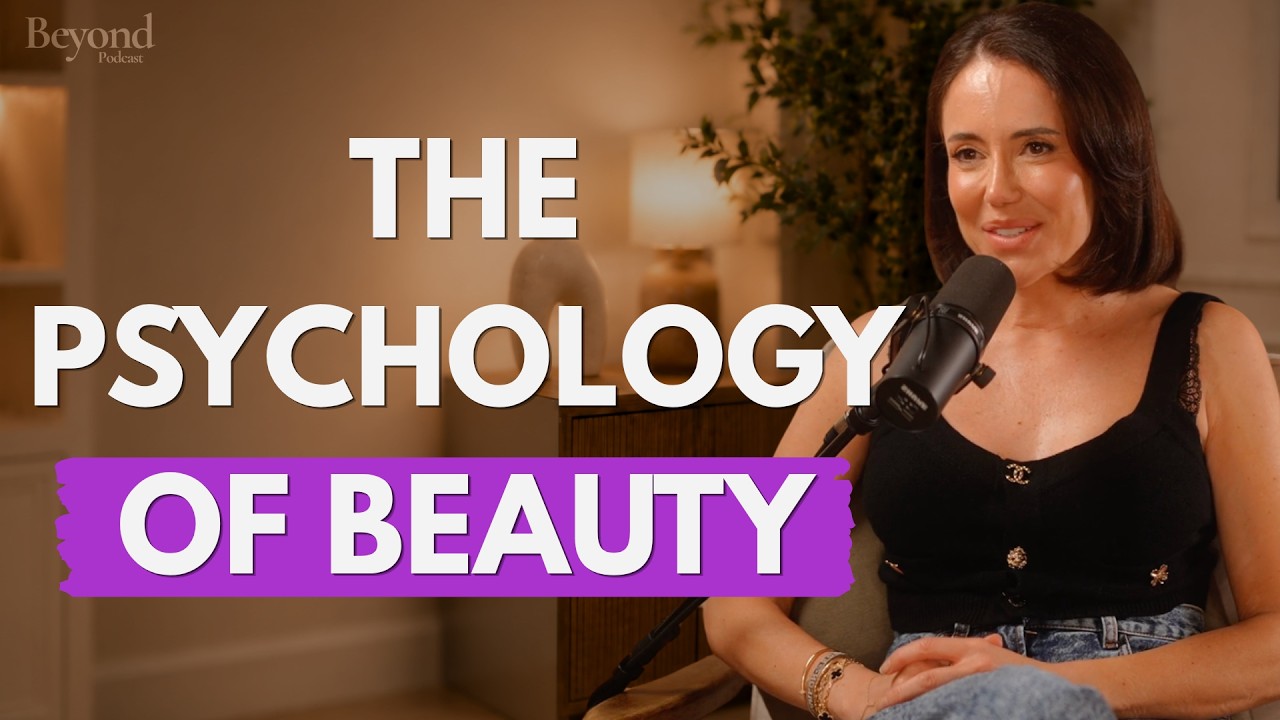
Dr Nina Bal moved to England with €2,000, taught herself dentistry and facial aesthetics, and built a practice with over 7,000 clients. She credits manifestation and an inner drive for financial independence, shaped by a childhood stutter and a strict father, and now focuses on mentoring women and finding peace beyond external success.
Chapters
I came from Italy to England with €2,000 in my bank account. That's it. My first job was in a basement in High Street Ken. I was getting paid £17 every 3 hours. And so I wanted to learn everything and become the best injector possible I could.
You're very successful. I mean, you're everywhere. You're in Forbes, Tatler. You've won so many awards. Now I want to play dumb here because I know you're known as the facial sculptor. I don't know what that means.
I got the privilege of making people feel and look the best the best version of themselves.
How do you then balance your success and really stopping and saying, I have really done something here, and actually like really celebrating each milestone?
I don't.
Do you not?
Really? Wow.
No. So how did you then get there? Because it was clearly a thread going through you at a young age, wasn't there, that you followed?
It's so funny that you ask this because I don't even think about it.
Do you not?
Doesn't even cross my mind. No.
You just knew?
I just knew. Now I've got 7,500 clients. Has she really? I never planned to do any of this.
Did you not?
I love it.
Oh, really? Yeah.
It just happened to me. Yeah. I'm getting very personal here. So I had—
Really?
Yeah.
Really?
What's that journey like? Nina, wow. Can I just say I'm so excited to have you here with us. Karisann and I talk about you all the time. You inspire us so much. Welcome to Beyond. You are someone who really does encompass what it means to go beyond. Now, of course, Kari-san and I know who you are, but for anyone tuning in for the first time who might be finding you for the first time, how would you describe what it is that you do?
Firstly, thank you so much for having me. I feel emotional actually. Who am I?
What do I do?
So I am firstly, a mum. I've got two boys who are 11 and a half and 7 and a half, so I think that's what I'm the most proud of and the most challenging job for sure. Then I've got the privilege, um, of doing every day what I absolutely love, which is making people feel and look the best version of themselves and, and feeling matching what they feel on the inside and how they look on the outside, uh, through my work, which is all non-surgical facial aesthetics for the face. So I— my background is in cosmetic dentistry, so I'm a dental surgeon by background, and then I just, um, moved towards what I loved, which is aesthetics, fashion, And so the move towards the aesthetic side of the medicine was just a natural flow. Um, and having a background in dentistry, I studied the face for 6 years, so my— the knowledge of the anatomy as a dentist is excellent, and we inject so much, so we are very strong in anatomy of the face and we are very good at injecting. So That plus my love for aesthetics, it was just a natural move towards the aesthetic side of the, of medicine. So I've been doing non-surgical facial aesthetics for the last 15 years, which for who doesn't know, basically entails everything from, um, botulinum toxin, so Botox, dermafillers, skin boosters, all the injectables for the face, lasers, energy-based devices.
Wow.
Wow. I was just so like— and for me, listening to you talking about that, you know, how have you managed doing all of that whilst having two children as well? Because I mean, like you said, you know, that's one of your greatest achievements, but trying to weave that into also staying true to you and carrying that torch of I'm gonna do this for me, like, how have you done that? Because I know there'll be a lot of women listening to this saying, well, inspiring. You know, I'm certainly listening to that thinking that. So how have you, how have you managed the two, do you think?
I think I never planned to do any of this.
Did you not?
I love it.
Oh really?
Yeah, it just happened to me. Honestly, I just, when I moved to London from Italy, um, I, I couldn't, I barely spoke any English, but I by then, which was about 16 years ago, by the way. So my English was very broken and I moved for love and I just thought, I'm just going to work 2 days a week as a dentist, just have a bit of pocket money and I want to just be a mum and just do what I love. And then it just happened. I feel just following when I found out and learned about facial aesthetics, I remember sitting on my first course and I felt fire inside me. I was like, this is it, this is exactly what I want to do. And he hit something very deep because I've always been very insecure about, about my own looks. Growing up as a hugely introvert, not very confident about my looks, but loving medicine and loving aesthetics. I don't know, I just felt this is exactly what I want to do. So I just, I was very interested. That was my passion. So I just started to learn more and more and more, and I wanted to become the best at what I was doing. So it just happened. And over the years, by starting working in one clinic, I was building my patient base, and I've realized that people were following me wherever I was working. And then I opened my social media page in 2016, 10 years ago. And it just grew very organically. And even when I had— actually, having my boys made me the most efficient version of myself. I am so productive. I honestly, it didn't stop me. If anything, just gave me that. I think it's a question of being— wanted to be financially independent, which is a major part of my upbringing. Because I think you only are truly free if you are financially independent in your choices. Um, so that was a major thing. And also I felt really rewarded at work, so I felt so good about myself, um, doing what I was doing. And having that— you see in the eyes of the patient when they are so grateful for what you do, and you make them feel So, and I know the feeling because I had work, so much work done on my own face. And so I know how it feels to feel more confident. And giving that to someone else, it just made me feel so fulfilled on such a deep level. And at the same time, obviously being a mum is, it's incredible. I mean, you experienced it, you experienced that as well. So, but equally I felt that being a mum, it wasn't enough. And also I feel I'm such a better mum if I am happy, if I'm accomplished. And I see now, after many years of balancing that mum's guilt, I think the most difficult thing as a new mum is the guilt. A new mum and old mum actually, of thinking, my God, I'm taking time away from my baby. I should be with him all the time. But equally knowing that, no, I need this to be able to be the best version of myself and actually give back. And now sometimes I see glimpses of that working when my older son, who is almost 12, comes to me saying, um, mommy, I just Googled you and, um, I see that you've got, you know, lots of followers, you've got pet press, but 'Are you, are you important?' I'm like, 'No, I'm, I'm, I just love what I do so much.' And sometimes, like, maybe flying at Heathrow, I've got, you know, people maybe stopping me, patients recognizing me or followers, and I can see, say, 'Mummy, are you, are you famous?' And I'm like, 'No, not at all. Um, I'm not famous at all. I just, um, I truly love what I do.' And sometimes people recognize me for what I do. And I think those moments I'm like, I think I'm giving, I'm leaving something good to help other people.
Yeah.
And where did that come from for you? You sort of talk about the financial independence, which I agree with completely. But as a kid, was there that element in you that was hungry for success? Like, take us back. Like, what was Nina like as you were sort of growing up before you moved to London? Did you always know you'd be successful? Because I think especially the work we do, I always say there's people that consciously manifest and people that unconsciously manifest. And a lot of people that are successful that don't know the work are good unconscious manifestors, just because even though they perhaps didn't know what they were going to do, they just knew deep down that one day they'd be successful. What was that like for you?
That's exactly it. It was always, I grew up in a very tiny village in the mountains in Italy. Um, I've got two brothers. I come from a wonderful family, but very middle class, and both my parents are— were teachers. And all I remember since I was born is, um, them at lunchtime or dinner time complaining about, we don't have enough money, we can't afford this, we can't afford that. And I remember clearly once where I was looking at a picture of Maldives. I must have been maybe 7. And I said to my parents, can we go there? Can we go here this summer? I really like the look of this. I want to go to Maldives. And my dad, um, was like, you're dreaming, we would never afford to get there, we don't have enough money, that's crazy. And I remember something clicked inside me and I was like, I'm definitely gonna go there, I'm definitely gonna be able to afford that myself. Or things like, for example, you were saying, oh, you need to go, for example, to just give water to the plants in the garden because we can't afford to have someone that comes, a gardener. And I was thinking, I'm definitely going to do everything it takes to be able to afford a gardener because I don't want to do it. I can't be bothered.
Yeah.
So I always knew I was going to be in a place to do everything that was told is not possible. There's a know-how, and I love your teaching because you always say, It's none of your job to know how.
Exactly.
Um, and that's exactly how it happened. So I always knew, I always knew I was going to be successful. I just, I had no idea why, how. But, um, yeah, I always knew that. I was like, I don't want to be in the position— I would never want to be able to complain with my kids at the table that we have no money.
So it's an inner fire really, yeah, inside you, which I think is just so powerful when you think about it, that, that something innately in you was like, no, I'm gonna, you know, that is just, that takes a lot of strength, which is amazing. I love that.
And what I read is even as a kid, weren't you like top of your class as well?
Yeah, I love competition.
So you've always had that fire, really?
Always, always. But I think that comes from, I don't know if it's a good thing, because I grew up with a very strict dad and two brothers. So I was treated very differently. From a dad who's an empath like me, but grew up with a very narcissistic mother. So he had a lot of narcissistic traits, and he was very hard on me. And I think I constantly chase that approval. So I don't think it's coming from a good, from a good reason, my perfectionism. Um, it ended up bringing me good things in life. So I think not having much and having that approach from my dad brought me exactly where I am, which is which is amazing, but I don't think the reasoning behind it is necessarily good. And then it took me to actually search and look for that familiar feeling of those narcissistic relationships because it felt so familiar. So, and so I don't, I don't know, it's hard, isn't it? Because this is who I am and I'm so grateful for my story. But equally, I think about my kids. I've got such a different, different approach, and obviously they have a very different life compared to what I had growing up. But I'm thinking, am I making them not ambitious because the way I'm treating them? They've got everything that I would have wanted. So am I the reason why they're not going to be successful as me when they're older?
Well, you could look at it in two ways. Couldn't you? Because everything you've learned, I mean, you're clearly massively successful because you're everywhere. I think you were at the Cannes Film Festival.
Oh yeah, I mean, can we just discuss that, like, dress, the way you looked? Yes. I was like, ah!
Cora-san was like, have you seen Nina? Look at her on the red carpet. I mean, you know.
Yeah, you look beautiful.
Thank you.
And I really felt that energy from that photo that you'd really sort of stepped, like, claimed that sort of like, I'm here, and I loved that. I was just thinking, giving myself permission. Yeah.
Oh, there's that word again.
I actually allow myself to fully enjoy this. There's no guilt from being away from this. There's no guilt from being away from my kids. I come from a tiny village in the mountains. People don't even know what Cannes Film Festival is. And I'm here. I'm invited. And I'm going to enjoy every single second. I deserve this and I enjoy it. And I did.
Good for you.
Yeah.
So take us back prior to the Nina that sat here right now, when you are there with your dad and you are saying, I'm going to go to the Maldives.
Yeah.
And there was just something in you, of course, at that age, probably had no understanding of money. Why would you? But you just knew on like a soul deep level. What do you think success meant to you when you were younger, when you were chasing it? You talked about financial independence. What was it that you were sort of aiming or arriving at? Do you remember that when you were slightly younger?
I think it's a freedom of choice. I felt like I had no choice, and my parents were complaining about not having choices. So for me, I was like, I will never have choices. How do I get choices? Having financial independence. Okay, I need to find a way to get money because I was asking for money. Like, Mommy, can I get— I remember when I was like maybe 13, can I have a Hermès bag? Can I have a Hermès scarf? I always loved nice things. She was like, we can't afford it, you out of your mind. So is that choices?
Wow, and how did you do it? What was going on in your mind? Like, how did you move from Italy to London? Did you even know, like, how you were going to do it, or did you just keep following? Like, what was it that led you?
So funny that you're asking this because you always nail the— How do you do it? Honestly, it's crazy.
Yeah.
The question's just guilty.
You're laser bang on. So, You would touch the right chords. So I always knew— I'm getting very personal here— so I had a very severe stutter in Italian.
Really?
Wow.
Since I was 7, I basically, I couldn't say my name at all. I, I basically couldn't speak. I couldn't do like oral interviews like at school. And it started one day, I remember, when I was 7. Don't know why, still working on that. Um, and so I knew I was gonna get married with someone foreigner because I'm like, I can't possibly say sì, lo voglio, which is yes, I want to marry you in Italian, because I couldn't say s, right? So I thought, wow, I'm definitely gonna marry someone that speaks another language because in another language, there's no stuttering.
Is that what you thought? Yeah, that's brilliant.
Which is amazing. When I was learning French, French and English at school, zero stuttering. Zero. Really? Absolutely nothing. But in Italian, I couldn't say a word. So I'm like, I can't go marry someone and then not be able to say anything in front of everyone. How embarrassing, right? So I will marry someone that speaks another language. That's all I knew, uh, for sure. And I'm gonna make money. That's all I knew. So, uh, and funny enough, and you did—
I did.
I was on holiday in London for 2 days over New Year's Day 2009, and, um, I met my ex-husband in a cafe. Started chatting to me, um, and randomly. And I remember— this is so funny, universe just plays such games, right? Yes, such games. I was coming to London, I remember it was New Year's Eve, and I was on a Gatwick Express coming from Gatwick to Central Victoria, and I was thinking, there's no way I'm gonna live in this miserable country. Look at that, looks disgusting. People have no class, and it rains all the time. Oh, if I move, I'm gonna move to New York or like to US. And after a few hours I met my ex-husband and then we dated for a few years and the rest is history. And then we had two kids and I marry him. And obviously we came true. And the ceremony was in English, so I did have zero stuttering and it was amazing.
And you genuinely had zero stutter in English? And what about, like, you obviously clearly now can speak Italian, right? So how did you overcome that then? Did that then sort of untangle itself?
So yes and no. If you interview— like, I— if they asked me to do this in Italian, I don't know if I would have said yes.
Really?
Yeah, really.
I don't think I would.
That's super good.
Because maybe yes, maybe— so I— it still comes in Italian, especially when I— I'll tell you when it comes, when I'm back home with my parents, um, when I'm, when I'm emotional, when I'm happy When I'm angry, I cannot. So when I speak to my kids in Italian all the time, except when I'm angry, I tell them off in English because I can't tell them bad words in Italian because it just doesn't come out.
That's so funny. So you find yourself even now, like when you're speaking Italian, like you're aware of, like, especially if you get a little bit angry, like you start to stutter a little bit. I can't talk. No way. That's fascinating. So I'm fascinated there that as a kid, You always knew, of course, I know you're into manifestation and we'll talk about that, right? But way before any of us knew any of that, you just knew those two things. You knew that you'd have financial independence because you'd have choice, which would mean you'd be able to go to the Maldives, which is fundamental, and hire a gardener. Yeah, exactly. All important. Yeah. And you knew you'd marry a foreigner, so you married an Englishman. That all came true. So that tells us there's like an invisible force inside of you that you followed. So now I want to play dumb here because I know you're known as the Facial Sculptor. Is that right? I don't know what that means. Kharisan does.
I do.
So for any men tuning in, you know, you're very successful. I mean, you're everywhere. You're in Forbes, Tatler. You've won so many awards. Like we just said, we saw you you know, down the red carpet at Cannes. I have no doubt people do stop you in airports. You're very successful. So how did you then get there? Because it was clearly a thread going through you at a young age, wasn't there, that you followed? Of course, as a youngster, I'd imagine you had no idea that you'd end up where you are now. So you go from dentistry to facial sculpting. What's that journey like? Just a quick one. On. I find it amazing how many people message me and say, Matt, I never knew that you had a community. We don't talk about it that often. It's called the Beyond Community, and basically it's a place where we just take everything we talk about on these podcasts just much deeper with people from all over the world, all walks of life, all looking to manifest different things. It's one of my favorite things to do every day, just to check in and see what other people are doing, sharing their wins, sharing their signs. But what I love most about The community is— it's a beautiful app that you can have on your phone, and on that app, inside the community, you've got all of Cora Sanonai's meditations, you've got a course, you've got challenges, you can join our book club. It's just one of those places that just takes you from the distraction of social media and actually helps you get towards that dream. So if you want to check us out, look at the link below. We give a 7-day free trial, so come and join us. Come and check it out. And if you go, do you know what, this isn't for me, no hard feelings, but I think you're going to love it. Anyway, back to the episode.
So I worked really hard, and that's why I relate so much with your teaching when you say you need to put the work in. Um, so I was like, okay, um, I want to make money, I want to be financially independent, have choices. So I choose to do what I love, because actually my parents gave me 3 options. You can be a lawyer, 'You can be an accountant, you can be a doctor.' And I was like, 'No, I love medicine, so I'm gonna be a doctor.' Um, and then I was like, 'Okay, should I become a doctor or should I become a dentist?' Um, and then I was like, 'Okay, what's the— what's the course where it's more likely to make more money, to have more time free, more money quicker?' Um, so I did the test at uni Yeah, to get into medicine and dentistry, and I got third out of 1,000 people in medicine and fifth out of 700 people in dentistry. Wow, a nerd. I listened all summer. I had no life. I was like 18. I had a huge nose. I was geeky, frizzy hair, uh, train tracks. I looked bad and I was a nerd. So I studied all summer and I did both tests. I was like, okay, what should I do? I've got both choices. Okay, dentistry, 6 years, medicine, 12 years. Okay, if I'm a dentist, I'm going to be self-employed, so I don't depend on night shift in the hospital. So more time. Okay, dentistry now is winning. And then I think dentists have a nice life. I see dentists going around with Mercedes. I think I'm good. I think that's okay. I think more likely to get more money, and I love like working the small things. I love like medicine, and I think I can make teeth looking cute and nice and white. I love white smile. I love like, okay, let's go for dentistry. So that's how it happened, and I worked really hard. Dentistry, loved it. But then by the end of the, of year 6, I was thinking, I don't really enjoy looking in people's mouth. I don't really enjoy doing like crowns or inlays, onlays, and these— and it's boring. It's not really my thing, and people are not appreciative. People hate going to the dentist. So I started doing dentistry. I'm thinking, yeah, make good money, but it doesn't really excite me to go to work. And then what happened, I was like, but there's cosmetic dentistry. That sounds good. It's aesthetics. I can make someone looking better, with a smile. So I naturally fell into cosmetic side of dentistry, which is veneers and teeth whitening, composite bonding. Better, but still not— I was like, um, this is not really my call. And then it just happened that when I moved to London, um, in my very first job that was doing— by the way, my first job was in a basement in High Street, Kent. Where I was doing Groupon teeth whitening. I was getting paid— you ready? I was getting paid £17 every 3 hours in a basement. Um, it was so dirty, it was so embarrassing, and I was literally wiping the floor because I was embarrassed when my patients were coming in. It was disgusting, it was dirty. Um, the owner was, um, it was quite bossy. Um, and So I did that and I was thinking, um, what's happening tomorrow? But I was so happy because I'm like, I've got a foot in the work life in London. Doesn't matter where, I just need— I need to start somewhere. I don't know where, but this is great. So I was like, perfect. So what, what should I do next? Then I was, um, there was one of the dentists in that practice that was doing a bit of, um, facial aesthetics here and there, a bit of Botox, a bit of fillers. So I said to him, I said, look, where did you do your training? And he gave me a training academy. Back then, 15 years ago, there were not many. So I was like, okay, perfect. So the day after I called and it was, I couldn't afford the course. It was like £2,000 back then. And I came from Italy to England with €2,000 in my bank account. That's it. Yes, I had a husband, but I had no money myself, zero. And my ex-husband is very wealthy. But it wasn't my money, right? So I was like, okay, I can't pay the course. I need to wait for the first month's salary, which was nothing. So I waited for, I think, 2 months, and then I paid the first course, and I had no money back again. But then I did the course. So I did my first course in aesthetics, and I was like, amazing, that's what I love. And I'm thinking, I was doing the maths in my head because it was like, you know, if you do Botox, it doesn't take long, it takes half an hour, you can make this.. And after 3 months, the Botox wears off. And I was like, great. So if it wears off, you need it again. And if you feel better about yourself and you like it, you want to pay again. So I'm thinking, this is great. Financially, it makes sense. I love it. I tried it, I was hooked. And I'm thinking, that's it. And so I wanted to learn everything and become the best injector possible I could. So at night I was looking at YouTube video and learning and learning. And then I applied for— I was like, I need to put this into practice straight away. Because if I don't do anything, I get scared. So, but couldn't practice facial aesthetics in a dental practice because you can't really ask someone that comes for a composite, for a filling, sorry, can I just inject your frown line as you're waiting?
While you're there. Yes, exactly.
I can also also stuff in your forehead.
Yeah.
Um, so I was like, I need to, I need to separate the two things. So I went, I literally applied for so many aesthetic clinics, and my— the only one that accepted me was at the back of Superdrug. There was a clinic called Pro Skin.
Wow.
It was the cheapest of the cheapest of the cheapest of the cheapest. I was like, don't care, don't care. I just need to practice. So I was so excited because I'm like, great, so I can practice. And they were booking me like so many patients a day, and I was getting paid like £150 for 8 hours. I couldn't— I was like, great, I couldn't care less because I'm— and that's how I practice. That's why sometimes when I have junior doctors coming to ask, you know, to work for me, and they ask their requests for mine. I'm thinking, you have no idea how long it takes and what it takes to become successful. So yeah, so I started doing that and, and it slowly grew, and I grew my confidence, my expertise, my knowledge, patient base, and that's how it worked, all worked out.
But I love from that though that you've formed this rather than like— I, and I really, really feel this whenever I you know, hear anyone talk about coming and having a treatment with you, or I see anyone who posts something and they've had something done, I love the fact that you've gone for this less is more. So like, you could just jump on a trend and be like, oh, everyone's doing this and I'm gonna do it that way, but you haven't. You've really found this beautiful way that really feels like it's Nina's. And I think what I wanted to ask you is, and I think there will be people listening to this who maybe have got their own business in a similar field to you or not, within a 10-mile radius of where most people live, they could put in facial aesthetics or something, and they can find within at least a 10-mile radius someone that does something or a version of some form of facial aesthetic. But what you've done is you've gone completely beyond that and created this really beautiful way that is just true to you. So how have you kind of ignored, okay, well, everyone's doing it this way, so I'm just going to copy that and do that, and we're all going to jump on this trend together. You've kind of really said, no, actually, no, I'm going to do it like this, that I love that less is more feel. So how did you kind of stay true to you in those moments? Because I think that's just— yeah, I love that.
Thank you. I think my ethos is I— so before I offer any new treatments to the— my clinic or the patients, I always try and test everything.
Myself.
And I am so honest in what I do that I would never offer treatment to anyone if I truly don't believe that's the best thing for them, and if I don't believe in the treatment regardless of, you know, how much money this can bring me. And I think that integrity and that honesty of, okay, what I would— what would I do on me? Um, it's what I instantly do. And I think there's it's so much less stressful because I don't have to think. And that's just how I operate. And actually, I had so many new patients coming to me thinking, saying, I came to you because you said no to my friend and she doesn't need anything. Yeah, the only one that said no, that's why I'm here. And I think for me is also, which is not right or wrong, it's just my style. I want to look— I'm 41. I want to look and feel the best version of Nina at 41. And that's the way you see me, it's the way I see aesthetics. And if you align with me, amazing, you're gonna naturally gravitate towards me in my clinic. If you don't, totally fine, you're gonna follow someone else that has a different aesthetics. So naturally I attract amazing women and some men as well that align with my aesthetics. And I think— I want to think people also come to me because it's all experiences. Like, I love building that relationship with my clients. It's that one-to-one that— I'm such an introvert, but it's a one-to-one relationship that at the end of the day, I feel like I've been to therapy for 10— for 8 hours, 9 hours, 10 hours, and they paid me. Like, this is just Great.
I love that.
I love that as well, yeah.
So, it's about the natural beauty that's sort of all sort of within, then in a sense that you help sort of bring out. Am I right? Like it's—
And authenticity as well from your side, like a real, like deep authenticity, which I think is so many people miss that just in anything that they do, like not being authentic and true to themselves. And I think that like what you've just said there is, but I wanted to go back a little bit and I was really listening to what you said about worrying about that kind of, that drive and that kind of almost that fire saying, you know, does it, you know, does it come always from the right place? And I wanted to know, so how do you then balance your success and really stopping and saying, wow, I have really, I have really done something here, and actually like really celebrating each milestone if you're such a sort of keep going, keep going? Like, how do you kind of stop and kind of go—
I don't.
Do you not?
Really? Wow.
No, 'cause you've gone from Groupon and sort of Superdrug to being like the best in Chelsea.
Yeah, like even just—
I mean, it's in a short period of time really. And you said, you know, when you came over, you didn't even really speak proper English. So I mean, that in a sense, that's just so inspiring, isn't it? Because if I was to think of moving to Italy and then dominating and being the best in class within a period of time and learning a new language as well, Again, though, I'd imagine with you, even when you were there, was it Superdrug, did you say?
Yes.
You knew that this was just leading you somewhere, didn't you?
Yeah, absolutely. I was like, this is the first step towards something greater, but I have to go through this.
So what about, because a lot of people I work with and we've worked together struggle with differentiating the difference between intuition and fear. I think it's a subtle difference where I think you are very good at listening to your gut. 'cause it's clearly guided you here. And there's no way you could have predicted then that you'd be sort of where you are now. And, but fear's always the loudest voice in the room. It's self-referential, it paints an ugly picture, it tells you why you might not. There was clearly an element of personal risk that went into this endeavor for you to get from Groupon to where you are now. I'd imagine you've just opened, I think a year ago, a beautiful clinic in— Chelsea.
Yes, I've cancelled.
You know, obviously would require an enormous investment, I'd imagine, to do so. Where do you sit when it comes to risk?
It's so funny that you asked this because I don't even think about it.
Do you not?
Doesn't even cross my mind. No. Like, I really need to think about it. How interesting. No, like when I just know I need to make it work.
So do you even have fearful thoughts, would you say, when you're taking a big step or a big decision?
So I have a lot of fear and confusion, actually. If I tell you how many times I go back to your post when you talk about differentiating fears and intuition, and just make me really emotional because you're helping me so much. And you did, obviously, that's how I personally reached out to you. That's how we we met, but daily with what you do, the impact that you have, um, it's, it's incredible. Even on me after years that we met. Um, and on a— weirdly enough, it's almost like in my professional life I've got zero fear, nothing. Like, I don't even think about the risk. I'm like, it's just gonna work. I remember the first day when I, when I decided, okay, from today I'm gonna stop being an associate in those clinics and I'm gonna rent my own room and start with a completely empty diary. So remember, it was April 2017. I remember looking on my phone at the diary, April 2017, and it was complete— not even one appointment, was zero. It was empty. And I was like, uh, it's fine, it would just get busy.
You just knew?
I just knew. Now I've got 7,500 clients.
Have you really?
7,000 in my database, um, over the years. I don't see them like, yes, over the years I build them up, 7,000. But there is a moment when I started from zero, and I don't know why, Matt and Asha, maybe you can help me to understand why, or why I've got no fear on that at all. But on my personal life, um, I've got so many fears. I never know whether intuition is a fear. I constantly feel good enough at work and I constantly feel not good enough in my personal life. It's almost like there's two different people. I'm like, if someone didn't know me well, they were like, this is actually crazy. It's like two different opposite people.
It's a little bit like though how, you know, the duality exists and everything. There's always the opposite. So what you're saying is if we see you in a professional environment, There's no fear. There's risk, doesn't mean anything. It's just, you know exactly where you're going, fire in your belly, intuition. You know, you've already achieved it. It's just drive. And now it's just helping people. But then what are you saying behind the scenes? There's another version of you that tends to crumble and perhaps says to yourself, why am I not like Nina at work when I'm—
Exactly.
It's a little bit like though, isn't it, how I still find it fascinating that you can speak fluently in English, but not in Italian. So your brain to me indicates that as above, so below. So there's something there, isn't there? And I think the answer lies in what you said early on, which is choice. And it's remembering, I think, that even outside of work, there's a choice. Manifestation starts with choice. It's a choice of who am I going to be? And for you, it's a question for you now is, do you find then that with choice at work, you charge, you know exactly what you've got to do, but behind the closed doors, does choice slightly get put to one side and you crumble? Perhaps, I don't know. Like, what do you think happens to you there then in your personal side?
Yes, or maybe actually, as we actually talked about it is, I think I want something, and then I know how to manifest, and I manifest it pretty quickly. And then I'm thinking, oh, actually, do I actually also want something else? And actually, you helped me so much to say, Nina, that's normal, it's called the ego. And I'm like, okay, fine. And I know all of this. Matt told me, I'm looking at his notes, I read them through, makes sense. But it's almost like Or is it maybe the part of me that because I never feel enough, I'm like, okay, I've got two beautiful kids, I should have three.
Yeah.
So because I don't know, maybe because I'm a family of three, but I feel completely not an accomplished mother at all because I'm thinking I just have a successful business and two kids. How easy is that I need at least 3 kids to feel enough. 3. Yeah, 3. So for me, all I see some days is I am so not enough because I don't have 3 kids. I feel so much less than maybe some other moms at school. Maybe I'm, I'm dropping off the kids at school and I see mom with, with 3, 4 kids, maybe they don't have a business, maybe they feel insecure towards me for I don't know, God knows, but I feel less than them because I'm thinking I just have two beautiful kids and a successful business, but I don't have three kids.
So what does having another child mean to you then? What is the gap you're trying to fill? And that's the work, isn't it? It's trying to understand, because it's, it's the perpetual chase that I think for you, you're so good at. From a 7-year-old when you first looked at the catalogue of the Maldives.
Yeah, that's incredible.
You've been running since then. And I think that again, it's the egos wrapped in, you know, to everyone looking at Nina's life, the glitz, the glam, the red carpets, it's like the epitome of success. But, you know, I have a saying, it's the man who loves walking will walk further than the man who loves the destination. And You know, to the ego, there is, you know, there is no destination. It arrives, gets familiar, and then has to go again. It's almost like if you don't chase the next thing, it actually becomes dangerous staying where you are. You know, and I think it's reading you and working with you and knowing you, it's like, how can you balance the business and the identity of Nina into sort of one? And like knowing what that's like. Isn't it?
Absolutely.
It's fascinating, don't you think?
Absolutely fascinating, because I think there'll be so many people. I almost think there'll be so many people that will breathe watching this because they will say, resonate. Oh, like, even I, like, as you're saying, I'm like, like, there's a whole part of— because I think, I think, I don't think it's just as women, but I think we all are so guilty of not stopping. Like, that's why I said that to you, because I'm observing you and what you've achieved. And I'm thinking like, wow. But it's so interesting when you spin it, you say, well, I don't like, you know. But I'd be really interested to know, and obviously we've called this podcast Beyond Podcast, what does it mean to you? Because you have completely and utterly gone beyond, you know. What, what does that, what do you think that means to you? If you think of 7-year-old Nina going beyond, what does that What do you think that really encompasses for you?
I think it's just being aware of the fact that we all can absolutely believe in what we want to achieve. And I think that's, that's what you teach so well and you explain so clearly, um, is that we actually manifest whether we want it or not every day. So we better be aware of what we are thinking and what we are saying because it's not that, it's not a choice. We are manifesting daily, every single minute, every single hour. So I think it's that metacognition, actually you told me. Yes, yes. Become aware of our thoughts. And I think, and it's the work is exhausting because it's daily and I forget about it. And then I call Matt crying. And it's just true, by the way. Exactly. And it's just that knowing that it's, um, yeah, it is, it is a journey. It's endless, it's exhausting, but it's also so, uh, it's so empowering actually for a second, thinking, gosh, actually, I think with, with your work, with Jodie Spencer, that I adore. It's— it gives me that power of thinking, actually, I bring the power back to myself. And sometimes I forget and I have to be reminded. But it's knowing that we all have, and everybody that is listening or watching to us knows that actually, in any moment, you can start to get the power back to yourself because you have it, whether you believe it or not. Um, you have it.
And you clearly had it unconsciously because we've all got the gift. Like I say, we're always manifesting, and you were so good. When did you— I mean, let's talk about that because of course that lies through the thread of what Corazon and I do, you know, manifestation. I think the word beyond encompasses so much. You've clearly succeeded with that. But what's your mission now, Nina? Because you're— I mean, where do you go from here? Like, what— how are you using manifestation now in your life?
I think actually I spent the last 15 years building me as a brand, me as an injector, me as a medical director, etc. I think, I think the last year or so I really feel a shift where it's not about me anymore. I'm not even applying for awards for me anymore because I'm like, I don't want it. I want to build others. I want to build my team. So I want to build the best clinic, the best therapists, all the girls that work for me. I want them to feel a bit of how I felt over the years or how I feel. So I think it's part of that is keep doing what I do, which what I love, which is facial sculpting, facial aesthetics, but empowering the team, building the clinic and the other girls. And also just moving towards your work is like, because I was invited to speak to a woman in aesthetics conference for the Women's Day on the 8th of March, and they asked me to do a TED Talk, um, for 20 minutes about identity. And nothing to do with aesthetics, just about identity. And I absolutely loved every single second, and I made everybody was crying. There was silence in the room. People, so many women coming to me for months after saying how because of that they left a toxic relationship. And I'm thinking, what is, is there maybe something that I need to move more towards? Um, I just love more that kind of empowering other women Um, I, I hope I can empower other women through what I physically do to them, so made them look and feel the best version of themselves, the most confident version of themselves, but equally empowering them on what they can achieve.
It's funny when you said that because it really did come through me as like seeing you empowering on a stage, like really, because you have got such an incredible story of like how you've, how you've achieved that. Do you feel like— like, how do you, how do you do that? Like, how do you empower the women that work with you? Do you have a certain attitude in the clinic? Like, do you keep it— like, what do you do?
I don't really have an agenda, really. I just, uh, no, I just, um, I think I'm just very supportive, very, very kind, um I think I'm a really good boss. I teach everything I know. I don't keep it to myself. And I always say to them, do not look what the competition does.
Oh, I love that. Yeah.
Just don't. Just don't. Because when I say that, I just say to myself, because sometimes it just takes— so easy to get distracted and say, oh my God, this person is doing this and achieving this. But actually, it's when you bring that power back to yourself. That's then where the success comes, actually. So I say, you know, let's create the best—
we—
the best experience, best experience for the— for our patients in terms of everything. And I'm so, so in every single— the clinic needs to smell amazing, look amazing. They have to have the best service, the best treatments in terms of technique, products, devices. Everything has to be top, top, top. And I think they just feel and breathe that. And I feel actually they want to, I think if you raise your standards, people around you naturally raise to yours as well.
Yeah.
And I love that because I always say where you place your attention is where you place your energy. So do you find that by not looking elsewhere and keeping your eyes focused, I mean, what are your thoughts around that and like energy thieves? Because we all have energy thieves in our lives, don't we? How do you cope with that in what you do?
So I actually, the amount of time I think about what you and Corrie Zahn do, because you told me that sometimes you say, okay, you protect your bubble.
Yes.
Right? Yeah.
So I'm learning to become more aware of that actually, because I am, I think because growing up so insecure and a people pleaser, I tend always to say yes to everyone. And whether— I think in the past saying yes to so many things helped me, but now I'm more and more aware of the energy thieves. And I think even sometimes I just, I try to do it with grace. Um, like even if a patient comes in straight away, within a few seconds I feel the energy, um, and I know this is not gonna work. Or maybe that person is on a journey where she or he thinks is ready for treatment, but that's not the right reason to get treatment. And I feel that I very kindly push them away and protect myself. And I'm thinking, there is no way for any amount of money I'm gonna touch a person that I don't think— you know already what is gonna bring trouble, is not the right treatment for them. So I think It's that my try to protect my peace at all costs, but it's becoming natural. But it's, um, it took a lot of work.
Interesting.
Yeah, because I've noticed that you talk about that intuition, that sort of feel. So you're very, very connected. Have you always felt like— I always, I've noticed you said about that sort of that feeling of following your intuition, following that kind of connection. Where do you think that comes from, that almost to self always? I think that's just, that's part, all part of this work really.
Yeah, like I think like even now in your clinic, you like what you've just said there, you're very good at, I think you're very good at reading energy.
Yeah, I've picked up on that.
And I think one of the, I mean, you're amazing, but the success is obviously, I'd imagine you create, I haven't been to your clinic, but I'd imagine if you go, I'm almost like feeling it now and almost imagining people when they go, I'd imagine they just sort of let go a little bit. Do people say that? Do they feel like it's just such a I'd imagine people say, "I just need to go and see Nina." Or, "It just smells great.
I'm just gonna go." Yeah. You see people sitting and saying, "I just love coming to see you." Is that what they say?
Oh, that's really nice.
So you just feel it.
Yeah.
So then talk us through, because, you know, today, this is the first time Corisande's been away from Aston Humphrey, who's of course nearly 2. Your boys are, did you say 12?
11 and 7.
11 and 7.
11 and 7, wow.
So, you know, you've got two boys. How have you, like, you know, and you manifest and you do all this, like, what does balance even mean to you? Like, is there a thing as work-life balance for what you've achieved, and how do you do that?
Great question. I think firstly, balance can look very different to everyone. So for me, I think I found my balance, which is working in the clinic 3 days a week. Ah, and when I'm in the clinic, I am fully in the clinic, and I am a medical director, I'm the CEO, I'm the boss, I deliver the best treatment for my patient, and I'm physically there. The other days when I'm in clinic, I am a mum, and I am there for drop-off pick up, I do homework with them. And I think knowing that there's dedicated time to everything, um, is what for me is my success. And although knowing that, okay, maybe if there's a— and also choosing my battle. So for example, at school, if I know my kids are gonna say a line on a show, I'm gonna be there first row, shouting, like cheering and clapping, I'm the biggest cheerleader. I'm gonna be there. But if there's like mom's coffee mornings or anything, there's no way I'm going. That you will not see me. No way. So I'm really choosing what— yeah, you know, and I don't care if other mom thinks I'm antisocial. I really choose what, where to dedicate my energy. And I think that is what I find It's the balancing that makes me happy, knowing that I'm either wearing a cap or the other cap well and choosing what to be there for.
And do you find that when you are— choice again, this word for you that I've really picked up in action. You're very good at choice, making good choices. But when you— so, you know, when you're, um, mom and you're at home, do you like— what's your mind like though? Does it ever think, I should be at the clinic, I should be working? Like What does being present look like to Nina?
It's hard.
I was gonna say, literally, he stole my question.
He did. I'm sorry.
No, no, no, we're aligned.
It's hard. It's hard. So, because obviously, you know, although I'm not there, I'm the CEO, so it's constantly questions. So, I think I learned to tell my team, boundaries. So do not contact me unless it's an emergency. I still have all the work email on my phone, and I still am guilty of checking, but it's, um, I was reading some, um, I follow a couple of, um, child psychiatrists on Instagram, and actually, um, what Doc Hammond was saying, um, these American psychiatrists were saying 'What you need to do every day with your kids or with your child is 20 minutes presence, no phone, no questions, no comments.
You're just there.' Just be with them.
Just be. No question. You don't ask anything. So I'm like, okay, 20 minutes, easy. I can do that.
Yes.
So I'm like, okay, if it's a busy day, I'm like, oh gosh, I need to check. My social media calendar, I need to reply to this, I need to, I need to prepare the presentation for this. I'm like, okay, Nina, okay, you're going to do all of this once the kids go to sleep. But now it's 20 minutes, maybe we do like a puzzle. I think puzzle really is helping me to do that because I'm not just looking at my son thinking, I'm not going to ask any question, I'm not commenting anything. We're doing something together, so it's easier not to just get involved. Otherwise, it's easier also to ask questions. Maybe not yet, Humphrey, because he's so small, but how was your day at school? Who's your best friend? What did you eat? No, I'm just there. We're building a puzzle and there's no questions. And that is as easy as it seems. It's hard, but I feel so peaceful afterwards. I'm thinking, because I feel present, and I think that's helping me to maybe have that presence that you were saying, a home. Maybe it's 20 minutes or it's more, but that is— I really feel that bond glowing with my kids. I feel like—
Which was 20 minutes?
20 minutes.
So it's almost like allowing them to lead and you just— your job is just to follow. So if they want to do a puzzle, yeah, you do a puzzle, but you can't dictate and tell them what you want to do. So it's like just following for 20 minutes.
You don't even ask what they want to do. No, you follow. And the only thing I do, I validate their feeling because I know now being 41 and doing work on myself, that I didn't have my feelings validated when I was young. And that's one of the most crucial things— validate. So when they are upset, crazy, I just validate it and be there. It's so hard, but I think as long as you've got presence, validate their feelings and give them love I hope they're all going to be okay in life.
Well, I think if they've got a mother like Nina—
I absolutely, I absolutely think that.
Oh, it's been lovely.
Yeah. And I think, any final questions for you, Si, on your mind?
I was just going to say, you know, that I think, I think for a lot of people watching, I think they'll be incredibly inspired by what, by what you've achieved, but also just to hear that relatability about giving women permission. So I think if you were talking to any woman now sitting there saying, oh, like, how am I gonna step back in? How am I gonna give myself permission? What do you think you'd say to those women who are sort of like in the in-between, like we talked about before, where you're sort of— yeah, you don't know who you are and, and what you're going to be and how you're going to get back?
I think DM me. Text me and I'll help you. Let's go. I think create your support of women that actually will inspire you or just have that connection. Just don't— it's so easy to those moments, um, to just close and just don't live in that fear, in that, in that feelings. Whether I think if you reach out and if you create a connection of women really supporting women really, which is rare. But when you found them, those women are incredible. And you don't have to know them personally, could be on Insta. I mean, we've been knowing each other for years.
Yeah.
And we met today for the first time in the flesh. So yes, I think it's having— it's having that connection of actual women that know exactly what you mean. Yeah. Um, and truly support you. And just because sometimes it just takes one other woman to say actually, you can do it. Yeah, go for it.
I absolutely love that.
I think what you've confirmed for me as well, which I see with a lot of people I work with, is just fascinating how you, you know, you can look at what you've achieved, but then— and thank you for being so honest, and I think that's what's so lovely about you, you know. Clearly people love coming to your clinic because it's so authentic and you bring out that natural beauty, and, you know, but it shines through you as a person too, because you're honest about the fact that, you know, there's still that sort of like longing and wanting and chasing, like, do I— I'm failing if I haven't got a third child. And I think that gives so many people permission to, to realize that they're not alone in that either, because it's like, well, if Nina's still feeling that but she's achieved all this— and it's interesting, I noticed that years ago, it doesn't matter what— it really doesn't matter what level of success that I work with, people are still driving for more. And that's okay to admit sometimes. But I think knowing that you can always find the feeling now— and that's what you and I talk about a lot, don't we— it's just like understanding why we want it and how we want to feel now. So I'd love to sort of finish, I suppose, by Nina, where from here for you? What is the dream now? Do you know? Do you work on that? What is the mission and vision for Nina before we meet again?
I don't really have a plan. I never had it throughout all my life.
I love that.
I really honestly don't. I think I'm just working on just keep doing what I love, just follow my passion and just follow what, what actually— what do I do that makes me feel good, that makes me feel fulfilled, makes me feel grateful? And it's, it's helping women. So carry on working, maybe just building more my team. So just stepping away slightly and creating more a team. I don't really want to open another clinic. I just want to expand where I am. Just do that and maybe do other things. And just, I think, find it also— I think what I really want to do is just working more towards finding my peace. Um, I love that, that, because I feel, as you say, it's funny because when someone else said, oh my God, you achieve so much, you must be feel so at peace, and truly I am not.
Really?
So I think that is my work.
You noticed something. I've got one more question. Is it true? Were you a professional skier?
Yes.
Were you? Because when I wrote—
I did do a picture art competition.
I don't know how you found that.
And then Matt Cooke said to me—
I was like, really?
Yeah, it's always like a slight questioning of you. Like, is, really though?
Yeah, we were like comparing notes. I was like, have you done some research on Nina? I was like, I know, I know Nina. She was like, "Yes, but did you know she was a professional skier?" And then hang on.
Oh, we missed a mini rant, just to unpack this, Neela.
Yeah, when she said that, I know you said you were born in the Italian Alps, and a lot of your Instagram sometimes is on ski slopes, isn't it?
So all the signs were there, Matt.
So hang on, we're gonna add to this whole conversation, oh, and by the way, everyone listening, she was also a professional skier.
Yeah, just to add to the—
So that was—
I wasn't very good at it. We had no choice, guys. I was born in the middle of nothing.
So it's like, if you didn't ski, like, what's wrong with you?
Yes, my father was a ski instructor, so basically that's what you do. But I think something interesting on that actually is, I think, um, literally 2 days ago I was reading an interview of one of the top trainers at Rafael Nadal Academy, and he was saying like, how is so crucial, especially if you have a daughter— that we all don't— um, is that they, they do professional sports. Because if you have a girl and she does a sport professionally, there's only 0.002% that she will actually become professional, but 85% of chances she will become a successful CEO of Gogo's Bums.
Wow.
And I thought, wow, isn't that so? I felt that in my bones because I think you're used to— I'm so used since I was like 5, 6 to challenge and to get disappointed, to literally pick myself up from a fall on ski and just get over again. And so I think that's been such a huge life lesson.
And then just to wrap that up, if you take the essence of Nina, the soul, which has clearly driven you here, isn't it amazing how it just orchestrates this journey of the parents, the ski slopes, the being told that you can't go to the Maldives, saying, "I will," saying, "No, I'm going to get a gardener," saying, "Okay, well, I've been, for whatever reason, I can't speak fluent Italian, so I'm going to marry a foreigner." So you go marry an Englishman. And then, "I need to make money because independence gives me choice." So then you do that and you master that. And then here you are now. And I think that's a lesson to everyone, to follow your gut. Totally. Nina, thank you so much.
Thanks so much, Nina. Thank you.
I've loved that conversation.
Thank you so much, guys. I'm so grateful.
More from Matt

We Were Invited to Sit Front Row At A Dr Joe Dispenza Retreat — Here's What Happened


BBC & Sky Broadcaster: The Secret Mindset Behind the World’s Top Achievers | Gavin Ramjaun


Colour Expert: What Your Clothes Are Subconsciously Attracting | Kate Harrison