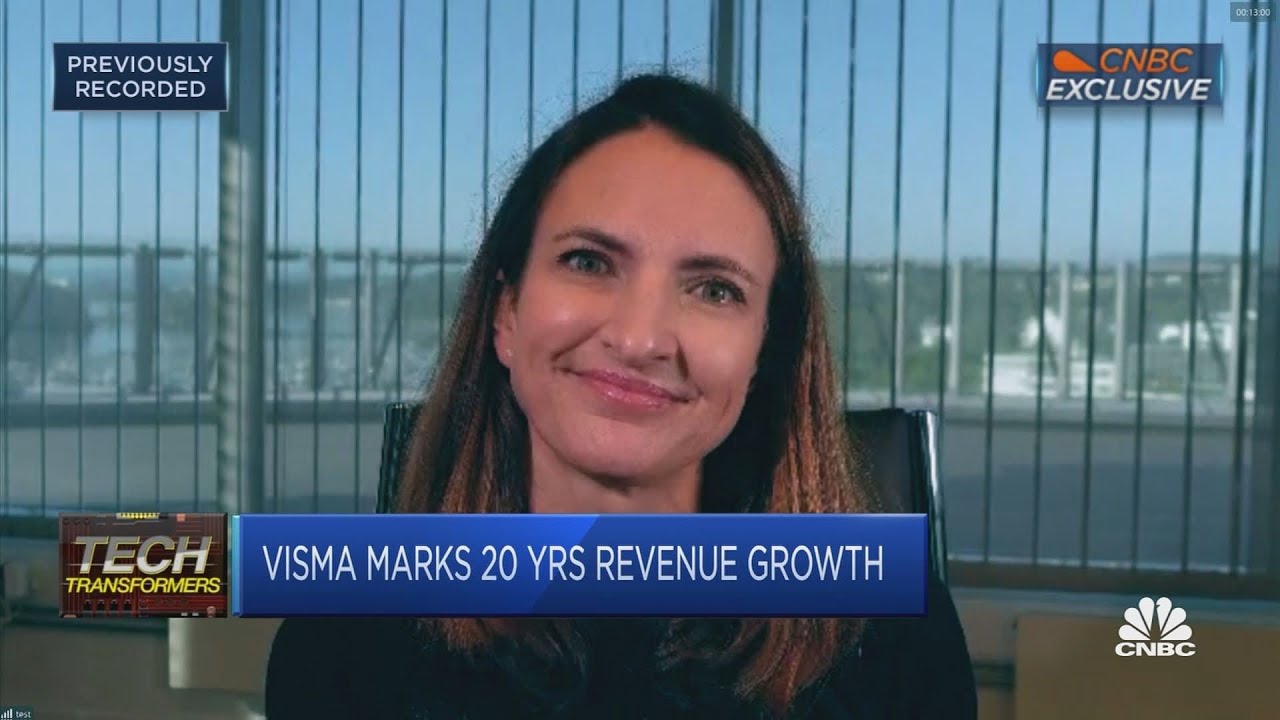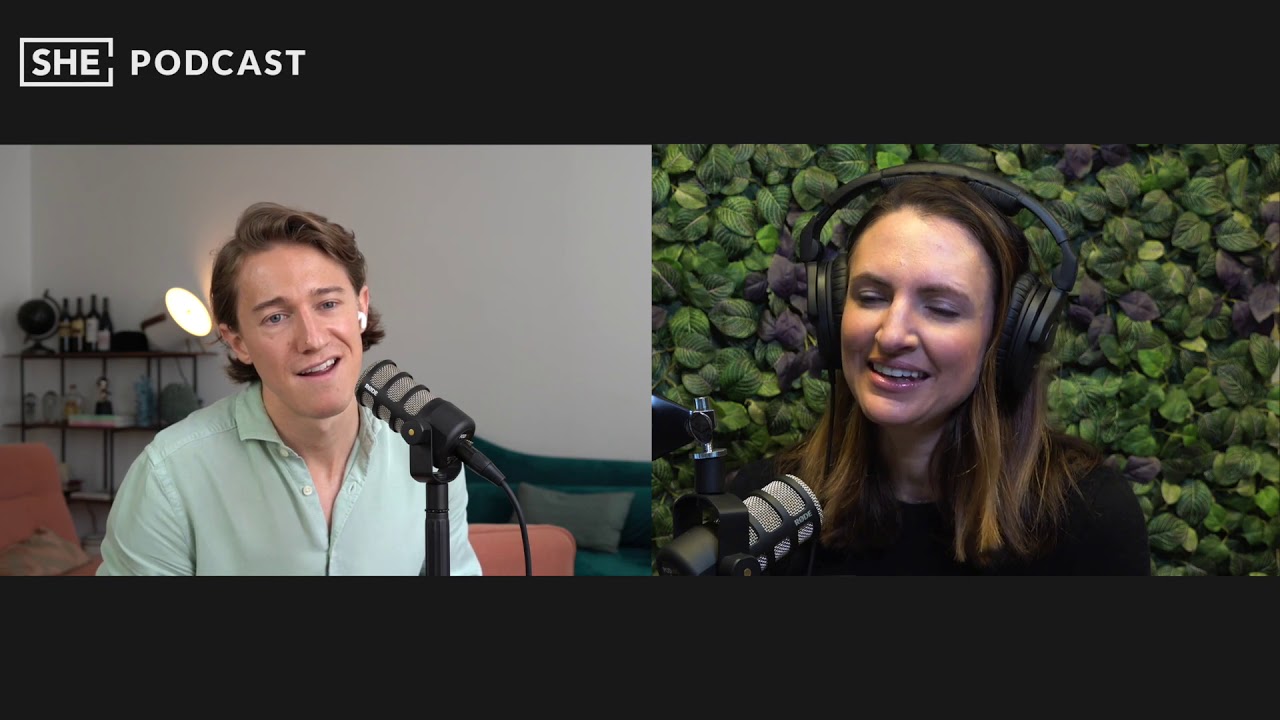
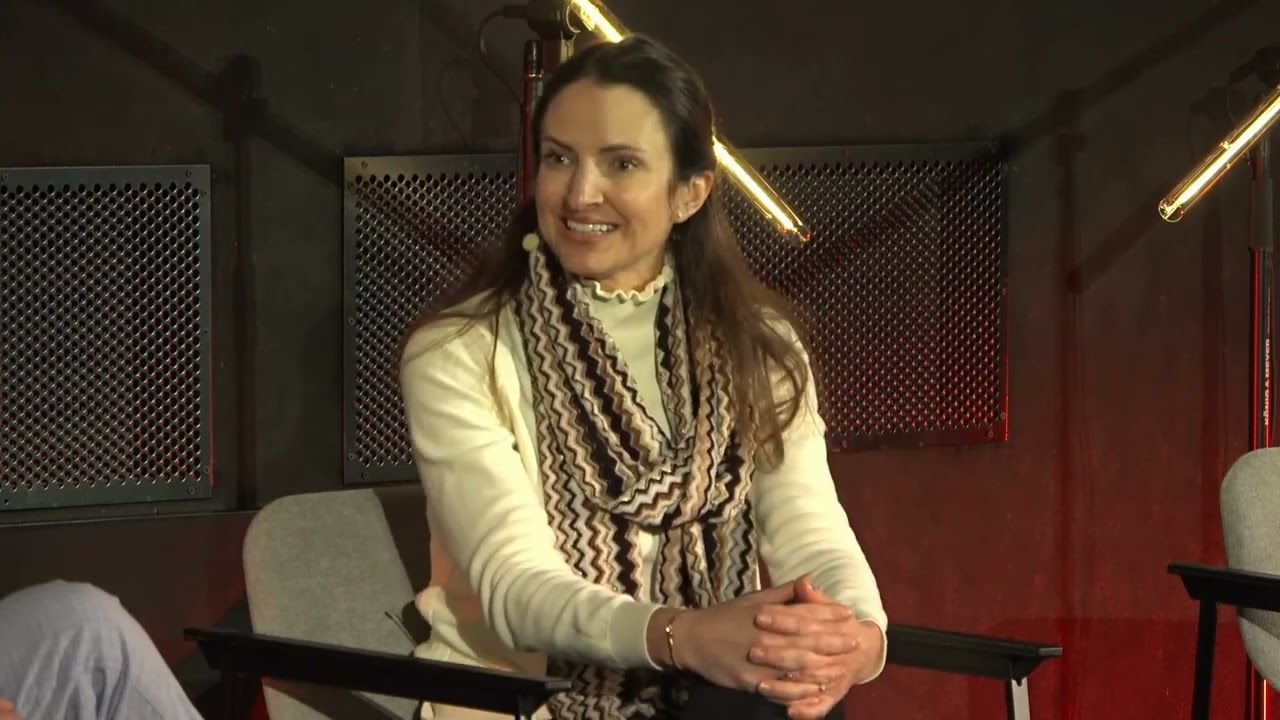
Merete Hverven, CEO of Visma, a Nordic software firm with 12,500 employees, eats plain Weetabix every day to cut decision fatigue. She describes the four traits of successful CEOs: deciding fast, engaging with impact, adapting proactively, and delivering reliably. Visma acquired 37 companies in one year.
Chapters
Hello everyone, welcome back to another episode of Breakfast with a CEO. I'm your host, Matt C. Smith, and today I'm joined by a CEO who knows a thing or two about recruiting CEOs, because before she became the CEO of Visma, she was actually in the role and in the business of recruiting top leaders in management. So today she's gonna share some of those insights into what to look for and how to shape your career a little bit, 'cause that's what this podcast really is aiming to do. It's there to talk to some CEOs, hear how they did it, and how maybe you could too. So, I hope you enjoy this one today. But just before we kick in, I wanna say a big thank you actually, because we're, I think, 11 podcasts in right now. And, you know, we've been learning while we've been going with this, and we've seen our viewer numbers and listener numbers explode recently. So we're doing something right, I hope. Thank you so much for listening. I hope this is a little bit of enjoy and ray of sunshine throughout your days. And it's getting a bit tough now through another lockdown with everyone else everywhere in the world. So stick with us and we'll stick with you. Thanks for listening. And as a reward, I wanna invite you to the She Conference this year. So the She Conference, you may have heard of it, it is traditionally for the last 3, 4 years been the largest gender diversity conference in Europe. I've been hosting and we've had a lot of incredible speakers. And this year it is no exception. We're going digital, obviously. I think it's from the 5th of March to the 19th, so it's gonna be spread over a long period, lots of different speakers, and one of the headline acts is Hillary Clinton. So I'm looking forward to hopefully seeing you all virtually during those 2 weeks. Join us. Go to sheconference.no to find some tickets, to see some of the events you want to tune into. And I really hope that you, you know, get some conference vibes from that because we're going to try and create a sort of live show like you've never seen. So I hope to see you all then. All right, enough plugging. Back to the episode. Our guest today is Merete Verven, the CEO of Visma, which has 12,500 employees and provides business software and IT consulting to, I think it's around a million customers in Northern Europe. So it's quite an established organization. I've been really looking forward to this episode. episode today because, you know, I have a prep call with all my guests the week before, and I was honestly left with such a positive energy after my chat with Merete. So Merete, welcome to the show. Good morning. How are you?
I'm fine, thank you, especially with that introduction. I had a lot of energy after our talk as well.
Fantastic. Well, you know, there's a famous question and is the title of this podcast, Merete. What do you have for breakfast?
Well, uh, Today I had Weetabix with milk. And I've actually been eating that all weekdays for the past 20 years. I know it sounds terrible, but that's just what I do.
Maybe if it works, it works. I mean, I do remember Weetabix when I was at boarding school was a staple, but I think it was just because I was at boarding school. But do you put anything on them? Do you dress them up? Or is it just straight up Weetabix and milk?
Straight up Weetabix and milk. Nothing more than that.
Sorry. Is that, is that, is that a routine for you? I mean, that's one thing we try to sort of extrapolate from our CEOs on this show is what do they do differently to us? Is there any sort of secret hacks to becoming a CEO based on your daily routines?
I don't think so. But I guess, in general, I just, when I don't have to make a conscious decision, I go about my regular things. And in the morning, the Weetabix, it's just 2 bricks, a little bit of milk. I have 3 kids who want their different things. One wants toast, one wants yogurt, the third one wants havregröt. So I just try to really, really not spend a lot of time on my own breakfast.
But maybe that's an interesting point you make. I mean, you might have heard, and I know many of you listening to this might have heard this too, that, you know, CEOs, tech CEOs such as Steve Jobs did, and Zuckerberg, Mark Zuckerberg of Facebook, they limit the amount of decisions they need to make in a day by, you know, wearing the same outfit every single day, by eating the same things at the same times, they sort of create these ingrained routines in their day. Is that something you do? Is that something you see could work for any of us who want to become a CEO?
Well, in general, people don't like change. 97% of us don't like change. So we're all trying to look for some, some sort of stability. Like when you go to courses, You can see if there's a 2-day course, unfortunately, we can't do that now because of COVID But if there is a 2-day course, you will see people coming back to the same seat they had the day before. So that stability, that's fine. It won't ruin what you learn. So you're looking for some sort of stability in a world that's ever-changing.
That's interesting. I mean, stability right now is obviously a big question for everyone, right? I mean, I have to admit, and many of you watching and listening to this might be in the same position right now that, I am really struggling with lockdown fatigue at the moment. I mean, I'm lucky because I'm in Lisbon, which is obviously a warmer climate. It's 15, 16 degrees right now. And it's, you know, end of January. Well, actually, it's early February, isn't it? It is. I'm forgetting the days now too. How are you dealing with COVID fatigue?
Well, I totally agree. We're social creatures. And I'm without a doubt quite extrovert, like to be around people, get a lot of energy from being around people. So, so I, I have to get out every single day, get some sunlight. And I have a lot of walk-and-talk meetings with the people on, on my phone, not sitting the whole day in front of the computer. And also, there's lots of research that shows that just walking, you're going towards a goal. So you're a lot better at solving problems, you're more energized. So I have to go out every single day, and I have to at least exercise 3 to 4 times a week. So I guess that's 2 of the main things that I do to sort of keep track when I sit at home every single day.
Tell me about it. I am struggling at the moment walking along the waterfront here. I wonder what you're doing at home listening to this, or maybe you're not at home, maybe you're on a walk right now listening to this. Actually, I'd be curious to know. Go to She Community on Instagram, and when we post this and you listen to this, go back to the post and write down where you listen to this. I'd be curious to know if people are listening to this while walking or elsewhere. Merete, your career. Let's get into that. So you know, your your your your childhood was one of traveling around the world. Really, you know, you grew up in the U.S. and Norway, then you studied in Switzerland. I'd love to get an idea of, you know, when you first started out, from your family, to university, to your first jobs, what did you want to do? You know, what was your sort of career path ambition?
Well, I have to say, I wasn't a person that thought and wanted to become a CEO. I just took one day at a time. I think wherever I've been, I've been very engaged. And I love to be around people that are enthusiastic, that want to create things, want to create value, that also have great values. So people that sort of are fun to be around, that you can trust, and that really deliver. I mean, it is hard work to get somewhere in the world, without a doubt. And I think that sort of brought me where I am today. When I was at university, I started at the Norwegian Business School, because I wanted to move away from home and to get to learn new people. But also, I wanted an education that could sort of just open a lot of doors and not close them. So I think I've just— the path has actually just gone by from day to day, just being really, really energetic and engaged, and asking questions and maybe challenging status quo. And suddenly, here I am.
What do you mean by that? I mean, how do you challenge status quo? I mean, and actually, I'm curious as well, because obviously, a lot of the CEOs we speak with, you know, if you're a CEO today, you're obviously, you know, anything from mid-30s to mid-50s, 60s, right? You know, so obviously, you're, you know, you've been building your career for 10, 15, 20, 30 years in some cases, right? Do you think you can build a CEO career today as you could have when you started? What's changed?
Wow, that is a good question. I think going back to sort of what has always been my driver, there have been 2 main things. I, at the studies, I loved mathematics. I loved sort of that you could get an answer and you saw how much value you created. And at the same time, I really, really was engaged by how people are different, what strengths they have, and how much value each person can create, especially if you combine a team. with different strengths. So I think the people perspective and the financial perspective has always been a driver for me. The big change maybe today, if you look at leadership, going back all the way to Machiavelli, he was the first one who challenged if it would be best to be loved or feared as a leader. I think today you can change the wording and ask if it's best to be liked or respected as a leader. As opposed to? As opposed to loved or feared. To be liked or respected. That would be sort of better words to use today, I would say. 20 years back, I think it was enough to be respected as a leader, respected for your competence. People listened to you if you were competent. Today, you have to have competence. But in addition to that, you actually have to be liked for the person you are. People have to respect you for the person you are. They don't listen to what you say. They listen to what you do. And I think that is maybe a big difference. So you have to— in general, you should be quite competent, high IQ. But emotional intelligence is without a doubt really important today as well. That's when you get the best out of your people, by treating people the way they want to be treated and getting the best potential by actually tailoring your behavior to creating efficient relationships.
That's beautiful. You know, emotional intelligence is something obviously that is being increasingly seen as a very strong trait in recruitment actually, and HR, and obviously just, you know, as a role in an organization, emotional intelligence is so key. But what you said there was beautiful. You know, it's best to be— is it best to be liked and respected or feared? Is that sort of the new way to look at things? Liked and respected as opposed to sort of loved and feared. How do you create that within your organization? I mean, how do you project yourself as someone who is loved and respected? Is it just simply by, like you said, you know, people need to listen to what you do, not what you say?
I think it's all about being a role model that people like and respect. We're all different. I think it's important to be open, Transparent, to phrase a message even though it must be harsh sometimes, but to phrase it with respect for other people, to be open about your strengths, to know who you are, but also to be open with regards to your weaknesses, because no one's perfect. Mm-hmm. But if you know who you are, if you're open with regards to that, if people know your strengths and can really, really use those strengths, and at the same time, you know your weaknesses, then you can create a team that are very, very different, that complement one another. And as long as you are open with regards to that, you create a lot of value. Yeah. I don't think that employees are engaged by thinking that the CEO is perfect and flawless, because nobody is. And just being open to that, I think that's maybe some of the feedback that I get from the employees. They love that I'm— they say, it's wonderful that you're not a machine, you're a person. Right. And they can sort of relate to that. It's not like I'm a person far away from them. We're a very flat organization. I really don't bother with the hierarchy. In general, if you read management books, you see that there's a pyramid where the leader is on top like this. I usually phrase it and say it's all the way, about turning it around. The leader is actually at the bottom. Because I'm out of a job if people don't listen to me, respect me, and want to follow the strategy that I have for Visma. Then I'm out of a job. I can't do anything alone. I need to get the people on board. And then you have to be liked and respected.
That's something I've seen in all the CEOs we've actually had on the show. And something that is often surprising, I think, to many of us when we meet CEOs. I remember the first time I met Sigve Brekke. CEO of Telenor, right? A $23 billion company that's got 185 million customers, 9 countries, you name it, right? Yeah. And I met this guy and I met him at actually it was a small conference in Telenor Arena in 2018, I think. And, you know, I was just a little bit obviously, you know, he's a public figure too because it's a public company. It's owned by the state, right?
Without a doubt.
And I was a bit, firstly intimidated to meet him, and then I met him, and he was just the friendliest, charismatic, humble guy. And I think, you know, if you haven't listened to that podcast, it's the first one we released, you know, go and have a listen to that, everyone listening to this, because it's a fun one. And he just, his guard was down within seconds. And, you know, I was like, I feel like I could follow this guy. He was a charming guy. Yeah. And I've seen that as a trait with all the CEOs we've had on the show, that, you know, there's not one of them that I was intimidated by after I, jumped over the hurdle of just conversation. I feel like, you know, actually, maybe there's a funny question I can ask you, because I think a lot of people— and Águl Spando of Emesto Group, we've had on the podcast too. Yeah, wonderful guy. He said— he is such a charming guy, right? Wonderful guy. Um, building a family of entrepreneurs within Emesto. Again, another podcast to go listen to if you haven't heard that one. Um, but he, he said, obviously, you know, that people, you know, in his organization of, of 1,000 employees, um, obviously are intimidated by him. He sees people act differently around him. Right? Here's a question. How would you want to be approached as a CEO? You know, how should people listening to this approach you?
Just like a normal person. I think that's really, really key. And that's what I strive for in Visma. And I think I'm happy that I was working in Visma for more than 9 years. Or actually more than 8 before I became the CEO, because people had seen me as just an employee in the company. And then naturally, after a year, I became part of the top management team. But at the same time, being responsible for people as a CHRO, I really, really got to know a lot of the people in Visma. So for most of our employees, luckily, I would say, It's just me. And I think that's what I want, because I want people to be open. I don't want people to think of me as sort of the leader that they have to act differently around, because I want the feedback so we can all together continue to create the success of Visma. And then I need feedback, and I need people to look at me just as a regular person, because I am.
But let's jump back to that then. You mentioned a few things, you know, obviously, you worked in Visma for many years before. In a completely different role, and something I alluded to at the beginning of this in my intro about how you have experience recruiting leaders, right? You have experience in seeing what traits are most relevant and important in leadership. So here's a question then. Going back to your early days, I always like to ask our CEOs, you know, is there any investments they've made in themselves, or is there any part of their career that they thought was most valuable to their current position. HR, it seems like that was an extremely valuable part of your career, which has shaped you as a leader and is why you're such an approachable and friendly leader. Would you agree with that? And then actually, further to that, I mean, what are some of the takeaways from that portion of your career?
I would definitely agree to that. I think, in general, if I were to give any advice, it's all about trying to find what really, really energizes you at work. and what strengths you have and where you see that you can create value. And our former CEO, he always said that your superpower, Merete, is people. And I think that as a CEO, you can have different superpowers. It can be people, it can be finance, it can be sales. But really, really knowing what your superpower is and working on that, and then also knowing how to surround yourself with other people with other superpowers. I think that is important. That combination, the people perspective, combining that with how you can go about that to create value. Because at the end of the day, I mean, all of us CEOs, we're measured by one thing. What are the results month after month? And if we don't deliver the results, you can have as much superpower you just want. You will be out of a job. If you look at Fortune 500, 25% of the CEOs, they're not there anymore after 4 years. So it is a tough job. But that means you always have to really, really focus on the value that you create, but using your superpowers. And going back to your question, I really, truly believe that I've always been really interested in reading up, learning, looking at research, how I can quantify the un— The invisible. Quantifiable. When I started in HR, it was sort of more like people looked at HR as an admin job that didn't create a lot of value. And I was starting to really, really look at how can I quantify the deliveries I have. And there are lots of ways to quantify this area. So just making sure that you do everything you can to recruit the best ones. And when you do recruit, you have to have structured interviews. You should do ability testing. You should give work cases. You should do reference checking, but actually checking references that aren't given in the sheet, references that you pick out. There's just so much smart things you can do to really, really try and recruit the right person and then continuously develop that person and create roles that fit their strengths. So when I create— every single year, I mean, I look at the top management team and we make some adjustments. And the basic thing I do is not having sort of a box named CFO and trying to find a person to fit that box. I look at the people around me, and I look at their strengths, and I create a role that fits that person, because that's what really, really creates value.
Wow. In terms of the HR perspective as well, looking for those roles, How would you go about recruiting a CEO today? I mean, what would you think is most important to say, for example, replace yourself? You've only been there for a year, so we're not trying to replace you yet. But if you were trying to recruit a CEO today, I mean, what are the most important roles— sorry, what are the most important sort of traits, leadership traits that you would look for and that are learnable, you know, that any of us could actually learn over time by committing ourselves to that cause?
I think that recruiting a CEO, you have to know the business, because what kind of CEO you need will be different depending on the business. So if you're working in a software business with a culture that has to be innovative, creative, fast-moving, that would get— that would actually need different traits than if you are coming into a business that is really, really stable, that actually does not move that fast, where actually, if you make a mistake, it's going to ruin the business. So you really have to look at the business, the competitive landscape, what kind of traits that company needs, and then you have to look for that. But in general, I would, without a doubt, say that it's Naturally, you have to be competent. You need to know the business. You need to know what drives the business, and you should have the traits that actually aspire to what kind of culture you want to have in that company.
How important is it then also to be, you know, riding on the coattails of other leaders? Because we've heard in the podcast beforehand that, you know, if I were right now setting out on a path, you know, aiming for a role like yours in the future, you know, there are various ways to get there, right? There's the obvious ones like just being the smartest kid at school and obviously becoming a domain expert and building. Those days are somewhat numbered, I think, because it's, you know, no longer is just the smartest kid in the room the CEO anymore. Actually, we've learned through pretty much every CEO we've spoken to that they're not one of the— they're one of the least smartest people in the room. They're just the best person at seeing how smart everyone is at what they're smart at, right? Mm-hmm. And then putting those and forming those those teams together. But if you were starting out today as a, you know, you just finished university, and what kind of, I mean, maybe your children, you're recommending them that too. What would you, what route would you take if you wanted to be in the role you are today?
Well, I would take a role where you go to a university that actually opens a lot of doors, either within business, within engineering, technology, I think sort of that really opens a lot of doors and not going to a study that's really, really detailed within one area. I think that's important.
Do you think university is still relevant?
I think the most important thing I learned at university was to learn. So coming from school, I found school quite easy. I didn't read a lot, I didn't do a lot, and I did pretty well. But going to university, I thought I could still not read a lot, not do a lot, and that really didn't work out in the beginning. So, so I had to really, really change the way I, uh, the way I learned and, and, and read and studied. And, uh, and at university, I got to know a lot of wonderful people that, uh, create a wonderful network today as well. So, so in general, I would say I'm happy I didn't start working before I was 23, because you sort of need some years to get ready for work life. So I would, I would recommend studies, but it's more about getting ready for the grown-up life and getting ready to really, really work hard, because it is hard work, naturally. And I had, I had to learn that while studying. I didn't learn that prior to studying, I would, I would state. But you asked a question previously that I would like to come back to. What traits are you looking for to be a successful CEO? And actually, there is research done by GH Smart, which I use quite a lot internally in Visma, that there are 4 elements to what goes to show for being a successful CEO. And the first one is deciding with speed and conviction. And I think in an ever-changing world like the one we're living in, You have to act fast, and you will never have perfect information. So you have to act with regards to imperfect information, and you have to convince the people around you that you're not insecure, even though you don't always know that this is the right thing to do. The second one is engaging with impact. So when you have made a decision, when you have a strategy, you need to make sure that you get the people along for the ride. That is the second trait or element that shows for successful CEOs. The third one is proactively adapting. I started out stating that 97% of people, they don't like change. But there's— I've thought a lot about this because naturally I've been reading a lot about change management. And in Visma, we change every single year. Just last year, we bought 37 companies. But when you get people along for the ride, It's when they are in the driver's seat. So if you're actually making the changes and feeling as though you're in front, people are fine with change. But if you're in the back seat, always running behind, trying to change because you're too late to the party, that's when we don't like change. So adapting proactively, really important. And actually, that research goes to show that the CEOs that adapted proactively, they were 6.7 times more probable to be successful than others. And then the last one—
6.7 times. Wow. That's pretty substantial.
That is really, really substantial. And then the last point, I guess, that never goes out of style, delivering reliably. Going back to all stakeholders, our owners, my owners, they love a steady hand. They really, really value having a CEO that delivers what they have promised. And I think if we look to history, the ones that have been CEOs for quite a long time, they haven't had one year with tremendous results and then the next year really, really poor results. It's just been steadily nice growth all the way. And I think that's maybe the largest challenge that we have as CEOs and as employees today, having the long-term and short-term picture all the time. Because I would say, in general, it wouldn't be that difficult to really make wonderful results a year or two. It's all about making sure that you make the right investments today that will drive the business 5, 10 years ahead, but at the same time deliver reliably as we go along.
So yeah, you finished off there with saying that, you know, that we— you need to make long-term investments, right? And obviously, there's a kind of an oxymoron there because CEOs are any— are there anything from 6 months to 16 years, right? You know, it changes over the years. Your former CEO before you was there since like '97. Right?
He was a CEO for 23 years.
23 years. There you go. Before he left and then, and you transitioned in. So 23 years in the organization. I mean, there was— I mean, Warren Buffett's run the same company for how many years? 75 years? I mean, he's 90-something now, Warren Buffett of Berkshire Hathaway, right?
Yeah.
Um, so obviously when you're there for 23 years, you can take some risks because you know that either, you know, you'll have time to understand why they went wrong, or hopefully they'll go right and then you'll gain more confidence. So what investments are you making? You're one year in. What investments are you making for the future?
Well, like the year that has passed, we have naturally been really good at saving costs where we see we have non-strategic products. At the same time, we have invested like ever. As I mentioned previously, we are a company that acquires a lot of companies. So we grow—
37 companies you acquired last year, right?
Last year, 37 companies. And that's going back to the investment. We have never ever before bought that many companies within a year. But in times of—
Is that because of— sorry, I'm just curious about that. I'm a former venture capitalist, and I used to work in M&A before that too. And buying that many companies in a year, firstly, obviously, you have a whole team or a bunch of financial agencies and boutiques being out there for you. But was that because companies were cheap during COVID Was it an opportunity based on the environment?
I would say they were not cheap. But without a doubt, in times of recession, there's always a technological boost. If you look at the last financial recession in 2008, 2009, that's when iPhone was launched. So typically now with COVID everyone working from home, we took a leap within 3 years— no, within 3 weeks, that typically would have taken society 10 years. So there's so much interesting happening within this space now. So the time for really acquiring the new stars, the time is now. And these stars, it's like recruitment. The best talents, they're not knocking on your door. You have to find them. And I think we're lucky in Visma because we have a culture that is entrepreneurial. We have a culture where everyone chips in and looks for wonderful businesses to acquire that fit fit the Visma family. So we actually don't have lots of agencies. We just have lots of wonderful employees looking for companies to buy. And then we approach them because in general, they're not knocking on our door because they're really, really happy the way they are. But when we come into dialogue with them, we want to make every single company that is in Visma better than just standing alone. But still, we give them a lot of go-to-market freedom. So we try to make the total more than every single part. But at the same time, even though we've become large, we really, really want to make sure that there's lots of go-to-market freedom and that we keep the entrepreneurial spirit. So it wasn't cheap. The companies we bought last year, we didn't pay lower multiples than we have before. But in times of recession, that's when you really, really need to invest for the future. And we did. And we will continue to do so in 2021.
That's good to hear. On the investment front too, so apart from just acquiring companies and streamlining your organization, as you mentioned, investing in equality and diversity. Now, this has been a growing trend, thank God. This podcast is sponsored by the She Community, right? As I mentioned, they've got the conference coming up now. They exist to reduce the gender economic gap, which I think still, I, you know, I repeat it in every podcast because I, I just still am just blown away by this number because it's just unimaginable. 256 years they say it'll take before we reach gender economic equality. I mean, that's not my kids' kids' kids' kids', you know, it's such a long time away. Yeah. So talking about investments as CEOs in equality, I, you know, you're firstly, congratulations, you're one of, you know, the 22% of CEOs in the SHE Index that are female. Yeah. So obviously there's a lot of work to do there. Boards, it's moving towards, I think it's 37%. And hey, the SHE Index, if you haven't heard about it, it's powered by Ernst& Young, launched in 2018. The goal is basically to document from an individual, from company to company perspective, how gender balanced they are and how well you can move in the different ranks there. I know you're one of the, you're on there too. But what are you doing? So obviously, you're a female leader, great. But, you know, you need to do more than that. What are you doing to make an organization in technology today, software, tech, famous for bearded men? What are you doing to invest in the future for gender inequality?
I think it's extremely important, because the most challenging part going into the future is to recruit enough talents. And talents and what will drive the business, that is actually making sure that the employees are highly diversified. Diversified with regards to naturally male, female, but also race, everything. So the more differences you have in a room, as long as people are talented, the better decisions you will make, the more value you will create. And that's something I'm highly passionate about. So I always try to look at the leadership teams we have, naturally top management, but all the way to the management teams and to the teams in each company that we have, trying to challenge to see if they are too alike one another. Because in general, when you recruit, you actually, without knowing it, you're looking, you like people that are quite like yourself because you feel like you're on the same page and you think the same way and you have the same terminology. So it's all about really, really becoming conscious to look for people that are actually different to yourself. And I think that is also going back to GH Smart, which I think is quite interesting, the research there.
GH Smart. GH Smart. We should go check that.
You should go check that. It's good. Yeah. When they tried to find what made successful CEOs, they naturally asked the boards what they thought would be a successful CEO. And what came out of that was that, in general, the overall feedback was that they— the boards thought that the CEOs was a tall, white male coming from a wonderful university with a straight-to-the-top career, never making a mistake in his life. And they found out that there was actually no correlation to that, other than that was the most of the people in the boards, the highest percentage was a white, tall male in the board recruiting CEOs historically.
They just looked at historical data. Of course, if you look at historical data, you only have to go back a couple of decades and women weren't even allowed on boards in a lot of countries. And it's, I mean, that's the crazy thing. You only have to go back 50 years. And I mean, even my parents' generation, you know, in their mid-60s, I grew up in South Africa. South Africa is also behind the rest. So South Africa was 10, 20 years behind everyone else. So, you know, they grew up in a generation where, you know, men were the typical kind of, they go work, woman looks after the kids, right? Caretaker, caregiver. That's not even that long ago.
No.
That's the crazy thing. I mean, even talk to some grandparents today, right? So, but, you know, still, It's not moving fast enough.
It isn't. So I think it's just, we just need to continuously focus on it. I think it really, there's no correlation to male, female, race, whatever. I think you will create the most value if you attract and acknowledge people that are different. So we really, really need to make sure that we work on equality. Because just our subconsciousness will not help us in equality. If we don't know that we're looking for people that are like ourselves, we will continue to recruit people that are like ourselves, and we will continue to build teams that really, really are like ourselves. So it's just at least starting points, and we've come a far way with regards to that, I think, in society as well, that we need to challenge ourselves, be aware of that. Because great teams are not the— they're actually highly different with regards to where you come from, what kind of experience you have, what kind of strengths you have. That's when you create value. Yeah.
So let me ask you a personal question as well. You know, fantastic answer towards, you know, investing in equality and all that. But what is equality to you?
Equality to me is Treating people in the same way, with the same respect, listening to everyone, even though people are different to yourself, and trying to remove the experiences you've had that actually just— I mean, all of us, every single day, we sort of have a backpack with experiences. Just by hearing a name, you can actually get some negative thoughts or positive thoughts based on your earlier experiences. So being really, really cautious to not letting previous experience actually make you have judgments that are wrong and just being open and wait and listen, and you will learn a lot.
Personal question, how do you make yourself more open? I mean, how do you deal with conflict? How do you deal with tough days?
I think, coming from HR, I have had a lot of experience in entering into conflicts, restructurings, when things aren't working out. That's— I've been working a lot with that, naturally, based on my background. And I think that, all in all, it's about entering into a conflict and stating it as it is. As early as possible. Because if you don't address the conflict, if you don't address the problem or the challenges, it just grows larger. And if you—
So attack it front on, call it as it is. Just, you know, if there's an issue, look, we can dance around this to not hurt someone's feelings or to offend, you know, to lose a customer, or we can just go, hey, look, come on, we all know what's happening here. So just being honest and open and transparent with yourself. And okay.
But at the same time, I think it's also important. I truly believe that you can give a really, really tough message in a nice way, in a humane way, with respect. So it's all about the phrasing of the message as well. Positive phrasing. Yeah, yeah. But also, I mean, too often I can, when I enter into conflicts, naturally, let's say a leader has issues with an employee. The leader naturally thinks that it's terrible to be in that situation, but instead of being open, vulnerable, and stating that, you know what, this— I think this is difficult, I really don't like to see you hurt, the leader to a larger extent, to sort of, I don't know, how can I phrase that? Instead of showing that vulnerability, the leader to a larger extent, sometimes I see the leader being harsh and tough. not because he or she wants to, but just because he or she actually thinks it's tough and really believes that it's important to not show vulnerability. And I think if you do, if you're sort of humane in that sense, I think you come a lot farther in these difficult situations.
I think that's beautifully put. And that's really the emphasis that I've learned through this whole last year in COVID environments is empathy, having empathy and understanding. Unfortunately, The world, you know, not everyone has that, the eyes-open awakeness just to see that. But maybe if you work for Visma, you'll have Merete to teach you how to do that. Merete, just to finish things off, I want to thank you so much for this because this has just been like amazing. I mean, really, I haven't really needed to ask anything because you've just given all the answers without me even needing to. I wanted to— I always try to sum things up by sort of just recapping what we've spoken about today. And I mean, really, the emphasis comes down to positive phrasing. Positive phrasing, seeing, calling things out as they are, but trying to spin things in a positive way. Seeing there's always positives in everything, right? Whether it's someone who is being let go or someone that needs to change roles, you look at them and say, hey, you know, this is not right for you, but this is. Instead of saying this is wrong and you're wrong for this, seeing what you're best at and then helping them get to that role, I'd imagine. Is that, would you agree with that? That's sort of what you meant by the positive phrasing?
Yes, without a doubt. I mean, if people are in a difficult role, they're not feeling well either. So it's all about, as a leader, you have to really take responsibility for that and help that employee to a better place. That might be within a company, that might be outside a company, but it's all about dealing with the issues as they come along and treating people with respect.
And leaders that lead, um, you know, your, your team, your employees, everyone listens to, to what you do, not just what you say, right? That's an emphasis we want to make there.
Yeah.
And be engaged. I'm reading off my notes here. I've scribbled so many during this because I just found them fantastic. Um, and your 4 points, just quickly, those 4 points about, um, CEOship, the 4 traits that you loved, you, you went into a lot of detail.
Yeah.
Give me the 4 highlights.
The 4 highlights. Deciding with speed and conviction is number one. Number 2 is engaging with impact. Bring your employees along for the ride. The 3rd one is proactively adapting. And the 4th is delivering reliably.
Fantastic. Merete, CEO of Visma, thank you so much for joining us on Breakfast with the CEO. Last question, always like to finish with this. What's your message to anyone out there listening to this, as well as a message to CEOs watching and listening to this too?
Wow, what my message would be?
About some leadership?
I think it's important, some leadership. Know yourself, be true to yourself, work with what you're really, really good at, and create a team around you that complements you, so in total you have it all, even though No one person is perfect.
Beautifully said. Thank you so much, Beretta. Hey, and go check out Visma. They're a really cool company, obviously buying lots of companies. So maybe you know you're an organization that's looking for an acquirer. Meretta is the the person to speak to.
Definitely, definitely. Thank you for having me.
Awesome. Tusen takk. Have a wonderful day wherever you are. Go ahead and check out one of our other podcasts. We have many episodes with some fantastic CEOs. as well as Merete. And I hope that Merete has given you as much of a positive energy as she's given me today. Thank you for joining us again, Merete. We'll talk to you and see you and hear you in the next episode. Thank you.
More from Merete

Merete Hverven and Mark Schneider | Panel discussion | Investment Conference 2025
Merete Hverven - Visma | Investment Conference 2025 | Norges Bank Investment Management

Ep 14: Women, innovation, and the future of Visma with Merete Hverven | Voice of Visma

AllemaalDigitaal Special: The Future of Accounting: Visma's Vision with Merete Hverven