Ep 14: Women, innovation, and the future of Visma with Merete Hverven | Voice of Visma
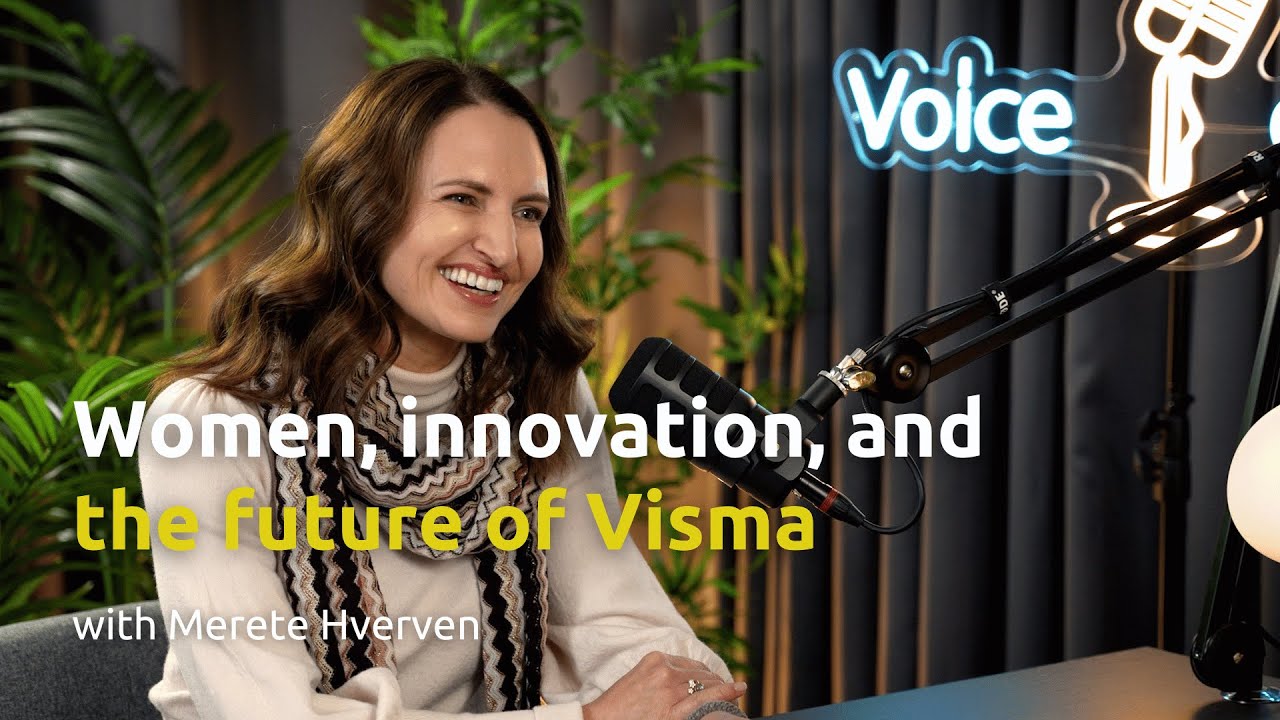
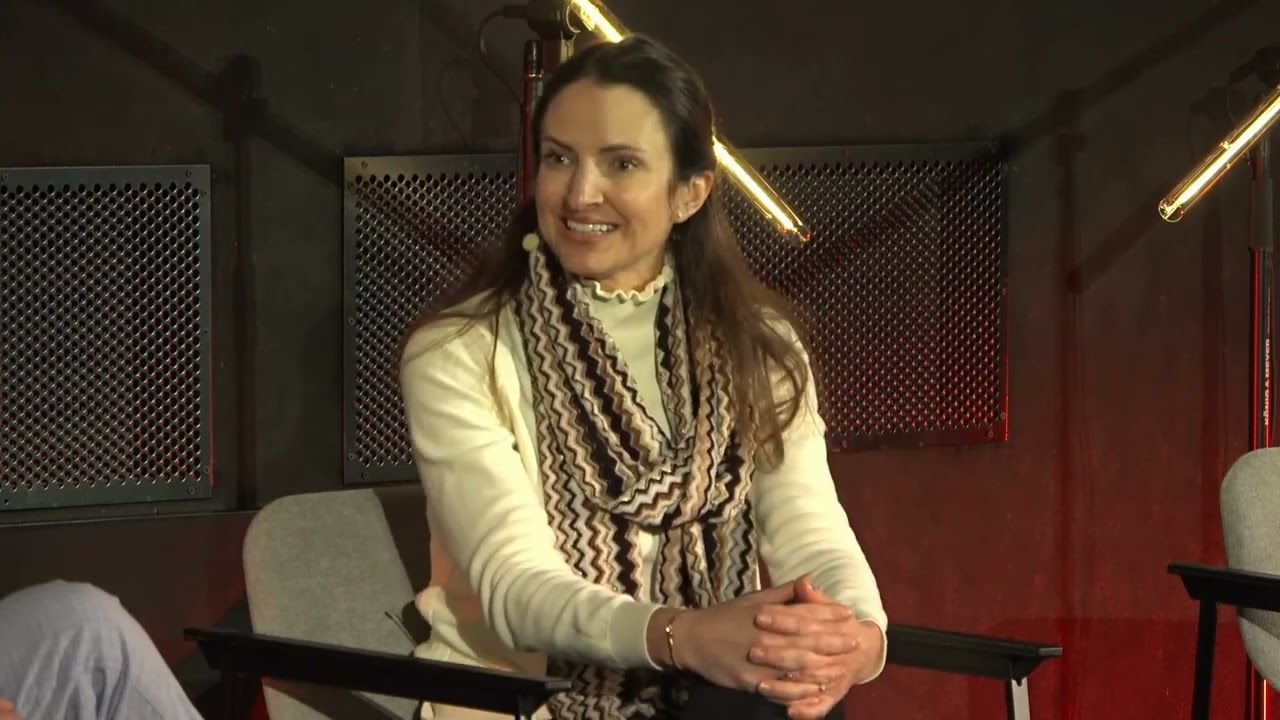
In this episode of the Voice of Visma podcast, host Juliette interviews Merete Hverven, CEO of Visma, about her personal background, career journey, and leadership philosophy. Merete shares how she moved from finance and consulting at Arthur Andersen and EY into HR and eventually the CEO role at Viska, highlighting her motivation to join the tech industry after experiencing the impact of software on daily work. She discusses Visma’s culture‑first acquisition strategy, emphasizing values alignment and the willingness to walk away from deals that don’t fit. The conversation turns to gender diversity, where Merete cites industry statistics, Visma’s above‑average female representation, and the benefits of diverse teams for innovation and decision‑making. She reflects on role models, the importance of authenticity, and offers advice for women entering tech leadership, encouraging imperfection and confidence. Merete outlines Visma’s growth opportunities—digitization, regulatory change, AI, cloud migration, and geo‑expansion across Europe and Latin America—while expressing excitement about maintaining an entrepreneurial culture. Finally, she shares personal insights on work‑life balance, prioritization, and how being a mother informs her CEO role, advocating for realistic expectations and leading by example. The interview provides a comprehensive view of Merete’s values, Visma’s strategic direction, and actionable guidance for women in technology.
Chapters
We're doing something that not a lot of companies are actually able to do. That excites me a lot.
Welcome to the Voice of Visma podcast, where the heartbeat of our community comes to life. Join us as we chat with Visma leaders and colleagues sharing their stories, industry insights, and valuable career lessons. Welcome back to The Voice of Visma podcast. My name is Juliette, and I am very excited to be your host this month as we shine a light on a couple of really incredible female leaders in Visma. Today, I have the pleasure of sitting down with Merete Hverven, who is our CEO. Merete, welcome to The Voice of Visma podcast.
Thank you very much.
And I'd love to get started by you just telling us a little bit about yourself.
A little bit about myself. So, starting with my kids, I think. I have 3 kids and 2 plus kids. So, when I'm not running around being the CEO in Visma, I'm quite busy with them, spending time with the family and my boyfriend. And then, if I look towards Visma, I usually say I have 6 kids. So, it's Visma and my 5 other kids. I've been in Visma now 12 and a half years. Wow. Prior to Visma, I was 10 years in EY and Arthur Andersen.
Okay.
So that's a little bit about me.
Nice. And there's a connection here I don't think even you know between us. So I know you were born in Texas, is that right?
That's right.
I'm actually from Texas.
Wow.
I live in Oslo now, obviously, but I just thought that was a very cool connection. It's very cool.
I was born in Houston.
I was— oh yeah. And I lived in Austin. So not too far.
Not too far.
Yeah. I just thought that was a very cool I agree. Yeah, yeah. And so for anyone who might not know your career story yet, could you give us a little bit of backstory on your career, you know, before Visma and then obviously your journey in Visma?
Yes. So I took 2 master's degrees, one in finance and one in international management. I think that says a lot about my drivers. I do love to create value and I love to create value through getting the best potential with the people around me. So, starting my career in Arthur Andersen as a financial management consultant.
Okay.
Then came the dissolution of Arthur Andersen, so that merged into EY. I spent time those years both being a financial management consultant, I worked as an analyst, I worked with mergers and acquisitions in Copenhagen. I actually did a little bit of auditing also in my time.
Okay.
But after the merge, or when we were planning the merge, they actually asked someone from the business to do an analysis of creating a combined culture in 2 actually quite sizable companies in Norway at that point in time, 2,000 employees on each part. And they asked me to do the analysis, and that was actually my route into working from a people perspective.
Okay, yeah.
So, many years back, I looked at value creation through making sure that we actually combine 2 quite different cultures and how to make that a success.
Yeah.
So, I spent time then as an HR director, started in Norway and then working also across in the Nordics, which then led to actually my path into Visma 12 and a half years ago. Started as an HR director. Now we say people, not HR. Yeah. In one of the divisions that we've actually divested. BPO, now known as Assets. After one year, I became the Chief HR Officer in the group, and then gradually working both with, naturally, people, HR, M&A, a lot of strategic topics. I became the Deputy CEO now 6 years ago.
Okay.
And then I became the CEO 4 and a half years ago. So, in general, Started as a CEO when society locked down in the beginning of COVID which was quite crazy.
Yeah, I can imagine that was probably a big challenge. I mean, just stepping into a CEO role, but then specifically that point in time.
Yes, I was really happy that I had been in Visma for quite a long time. So, I knew the business, I knew the people. But, of course, juggling being a mom, trying to be a teacher, and also driving this amazing company, all 3 at the same time, that was a bit challenging, but we pulled through together.
Yeah. And now, I mean, look at us now doing amazing things.
Yes, yes, it just keeps on rolling.
Yeah. So, I have a question. So, you moved from finance into the tech industry. What was it about the tech industry that kind of drew you towards it?
I've reflected a lot about it, and I think there are 2 things that drew me to tech back in the days. One was when I was working in EY, I did feel a large impact on how software and the software solutions that I was using in EY either made my day better or worse.
Yeah.
So, some of the software was amazing. It allowed me to focus on the tasks at hand, while other software was like, why am I filling in all of these things? Why do I have to click 10 million buttons before I actually get it to do anything?
Yeah.
So, feeling that impact in my work life drew me to tech because I want to be a place where I make an impact.
Yeah.
So, knowing that Visma works on simplifying and automating business software for our customers, that was definitely a draw into tech. I didn't know anything about it. I just knew the impact it had on my life.
Yeah.
And then what drew me to Visma, back in 2011, Visma was already at that point in time known in Norway, very well known in Norway and the Nordics. For being a massive success.
Okay.
Lots of acquisitions and still being a success. I had been a part of a merger of 2 large companies, and I definitely felt, whew, that was a large job. So, when the headhunter called, I was like, this company, tech and being able to acquire so many companies and actually making the financial results that they are.
Yeah.
I have to listen this one out.
Yeah. I mean, yeah, it combines your 2 favorite things.
Yes, it does. It does. That's amazing.
Yeah. That's quite an interesting way to get into, like, to find your passion, to work with software and be like, this really either makes or breaks my day.
Yes.
And I don't think people think about that a lot. I mean, in our line of work we do, but how impactful software can be. So that's very interesting.
Yes, yes.
So obviously being CEO is a very difficult job. I'm sure it has a lot of rewards. It's amazing. Amazing, challenging, all of that. Yes, yes. So I am curious, What gives you energy in your job as CEO?
Yeah. Well, I sort of talked previously about what drew me to Visma. So, why we're here and what we're working for, sort of automating and simplifying business software to make sure that our customers have a better work life. That brings enormous purpose into my life. But— One thing is what we do and why we're here. I would say actually even more importantly is who do you do it together with? So, working together with people in a culture where no one's perfect, we bring our best to the work every single day. Yeah. We're very different. We bring different perspectives. We try, we fail, we learn, we grow. love the culture that we have in Visma, and that brings enormous energy. So the ones I work with every day and the people in Visma, that's actually what really, really drives me.
Yeah, that's amazing. And you feel that at every level, I feel like. And one of the cool things about Visma is each company has its own culture, obviously. So how do you kind of make space for that where you have this kind of Visma culture, and then you have space for all the other companies to have their own little microculture?
Yeah, and that's a really good question. When we acquire new companies, we definitely look first and foremost outside in on what products are out in the market that fit our strategic positioning. But when we're looking into these companies, and they're typically startups who have been successful already, we love the growth stars, the leaders of tomorrow. When we do due diligence on these companies, we spend a lot of time on the people part. So, making sure that it's the people who have made this company a success. We want the founders, the people to stay put and continue the growth.
Yeah.
But in order for those to stay in place and be happy in Visma, the culture on both sides needs to resonate. There's lots of go-to-market freedom in Visma. But in general, I would say that the values, that's not something you— you can't say it's equivalent to clothing. It's not something you put on in the beginning of the day and then you take it off when you come home to put on something more comfortable.
Yeah.
You bring your values with you all the time. And in Visma overall, we say we're responsible, dedicated, we're inclusive and entrepreneurial. And yes, our 200 companies, they have different values. But all of them resonates with this. So we basically look for companies that fit this value proposition, that fit our culture, because with all the freedom, we need to have a transparent and trustworthy culture so I know what's going on. And that's really important.
Yeah, that makes sense to have that base, that shared set of values, like you said, to have that and then—
We walk away from deals if that doesn't resonate. Yeah.
Oh, actually? Wow.
Okay. 60% of the time we walk away if we see that the product or the tech isn't sort of what we need or it doesn't fit. But we can also walk away from a deal if we see that we want different things or if the culture doesn't resonate.
And speaking of values, kind of when we're thinking about the people that we work with, we want to have those shared values, but then when we think about the people that inspire us, they obviously share a lot of our same values as well. So I'm curious, are there people, specifically women maybe since we are in Women in Tech Month, that you've looked up to as role models throughout your career?
Definitely. I have several role models that I have looked up to, and if I were to sort of look at patterns at females that I have looked up to, I usually I usually say that people follow leaders.
Yeah.
They don't follow companies.
Yeah.
And then I think about what has made great leaders for me, because I've had my share experiences of both great leaders and maybe more undesirable leaders. Yeah. And the common field for the ones that have really, really become my role models are the ones that I have respected for their competence, But also liked for the people that they are. The ones that are true to themselves, the ones that celebrate success together with the people that were part of it, that don't take credit for others' success.
Yeah.
The ones that are close to the employees, not distant from them, being open, sharing who they are with their strengths, their weaknesses. So, one of the female leaders I had through my career in EY, she was very open, very clear on her strengths and her weaknesses. And it was so refreshing to see that a very impressive woman had come where she was and she was far from perfect.
Yeah.
That brings a lot of hope. to lots of other females, because a lot of the time we think we have to be perfect, but no one is. People love connection, not perfection. And I've seen several female leaders in my days that have been very close with respect to that.
Yeah, I love that. And I think in terms of specifically the tech industry, I think it's sometimes as women, we can kind of feel like we have to be, like you said, perfect and be very assertive and very, you know, Not, yeah, just kind of like what people expect almost. And so, it's nice to hear, you know, leaders just embrace imperfection, embrace clarity, embrace authenticity and vulnerability.
Yes.
We were talking in another episode about how some of the characteristics that women do bring to the table that are a little bit different than men, and like vulnerability is one of them. And so, I'm curious if there are any others that you can kind of think of that kind of women kind of bring to the table that balances out in terms of leadership?
Yeah, I think in general, both men and female, you can find all sorts.
Yeah.
But of course, there are different patterns.
Yeah.
That you can see in general in females. And I don't know if there are specific traits in addition to the ones you mentioned, but I would maybe rather put forward, you know, when you have a diverse group of people, gender diversity, it fosters more creativity, more innovation, better decision-making, better products. It's just mirroring actually our end customer. They are different. They have different needs. And if everyone in the room are similar, Yes, we might get to a result really quickly, but that's when I worry. So, when we sit in the top management team and there's no discussion, that's when I worry.
Yeah.
Because nothing is so easy that if we just, I don't know, come to a conclusion really quickly, I believe that there's something we've missed out.
Yeah.
So, making sure that the groups are diverse, both gender but definitely background, Yeah, there's lots of things to say about that.
Yeah.
I'm a true believer that that's important. And if we look at tech, I mean, tech is synonymous— being in the tech industry, it's synonymous or equivalent with innovation. But at the same time, we are so much lagging with respect to females in the industry.
Yeah.
Currently, I think the latest statistics I saw were like 25% in the business are females.
Oh, wow.
If you look at leadership, it's 11%.
Yeah.
In Visma, we're doing better than that. So, we're 40% females in the business. 19% are managing directors out of our 200 companies. So, we're better than the average, than the industry average. But there's so much more to be done. So, with this lack of diversity and gender diversity in tech, Still, we're very innovative. So think about what we can accomplish if we actually make a better gender diversity in the future.
Yeah, absolutely. That's exciting to think about. It is. Because the trend is going that way, and that's exciting to see.
It is.
So from a leadership perspective and innovation perspective for women in this industry, where do you kind of see the opportunities?
I would say the opportunities are endless. So, every time I'm in a meeting where we have a more diverse group, the outcome is much better.
Yeah.
I saw McKinsey also with the latest report that the probability of a successful company and financial results, they're 36% higher if you have gender diversity and diversity in the group. So, just, I would I would sort of challenge all the females out there, stating that you don't have to be perfect to enter into a leadership role or to work in tech. When females look at a job description, they often think that they have to know everything to actually apply for the job, while men, to a larger extent, it's like, I know 50%, I'll handle it.
Yeah.
Jump out there. Don't be so hard on yourself. We would love more views and a more diverse group. So just go for it.
That's really good advice. Yeah. Yeah. Amazing. So zooming out to the Visma business in general, just a little bit, just since we're looking towards the future.
Yes.
Where do you see the biggest opportunities for Visma as a business?
Wow, that's a really good question. And there are just so many opportunities. So, the biggest is a little bit difficult. Since we're zooming out, I would say, if you look at the world, it's continuously digitizing. Mm-hmm. New technology is coming our way more and more often, which is actually changing the work life of everyone, changing the life of everyone. You also see that the number of rules and regulations laws are increasing and there are differences between countries and differences between size of companies. All of these factors I'm mentioning are creating opportunities for Visma.
Yeah.
So, if I look inside our core markets where we're already sizable and have been growing quite a bit, if you just look at Nordics and Benelux, we're growing by more than 10%.
Yeah.
If you then look outside of the newest countries that we've entered into now, yeah, being in more than 30 countries, We're growing by more than 30%. Wow. So there's a massive amount of opportunities in our core markets because of digitization, new laws and regulations, and new tech. AI, how we can build new features for our customers. But then in the less mature countries that we've entered into, where still a lot of customers are moving from on-prem to cloud, us having more than 90% of our revenue in cloud, With the knowledge we have from Nordics and Benelux, using this knowledge to find the leaders of tomorrow, the opportunities are just massive.
Yeah, that's really exciting.
I think so too.
And in terms of like all these opportunities and, you know, we're expanding into new markets and constantly having new companies join us, what are you most excited about personally about the future for Visma?
For Visma?
Yeah.
I would say I'm very excited about our geo-expansion. I'm really excited to see that we're actually able to enter into new countries through acquiring amazing companies that are successful. Yeah. Keeping the entrepreneurs and seeing that growth actually is boosted. We're doing something. that not a lot of companies are actually able to do. That excites me a lot. And when we move into new countries and cultures, I'm very passionate about different kinds of cultures and how you can get the best of both worlds.
Yeah.
That's really exciting. We're going to learn, we're going to grow and adapt. And then I'm very excited about, even though we're becoming quite sizable, even though Stanford and Harvard are looking into Visma and how we're doing something that very few other businesses are actually able to do.
Yeah.
We're still staying very true to who we are, being entrepreneurial. No job too big, no job too small. We're now the largest entrepreneurial network in Europe. We're growing in Latin America. The sky is the limit. Or maybe not. Maybe it's not even the limit.
Yeah.
And still, our feet are well planted on the ground and we're very, very keen on just staying who we are, even though we're becoming sizable. That also excites me.
Yeah.
Yeah.
And as someone who works for Visma, that's also very exciting. Yeah. Good to hear. Yeah. So bringing it back a little bit to you personally and like your philosophy, is there any piece of advice that you kind of learned Early in your career that has just like really stuck with you and informed how you show up as a leader.
Yes, I think I have to go back to when I took my first maternity leave. I remember at that point in time I was in EY, and at that point in time one of the partners said, "Merete, today you're used to." sitting at work, finalising everything, delivering 100% before you go home every single day.
Yeah.
When you come back, you will have to go home to your kid.
Yeah.
There has become something, you've gotten something in your life which is more important than work, which are naturally, it's the family, it's the kids. So you have to get ready to not deliver 100% all the time. To go home before you actually finalize work, you have to be really tough on prioritization and figuring out what's good enough. And I can promise you, it will be good enough for us. You need to find a way for that to be good enough for you. So, 80% is more than enough a lot of the times. We might be the ones that are challenging ourselves the most.
Yeah.
So, not being so hard on yourself, And just lowering sort of the expectations and figuring out what's good enough. Sometimes 50% is good enough. Sometimes it needs to be 100%.
Yeah.
But just really making sure that you're prioritizing right so that you're the best version of yourself at home and at work. That was food for thought for me.
That's really good advice. Really, really good advice. And I remember there was another interview That you did for— it was where you were talking about being— you can't be a good CEO unless you're a good mom. Is that kind of the same idea in terms of prioritizing and knowing where to put your energy?
Yes. Yes, you can't. I wouldn't be a good mom if I wasn't sort of a good CEO and the other way around, because I get a lot of energy from being the CEO in Visma and I get a lot of energy from feeling that I actually am able to be a CEO and still put my kids first. So, it's doable. We just need to be quite rough with regards to prioritization.
Yeah, absolutely. And how do you feel we do in Visma, just from your perspective, in terms of that balance, finding that balance, you know, where people have their work life and then their home life? Do you think we do a pretty good job?
Yeah, I do. I do. We talk about it a lot. And one thing is talk, but I think it's really important that all of the leaders, actually showcase it. So, often I don't get to work before 8:30 or I leave at 3:30 because I want the breakfast with the kids. I want my 9-year-old to sort of have a nice time before she goes to school. And talking about that and being clear to all the employees, not just saying, make sure that you take care of your work-life balance, but also having leaders that do that, I think that makes all the difference in the world. So, I do believe that we're quite good with respect to that. Can we do better? Of course, we can probably always
do
better.
Always. Always. Yeah, yeah, yeah, yeah. No, I agree. And you see that with the leadership, and obviously it comes from the top down, which is very important.
Well, thank you.
Yeah. Well, I think that's all for today. This was a really great discussion. I really appreciate you taking the time to sit with us and to let us get to know you a little bit more. And I think we are walking away with some really good advice, especially for women in this industry. So I really appreciate you being a part of this.
Thank you for having me.
And for everyone who is listening at home, thank you so much for joining us again. As a reminder, you can find us anywhere you listen to podcasts and also on YouTube. Join us again next month for a new group of hosts and guests, and we'll see you then.
More from Merete

Merete Hverven and Mark Schneider | Panel discussion | Investment Conference 2025
Merete Hverven - Visma | Investment Conference 2025 | Norges Bank Investment Management


AllemaalDigitaal Special: The Future of Accounting: Visma's Vision with Merete Hverven