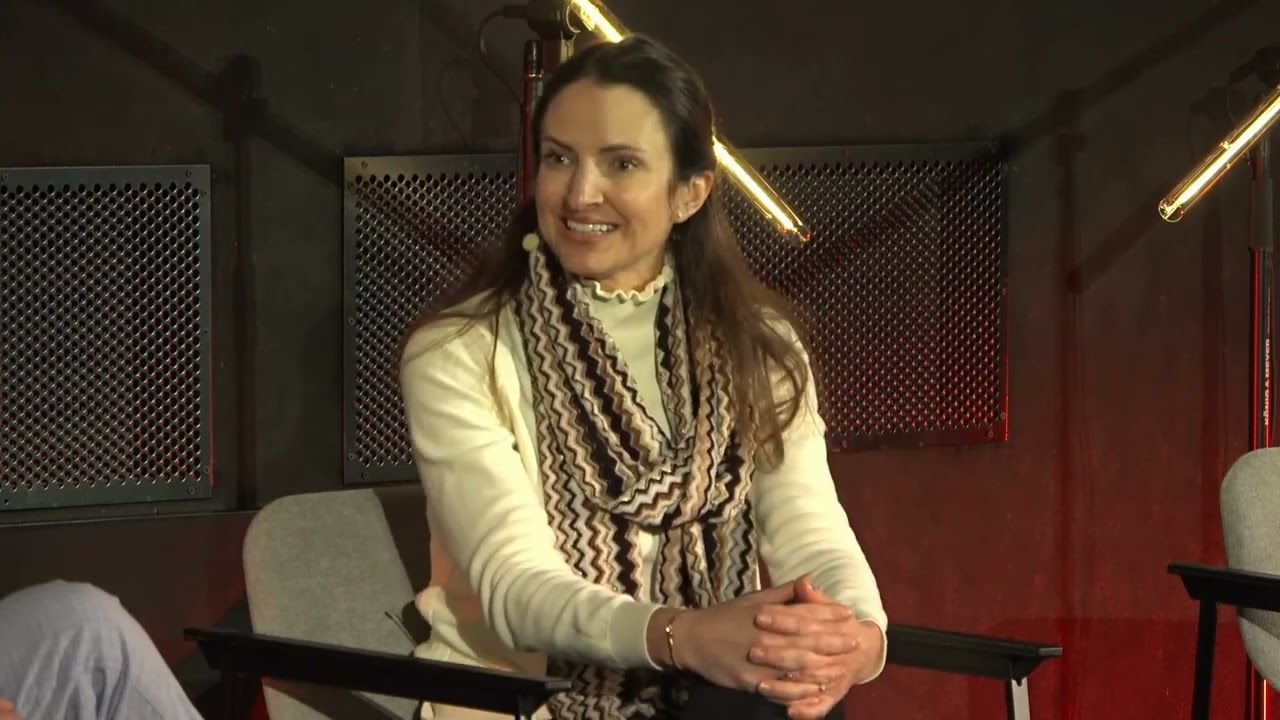
Merete Hverven and Mark Schneider | Panel discussion | Investment Conference 2025

Merete Hverven, CEO of Visma, and Mark Schneider, former CEO of Nestlé and Fresenius, discuss how people and culture drive organizational success. Visma raised female applicants to 50% through data-driven recruitment and female leadership to 36.5%. Both leaders stress that diversity improves decision-making, and they share how decentralized decision-making during COVID kept employees safe and customers supported.
Chapters
Thank you. I feel very fortunate to be able to moderate a panel after having heard both of you. As you know, we had questions in advance, but I have so many more questions now that I've heard both of your remarks. And I actually want to start with something that was a theme through both of your comments, and that is around the people. Merete, I'll start with you because I find it interesting that prior to becoming the sole CEO, you had a career in HR, or That's not typically a job that is promoted into the CEO role. Tell us a little bit about what you learned about leadership by leading the human resources function.
Well, I know it's a little bit of an odd way to enter in as a CEO. And stepping back, it was previously talked about, you talked about Enron. I was working in Arthur Andersen at the time. I was a financial management consultant, and it led to the dissolution of Andersen. And in Norway, at that point in time, we were merged with EY. We were approximately 2,000 people in EY, 2,000 people in Arthur Andersen, and everyone thought that this merger was going to be great and simple because the 2 companies, they provided the same services. And I was asked to analyze and to get the possibility actually to merge these 2 and co-locate 26 offices. And during that time, I did the math afterwards, some of the co-locations were great, some of them were not so great, and the pattern was this: where we had great leadership, where they were able to come together from a cultural perspective, because at that point in time the culture was quite different in these 2 great companies, but it was different and sticky. Where they were able to work together, that actually worked, and we got financial great performance. Where they weren't, we had a struggle. So that actually made me want to move over to working with HR, and since then, also during my studies, I studied psychology, I've done coaching, and I'm very passionate about the area. So, I usually say that winning in most businesses is more about having the right people than anything else. I feel lucky that I have been able to actually see how performance is so tightly linked to leadership, and I learn something new with respect to leadership every single day. So as long as you're able to sort of speak of these warm words culture and actually operationalize it in the way that we have in Visma, it runs really nicely, yeah.
Thank you. So, Mark, I wanna pick up on what you ended on, and that is what the insights that you've had around the role of diversity and inclusion in the workforce. And as you also alluded to, certainly in the United States, that's something that is under tremendous pressure at the moment. But I'm wondering, given your journey, your leadership journey now across multiple companies, 21 years as a CEO, how did you come to identify that engaging and finding ways to build a culture around a diverse community was so central to the success of the companies that you've run?
Look, I think like most leaders in most corporations, it happens step by step because those 20 years with a lot of company, a lot has changed. And when I compare, you know, today's executive leadership team, whether it's Nestlé, Fresenius, or any other large company I'm aware of, to what it was like 20, 25 years ago. It's certainly a lot more diverse. It represents the globe in much better ways. There's better gender representation. And I found that in addition to bringing these different perspectives to the table, the tone of the table also changed. It's no longer just about ramming something through and trying to bulldoze, you know, other arguments. It's about a true competition of ideas. And also frankly most of the time a more civilized debate. And so when you see that and when you see better decisions, better results coming out of that, over time step by step you become a true believer. I do want to highlight nonetheless and this is important to me, I mean we were doing 2 things, all of us over those years. One is we were correcting historic wrongs. Let's not lose sight of that. Diversity inclusion is not a business tool only. Okay, it delivers results. It's one of these perfect cases of doing well and doing good at the same time, and that's important to me because let's not belittle it to just being a strategy.
Thank you for sharing that. Merete, I know that part of what's important to you around the diversity space is women, and you talk about the role of— or your desire to ensure that women are actively engaged in the work at Visma and other places. Tell us more about why that has been important to you and how you've seen it evolve.
Well, specifically, I think it's the most important part of diversity. You mentioned it very well, Mark. And it's really important to increase the talent pool. And what we have experienced, especially in tech, and especially when you acquire a lot of amazing companies, in general, the entrepreneurs, there are very few female entrepreneurs. I unfortunately can hardly remember many companies that we have acquired where the females were entrepreneurs. And I think that also is maybe on average a gender difference, that men are more risk-takers. If I look at the portfolio of all the companies we have, as the companies grow and become more sizable and more structured, we have more females coming in and actually professionalizing to a larger extent. There's lots of— I'm just trying to sort of average it out. But for me, it's been extremely important to increase the talent pool. It's been interesting to see how you need to tailor ads and how you approach females versus males, because we have different preferences. We have always these past years been spending a lot of time making sure that we if we believe that they should actually apply for a job, because on average, a lot of males can look at a description and say, I know 50%, I'll go for it, while the females go, I know 90%, I'm not going to apply. So actively pinpointing to get more people and a more diverse group in the process, that has had a really good result, and now we're actually at 50% female applicants. That's great. 36.5% of female leadership in Visma.
Could I just build on that? That meshes incredibly well with my experience. So the number of times I was actively motivating, encouraging women to take a promotion where they felt they weren't ready, I've never heard that from a man. And so clearly there's something here that, you know, you actively have to kind of push for and work for to make it happen.
That same dynamic happens in the MBA classroom as well. I see that quite regularly. So one of the outcomes of a diverse workforce is innovation. There's plenty of research that says that the more diversity you have in the decision-making and the idea generation, the more innovative, the more creative outcomes will result. But at the same time, when you have that diversity, it's because there are differences in how people approach the world that it can become contentious or challenging. It can take longer. How do you balance the benefit of the great outcome from a diverse environment vis-à-vis the tension that is oftentimes created when you have people from disparate perspectives.
Erika, at the risk of twisting it slightly, when it comes to innovation, I mean, obviously no one here in the room would disagree it's a positive thing. Everyone loves innovation. The moment of truth is when it goes wrong. Okay, because every time you try something new, there is a certain risk depending on what you're endeavoring to do that it may fail. And then what at that moment? And that separates, in my opinion, the Sunday pep talk— we all love innovation— from walking the talk. So if someone with the best of intentions, no matter whether this is a diverse leadership team or not, whether some— if someone with the best of intentions has been trying to advance the organization, has been trying new things, Product innovation, R&D, whatever, a new marketing campaign, and it falls flat. How do you handle that situation? It's usually bad news. It's usually something that, you know, becomes visible. You may have announced the product. You may lose market share. You may not meet your quarterly results. But nonetheless, I mean, those are the moments where all these good attributes about culture and, you know, integrity and being supportive and all of that, That's what's being put to a test. And if you then treat it like the world is coming to an end, people will basically go back to their old behaviors. And this is what I talked about earlier, like moving away from the accountability, like it's someone else's problem.
Would you like to add anything to that?
Well, in Visma, we have a difference between experiments and projects. And I would say that projects are typically me delivering on the budget. That's something that we can't miss. But underneath the hood, we can do a lot of experiments. And I agree that it's how you respond and how you drive the business in actually figuring out that experiments are great. And we even experiment on acquiring companies. Sometimes that goes wrong as well, and then it's more about what now, how to react. 'Cause when things go wrong, if you finger point and don't focus on, okay, it's gone wrong, what do we do now, what can we learn from this, then we will continue to innovate and experiment. So I think it's a balancing act, and it's not a simple one. When it comes to your question on speed versus sort of experimenting, I think it's important to, depending on the line of business naturally, But we have a lot of pilots going on, and instead of making everything perfect, we let several customers try the pilots, and we get the feedback, and then we fail fast. So in general, when we have experiments, we know that we have succeeded when we know if it's a success or a failure, instead of waiting to the perfect launch, and then suddenly things go wrong, because then you actually become more resilient, and you're able to do all these experiments at once without this huge process that actually underpins the results.
So I want to pick up on this concept because you both represent different types of firms. Visma is relatively new, it's still in hypergrowth mode, etc. You spent many years at Nestlé, which is a stable, longstanding company. What— in Nestlé, over the time that you were there, what have you seen as some of the biggest challenges? So I spoke about crises, and What were some of the big tumultuous events that you had to navigate when you were at, at Nestlé?
Well, obviously a good one to talk about in general that touched all companies was how were you dealing with a once-in-a-century event like COVID? And good example of the power of decentralization, because there was no way from one place on earth to try to manage that situation. There's a few things that, you know, you can give out as principles, like, you know, you trust that people will follow those principles. But all the laws locally were different and the timelines were different. And then you really— I mean, this is one of those moments where, in my opinion, culture is shown because you handle your own situation, in our case Switzerland, where the company is based, and then you try to place some of these principles in the organization, but then you have to trust that in 197 countries people will make it happen. One of the events I literally remember from late 2020, the first time we were with all 197 back together on a video, I wanted to talk about the next stage of the crisis, and I noticed everyone was talking about that year. and what it meant to them. And I was getting a little impatient and one of my dear colleagues, he was sort of tugging me on the shirt and saying, let them talk, they need to talk. I mean, they did something really, really amazing and that is adjust to this once in a century crisis with flying colors. They need to— everyone have their traumatic experience, they need to talk and then we'll transition to, you know, what are we doing in 2021? But this is one of those where clearly in a broad, based global corporation, if you're trying to handle this from one place, you'll fail. And this is where culture takes over.
Absolutely. So if I have my timing correct, you started at Visma in 2020.
The CEO, 2020. I started in Visma in 2011. Yes. But I started as CEO in
2020
when society locked down.
Right. So I wanted to have you talk about your experience as a leader coming into an environment— you'd been there, so you, you had relationships, you knew the company, but you were coming into the prominent leadership role at the time when the world was being turned upside down because of the pandemic. Walk us through how you observed culture helping Visma navigate that time period and what role you played as a leader in that.
Well, it was definitely special times. I think all of us experienced that people need to connect, they need to meet up, and that was close to impossible in that time. So I spent a lot of time having meetings virtually, naturally, speaking to the whole organization, speaking to the different leadership, having tailored meetings to the different countries where we were in, because there were different challenges depending on where you were. We have some of our companies that were sort of more scared than others because people were pulling out, of some of the countries. So it's— I think the most important thing I did was communicate, communicate, communicate. Make sure that our employees felt safe, that we would continue, that we would do our business as we always had done, being the safe haven. And in addition, taking care of our local communities and our customers. And we had been working virtually a long time, naturally a tech business. But our customers, so many of them, they weren't used to this. So it was an immense pressure on the employees and trying to figure out, of course, making sure that especially customer support, they were so heavily loaded with work, trying to find these small openings, making sure that we have walk and talk with people that live close to one another. We have mentors coming around. We did a lot of operational things, just being very close to the organization, speaking to people, speaking to a lot of people, speaking to the talents. And in general, I guess you can say in a time like that, either the culture comes together or it sort of falls apart. And luckily for our sake, we really came together. I'm really proud of what we accomplished, but I'm so proud of what society accomplished in such an immense shift.
Yeah. One of the things that I teach in business schools is culture and what that actually means and where it comes from. And Christian mentioned culture eats strategy for breakfast, which is something that we've all heard. But we don't often pay attention to how culture is truly developed. And one of the things that we explore with our students is that culture is a component of 3 different things. It's sort of understanding the environment or the context that your company, your organization is in. It is the leadership and the values that are propagated by the leader in that company. And it's about the strategy or the processes or the policies that exist. And culture, a strong culture, is created when all 3 of those things are in alignment. When the environmental context that your firm is operating in is aligned with the leadership values, which is aligned with the strategy and the policies that are put in place. And that's when you create a strong culture. And that's what leads to results. Have you experienced or seen times when there was a breakdown in the alignment of those 3 areas that led to challenges that you faced with keeping the culture together?
I have to say I haven't. So going back to when I became the CEO, 2020, society locked down, and I think from 2020 up until now, it's been one extreme after the other, I have to say. And every time we have been able to come together and work together, but it does take a lot of time making sure that you just actively communicate and make sure that people understand. Not everyone needs to agree all the time. Everyone has a voice, but not everyone has a vote. But just explaining where we are, keeping calm, thoughtfully prepared and ready to act, and making sure that people understand why we do what we do. I haven't had that opportunity, luckily, I have to say. But maybe you have, because you have been CEO longer than me.
It's been longer, but look, I also haven't witnessed that complete meltdown. Do keep in mind, I agree, the consistency is important. To bring all of these 3 dimensions in alignment is not something that happens on one day on a drawing board. It's something that you kind of move over time and then hopefully it stays close to each other. And the minute something pries loose, it's usually because of some sort of change in the environment. Something's changing in your industry, something's changing among your people. Something that really kind of brings it into a state of imbalance. And I think it is important then to react early to that before it disintegrates. So it's one of those where first you might just hear a little noise and then all of a sudden goes poof. And so it's important to recognize that early and do something about it because afterwards it takes a long time to put it back together again.
Absolutely. We have just a couple minutes left and I want to ask a question for each of you. And that is, as you reflect on your own leadership journey, were there or has there been a pivotal experience for you that really was a demarcation in terms of being a transformation to how you thought and act as a leader?
Do you want to go first?
Yeah. So look, when you mentioned micromanagement earlier and talking about Nicolai, that kind of rang a bell with me. And it was a situation about 20, 21 years ago. It was my first year as CEO at Fresenius and things were going incredibly well. I was very proud of how things were going. I had a fantastic relationship with the chairman who was very supportive and gave me all the support and advice and coaching I needed. And at one point after a board meeting, he took me aside and basically saying, look, I couldn't be happier as a chair with you as a CEO. You're hardworking, you're transparent, you're on top of the facts. I'm not sure I would want to be one of the people working for you. Okay, nice to hear that from you, Chairman. The way he shoehorned it in, he was absolutely spot on because— and this was not out of bad intentions— when you get promoted to a job like this, age 37, you don't want to fail. You're working hard and you're basically trying to assure everything works just And in that process, unfortunately, you become too prescriptive for the next people working for you. So it's not out of bad intentions. I don't think generally for the rest of my career I was a micromanager. It needed that nudge, and he had a point. And I remember that was probably the best cup of coffee in business I ever had. I don't remember what brand of coffee it was, but the advice I got was super, super helpful. And as a result of that, over the years, You know, as long as I'm convinced that people are pulling in the same direction, let them figure it out in their ways. And, you know, they will take the pride in it. It'll create more allegiance to the business on their side. And as you mentioned earlier, I think, you know, that pride for— as a leader, of them finding ways that you weren't aware of, you know, that's something wonderful. No one has it all the time right. Absolutely.
Anything for you, Merete?
Very quickly, I think my most learning experience was I hired a managing director back in the days. He had been a CEO of another company. He had the whole strategy planned out. He was amazing on all aspects. But when he joined, he made all the right decisions, but he wasn't able to get the people along for the ride. So I had to fire that person one year later. And for me, that was a very important learning experience. As a managing director, as a leader, you have to make decisions with speed and conviction, but if you don't get the people along for the ride, you're out of a job.
Well said. Thank you both very much.
More from Merete
Merete Hverven - Visma | Investment Conference 2025 | Norges Bank Investment Management

Ep 14: Women, innovation, and the future of Visma with Merete Hverven | Voice of Visma

AllemaalDigitaal Special: The Future of Accounting: Visma's Vision with Merete Hverven