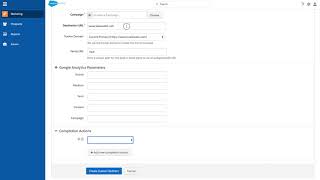
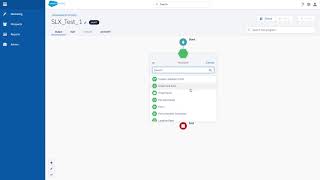
Automate Salesforce for More Revenue (Without New Tools or Headcount)

Milton Antony shows how to automate Salesforce without hiring or buying new tools. Companies earning $10M+ annually lose about $2.6M in revenue due to inefficient processes. He walks through ROI frameworks, real case studies, and a rollout checklist using native Salesforce tools like Marketing Cloud and Account Engagement.
Chapters
Organization Sales Lab X is based off of Austin, Texas, and we are certified Salesforce partners, so we work very closely with them. We have a subscription service where we provide users, our subscribers, with access to Salesforce strategists, Marketing Cloud strategists, part of account engagement, designers, coders, all those kind of fancy resources. Where we're a little different from others in our space is we don't do hourly or project-based work. We think that's the wrong incentive when it comes to automating Salesforce and getting more out of it. So we actually have an all-you-can-consume subscription model where you pay one flat fee every month. You're not in presenter mode yet. Oh yeah, thank you. I guess I should. I just get very— I like to see the next slide, but let me go ahead and do it. You're right. Let's do it. Let's do full mode. Thank you. Here we go. But yeah, so because of that, at any given moment, we're actively managing tens of millions of prospects around the world. And so we have a huge dataset of what is working in the Salesforce space, what is not, what you should be doing, what you should not be doing, et cetera. Our North Star, we're a little different from others in our space, is that our North Star is not just getting something done or executed, it's revenue attribution. So to date, we have generated over $100 million in attribution to our subscribers. That's really awesome. And if you are in the marketing or Salesforce space, you know that the number is impressive, but what is almost as impressive is the fact that we can track it for all of those subscribers. So that is really cool too. Today we're going to be talking about automation in Salesforce, and we're gonna talk about how and when to automate, what, in order to get more revenue out of Salesforce. I really like this to be a dynamic conversation. If you have any questions or if I say something that doesn't really match what you've been doing or you've been seeing, feel free to ask that in the chat on the right-hand side. And even if I don't address it immediately, I will get back to it. A lot of what I'm going to try to explain is very specific for a lot of different Salesforce instances and a lot of different markets and industries. I will try to boil that down as much as I can for, for a wide audience to consume, but just know that there's a lot of nuance. If you do want more nuanced conversation about how you can apply this to your specific instance, you can set up a one-on-one with me, complimentary. They call it a roadmap, and then I can look at your instance and we can talk about that too. Okay. But feel free to ask any questions that you have in the chat as we go through. Okay, so let's go ahead and get started. So let's start with the ground rules here of what we're trying to solve. I call it the $2 million question, and that's because most studies out there and the, and the data that we've seen is that most organizations are losing about 26% of their annual revenue due to process inefficiencies. And if you are an organization that is doing $10 million or more in revenue per year, then you could be losing about $2.6 million annually in revenue because of your ability to leverage the data in Salesforce and the automation possibilities correctly. I researched each one of these stats because I hate numbers that don't make any sense. So if it doesn't match with what you think in your head, feel free to say that in the chat there. Yeah, I call that the $2 million question. And how do we solve that? Now, what's really interesting is that we are really into data. We're really into automation. And we're really into AI now, or human-in-the-loop AI. And the one thing that we've seen, as far as we can remember, the one trend is that the more you automate, And the more you use AI, the more you use data, either you can grow a lot faster and efficiently, or you can get lost a lot faster and more efficiently. What I'm gonna talk about today is what are the opportunities for improvement in your instance, in your Salesforce instance, and also what are the things you don't want to automate? What are the conversion tankers? What are the things that are gonna destroy your conversion rate? If you try to automate. And how this automation and data integrity issues show up in your instance that are driving to this $2 million loss in revenue every year is some of these bullet points right here. One is manual follow-ups. So when marketing gets really good at marketing, what inevitably happens next is that sales either doesn't follow up on all those leads or doesn't follow up with them with the efficacy that they need to in order to really leverage that increase in lead volume. So those manual follow-ups, that creates a bottleneck. When somebody is qualified and we're really data-driven or data-informed, and in this instance the data and what sales reps have probably been telling you for years or decades does line up pretty well, which is there are different levels of qualification for prospects, leads, and contacts. When a sales rep says, "That's not a good lead," or, "I don't wanna follow up with it," now if they've missed their number 2 quarters in a row, maybe you should take that with a grain of salt. But in general, there are leads that you should be following up with a lot more manually and you should be following up quicker on. If you're not able to parse those two out, it leads to fatigue on your sales rep where they don't follow up on the good ones. The second thing is that as AI and automation and data has picked up, what hasn't caught up is the type of activities and tasks that humans are doing, sales reps and marketing resources, so that they are spending still a lot of their time on tasks that should be automated. So they don't have the cognitive bandwidth to spend more time and deeper time on the strategic activities that now matter much more than ever. And the result from that is millions of revenue loss across the board, across multiple industries and fields. If you have any questions, feel free to ask. Our solution to that, that we'll go over today, is the Sales Lab X growth framework. So basically what, and this is the same thing I want, we're gonna talk about today and what I want you to apply in your own organization. First is that we need to think about what is the strategic path or the infrastructure we need to build out in order to get a feedback loop. Then how do we create transactional actions that give you feedback on that? And I'll give you examples here in a second so it's not so vague. And then building positive ROI automations based off of those two items. So the idea is that you don't create automation that you just create, set, and forget. You set it, you create infrastructure where you can track that, and then you analyze and then you update it. And then you do more of what is working and less of what is not working using the data as a feedback loop. Cool. Let's keep going through here. This is a couple of high-level items that I use a lot of times when I go into an organization and I think about whether we should automate something or not. The number one rule I always tell the accounts that I'm on is that just because you can automate something doesn't mean you should automate something. The people that I help, they have Sales Lab X subscriptions, and what that offers them is unlimited automation capability, meaning that those things that they thought were really hard and cumbersome to automate previously, with a subscription from us, they can automate without thinking about. And so what that leads to a lot of times is over-automation. So the first thing we want to think through is, Now that we can automate anything that we want, should we automate it or not? So these are the questions that I go through, which is 1, does the touchpoint require human judgment for context? 2, if you are trying to personalize, does that automation improve or hurt personalization? 3, can we measure the conversion differential with automating and collecting data on this versus not? And then what is the true infrastructure cost of automating this? Because everything is a cost-benefit analysis when you talk about automation. Now I would love to hear some of the things y'all try to automate in the chat, and if it did work and did not work, if you have any ideas of what you want to automate, and if you want to get my gut check on if you should automate it or not. But let me give you some examples of this.. And we can, we can go through that too. So you'll have some real life examples to how to do this. Okay. So this is my high level ROI decision tree, and I'll give you those examples of how we check for this. First is before I automate something, do I have visibility to the impact of that activity without automating? Okay? So for us, we believe in if you have a form on your website and somebody fills out that form, somebody from your organization, either automated or human, should reply within 5 minutes on any single form submission. That's a belief that we have. If I go to your website and I fill out your form and you don't have an auto-reply and that auto-reply isn't customized to the data that I collected on, that you collected on that form, if I'm a sales rep for Sales Lab X, I want to address that in my initial follow-up. So if I am a sales rep here, I would want to go to your website I would want to fill out your form and I would wanna see if I have an automated follow-up based off of the information that I gave you. And then when I reach out to you, I want to address that specifically. Now what I wanna do is I wanna see, does that first email from the sales rep, when they go and they research that and they send out an email, that is customized to if you are doing that or not, does it increase conversion rates or not? If you can— if you do measure that manually and you see there is a lift in conversion rate of doing that research and personalizing, then you are allowed to go and automate that. Okay, so do you have visibility to that? Do you have a group of sales reps that you are assigning tasks to that require the first touch to be personalized based off of something they know about that organization? And you have a second sample of sales reps that are automatically having an email go out, and are you comparing the conversion rate of both of those? If you don't, before we even go through level 2, level 3, and if you even automate it, you should pause and figure out how to do that. If you have an example of a test like that you've been trying to do that you need advice on how to execute on, let me know. The really cool thing about these enterprise tools like Salesforce is that you can basically accomplish anything that you want as long as you put the order together correctly. One of the foundational elements to run a test like this is Salesforce Campaign and Marketing Cloud or Account Engagement automations. So for example, if you want to do that test that I just talked about between two different sales reps, what you would do is that you would create an automation on your form in Marketing Cloud or Account Engagement, and you would tie them to two separate campaigns in Salesforce. In those campaigns in Salesforce, you would have automated tasks that are created. For the control group, that task would require them to send out a manual email. For the automated group, that first email is gonna be an automated email coming from the sales rep with the email signature of the sales rep and the headshot, so you have one control sample size there. And then you're going to look at those campaign members on both of those, and you're gonna look at the revenue attribution of conversion rate 90 days after doing that test. And you want to see that level of personalization is worth— that personalization is now giving you a revenue uplift that is worth automating on. Cool? Now the second thing is if that does exist and you found that there is a— you do have the visibility and you can track the delta and there is some level of delta or difference between those two. Then what you want to do is you want to do an ROI qualification. So ROI is not just that, hey, I know that personalization is better than non-personalization. Okay? You want to look at what is the process frequency. If you are getting 5 people every month filling out that form, is that really worth optimizing or automating first before you have higher-level opportunities to capture. So how often are you using— how often are you doing that? The second is how many team members involved in order to do that? Here's the funny thing that we've realized, first going through the whole big data bubble, then through the automation bubble, and then now through the AI bubble. When you have multiple departments or multiple areas of competency that have to be involved in order to do something, there is inherent inefficiency no matter how much automation, AI, and data that you use. For example, if you have webinars that you launch on a regular basis or you produce content on a regular basis, if that content has to go through content approval through legal, or you have somebody writing that content, or you have somebody who is QAing that content, someone else who is designing that content, if you have someone else who is publishing that content on your website or working with your advertisers to publish that, or if that's you doing all of that, there's inherent inefficiency in those steps. For example, if you are trying to do some sort of account-based sales model, if your sales reps basically have whales. Hey Milton Antony Antony Antony, I have some of these accounts that I have really long sales cycles on, but they're large contract value sizes. And it would be really awesome if I could have a landing page with the logo of the potential customer and the headshot of the sales reps that's assigned to them. That would be awesome. Now think about the level of work cross-departmentally that's required to do that. Design, copy, dev, Salesforce, account engagement. That is a prime example of something that probably has a lot of impact, but takes a lot of effort in order to create that type of content. Creating automation that dynamically changes the logo of the prospect based off of their email address URL is a huge ROI efficiency gain there. Changing the headshot of the, of the sales rep based off of the assigned lead or contact or account owner in Salesforce is a huge efficiency gain there.? And then think about the time investment that's required in order to do that. I need some questions, so y'all need to put them in the chat. And the third level is conversion impact. We'll talk about some examples here and some case studies that I built here quickly. But what is the impact of conversion? I'll talk about the toggle switch test right here in a second. Dynamic personalization opportunities, we talked about that. And we talked about human-in-the-loop requirements.. So this is especially true with any sort of AI enrichment tools that you're using right now. So one of the benefits for Sales Lab X is that we're vendor agnostic, meaning that yes, we are huge Salesforce partners that work with Pardot Account Engagement, Marketing Cloud, and of course Salesforce. But now we have Salesforce, we have HubSpot prospects, we have prospects that use Outreach.io that use SalesLoft, that use Formstack, that use, what's the big data enrichment tool everybody used to use? But anyway, LeadIQ, all of these different tools. So you can personalize using a lot of these tools, but all of them have some sort of failure rate. Okay, so that example that I used where the sales rep has to go research on the form, on the prospect's website if they have an auto-reply. We built an automation to do that and update the Salesforce leader contact record in order to tell the sales rep if somebody has that automation set up or not. But there is edge cases where the sales rep has to go there and validate or not. So that's what we call human in the loop. We have a, with a lot of organizations, We have AI scrapers that we built that basically will go to the prospect's website and try to understand who their target audience is and give them a suggestion on what their first email should be. We don't want to automate that first email. We want to deliver that research content to the sales rep to choose whether they use that or not. That's called human in the loop. So we wanna track for those items too. If y'all don't ask questions, I'm just gonna zoom through this. Okay, now they had a different word here I removed 'cause I don't like the word killers, but what are the things that we don't want to automate? Okay, do you employ SMS message? How do you deal with these? Okay, awesome. Thank you, Mark. So Mark's talking about SMS. Which is really awesome, and then maybe, and then some compliance around that. Okay. We'll chat about that. I really appreciate that. Thanks for the question. Makes a lot of sense. So let's talk about, actually, let me stay right there for a second, just to encourage more questions. Mark's asking a good question, which is SMS and how do you deal with compliance around that? One, we're not allowed to give compliance or legal advice, so I'm not going to address compliance and legal advice. I can talk about best practice when it comes to things like that. And Mark, if you wanna have a one-on-one where we can dig deeper into that, that, we can talk about that too. I am a huge fan of multichannel. Huge fan. So Mark's asking about SMS. If you're using something like Marketing Cloud or even Account Engagement, there's a lot of tools that tie in directly with that, and SMS works really well. Okay? And what works— why multichannel and especially SMS on the— B2C and the B2B side work well. And on the B2B side, LinkedIn outreaches, phone calls, one-to-one personal emails, retargeting ads. Why these work really well is that you're trying to create this echo chamber around the prospect where they feel like they've been hearing about you from everywhere. When you use one channel like email or just landing pages or just ads, what you're doing is you're creating this cognitive fatigue with the user. And they're like, I hear about you every time I go to your email. But you're not doing this multichannel approach. So I love SMS, and the key to doing multichannel, especially SMS, is personalizing across all layers. So something I do with a lot of my accounts is that when a sales rep or, we also do a lot of EDUs, higher ed, colleges, and nonprofits. If you talk to somebody on the phone, a prospect, there are a lot of tools out there that capture transcripts. And one of our favorite things to do is do an automation that takes that transcript from that initial conversation and update fields in Salesforce based off of that. Okay, so one of the big things that we solve for at Sales Lab X is either data visibility So, oh man Milton, we have a lot of duplicates. We have things that are named the wrong thing. We have sales reps that are not using the things they're supposed to, which is adoption. We can't build awesome conversion optimized journeys, which is content. How do we capture that information? And then second, how do we tailor our outreach based off of that? So we have toggles in Salesforce that get updated based off that information. And then we can use that personalization in either SMS, LinkedIn outreaches, plain text emails, retargeting ads. And as far as— so I love multithreading and I love creating that echo chamber. As far as your specific question on compliance, Mark, the big generic best practices that I can give you is centralized place of truth. Okay? The fines are gonna get higher and higher. If you're doing anything international, fines are just higher and higher, right? Anything outside of the US. What I would say from a compliance perspective is have a central point of truth where you're managing all of this. You don't want to have your whole tech stack managing opt-ins and opt-outs in different stages. What happens when a sales rep emails somebody and they say, "Don't email me anymore"? What if somebody calls your sales rep and says, don't call me anymore. What if they opt out of your text messages? What happens to your email? What if they don't accept cookies? Where is the central repository where you're collecting all of that information? So the only high-level information I can give you right now, Mark, without talking to you on a one-on-one, is have a central place for that information and then try to track that data back to the touchpoint that triggered that opt-out or opt-in. So you can plug that hole. Cool? But you see how Mark's question brought up a lot of cool things? Okay, cool. I was a 6th grade TA for a long time, so that's why I'm encouraging the feedback. Okay, cool. So now let's talk about some case studies, okay? I am not a big— and by case studies, real examples that we've done. I'm not a big fan of examples a lot of times because I think what ends up happening is that people will take the worst part from it, but people like it, so let's show that. So let's go through this, okay? So I'm gonna talk about the toggle switch experiment that I've done across multiple accounts, and the really cool thing about the Sales Lab X model more than any other place that I've worked at is that because we're actively managing hundreds of thousands of leads and contacts and prospects for accounts around the world, we have a huge dataset of what's working and what's not working. So a lot of times what ends up happening is that like organizations have all these tools to run these experiments, but they don't have the bandwidth and the data size to get statistical significance on the tests that they're running. What we do is because we have this huge dataset of what's working, what's not working, We can surface up the winners from other organizations to you so that now you can test those out in your instance without paying for those same mistakes over and over again. And if you have bandwidth constraint, and if you have a bunch of fire drills you're running a lot of times, right? Even the idea of A/B testing is hard. The idea of A/B testing with any level of statistical significance is even harder. That's why I do the work I do right now, which is helping these organizations build this architecture and build out these tests, because I do have that backing of that huge dataset. So with this particular example, which I personally does on a lot of accounts and it's working and trending across a lot of accounts right now, is that this particular— I guess I shouldn't call it an account— this particular subscriber or client, this particular organization they only had one way of somebody reaching out to sales and having a hand-raising event. And it was basically this form that said, "I wanna be harassed by sales right now." And that was what they were measured on by success. And they had a really low conversion rate from initial website visit to cookie conversion. So they weren't even getting people into their funnel. So basically what we did there is that we were like, okay, we need to create more top funnel content. And they had a bunch of video webinars that were not gated. We started testing gating versus not gating. And I even want to get into that for a second here. We wanted to test out what was— the idea was what happens if we route these webinar downloads into sales? In order to do that, we needed to set up a lot of routing, custom notifications, custom reporting, change management in order to set that up. But before we did that, we did a couple of things with just marketing before we even went ahead and did that automation. I'll show you some of the testing that we did. First, we just did a blind test on conversion rate from that, I wanna talk to sales or I wanna get harassed by sales to this video webinar gated content download. We did that enough to get statistical significance. Now we did notice that the conversion rate was lower. The sales reps were right. And we did, and we ran this test across multiple clients at the same time. And we noticed that across all of them. So we got statistical significance across multiple industries so we could isolate that this was a thing independent and didn't have variables there. Now we saw that, but the thing that we noticed is the conversion rate from page view to form submission was astronomically higher, 800% higher. So we were like, wow, there is something there. People are willing to give us their email address, but they're not converting from the sales side. What can we do where we're not sending sales bad leads, but we're still capturing that. So this is the example right here. Two different examples of what we're doing here. How do we test and track for that? One, let me show you this. And all of this is done natively in Account Engagement using Account Engagement forms and Marketing Cloud pages and all of that stuff, right? So here's the video. This is a wireframe of what we did, right? And this is usually how we show it to subscribers or clients or whatnot to see how they do it. So we go here. And then we have this form. Okay? So somebody fills out this form and then we had a thank you page like this. So here's the video replay and it hears, and I love, it just uses the information we just got. And then now there is a separate form here that says, "I wanna talk to sales." Everything's prefilled, nice, as much as we can, yeah? We're trying to figure out what is the lowest cost for that conversion for that golden hand-raising event. So the first thing that we tried out is somebody fills out this form, then they have to fill out this second form. Now you can imagine this had a lower secondary conversion rate, but a much higher sales thinks this is good conversion rate. 'Cause it required a full second form submission. Now we're like, okay, but we think we're leaking a lot of people because all Sales wants is intent measurement, intent to talk to us, not the cognitive load of filling out a whole nother form. How do we isolate those two things past each other? Third variation, same exact thing except now Ugh, I was just getting into it. Now we have a toggle switch, right? We have a toggle switch now. This converted statistically significantly enough closely to this one, but captured massive amounts more of a good quality index to sales conversion. Now what did we do? Now we took all of that And now we built a bunch of automation around that. We built custom notifications, we built the infrastructure, we just built a lot of stuff around that. What I see a lot of organizations doing is building the infrastructure and then wondering if there's any impact by that. Look at how much we did before we built that infrastructure. Now I'll tell you the space that Sales Lab X is in and the space that I've been for over a decade even though I look young. Really young. Shout out to Tatcha and Sephora. But like the space that we're in historically has this very backwards economic incentive where if you are hiring a— I don't know, we don't like even to use these words, but a contractor or an hourly-based person, they have an economic incentive to do the largest, biggest, most complicated transformation XYZ first, then do the simpler A/B testing to see if there's impact. With Sales Lab X, since we run on a flat rate model, I as a strategy specialist who gets to geek out and build these tests every day, I can just pick out what is the most efficient way to get you the revenue without thinking about what's gonna cost more. So what I'm saying is that whole backwards mentality of automating at the wrong time or the wrong thing, I do think is the industry and space that we're in sometimes does cause that a little bit, right? And all the content that you read, no one's writing free content, right? They're writing content for a very specific use case. Either they're trying to sell their services for hours or projects, or they're trying to sell you a new tool. So anyway, let's keep going here. I have the same example here. I'm not sure if I'll go through it. A little bit, basically that example that I was giving you, which is, Should we put the logos of the organizations that we're prospecting in the landing page dynamically? Should the background image change based off of industry that they're in or where they are in the decision-making process? Okay. And starting off with building the infrastructure to measure that, tracking that, seeing what the lift-off of doing it manually, and then going back to to build it out and build the infrastructure out showed massive results. But we didn't deploy the resources in the wrong place so we could deploy it effectively and efficiently, being good stewards of the organization's time and money. In order to do personalization right, there is a lot of things that you have to do in order to get that done. I'll talk about that here in a second. But I really like that because people always think, oh, like, "Me as a user, like I know Pardot or Marketing Cloud or I have a Salesforce admin, I'll just do a quick test." So, I guess marketing put this together, but this is cool. So this is basically what are those missed opportunities between both of these things. What we do see, there is truth to this, a lot of organizations are using Marketing Cloud, Salesforce, and account engagement to do this. Basic email sends, simple lead capture, manual list uploads, And our Salesforce AEs hate when I say this, but if you are doing this but using Salesforce, you are spending a lot of effort to get very little results, right? Like tools like even MailChimp or Constant Contact can do this for a lot less money. This is why they won't let me speak at Dreamforce. No, I'm kidding. Somebody give me an invite to Dreamforce. I might be there if somebody wants to come and visit me. But this is, this I think is like You're making, you're using a Lambo to pick up groceries for your kids and you're like, man, the trunk space is really bad. And it's yeah, 'cause you're not supposed to really be using it like this. Really what you should be doing, going back to Mark's example here, thank you Mark, is you really should be using Salesforce and these types of tools first cross-platform behavior of triggers. Oh, they read the SMS, now we should send an email. Oh, they clicked on this retargeting ad, now we should send a LinkedIn invite. Creating consistent feedback loops, multi-touch attribution modeling, predictive lead routing. And what's really interesting about this is that like every organization we've been a part of now, marketing, IT, and even sales teams are being forced slowly to do QBRs, which is like super interesting, and we always support them build out the QBRs and all that stuff. But we've just seen such an influx, and because organizations from the top down are looking for so much efficiency gains, they're looking to justify additional spend. They're honestly looking to justify current spend levels, right? They're thinking, how can I use AI? How can I use data? How can I use automation? The tool stack that you already have helps you show what is working and what's not working if you use it properly. Okay? Now, a lot of times when I talk about this, people are like, "I don't even know where to start. We don't even have the resources to start this." And of course, a sales rep from Sales Lab X will reach out to you and tell you that we can solve all your problems for you. Which is their job, so let them do that. But I think you can also do a lot of this on your own, which is if you were to follow this process, which is you should really document and measure what you're currently doing, map out what you're currently doing, establish baselines, then identify quick wins, then test out and learn through a few A/B tests, then gather feedback, then actually scale, optimize, and scale up. Jeremy has a question here. We started using AI to transcribe session notes from Zoom and then providing the sales rep with a recap of session notes for them to send the prospect as a follow-up. But even with Outlook adding the emails to the prospect Salesforce records, we aren't really tracking how many reps are sending the notes to prospects. I'd love to automate that, but how do we keep— ah, exactly. I've done almost the exact same thing in a couple of organizations. I think if you pre-write the email with variable tags of the personalization, that helps a lot. So Salesforce can send the emails out automatically through their Outlook, but it should pop up and it should say, I'm about, like, click send on this email, but you can edit it before you click send. That little step makes a little bit of a difference. If you have a task that you're making due to them, showing up, showing the, which honestly, Jeremy, you're already like 50% ahead of most organizations. So I really love that. That's really awesome. And there's a case to be made for taking that and just sending it from a branded email too. Okay? Remember that echo chamber I was telling you about? Let me go ahead and show you this real quick. Hold on a second. You don't really necessarily always have to wait for sales on something like this as long as you're transparent on what you're trying to do, right? What you're doing. So let me show you this real quick. So we have an engagement studio that has automated emails and the sales rep lets them know that this is happening. And so if I am on the demo as the strategy specialist or if it's one of my other colleagues who are strategy specialists, the sales rep is gonna send their own emails and I, because I spend most of my time on client stuff or doing these webinars, I am not gonna send up follow-up emails. But what we do is that we have these dynamic emails that go out where it does reference the conversation that we had on the demo. So Jeremy, imagine that is the recap that you're talking about, right? So you see how this is a branded email and you don't have to— you can come from like the marketing team or whatever, however you want, right? So the two things I'm saying is one, for Human and Loop, one is you can surface it up to them. 2, you can lean into it a little bit and you can say, hey, you are going to get something like this for what you're doing. I have a good use case of this. It's probably basically for me, it's called like radical transparency. So it's not, it's not, if you do it properly, I think it can come across well. And I'll show you an example of this radical transparency real quick. Side note here. Here we go. I love this example. This is my personal email, so marketing people, please blur this, my email address out. So I run a lot, run ultras. I'm a cool guy, right? I love this store called The Feed. Shout out to free pitch there, right? They do running stuff, blah, blah, blah. You can see. And I bought socks and they were the wrong size. So I shot them an email and I said, hey, blah, blah, blah. I got an, I wake up really early. Right? So I either schedule my emails, my text messages, because the morning is very productive for me, or I just send them. I thought this was gonna go into lead queue or case queue, so I just sent it out early. I immediately got a message back a minute later, and I was like, okay, momentum. Right? Talk to any sales rep, they'll tell you time kills deals. And even in cases here, I got this email. I can help you with that exchange. I see, I see you wrote a clone, blah, blah, blah. To process your exchange request, I need to clarify a few details. In this instance, Is the entire order affected? This was my first sign that it was a little bit AI-y. 'Cause I was like, dude, the other things I bought were just food items. I'm not gonna exchange a food item 'cause it's the wrong socks. Then it said, please send me a photo of the socks. Okay. And then it said this, once I have this information, we can get your medium size. I'll skip that thing. So then I send out the, here's the socks right there. They are neon green, don't judge me. Then I immediately got this email back. Thanks for confirming and sending the image of the socks. I can now offer you two options for resolving this. Store credit or refund, blah blah, which— and at this point I was thinking, what is going on here? Then I read the email signature. You've just interacted with Matt Bot, the AI version of the real Matt. I thought that was cool, like offering transparency that this is happening, etc. So that's an example of like, how do you implement not really human in the loop, but how do you get radically transparent about your fact of using AI? If you want to use it effectively and not disingenuously, right? I like this, right? And what I really like about this, and they're so on brand, but if y'all are a runner, you know the term bonked, right? Like where you hit that wall. So I love that even their, that part was branded. I can buy running stuff from like Walmart or Amazon or anything. So they are saying like, hey, blah, blah, blah. I love this. I just love that a lot, right? So anyway, it was cool. Yeah, anyway, there's that. So I love that example right there of how to use that. Not so much, a little bit of the answer that you asked for, Jeremy, but a little bit more. Here we go. Okay, so I have 10 minutes, but what is your automation audit checklist where you can think about, so whenever we go into your organization, my first job is, you're welcome, Jeremy. Thank you for telling me your question out loud. So my first thing is basically we have a metric internally that we're measured by., which is called time to value, which is very interesting for a technology partner. But basically, like, how quickly can we get you to a, to some sort of ROI metric? So this triaging is a lot of what we do right now. It's not this exactly because we have access to your system, secure access, so we can run a lot more analysis. But here's the kind of thing that I would do, right? So automate the first touch within 5 minutes. Look at behavioral triggers across engagement platforms. Okay, the really cool thing about Marketing Cloud and Account Engagement is that they integrate with your website and social media directly without paying $1 more or not upgrading or buying any tools more, right? So if, you know, I feel really bad for whoever sales rep follows up on y'all, but if you come to our website and you have an open opportunity and you visit our pricing page, you will get an email. From either your sales rep, an SDR, or somebody. Okay, hopefully y'all don't think that's bad, but that's what happens, right? That's a behavioral trigger. You gotta think about where to put those behavioral triggers. Personalization. I always show this example right here. And everything I'm showing you is default, out of the box. Dynamic content, I'll have to think about. That might be Plus version or higher. But anyway, it's not gonna require a lot of new tools or anything like that. If somebody is an early stage prospect, what does the landing page H1 say? If somebody is a mid-cycle, what should they say? If somebody is somebody who's on an enterprise, what should you say? If somebody is a strategic account, does your content adapt to them? Okay? And then if they're a technical decision maker, does that content adapt across landing pages? Emails, and your website. Whether that be WordPress or whatever your website platform is. This is all supported out of the box with Account Engagement and Marketing Cloud in Salesforce. So are you using that? That is a big opportunity there. Dynamic content. I, see, I did the full screen, but I'm not used to the full screen, but I think I like it. Okay, good, let's go ahead. And then we do re-engagement, basically like stalled deals. I talk about this a lot. If a deal is in a stage for let's say over 30% above how long that deal should be in that stage, then you should be doing some sort of re-engagement or automation there. And then my favorite thing of all the time, which is attribution reporting. And when I say attribution reporting, I'm not just saying attribution from campaign and multi-touch, I also mean UTM parameters, okay? If you spend more than $5K on ad spend and you're not doing UTMs down to Salesforce, that's a to-do. Now here's the part of the conversation which I think I'm gonna make a point not to do every time I have one of these conversations, is that you are not bonkers that if you think, "Man, doing this will, it sounds like a full-time job and it's gonna take a lot of things to do." To pull this off, it does take a lot of time and not just a lot of time, but a lot of resources working correctly. One of the big things that I don't like about how products in this space are positioned is that they position as you buy this tool, Salesforce Marketing Cloud Account Engagement, and then you turn it on and it works. In order to do— or they'll hire one marketing person, or even a marketing automation person, heck, even a Pardot person, or heck, they might even have a Salesforce admin, they might even be using a Salesforce contractor. The fundamental issue is that all of these people have to work together for small amounts of time to pull off the things that I'm trying to tell you to pull off., which is really what leadership wants. In order to do some of this stuff that we're talking about, this is what's required to do that. Right? So it's not bonkers when you think, oh my God, you come to a webinar like this or you see content and you're like, that's cool and that's what I want, but it's gonna take a— whatever. But you read it, right? What are things that you can start with quickly? Some of the stuff that we talked about, which is form optimization. That's something that you don't need a lot of integration for, but you can test out, like the toggles. Dynamic personalization based off of things like industry, those triggers based off of Kloss platform to create that echo chamber, internal notifications. If you're not sending custom notifications for your sales reps for the engagement type, that's a big win. If you want them to follow up, you should really be doing that. And then follow-up sequences to re-engage systematically, like those re-engagement deals, things like that. Cool. So as far as next steps to make this actually actionable, complete your audit, map your current step, define success, start And then test and iterate. This iterating, that's why we call ourselves Sales Lab X because we're a laboratory in order to run these tests because we believe that iterative process is key to your growth. Look at that, 5 minutes left. So I'm gonna pause there and then I'm gonna say, hey, hopefully y'all enjoyed that. Hopefully I didn't do too much. I always start off slow and then pick up. But yeah, does anybody have any questions about what I talked about? Any concerns? Anything that you liked? Anything that you didn't like? Anything you want me to talk to you your leadership and convince them of because they keep telling you to do something that seems like it should take 2 minutes. Anything that you, any questions, comments, or concerns? No hand raises. You can put it in the comment section if you want to. Cool. I think that's gonna be it then. I'm not gonna drag it on for another 4 minutes. Thank you, Mark. I appreciate it. If you are going to Dreamforce, feel free to reach out to your sales rep who reaches out or whoever follows up and let them know I'm not doing a booth or anything like that, but we are, I'll be there. Listening. It'll be my first time too. Reach out and we'll chat. We'll hang out, grab a coffee. Alright, thanks y'all. Have fun. Bye, Sam! Hopefully I see you there. Bye, Brian! Bye!
More from Milton

Unlocking Success: Accelerating Conversion for More People #SalesLabX #salesforce #pardot #shorts
A SALESLABX WEBINAR: UTMs & Salesforce Campaigns: Effective Attribution Tracking