Build Better MQLs in Salesforce (Stop Passing Bad Leads to Sales)

Milton Antony of Sales LabX breaks down why most MQL definitions fail and how to build better ones in Salesforce. He outlines a three-step model: fit, intent, and action. Skip email opens as a signal due to bot traffic, use data tools like ZoomInfo to enrich your ICP fields, and close the feedback loop in under 30 days.
Chapters
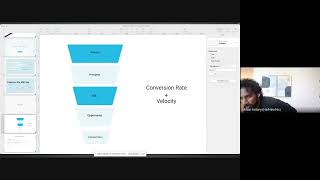
My name's Milton Anthony Antonelli— I work for Sales LabX here in Austin, Texas . We're certified Salesforce partners so we've worked closely with them on our team; we have Certified Salesforce Admins, Qualified Pardot Administrators, Account Engagement Administrators, Marketing Cloud HubSpot all those fancy tools! And where we're a little different from others in our space is we don't do hourly-based work or project-based work. We think that's the wrong incentive when it comes to things like MQL definitions and journey building and revenue attribution modeling, um, because it's very iterative. Uh, so we actually have a flat rate subscription where you pay one flat rate every month and you get unlimited access to all of that talent to design, strategize, and execute in your live environment. And because of that, at any given moment, we are actively managing tens of millions of leads and contacts for accounts around the world. So we have a huge database of what's working, what's not working, best practices, industry trends, all of that fun stuff. Our north star is revenue attribution for all of our subscribers. So I'm also eating some carrots for breakfast. And so to date, we have generated over $100 million in revenue attribution to our subscribers. So that's really cool. For the next few minutes that we have together, these sessions are really built around two-way communication. There's a lot of documentation online of how to do everything and everybody's opinion. And now AI is just pumping out content constantly too. So I think one of the benefits of why I like coming to these sessions is that I get to hear from y'all. So if you do have, if I say something that's a little generic that you've tried before or you believe you've tried before or you don't think it's gonna work in your environment, or you want to get a deeper dive into, or you want to give me some specifics, you can either raise your hand and stop me, or feel free to put a comment in the comments box, even if you like something or don't like something, and I will make sure I come back to it. So feel free to ask that. Last time we didn't get a lot of people, so we ended early, which I don't like doing because then I have nothing to do for the rest of the day. Cool? So let's go ahead and get started. Before I get started, just to see a couple of hand raisers in the room, how many people currently have an MQL definition in their organization? There's a little hand-raising icon or— I see a lot of it. Well, I only see a few heads, but I see one hand. Okay, okay. If it's a maybe, you can raise your hand too. Okay, okay, cool. So that's a very interesting thing. And I would love to hear in the comments too as we go through this, why you think that your current definition of an MQL isn't as solidified as you want it to be. And as we go through this, maybe it'll become more obvious to you, but the first 3 slides I'm gonna give you is going to be probably the most important. And it's probably gonna be the things that you've heard over and over again if you've heard anything from Sales Lab X before. So, and it does come down to the definition of the words and how to write a good definition, okay? So as we're talking today, I wanna talk about the word MQL, or marketing qualified lead. There is no standard definition for that word. The reason why you're feeling a little bit vague about it and you might hear conflicting things about it is that there isn't this like black book or Bible or religious text that tells you exactly what an MQL is. So it is gonna differ from organization to organization. Now, I go into dozens, hundreds of organizations and help them define an MQL based off of their specific organization, their specific sales cycle, how many sales reps they have, if they have SDRs or not, what is their, product-market fit look like. And the next 30 or so minutes with us together is my, what I'm trying to do is trying to boil it down to generic advice. So take it all with a grain of salt. But ultimately what we're looking for is that you have these steps right here. You have a lead, you have marketing qualified lead, you have sales accepted lead, you have opportunities, then you have close one. You could have different words for these. You could treat them differently. You could have different definition, but ultimately you're going through some sort of funnel to touch each one of these. And I'll talk about that a little bit more. And Sales Lab X, our kind of sweet spot is that marketing to sales handoff and those automated journeys that use data from both of those, right? We have a little bit of a bias there where I do think that handoff is where all the revenue lies, where all the revenue hides. That handoff between marketing and sales, that handoff between Marketo, Account Engagement, Pardot, HubSpot, and Salesforce. That is where our biggest revenue opportunities always lie. And the number one thing we've seen that helped bridge that gap a little bit more is clear ownership and accountability of both sides of that gap. And the first step of accountability and ownership of both sides of that is defining what these different words mean and what your internal definitions are. This is my very rough definition of an MQM, okay? And in my mind, what I think is that marketing's job is to have one-to-many communications. So you're basically sending out broadcasting, as they used to call it, right? To multiple people, to thousands, millions, hundreds of millions of people, or thousands of people. And then as you're doing that broadcast of that one-to-many communication, if you have a theory that this person shows potential that is worth having a one-to-one follow-up. And I'm being as vague as possible there. That is your definition of an MQL. Marketing is doing one-to-many broadcasting and marketing has a theory that this person is worth deploying some time for a one-to-one communication or follow-up to be had. Another way to say that is to say marketing has been doing outreach to a group of people and they believe that sales or donor relations or if you're in EDU, higher ed, recruitment, believes that a human being should follow up on that. That's ultimately the thesis statement or the theory that we're making here. Cool? If somebody has a different definition or something else that they believe, feel free to put that in the chat. So ultimately it's a handshake agreement between marketing, who's doing one-to-many prospecting, and sales, who's doing one-to-one prospecting. And marketing is driving that conversation and saying, we have a theory, we do, that sales should follow up on this. Okay? Chat's open for questions. Now, what happens when that theory is wrong? Right? So what happens when marketing has— and now you see what I'm doing. I'm putting clear ownership and responsibility on marketing to come up with the MQL definition, right? So when I'm saying that somebody did something wrong, I'm saying what happens when marketing theory on what is a good MQL is wrong. One, it silently wastes budget. Okay? If you are running Google Ads, LinkedIn Ads, Facebook, Meta Ads, if you're running sort of any sort of ad spend, If you don't have a clear definition of MQL, you are donating your money to Mark Zuckerberg and Elon, I guess. I don't know who owns Google now, who knows. But you are wasting budget because you're not able to get clear visibility to the downstream impact of those leads. Okay? The second thing that you— and it also wastes SDR budget, it's also wasting sales budget, the bandwidth. That's basically, time, data, content is like a race to zero cost, and the cost of a human being's time is becoming more and more as a premium. So that's gonna be the biggest budget that you're gonna be wasting is the human being who's following up or doing activities that are no longer consequential. The second thing is stalled deals. When I do an analysis in an organization, I can run two reports on your opportunity stage and duration, and your lead status and duration, and tell you if your MQL criteria is good or not. Because your velocity tanks, they get stalled at the exact same spot over and over again, right? That could be one potential. Give me some comments in the chat too, tell me if I'm right or wrong, or if you have some theories there. And the second thing is inflating pipeline. If sales is taking these MQLs and converting them, the number one thing that Salesforce was created to do, and any organization, want is visibility to their pipeline and their revenue potential, their pipeline predictability. If you have a wrong or miscalculated MQL criteria or definition, it could inflate that pipeline. And if you have a long sales cycle, like, I don't know, anything over 30 days, 30 days, 90 days, 180 days, 6 months, 6 years, 10 years, I don't know. If you have anything like that, it's gonna be very hard for you to see that inflated pipeline till it's way later. And this is what's gonna cause that feast to famine teeter-totter over and over again. Sales says, "I don't have enough leads." Okay, then they're like, "Hey, these leads aren't good." Then they say, "I don't have enough." Because your visibility and your feedback loop is so long that you're not able to actually get more nuance there. That's all leading indicators that your MQL criteria and definition is misaligned. And I would say the number one thing that I hate about bad lead criteria and the downstream impact of bad MQL criteria is the early 2000s Rihanna album Good Girl Gone Bad. But it's good leads go bad, right? So when there's so much noise that the sales reps are getting of potential MQLs, They treat everything with a little bit of hesitation. Okay? So then the lead follow-up on those are not as good or as deep as the ones that they believe are good. Now it's very interesting 'cause I live in this sweet space, me personally and Sales Lab X, between sales and marketing. Marketing has a lot more data and a lot more process and is a lot more analytical driven than sales. Historically. So what happens a lot of times is that like the bigger that which sales follows up with leads differs based off of their perception of those leads. That vigor of the follow-up, I've run this test and we have multiple data sets on this, has a much bigger impact than any MQL criteria could. AKA the placebo effect, right? Of like if they believe the MQLs are good and they follow up with a certain level bigger and formula, then they are going to have a— those conversions are naturally going to be a lot higher. The problem is that on the sales side, there's a— it lacks visibility of the outreach and the touches and what's happening there a lot of the times, and it becomes a black box. But that bigger and their perception of that is really, really important. Cool. Give me any questions, comments if you have any. So we don't want them to doubt the sanctity of those follow-ups. Cool? So let's keep going here. Now, what makes a good MQL on a very high level? On a very high level, you're looking for 3 things. And you can see here I'm not using the word scoring at all. I'm halfway through my deck and I haven't talked about scoring yet or form submissions or anything like that because we're talking about the strategic implications of this first before we talk about the how. Like how do we get there, right? So one is, if I'm a sales rep and you're making your best guess that I am worth following up on, fit is a big factor. ICP, right? Ideal client profile, ideal customer profile, whatever you wanna call it. Do they fit my persona of the type of person that I wanna talk to? Now, what is really weird about that is that a lot of organizations I go into, their definition of fit changes like the river. Right? If sales is having a good week, they're like, "Yeah, send me everybody. I'll close that person who doesn't have an ideal fit." If it's a bad week, then they're gonna be like, "Oh yeah, no, actually I only wanna talk to people who are VPs or higher." I only want to talk to people who have 30 headcount in marketing titles or not. That makes it very hard for you to have a good AdWords strategy, for you to have a good content strategy, for you to have a good, which is all things that we support with. So we have to make sure that fit is well-defined and it's programmatic. Okay? So ICP. Then we want to make sure that they have intent. This is the part where people get A lot of, there's a lot of gray area there. Do they have intent on purchasing or have intent on a need? And the second thing, and the third thing is that they've taken an action. They've taken an action to let you know their intent. Okay, some other things that I like is when we talk about MQL from a programmatic perspective, one is that it's something that has few variables. Something that has few variables. I am known sometimes as a scoring and grading hater. Right? Like I am known as like, I don't know if I like scoring. I'm very confident that I've implemented so much scoring. Scoring sometimes hides the ball a little bit. It creates this like long-term feedback loop where it's like, oh yeah, it was good because they looked at the website for 20 seconds and they jumped up and down 3 times and then they clicked on 7 emails, some of those could be bots, and then I think it's a good fit. Right? And then sales says, oh, it's not a good fit. Then you're like, oh, okay. I guess it needs to be 8 jumps and jump up and downs and not 7? Now you're stuck spinning their wheel. So there's a lot of variables. I'm not saying scoring's not good, I'm just saying there's a lot of variables. And that's one of my big factors to good MQL criteria, how little variables do you have. The second thing that I like is that it has to be trackable programmatically, meaning I don't need a human being, a human being shouldn't have to view and decide, yep, that's good, oh yeah, that one's good, no, that one's not good, that one is good. It should be programmatically, the criteria should be programmatic. And the third thing that I'm looking for is that you can build a feedback loop based off of that, and I'll talk about that a lot here in a second. Cool? So the 3 strategic implications are fit, intent, action, and the 3 things that you're gonna look at when you talk about more tactically is something that has few variables, something that is programmatically trackable, and something that you can build a feedback loop on. And preferably a feedback loop that's less than 30 days. If your feedback loop is you send an MQL over and then you track how many of those MQLs became an opportunity and it could potentially take 6 months for you to convert that into an opportunity, eh, that ain't a feedback loop. Right, it has to be sub-30 days. If you tell me, hey Milton, but my sales cycle is 9 years, so it could take a really long time. Doesn't matter. You need to come up with something in 30 days that you could track on. Is it meeting booked? What is a feedback loop to tell you that MQL is good or not? And I would love some comments in the chat to tell me if you've tried this or if you think it's harder or how would we do it for your instance, or you can raise your hand and you can ask me. It's a lean group today, so feel free to raise your hand too. Okay, cool. So few variables, programmatic, and feedback loop. Cool. So now let's get into the how do we do this tactically. Now, I'll tell you the things that I don't like that people do. If you're looking at going back to our north star of somebody who you're doing one-to-many communication with and they're showing potential for one-to-one communication, how do you track the showing potential? There is a platform that still has the best ROI out of any platform, and that is email communications. I don't care what anybody says, email communication still has a massive ROI compared to all other kind of like vehicles. So people, especially in B2B, EDU, and nonprofits, they spend a lot of time doing emails. So with emails, there is an activity that is very easy to track for showing potential. It is clicks and opens. Oh, this person clicked on 5 emails. Oh, this person opened on 5 emails. And that shows some potential, or the theory is that shows potential that a human being should follow up. Now I'm not even gonna agree or talk about the strategy behind that and if that shows intent or not. Let's just talk about the tactical implementation of that. I say this all the time and some of y'all might know this but I'll say it every time. Currently, over or up to 30% of your clicks and your opens could be bot traffic. What does that mean? That means that current email browsers, when they, when you send an email to them, their security system might open their email, every single email, to check if there's any malicious links in there. They might click on every email to check if there's any malicious links on there. Alternatively, things like Apple or some other systems who realize, how much ROI email has and they wanna sell you ads, they have started blocking some of this so that it'll block every single pixel from firing so you can't tell if they're actually opening it or not. Meaning that these opens and clicks are directionally accurate, but they're not something that I would use towards gauging showing potential for sales to reach out to. Because why? As somebody who's run SDR teams and sales teams, it is very annoying for you to tell me this person shows a lot of potential because of their score is inflated, but like half their clicks or 90% of their clicks are bot clicks and I call them and they tell me, "I don't know who you're talking about. I've never even heard your name." I ain't following up on any more of your leads, okay? No, okay. Right? So that's the bot clicks. I'll tell you some stuff around that too, right? The bot clicks, okay? So that's what the clicks and the opens, you don't want to, you wanna try to avoid those. I usually have something on, let me look at my notes on there. There's bot clicks, okay. Okay, and then the second thing that you wanna do is that, you see this right here? Where I say, when I talk about ICP or fit? Are they in your zone of influence? The first thing you want to do is you want to track, you want to define that. And if you have an idea of what that is, put it in the comments or you can raise your hand later and I'll tell you if it's a real definition or not or if you need to be more precise. You need to collect the data architecture. You need to collect the data in order to track that. Currently, there's two ways that you can do that, right? So let's say for example, Martin, his ICP or their ICP, ideal client profile, is somebody with a revenue over $5 million $1 million a year. There's two ways that you can collect that. One, you can ask the prospect by a form submission. Or two, you can collect that data through data aggregation. I will tell you right now, if you want a dataset, if you want something, I don't care if it's gender, race, what their title is, how long they've been working in an org, if they use this particular tech stack, if they are using this particular word on their website, if they have, they're positioning themselves as this. I don't care what your dataset that you're looking for is right now, I can get you that dataset. There is a scraping tool, there is an AI tool that can get that dataset for you. Challenge me in the chat set, right? But there are so many tools, and we partner with a lot of them, right? There are so many tools out there that can get that dataset that you don't necessarily need to ask the user per se. You don't have to, right? To get a user to fill out a form, it is horrendously difficult. It is horrendously difficult. And let's also even say one more thing. Wouldn't the most accurate MQL be somebody filling out a form that says, "I wanna talk to sales"? If you built a form up, and marketing people don't like this a lot when I say this, right? They go, "Oh, sales isn't following up on the leads, blah, blah, blah," right? If you built a form and it says, "Hey, do you have money to buy our tool right now and you're the sole decision maker?" And if somebody fills that form out, do you think sales would follow up with that? I would say they would. But is somebody going to fill that out on their first date with you? Probably not. You have to collect information slowly and build them up to that. So how do you collect that information slowly? Getting a user to tell you what state they're in, what zip code they're in, how long their org's been, are they a decision maker, are they not a decision maker? Like, you're basically getting them to do the cognitive load of like raising their hand to talk to sales, but 10 times before they're ready to talk to sales. Collect the data online using one of these data aggregation tools. It is like gonna cost you pennies at this point. Okay, so you have to collect the data. You have to track for bots, you have to kind of noise that out. Then you have to collect data. Then you have to build a feedback or an iteration loop. Okay? So the first thing I wanna talk about is the bots. So we know clicks and opens are wrong up to 30% of the time. And let me tell you, this is the most insidious way that clicks and bots are wrong when it comes to MQL definition. This is happening on a programmatic level, mostly domain name by domain name. So if you send an email to Martin and Martin has— sorry Martin, I'm using your name, but you know, you're the example now. So if Martin's organization has a checker and it clicks on every email and you're giving 5 extra points for every email click, Martin's gonna score the heck out of that. If at Joseph's org they have a bot that doesn't let you click, that score is going down to 2. So your MQLs are gonna be wrong, not just overinflated, they're gonna be programmatically wrong. Okay, so that's something to think about in the bots. Now what is the intent? Now if you go back to your core and you're no longer like a a robot or an AI and you're a human being thinking through these things and you think about like, what am I saying when I look at clicks? They are intended to, they are interested in our content. What are things that you can do in order to get that without tracking? We have a tool that we built that's included with all of our subscribers. I'm sure you can ask your dev team to build something as a proxy. But basically if somebody reads a piece of content for over 30% of the page, we count that as an MQL. Certain types of that. We track that as what you would have tracked as a link click. They read an article over 30%. How did I, what am I doing there? One, I'm removing the bots. Two, I'm not making them fill out a form and gating something. 'Cause I wanna save that cognitive load of the gating when they are raising their hand to talk to sales. So if they read 30% of an article, I wanna count that as a form submission and immediately mark that as an MQL or scoring or something that's a high-value activity. Content consumption, not that they just accidentally clicked on something. That's a workaround for bots. I show a lot of other workarounds for bots. We can talk about that more tactically. I think I'll have time separate. But here's the part that's gonna be the hard part hardest part, and it's the part that you're gonna probably ignore as I talk about it out loud, right? Because it integrates multiple parts of your organization working together. It's that defining ICP, defining ideal client profile, okay? Because here's the thing, defining ICP and then collecting that data is something that Sales Lab X does as one of our multiple full-time jobs, and we have multiple people working together to get that for an organization. So I know it's very hard to do that. I say this because let's say that you are an organization that works with a piece of software and they have to have more than 5 people who need to use the software either by location, units, or headcount in order to be in your ICP.. So you have to collect that data. Now, in order to do this properly, you have to— in Salesforce, you have to build the field. You have to come up with a strategy of collecting that data. Then you have to build the infrastructure for collecting that data. Then you have to build the MQL criteria based off of that data. That process and that feedback loop is gonna take probably 90 days to do. If you don't have the discipline to let that dataset scroll through, and align all the stakeholders to do that, you're going to keep chasing, you're never going to really be able to build that personalization infrastructure that you need to be able to ideally do that. So defining the data and building the traps for the data is the most critical part. In absence of that, you use the crutch of things like opens and clicks. In absence of a cohesive strategy that we've agreed on, and then a data infrastructure that we do there. I have to drop it, thanks for putting this together. Okay, cool, bye, Mert. And then this last thing is iterations. So you have to make sure you build an iteration loop. A really good way to do that is lead statuses. So MQL can be a lead status, and then sales accepted lead can be a lead status. Sales qualified lead can be a lead status. Booked a meeting can be a lead status. You have to have some feedback loop with sales that they did something and this became a good lead. So booked a meeting is a good one, had a conversation, which is a proxy for that. I honestly like that a lot. I think that's the ultimate sign, right? Like you sent over an MQL and they were able to have a conversation with that, two-way communication. That's my ultimate sign for a feedback loop. Now what you say is that if you do that, If you have that feedback loop set, look at how easy this becomes. Now you can say, hey, I ran a Google ad, it cost me $20 per form submission there. Out of that, I got 5 form submissions and one of them became a booked meeting, that feedback loop. Then I run a LinkedIn ad, I only got 2 and it cost me $20, but both of them became a booked meeting. That is such a better— now you can say like, oh yeah, even though it cost me more per lead or it takes more work, it's worth doing that effort. And I'll tell you why this is so critical. So like on our subscriptions, we will build unlimited emails, beautiful conversion rate optimized, looks good in dark mode. We'll build unlimited landing pages with the logos changed, all of this stuff, right? So we have no friction. And even for us, the first thing we do is we build this dataset and this infrastructure because we know the more effort we build on building these beautiful conversion rate optimized designs, the better the conversion rate's going to be. But it's going to be very hard to prove to you that you should work with us to spend more effort doing that and stop spraying and praying unless you have this iteration loop built. And if I'm being too vague, please ask the questions. I can give you a little bit more direct questions too, right? So it's the bots, the data, and the iteration loops. Okay, let me see. Okay, cool. And the last thing I want to talk about here is defining the follow-up. I kind of alluded to it for a second there, but you have to have a way, if any sort of theory that you have, you have to have, you have to normalize as many variables as possible. So you have to have, and one of the biggest variables is the follow-up that sales does. Okay? So if you send over an MQL that registered for a webinar versus downloaded a white paper from LinkedIn, are they doing the same 6 touchpoints over the same 6 weeks? And my thing I say is trust but validate, right? Do you have a report where you can track that? Yup, sales followed up 6 times over 6 weeks. These are the dates, these are the times, and this is what happened. If you don't, that is such a major variable that you're sitting here micromanaging on the marketing side, going through all these spins, right? This is why, like, on any Sales Lab X subscription, one of my jobs is I do sales training. Like, I go to sales and I say, hey, did you follow this process or not? Look, this report is showing me that you didn't follow this process. 'Cause I wanna build that definition of the follow-up, otherwise you're not gonna get that solid feedback loop. So you wanna make sure that you have some sort of follow-up criteria set up with sales or I don't know, whoever does the follow-up of those MQLs. And you wanna be able to tell how many times they're reaching out, when they're reaching out, and what the velocity of their reach-outs are gonna be. And you can do all of that in Salesforce on the lead, contact, or opportunity object depending on your environment. Cool. Okay, so to scroll back and recap and then we'll open it up to questions. I think this step right here from MQL to SAL is the most important step. That's where all of our plans have an ROI guarantee. And the number one reason we're able to do that ROI guarantee is 'cause we come in here and we just collect money like a bag that just falls, right? So this is where we think the revenue's always at. We think the number one thing that's going to help you solidify that transition is clear ownership and accountability. The way that you have clear ownership and accountability is that you have clear definitions. If you don't have those clear definitions, you're going to waste money and you're going to waste time and you're going to waste brand equity because the sales reps aren't going to follow up on good leads because they're going to treat them all as bad leads. What is a good lead? Somebody who has fit, fit, ICP, intent, they're interested, and then they've taken an action. A good MQL from a tactical perspective in order to make this work is that you have few variables, it's programmatic, and you have a feedback loop that's 30 days or less with sales where you can quickly tell if an MQL is doing well or not. How you do that is that you normalize and you remove the bots. We don't want to use clicks and opens And I'm saying that very matter of fact, but there's a lot of caveats. I don't want somebody to blaze me on LinkedIn. We want to make sure that we have a data infrastructure and we work closely with our Salesforce team to build those fields. And then we're collect— and we're using data aggregation tools. I can give you some recommendations if you want to ask me that after here. And then we are building an iteration loop where we're checking every 90 days if your MQL criteria is working or not. Bonus tip, blind spot that most people miss is the follow-up of what happens after an MQL. Cool? Awesome. Well, I'm gonna stop there and I'm gonna ask, does anybody have any questions, comments, concerns? Please, somebody say something. You've tried this, how do I run a report on this? Super tactical. No, no questions, no comments. Cool. Anybody's using any AI tools they want to talk about? Raise your hand if you want me to talk about how AI can help with some of this. Data aggregation tool recommendation would be awesome. Cool. Perfect. Would you have an example? This is going to be cool. I'm going to show you something really cool. And then I show this all the time. And we don't make any money off of affiliates. And we don't— we're not warrantying anything that we say here. Denise, if I'm saying that right, I'm not sure how you say your name, but would you mind telling me what type of data you think would be really hard to get but very beneficial when you're doing your targeting? Can you put that in the chat? While you're doing that, I'm going to show you some of the tools. We're vendor agnostic, so we're partners with a lot of these orgs, and we're not warrantying it or anything like that, unless you get it, you know, but we manage all these tools for people, but I'm trying not to say my biases out loud, so we'll talk about it here, right? Big people in the space, ZoomInfo, right? These are big players in the space. But we'll keep going, right? So ZoomInfo is the biggest players in the space. They primarily, they use LinkedIn data primarily. I'm gonna get flayed for that, but like a lot of these people use LinkedIn data as their primary kind of source now. So ZoomInfo, they could do things like title, country, phone number, revenue, department headcount. Imagine anything you got on LinkedIn basically effectively.. Then, and there's tiers of this, so that ZoomInfo is one of them. Another big people in the thing is this right here, Clearbit. There's this right here, Clearbit, very similar to ZoomInfo. So the differentiator is HubSpot bought them now. That's the differentiator. So how they do that. And then the second, and then the third one is something like Apollo. Right? So these, and then this old one was like Dun Bradstreet, right? I put ZoomInfo, Clearbit, my reps there are gonna hate me for this, ZoomInfo, Clearbit, and things like Dun Bradstreet in one column of like data, purely data aggregation tools. Now I put things like Apollo, Apollo.io, and my favorite new toy, and remember my favorite toys only are my favorite toys for a month, right? So don't go to bat. Apollo and my new favorite toy, Clay,, right? These are all enterprise sales motions. So imagine sales contract, AE, all of that fun stuff, implementation, but it's also very important if you run a large organization, right? These are more nimble, right? So basically Apollo and Clay, they're more of, they use the data, it's called waterfall enrichment, right? So they will aggregate data from things like ZoomInfo, and AI models. So basically, and they're priced a lot better. Right? Like you buy now, you just like go here, you do it. So yeah, yeah. So these are more, I don't wanna use the word modern because they lack the enterprise sales cycle kind of things that you want. So something like Clay, now I'm not sure how to pronounce your name, but in the chat we're saying the things that she wanted or they wanted was job title, whether they have the authority to purchase, are size of organization. Job title, size of an organization, you can get it almost free. It's just like, it's un-abundant. You can use, these are the most expensive ways. You can use something like Apollo and pay one of these things to get that. Or just go online, there's a bunch of them, right? Just say like, exact, there's a bunch of them, okay? Now, what's very interesting, you see this right here where you say, have authority to purchase. That's interesting, right? That's cool because now that requires a little bit of finagling. Now, you could do something that's very programmatic. So we use a little bit of, you can use a little bit of a different definition and you can say leadership titles. That could be a proxy for that. So we're using account engagement here. And so we have an automation rule that basically— so you can get your data from any of these tools. Uh, and remember, I'm not making any claims of GDPR, all of that stuff. That's all on your own, or book a one-on-one or talk to legal. I don't say compliance issues, but all of these are big tools, so you can talk to them. But you can also do something like this where you can say, if the job title contains president, CEO, founder, CMO, chief, vice director, head, then you can decide that their leadership or a decision maker. That's one way to do it. If you want to do that. But that's directionally accurate. And then what you can do is you can say, "Hey, if they have this tag, show them this content. If they have this tag and they read 30% of this piece of content, then mark it as an MQL." That's something we do, FYI. So that's a way that you can use that for authority to make a purchasing decision. But you know what's interesting? What if you want something more vague like, "Hey," if they're in an organization that, well, let me state, let me skip that for a second. Let's go to the comment here from the marketing team, because I think that will give you a better explanation of it. What do you think of intent feature when ZoomInfo leveraging that they help identify intent for prospects? Okay, so, oh, you know, that's so interesting. Okay, so that's interesting. There's a lot of organizations out, there's a lot of things out there that they sell what are called intent signals. I am not an expert in any of this stuff. I'm a generalist, so I have a breadth of knowledge but not a depth of knowledge, so please take everything I say with sense, with a grain of salt. But effectively, there are data brokers. Please don't roast me for this, but I'm doing my best to explain it. There are data brokers that basically have third-party cookies. So when you go to something like WebMD, all of your WebMD tracking history is centralized and sold to a data broker. Now those cookie brokers have a bunch of different websites that they know, and then based off of what you visited there, they will calculate your intent across the board. Okay, so they'll say like, Milton went to this website, and I heard an NPR thing about this, so like, and then researched a WebMD article about what are the first things you should do when you think you're pregnant. That dataset from the WebMD, they're selling that as an intent signal to target the corporation to show you ads for that you might have a propensity to buy pregnancy clothes. The data broker is just selling a black box of segmentation. They're not telling you the underlying data. I say that to say, I don't— the quality varies a lot and I'm not going to comment on any particular data broker like ZoomInfo because it's a black box. And I don't think we're incentivized in the same way. Right? So like, I think it's okay. I like to build my own datasets on intent, but I like it. But like, there are some that I like, some that I don't like. I don't want to give that commentary upfront, but ultimately, You shouldn't trust an intent signal from a data broker. You should build a feedback loop so you can validate that and then decide if their renewal should be there or not. I can tell you 90% of people who are selling intent data, they know you can't track the feedback loop. 'Cause I work with a lot of them, or almost all of them, right? So you have to build a feedback loop. I think it's okay, but it varies wildly. Now let's talk about how do you build What I want you to ask me is a different question, which is when I said the ICP thing, ideal client profile, the fit, 'cause I actually think the more I've been doing this space for a decade, even though I look young, shout out to Tatcha and Sephora, right, is that I think this fit is something people don't think about a lot. I think sales complains about it a lot, but I don't think people really think about that. Like how hard or easy is it for that? So like what's very interesting for us is, hey, if I go to your website, I'm going to show you an example here. If I fill out your form and I don't get 2 email follow-ups, one immediate and one personalized email, I know that I can help you. Like I know I can give you an ROI guarantee for our services. Also, I know if I go to your website and you have a CTA that, uh, get a demo or try for free, I want to put you on a specific type of persona. If you have a CTA up here that says, uh, something less specific like talk to sales, get a quote, or if you have no CTA button out there, which is the worst, I put you on a different bucket. And I know you fit in a different ICP. Now how do I know that? That's what I want. That's what I want. Let me show you this. Oh man, this has nothing, this has nothing, right? That's where waterfall enrichment tools like Play is amazing. So what you can do is you can say, hey, go use LinkedIn data, tell me everybody who has a leadership title., right? Then, and they're using, they have been in their role for X amount of time from job change, and then their industry equals XYZ and their revenue equals XYZ. Then what you can do is you can say, hey, they're called agents, you might have heard this, right? Say, hey, go to their website, read their website, tell me what their what their CTA is, and then add in this column what their CTA is and if they have a CTA or not. Isn't that awesome? Right? Like, that's really how you measure things. I wish somebody would give me one of their org names so I could actually do it for them. I can give you a— but I can give you an example that's Can I? Okay, anyway, the person who made that comment from the marketing team, do you mind if I use your website? 'Cause your name's in the thing. No, okay. Well, you can say it. Oh, okay. Okay, thank you, okay. So when I look here, right, I see, and I'm completely making all of this up, so I don't know anything like that, right? Anything about this stuff, right? So let's go to case studies here, and I see case study integration with warehouse management systems, right? So I would imagine that if somebody has multiple— if I look at their website and I think that they are— I'm completely making this up, right? But they are potentially could be selling a product that requires just-in-time manufacturing or they're competing with direct shipping. Basically, their warehouse might be important. I would think that they might be in the ICP. Or if I look at their website and I can assume that they might be a global supplier, they could be supplying different variations for different countries, then I think that they might be an ICP. But how do I get that information? The really cool thing is that you can send an AI bot to go to their website, read it, and use their human intelligence to decide and tell you how confident they are whether they have a global supply chain or not. That would be awesome. That's how you use that. Like, if you're confident about your ICP, that's how you use data aggregation in order to track these things. So IALA strike, right? So, oh, awesome. Wouldn't it be awesome to know the people who got impacted by the IALA strike? And then, like, you know, I don't know. Like, you know, you see what I'm saying? Like, if you can do that, like, level of Yeah, and I would bet you that there are some prospects that you can sell them warehousing services and transportation services, and maybe when they help you, when you help them manage the end-to-end, it's a better holistic ROI, and you want to try to identify those people that have that. That is an awesome ICP. Like you could use AI for that type of ICP data aggregation. Okay? That's an example of how I would use data to target your ICP and how I would use AI. And you know the really cool thing about this is that it's priced per transaction. So you can try it out. If there's a comments box or something, please put my name on there because I've sent them so much thing. So you can try it out for $0 and just try to do a waterfall enrichment if you want, just to see. It doesn't have to integrate with any of your systems or anything like that. You can try that. I like it a lot. So try it out and see if it can collect your data if you want. If you use any sort of prompt engineering with like ChatGPT or Claude, it's very similar to that. Also, it's very similar to that, like that it's very hard to get right and not go wrong. But play with it and see what's possible. Well, so that's a, that's an example I would use. So I appreciate you telling me, letting me use you as an example. And if anybody here has a global supply chain, please make sure you use them. But yeah, any, any other examples or parts of your sales cycle that you feel like are disconnected that you would want, like, how do I solve for that? How do I increase that? Some data that you don't have, anything like that? Oh, I'm sorry. I was just saying like, is there anything that you, any other questions that you might have or anything else that you need? Like, yeah, basically it's opening it up to come. Oh, that's a great question. Basically like, is sales also, and I do like opening that up, is sales doing their own prospecting or? What would be considered top funnel at some point? I have an answer, but I would love to hear. We have the same issue, we're selling multiple solutions. I love that. What about the question about like, does anybody have like a, do their sales reps go and hunt their own? Do you want them to hunt on their own? Is that an expectation you have? And then, yeah, what do you think about hiring a specific person to hunt versus training them to hunt? Anybody tried anything there? I would, yeah, I would love to hear. I, since I'm not getting anything, I'll say this for myself, right? One, I think you should hire somebody. I speak in hyperbole, but as somebody who's run, my core proficiency is these extended sales cycles, selling multiple products, very narrow. It is very hard to get a person who has that depth of knowledge to now, and who's used to working deal cycles, to now also do the hunting. Like top funnel, it's very hard. And it's a very expensive skillset. And I've run BDR teams and it's become very, I've seen like, and that's one of the things we do is we launch those BDR teams. You have to build a dataset around it, but I think it's very beneficial and I wouldn't hire them till you build the infrastructure. But like, yeah, I would definitely hire a hunting group, BDR or otherwise, one headcount. And then it becomes a pipeline for sales reps. It's a great like recruitment tool to like, churn and burn people before they become a sales rep. That's a wrong term, but yeah. And I think that is the direction that we're moving towards. We just don't know how to scale. No, you're exactly where you need to be, which you're basically like, hey, I need to— you know that thing where I said you need to control your cadence, the follow-up cadence? You're basically there, right? Especially with tools like— I like sales cadence tools like Salesloft, Outreach. I love them because I think it helps them kind of stay programmatic. It is a little bit of a learning curve, but I think if you do it well, the real question is, do you think the BD will report to marketing or sales? Good. That's, you know, but I can only say the right answer. I can't, I can't, there isn't a right answer, but that's the answer I'm like, like that's the answer I like. Yeah. It's just ownership. It's clear ownership. It's clear ownership. And then you can start measuring yourself by cost per meeting booked. And then, then you can basically play the variable game of like, Should it go to the, you know, should it go directly? Should it go to SDR top funnel hunting? Yeah, so that's what I would, I like that, I like that. Yeah, and then do variable comp with the SDR role. So like do handoffs, like booked meeting show-ups, but then also do, you know, a percentage of closed deals. Not a variable comp as in like they get a flat rate if their conversion rate to close one is X amount, in the long term. That way you can balance that out too. So yeah, just some traps there. But yeah, that's cool. I appreciate it so much. Yeah. So yeah, it was fun. I appreciate the question so much. It shows me that you trust me a little bit. So take my answers with a grain of salt and get those MQLs defined. We're not taking any new accounts on right now. We're ramping up for the end of the year where everybody kind of like onboards. So, but if you have any questions or comments or concerns, feel free to put them in the chat. Yeah, I like this open group thing. I feel like we need to create our own group. But all right, y'all have fun. I appreciate it so much. Thanks for sticking with me.
More from Milton

Unlocking Success: Accelerating Conversion for More People #SalesLabX #salesforce #pardot #shorts

A SALESLABX WEBINAR: UTMs & Salesforce Campaigns: Effective Attribution Tracking