SalesLabX Webinar: Planning Salesforce KPIs
In this 2023‑11‑06 webinar, Milton Antony (Speaker A) walks B2B leaders through the systemic problems that prevent revenue growth in organizations with extended sales cycles. He argues that the root cause is a lack of a shared language across sales, marketing, and ops, which leads to fragmented KPIs and siloed decision‑making. The session outlines a step‑by‑step framework for establishing a common terminology (lead, email address, MQL, SAL, opportunity), running definition workshops, and configuring Salesforce (custom timestamp fields, flows, required dropdowns) to capture velocity and conversion data. Antony stresses the importance of feedback loops—disqualification reasons, SAL acceptance, and pipeline reviews—to keep the funnel transparent. He differentiates true KPIs (conversion rate, velocity, revenue attribution) from vanity metrics (open rates, click‑throughs) by tying each metric to downstream revenue impact. The webinar also covers multi‑touch revenue attribution models, the need for intentional experimentation, micro‑transaction mapping in long journeys, and practical tips for measuring and improving lead cost, MQL‑to‑SAL time, and opportunity win rates. Throughout, he offers concrete examples, anecdotes, and a call to action for organizations to schedule a 45‑minute definition session to operationalize these practices.
Chapters
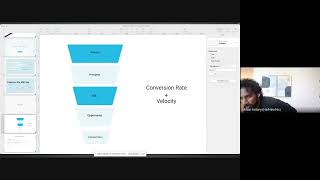
I am going into hundreds of organizations, Most of them B2B or anybody with the extended sales cycle, like a long customer journey where it's very critical for the revenue side of the house, the marketing side of the house and the IT side of the house, all designed to all collaboratively work together. That's my lens that I'm looking at this in. And I'm always coming in from an outsider's perspective. So it's always interesting for people when we come in. So for me, what I find and why I'm so excited and I am always so excited about KPIs, is I feel like the biggest growth opportunity for most organizations that we go into using revenue as the North Star is that these different departments don't have a common language that they all speak from. So just because you're in B2B or B2C or whatever, you're in all consumers and your users and your prospects and your leads, they're used to very cohesive journeys. And what we see a lot of times in organizations with extended sales cycles, think about A considered purchase ASP above 10k, is that the user journey or the customer journey is very disjointed. And the number one reason for that is there isn't a common language that all these different departments are speaking out of. And there are tools out there that try to get all of these different departments to speak a common language. We believe one of those tools is Salesforce and Marketing Cloud. And what ends up happening is people buy these tools, but there isn't this cohesive strategy and this cohesive language across all these departments. No matter how big your tech sample, whether you have Zoom Info, whether you have Clearbit, whether you have Apollo, whether you have Outreach IO, whether you have all of these tools that are basically and now all these new AI tools that have basically try to come into the market and help organizations build this common language. We found, because we're partners with all of these different tool builders, we found that nothing is really replacing this, which is a common language across all different departments. This is where we believe KPIs actually move the needle the most. What we're trying to do with KPIs and why we think KPIs is so important. And the number one thing that we see growth opportunities we see for organizations going into 2024 is that they have invested in either people and or tools, but they have not invested in a common language. This is huge for organizations that are trying to increase their conversion rate, velocity, revenue, go into new product lines or new regions, this common language becomes more and more important. Let's talk about how some of these silos get formed and what we can do to help break down these silos. We call them busting down silos. A lot of times when you look at a tool like Salesforce or account engagement or your website, a lot of that is housed the technical aspect of that in it or a Salesforce admin or the ops team. Now let's say that marketing is in charge of getting new lead for sales or new MQLs or new SQLs in order to do that. And maybe you're also measured on the conversion rate of those MQLs to opportunities or the velocity, meaning the speed of those MQLs to opportunities. And if these words aren't something that you use on a regular basis in your organization, don't worry about it. I'm about to explain a little bit more about that in a second. But if marketing is measured by those type of type of KPIs or if sales is measured by opportunities and the velocity, we need to make sure that we're aligned with it because we need to make sure or the Salesforce admins to make sure that they're creating the appropriate field and the back end technology backbone in order to track that. For example, if you have lead statuses in Salesforce or opportunity stages in Salesforce and you won't have a lead status date field, lead status date field or an opportunity state date field and IT or your Salesforce admin, or if that's you and your organization have not created that with a flow to automatically fill out those timestamp, there's no way that downstream you'll be able to track the velocity. So if we want to encourage that collaboration and that feedback loop between sales and marketing, if sales are saying that the leads aren't good and marketing is saying, hey, I'm sending you a bunch of leads, what are the infrastructure items that I need to do in order to make that happen? One of my favorite KPIs to look at is velocity, the speed and the conversion rate. So if sales is saying that these leads are not good, the question we need to ask is what does good look like to sales? That's a question that needs to happen. Marketing needs to ask that question to sales. Sales needs to answer that question and then it needs to implement the infrastructure in order to get that done. One of the first things that we want to do going into 2024 is I want to sit down. If you're a sales leader, a Marketing leader or you're an individual contributor or a department head or whoever you are, either I want to sit down by myself or I want to sit down with my stakeholders. And I want to have what we like to call definition sessions. Okay, So I want to sit down and I want to define if you do have metrics right now, I want to define in a very clear, understandable way what those mean. But you would be surprised on how many times I go into organizations and I and sales says, hey, I need more leads. And then marketing says, hey, we have been giving more leads. And then I raise my hand and I say, hey everyone, what's a lead? And then sales is a new email address that we've never had before. And in marketing is, oh, you're saying if we have an email address from Zoom Info, but they've never actually done anything, but now they fill out a form that's not considered a lead. Oh, wow, there's a big mismatch here. Is it now when we decide, and I love facilitating that conversation, when we decide what that is now we go back to it or the Pardot Admin Oscar is asking, is it it job or can do it? If you have Salesforce admin access, I think it's totally okay for you to do it in collaboration with sales. But now we need to go back and if what is that definition of lead? And if it's not a net new lead creation, that default field of lead creation date isn't going to help you. And you need to create a new field in Salesforce in order to track when those leads come in. Another big question that people ask all the time to us is Milton, how much does it cost us to get us a new lead? Same question I asked back. What do you mean by a lead? What do you mean by a contact? What do you mean by an opportunity? What do you mean by a prospect? What are your definitions internally for that? I'll do my best to try to give you global definitions of that in a second. But ideally you're having that definition session inside and you're creating a one pager where everybody is singing out of that same hymn book. If you get nothing out of today's conversation, the least sexy thing is this right here, this definition session with the sheet. What are the most common KPIs that people talk about? Leap MQLs. And I'll define this opportunity. Close one. I'll add one more here. Revenue. The magic one. Revenue attribution. Okay, this right here, this and this. These are where A lot of organizations do not have a common language. What is considered a lead? So a lot of times organizations will come to us and they'll say, what's my cost per lead? How much is it costing marketing to create a new lead? And there are varying definitions of lead. To me, what I found helps a lot is instead of using the word lead, I like to use the word email address. How much does it cost me? I'm, like, super dyslexic, and I'm horrible at spelling and reading comprehension. So ignore these. How much does it cost me to get a new email address? How much does it cost me to get a new email address? That's how I like to position that. First question, how much does it cost me to get a new email address? What is my cost per acquisition? If I'm on a LinkedIn campaign, what does it cost me to get an email address? Now, here's the thing that you don't want to do. If I say this and then somebody in sales or a sales leader or marketing said, hey, Milton, is it a new email address? What if I get a spam email address? What if I get an email address that's not in my ICP ideal client profile? What if I get an email address as a student or someone that's kicking the tires? That's okay. We have to be okay with that for a second because all we're saying is, how much does it cost me to get a new email address? The definition is just email email address. Now let's go into the set. Now we say that. Then we say, how much does it cost me to get an email address? That is that sales, like, right now, these are two different questions. Why do I want to parse these qu. Sorry, I'm going to yell a lot. And also because I have a new daughter, my wife kicked me out of the house, and I am in a shed in the backyard that is soundproof. So I can yell. I have no barrier now, so I'm gonna yell. Sorry about that. And I don't know. I'm really into conversion optimization. What can I say? I have nothing else to get in my house. Okay? So what I want to do is I want to parse these two things out. When I go into organizations, a lot of times what happens is that they jumbled this into one KPI and it becomes very confusing. I'm a big. I have 17 notebooks. I love writing things down. Whenever an idea or cop an idea or concept in your head seems overwhelming, it's probably because you haven't broken down that idea or concept into enough small pieces. This is the same thing. When people use the word lead. You go online and people are like, oh, lead. Then you go internally and you say I need more leads. And it sounds like such a simple concept. So you don't think it's worth breaking down anymore. So then you get frustrated, you get irritated and then you start looking on LinkedIn for new jobs and you're like a dog market interest rates. What I want you to do is I want to break this down into two things. Why am I saying we need to break these down into two things? Why is it critical? Especially as a marketing KPI or as a leader of a revenue org. Imagine you run a LinkedIn campaign and all you ask for is, is hey, here's a free white paper or a free puppy. And you get an email address and it costs you, I know, $1 to get that email address. Okay? Then you put them on a marketing journey and then you slowly collect more information in order to qualify them. And let's say that you can get 100 just raw email addresses and you put them through that nurture journey and then out of that you get 20. Out of that you get 20 that sale things disqualified. Okay, now imagine you didn't do that and you tried to qualify up front. My daughter and I, older daughter who's 16, we had a big debate about this because a lot of work, I don't know, maybe I should have a better relationship where we talk about her grade and driving or something. But we were basically saying is a person more qualified based on the amount of fields that are on a for there's some mentality where people are like people filled out six fields. That must mean they really want it. As someone who's lazy, has a very low cognitive load ability, My daughter is super smart obviously because they put up with me my lack of leading comprehension. So there. Let's say that you add more fields up front. I see this all the time. I can go to your website, put your domain name and I'll do it right now and I can look at your contact us. You'll get a demo, you request a quote form and I can tell you all your values in an organization and how much pushback you get from sales on that. If I see zip code I can tell you routing by territory and the sales are really yelling at you about that. If I see what are you interested in or what product or your industry, I can tell. Or if you have revenue, I can tell that sales is complained about or you have basically a threshold and your icp, if they want to meet this revenue threshold, you don't want that. What ends up happening is people try to qualify that up front. So they have six or seven deals here. Now let's say that you do run that LinkedIn ad campaign and you do want to give Microsoft or Zuckerberg more money at their drones and it costs you $100 to get each one of those because there's so much friction on there. What happens a lot of time is that organizations don't have clear visibility to this, so they focus on solely this and they end up spending a bunch of money because they don't know this right here. Just splitting this into two different things makes a big difference. Now if I was. Because people always ask generic definitions. High level, giving generic, generic definitions. You'll get the recording of this after today's session. On that recording, you'll have my direct calendar link. Okay, so if you want to book 45 minutes with me, complimentary. If you want to book 45 minutes with me and tell me about your organization, I'll walk you through helping you build this definition for your specific organization. Okay. But in lack of that, if I have to give you generic definitions right now, this is the closest thing I would use to a new email address acquisition. This lead, I would say, if I had to use something is the closest to I got a new email address. Now, if you have something like Zoom Info or Clearbit, these data augmentation tools, it's really going to inflate that. But we need to come back into that. Right? So this. But if you're using lead sources and you have some mechanisms for that, you could. It would be better anyway. Okay, I'll come back to it. Technically, ZoomInfo is a email acquisition source and there is a cost per email acquisition source. And if you're in a b2b.org, where you have a clearly defined zone of competency, I don't think counting goes as leads as long as you have lead source. And in comparing it against what does it cost on LinkedIn is not a bad thing to do. So lead, I would say is new email address. Is it ready? Is it qualified for sales? That's MQL Marketing qualified lead. Marketing qualified lead. This is, hey, I got an email address. Then marketing was able to qualify that and say this is potentially good. Now here's the thing. With M2LS, marketing does not get enough. My background is in ops, but I also run sales team. So like I have a good Understanding of both. So I will play devil's advocate on both. Marketing cannot build the MQL criteria in a silo. Marketing has to have a session with the sales leadership and you have to together say hey, we think this is what. And I can give you the script that I usually use if you want to book a one on one with me. I do have a script that I go through when I have those. Right. How is flow walk people into collaboration I guess is the word sales. You say hey, what would you think is a marketing qualified cool. We have that conversation and then now marketing has a little bit of a feedback and then we agree on that. If you came to my A B testing I just expect everybody to come to everything I ever do. But if you came to the A B webinar, I told you that you do anytime you do something new, you, you have to make sure that you give it enough time to have statistical significance. So if you come up with an MQL criteria, do not change that for 90 days. Okay? And then you have to make sure you have a feedback loop of how do I check if MQLs are good or not. So what does sales tell you? Hey, this MQL that you gave me, Jody, this MQL that you gave me, Rick, this MQL that you gave me, Blake, this MTO was good, Send me more of those or this MTO was bad. Don't send me any more of those. What is that feedback it? Is it a disqualified status? If it is a disqualified status, do you have a disqualified reason? That's a required and a dependent field and it's a drop down and not a plain text and they can put together what is that feedback loop between marketing and sales and then opportunity. This is huge. A lot of times when I talk to marketing leaders or marketing, I see, a lot of times what I see on the marketing side is they have very little visibility opportunities. Very little. One of the things I do and I see Cesar, who I know is in sales, one of them. Even though now I am in very much of an operations marketing role, I shadow sales pipeline reviews all the time in the orgs I go into, I do it, I go in there and I listen and I take notes and I help build them. Because here's the thing I want to know where are they keeping pipeline? What are they considering pipeline? What are they. When are they converting an MTR to opportunity? When are they doing that? How are they doing that? Do they have some excel in some random place? Because here's the thing, ultimately I like to say there's only two places that I get validation from. God and the market. Right? So ultimately nobody cares about leads in mql, sorry, marketing. What we care about is revenue. Everybody cares about revenue if you're in a nonprofit. Donations. If you are in a, if you are in an adu, then it's, then it's registrations. But they all tie back to revenue till we get a universal basic income or whatever the next thing is after AI takes over our jobs. But till then, the North Star that we have to back up into is the revenue number. And the revenue gets stored in an opportunity. And no matter what you say about fails, they have a direct, the most direct input into that sales number downstream. So we have to get really good. And I have a framework of pipeline reviews too that if you come to one on one, I can talk to you about. I'm a really good Google sheet like this that I can show you. So if your sales leadership isn't following that, it's not unexpected for a Cardot admin or a marketing leader to say, hey, I talked to Milton, he thinks this is a good pipeline review sector that other teams use. A lot of times when I go into organizations, this right here is very fuzzy. Okay, Sometimes it's fuzzy by accident, sometimes it's fuzzy on purpose. Right? What do I mean by that? So if I come in and I see if marketing is measured and you should, if you're in marketing or design or any role, the number one way you make sure you increase your budget and your job security year over year is, is making sure you tie your number and your work to remedy. You better get ahead of that before somebody else gets ahead of it. I need to tell them right now, with a lot of organizations leaning, I have very unique insights into that. And I can tell you that that is a big criteria. So even if your leadership hasn't asked you for this, I would get ahead of that. Make sure that you clearly define when an intro converts into an opportunity. If the sales rep or the sales teams give you any vagueness, it should be direct, it should be actionable, it should be measurable. It should be something like bear, it should be something like medic. It should be one of those things. I, when I first go into an organization, I listen to sales calls too. I'm like, hey, I want. Especially if it's like zoom webinar. I'm like, use gong. Use your voice reporter. I need to hear demos, I need to hear what happens. And then I go and track back onto what you mark as a disqualified and what you convert into an opportunity, you need to have a marketing sales ops. Everybody needs to know when an MQL gets converted into an opportunity. There's a lot of things, a lot of organizations I go into where they say hey, we have a really extended sales cycle. Cool. That's what I specialize in. So. And they say, hey, we don't convert into an opportunity till xyz. Little bit of a yellow flag on the court there, but okay, if they're not converting, if let's say you notice that the empty, the opportunity to close win rate is above 30% to me that's a yellow flag that they're not converting opportunities early enough. But let's say you're in marketing, you don't really have visibility to that. You don't have the clout yet to push into that. I'm not on your team so you haven't let me go in there and yell. The thing that I want you to think about is the term sal as another step. Okay, so if I'm measuring marketing's efficacy from MQL to opportunity, marketing thinks that's a qualified lead. Sales thinks this is a qualified opportunity. And it takes let's say eight months to go between this. Think about the speed at which marketing is working. You should be working on your email campaigns. Your you're ad arts, right? You're working probably in a weekly or quarterly basis to try to get feedback loop on your plate. If it takes them six months to go from here to here, one yellow flag, call me second, build a middle stage that's called sales. Accept the delete and you can tell I've been burnt. And I karma point. I have been a burner. I have been the one that where my team doesn't meet my sales quota for a quarter and I want to buy an extra quarter. I am the type of leader who was like that's the sales. Marketing didn't give us any new leads. And what's going to happen is if you go to the end of the quarter and that feedback loop takes six months to go from here to here and you don't have this middle step that everybody's agreed on. Sales accepted, lead. Even if you did your job and you delivered a lot of N2L's you have no visibility. It's very vague and undefined of if those were good or not. So you need to have a middle step that sales acceptedly and that feedback loop should be in days or weeks, not in months. And then of course Opportunity to close one, meaning, hey, sales is working a pipeline and then they collect the money for that. That one's pretty simple. Sales rep should know about that, right? And then the last thing bonus here is revenue attribution. So as a marketing leader, you're getting new email addresses, you're making sure you can get those email addresses to nql, meaning that sales, you think marketing thinks this is ready for sales to follow up? Then bonus item, you might be checking how many of these get to sal and how many of those go to opportunities and then how many of those go to close one. Now I'm funnel obsessed. See these shorter times, I can't make my jokes or anything like that. But so this is one funnel that marketing is helping with. And it's very clear one of the things that has happened a lot is there's this blurring of lines between marketing, branding and demand generation, which are really different roles. But we'll, we'll talk about that another day. And how VC funds and private equity have changed a lot of this and data nerds like myself have ruined the game. Right? But this gives you a very myopic view of marketing's impact because basically all you're doing is how many of these are you generating and how many are moving here? What marketing providing air cover for an actual deal veteran play. Okay, if all I cared about is this, I'm just going to focus on, I'm just going to focus on LinkedIn ads that say, hey, get a free cookie. If all I care about is M2L, I'm going to say get a free cookie, but tell me your title. Right? It's very easy. Not easy, but it becomes a little bit. And I'll talk about it here in a second when I talk about KPIs versus vanity metrics, right? But it becomes very easy. You become a very one dimensional person. If you've ever seen those emails where it says get a demo, book a demo and get a free Amazon gift card. Have you ever, Have y' all ever seen that? I run them in some org, but sometimes it works. So I don't want to do it. It does work some places, but to me that's a clear indication that somebody somewhere was like, get me demo requests or quantum requests, no matter what, I don't care how you get them. And it's yes sir, let me go get. And then now what ends up happening is, hey, it cost me $25 to run this whole thing to get an sale. Why don't I just give a $10, Amazon gift card. Because I got your metric. I got your metric. This is why the public school education system. Okay, anyway, I got your metric. So what else do you want? I was past grade level to grade level. I should not have last solar grade level that I was in. But the teacher was measured on graduation rate and there was no one checking the efficacy of what that 70% graduation rate meant. So the same way here, if you could track all the way to the end. And the thing that I like about revenue attribution is it rewards. Hey, once an opportunity is already created, let's say that opportunity sales cycle is nine months. It's marketing's white papers. Is there maybe thought leadership, is there branding, is there website pages, are those impacting how quickly an opportunity goes from Created to close 1.1kpi that I saw was very interesting this, this last quarter or really this year is. And it's very interesting because I think we're the only our what we do, if we, when we come in and we give full funnel visibility, it makes this data very clear. But because so many people are quote unquote data driven and so many people are remote now KPIs have become more of a religion, right? And what we've noticed is very interesting. A lot of organizations come to us and they say our sales cycles have increased, meaning it's longer and our average order value has gone down. It's very interesting, right? Even though all of these kind of what I say, top funnel metrics have gone up, what we're noticing is if you are looking at a, if you're looking at higher value opportunities, 60,000, a hundred thousand, 200,000, 50,000, whatever, right? Less transactional. Those people need a more cohesive, longer journey and they can be treated very transactionally. But if all you're measured is on right here, who did? That's somebody else's job, right? But if you have visibility to this whole thing, it is super interesting for us to see the quality of leads that are coming in and how the quality of the revenue on the back end. That's where revenue attribution comes into play. Revenue attribution is basically, and I had a whole session on it and the recording is probably out there somewhere on YouTube. But if you reach out to me, like I said it to you, but basically what we're looking for is this multi touch attribution model or this even distribution model where marketing efforts are also being tracked. Not one late till this point, not only till this point, but also to this point an opportunity got opened and Then it impacted the velocity and the amount of that opportunity. The difference between KPIs and vanity metrics. Okay, there's a lot of gray here. I think the difference between a KPI and a banning metric are basically how you're using it. For example, let me say this right. If you're in marketing and one of your, One of, one of your metrics is engagement, what is my email open rate? That could be a KPI. Okay, what is my open rate? And I want that to increase year over year or a month over month, which, if you haven't, you should do that. Now, that is the KPI. Now, if you go online or you look at a lot of stuff nowadays, they'll say, hey, open rates and click through rates are now a vanity metric because there's so many bots. And if you all haven't noticed, or you probably would notice, right? But basically, most email servers now will just Microsoft, Apple's the best or worst, whatever you want to call it. They will just open every email and click on every link. A lot of Apple browsers now don't show clicks at all in obit. So there's this big move that, hey, those open rates, because they're so unreliable, are now considered vanity metrics. If you use the open rate as directionally accurate. Hey, this subject line got a 20% open rate and this one got a 25% open rate. I still think that could be a valid KPI because the same amount of bots should remain on both. And one got a 5% over open rate. So that, that line a lot of times is basically your intention behind it. Okay? And I would say the biggest thing about KPIs is what I've noticed is the biggest difference between KPIs and vanity metrics is the feedback loop. Here's what I mean. We ran an experiment the last couple of times. Y' all might have seen multiple versions where we ran a different subject line to see if they had the best open rate. And then we're like, oh my God, this subject line got a much better open rate. So then. And it blew the other subject line out of the water. Then we were like, let's use that subject line everywhere, right? Then we did a postmortem and we went back and we looked at it. We're like, hey, yeah, we got a huge uplift in Opens. But none of those people actually ended up filling out the form on that subject line because all we were focused on is in isolation, the subject line. We couldn't. We didn't have a feedback loop of the ultimate metric which was the submissions of the forms. Right? So that which overrated could have been a KPI turns into a vanity metric. And the reason I'm saying that tied to leading and lagging indicators is that really the open rate should be a leading indicator to how many people open or how many people fill out the form, right? If you use the open rate as just by itself it's not going to it turns into a vanity metric. Okay? So if you understand that the email open rate is actually supposed to help tell you that they're going to open, they're going to fill out the forms, then it becomes a KPI. If you understand that the form submission array its job is to get MQLs, then you've done this job right. If you understand the NQL's job is to get opportunities, then you've done your job right. If you understand the opportunity's job is to get the close one revenue, then you've done your job right. Okay, the two things that I want to think about over and over again now is these KPIs defining them and then also looking at the conversion rate and the velocity. So basically how fast does it take to go from a lead to MQL and how many how fast does it go from an MQL to an SQL and what's the speed? Both. Okay, because you might run a marketing play or you might run a branding play or a sales play and the speed might increase, you might run another one and your conversion rate might increase. So you want to make sure you're tracking both. As we go into 2024 and we think about the your KPIs, I want you to spend some time and zoom out and think about intentional experimentation. Okay, I'll tell you a little story and I'll answer the questions in the right I worked at a gas station for a while and and I would drive to work at 9am and I would see these people running on the side of the road just living their best lives. And I was like man, how do I live a life where I could wake up in the morning and just run, man? Imagine having that type of bandwidth where my life is that casual and I can get to work whenever and I can just run. So what I did was I just Woke up earlier 4am and I just started running. Now did I become successful or did I get a better career that led me to that running? Argue that, but I can tell you I had to use a lot of brute force and it was dumb. I did a lot of work because I was chasing the lagging indicator. I was chasing the lagging indicator. I had to go through this big funnel and there's a lot of workforce. There was a lot of leakage in my funnel because I didn't have a good understanding of how this, that running in the morning was actually a lagging indicator of having a stable lifestyle, having a college degree, having knowing how to manage up and manage down. That to me, there was a lagging indicator. And what I want to say is sometimes you don't have and you don't have an SLX subscription on the budget for an SLX subscription, which should be the only reason you don't have one. So you don't have visibility to what are lagging indicators and leading indicators. When. A lot of times when I have these conversations with orgs, they either get very excited or they get overwhelmed. And the thing I'm saying is if all you have is in your neighborhood is, hey, I see a guy running in the morning and that's what I want. Somebody says, I want more leads and that's all. You have visibility to start there. But no, that's not the end thing. You have to make sure you start getting increased visibility to the leading indicators. You've got to start thinking, what are the things that are impacting this and what are the things that are, what are the downstream impacts that are going to happen on the bottom? Based on what I'm doing, you have to start getting more visibility. You got to start isolating the different stages of your customer journey and you got to start intentionally experimenting and your North Star has to be conversion and velocity. That's it. If you ever catch yourself getting obsessed with open rates, click through rates, form submissions or any webinar registrations, anything like that, don't worry so much about that and try to measure the downstream impact. Make sure you talk to sales. Make sure you have the definition section before the end of the year. Make sure you have metrics that are locked in. Make sure you have a feedback loop and then make sure you have an iteration model where you can constantly be tracking on that. I'm going to answer the questions in the chat. Can you define how you calculate velocity? Great. Here's why I think that's great. Because you can't do it out of the box in Salesforce very easily, right? How do you calculate that? Awesome. First you agree on what and what is an MQL and maybe you have a lead status that's considered MQL Then you have you or your Salesforce admin or whoever, you create a field on the lead object that's called MQL date. Then in Salesforce, you create a flow or in part or account engagement, you create an automation role that as soon as they get marked mql, you automatically fill that with a timestamp. Now you create another date field or timestamp field. However you want to do it, you call an SAL date. As soon as it gets marked to sal, the SAL date field gets marked. Now you have a calculation that tracks what was the delta or how long did it take from MQLD to sald. That's the velocity, that's the speed. Okay? And then now you run a report and you do velocity of MQL to se out by lead source by UTM parameter. Oh, man. It's going to change your life. Because now you're not just buying LinkedIn ads based on what LinkedIn or Facebook or Google are telling you. You're doing it based off of another metric that they're not telling you on purpose because they just want you to dump more money into their ads. So that's velocity. Right? For long customer journeys, is there a timeline for successful loss lead between each? Whenever I hear long customer journey, I push back. My gut reaction is sustained. Is it really a long customer journey or you. Or have we defined any enough microtransactions in between? Have we defined enough microtransactions in between? Okay, so that's one thing. Right? Right. So if you ever are caught in this, oh my God, it's a long. So I, I don't know how long it should take. The first step is I would start thinking about micro journeys, micro steps. Can I break down? If it's a. If, if it's a long. And I, I would say if any step takes more than a month, if any step takes more than a month, I would start thinking about what can I do there? And I can I. If you set up a Sefton and you tell me about your sales journey right now, I can tell you successful metric. My big thing and what we do here, why we call ourselves Sales Lab X, is we want to create a laboratory type environment where you can iterate. So what is a successful. And a lot of people, they come to us and they're like, hey, y' all want a subscription service where you do this for us on an unlimited basis? Maybe I don't want this on an ongoing basis. Maybe I just need it for three months. I'm like, okay, that's Interesting. Probably don't need it for three months. You probably need it for a longer period of time. Because the key is not setting this up and forgetting it. The key is iterations. Going back to the question, what is a successful velocity time frame? Beating the last quarter's time frame, Beating last quarter's time frame. Oh, people hate. But in general, if it's over 90 days or I don't want to say 90 days in the sales cycle, if it's over 90 days each day, I would think you want to break those down to microtransactions. On the marketing side, if it's over 30 days, you want to break those down into micro transactions. But in general, don't worry so much about the successful ones yet. What I would do is what is my baseline and how do I increase that 10% or 5% quarter over quarter? What you're asking is how do we track. Let's say somebody comes in through a webinar. How do we track? Give us an example of what that would look like in a low and I actually have somewhat of an example here. So let's go through this from my UTM webinar. So basically someone comes in through the ad. Let's say that this way I say landing page and partner form is a webinar registration. I would say that's when a salesforce lead is going to get created. Okay. Then let's say that it goes through a nurture and it hits a scored threshold, slash grading threshold. Or they fill out a specific form that says get more information. Right. Whatever you want to call it. Then that would be an MQL then sent to sales right here. If sales decides it's worth working on, that would be an SA out. Then let's say there's another webinar that marketing sends them to and then they attend the webinar. This is that multi touch revenue ad that you sign saying because now you've already done kind of all the steps, right? Then they do this. Then an OP is created. This is MQL to OP conversion rate this time. All right, I said sal here this time. And this is a great question. I don't even know if this is a question you meant or not. I have this tendency of just answering the question I think you're asking. But this is good because now I've updated this thing that I use all the time in Cardot Prodigy starting on Tuesday, which I need three people to sign up for. Sal to. This is the velocity, okay? This is the velocity of that. So if you are a company that sells multiple product solutions. You need to consider MQL by an interest area. Correct. That was a big problem. I was faced with marketing strategies change from new customer acquisition to existing customer expansion. So it was difficult to track the MQL KPI since existing contexts were not created immediately. Let's talk vibes. Let's talk. That is a classic thing of basically, hey, they told me to pivot maybe or also do upsells and cross sells or something like that to existing customers. But my metrics stayed the same and they still measured me by NQL. Here's the thing, if you're a B2B and you're doing and you have a neural proficiency, basically you're not selling like carpet cleaning. You basically have a known universe. This data augmentation tool and let me know. We're vayner agnostic, but we're partners with all of them. Can't tell you here, I'll get in trouble with one of them or all of them. I can help you pick those tools but don't like ZoomInfo, Clearvid, Apollo. They have so much of the data that you need them accurate or not. Right. I can say it's difficult to track the MQL KPI since they're contacts already. Yeah, you need to come up with new KPIs or yeah, and you need to say maybe qualified for this product. I need to talk through this a little bit more with you, but I can tell you one thing, the old model just isn't working. The old model isn't working and honestly I would say you need to come up with a new one and it might be product based. The reason why I can't give you a lot of specifics on this stuff. It might seem like I'm being gatekeeping, but the problem is that I want to make sure also whenever I come and because we go in there and we also manage the technical side and I am also technically competent being double certified in the tools. I am very cognizant of the downstream impact and the technical that gets created from some of these things. That's why I don't want to say, yeah, create three fields and for each product because I know there's some downstream scalable issues with that. So I want to like really think through it and if that's. If that's a last ditch effort and I can't think of anything else, then I want to undo it. Okay, Don says I'm a genius. Great. Thank you Dawn. I'll put you in Touch with my wife. We do Sal after the opportunity in a free trial model. That's very interesting. I would say there's a lot of things that's one of those yellow flags I want to look more into. You might be right. And it's very interesting. I call them salesforce artifacts because I can go into the organization. I have my little, I don't know what you call that digging too. And I can tell the last three marketing leaders and sales leaders that turned over an org based on just like that. Right. Like when I see something like that after opportunity, I'm like, oh, that was very interesting. I can tell. And the interesting thing is you might have inherited a process that you had no job, you had no say in creating. And you're just like somebody. Mark must have came up with this. Everybody keeps using this word, right. So there must be a reason for it. And it's very interesting for me to come from the outside and be like that might have been a decision somebody made six years ago. Like an example where he was mostly focused on top funnel and not existing customer base. How do you get a qualified lead back into the marketing pipeline? Awesome. So basically a lot of times what happens is that leadership and even human beings, they think that life and conversion funnels are a one dimensional flow like this. I'm doing this to get you to talk to me and I'm showing it to hundreds of people at a time. In reality, this isn't how this works. Think about the last thing that you really bought that was over let's say $700. Personally, it probably didn't work like this. It worked like he clicked on a Google Ad. You saw it retargeting, you saw an influencer talk about it. It's not this clean. When we say how do we get this qualified lead back into marketing pipeline? Meaning hey, I send an MQL over and marketing says, hey, this is not an sales, it's disqualified. Okay. This is where you have to have. I'm getting into nuance in the weed. What I would do without create another deal that's called MPO account. Right. So basically what I would do is I would say if sales sends it back one, I would High sales cannot send it back without a DQ reason. So they have to in order to market disqualify, they have to market give it a reason and that reason cannot be other. And it can't be gay. Like not interesting. Okay. And it can't be not ready or not qualified. If you think those are specific, they're not okay. So they have to give a reason and then basically based on the reason they select, they go back into the marketing funnel marketing pipeline. And then basically if marketing can get them to re engage and maybe they just there's a score reset, they lose 100 points or something. So they start back over again. And until then, they basically go back, marketing gets them back again, then MQL gets counts, gets sent to two, and then they get sent back to sales again. We're over time and I have a good amount of people that are still here. So that means that you didn't get bored and you learned some stuff. Please make sure you reach out. If I could help with anything, I appreciate it. And start building out the those metrics and KPIs. Sam.
More from Milton


Unlocking Success: Accelerating Conversion for More People #SalesLabX #salesforce #pardot #shorts
A SALESLABX WEBINAR: UTMs & Salesforce Campaigns: Effective Attribution Tracking