i made $639,513.58 in 90 days with recruiting (just copy me)
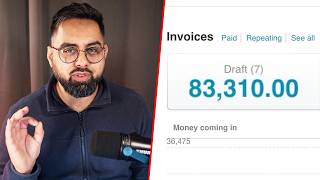
Mohammed Adris made $639,513.58 in 90 days with his recruitment firm by focusing on direct-hire placements in the $300K-$400K salary range. He breaks down his three-step framework: find clients, onboard them, get them to pay. The method relies on warm LinkedIn outreach, targeted email, and follow-up calls to build a repeatable, scalable process.
Chapters
In the last 90 days, or since the beginning of this year, I'm going to share with you how much money the recruitment business has generated. This is revenue generating employees, and then alongside the accounts as well. And in this video, I'm going to take you over to my whiteboard and show you over 3 core steps that we use in our recruitment business. And these allow us to build these kind of numbers. And by the end of this video, you'll be able to just copy me. And what I'm going to show you through is literally how we find clients, get clients, and get them to pay us. So what you're looking at here is this year's worth of revenue that has been tracked so far in GBP. So we are first week of March at the moment, and this is considering all of the placements that have started. This is not considering recurring revenue contracts. It is not considering retainers. It is not considering temp fees. It is only focused on direct hire placements. And you'll see here, 51K by one person, 41 from another, $28 from another, and there's a few others here that have been allocated some smaller commissions. Now, if I dive in a little bit deeper, this is what the accounts look like. In fact, if I give you a more accurate picture, let's take this first week of January and then blow this up towards the end of the year, then it'll just show me everything that's come in this year. Again, I'm going to let you work this out, but there are 1, 2, 3, 4, 5, 6, 7, 8, 9, 10, 11, a partial refund there, so I'll put that back down to 10, 11, 12, 13, 14, 15, 16, 17, 18, 19, 20. 20 direct hire placements that have been made so far in the first 9-ish weeks of the year. And these are those that have started. So some of them were generated in December, but either way, you've got January up until now and everything that is forecasted to come through. This is everything. I'll let you calculate the total number and you can see down here how many have already been paid and those are awaiting payment and those that are, yet to be sent. So only talking about direct hire placements at the moment. So now going over to the core elements of what this video is going to be about. I'm going to talk you through how we find clients, how we get them, like basically, um, on board, and how do we get them to pay us. Where a lot of people get stuck here is they literally go for anyone. Okay, so if you go for literally anyone, then the problem is that you don't have a defined criteria for who you can actually help and who you can't help. The problem with not being clear on who you can and can't help means that you are literally, you have no direction for your business and never mind direction for your life as well. Because someone's going to say to you, hey, can you help me with this? Can you help me with that? And you're just there saying yes, yes, all the freaking time. So by what I mean by anything is focusing on a niche. Okay. What I mean by niche is we need to find a company that has a hiring problem that is a serious, serious issue. Okay. Let's just take, for example, a private medical clinic that needs a doctor and they only have one doctor. And if that doctor leaves or for any reason can't turn up to work on a given day, they need a replacement on that day. It becomes so critical for them that their business is as good as closed, if not can fall apart if they just don't find a doctor on that particular day. That is a good niche because the people that you're going to be working with and you're going to be recruiting for is that they need your help. It's not just like a nice to have, it's like, no, we need this literally right now. And provided that there are enough of those clients and you have a candidate pool in a similar region as well, then ultimately you end up in this situation where you are the supplier for the demand that already exists. And I'm going to say that your niche has a huge bearing on the amount of success that you actually have. Because if you pick a niche where the salaries are $30K a year and they are sick and tired of using recruitment companies and everybody charges 15%, then you're going to go into that mix. Okay? If you go for a niche where the average salary is $400K a year and they're used to paying recruiters 30%, then guess what? You're going to go and fall into that kind of norm. So your niche has a huge bearing on the amount of success that you're going to see in everything that you do. And I look at even my niche now, and I have some, I'm going to say some regrets in the sense that I wish I picked a niche that was paying more. I wish I picked a niche that literally had higher salaries and where there was maybe, I'm going to say, a little bit less competition from recruiters. It's not that I fear the competition, but at the end of the day, like there's a moment in time where managers or even hiring managers have a level of frustration towards recruiters when they kind of spam you or do a little bit too much work. So these are some of the things that come into mind. Like, if I were to start this entire thing again, then I would look for a niche that pays significantly more and maybe has slightly, slightly less competition from a recruitment perspective. That said, more competition in a niche is actually a good sign because it tells you that the niche is alive. So when it comes to finding clients, what you're actually doing is you need to find a niche. And a client is somebody that sits within your niche. And as long as your niche works and your client works, everything else becomes easier. Because the next thing from there on is how do you actually make contact with them? How do you get them on board? And how do you get them to work with you? When you reach out to them, there are absolutely loads of ways to reach out to people. And this is a humongous area. Sometimes it can be narrowed down because there's some go-to and traditional ways of doing recruitment, but at the same time, it can't be narrowed down, meaning that you can get clients by cold calling. This is one way. I used to do this as well. Okay, you can use email. You can use LinkedIn. Okay, you can use Instagram. You can use TikTok. You can use YouTube. Ultimately, social media stuff. Okay. And this is like, we're not even stopping here. Like you can use TV. You can use newspapers, newspaper adverts. You can go on like Facebook Marketplace. So like there's subcategories within some of these social media platforms. You can advertise, like just yet, but let's just put advertising. Okay, advertise on social media. You can advertise on billboards. Like there's 101 different ways of how you get your customers. Okay, now the reason why this has become a topic in and of itself and why I'm pausing as I'm saying this is because I'm not here to say there's one tactic that does or doesn't work. Heck man, you can just go and Knock on doors. You can get customers by knocking on doors. So when you put all of this together, you can do a lot. Like there's 101, like we're just talking about one part. Like there's a load of dimensions to this as well in the sense that yes, you can use Instagram, but are you posting reels? Are you doing posts? Are you doing stories? Are you doing outreach? Like you're DMing people? Are they coming to you? Are you running adverts on there? Are you not running adverts on there? Are you redirecting people? Like all of this stuff, it just becomes really messy. Anyway, the point that I'm making here is what is the most effective way that I've seen for how we get clients, and that's the only thing that matters. Okay, so I'm just going to rub all of these out. Okay, this is what we've seen works. Even then, I'm going to change this. We don't do cold calling. We only make warm calls. We only contact clients when they are already familiar with who we are and what we do. These are the 3 core ways that we go and get clients. We find them on LinkedIn. We will email them and we may even follow up those emails with warm calls. All of these are all focused around what they need. So one part of the need is the what. Another part of the need is when. And another part of the need is how. Okay. So you can say, just for argument's sake, that I need food. I need it right now and I want to eat it in person. That's how, okay? Or you can say, I want food, I want it right now and I want it delivered to me, okay? I want food, I want it right now, or I want mom's cooking. So you can play around with this, okay? So from a recruitment perspective, by the what, what we're referring to is what is the actual job? What's the job that they are recruiting for that you can find elsewhere that exists in a similar like-for-like company. That is the job. Okay. When this determines urgency. Okay. So actually I missed one on there, but I'm going to come back to it as well. Put a Y over here. Okay. The when determines urgency. When do you need it? And do you need that person to start today, tomorrow? Was it yesterday? Should it have been 2 months ago? Whatever it is, this is going to help you determine urgency. How depends how you're actually going to fulfill the client's need, which is in recruitment terms. Do you charge them on a commission-only basis as and when the person has a success fee? This is known as contingency recruitment. Do you charge a portion of the fee upfront so that the client is fully committed to you? This is known as retained. Do you realize that they have a consistent and ongoing need and you want to charge them a regular fee where you are embedded as part of the team? This is commonly known as RPO. Or Or is it that the client's need is such that somebody has just gone on maternity leave and they need cover for 6 months? This is known as temporary hires or even staffing-based hires. So that's the how. Now the why is what has triggered this hire? So this is more of like a sense check thing that you've got to do, meaning is the reason why this need exists because the manager is really difficult to work with, in which case we're going to have a churn problem here. Okay, does this need exist because somebody has just left? Have they resigned? Have they, God forbid, has somebody died? Like, we've come across these stories. And could it be that they have a colleague that they always sit next to? Meaning that, is there a pattern for why this person is leaving? And is this problem going to happen again? And if this problem keeps happening again, then that has something else, meaning that there's a bigger risk at play, which is reputation. Okay, so why is more like a sense check thing. Okay, So now we have a niche which has a demand. We find the clients within that niche. We reach out to our clients, warm email and even LinkedIn. There is one other way. I have a hypothesis around it working, and this is a completely different platform, one that based on my research, I cannot find a single other recruiter even using this platform. And I've shared the details of this with my small coaching community and group that I work with. And that's something that I'm working on. So there is one more that I have a hypothesis around that can help you generate clients and candidates on a large basis, almost like a large-scale thing. And it doesn't actually involve much in terms of an AI perspective. It's not complicated or anything. But anyway, it's something that I'm working on. When it launches, it will come through. And the only person who to my knowledge, is even onto this. There's going to be 1 or 2 people inside my coaching group. So if they do this before I do, good to them. If they don't, then fantastic. But once it's launched, I believe I will be the only recruiter who has ever even touched this market. I will circle back to that in a future video. So stay subscribed. Comment secret. And depending on how many people reply, I will, I will just keep this in mind in future. Okay, cool. So I've touched on the niche. Which is effectively where the clients exist, how we make contact with our clients, which is warm calls, email, LinkedIn, and then one new project that I'm working on at the moment. We identify their need, and their need can be broken down into what, when, how, and why. And once we've established this, this how determines what we get paid. Okay, so what I showed you is all of the direct one-time Hires. Okay. What I have not shown you in the stuff that I shared earlier is the recurring. I've not shown you the recurring. I have not shown you the retained. And I also haven't spoken about some of the growth strategies. So what we're working on or what I need to focus on for the time being. Number one, we have this thing which we are working on at the moment. And I believe it's going to be huge. And there is also one other thing, which is the growth of the company. So also interested in hiring. So one of the things that we are focused on is from a hiring perspective. So in terms of our growth in our business, what you'll find, and this was going to be the same for you as well, in terms of how you can grow your business beyond whatever you're seeing, looking at right now is, you are ultimately going to find a new niche, or you're going to find a new channel for generating clients, or you're going to find a new way of what, when, how, and why you serve a customer, or you're going to amplify the entire thing, which ultimately means hiring more recruiters. That's every single way that you can grow a recruitment business. And when it comes to the growth of it, eventually you get to a stage where you need to build like layers of management and hire people and hire managers and so on. Everything happens in stages and phases. At the end of the day, like you're going to have a skeleton structure to have all 1, 2, and 3 steps completed at the beginning. As they become stronger, more confident, more reliable, you continue to grow and you will see opportunities along the way as well. And by the way, if you like this and you'd like some of the things that I'm talking about, I've left details for my school community below. It's a place where I'm going to be going live. I'm going to be hosting some webinars and live Q&As as well. So if that's something that you want to be part of, you would enjoy having some interactive sessions as well, then just click the link, join it below. But either way, what you're looking at here is all of the different growth channels and strategies that you could come across inside a recruitment business and how well they work is determined by how strong your systems are. So if you are on your own, working on your own, no other employees whatsoever, and let's just look at your niche for argument's sake. You have a lack of confidence in your niche or it's not consistent in terms of demand or it's peaking and then it slows down and it crashes like crazy. You know you're going to have some problems when it comes to your niche. Okay. If you are relying purely on cold calling, then at the end of the day, that's going to be days where you feel tired. If you do or don't even use LinkedIn, then you know that there are some restrictions that come into play. Similar kind of thing when it comes to using emails. Now, when it comes to job titles, you know that if you only recruit for one job title, you can be really, really focused. If you've got 20, 30, or you're literally saying yes to everyone, then it becomes a whole new problem in itself. And if you're not validating urgency that creates problems. And if you don't have multiple ways for how you can serve your clients, then you're losing out on some part of your market. Why? We can save that for a little bit later, but ultimately that has a determining factor on how much you get paid, when you get paid, how frequently you get paid. So now when you layer all of these things together, yes, this is a step-by-step process, but it's also something that needs continuous refinement. This is like, imagine going to the gym and you want to get fit, you want to lose weight or gain weight, like whatever your goals are. You're looking at a few different things. You're looking at your diet, which we can treat as step 1. You're looking at your training regime and routine, and then you're looking at the frequency of how often you train. And every now and then you will have off days. There will be days where you're not fully there, or there will be days where something can't get done. And if those days where you're not fully there, not fully present, things can't get done, falls into one category. So let's just say that's your diet, then that's gonna have an impact on your entire result. Because for that one day or that one week, for whatever reason, you couldn't focus in on your diet. That is it. And the system, all that means is how do you build a system that allows you to focus on your diet without interrupting you and without you even making a mistake? Just think of it like that. Now, there is a system for that if you are going through a training program. You order the same food every single day and get it delivered to you because you know the macronutrients and the portions are going to be exactly the same. Obviously, that comes at a cost, but you have to get going to, to start off with. So now, if that's what you're working on and that's what your focus is, then right now, start on step 1, move on to step 2, move on to step 3, and look at refining and making yourself better at every single part of the process. Because only once you become refined and really good at one part, does the next part become stable? Because hey, guess what? If your niche is all over the place and you— the way that you contact your clients and candidates is all over the place, then what job you recruit is also going to be all over the place. And how often you get paid and what you get paid is also going to be all over the place. The more rigid and structured this is, the more stable it is. No different to building a building. Think of it like 4 floors. If the first floor is really strong, then second one's going to be strong. And if it's not, then it's going to be weak and you just layer everything on top. So the taller you build a building looks amazing, but if it's built on weak foundations, then it was just going to collapse. So what I've given you here is a really high-level overview of the entire business. And you can take all of this information and go and apply it, attempt it, and you're going to use this and eventually you're just going to figure it out and you'll be able to get it right. Congratulations to you. But just keep in mind, you will make some mistakes along the way. I did exactly the same thing. And if you want an alternative option, that alternative option is this. You're welcome to come and work with me. I will show you everything and you can just skip the learning curve and skip all of the mistakes. If that does not seem or even sound valuable to you, everything is completely fine. It's just there if you want to. And the details for that are below. Just keep in mind that it's the same space and place where I work with all of my current and even past students. So some of the videos that you might have seen of the people who have helped and the results that they've achieved, they're all inside this group and I can connect you to them all. So if you want to know what tools I use and which ones I've experimented with, then this is the video that you're going to want to watch next. Because in it I break down every single tool that I've tried, tested, including the AI tools. And I'm going to leave you with the very best from amongst them so you can just skip all the experimenting and avoid needing to waste any more money on what you're already doing. So I'll see you in that video.
More from Mohammed








How to Build Client and Candidate Relationships That Make You Impossible to Replace
