The £4k Bet That Grows Every Recruitment Agency

Mohammed Adris breaks down hiring a recruiter as a low-risk bet: a junior costs £4-6k over three months, but one placement generates £20-25k in fees. The real question isn't whether you can afford to hire, but whether your systems work. He details how to de-risk the first 90 days with daily checklists and close monitoring.
Chapters
For a lot of recruiters, agency owners, and even senior recruiters, there's usually a decision that circles around in your head at a certain moment in time. As in, I've got this person, I'm thinking about hiring them. I know I need to hire someone, but can I actually either afford it? And these are kind of questions that go through your mind. And you keep landing on the same thing, which is not yet. And it's too risky. And what if it doesn't work? And how much is this going to cost me? And what if I pay them for 3 months and then I get nothing back? Well, I've actually had to make this decision several times. I actually run a recruitment agency with 14 employees. We regularly do 6-figure months. And I have both hired and fired this year and in the previous years, every single employee and software in my business. And now on reflection, when I look at the average tenure in our business, we actually have one of the highest in the industry average of how long recruiters actually work with us. And this same question that you might be running through in your head in terms of, you You know, how much should I spend? Have I got the budget for it? Is it the right time for me to do this? I've actually placed this bet multiple times, probably more than I can count. So I'm going to help you break down that decision in this video, including how to run the first 90 days. And I want to give a little bit of a spoiler to it. The risk itself is very rarely money. So let me just reframe the entire question first, because you might be asking the wrong one. You think the question is, can I afford to hire? It isn't. The question is, do I believe in my own systems? And do they actually work? Just think about it for a moment. If your systems genuinely work, this is the way that you win clients, the way that you secure candidates, your process for qualifying candidates and clients, and then whatever sequencing or automations, if you don't use any at all, doesn't make a difference. All I'm saying is take your business as a whole. If you know that someone doing the activities that you give them, the campaigns, of course, the emails, follow-ups, will generate Candidates, interviews, placements, contracts, and eventually that turns into money into your bank, then hiring someone is just putting a turbo onto the engine that already is running. So you have to ask yourself this question, which is, will my machine go even faster if I put a turbo onto it? And the answer is yes, and it's always yes. And that is the real question. So if you're hesitating, then you have to be honest about what your actual hesitation actually is. It's not the 4 grand, 5 grand, or 6 grand that it's going to cost you over the next few months. It's that deep down, you're not certain that your process handed to somebody else produces money. And that's worth knowing because it changes what you actually have to fix. And if the system is proven, then you hire. And if the system that you have built, i.e., the way that your business operates, you're literally just winging it and just hoping, then the next hire isn't the next step. It's actually proving that the system works. And the good news is if you've made placements or won contracts, I don't care if you're pitching RPO, retained, contingency, like whatever recruitment solution you provide and you've secured deals, you've got paid and it's happened more than once. Even if it's scrappy, you've got a proven process. And for team leads and for even agency owners, most of them are more ready than what they actually think or feel. Because if you trust the engine, then the turbo is a definite yes. And if you don't trust the engine, then that's the real problem. And hiring decision does not fix that. So now let's do the numbers because they're probably smaller than whatever the fear is in your head. Let's just take a modest base for a junior recruiter, someone around £2,000 to £3,000 a month, dollars, euros, wherever you are in the world. Then 3 months is all it will take, 3 months to know if it's actually working. It will give you complete exposure somewhere between £4,000 and £6,000. That's the entire bet. $4K capped worst case. Now the other side of it, one placement at a standard 20% fee on a decent salary might be $25K for you. I mean, this depends on your market obviously. So the bet that you're placing on hiring someone, which is actually a bet on how good your system is, is literally that I'm about to spend $6K to $8K to make $25K back. That's the math. And the only thing in between is how you recruit your niche, your market, how you win clients, how you get candidates, how you win candidates over. Do you get them over the line? Do you get placed? Do you get paid? That's a business problem. That's not a hire problem. And the worst part is, is that sometimes the hesitation actually comes from the other party. So let me talk you through how you can actually de-risk it for them because they're also taking a risk. They're leaving a job. So you have to have this conversation as good as word for word. But either way, what's your basic salary? Okay, worst case, this doesn't work out after 3 months. Would your old company take you back? And if they're any good, the answer is always yes, right? So your downside is you go back to your job that you already had, but that's not what's going to happen here because one commission check with me covers your entire year's worth of salary. Paint the worst case out loud to them. It literally shrinks the problem for the other person. And just keep in mind this, base pay plus commission, not commission only. Commission only is fine for somebody doing bits on the side, but for the moment that you want full-time commitment, you gotta pay for full commitment. You can't ask somebody to burn the boats for you while you keep yours on the beach. So if you had to lay it out, then it's 6, maybe even 7K as a downside and 25K on the upside. And if you have somebody that you're looking to hire, somebody who you rate, you respect, then you're just holding back. And just keep in mind while you're here, like I've been through this decision-making process multiple times. I have supported agency owners. I have helped recruitment team leads make that decision. And I'm actually supporting my own team at the moment in hiring team members as well. So if you are a recruiter who's looking, just message me on LinkedIn. We're actually hiring to grow our team and Almost all of our recruiters are now management material. So we're looking to hire more like the next generation underneath them. And if you're a recruitment agency owner where you feel like, okay, cool, you know what, this system build is going to take too long and I want to have a quicker turnaround, then you can have our systems. We are actually in the process of buying a few recruitment businesses and you're welcome to make contact with me on LinkedIn to see if that might be something that you would be interested in considering. So let's just go back to it now. So just keep in mind what you're doing when you hire is you're placing bets. Okay. Now the bet only pays if you run the first few months properly. And this is where a lot of people just tend to fumble up a little bit. So here's the commitment. And a lot of people won't tell you this. The first 3 months of a hire costs you an hour and a half a day. And it's the best paid 90 minutes in your business because every day all you're doing is cross-referencing and checking the other person's work. Like, show me the message that you sent. Why did you call this candidate? Do you have a call recording? Show it to me. Walk me through the campaign. Not because you don't trust them, but because this is how you find where they're struggling while it's still cheap to fix it. And it's how you find out really quickly if you've actually hired the wrong person. You'll know literally within a month or 2 at most that you might have made the wrong hire, in which case you might not even need to pay for 3 months. So give them a daily checklist. A task every single day, make sure you tick it off. Your system should be so clear that frankly, only an idiot can get it wrong. And I don't mince my words when I say that, because then when someone does keep getting it wrong, you know, it's not the system. The clarity is what makes firing decisions really, really fast and fair and keeps you from carrying a wrong hire for a year out, just out of guilt because you feel sorry for the person. And just record everything, every training call, note-takers on, save it, because you're not really training one person. You're building the onboarding process for every person you'll ever hire. That's another system that you're going to have in your business. And the second hire ends up costing you less in time and in money. The third, hardly anything. And that's compounding effect that for most people, they won't even experience or even experiment with because they're too afraid to take the first decision. So 1.5 to 2 hours a day, A checklist so clear that only an idiot fails it, and every training video recorded. You'll know within a month, and you'll also recognize behavioral patterns which will turn into interview questions for your future hires as well. Now let me ask about a part that I'm going to say a lot of people don't get right, and this is keeping them because hiring is easy. In recruitment, if someone stays 18 months, that's considered a good run. I've got people in my business that have been with me 5 years, even 6 years. And 6 and a half years. That's not luck. It's a few different things that come together quite nicely. Base pay, commission, how easy you make their life, and how good you are as a manager. And most owners, even team leaders— I have worked for a few as well— they only obsess over a handful of things and then completely ignore others. And the last part of what I just said is where retention actually lives for your employees. So Let me tell you about one of my recruiters. He set himself a target, $200K for the year, and he was flying and on track first 5 months. And then he went on holiday and while he was away, he had 8 literally confirmed placements, 8 signed, done, all dropped out from their start dates, all for different reasons, all completely out of his control. It was over $80K in fees gone in a month. And then what got worse is that for the next 3 months, he didn't bill anything. Which might come across a little bit contradictory because I've just explained to you that it takes you 3 months to test. So there I am paying a base salary and the running costs of a recruiter who in that moment wasn't bringing in anything. And month after month, what was the question? It was like, is this working? Is there something wrong? Do we fire him? Like, he wasn't lazy. He wasn't bad. And what he actually did is he doubled his activity off his own back. And I decided that If he fails, that's a verdict on my system because the business runs on my system. So instead of blaming him, I put weekly one-to-ones in place and I worked with him until he turned around. And so far this year, we're only halfway through the year, he's done $150K. And hopefully this video doesn't come out before I actually speak to him because I'm planning on giving him a promotion. The reason why I'm mentioning this is that the belief is a two-way thing. He could have lost confidence just as easily as we could have lost confidence in him. And the reason he didn't is the same reason why he stayed and the same reason why he turned out to be really successful. It's base pay, it's commission, it's making his life as easy as possible. And then a manager who actually backs them when it goes wrong. And that last one, which is dependent on the manager, I think is one of the reasons why we've had recruiters who are working with us for 6 years. Like you can go and check on LinkedIn. For a lot of business owners out there, it's really hard to keep somebody beyond 6 months, never mind 6 years. And the final piece, which is obviously going to cost you anything, but it's probably going to outperform a lot of other things that I'm going to mention in this video. Find out what your people actually want in their life, not just their KPIs, literally their personal lives. One of the people who works for me, he wanted a membership at, I'm just going to say luxury gym, pool, spa, that kind of stuff. And then it was 3.5 grand a year paid annually. So we sat down and we worked it out backwards. What commission Is needed by when so that you can pay for it. That was just his personal goal, how he was going to spend his money. And that is what actually became his target. And then I told him that, you know what, you hit it and I'll pay for it. Same target, just a different kind of energy around it because now the number on the whiteboard in his life, it's not my revenue. It's his target that he would've hit if he just did those numbers, but I'm paying for it. So the principle is this, gifts go a long way. And this is the bit that sounds, I'm gonna say a little bit soft, but at the same time can be a little bit ruthless as well. I've got a team in the Philippines as well. And they've been with us for over 6 years. We've paid for holidays for them for the entire holiday. I'm talking 5-star resorts, spending money included. And yes, it might have been expensive. But they also help us generate clients and candidates. And if they generate for us 1 or 2 placements a year, it pays for everything. And they do more than that. And I've got Another example, I had an employee whose daughter won a prize at school, and the family party was going to be like tea and cakes. So I sent them a little bit of money, no more than £100, dollars, or euros, wherever you are in the world. And it turned out into a table spread for 20 people with balloons for them. And that day became unforgettable because for me, it was like what is effectively a tank of petrol in my car. But for them, it was really special. And that also built in some loyalty into it as well. So here's a test, and I run it for myself as well. Is Is the opportunity that I'm giving my people who work for me so good that leaving the opportunity makes no sense? Not good enough that they haven't just left yet, just so good that even the idea of starting their own business or even doing a side hustle or joining a competitor would be so obviously difficult for them because naturally their lives would become worse. That's the business that you got to build. If you build that, then you'll probably never have anybody leaving your business ever. So the important points are this, tie their targets to their life, celebrate literally moments with their family, and make the opportunity too good to leave because people don't quit jobs. You've probably heard this before, they leave managers. So if you are in that situation where you're looking to hire, then just place the $4K, $6K, or even a $10K bet on your own system because it's gonna give you more feedback about your business than it is gonna be about them. And the system is actually the real question. an hour and a half a day, fully commit into it, make sure that they perform well, whatever you can possibly do, like watch over everything just to make sure that they do really, really well. And now just keep in mind for what I've touched on here, it's not like a level 1 problem in recruitment. It's certainly not a level 10 problem in recruitment either. So I've actually made a video that talks about all the different journeys and stages and things that you will experience and encounter, challenges, problems, et cetera, for all the different varying levels and stages of growing a recruitment business. And if you are either a recruiter or if you are looking to grow a team, or even if you run a business, you'll love this video. Go and check it out. I'll see you there.
More from Mohammed







How to Build Client and Candidate Relationships That Make You Impossible to Replace

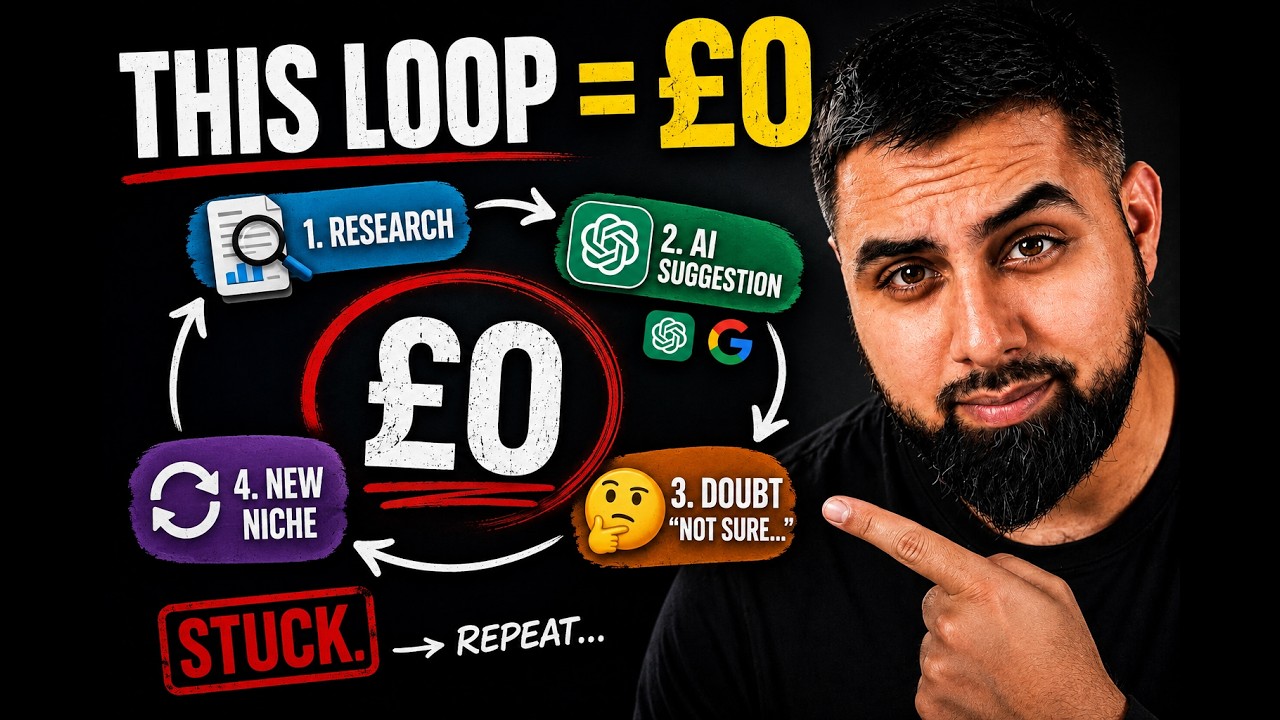
The Real Reason You're Afraid to Pick a Niche And What It's Actually Costing You