Why Automating Your Recruitment Business Is Keeping You Broke

Mohammed Adris explains why recruiters who automate first end up broke. Automation multiplies results, not creates them. Do manual outreach first to find what works, then automate that specific pattern, not the other way around.
Chapters
Most of the recruiters that I speak to who are setting up automations, building AI workflows, getting LinkedIn sequences running, are in many cases making less money than the recruiters who actually aren't doing any of that. And that's not a knock on AI and automation. I use it every single day. My team runs it. And there is a version of building automation that is useful. And there's also a version of building automation that is an extremely convincing way of avoiding the actual work. And if you're a recruiter or even a business owner who spent the last few weeks setting up all of these tools, testing them, building workflows, and you haven't made any money from it or a placement or even a meaningful step towards either of them, then I want to show you something in this video that I think is going to make you feel a little bit uncomfortable and then hopefully make you a lot of money as well. Okay. Let's start with what's actually happening when you build automations before you have results. You start building an automation because you want to do more in less time. And that's a reasonable goal. But here's what's actually happening. Certainly for the first couple of months, you spend a week setting up LinkedIn outreach sequences, you spend time getting your email sending platform right, you test a couple of messages, you tweak the copy, you adjust the timing. And it feels like progress. It is progress in the sense that you're building infrastructure. But the end of that week, you still haven't generated a client or a candidate or made a placement or arrange any interviews. And the candidates and clients who were sitting literally on your CRM, who know you by name, who you've not spoken to in a while, they haven't heard from you. So what you've actually done is automate the least certain part of your business while ignoring the most certain part. And the people who don't know you get a perfect automated message, but the people who do know you, they get nothing. So what happens is that you're not building efficiency. You're building a delay and the delay costs you money every single day that it runs. And there's a question that I use with every recruiter that I work with, employee, consultant, like whatever relationship I have. And I want this to sit with you and I want you to answer it honestly. If your life depended on it and you had to either make a placement within a week or add a million to your business or to your desk, what would you do over the next week, month, year, whatever it is? Don't like overthink it too much. Just say the first thing that comes to your mind. And almost everyone I've ever asked this question to gives me the same answer. They would call, they would email, and they would message. They'd get on LinkedIn and message the people that they already know. They'd go through their CRM and contact every single candidate who is even close to matching the vacancy. And they'd WhatsApp and message clients that they've worked with before. And they'd work their existing network as hard as it could possibly be worked. None of that involves building a new work club. None of it involves testing a new tool. None of it requires automation to be set up first. It requires you to pick up the phone. The reason that question matters is this. If that is what you do when pressure is at the highest, that's also what you should be doing right now. Not instead of automation, but before automation. You already know what works. You just stopped doing it because building the system felt more important. It's not. Not yet. Now here's the part that I just don't want you to misunderstand because it isn't an argument against AI and automation. It's an argument about sequencing. Automation doesn't create results. It actually multiplies them. So if you find a message that works for you, automate it. You send it 5 times and you get 5 responses. Yeah, automate it. If you find a candidate qualification question that converts well and you automate the follow-up, you qualify 5 times quicker. Yeah, that saves you a lot of time. By all means, do that. But if you don't know what works well, and if you haven't sent enough messages manually to see which ones get replies, what format you should send them in, if you haven't spoken to enough candidates to know what qualification questions open them up, then automating gives you nothing because you're multiplying a process that you haven't proven yet. And here's how I think about it. The skill of knowing what to say to a candidate lives in your head. Years of experience, years of conversations, patterns you picked up without even thinking about it. The knowledge is the asset. Automation is just a delivery mechanism. So if you automate before you've extracted that knowledge, you end up with a very efficient process that produces mediocre results at scale. Whereas if you extract the knowledge first, run it manually, refine it, prove it, then you automate it, you end up with an efficient process that that produces your best work at scale. So automating nothing until you know what works, because automated bad is just bad faster. Now I want to make this clear. I'm not saying that you ignore any idea of preparation. What I'm saying is to do the minimum just to get moving and sort the rest out along the way. And in a recruitment business, the minimum to get you moving is, do you have candidates that you can call? Do you have clients who you can call? Start there. Because a person who doesn't do that isn't making any progress. The one who does is. Just don't be that recruiter or business owner who spent 6 months building the perfect workflow and hasn't actually generated any clients, candidates, or placements from it. By the way, if you are building a recruitment business, maybe even you're an employed recruiter, then I'd appreciate if you just heard what I had to say here. Effectively, what I'm looking to do is number one, I'm hiring and growing in my own recruitment business. So message me on LinkedIn if you want to explore the idea of even working with me. If you are looking to establish your own recruitment business and grow it from there, then at the moment I am supporting a few people doing that. And there's some information below. You can book a call with me or someone in my team. If it's a good fit, we'll make it work. If it's not, we'll try and point you in the right direction. And if you are running a recruitment business between 1 and 10 employees, like you're the founder, you're leading the business, and you're thinking about either closing down, merging, or maybe even working in partnership with us would strengthen both of our businesses, then I'm open to that conversation as well. So just hit me up on LinkedIn and we can take a conversation from there. Okay. So I was talking about the order of things. So what is the right order? Because I'm not telling you not to build automation or use AI. I'm telling you what has to happen first. I would rather hire an old school recruiter who doesn't believe in AI and automation that bills $400,000, maybe even half a million a year, than a recruiter who has built every workflow imaginable and bills absolutely nothing. And the reason why is this. The old school recruiter already knows what works. They know which messages get callbacks. They know how to qualify a candidate in 10 minutes. And they know how to handle every single objection that a client throws at them. The knowledge is real and it's proven. What they don't have is reach. And they're limited by how many hours they can work, how many calls they can actually make, how many messages that they can send by hand. And when I put automation and AI behind a recruiter who is a well-polished recruiter like that, they get triple the reach. The same messages. I've had this conversation even internally. I had an employee who joined us recently who came from a competing recruitment firm, very busy, worked long hours, all of that stuff. And she joined us and word for word she said, I didn't appreciate what a high-performing recruiter was until I came here because all of the things that were keeping me busy, I don't have to do any of them here. And the amount of candidates and clients that I get to speak with in a given day is completely different. And now I'm beginning to see and understand why everyone performs so well here. Word for word. And that's the bit that I actually enjoy, which is literally tripling the outreach of every single person who comes and works for us. So the same message that basically already worked, that's going out 3 or 4 times a day to different people, clients, candidates, the same process that already converted, running every day automated instead of doing it manually, That's where time efficiency really comes in. So the contrast with a recruiter who has built everything perfectly, but hasn't proven what works yet, automation gives them nothing to multiply. So the sequence is this: manual work first, prove the message and the process and the approach, then automate it so it runs without you, and then layer in AI to personalize and improve the whole thing at scale, not the other way around. If you start with automation, what you're trying to do is build the 2nd and the 3rd floor of a building that doesn't yet have a foundation. So manual first, automate second. There is no shortcut around that order. I know that's not what you want to hear, but it's what will actually produce the result. So I want to leave you with something practical because another question that comes up after you watch a video like this is that, okay, but how much manual work before I actually automate? Well, the answer is this. You automate when you have something worth automating. That means that you've sent enough messages to know which ones get replies. You've spoken to enough candidates to know which questions and openers work really, really well. And you've run enough email campaigns to know which subject lines get opened. You don't necessarily need years of data. You just don't need to be perfect. You need enough repetition to see the pattern. Or if you want, you can use that link to book in a call and come and work for me. And we've got 10 years worth of data and we'll just hand it over to you. So anyway, for most recruiters, there's a few weeks of consistent manual outreach, not months, not years, a few weeks done properly every single day without stopping to build something completely brand new. And when you have that pattern, you automate it and then you do the next manual process and prove that all at the same time. And you automate that one too. And then that turns into a skill and then it becomes a workflow and that's how everything kicks off. So here's the question that I want you to sit with. Go back to the question that I asked earlier. If your life depended on you making a placement or adding a million to your business or your desk, what would you do? And whatever the honest answer is, that is your priority this week. Not automation, not the workflow, not the AI setup. The thing that would work if everything else was stripped away. Do that thing. Do it manually. Do it until it works. Then automate it. Manual first, automate second. There is no shortcut around that order. And I'm not going to stop repeating that. Now, if you want to understand the manual processes, some of you may or may not know, especially if you're new to the channel, I actually released a full 5-hour course on how to start a recruitment business literally from scratch. This is the kind of stuff where people have commented and said like, bro, I paid $5K for a course and you just explained it so much better. Like they're the kind of messages that I got. It's 5 hours long. It's end-to-end from start to finish of everything that I would do to help start and grow a recruitment business. The idea is, is that you shouldn't really want to work with me or have to pay me anything until you've already got going. If you want to start sooner, that's not a problem at all. I've supported beginners that I've worked with. But the reason why I put that video online is because I wanted it to be for free. And I didn't want to leave any excuse for anybody to say they don't know how to start a recruitment business. It is literally for free. And I have had countless people message me saying, bro, I appreciate you releasing that video. I've used it. I followed every single step. And I am making a lot of money from this. Thank you so much. So if you go and check out this video, then hopefully I'll be getting a message like that from you pretty soon. I'll see you in the next video.
More from Mohammed







How to Build Client and Candidate Relationships That Make You Impossible to Replace

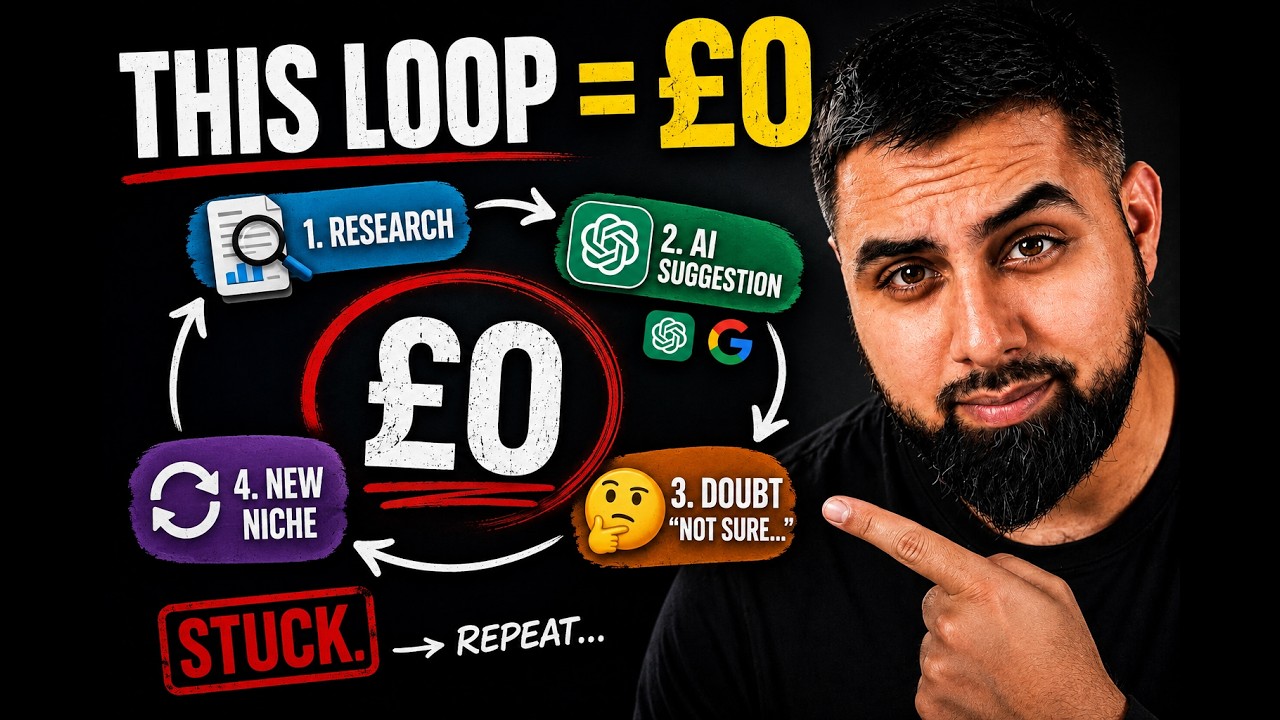
The Real Reason You're Afraid to Pick a Niche And What It's Actually Costing You