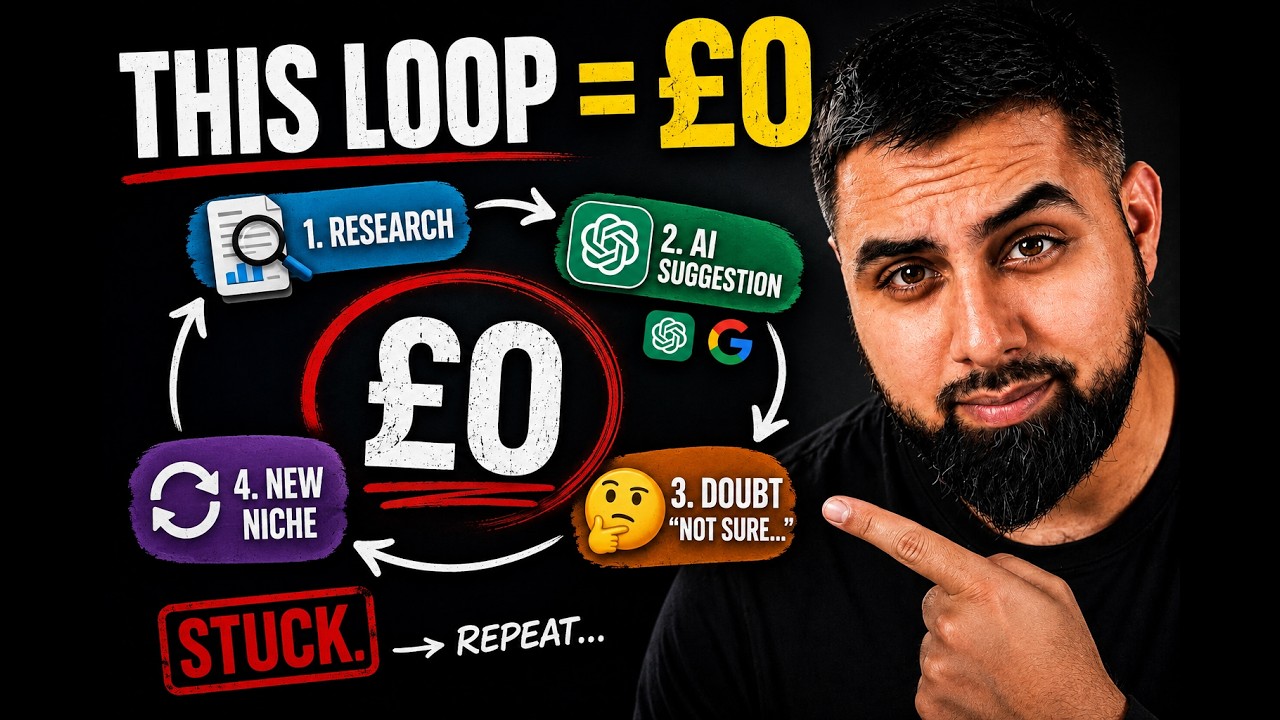
In this coaching‑style monologue, Mohammed Adris challenges the common habit of treating a first "no" from a client, candidate, or partner as a final rejection. He argues that a "no" often reflects incomplete information or a lack of understanding about the value being offered. Using a real‑estate analogy—where the most valuable properties are sold before they ever hit the market—Adris illustrates how hidden opportunities require proactive follow‑up and the provision of missing context. He shares several concrete recruitment scenarios: a client who initially declines an agency partnership, a candidate wanting to switch to an internal recruiter role, and his own experience launching a recruitment business without an established brand. Across these stories, he emphasizes that successful recruiters treat the first "no" as a data point, not a verdict, and they re‑engage with additional insight or a reframed proposition. The talk concludes with a brief plug for his anti‑trend video "AI is Massively Overcooked or Overrated," urging viewers to stay focused on the core message rather than getting distracted by the plethora of AI tools.
Chapters
So let's just say a client or a candidate just says no to you once and then you disappear. You just say, okay, no worries. You close the laptop. You tell your friend that you respected their decision. But here's a question that nobody asks. And in the moment is this, was it actually a no or was it just that the first thing that they said because they just didn't understand what you were actually offering? Well, if you've ever backed off the second somebody hesitated, a client, hiring manager, candidate, partner, whatever it is, then stay with me because this one might change how you show up in every conversation from here on. And here's something that most people don't actually think about, and that's this: the most valuable house on the market, or the most valuable car on the market, is never the one that's actually on the market. They literally sell before the listing even goes public. An agent quietly tells You know, three or four of the people that they trust. This one's coming up. Are you interested? And it's gone before a single photo has even listed on the site. And the public version, the one with the open house and the bidding war, that's basically for everyone and for everything that is left over. It's not because those houses are in hiding. It's because the people who ended up with them didn't wait for an invitation. Someone made a case for that house. Before anyone else even knew to ask the question about it. And that's not purely a real estate or a property selling story or a car selling story. That's every good opportunity that you'll ever come across, even in recruitment. The client, the candidate, treat them like the buyer, the job, the deal. The best ones are rarely just sitting there waiting for you to apply or waiting for them to apply. They go to whoever was still in the room after the first no. I'll give you my own example. I can still remember a client telling me that they didn't want to work with us as a recruitment agency because they have just advertised a vacancy. And at first instance, they said, no, we don't want to work with you. And I left it. And I said, you know what, okay, cool, I'll wait until they come back to me and then we'll carry on going. But in that moment, I decided not to. I decided to give the client a call back because I didn't believe what they were doing was right. And I gave them the example that I just shared now, which is that The best candidates are not necessarily the ones that are actively on the market that are looking for jobs right now. And I told them, told the hiring manager that you're probably one of the best people in the space. You're not looking for a job right now. So if there's a competitor who is hiring for your position, you wouldn't be applying. So the best candidates don't necessarily sit on job boards. So just for clarity, just in case you are considering making the jump from a corporate role in recruitment and you're thinking about starting your own business, or, you know, maybe you just hit your first few weeks, then the likelihood is that you've probably encountered this problem. Like you send a message and somebody replies saying, Not interested, and because you're new, you just take that at face value, and you just think, okay, cool. Well, the door is closed there. It almost never is because most of the time, not interested just means I don't understand yet why this is worth ten to fifteen minutes of my time, or it might mean that I just don't need your help right now. It doesn't mean never ever speak to me again. And the people who build like real books of business in recruitment aren't the ones who just. Never heard no. They're the ones who treat the first no as incomplete information, not a final answer. And I want to give you another example. Imagine somebody is working in a recruitment role and they hire accountants. Let's just say they recruit accountants and they want to leave recruitment because they are bored of hiring accountants all day long. They always talk to accountants and they're getting bored of it. They want to speak to a few different variations. And you ask them like, what kind of job do you want to consider? And they say, I want to become an internal recruiter for an accounting firm. I was like, hang on a second. That's the scenario that played out for one of my candidates. And it wasn't just them saying, this is what I want to do. This was me now saying, no, this is a bad idea. Which for most people, that would be a terrible thing to do, which is telling your clients and candidates that no, they should not do that or not consider that role. Even if I had that vacancy in mind, i.e., a candidate wanting to go client side. That was a situation that played out. And I said to them, No, I'm not going to help you with this because I know you're not going to be happy. You're telling me that you're bored of talking to accountants all day, and now you're going to go and get a job with an accounting firm. Yes, it might pay you more, but it's not the right thing for you to do. So when you are in that position, let's just say you're starting your own recruitment business. Every no just feels personal. I've been there as well. Happened to me 11 years ago now, and it feels personal because it feels like they're saying no to your company because there's no real name or reputation behind it because it's just you. So the instinct is to protect yourself. Well, somebody declines and you quietly decide, well, okay, cool, they were never going to say yes anyway. Like, no, that's not true either. But go back, go back to that house example that I gave earlier. That sold before it hit the listing sites. Nobody who ended up owning that house believed the first I'll think about it was actually the end of the conversation. They asked one more question. They explained the thing the other person hadn't understood or even considered yet. The no didn't move because they were louder. It moved because they got clearer. And even in running your own recruitment business, you know, like, the fastest way to lose momentum is that a client tells you that they're happy going through applications for now, like the story that I gave earlier, and you just stop. And you stop thinking about the role. You move on to the next one or the next role because chasing them feels like begging. You're not begging, except that the client isn't rejecting you. They're just trusting a slower, more familiar process. They're leaning into familiarity, all because nobody's actually shown them what they're missing out on by not talking to you. That's not a closed door. That's missing context. And the recruiters who actually end up doing really, really well aren't the ones with better luck. They're the ones who go back the second time with something that the client hadn't considered the first time around. So if your instinct is to wait until either you're ready or they're ready, then all you're doing is you're leaving the outcome to a chance. And the owners and the recruiters and the agency owners who get the best terms with the clients that they actually want to work with are the ones that just don't take no for an answer. That doesn't mean you become pushy the moment they say no. It's just that The reason why they're saying no might be because they're missing some context, so you give them that context. So I want you to take this as a shift. I want you to stop treating the first no as a verdict. Treat it as the version of someone before they had the full picture. Your job was never to convince someone who was already sold. Anyone can do that. That's the job of a cashier. That's not you. Your job is to be the reason that they continued the conversation and considered an alternative solution. So the next time that somebody tells you no, don't ask yourself, should I let this go? Just ask yourself, do they actually understand what I'm offering yet and why it is a better way of doing things compared to what they're doing right now? Or did I just stop one conversation too early? That question alone will change more outcomes than any script, any pitch, any perfect message ever will. Now that said, I did make a slightly anti-trend video recently, and it's this one here titled AI is Massively Overcooked or Overrated. Have a watch of it and I'll explain why, just so that you don't get lost in the process of looking at all of these different AI tools that are available.