I Tried Every AI Tool For Recruiters, These Are The Best
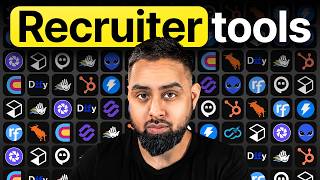
Mohammed Adris tested AI recruiting tools for five years and sorted the best ones into three categories: candidate sourcing, recruitment operations, and lead generation. He warns against LinkedIn automation risks and explains when AI shouldn't be used, like ultra-niche screening.
Chapters
AI has completely changed recruiting, and if you're not using it the right way, then you're probably getting left behind. And frankly speaking, there's no debate about it. Partly because the problem is that there are hundreds of AI tools and experts claiming that they will revolutionize your recruitment business. But most of them, frankly speaking, are just complete rubbish. I've been using AI and automation tools for the last five years, but I've spent the last few months researching it in a little bit more detail, ultimately trying to find out one thing, which is which ones are the most relevant for recruiters. Literally everything from tools to help you source candidates, tools that automate your outbound sales process for clients. And I've narrowed it right the way down to the best AI and automation tools in the market right now. So, in this video, I'm going to be breaking all of them down into three separate categories, showing you exactly which tools are best for each individual category, and most importantly, sharing with you which ones you should be using right now, depending on the stage that you're at in your business. Because, let's face it, the tool that is best for a solo recruiter is very different to the one that's best for somebody running a team up to 10, and completely different for the one with a team of over 50. So, without further ado, let's get into it. But before we dive in, let me just show you how I'm categorizing all of these tools. I'm going to be separating them into three separate categories. One is focused purely on candidates, another set focused purely on the back end of the business, the operations, the running, and another set of tools focused purely on client acquisition. There's an important point to mention here, and that is that if you are running a recruitment business, you don't actually need any AI automation tools to run the business. You can run it without AI automation tools, because there are still recruiters today making 100k a month, working literally just off an Excel spreadsheet. But you have to ask the question, is that the nature of business that you want to run? Is that the lifestyle that you want to have? Do you want to be glued to your desk for 16 hours a day? So the question of what is the best AI tool for you to use? Well, it depends on what specific processes you're using, what activities you want to amplify, and which activities you want to get done in less time than what you would do if you were doing them manually. So let's start with candidate sourcing. Now, if focus purely on blue collar candidates, then the reality is that they're going to exist on job boards, on Instagram, on Facebook, and these are the places that you're going to be able to contact them, that is via social media. And if you're recruiting predominantly for white collar candidates, then the reality is, is that 90% of them are on LinkedIn, which makes things so much more easier because now you can get the data. Once you've got the data, now it's about processing. So if we break down the candidate sourcing process, there's a step where you want to start a conversation. Let's say you can work with this particular candidate or they might not be ready right now. You need a way to maintain that relationship. So for starting the convers, we've experimented with a few tools. Dripify and heyreach both do very similar things. There's a couple of other AI automation tools. The reason why we stick to these two is because ultimately LinkedIn automation is considered illegal. From a LinkedIn perspective, they don't really like it. So unless you set the tools up properly or you've got some proper training on it, then you could risk compromising your account. And after testing several automation tools on LinkedIn, we found that these two were the best ones to use from a safety perspective, which should be your absolute priority on LinkedIn. But just keep in mind the rule still applies, meaning that if you don't know how to use these tools or you're completely unfamiliar, just get some expert advice on this. Because not setting up the accounts properly or not using them in the right way, you can still run that risk. So just keep in mind what I'm talking about. I'm talking about literally the first step in connecting with new candidates in your market. Because if you are building your connections in your market, then ultimately you're going to be going through either a list, you'll build out a Boolean search, or some kind of search on LinkedIn, and you're literally manually sitting there, connect, connect, connect, connect, and maybe even sending a few personalized messages. But if you're doing that, you could be sitting there for hours on end because as soon as somebody connects, then they're going to send you a message and then you get lost in your inbox. And this is probably like the most simple thing that I'd say just must be automated because it's not worth anybody's time to be sitting there on LinkedIn. Just be clicking, clicking, clicking, clicking, clicking. You might as well just automate it, especially for a tool that costs $99 a month or less. So go and check out both of those tools. You'll also find all of the tools that I've got listed in the highlights of my Instagram. But ultimately these are the best tools for candidate generation on LinkedIn. So if you want to go a step further, you can also generate candidates via email. And the two tools that I've come across to experiment with this is either pin.com or juice box. Now, if you've been reading through the Reddit threads, then you'll find that Juice Box went this period where a lot of LinkedIn accounts were getting restricted. And this is exactly the point that I was making earlier, that you want the best tool for the best job. Now, yes, it is really good if you can run multi channel campaigns, but if your account's going to get compromised, then it's not really worth it. So PayBeach can run multichannel campaigns. Except Juicebox has a much better way of really filtering and defining the specific candidates that you're trying to source for. So if you ask me how I do it, then use Juicebox for email and use one of the Automation tools for LinkedIn for LinkedIn connections. So now that's the first touch point made. The second touch point is when you actually talk to your candidates and when you screen them. Here's something that I might say to you which might make you think, gosh, why is he talking about AI tools? Well, we don't use AI tools here because when you're recruiting in an ultra niche market where the candidates are in super high demand and a very technical one as well, yes, there are a few screening tools that you can use to help you automate the process of screening candidates. But we found that the candidates didn't enjoy the process or didn't enjoy the journey, meaning that they were less likely to sit there at their own pace and complete a survey or a questionnaire or even an AI interactive interview. So at this moment in stage, we don't use any AI tools for screening. So just keep in mind, choosing the right AI tools is like one piece and component, quite an important one for growing recruitment business because ultimately you need to get the right tools that set your business up for scale, not ones that limit your growth because they only allow one user and they don't communicate with each other, which becomes a problem in itself. I. E. You want tools that are able to communicate with each other, not create more work for you. So if you want to skip the guessing phase where you're trying to figure out which tool is best for you and your business. Then you got two options. One, I've left a link below for a school group. It contains all of the information for some of the systems that you need in the earlier stages of your business. And if you're past that stage and you're a little bit more experienced, then another link in the description is a link for you to work with me. So if you click the link, you'll get some information on which thing is the right thing for you. And if it is the right fit, we'll end up on a call either with me or someone in my team. We'll map out a plan, we'll make sure it's a good fit, and if it's a good fit, we'll get going. If not, no problem. Because the last thing that you want to be doing is taking out one tool which you believe is the best thing for the growth of your business, and then six months later you need to change it because actually it causes a few more problems than what you actually want to it to do. So now let's move into the back end of the business, which is category two, and we're talking about the recruitment operations. Now, there's going to come a moment in time where you need a CRM. Now, I don't actually believe that complete and total beginners need a CRM, certainly not for the first few months, because you just don't have much data to manage. However, if you decide to get one like I did when I started my business, then it just helps you keep everything clean and organized. However, just anticipate that there's going to be about a day's worth of work later on down the line when you do need to implement that CRM. So when it comes to picking CRMs, what's most important about a good CRM is one that is malleable. And malleable can come in two different forms. One is that there is an unlimited amount of customization that you can put in play. And the other one depends on how good the team are. Meaning that if they take on your feedback and they adjust things for you or they customize things for you, that makes it completely fine too. So we used to use Bullhorn, we went through HubSpot, tested out Loxo, and also considered recruiter flow. And all of these tools are good in their own right. Except there's one that communicates really, really well with all of the other automation tools that I've already mentioned, and that's recruiter flow. Recruiter flow also connects in with A load of other automation tools like Zapier make, which are all really important ones that you want in place because all of the data that you're connecting in with across all of your LinkedIn profiles, you want one place where it's all being collected and that's going to be inside recruiter flow. And the final category boils down to how you get in contact with your clients. So if you're looking for lead scraping ability, then Apollo, Crossbo, ICPS, play.com all of these are really good tools for generating leads for your clients so that you know exactly who you're going to be contacting. And the reason why these tools all really help because how quick and easy it makes it for you to, number one, gather a load of data and talking about first name, last Name, email address, LinkedIn profile, phone number of people who you want to contact or you want to have as clients. But now tying that up with a tool like instantly allows you to now process that data, meaning that you can reach out to a lot more clients and candidates if you are going to do something like cold email. And when you consider the approach for cold email, you can contact thousands of people a day and if you compare it to traditional methods like cold calling, then you're capped, you know, 100 calls a day and you're pretty tired. And yes, there are AI tools now that can help you cold call, but if you're in the earlier stages of your business, then they're not going to be the best things for you because they're probably going to eat into the budget that you might have for helping getting your business off the ground. So if you are looking to grow, then you're going to face some of these bottlenecks in your business. You're either going to have a shortage of candidates because you need more candidates. You're either going to have problems within your delivery process or you're going to have problems with acquiring new clients. I've just given you all the tools that we use in the business, some of the ones that I've experimented with. Now the only thing left is for you to set them all up. So now if you want me to go over the exact step by step process for how I land fees up to 35k in my recruitment business, regardless of whether you're a complete beginner or an experienced professional, then go and watch this video because this explains exactly how me and how I've helped some of my clients land 35k placement fees. So I'll see you in the next video.
More from Mohammed








How to Build Client and Candidate Relationships That Make You Impossible to Replace
