Blended Learning with Liz Arney
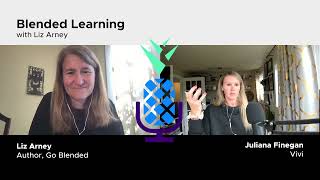
Liz Arney, an education consultant, talks about blended learning and how schools can use technology purposefully after the pandemic shifted teaching online. The conversation covers real barriers to tech adoption, what actually works in classrooms, and why teacher support matters more than the tools themselves.
We're no longer convincing people they need to use technology, which is literally what we were often saying to folks. And now it's much more around how to purposefully use technology and make it meaningful to people. Now we're using it to address learning gaps. Now we're using it to differentiate instruction better.
Welcome to the Educator Pineapple Podcast, which features trailblazers, pioneers and ed leaders who all started their careers in the classroom. Come hear about topics ranging from digital transformation, data literacy, blended learning, innovation, and honestly, everything in between. So excited to have you join our show. Today's guest is Liz Arnie, who is just so excited to be on here.
Hello.
Liz is an education consultant in the areas of innovation, school leadership, adult learning, school design, change management, curriculum pedagogy, school startup, and educational technology. She also has over 20 years of experience working in schools. She's written numerous white papers and landscape analysis, built and facilitated communities of practice, provided instruction and coaching support in the areas of digital tools, digital capabilities, school design, and high quality curriculum implementation. She's taught grades 9th through adult courses and conducted research and diligence on education products and services. She is also the author of Go A Handbook for Blended Technology or sorry, A Handbook for Blending Technology in Schools, which is one of my favorite books. And she thought I was lying that I recommend it, but she checked the Amazon and saw that it had gone up. So thank you so much for joining me, Liz.
Thanks for having me.
So do you have anything to add to the bio? I know it's a little uncomfortable listening to the bio, but do you have anything to add to it?
No, it's pretty comprehensive. Thank you.
As you know, and as I told you, everyone who joins the Educator Pineapple podcast started their career in the classroom. So what did you teach and where did you teach?
So I taught 9th through 12th grade English and I started my teaching career in Boston public schools, and then I taught for a number of years on Bainbridge island in Washington and then taught for a number of years at the Taipei American School in Taipei, Taiwan.
Awesome. So did you ever expect you'd be doing what you're doing today when you were teaching in the classroom?
No. No. I very much saw myself as a writing teacher and figured I would either always teach writing or I would have a career in writing or in editing or in publishing. Um, and I keep in touch with quite a few of my former students and they are always without, without fail, quick to tell me some anecdote of how they made some grammar mistake and got caught with it and how I would be so disappointed in them all these years later. And I'm not disappointed in them, but I think they very much saw me as kind of a crazy grammarian, writing rules kind of person. And it never, never would have. I never would have believed I would have been doing this or caught up in technology now at all.
Caught up in technology. That whole technology thing, just as like, a little history of Liz and I. We go way back to when we both got caught up in the technology. Absolutely. 2012, 2013, when I doing some courses around blended learning and teacher prep. And. And I just. I love that because we've worked together for a long time, and I have asked for, you know, some favors, and she always joked that my superpower was getting her to do those things, which I wasn't sure was a compliment or not, but I'll take it as a compliment. But I really do appreciate you always being open to jump in and share, because I do think that you have a ton of experience, expertise, and knowledge in this space. And so I guess my big question is next, how did you get into this whole world initially?
Well, back, I don't know, 10 years ago, longer. I was wrapping up some work. The Common Core had just started rolling out. I was doing some curriculum work, and I was approached and asked if I could lead our hybrid learning work. And I was like, I don't even know what that is. And they called me the hybrid learning champion, which was a horrible title. And yet when I asked my supervisor, like, why do you want me to do this? I don't know tech. And she said, you've spent so much time on instruction and curriculum, you will not mess it up with the technology. You will not let the technology get in the way of learning. So I was like, okay. And I'm an incredibly curious person, and I didn't know what I didn't know. So I was like, sure, I can do anything for a couple of years to just make sense of it. The bar was low at the time, and so I just started learning and connecting with other people like you, who knew things, and the rest was history.
I. It's funny, when we first met, I.
Feel like these problems are, like. Especially during the pandemic, somebody called me and said, all our employees are working from home and their kids are home. Can you figure out what they can do with their kids in the summertime while they're working? You know, which was kind of an interesting problem to solve. And sometimes it's much more cut and dry of trying to roll out blended learning in Our school and it's not working and we don't know why it's not working. Can you come and kind of diagnose the problem or tell us what's getting in the way? So I would say that's probably my crown. And then I think what I'm working on, I'm always trying to think about adult learning theory and trying to use that more in my approaches to adults and embed that more in how I'm presenting to adults and thinking about engaging adults. And then I am just still, you know, anybody who knows me knows I make terrible PowerPoint slides and I, I'm getting better, but I am terrible. I just don't know what to say. Didn't go to business school. That's not my strong suit. That's.
I didn't know that I learned something new today.
Wall of words.
So how do you think you use or I guess how do some of these inform the work you do, your outlook and where you focus your time currently?
Well, I would say I'm super empathetic to people in schools right now. I think it is incredibly hard to work in schools. People are super stretched thin. Everybody needs a lot of capacity in their charters and districts. And so it's been great for me because it gives me plenty of work. But I am so empathetic about how problem solving just has to look different in this kind of post pandemic world around what people are just physically capable of doing, what people are mentally capable of doing. And understanding that it's, it's just really, really hard right now. So I, I think when I approach especially schools, I approach it them very much from a listening perspective because lots has changed and have in the past few years.
No, I totally agree. There's so there are so many different challenges on every leader and educators shoulders right now. And trying to even just unpack some of those, to figure out ways to support those challenges is a challenge in and of itself. So I think that that's definitely both being empathetic and also giving a lot of grace. I think that's been kind of my mantra is like, you know, you just don't know what people are dealing with, working through, especially in this time in education and as parents like you mentioned too, just all of that in between. So I have to say before I build out questions for my guests, I asked them to do a survey and I just had to share this because it illustrates Liz and I so perfectly. I asked like, you know, what do you want to talk about? And it said, I think You've assigned me blended learning, so that's what we're going to talk about. But really, it's about my curiosity. What makes people tick? What do people learn best? What barriers are getting in the way of using technology to meet their needs, and what's out there around supporting your work. And I just. I love that because we've worked together for a long time, and I have asked for, you know, some favors, and she always joked that my superpower was getting her to do those things, which I wasn't sure was a compliment or not, but I'll take it as a compliment. But I really do appreciate you always being open to jump in and share, because I do think that you have a ton of experience, expertise, and knowledge in this space. And so I guess my big question is, next, how did you get into this whole world initially?
Well, back, I don't know, 10 years ago, longer, I was wrapping up some work. The Common Core had just started rolling out. I was doing some curriculum work, and I was approached and asked if we could. If I could lead our hybrid learning work. And I was like, I don't even know what that is. And they called me the hybrid learning champion, which was a horrible title. And yet when I asked my supervisor, like, why do you want me to do this? I don't know, tech. And she said, you've spent so much time on instruction and curriculum, you will not mess it up with the technology. You will not let the technology get in the way of learning. So I was like, okay. And I'm an incredibly curious person, and I didn't know what I didn't know. So I was like, sure, I can do anything for a couple of years to just make sense of it. The bar was low at the time, and so I just started learning and connecting with other people like you, who knew things, and the rest was history.
It's funny, when we first met, I feel like it was before it was called blended learning. So it's just like using technology effectively or strategically. It was like, okay, how can we use technology to build teacher capacity to impact student learning in different ways? And I think that, like, our go to mantra was don't use technology for the sake of using technology, but leverage technology to address instructional challenges and teach students better. And I kept, like, reciting that every time I visited a school, thinking through, like, why are we using that? And that speaks to actually that story of, you know, you were put in charge of it because you were so deep into the pedagogical approach, not necessarily the technology side so really thinking through how it would impact that instructional practices and not just add some fun aspects to the learning experience, but actually impactful parts or both.
But also at that time, you know, technology was just taking off. And here in the Bay Area, there was a lot of hype and a lot of promises being made and people were really into it. And there were a bunch of. I mean, there were a bunch of snake oil salesmen, if I could sound old and crotchety, but there were a bunch of people making false promises to schools about what technology could do or what was on their critical path of development. And so I think there was a lot of anxiety that if we put the wrong person in charge of technology, we're going to spend all this money and it's all going to get wasted.
I mean, that's so important that you don't not only use the technology, but that it's sustainable and impactful. Right. So really thinking through the. Which are things that we're still thinking through today. I know. So with that, what are some of the first places you saw blended learning taken off and like, what systems and structures did they put in place that allowed that to happen?
So I started touring schools that were using technology purposefully pretty early. And it was really interesting because it was. It wasn't what systems and structures, it was the fact that they had systems and structures to use technology purposefully. Rather than kids get on computers or there's a computer station and kids are just messing around in different programs, or teachers are like, hey, let me show you something on the computer. It was very systematic, it was very structured, it was very purposeful. There was distinct times assigned to tech use and distinct outcomes used for tech use. And that I feel like the people, it's kind of the Kip la's of the world, the early adopters really got those systems and structures right. That helped, I think, others and helped me envision, oh, if we're really, really purposeful about when and where we use the technology and for what purpose, you know, we can make magical things happen.
And I think that that speaks to how you structured your book. And like, you know, that not just like, this is what is the pie in the sky that could happen? But exactly, you know, what are those steps that you need to take to get there? What are the conditions and systems and routines and procedures and guardrails that need to be set so that it is successful? And one of my favorite things about your book, like I said, is that it wasn't just theory, but it put a lot of those pieces into action in concrete and translatable ways. In many ways, it inspired me on how to always think about not just the what, but the why and the how. So why did you build your book that way? And what was your goal with writing it other than finishing? I know that.
Well, I don't think I had the initial goal to write a book. I think what had happened some others who were doing similar work to the work we were doing around the country, who were trying to get blended learning going on in their district or in their charter schools, we were learning really quickly from each other, and we had created a community of practice, and we were sharing information on products and structures and what was working, and we gave each other a ton of thought partnership. And I started codifying so much of what we learned because people were starting to reach out to me and saying, can you just talk to me about this, or can you show me how this looks? Or, can you show me a document where you track this kind of data or whatever? And then they'd say, oh, we want to come tour your schools? And. And it started just becoming a bigger and bigger and bigger job. And when somebody approached me about writing the book, I was like, I have so much stuff, and my friends have so much stuff. Like, we could easily put together a book of all our advice and all our structures and routines and kind of all our thinking around change management of adults. And so I put together an outline and reached out to my community of practice and said, hey, will you do this with me? Will you contribute your ideas and make this happen? And they all said yes. So that's how the book happened.
I don't know how. I've never asked you how it started. So it really, truly, like, that collective intelligence and that community aspect and, like, how do we not reinvent the wheel over and over? Which is another reason I did the podcast was like, how do we share these stories so that others don't have access to, even knowing they exist, can leverage those learnings and really put them into practice. Not in a copy and paste mentality, but really in a what pieces work for me? How can I build a model that matches my students, my community, my school needs in a really, like, actionable way? And so I know we've said blended learning has had a lot of iterations like blended learning, personalized learning, innovative learning, hybrid learning, hybrid learning, just using technology. Why do you think blended learning just even the word is hot right now?
I think a lot of it has to do with the pandemic. I think the Pandemic accelerated technology use in all schools. I have a colleague I work with from time to time who we have worked on projects trying to get adults to use technology. When the pandemic started, he was like, well, we have pushed adult technology use ahead 20 years. We're no longer convincing people they need to use technology, which is literally what we were often saying to folks. Now it's much more around how to purposefully use technology and make it meaningful to people. Now it's like, now we're using it to address learning gaps. Now we're using it to differentiate instruction better. Like, the tools have gotten better, bandwidth has gotten better. Instruction in many ways using technology has gotten better. So we're just in a completely different space, which I find very exciting. Certainly there are still people who are like, I don't want to use the technology, but there's no more like, I don't want to use the technology ever. It's just, I don't know how to use this. And I'm feeling kind of vulnerable because I don't have the support I need to be able to use it effectively.
So I think you're already kind of jumping into this, thinking through, you know, now we actually have the technology, right? We have a lot of tools. I mean, these are dreams of actually having so many schools with one to one devices. And so what do you think are the biggest barriers now versus in 2014? You alluded to this a little bit of the, like, before it was like, get the tools in there and now we've got the tools. But what are some of the things that are still holding us back?
I mean, in 2014, bandwidth was still holding us back. It was like. And tech support and IT department. I mean, there was so much holding us back. That is not, for the most part not holding us back. Like, certainly bandwidth is still a problem in some parts of the country. I think there's. It's two things. One is support that I think everybody, myself included, needs differentiated support around tech adoption. I'm really good at some things, I'm really terrible at other things. And I just need someone to hold my hand and do it with me once for me to understand how it works or give me the rationale behind it so it makes sense to me. Whereas other things I can totally figure out on my own. And I don't need to have a tutorial on how Instagram works. Like it's. I can figure it out. So I would say support is one and then the other one is really around imagination. And I think this was the same before. Like, I just remember thinking, we'll never do blended learning with kindergarteners, because I can't imagine a kindergartner carrying a Chromebook across a room without dropping it. And then I went to a district school here, and I watched all These kindergarteners, like 50 in a lab, and they picked up their Chromebook and they walked to all these different places in the room, and they were sitting on the floor, and they were sitting on tables. I was like, what's going to happen? It's like, no one dropped a Chromebook, and if they had, it would have been okay. But I think there's a way in which until we see it, sometimes we just can't imagine what it looks like. And it doesn't take that much imagination. But I totally understand why some teachers are like, yeah, I don't get it. It's like, I need to see what it looks like. And then I'm with you.
What I'm hearing. And I mean, I think this is very similar to 2014, but also even more resonant now since we have the tech, is that we just need multiple access points because everyone's at a different point on the spectrum. And so what resonates with one school or district is not going to necessarily resonate with another. And so how do we build those bridges and those access points for everyone to kind of start their journey where they're at and in a resonant way, a way that they're like, oh, I could try that. And then I think also that space speaks to the idea of having the ability to see examples at different points in the spectrum, too. Because I think that a lot of times we show some of these shining examples of crazy innovation happening in different districts across the country. And people are like, that's really cool. Great for them. Congratulations. Not my jam or I can't even imagine getting there. As opposed to sharing meaningful milestones of going from step A to step B to step C before even getting to step X, Y, and Z, which some of those schools are at. Right? So trying to not only say, what are the access points that we're on different points of the spectrum, being transparent about that, and also what are examples at different points of the spectrum? So in an ideal world, I know we both have kiddos, yours are older than mine, so I learn from you daily. Thank you for being my mom role model. What do you wish all could could do, given the tech that we actually have in classrooms today?
I watched so many kids do amazing things with technology during the Pandemic and part of. Well, let me tell you a story. So my son plays in a youth orchestra and when the pandemic shut everything down here, they were like, oh, we'll just move online. Well, you can't play in an orchestra online because if you play on Zoom, there's something called latency. And so there's just a bit of a delay, so everybody can't play synchronously. So we're like, what are we going to do? And some adult who was involved in the orchestra was like, oh, I've got this everything down here. They were like, oh, we'll just move online. Well, you can't play in an orchestra online because if you play on Zoom, there's something called latency. There's just a bit of a delay, so everybody can't. And had figured out what it was going to take, technology wise and programming wise for every single kid to play synchronously in the orchestra. And it wasn't like, here's a one pager and just configure your laptop like this. Like it was extensive what had to be done. And he somehow. And it's not like the parents did it. I looked at it and was like, oh, play synchronously. So we were like, what are we going to do? And some adult quite even understand how to get into the back end of your MacBook to get. To get to that point. But every kid learned how to configure their laptop to make it happen. And once they had done that, it was really interesting because I watched my son take off and he was like, oh, but if we can do that, then we can do this. And he just kept going of, oh, I can film myself doing 10 different versions of a song and I can sync them all together where I'm like, what? Like, there's a way in which what I want for all kids is not the same thing, but what I want is I want an adult who is involved in the orchestra was like, oh, I've got this. Who can get them over certain technological humps so they can then just. And had figured out what it was going to take, technology wise and programming wise, for every single kid to play synchronously, teach themselves, or seek out the next adult who can teach them what they want to learn. Because I feel like I don't think I could have ever gotten those kids over the hump that that adult did. But once he did, the kids did all these amazing things because it like cracked in the orchestra and it wasn't like, here's a one pager and just configure your laptop like that to open a whole new kind of world of tech for them.
That is incredible. And I think just like speaks to the fact that kids especially during COVID have been extremely resilient and have pushed the envelope in so many different ways and have taught us as adults, even adults in educational technology just how much can happen with like you said that little support of giving over those challenges. And so I guess like you said this a bit with like having those supports and those people who can help get over the small humps with like.
It was extensive what had to be.
Done which probably seems like a really big hump to some of us. But how do we get there on more of a scalable system level?
Well I think, I think it's a few things. I think there's a big. And he somehow and it's not like the parents did it. I looked at it and was like oh, disconnect between the tech we teach kids and using to quite even understand how to get into the back end of your Mac technology to go somewhere. I feel like I've watched my kids and they are taught really specific. They're now in coding which I've got more hope around. But they've just been taught here's how you do a slide deck and then they do a slide deck. It's like this very end focused objective which I think is the wrong book to get to get to that point. But every kid learned objective around teaching and using technology. So I would say that's the first thing. But then I really think we as adults need to double down on the purposes of technology. Like I hear, like I still hear adults go crazy about screen time. And I'm just like not all screen time is created equally. And there is, it is very different like trying to figure out technologically how to merge how to configure their laptop to make it happen. And once they had a bunch of, you know, videos together than it is to just scroll on Instagram stories for an hour. It's just totally different screen time. And we kind of done that. It was really interesting because I watched my son take off and he was like oh, but if need to get away from that and we need to ask kids how might you use technology or leverage technology to solve this problem. If we can do that then we can do this. And he just kept going of, you know, I think my kids teachers are really good about putting problems in front of kids. I would say they are less accustomed to Saying, okay, you've got this problem to solve or this research idea to solve. What are the ways in which we can really think differently about how to use technology to solve this problem? Oh, I can film myself doing 10 different.
Brought up a lot there. Because I'm thinking about, I think a lot of these things connect. If we are aligned on the purpose of that technology, we can kind of move away from this ptsd, from all of the kids being on computers all the time, right? Because as parents, even in education, you're like, you see kids being on screens all day and you're like, I don't want them on screens anymore. Without actually taking a step back and saying, so what are they doing?
Like, what is versions of a song? And I can sync them all together. Where I'm like, what the goal?
What is the objective? What are they learning? You know, really thinking through those different opportunities around inquiry based learning around project based learning around, like, there's a way.
In which what I want for all.
Kids, you know, peer collaboration and peer support and that it's not always passive learning. A lot of it is active learning.
Leveraging this is not the same thing. But what I want is I want.
An adult, the technology to address challenges and solve problems that they couldn't do without that tool. So I think that there's something to be said when thinking about blended learning then and now of how can we be really transparent, build engagement from all stakeholders, especially our community, to understand what is the purpose of why we're using technology in schools and how we are leveraging it to do these things, who.
Can get them over certain technological humps so they can then just.
And also to build teacher capacity to differentiate, personalize, give multiple opportunities for kids to really like, go off and learn and exceed even what some of those objectives were.
Right.
So with that in mind, what have you seen today that just inspires you for the future?
So I teach themselves or seek out the next adult who can teach them. Last spring, my local high school had a guitar engineering showcase. And this teacher had created a guitar engineering course, what they want to learn. Because I feel like I don't think I could have ERSE and students designed and built guitars. So at this showcase, which I was walking by, I was not planning to attend, there were all these. Ever gotten those kids over the hump that that adult did, but once he did adults there and there were all these kids there who are walking adults through kind of the engineering of how a guitar is built, how a guitar is made and the sound and all of those pieces. And then they stopped the showcase and these kids who are in a band played their guit. The kids did all these amazing things because it like cracked cars in a band. Like they had a concert. It was like five songs. They were jamming Green Day and it just knocked my socks off. And I was like. It was incredibly cool. It was. I just felt like there were so many layers of awesome in it. Like the teacher designed the course and like got the course passed, which is no small feat to do. And kids enrolled in it and kids really dug into it and she created this amazing showcase of it. And then these kids took it even further to open a whole new kind of world of tech for them by playing a concert with their guitars. Like, I was so excited about what that could mean.
To see something like that is incredible. And I think just like speaks to the fact that.
That it was so exciting. It was very much hands on for kids.
That was how the kids, especially during COVID have been extremely resilient.
Course was billed. It's like much more hands on engineering for kids who like science less or something. Like there was some kind of hook for it. And I just was like, we've got to support teachers to have the headspace to take these kinds of risks and bring these kinds of things to kids.
But.
But it's like these teachers are so overstressed. Like, I don't know how she must have been thinking about this and have.
Pushed the envelope in so many different ways and have taught us course prior to the pandemic.
Like, I don't know, but it was incredible.
I like, I'm like speechless because I didn't know this story before. My heart is so happy because I just think of the teacher too. You know, I was a chemistry teacher. And even when they did a really cool lab, your heart just sung because there is that buzz. And I just can't even imagine the buzz in there of the students and how proud they were of what they did, of what they accomplished, of the teacher seeing all of this, like work as adults, even adults in educational technology just go in and what came out. And I think those are the experiences that students take from them, take with them for years and years to come, you know. And it says you can do this. Like, you know, like when you get faced with it, how much can happen with like you said, that little support of giving over those challenges. And so I guess like you said this a bit challenge. You can actually build a guitar and play it. Like, you know, that's. That's Pretty incredible to have that experience in and of itself from like a confidence and a. Oh yeah, they were.
So proud of themselves. I mean everybody was just stunned at how amazing it was. And it was so cool to see these kids. You know, like a guitar is a pretty tricky piece of engineering with like.
Having those supports and those people who can help get over the small humps.
So that in itself was incredible that the teacher had that area of expertise and could actually pull that off.
So I know that like our kind of episode conversation was grounded in the whole like blended learning then and now. And I think we've hit a lot of these different parts thinking through what does it look like on a system level? How are we thinking through all of those steps? How are you being strategic in your implementation of technology and having a goal and aligning on that goal with multiple stakeholders? How do we look at it from a classroom level? How do we engage our students so that they understand not just the what but the why, which probably seems like a really big hump to some of.
Us.
But why they're using technology to solve problems, to really exceed expectations. How do we get there on more of a scalable system level and learn and grow? And so I think that there's so many different ways to look at this conversation. I think a lot of districts and a lot of families and leaders are trying.
Well, I think, I think it's a few things. I think there's a big trying to.
Grapple through this and saying like where am I currently at and what are actually what do I want learning to look like in the future in my school? So with that in mind, is there anything else you want to add? Anything I missed?
I'm always a tool skeptic, but I wanted to say I'm cautiously eager about two tools which I never am disconnect between the tech we teach kids and using just because I think they're interesting newish approaches to how technology could be used differently. 1 and I'm sorry, I don't know the name of this tool, but Matt Pasternak's early reading tool where he's. He's got a really interesting way to have adults other than teachers teach kids how to read face to face using technology as the support for the adult. It's pretty amazing. It's super interesting. It's all technology to go somewhere. I feel like I've watched my kids and they are taught really small underpinned around the science of reading. So that that got me pretty excited. That specific they're now encoding which I've got more hope around, but people are starting to imagine something other than just kid in front of screen. And then the other one is a tool called brilliant. They've just been taught, here's how you do a slide deck and then they do a slide deck. It's like this variant that my son picked up during the pandemic that's really not for kids. It's an upscaling tool for adults. But it's a really super beautiful, clean interface, which I just hate all these goofy interfaces they use with kids. And granted, this isn't for kids, it's for adults. But he got very hooked into going very end focused objective, which I think is the wrong through brilliant. It's kind of like the next. It's kind of like a more beautiful Khan academy of just really thinking about problem solving and how to engage people and how to improve their learning in little tiny bits. So I was really excited about what would more tools like that look like for kids who want to go deep into some sort of passion and keep learning and learning on their own. And you can do it on the phone, which you know, he would sit and if he's sitting and he's board, he's doing brilliant on his phone, which I thought objective around teaching and using technology. So I would say that's the first thing. There should be more of this for kids who have these interests. But then I really think we as adults need to double down on the purpose.
I love how you're looking at really how does it translate past the classroom of technology?
Like I hear, like I still hear adults.
So, you know, because I think the thing is, is the more we effectively use technology outside the classroom is how we can better even envision as the community what's happening in the classroom. Right. Because a lot of times the out of the classroom technology is device time. It is watching a movie or playing on the device in some more passive way. I'm not throwing stones at anyone. I have two toddlers. Bluey has played in my house. I'm not throwing any.
Go crazy about screen time. And I'm just.
But I will say the technology usage at my house is, you know, definitely different than in their classroom. But if we start using it at home in a more instructional way that builds that curiosity, then it translates even better when they're going in the classroom because they're like, oh, this is not something I just sit and get. This is something I need to engage with. So I love that kind of like flip, you know.
I totally agree.
So as we said before, I think sharing is caring. I watched Barney growing up.
Like not all screen time is created equally. And there is. It is very different.
Actually I didn't. My sister did. That was after my time. But you know, so that we're not reinventing the wheel and so that we are sharing those stories and like trying.
To figure out technologically how to merge a bunch of, you know, videos together than it is to just scroll resources.
Is there anything that you would like to share with those listening that they can continue this conversation, continue expanding, exploring and engaging and actually building those tools to implement in their school system or school themselves As a teacher and I know obviously I will be adding a link for the book. Thank you. But is there anything else you would suggest people to look at?
I mean, I definitely, I want people to think about what supports adults need. And really not as a group of adults, but on Instagram stories for an hour. It's just totally different screen time and we kind of really thinking about individual adults because sometimes it is about individuals who are stuck and not about a group of people who are stuck. Anybody who's been in a technology class knows that that is an incredibly painful place to be where someone's like, okay, now you all click on this. Like adults need different things to get over humps. Like obviously, like my mom uses technology. Like she needs something very, very different than say, need to get away from that. And we need to ask kids how my daughter who may need something. So it's just food for thought. Or might you use technology or leverage technology to solve this problem? You know, I think my kids teachers are really good about putting problems around, thinking about the people who are stuck, what they need or asking them what they need. And then in terms of thinking about partners. Full disclosure, I do work for Transcend Education, but I think the absolute world of them and they are doing this work with districts and charters all around the country, but especially in Texas, which is where I am doing work. I think they've been very thoughtful and they're very smart and they've launched an innovative models exchange to really in front of kids. I would say they are less accustomed. Start showcasing what these different models look like. It's on their website. But I feel like they are doing incredible work helping schools rethink learning experiences for kids.
Awesome. And since we're gonna do like, you know, certain plugs. I used to work for the learning accelerator. They also have showcased.
I'm just saying, okay, you've got this problem to solve or this research idea.
To Solve a ton of different schools who are doing this work. So you can kind of have that little window in that we said, you know, really trying to see what it looks like at different points of the spectrum. So I'll definitely include that link. So those list, what are the ways.
In which we can really think differently about how to use technology to solve this problem?
Can explore and see what's happening in elementary, middle, high school. And different examples both from, you know, 2015 to now brought up a lot there because I'm thinking about, you know, and then there's also some relay courses on canvas that are focused on really starting to do blended learning as well. So I'll include that as well. So lots of stuff to check out. If you want to look for it, you can go on the VIVI website. And so I always like to end with a post it promise. I think you're getting your post it.
I know, I'm like, oh boy, I didn't put my post its in front of me.
I always like a post it promise because I think we have these fun conversations and then we say, okay, so like, what am I going to do today, tomorrow, next month? I think a lot of these things connect, right? If we are aligned on the purpose of that, whatever. So that I don't like, take this inspiration, walk away and then life happens. And so I actually know that I already have mine. So I'm going to share my. Because I just was thinking about it was. I think my post IT promise is to actually start bringing active engagement through technology into my home because I definitely use it more passively with my students. My students, my, my kiddos, because they are younger and it's like giving me time. Normally it's technology. We can kind of move away from this, like ptsd, from all of the kids being on computers all the time. Right. Because as parents, it's usually a little more of a babysitter, if you will. And so I think that doing some investigation on some tools that my kids can use to learn at home to fill that time as opposed to just sit them in front of the tv, which I. Even in education, you're like, you see kids being on screens all day and you're like, definitely done. So that's mine.
Oh boy.
No pressure.
What you made me realize is this terrible handwriting. Ask my kids how they can leverage technology to, to solve this problem. I think, oh yeah, I'm telling teachers to say that all the time. But then I'm like, do I do that at home? I don't think I do. I mean, I, I will say like, look it up or.
But you, I don't want them on screens anymore without actually taking a step back and saying, so what are they doing? Like, what is.
Actually, that's about the extent of it.
I mean, I feel like we've got like a parent side of us, an educator side of us. Sometimes they kind of mesh together, sometimes they separate drastically. So this, I. This is just as enjoyable as I expected it to be. Thank you so much, Liz, for joining me and thank you for, to those at home in the car for listening. I appreciate you. Please, please reach out if you have any questions, comments, feedback, everything in between. And again, thank you, Liz, for joining me.
Thanks so much, Juliana. It was fun.
Awesome. Well everyone, hope you have a great day and make the goal. What is the objective? What are they learning? You know, really thinking through those different opportunities around inquiry based learning around, project based learning around. Make sure to check out the resources online, you know, peer collaboration and peer support and that it's not all ways passive learning. A lot of it is active learning, leveraging the technology to address challenges and solve problems that they couldn't do without that tool. So I think that there's something to be said when thinking about blended learning then and now of how can we be really transparent, build engagement from all stakeholders, especially our community, to understand what is the purpose of why we're using technology in schools and how we are leveraging it to do these things. And also to build teacher capacity to differentiate, personalize, give multiple opportunities for kids to really like go off and learn and exceed even what some of those objectives were.
Right.
So with that in mind, what have you seen today that just inspires you for the future?
So I. Last spring, my local high school had a guitar engineering showcase and this teacher had created a guitar engineering course and students designed and built guitars. So at this showcase, which I was walking by, I was not planning to attend, there were all these adults there and there were all these kids there who are walking adults through kind of the engineering of how a guitar is built and how a guitar is made and the sound and all of those pieces. And then they stopped the showcase and these kids who are in a band played their guitars in a band. Like they had a concert. It was like five songs. They were jamming Green Day and it just knocked my socks off. And I was like, it was incredibly cool. It was. I just felt like there were so many layers of awesome in it. Like the teacher designed the course and like got the course passed, which is no small feat to do. And kids enrolled in it, and kids really dug into it, and she kind of.