This is a YouTube video titled "Innovator of the Month: Phillip Sakellaridis" featuring a detailed talk by Phillip Sakellaridis about the integration of advanced technology, such as virtual reality and video conferencing, into religious education classrooms. The discussion highlights the challenges and solutions related to infrastructure and the innovative use of technology to enhance learning experiences, recorded in June 2021.
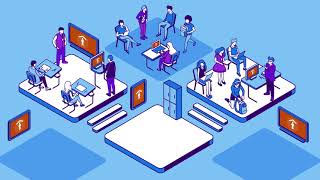
The standard tech that we've got would be, let's talk about an RE class, which you would think, you know, in terms of its traditional methodology of teaching. You wouldn't expect a lot of technology in a class that, you know, engages in the delivery of religious education. We've been able to engage in virtual reality kits where, you know, students can engage and interact with virtual tours on different places of worship around the world. Things that they were never able to do outside of look at it in a textbook. So, you know, that's an available resource. We've got, you know, three VR kits running across three sites and we've got lots of resources, but they connect with the classrooms. So, you know, you can understand virtual reality is very first person. But the fact that we've got our classrooms with triple screens where what that person is seeing, the whole room can see because of the way the room engages with the technology as well. So we've heavily used VR in our three screen VIVI rooms. And it's been really engaging to see because you've got an audience sitting there watching someone with a set of goggles on, but they can't see what that person seeing was. At least now you have that sort of, you know, I guess, backseat driver kind of thing when it comes to VR. And that's been really engaging. I'm going to reverse it and go. Now we're looking and saying that a lot of the technologies that we haven't been able to implement yet is because our infrastructure doesn't give us the opportunity to do it well. So, for instance, you know, now our standard classrooms would require at least a dozen access points so that we can connect all that technology into it. So now when we build rooms, we're putting them with, you know, a good 15 to 20 data points so that if more technology comes in, we're ready for it. So that, you know, I've got an abundant number of ports in my switches. I've got infrastructure sitting there in the roof that's waiting for technology to sort of come in. So we learned the hard way that we're spending more money on retrofitting than we are in terms of future proofing our infrastructure to prepare for technology we haven't seen yet. And then when we've got that makeup in our philosophy, it means it's easy to see something new at a conference and go, you know what? We're going to try that in a classroom and see how it operates. You know, a new one coming in is that we've just acquired some funding to get three portable video conferencing units so that in theory, I could take a video conferencing unit into an FLA classroom. The students are learning Japanese. Now, Japan and Australia have got a one hour time difference between the two. What we used to do is, you know, every year, our Japanese study tour, you know, 30 kids would go over to Japan for two weeks and learn the culture, go to Japanese classes. Unfortunately, we can't do that. So now in a VIVI enabled three screen classroom, I can take a video conferencing unit and then really reconnect the core part of what that program was about and connect a classroom in Japan to a classroom here.