The Admiral Squad with Marlon Styles & Kee Edwards
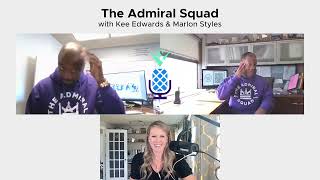
Marlon Styles and Kee Edwards from Middletown City School District talk about the Admiral Squad, their initiative to recruit and retain Black male educators. They discuss why representation matters and what other districts can learn from their approach.
Take a look at who is sitting at your table and who is not sitting at your table. If you're black males, if you're diverse staff are not sitting at your table as you go to do this work. Strike one, strike two, strike three. Make sure your diverse staff have been activated and empowered to have a seat at the table to help you throughout this journey to design and frame up this solution for the commitment that you just made.
Welcome to the Educator Pineapple Podcast which features trailblazers, pioneers and ed leaders who all started their careers in the classroom. Come hear about topics ranging from digital transformation, data literacy, blended learning, innovation, and honestly, everything in between. So excited to have you join our show. Well, hello and welcome to the Educator Pineapple Podcast. I would like to kick it off today with a warm welcome to two amazing educators and leaders from Middletown City School District, Marlon Stiles and Key Edwards. Thank you guys so much for joining. Love the sweatshirts.
Thank you, thank you. Excited to be here.
Thank you for having us.
Of course. So I'm going to give the listeners just a little bit of your background so I know this gets a little awkward. So apologize. Marlon Stiles is currently the Superintendent at Middletown City School district. During his 20 year career, he has served as a teacher, principal and executive director of Curriculum and instruction. In 2017, Mr. Stiles received the center for Digital Education Top 430 Digital Trailblazers Award. Under his leadership, Middletown schools earned the 2019 ISTE Distinguished District Award for ensuring equitable, accessible and appropriate technology use for all students. So congratulations there and then I'm going to jump over to Key is currently the assistant director of HR at Middletown City School District. During his 26 year career he has served as a teacher, basketball head coach and principal. In 2014, Rosa Parks elementary earned High Progress Schools of Honor where he was the principal from 2007 to 2013. Well, congrats all around basically. So is there anything that you guys want to add to that?
You go first, Keith.
No, I'm just excited to be here in a new position exploring new things. So thank you again for having me.
Same here. Site Explore new things. We're talking about Admiral Squad today I believe and just honored to be in the space. Thanks for joining us everybody.
Awesome. So as you know, everybody who joins me on the Educator Pineapple podcast started in the classroom. So first big question, what did you teach? And if you've taught multiple things, you can kind of like do the rattle off. But key, what did you teach and where?
I started off as a second grade teacher at Taft Elementary, a Neighborhood school that I attended as a young child growing up here in Middletown. Second grade is the very best grade. And I absolutely love those six, seven years I had teaching second grade.
That makes me feel excited. I have a first grader who's going to turn into a second grader. So I'm just. That just means there's like, you know, some good stuff ahead. How about you, Marlon?
I taught middle school math, seventh and eighth grade math. Phenomenal time teaching. I too taught at a place where I grew up, Pleasant Run Middle School. I will say elementary is not the best place to be. It's always a middle school. Middle school is where it's at.
I feel like there's some competition here. I will be the tiebreaker. I taught middle school and high school, so, like, we really, like, actually covered all K12 right here. You know, just gonna say so in the light of my pineapple theme. Everyone always is like, why is it the pineapple podcast? What I ask all of the guests to do when they join is what is your crown? So your area of expertise or something that you know, you can share with everyone? And then what are you ripening? And then kind of like, how does that inform your work in day to day or like, what's your focusing on? So who wants to jump in first?
I'll jump in first. Mine are really the two of the same thing, right? My crown, but the ripening is just being able to better serve. I feel like we do a very good job of reaching a lot of people, but there's also a lot of people that we're not reaching. So as much as we take pride in paying attention to what people need, focusing on equity driven based leadership and decision making, I also know there are some children, there are some people that are furthest away from the opportunity we had to do a better job serving them. That's my ripening right there.
Awesome.
So I would say my crown is the ability to build relationships with students. I absolutely love the interaction I have with our students. And if I have to look at something I'm ripening, it would probably be prioritization in a new job, in a new position, or when you're trying to be the very best you can be, you need to prioritize things instead of trying to do everything. And so I'm still a work in progress with trying to prioritize what the most important things are.
I think we all struggle with that a little bit. Prioritization and balance, right? So obviously we're going to be chatting about the Admiral Squad and I was super lucky to get to hear you guys speak. I can't believe that was just last week, by the way. Last week in Los Angeles. And actually hear about the work you've been doing with Digital Promise at the League of Innovative Schools. But first, to kick it off, like, what is the Admiral Squad? And I'm going to say, where did the idea come from? And who is Terrence?
So the Admiral Squad. The why? What if we start with kind of the why, the Admiral Squad. You'll hear Key and I talk a lot about today, and I'm so glad that the Educator Pineapple podcast has the courage to dig into the real topics. We are here talking about Admiral Squad because it is our obligation, a commitment to the profession, to inspire more black males to enter into the education profession. So we have framed up a recruitment and a retention framework here in Middletown City School district to hire 25 additional black male educators into our classrooms to serve our children. But also, you hear us talk about Admiral Squad today, our black male affinity group, to make sure that we not only recruit into the profession, but we retain black males that are just thriving and really inspiring our children. Just an exciting topic. Terrence is one of our elementary teachers who came to the design table with us. He told his story and really inspired a lot of the framework as well as key of what you're going to hear today around Admiral Squad.
So the key number today is 2%. We make up 2% of the profession. And so with that 2%, we're just trying to increase the. The numbers. Specifically, the Admiral Squad is a place of belonging for our African American males in our district. And we're trying to grow above and beyond that outside of our district.
Awesome. And so I know one of my favorite quotes when you guys were presenting was, you can't actually, I'm gonna mess with that. You can't be it until you see it. And I think that that's, like, so big for a lot of different shifts and changes and innovations across the country. But I think especially for this. And there was some just really ideas around these two pillars of retention. Well, recruitment and then retention. So kind of I'd like to talk about both of those sides because I do think that they need to be working independently but also be working together. Right. So let's talk about, like, recruitment first. How did you start with recruitment? What were some of the partners like? How did you even know where to start?
You want to take that one?
Well, I'll start with the you can't be it until you see it, as we said, 2% is the number of the day so far. Too many times our African American males go K12 and never have the experience of having an African American male teacher. So for them, the message that's sent to them is that this is not a place for you. And so that's why there's such a shortage in the education fields is because they don't see themselves in this position. So that's why we have started the Admiral Squad to kind of change that. That, that demographic and change that outlook that our students have.
Yeah, Keith brings up some great points and our partners have really helped us get to the finish line as far as this, this prototype that we have right now. Admiral Squad, we partner with a BIPOC organization called he is Me. Robert Hendricks has been a phenomenal support in this journey. Not only helped design and frame the Admiral Squad up, but to provide some programming for our youth to get some of our black males involved. We're actually leveraging his I Am King program right now in our sixth grade center. So great partnership with He Is Me. We also partner with a regional higher education institution, Miami University, as we are working with them to target their freshmen black males who are undecided. Our Admirals will be interacting with those students at the higher ed institution to encourage them to participate in the I Am King program with the hope of ultimately inspiring them to get into the preparation programs to pursue licensure. So partners have been the secret sauce of really making this recruitment side of this really come to light as far as the Admiral Squad is concerned.
So to piggyback off of that, I'll go for it. I'm sorry. So to piggyback off of that, the Admiral Squad is a place to belong. And so in that place to belong, there's support, there's room for growth, and there's opportunity to grow. And so when you think of recruitment, you get them in, we have them. And retention, how do we keep them? We provide them with opportunities to grow and we encourage them to pursue opportunities in the fields of education. Because many of our Admirals are support staff or hold other positions that not necessarily are teaching positions, but in this group you have role models and you can hear different stories and how people have moved from one place to another to eventually become a teacher. So area of support.
So you perfectly transitioned me, by the way, Keith, so thank you. I think that was the thing that I was hearing was that it's not just recruitment and recruiting at one stage, but really thinking through the whole pipeline, so saying, you know, how do we recruit and really show our students even that this is a possibility in their future? And then how do we work with ihes and how do we work with partners to really, like, bring that along the line, like one piece at a time, like as a community. So that, that's the recruitment side. But then you're looking at the retention side. And I think you've spoke about this a little bit with the community aspect, but why is retention so important? And then also what are the steps you're doing about that retention and building that community?
Go ahead.
Sure, sure. So retention is key. It's easy to frame up a slow rolling, grow your own program around diversifying staff. We wanted to make sure that we got the diverse staff in place. They stayed in the profession, if you follow the additional statistics of that 2%. Do some research around how many black males actually stay in the profession and some research around why they leave. We wanted to be very intentional about a homegrown, very personal and authentic affinity group for black males who are employed by the district so they have a safe space to be their authentic selves. We can dig into that later, should you choose. But for us, the retention was that to belong to a brotherhood of 30 some odd black males who work at the same place you do, who look like you, sound like you, same skin color, and also your hair looks exactly the same, even though I got gray and need a fresh fade myself, which is this weekend. The affinity group was our way of bringing people together to create that. That brotherhood to keep us not only in the profession, but to keep us here in a district. So we work with the youth that are part of our school district, so very intentional, part of the design process to bring this affinity group, which is the actual Admiral Squad, for those reasons.
In regards to retention, something me and Marlon always talk about that I'm extremely proud of in regards to this group is that we're giving all of our staff members an opportunity to do things outside of their normal role. So paraprofessionals typically play a similar role in a similar box and don't get opportunities to play outside of that box. In this group, in this Admiral Squad, there are opportunities to visit career fairs, recruitment fairs, to go speak at schools, to go sit on panels, to visit universities. And so given those opportunities outside your normal job routine serves as a sense, a sense of inspiration for many of our animals. And we're real proud that we're able to give those them those opportunities so that they can stay in the profession.
I love how I'm Hearing it's like the seeing is believing across every step as well. Even within the Admiral Squad itself. Right. So saying like, okay, so here are other positions I could do. Here is places I can grow internally at Middletown so that I both stay in the district, support the district, but also push myself in leadership opportunities in the future. So I think that that's really cool to hear is just, it's almost like you're recruiting from within for other positions as well. Right. To show that growth. What are some of the learnings? Because I'm hearing some of the stuff like what are some of the learnings you had throughout this process? I'm sure there was a ton.
Go ahead, Marla.
Thank you, Key. I really appreciate you allowing me to go first. Maybe next question Key will be able to go first. Maybe when you end the question, maybe we can say Key if you want to start. But to get back to the business here, you could tell we admirals we love to have a good time. Right. There is joy in education, some things that we have learned. A number one. And I'll say this, for anyone who is watching or listening to Educator Pineapple Podcast, which is one of the hottest podcasts out right now, I would encourage you to have the path and find the courage to do the real work. Right. The real work is not just diversifying the educators in the profession. The real work is being intentional and committed to doing that work. The second piece that I would say, as we've learned from Kim Smith and the center for Inclusive Innovation, is through the design process, it was important for us to personify our problem of practice. So when you you hear us talk about Terrence Plummer, who's a phenomenal black male educator at Central Academy. Here at Middletown City School District, we're able to hear Terrence's story and really explore his, what I call go throughs. From his pursuit for certification all the way through employment and those conditions that he had to experience, it really help us really frame up this solution called Admiral Squad to make sure that systemically it worked for any black male who be trying to get into the profession, engage in the preparation program, seek certification and also find employment and stay in the profession. Right. Personify your problem of practice as you do. Some of this real, deep, authentic, equity driven work would be my two big takeaways.
My biggest learning throughout this process has been understanding that from my vantage point and the superintendent's vantage point, we see and know what's going on. But for our admirals, it's been huge for them to know that they are experiencing and going through the same issues, going through the same crisis and barriers that they both face and being able to support each other and the need to hear one another's stories so that they don't feel isolated in their profession. It's good. It was great. Our first meeting there was an opportunity for a young man, Terrence, to share his story, and it resonated with just about the whole entire room.
I think it was really interesting to see when you even presented at Digital Promise, just how much it resonated with those even coming to listen. Right. And how you're even moving past the, like, we're on an island and we're just doing this independently, but that a lot of people are dealing with similar challenges, similar feelings, and how can we actually build that community and camaraderie across so that we can build this together? So, obviously, we had a bunch of learnings. I just want to spiral back to make sure that, like, if somebody's trying to do this work in their district, right, you have to think through, like, what is your problem of practice? And with you guys, it was like really having both sides of that, having the recruitment and having the retention and really constantly spiraling through those two. That it wasn't just, okay, we recruited and now we retained, but, like, how do we go back and forth and iterating on that design? What do you wish you would have known when you started this process? And key since Marlon went first last time? I just feel like you maybe should jump in of, like, what do you wish you would have known when you, like, first started?
I wish I would have known that there was a greater sense of urgency to attack this work far beyond the time we started. We should have done this years ago. The need has always been here. And for me, in regards to knowing this, I'll get a little personal. This work is personal for me, and I wish I had known that everyone may not have viewed the work the same way that I did, because you go in with your own frame of thought, thinking one way, and people see things differently. But the reason why I'm dedicated to this work is because we're 2%. And I don't feel bad about trying to address the missing voice that's in education currently.
Wow. How you follow up to that?
I was gonna say, good luck with that one, Marlon.
Can I just answer the next question first? I mean, I love everything you just said, Keith. Right. This is urgent work. This is. You hear about the teacher shortage frequently. This is an urgent matter. And I too, like, Key. I just want to ditto everything you said. I don't want to. I don't want to piggyback. I don't want to add on. Just say ditto. Everything said is beautiful.
So I'm going to actually go back to. And I love all of that stuff you shared. And I think that you can definitely tell the way you guys talk about the program and the way your passion towards this work, you know, started way before you started the Admiral Squad. So were there ways that you started trying to support this issue? And I know I didn't put this on your questions beforehand, but Marlon's gonna have to answer it first. Kate. So were there ways that you tried to start this work before the Admiral Squad?
Love it. So I'm gonna be very vulnerable here on the Educator Pineapple podcast again, one of the hottest podcasts at the scene recently.
He's my hype man.
I'm going to say this. I'm going to be very vulnerable here. I'm going to say shame on me. As a superintendent. I fell, and I've said this before, I fell victim to the way we've been programmed in the past. And that is we should diversify our staff. Right. I got here to Middletown City School District and we immediately went on a campaign to diversify our staff. We were celebrating the fact that we had increased our diversity by 6. Very proud of that. At the end of the day, we were sitting there asking ourselves, what impact has it had on our children? So as we took a step back collectively as a leadership team in a school community, we figured out my learning is that we weren't intentional enough about our work. Right. If you hear that thought right, let's diversify our staff. How specific is that action? What is the actual problem of practice when you hear someone say, we need to diversify our staff or the profession right now saying, we need to diversify the educators in the profession. So what we were doing before is we were trying to hire diversity. We were trying to shift our hiring practices and seek out what we were calling urban minded educators. We found some dynamic urban minded educators who are very well working with our staff, our kids right now being very, very successful. But as we dug a little bit deeper, we found this deep problem of practice with which has led us here today. So for me, those attempts to diversify the staff, those attempts to take folks who have certified degrees and get them education degrees in partnership with higher ed, we were falling victim to this notion of we can grow our own. And over a 15 year period, we might be able to hit our desired outcome. Shame on me. Was kind of fallen victim to some of those stale, non effective, traditional ways in a profession that we tried to accomplish this, this, this outcome. And I don't know when that happened, but a light bulb moment went off one day when I was talking to Superintendent Baron Davis down to Richland too, and discovered his Premier 100 and that light bulb moment. And if he hasn't been on your podcast, he should be absolutely next about the great work he's doing. That light bulb moment when he and I connected about his Premier 100 really brought a reality check to me that I needed to be doing real deep diversity, equity, inclusion work around a specific topic.
Thank you so much just for sharing that. And I think that and just being vulnerable and be able to say, like, this is how we started. But that also got you to where you are. So a celebration there, you know, so congrats and very appreciative for that. So, like, I think so. Part of the podcast was so many times in education we reinvent the wheel as educators, right. And it's because we are constantly doing the work. We have our head down, we are just constantly moving and we're not able to pick it up and be like, how have other people gone about this problem of practice or gone about this challenge? So we've talked a lot about the recruitment, the retention. Partnerships are key. Working with people, getting buy in across the board and really, like, honestly, I love the idea that and bringing joy to it that the community is a community. It's camaraderie. Love the sweatshirts. You know, like, swag is always a good idea. But if somebody wanted to start doing this in their district, their system, their school, like, what would be maybe if you have to do your top three checklist of like, this is what I would do first, this is what I would do second. This is what I do third. You know, are there some sort of, like, first steps?
I'll piggyback off of what Marlon just said. You have to go back before you can go forward. As a principal and as my first year in this position, we were looking for urban educators to diversify our workforce. But I will use the word intentionality. What was a game changer for us? I would say the starting point is to start with your least representative group in your workforce, take a look at your student demographics and see what voice is missing. And nine times out of 10, it'll give you a good starting point. And so for us, our black male voice in our school district was missing. And so that's where we started. And it's going to have a plethora of advantages for. For all students. More specifically, our African American males have the opportunity to have role models that they have never had before. Our Admiral squad will be not only role models for the entire district collectively as we pool our resources and our numbers to go visit different schools in different places, but specifically for African American males who now can look at one of the admirals and say, I could be a teacher. I could be a PE Teacher, a counselor, an assistant principal. It gives them an opportunity to see their future in a way that they had never seen it in years prior.
3. So let's spread through these, right? Number one, commitments over goals. Easy to have the goal to diversify your staff. Much deeper, passionate, driven work. If you make the commitment to hire 25 black male certified educators over the next five hiring seasons, make the commitment to the journey you're about to take. Number two, have the courage to say it loud and proud, right? No different than if we're saying, we got this big commitment to math initiative. We got this giant commitment, big heart, passionate commitment to bring in 25 black male educators. Sing it to your school community the courageous work that you are doing. Be proud of why you're doing the work and what it's going to do for the children that you're serving. Number three, what I'll add is probably the most important piece for me. Take a look at who is sitting at your table and who is not sitting at your table. If you're black males, if you're diverse staff are not sitting at your table as you go to do this work. Strike one, Strike two. Strike three. Make sure your diverse staff have been activated and empowered to have a seat at the table to help you throughout this journey to design and frame up this solution for the commitment that you just made. The empowerment itself, once you get into implementation, is where the magic really starts to happen, right? So be very intentional about those three things. You'll be off to success. Have the courage to do it.
I'm like, now I don't know how to follow that, but amen. I mean, honestly, I just want to also say that one of the crowns I've noticed from both of you guys, one of your crowns that weren't mentioned was your energy, your passion, and just the, like, magnetism you bring to this that you have been able to stand up and say, like, this is what we're doing and this is why we're doing it. And that's a crown in and of itself to just really like bring people together and bring them together authentically meaningfully and really to think it through, it seems like a lot of leaves but like authentically meaningfully and like strategically too and saying like how are we going to do this? Not just for now but in the future. So really thinking long term shifts as well. So kudos just hearing you guys speak, really. I think that's definitely one of your guys crowns as well.
That's a cool part. It's also a crown of the Admiral Squad in general. Right? So if you don't mind me taking just a quick, quick segment to talk about a crown of the Admiral Squad and somebody specific. Recently, the admiral squad, about 15, 20 of us, we traveled across the district to four different buildings. We were at Highview Sixth Grade center one day in a matter of an hour and a half we hit every single classroom. We showed love to every single student in the entire building. The Admiral Squad had an impact that day. Here's the story. We were in a classroom one day. Admirals were packed in there in our purple shirts. Two black male sixth grade students were sitting next to each other and they said, Mr. Stiles, I want to be a physical education teacher one day when I grow up. Don't you know, Educator pineapple podcast listeners. We put over George Kennerly, black male elementary physical education teacher with his purple Admiral Squad hoodie over. He spent about 10 minutes with those two young men and poured his heart and soul into him. Here's the coolest moment when you talk about the crown. George Kenderly, Admiral Squad member, walked away. We had backed away from the table to give them their three person moment when he walked away back to the two young men, they looked at each other and one young man looked at the other. I swear this happened. We caught the moment. The one young man looked at his friend, he said, that's going to be us one day. We're going to be just like him. The impact of the Admiral Squad is real. So earlier, before you heard Keith talk about if you can't see yourself in it, you can't be it. Representation matters. So one of the crowns of the Admiral Squad representation is one of the most powerful pieces that we bring to the table. Great story, great moment, right? A joyful moment in education. Seeing that happen.
I. I'm like speechless. That's just, I mean I would have done. It would have gotten a little bit dusty and I would have definitely got. But that's just incredible. And what's funny is I was about to say like, what is one story you have with the Admiral Squad that just, like, is that bucket filler when you're doing this work, and sometimes, you know, like, there's those moments where you're like, okay, this is really hard. And, you know, key. You were saying for your ripening, you know, balance and, like, figuring out how to do everything. But I know that's your. Do you have any other stories you want to share about this moment? Because I think that's where you really. The listeners really feel it and say, okay, this is not only urgent, but it needs to happen.
I have a story to share. Far too many times when you see an African American male in a building, he's put in one little box. So we're out. That day when we traveled to 12 schools and one of the classrooms we walked into, everyone said we were in the cafeteria. So it was a larger group. You guys all coaches? Are all you guys coaches? What do you guys coach? And I looked around, and out of the 12, we didn't have not one coach with us. I said, actually, no. I said, none of us are coaches. I said, he's a second grade teacher. He's a PE Teacher, He's a school counselor. He's an assistant principal. And the disbelief on the faces of the students. For me, that's what this work is. It's about changing the narrative about who we are. We are more than disciplinarians. We are more than coaches. We can be experts in education, and we can be the teachers that these students relate to on an everyday basis. So for me, walking away that day was gratifying because not only did it change the thinking of our African American male students, it changed that table who happened to be four or five Caucasian young ladies who thought we were just all coaches.
So I absolutely love that. I think it's just changing the narrative in general, and, you know.
Yeah, sure is.
So. Oh, go for it.
Yeah, I got a cool story. You cool if I share a story? I didn't know I had to go first on the next question.
No worries.
Real quick. I know, I know. Pressing for time, but quick story. I talked about tables before. When someone has a seat at the table and they find themselves at the table, it's a magical moment. Quick story, right? So if you check out this QR code right behind me, I don't know if it'll work on your phone here. If not, we can throw it in the. In the podcast for you. If you look at the Admirals in that video, that Admiral Squad commercial, you will see exactly what I mean by if you invite someone to your table and you activate them at your table and they. They find their. Their unapologetic selves, the magical moments to come to life, especially when it comes to serving kids. So if you check that video out, you'll see exactly what I mean by my example of a moment. There's an Admiral in that. That commercial playing basketball with the kids. But he dunks on them, right? He doesn't lay the ball up. He dunks on them. There's an Admiral talking about what he does with his kids before and after school. You'll see an elementary counselor in there working on some social, emotional groups with kids in an elementary. There's some unique moments where you will see Admirals doing what they do. You'll see black males in the profession doing what they do. There's just more moments like those. We need to generate the Admiral Squad. Were hoping to do it.
I love all of this. I think that. So this is the part of this podcast where I say, you know, like, like we said, we don't want to reinvent the wheel. Sharing means caring. You know, how do we help others see it and start the work? And so I'll definitely make sure to attach a link to the video and to the slides that you shared, Marlon, to help others really see how to start this work. Is there anything else that you'd like to share? Things to read, like stuff that's inspired you?
Yeah, I'd like to share. I know right now, as you look and you review our video, you look at our pictures. If you follow us on Twitter, the Admiral Squad, you will see a lot of benefit that Middletown City Schools is taking advantage of in regards to the Admiral Squad. But in regards to another district trying to duplicate this work, I cannot go without saying our primary goal when we first attacked this problem, this issue, was to bring more African American males to the profession. It wasn't to Middletown. This was far before we developed the 25, particularly for Middletown. Our goal as we tried to frame up this initial work before we involved the two, the teacher and the counselor, our goal was to bring more males to the profession, whether it meant Southwest Ohio, whether it meant Butler county, that we teach in. I think that is important in regards to having a better reach, in regards to framing something with a solid foundation. It can't be so personal and specific to your. To your school district. It has to have an overarching goal for the profession. And that's where we started. We wanted to bring more males into the district. So when we started going out to the colleges and university, we offered our services as to African American males in the positions that we're in to help inspire others. It wasn't per se to have them come back to Middletown. It was to bring them into the profession.
So two things. Number one, there's a call to action. I don't know if the Educator Pineapple podcast is the moment. Do it. But I'm do it anyway. There's a call to action to our higher education institutions to reimagine the teacher preparation programs historically been in place for Lord knows how long. And it really caused barriers for black males to be able to acquire certification. And then the preparation programs let me give myself virtual snaps on that. Even though I just said it, it's got to change. There's so many circumstances that we have heard just talking here regionally to where I've gotten to the point where I get to the test and I can't access the certification because of the test. So if we can do anything today, a call to action a higher ed reimagine your preparation programs. Call to certifications across states to make sure that they are equitable and accessible culturally for all test takers. Number two, and I'll close with this if you don't mind. To any Educator Pineapple Podcast fan, have the courage, right? This is not easy work. It is meaningful, necessary, urgent work. With any type of meaningful, necessary, urgent work and the commitment that comes with it, you will get pushback, right? I get pushed back at home about how I grill chicken breasts. I get pushback about how I don't take the the trash out and put the bag in the trash can after I take it. That's pushback, right? No different in that when I'm at work, you're going to get pushback when you have a meaningful, necessary, urgent commitment that you're making, such as this. So stand tall, stand proud, and remember why you're doing the work. Yes. You're inspiring more diverse candidates to get into the profession. The ultimate intended outcome is the commitment to make sure representation is there so your children see themselves in different career opportunities as they go through educational system. Urgent, necessary, passionate, driven, commitment, related work. Let's make it happen.
I mean, you guys just keep leaving me with like trying to follow that. I think it's. But I think that call to action is so important because a lot of times we're trying to change one part of the system without thinking about all the different dominoes that affect that part and really trying to make sure that One, we shift together, but we also all get all the stakeholders on the same, like, team, if you will. Just really trying to think through, like, what is all of our goals and how do we all kind of hit on the elephant in our same way.
You bring up a great point. How much time we have. I feel like we're just sitting in the back patio having a chat right now. But if we're chatting about this topic, you bring a great notion. Yeah, it's a chat, right? Which where's the fire was the marshmallows. We should just be chatting at the fireside. He has mentioned it several times and you just hit a great point. What if this wasn't just isolated district work? Right. What if we as a profession, either regionally, statewide, here in the Midwest or across the whole nation, what if we did this work together? Imagine how powerful that would be for kids across this country. That's a great, great takeaway. I'll take today from the conversation. How can this become greater than just the Admirals here at Middletown?
And then. And in that call to action, the why behind that is we are missing out on some potentially dynamic educators and we don't have room, we don't have space to miss out on anything dynamic in education nowadays. From an HR perspective with this teacher.
Shortage, he's like, I'm an HR to do this. This has been wonderful. So, like the last piece I always ask people to do and I think we already like jumped in here, but I'm going to make you do it anyway. Is so many times we have these awesome conversations and we get really excited and we're like, that was great. And then speaking to what you said key before, it's like, then we just go back to life and we go back to our to do list and we go back to everything else instead of being like, so what is the one thing I promise that I'm gonna do tomorrow, next week, next month to continue this conversation personally? And so I call it a post it promise. Every time I do a presentation, I make everyone do a post it promise. You put it on your laptop and it sitting there like taunting you and saying, you promised to yourself you were gonna do X. Right? And since I just jumped this on you, I'll say, my post it promise is to share the Admiral squad with other districts that I've worked with. You know, I think that one of my maybe part of my crown is like, I love capturing and sharing best practices so that we can scale them and really get it to the people that need them. Right. So I just think about a few of the different districts I've worked with in the past and be like, share with them. Not only the podcast, but really the work you guys are doing so that the conversations can continue and the community can extend. So that's my post it promise.
Yes. Yes. We get to share ours.
Yep.
Let's do it. Next 90 days. My posted promise. I don't have post its, but my posted promise in the next 90 days is for 15 Admirals to visit a regional higher education institution and meet with a black Student union group and talk about the Admiral Squad and how they can join into our efforts and the commitment we're trying to pursue. Next 90 days.
Awesome.
My poster promised in the next 90 days, I promised to call 5 other HR directors and ask them, what if there was an Admiral squad in your district and I and offer my support in marlins in creating any kind of framework for any kind of squad they want to put together in their district.
Love it. As long as the Educator Pineapple Podcast pays for your lunch. To do that.
I'll send her the tab. No problem.
I'll send you an Uber Eats card. Thank you guys so much for joining. I knew this was going to be a lot of fun. It's just important work, but it's also just good to sit down, hear more, and really try to scale this work to anyone who will listen. So thank you guys so much for joining. Thank you guys everyone for listening on your ride, on your walk, on, wherever you're listening and thank you for your time. And please reach out if you have any questions, comments, and then go to the VIVI website and we will have the QR code for you there, the slides, and any other resources that we collect from these amazing educators. So thanks so much.
It.