From Anxiety to Achievement: Craig Ballantyne's Path to Disciplined Success
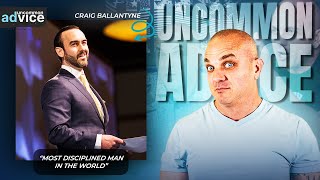
Interview between host Nate and Craig Ballantyne (June 4, 2025) covering Ballantyne’s path from anxiety and binge drinking to coaching, authorship, and disciplined productivity. Craig recounts key milestones (first online sale in 2001; anxiety attacks in 2006; mastermind in 2007; acquisition of Early to Rise in 2011; recent work on The Dark Side of Discipline in 2024), explains the concept of discipline‑through‑subtraction, warns against chasing external validation, and gives concrete practices (night prep, to‑do breakdowns, time blocking, blocking apps like Opal/Freedom).
Chapters
If you want to live your dream life, you first must stop living your nightmare.
All right, so I'm excited today we've got Craig on with us and I get what you guys to get ready, man. You're going to meet him, he's going to talk to you and share a bunch of information. He's not only mastered the art of discipline, but he's also redefined it for kind of the modern entrepreneur in my opinion on the things that you're doing, he's, he's known as the world's most disciplined man, which is pretty pretty epic. But his message goes far beyond that and rigid routines and relentless hustle. Right. I think a hustle culture has kind of taken over a lot of things and I think your insight's going to be unique to that. But you're also behind the best selling book the Perfect Day formula, which I own two copies, thank you. And the the game changing release of the new Dark side of Discipline, which is a really good book and where you challenges everything you thought you knew about achieving your biggest goals. Right. You dive into that stuff now. I actually, I don't know if you know this, but I'm getting into this. So you've also founder of early to Rise and you really got your start with the Turbulence training system.
Yeah man.
Back in the day. Right. So unique story about that in a second. But with that you're also highly sought after business coach. Right. You work with a lot of people. You've got a countless individuals from eight figure entrepreneurs to busy parents worked with the gamut of people helping them with efforts discipline systems and establish unbreakable standards which that kind of paved the way for lasting success without unnecessary sacrifice. Right. A lot of times we believe we have to sacrifice to get what we want. And I think if you do it right, you don't have to.
Right.
You can have it all if you do it right. So you're not really about theory, which is awesome because you're living it, which, which I love and appreciate. And you've gone from another thing I identify with you. You've gone from crippling anxiety and binge drinking in the past, multiple successful businesses. And I think entrepreneurship can be a lonely world. And I think guys and you know, people can find themselves in kind of these holes that they, they resort to other alternatives and kind of just focused on, on life and being the best it can be. But with that said, Craig, welcome to the to the call to the podcast Uncommon Advice. And I'm excited to have you here and being Able to communicate with our, you know, our audience and just put on a good show here for them today.
Yeah, it's going to be a lot of fun.
So one thing real quick is, I want to put this out there, a story that you may probably not remember, but we first met back in 2009. Wow. So I was in Underground. Yeah.
Okay.
Yannick Silver's event was, I believe, in D.C. yep.
At the Fire alarm at that one. Remember that?
Yep. Yeah. And then we. And I think what's his. Bob Parsons was speaking there, too, potentially.
He was. I remember that.
So I was at the gym working out with a friend of mine, Mark Evans.
Oh.
And I had just. Yeah. So I. He started introducing me to the online world back in 2007. And then, like, we. A group of us went out there and him and I were working out. You walked in and he introduced us and we had a quick chat, and then we got to our. Got to our work, man. Got our workout in. So that was, I think, back in your turbulence days.
That was. That was. I had not bought early to rise. I bought early to rise in 2011. Yeah. 2009. I remember that. That was a very pivotal year, and that was a great event, and I met a lot of people that year at that one. That was good.
So why don't you. You know, I kind of gave a good intro, I think, of you, but, you know, tell us a little bit about yourself. That stuff that I missed.
Well, you know, I'm a farm boy from Canada, and so I grew up in a small town, and I wanted to be, you know, I want to be a personal trainer to athletes, but that never worked out. And I became a personal trainer to Canada's richest people in Toronto. But I didn't really want to be a personal trainer. I'm not the type of person who loves, you know, bringing the energy all the time. And it's something I can do in short spurts, but not all day long. And so what I decided to do was figure out the online space and. And I sold my first workout program online on January 28th of 2001. And one of the things that really helped me, Nate, was that I got critical credibility by writing for Men's Health magazine. And so I just. I got, you know, I would say, kind of lucky as, you know, preparation plus luck, or preparation press, opportunity is luck, whatever the phrase is. You know, I sent one of my email newsletters to the Men's Health fitness editor, and he put it in the magazine, and that gave me the critical Credibility, which is a huge, huge lesson for everybody listening. Like your, your business, your brand needs critical credibility. It needs all that social proof, but it also needs like, differentiation and how you're respected and whether that means, like you have a 30 second clip on local TV or a column in the local newspaper, or whether you write for a magazine or whether you have a book. All of these things give you critical credibility that sets you apart from the competition. And for me, that critical credibility was key because I have a lot of introverted tendencies and I don't like to go out and schmooze and stuff like that. So, you know, that's probably why we didn't have a 20 minute conversation in the gym. Mark's a whole lot more intro extroverted than I am, but, you know, I just like to sit behind the computer. But I built this big network through that critical credibility because I was able to reach out and get people's attention because, oh, you're the men's health guy. So that was where I spent, you know, 2000 to 2015, basically in that fitness world. But around 2000, well, first of all, 2006, I had my anxiety attacks, which we can talk about. In 2007, I joined Yannick Silver's mastermind group, which was huge. 2007, I also had my first business event because all these people were asking me, how are you growing an online business? So I started teaching people. And then in 2011, I bought a company called early to Rise, which was a health and wealth and success newsletter by Mark Ford, AKA Michael Masterson, the author of Ready Fire, Aim, which a lot of entrepreneurs will know about. And I took that over. And then that's where somebody, particularly this guy named Ed o', Keefe, said, you're, you're the most productive person I know, therefore you're the most disciplined person I know. And that just kind of stuck. I'm obviously not David Goggins. I don't want to be David Goggins, but I'm a productive person. And most people will make the connection that if you're productive, you're, you're disciplined. But it's really about systems which we can break down. And then in 2015, I stopped the, the fitness business. I shut that down because I just didn't enjoy being in that industry with all its claims and crazy promises. And I wrote the Perfect Day formula. And then I wrote Unstoppable, which was how to overcome anxiety as an entrepreneur. Then I wrote Perfect Week formula. Then I basically took six years off writing books and Coached people through Covid and all those. Those years. And then in 2024, I just. I started writing this Dark side of Discipline book because of some, you know, disturbing things I started to see with people just going way too far and kind of losing the plot, you know?
Yeah. And it's interesting you mentioned Ed o'. Keefe. I met him back in the day as well, back in 2007, I think is when I first met him. And then we did some stuff together back in 23 as well. Kind of reconnected. So.
Good. Dude.
You know, it's the first time that we've been talked this long and we know so many similar connections. So one of your guys that you do this, just a random story, but Pedros, who. Who I know you're. You're pretty close with, and over the years where you guys have done stuff together, he actually. One of the things he did at that same event, he. He did a presentation on his sales funnel. On his sales funnel. And that completely changed things how. I look at the Internet world, and I would imagine that's all. All stuff that you guys probably learned together along the way, too. But it changed the world for me.
I love it.
So I want to. You mentioned the intro. The introvert. Which is probably another reason we didn't talk for 20 minutes with Jim. Because I'm the exact same way. Well, I actually, when I go to those events, I develop. And over the years, I started going to these events, I developed the nickname I can. Because I'd be hanging out and then I'd be gone. I'd have to go recharge and sit in my room and chill or go to the gym and work out. But I wanna. I wanna take some time, actually, to focus on a few things today. One of them being your book, the Dark side of Discipline. Let's. You know, that's the new one that's out. I'd like to talk about that. I think it's. It's very.
I.
Perfect timing for me. I've always been a very disciplined person, but I've been wavering a little bit lately over the last year and a half, and I need. I need to get dialed back in. So. So I'm excited to. That's. So selfishly, I want to focus on that if you're all right. So you talk about. In the Dark side in the book, you talk about this Chuck story and how the kind of the misguided chase for external validation. Can you expand on that?
Yeah, absolutely. So I had a friend and he had it all on the outside. You know, he was married with kids, you know, fancy red sports car. He was in great shape, he had a great business, you know, he had a beautiful house. And you know, I've been in this house and you know, I tried to help him with, you know, the perfect week formula, which is time management. And I'd sat down in his basement office and you know, walked him through, like, here's how you're going to have more time for your family and all that sort of stuff. And, and then, you know, one day I saw him entering one of these like three hour a day discipline challenges. And I was like, what are you doing man? Like, you got this family you're super busy with, you're already disciplined, you're super busy in the business, like, where are you going to get the time for this? And I don't know where he got the time from it, but it certainly wasn't the business because I was keeping him busy. And it's probably his family. But he didn't need the external validation. He had everything that somebody could want. But you know, one day he stumbled across, you know, something on the Internet that said, oh, you're not disciplined until you do these seven things every single day. And then he did it again. You know, he did the challenge once, he did it again, and then his wife walked out on him with the kids. And you know, there was probably a lot of factors in there, but that was one of them that he was spending so much time devoted to, you know, being disciplined, you know, and whose ever definition it was, he was chasing someone else's definition of discipline and chasing someone else's dreams, and he sacrificed his own dreams. So all of the things that he was doing, like working out and reading and cold plunging, all of those things are good on their own, but they got in the way of the great. And that's the dark side of discipline. And as somebody who's written many books, I get a lot of people saying to me, oh, I want to write a book. And then I'll see them six or 12 months later and I will ask them because I'm very interested to hear about their book. And they'll say, oh, I haven't started it yet, I just can't find the time because they're so busy doing all these other good things and again, they're sacrificing the great. And that's the dark side of discipline is that people are doing so many things these days because in social media now you can hear about everybody's daily Routine. And you can see all of these things that are getting a thousand likes. And you're like, I gotta go make a video of me getting in a cold plunge so I can get a thousand likes. And you're really losing the plot about what matters. And that's what bothers me. And that's what drove me to write this book. Because it hurt to see my friend lose his family. Because I'm a family man. Family is like the most important thing. Business is great success, monetary success is great. But if you lose your family because you're chasing someone else's definition of discipline, or even because you're working too much, man, I think that you've lost everything. So that fired me up to write this book because I think that being disciplined and productive and successful, the foundation of it is pretty simple. It just requires a few systems. And then obviously, like, you know, to have a hundred million dollar business, you got to have some great ideas and great marketing and differentiation and stuff. But to at least give yourself the time and the opportunity, the basics are actually pretty simple and we don't need to do a million things.
So in regards to discipline, like you said, there's, there's this culture of like doing all this stuff every day and everyone's got to post about it. What is your thoughts on a good discipline for? Like, if somebody's looking to be more disciplined, what's your idea of that?
The biggest thing that people need to do is get rid of the, the bad things. So I've always been a huge proponent of discipline through subtraction. And anybody who's ever gone into a weight loss program, like, listen, you can add a green juice every single day, but if you're drinking a bottle of wine and eating a bag of chips at night, what's, what's gonna Matt, what's gonna make the biggest difference? You having the green juice? Are you getting rid of the junk? In most cases, it's always getting rid of something which frees you up to go fast, faster in life. So everybody listening to this needs to think, what's the bald and chain holding me back right now? Is it booze? Is it porn? Is it Netflix? Is it Instagram? Is it scrolling social media? Am I hanging around gossiping friends, toxic people? Am I in a toxic relationship? Like, you can go and add a cold plunge and meditate and read a book a week, but none of those things fixes that 50 pound ball and chain that's holding you stuck. Stuck. And so when I first work with somebody, it is, let us See what is holding you back before we add anything new because you're already overwhelmed, your hair is already on fire, you're spinning too many plates, whatever, you know, cliche you want to use. We don't need to add more complexity to your life. We need to get rid of the stuff that is holding you down. And for me, back in the day, it was binge drinking. You know, binge drinking, you know, a habit that came out of, know, small town Canada where I grew up, and then going into college and you know, when I got out of college, I didn't drop that bad habit. And that bad habit robbed me of years of productivity, of success, of relationships, of maturity, all of those things. And it wasn't like I wasn't doing good things. I was working out all the time. I was eating well, I was sleeping pretty well, I was reading, I was writing, I was creating. But man, it was the binge drinking ball and chain that held me back. So when it comes to discipline, we need to figure out what are the things that are holding you back the most before we start going and saying, oh, well, I saw some, you know, 23 year old influencer on Instagram and he's, you know, fasting for 20 hours and three ice baths a day and he's training for an ultramarathon and doing CrossFit all at the same time. I got to do those things. No, you don't. You got to, you got to step back and identify what you bottle.
But I like, that is so, so key. It's a lot of people do, and I've done it where I just, what can I, what can I do to be healthier? What not, what can I extract to be healthier? What, what can I reduce? What can I get rid of? And, and when people do this one, that is such a great way of looking at it. That's awesome. Now I'm going to be a little vulnerable here on this. And because you talk about the anxiety and I literally was just sitting with my wife and sister the other night. We were talking and I talked about the first time I truly had an anx. And every once in a while I still wake up in the middle of night. It's not a full panic anxiety attack, but it's anxiety. And I'm up and I'm like, it's two in the morning and I'm like, can't sleep and I have to get up and I gotta go work. I'm like, all right, let me go work on what's keeping me awake or Stress, Right. That stuff happens. So what were some of the things you did to help solve that and alleviate your. The anxiety side?
Yeah, so a little backstory about how I got into it and then all the things that I did to get rid of it. So in 2006, I was making the most money. You know, I was switched from personal trainer to online business owner. I had a product launch. So I'm making money. I am in the best shape of my life. You know, I look like I belonged on the COVID of Men's Health magazine. I had everything going for me. I remember walking, you know, I had single and, you know, I had no problems in life. I had nobody taking my time and yet something. And it was probably the hypocritical way that I was living that, you know, I was leaving that personal training world where I was a good boy from Monday to Saturday and then Saturday night I was a binge drinker till Sunday morning. And that hypocritical lifestyle combined with my introverted tendencies of keeping everything in my head and never sharing anything, never writing anything down via journaling or anything like that, it all just compounded into this anxiety attack that I had after like kind of a. It was after the holidays, so I was binge drinking and then working early in the morning as a personal trainer and it all caught up with me. I was exhausted on January 1st and that's when I had my first anxiety attack. You know, nearly 20 years ago. It'd be, it'll be 20 years ago this coming New Year's Day was when I woke up and I paced my room and I, you know, for 11 hours and I thought I was having a heart attack. And eventually I went to the emergency room and then I got rid of it and then it came back again harder three months later where I again binge drinking weekend. And I was exhausted and I remember having this like disturbing dream and I woke up and my heart started pounding. And that one went on for six weeks, 24 hours a day, tingling from the top of my head down the end of my fingertips. I could sleep about four or five hours a night, couldn't concentrate. And I finally got rid of it by. One of the most important things I think people have anxiety is go to your doctor and have them do a little bit testing on you and they're going to say to you there's nothing physically wrong with you. And I think that's very important for somebody with anxiety to know there's nothing physically wrong with you, especially if you have any type of Hypochondriac nature. So that was the first thing, you know, I went to the emergency room the second time with that second anxiety attack, and they gave me a heart rate monitor, and they said, hey, we'll call you if there's anything that we find blind. And in the next 24 hours. And I, you know, I watched that next 24 hours go by, and nothing, you know, nobody called me. So I was like, oh, man, okay. And then I realized I had to turn over every rock. I wasn't going to go to the doctor and get medication, but I was willing to do tai chi, yoga, qigong, meditation, all of these things, because I knew that proper breathing and slowing down probably would help me. And those things, I didn't like any of them, but they all made a big difference in helping me learn how to breathe properly. And then I started taking up journaling. I realized I needed, like, an outlet, and so gratitude journaling. And I'm doing more planning and preparation for my days. And then the writing that I do is very therapeutic in nature. So I write books, I write articles, and I don't talk to a therapist, but I've used my writing as therapy. You know, I write about all of this stuff, and I share it willingly. I go on these podcasts and talk about it. So, you know, this is like a therapy session just by sharing it. And I realized, like, oh, I got to get out of my own head, and I got to go out and serve other people. Because if you just. If you're anxious, it's because your wheels are spinning, man. Like, oh, my gosh. And they're spinning in the mud because you're worried about something, and you're worried about something that's probably not going to happen, and it's not going to be as bad as you think. But you are just inventing these stories in your head, and it's taking up a lot of your brains, what I call cpu, right? Your computational processing power. And you're using all of that, and you're not being able to be creative. And if you keep that in your head, then it just gets worse. But if you go and you journal about it, if you tell somebody about it, you feel better. But even more, if you. If you go and help somebody else, if you go and focus on solving other people's problems, you will get rid of your anxiety, because you can't be generous and anxious at the same time. They're incompatible. It's like having gratitude and scarcity. You can't have them both. So if you are very grateful and you are very generous. You will get rid of your abundance, your sorry, not your abundance, your scarcity and your anxiety. And so I noticed like just when I was like, if somebody asked me a question on Twitter and I spent like five minutes helping them out, I was like, oh man, I feel better. Yeah, I'm just going out and helping other people. And so that was another key component to me. And then finally the last thing, like a couple months after my second anxiety attack, I, you know, I, I, I became, I had this paradoxical entrepreneur life, right where you, it's like the paradox of freedom where if anybody listening to this is dreaming of this or it has gone from like a side hustle to now being an entrepreneur on their own. You know, they worked a corporate job in the day and your side hustle became so good you were able to, to all of a sudden quit your job. Now all of a sudden you could do anything. And when you can do anything, like you can stay up late, you can sleep in, you can go to bed early, you can get up early, you can work for 12 hours, you can work on this, you can do this, you can not work, you can go to get a massage instead of working. Like you have this paradox of choice and it can be anxiety inducing. And so for me, I realized I was getting up at 7:30 in the morning and to some people that's early, but to me that was late. I'm a morning person, I like to do everything in the morning and nothing the rest of the day. So I was getting up at 7:30, like half of my day is gone basically. And then I was checking my email on my BlackBerry in my bed. Remember this is 2006, 2007. And I realized like this is causing me anxiety. So the next day I decided I'm going to get up five minutes earlier and I'm going to wait five minutes longer to check my phone. Just 10 minutes. And I did that for seven days, 10 minutes. And I had this 10 minute window where I was able to do stuff and kind of take control of the day. Then the next week I didn't go to them join the 5am club. Instead I got up at 7:20 and I waited till 7:40 to check my email. Just little baby steps. And I did this every week. Five minutes on one side, five minutes on the other side until I finally got to like 5:30am wake up time and 9:30am before I touched my email. And that was when I had some of the biggest shifts in my business. And My productivity in building those systems that allowed me to become so productive and crank out more content. And it really reduced my anxiety because I got my work done so early in the day. And now I really felt like I had freedom. So those things. And again, a lot of that comes through the self reflection, introspection of me going, I like to get up early and get a lot of stuff done. So therefore I can't be wasting my time on checking my email. And you know, of course, like you, you get 30 sales overnight, but you get one refund. All you're going to do is focus on that one refund notification and sure enough, I did. Or you like somebody, you know, one negative comment, you spend next three hours thinking of snappy comebacks that I never did post, fortunately.
But, you know, you waste so much.
Brain power on that stuff. And so I realized, like, that was the key to setting me free. And so those were the things. And, and now, like, you know, I could have too much caffeine, I could have a bad day, and the anxiety attack will never come. I can get a little grumpy and a little bit quiet and my wife will catch me on that, but I'll never have those anxiety attacks again because I have the systems in place to overcome them.
Yeah, that's. So that's key. And you know, it's interesting you say that because I like getting up early too, and I actually feel stressed. If I get up after a certain time, I wake up and I'm stressed and then I'm like, my day kind of just snowballs the wrong way. And even with night.
And I got up, maybe I don't use an alarm. And I got up maybe 10 minutes later than I'd normally like to. And I did feel a little rushed this morning, for sure.
Yep. And then there's, you know, not looking at email. It's amazing that we can think email is work. Right. And it's not. It's production. It's like, what are you, what are you knocking out? So one thing I try to do personally is I also just know when I do get up and I sit down to get my stuff done, like, what is the core activity I need to get done?
Yeah.
Because otherwise it's very easy to start poking around and get sucked in. If you check email first, you're getting sucked into everyone else's day for you, not your day.
Yeah. And most people, you know, you may. You said something there that's very key is, you know, get up and go to work on the thing. And most People don't think about what's that thing, you know, the day before. So they get up and they start thinking, well, what should I do? And if they get up thinking that, then the next thing you know, you probably got like a 30% chance of choosing the right thing and 70% chance of going down a rabbit hole, you know, ping ponging around. And then you end that day at 5 o' clock and you go, man, I've been up all day. I've been so busy, but what did I really accomplish? And if you don't break that cycle through better planning and preparation, which is really just doing your to do list the day before. If you get that done, you're very clear. Like, I got to spend an hour and a half on, you know, Project X first thing in the morning. Once you, once you get to that stage and you have that level of clarity, that's where you're going to have huge breakthroughs.
Yeah, for sure. So this actually brings up another thing you talk about. It's that I want to get into is level 10 effort into level 10 problems.
Yeah, yeah, absolutely. And so you. We go back to the story of that Chuck guy. He was putting a level 10 effort into the discipline challenge. Now, discipline was not even a level five problem for him. He was already disciplined. So it was a level one problem. That's what we call it, something that's not important. And he was putting his most effort and energy into it. Now, the most important thing in his life was his marriage. His level 10 problem was his marriage. And what level of effort was he putting into it? Maybe a two or a three. You know, maybe buying flowers on Valentine's Day, maybe writing a nice Mother's Day note on Instagram to his wife. But other than that, he was coming up out of his office late. He was not spending time with them. He was not helping out with the kids, not having connection with her. Like you're putting, you're having that mismatch. And that's what I see in so many people. You know, even in entrepreneurship, you might have a difficult business partner that you need to have a conversation with them. You might have a team member that's becoming cancerous, you know, and is really causing a lot of problems. Or you might have a funnel that's not working. And when people run up against those problems, what they often do is start a YouTube channel. You know, it's like, what are you doing starting a YouTube channel when you have this level 10 problem over here? And the reason why people do that is because you can go and start a YouTube channel, have a YouTube video up in like an hour, and you will feel like you've accomplished something. You know, you have that dopamine hit, but that is just a perverse form of procrastination against the thing that really matters in your life. So what we challenge people to do is to sit back and think, all right, be honest with myself here. What's my level 10 problem in my business, and what's a level 10 problem in my personal life? And it's not going to be hard to figure this out. Everybody should know this. You know, it's like, you know, whatever your revenue constraint is in your business or your profit constraint in your business, or the, or that team tension or problem that comes up all the time, you know what your biggest problem is in your biggest. In your business. You know what your level 10 is. And it's the same with your personal life, whether it's your health, whether it's your relationship, you know, whether it's a bad habit you have. Maybe it's a, a friendship gone sour, maybe it's a financial situation that you're in. You know what that problem is. And now you have to be honest and just say, okay, what truly, what level of effort am I putting into this business partnership that's gone sour? What level of effort am I putting into this $30,000 worth of credit card debt that I put up? Like maybe a 3 out of 10. And then the next step, what you need to do, is write down the 10 to 20 action items that would make it look like you were putting a level 10 effort into it. So. So somebody listening? Yeah, like, I do have 10 or $20,000 worth of credit card debt. That is the biggest problem. I really need to attack that. Okay, what would it look like for you to put a level 10 effort into that? Well, you would cut your cards up or you transfer your all, all your debt onto one card that has the lowest interest rate. You talk to people to maybe, like, you know, forgive some payments. You talk to your banker. You'd. You would increase your income. You would sit down with your family and cut spending like you would. You would go to your garage, sell everything that's in there that you possibly could. Like, That's a level 10 effort. Great. That, that problem's going to go away a whole lot faster once you put that level 10 effort into it. And so you can apply this to those two areas, personal and professional. And you should do this basically every month and just attack the level 10 problems. And that's where you're going to have the biggest breakthroughs in your life and it'll be the most productive year of your life.
Yeah, that's huge. That's, that's really, really good. You also talk about, in your book, you talk about standards. Eat discipline for breakfast, right? So for an entrepreneur just starting out, right. We, we have all, on all walks of life listening in here who might feel, you know, they might yet have the right to set high standards for themselves, right. They're just getting started out or unsure what those should be. How can they begin to define and implement some of these unbreakable standards?
Yeah, it's a good question. And so, you know, we need to look at this as we need standards for all areas of our life for, for our business. We need standards for our relationships with our spouse and our kids. We need standards for our health and we teach people how to set them in there. But one of the things that's really important is setting the standard in your business. So your standard of communication, like, you know, when you, if you have a customer, come on, say you're providing a service, what's your standard for getting back to somebody when they send a message to you? Because you know, you hate it when you go and deal with a business like Facebook. Like their standard for getting back to anybody if you have a problem with your account is like, never reply. And you know, that makes you angry as a customer. And so think about what would your customers like? Well, your customers would like to get a reply within one business day for sure. If not, way faster. So set that standard. And then as your business grows and you bring on customer support staff, etc. And an executive assistant, you always maintain that standard. Hey, we always get back to customers same day provided that they send a message to us before 3pm close, whatever time, Eastern standard time. Okay, great. That's the standard. And whenever the standard is violated, you have that one on one conversation with the person who, you know, dropped the ball and you remind them like, hey, these are the standards. What systems do we have to put put in place so that you are always hitting that standard? And the standard is the standard that it's not broken. It is always the level at which you play. And you have that again for your business, for your personal life, like, hey, I always, you know, pick up my clothes when I go into my bedroom. I don't leave them lying around on the ground. That's the standard. Because your standard is, you know, there's a great phrase about, in parenting that Behaviors are caught, not taught. Because you can tell somebody to do something, you can tell some, you can tell your kids to pick up your clothes. But if your clothes are all over the floor, what are they going to do? They're going to put their clothes on the floor because that's what they see because that's the standard that they see in the actions. And so if you want somebody to do something, you have to set the standard and do that thing so that they will follow through and do the same sort of thing.
Yeah, lead by example, right?
Absolutely.
And put those, put that stuff in place and follow through. I love it. So a couple more questions for you. So you also talk about the doom loop escape plan. Can you describe a little bit about what the doom loop typically looks like for an entrepreneur? Perhaps related procrastination and consistent results?
Yeah, totally. So you know, if we talk about what we were talking about there before with the, you know, start of the day, like most of the entrepreneurs get in this doom loop of they wake up in the reactionary, they don't have a to do list, they, they don't know what to do, they've got an idea but they also, they're going to procrastinate. So they open up email, they open up social media and now they get behind and they're frustrated and at the end of the day they feel bad so they go home and then they're probably going to have a glass of wine or a few beers to take the edge off and they're going to stay up and watch some Netflix which means they're going to get up late the next day and the doom loop is just going to continue because they didn't plan and prepare and it's over and over and over again. And the more you stay in that doom, doom loop, the harder it is to get out. Now what you need to get out of that doom loop is a circuit breaker. And the circuit breaker is often going to be better planning and preparation because you know, if you, if you live that day over and over again, you'll never get out of it unless you do something different. And the number one key that we see is getting ready for the next day. And there's a couple components to it like what I've been and I was actually just chatting with Chat GPT today because I've been struggling with this because the number one thing that I see is determining success in people of all, you know, fitness, health, business, etc, is getting to bed on time. But how do you make content that's Interesting about getting to bed on time. And now I had a conversation with Chat GPT about that this morning. It gave me some ideas because if I, if I'm coaching an entrepreneur and they're all disorganized, I'm like, are you getting to bed on time? Oh, man, I'm at this conference or, you know, I'm traveling and I didn't get to bed on time. And. And then they get up late and they get stuck in that doom loop and it's hard to get out of it. And so getting to bed on time is key. But also doing that to do list the day before is key. And if you do those two things, you'll break out of the doom loop. Because if you get to bed on time, you'll get up on time. If you have your to do list done, you'll go to work on the top of your to do list. And provided that you don't get distracted and you have systems set up to avoid the distractions, you'll start the day with wins. And now you're out of the doom loop. And you got to continue to do that work to stay out of the doom loop. But that's the key because most people just go through life stuck in doom loops. You know, it's like the person who works Monday to Friday and then they get drunk on Friday night, then they get in a fight with their spouse on Saturday morning, so they go and get drunk again Saturday night and then they're drinking, watching football on Sunday, so they're horrible on in a horrible state on Monday. They go back to the gym, they don't get results. And it's just this doom loop life, unfortunately, that most people get stuck in. And you feel sorry for them because when you look at their life, you can see exactly how to fix it. And most people, when they're on their own doom loop, they don't see exactly how to fix it. But it's almost always the same principles. Get to bed on time, do your to do list, do your planning and preparation, and that's how you're going to win it.
So one thing you've talked a few times about and we both mentioned is like being prepared the day before. Do you use any tools or resources online? Because, you know, I visit today's automated world, there's all kinds of softwares and systems and people can get kind of bogged down trying to figure out what to do. Yeah, I've tried to use a bunch over the years. This is the one that's always worked best. For me, gotta be yellow. Yeah, but what about you? I mean, what's some of the stuff that you leverage daily to help you stay?
So, so I don't use much, but, but I'll, I will share some of the successful coaching clients what they use. So first is something called the Opal app. O P A L and the Opal app is not a planning thing, but it's a protection thing. It goes back to what we talked about at the start of the, the podcast about subtraction. And the Opal app blocks you, allows you to block yourself really, because you set it up. You set up like, you know, from 5pm to 8pm I'm not allowed, you know, I can pick up my phone, but my phone cannot access any social media, can access text messages, can't access my email, So I can pick up my phone, but it's useless. And we have a lot of our clients who do that. They do this, you know, various blocks of time over the course of the day so that, you know, the phone is the number one destroyer of, of just in of attention, you know, it's the distraction tool. So if you block it from actually doing what it can do, you'll have a better chance of you making the right decisions. So that's one of the tools then. A lot of our clients are starting to use chat GPT to help them organize their days a little bit better. But I don't think that's necessary. If you get the structure down and you do the time blocking that I talk about in the perfect week formula and, and then it's just making sure you have a classic to do list. And the to do list shouldn't just say, you know, tomorrow I'm going to get up and you know, create that PowerPoint. It should be I'm going to get up and create that PowerPoint. And here are five, you know, starting points that I can have for, you know, the starting point. I need to have start with a great story, I need to then introduce myself, I need to tell them what they're going to learn. I need to, you know, teach these three things and then I need to have my CTA at the end be like this. Okay, great. Now I have those five bullet points. So when I wake up the next morning, I can go right to work on that PowerPoint, build it out, whatever, using whatever systems are available now. So it's not just having a to do list of like, you know, write chapter one, you know, build PowerPoint, but having a little bit of breakdown for it. So it's easy for you to get into the groove in the morning, and then making sure that, you know, at the end of the day, it's that discipline through subtraction, Making sure that you're on focusing phone is not disturbing you. Making sure that your phone is. Your phone calls are not disturbing you. Making sure that nobody's bringing you emergencies during your magic time or deep work time. And it's just everything has to wait and allowing you to focus on what matters. Because these things, they don't need fancy, fancy stuff. They really simply are a matter of you building the systems to keep the distractions out, and we don't want to bring more in.
That's so good. I actually use the. It's called freedom. It's very similar to Opal.
Okay.
I use that. So that's been very helpful. But I'm definitely going to start, because I don't do that. I don't actually. I have my. I have the task and the bullets that I'm going to work on, but I don't break them down to be a little bit more granular of like three to four steps. All right. Yes. Yes. I have to get this done, but here's what that looks like. Yeah. To complete it. That's really, really good. I like that.
Yeah. I learned this the hard way because as being a writer, you know, I would write down, I'm going to write chapter two of the book tomorrow, and I'd wake up, I'd open the Word document, and there's this blank screen staring at me, and I'm like, oh, man. You know? And the next thing you know, I go and procrastinate on something. So I realized. And I learned this from another book writer, and it's like, you know, if you want to write a chapter, you should have three subsections in each chapter and then a couple of questions for each one. So now you have. If you have three subsections and three questions in each one, and you want to write 1500 words, now you only have to write about 200 words for each one of those questions, and you have 1800 words for the chapter, and it's done just like that. It's so much easier compared to, oh, man, I got to write a landing page or I got to write a chapter. A book like that just seems like a big, big, monumental task, and people will have inertia to that, and they will. Will resist it, and they will procrastinate. But if it's like, I don't actually have to write a landing Page. I just have to write five sections that each have 300 words and they're all different sections then great, awesome. I can do that. And it's a whole lot less intimidating.
Yeah, absolutely. So. So looking back at your, your entrepreneurial journey and you've coached thousands of people over the years and worked with a lot of different people, your newsletters, I don't even can only imagine how many subscribers you have there, which is, you know what, we focus on a lot of his newsletters in our business. But could you just steal your most potent piece of advice for an entrepreneur who's feeling, who feels disciplined but isn't seeing the desired results in their life?
That's a great question. And so the number one thing that you have to do is you really have to get clarity on what matters. And so, so we believe in the book that before you can go and start figuring out your discipline plan, you really have to have a very clear vision for your future. Let's go three years into the future. Tell me exactly where you're living, what your family life is like, what your business is like, what your work week looks like, what your fitness and health routine looks like, what you do, what you don't do, where you vacation, what cars are in the driveway, etc. Now I know exactly what the North Star is, and only now can we then build the plan to get there. Because, you know, climbing Mount Everest, it's the same path. It's the same putting one foot in front of the other, going up the same path. You don't have to invent a new way. And whatever it is that the entrepreneur's goal is, whether it's building a $10 million info business or building a million dollar coaching business, or, you know, getting a newsletter to 100,000 subscribers, it's all been done before. The path to success is generally smooth, but if you don't know exactly what you want to achieve, you can get lost in the chasing of too many things and the distraction and not knowing which thing to work on and therefore not giving the number one thing the most attention. And you know, you feel like you're very busy without accomplishment. So you first have to step back and then you can move forward. So that's the number one thing that I would encourage people to do, do.
And one thing I take out of there, step back to move forward. But also the. Just hyper clarity.
Yeah.
You know, like where you're, you know, the three years, that's a great exercise. The three years of what does it look like, what does it Truly look like, not just like, hey, in three years I want to have this. It's in three years I'm gonna have, be in this house. My family's going to be doing this on a daily basis. My routine's gonna, you know, like that. That's ultra detail.
Yeah, that's big because, because that's the movie script for your future. And I can close my eyes and I can watch how your, your day is going to play out. And then therefore, with, you know, my experience and, or the experience of any coach, they'll be able to say, okay, I know exactly what you will get you there and I will know exactly what will be a dangerous detour for you. Because a lot of my coaches coaching clients, they actually call me Dr. No, because most of the time I'm just telling them, no, no, don't do that, don't do that. No, not worth, not worth your time. Because it's just, it's the curse of the entrepreneur. We're very ambitious people. We want to do a lot of things. We want to help. Oh, you know, this person, they don't have a business big enough, but I would love to help them. Yeah, but you know, you can't help every. I'm thinking particularly about this one client of mine. He's a consultant up in Alaska. He makes, you know, a million bucks a year as a consultant. And all this company, all this. The companies that pay him like a hundred thousand dollars for consulting, they're all $10 million plus businesses. But every week some new business, you know, new entrepreneur in his area who's making a million bucks only comes to him and says, hey, can you help me? And could he help him? Yes. Does he want to? Yes. But he's also fully maxed out and how much he can work right now. And he still wants to take his business higher. So how on earth can he say yes to any of those things? So I just continually say, hey, no, you can't take those things on. And actually we have this little, this little test. We say, I say to them, you can do this, but only if you do it Friday night after 6pm and then that gets people like to go, no, I'm not doing it pretty quickly because so the next time somebody up there is thinking, oh, should I take on this new project or this new partnership or something, just use the Craig Valentine Friday, Friday night rule. Like, you don't have any time in your work week, so you have to do this Friday night and sacrifice your family time or your social time. Will you do it. Oh, okay, then that's your answer.
That's a good one. Hey, well, one, it's. This has been great. I really appreciate it. I feel like we've packed in some really good lessons and value for our listeners. So, one, I'm grateful that you jumped on and we're able to talk about all that stuff, so thank you. Absolutely. And the next thing is, where's the best place? Like, I want my listeners to be able to. And I'll be shooting this out to our, our newsletters as well. Like, where should they follow you? Where should they connect with you? How should they get with you?
Yeah, absolutely. So two places, LinkedIn. I'm on there now. I haven't used it in a while, but I'm on there now. But also, more importantly is Instagram. So at real Craig Valentine and Instagram, that's where you and I connected. And then also grab the book, the Dark side of Discipline book at just on Amazon. Just grab it there. There's a, there's a link inside the book for tools on how to create your vision, on how to create your standards that'll be really valuable for people as well.
Yeah, absolutely. So that's, that's good. I'll also link that in the, those things in the show notes for them.
Perfect. Thank you.
Awesome, man. Well, thank you so much for being on. I greatly appreciate it.
Absolutely.
More from Nate


Anxiety doesn’t have to control your life. @realcraigballantyne breaks down how he faced it head-on
Chasing someone else's version of discipline cost him everything. Success on the outside means nothi
Scaling your business doesn’t have to be a slow grind. There’s a smarter way to grow faster without
Starting a business from scratch isn’t easy, but rebuilding it all over again was the best decision