Cultivating Executive Mindset With Eric Nehrlich
In this podcast episode, host Michael interviews Eric Nehrlich, a former Google chief of staff and executive coach, about what distinguishes a great executive from a high‑performing individual contributor. Nehrlich introduces the concept of the "executive mindset," which centers on prioritizing limited resources, making trade‑offs, and focusing on outcomes that move the business forward rather than merely delivering tasks. He explains how executives must shift from hands‑on work to creating leverage through delegation, building processes, and developing managers who think like them. The conversation covers the challenges of scaling from a small‑team CTO to leading large, cross‑functional organizations, the importance of cross‑functional collaboration and managing up, and the need for difficult conversations. Nehrlich stresses financial literacy—understanding balance sheets, revenue, and cost‑benefit analysis—as essential for influencing decisions. He shares practical practices for recognizing when one is a bottleneck, how to train the mind to think in terms of money and impact, and how to demonstrate executive capabilities in interviews. The discussion also touches on his book on personal agency, his coaching resources (TooManyTrees.com, newsletter, LinkedIn), and advice for aspiring CTOs on preparation, networking, and overcoming imposter syndrome.
Chapters
Welcome to the to the podcast. Welcome to the show. I'm really excited to welcome you today because you've been working with leaders as the executive coach for the last four or five years. You have awesome career at Google where you've been working as the chief of staff. So there is a lot that you know and can share with with audience about what it actually takes to become a great executive. And especially, you know, our community focuses on technology, so. So we can kind of bring more or shed more light on what it takes to become a great IT exec.
Yeah, I'm happy to talk about that. It's something I've been thinking a lot about in terms of what's the difference between being a great engineer or a great salesperson or a great marketer and being a great executive in those spaces. And this started coming to me a little while ago when I was talking to a potential client who was a CFO, and she's like, well, how many CFOs have you coached? I'm like, I've coached one or two CFOs, but I've coached CEOs, CTOs, CFOs, CMOs, Chief Revenue Officers. I'm like, I'm working on something that's different than your domain knowledge. I'm working on what it takes to be a C level officer at a startup, which is equivalent to maybe a VP at a bigger tech company. And when I started thinking about it that way, I was like, what's the difference? Like, what am I teaching these people? Because it's not their skill, not their craft. Like, I'm not a better engineer. I don't know much about marketing or sales or any of these things. And then I'm helping these executives become more effective. And so I've started calling this the executive mindset. It's really this idea of focusing on company results. How do we get those to happen? And the difference between being an individual contributor or even a manager is like, at those levels, your job is to deliver work. Like, we need this engineering work, we need this sales work, we need this marketing brief, and your job is deliver that. But somebody tells you what to deliver. Those are the executives. How do they decide what's most important to deliver? That's the trick or not the trick. That's the difference. So instead of my job is to deliver what I'm told to do. The executive mindset is, my job is to figure out what we're going to do with the people and resources that we have. The thing that I think is critical here Is that there's no easy answer, there's no right answer. It's like there's always a trade off. There's always limited resources. People are like, oh, but if you just had more money, we could do everything we wanted. I can tell you. I ran the search ads team at Google when I was chief of staff, we had a $300 million budget. There were still a lot of things we didn't get to. It doesn't matter how much money you have, there will always be more to do than you want to do, than you can get done. So that's the skill is learning. Like, okay, with the budget, with the resources, with the headcount that we have, what we're going to prioritize, what trade offs are going to be, what's most important, and starting to think that way and making those hard decisions is part of what makes you a great executive.
And this, this is really an interesting insight, especially kind of, you know, on, on the side note with regards to the budget, right? Because there are a lot of solopreneurs who we are also working with. You know, they operate staffing agencies with one or two people and they are always kind of, you know, buried under lots of tasks and they're like, oh, you know, I wish three more people on the team. And it's just so interesting to hear that with the $300 million budget, there was still not enough time to complete everything. It's just everything, right?
Because if they got three more people on the team, they would do three times more work and then they'd still be like, oh, but I want to do more. Because we always want to do more. There's always more you could do if you just had more resources. So it's like, well, that's saying, trying to say the answer is only more resources is really, I think there's times when that's true. Like, okay, we can't do the thing we want to do because we need more resources. But it's like, well, that's either you need to be able to pitch somebody to get those resources, whether it's your cfo, CEO at a company, or whether you're, if you're the CEO, you have to go pitch an investor, say, like, we need more resources to go grow, like, or you have to accept this is what I have, what am I going to do with it? That's going to have the most impact. Yeah.
And this, this mindset is very cool because it shifts the focus from we don't have budget, we don't have time we are under pressure to how can we deliver more with the resources we have? How can I be a better, better leader? How can I become a better executive, which, which is really cool. And that's why I'm, I'm so, so excited to actually learn from your experience. Because a lot of people who we've been interacting with, headhunting or coaching in the technology space, they became CTOs by being promoted from the back end team lead or director of engineering in a smaller company where it's kind of easy to become a CTO because it's a small company. Right. They don't have budget, someone knows someone, so they kind of invent this role. But even though the title is the same as in large organizations, the scope of work is totally different. So how can someone go from being a CTO in a small company where they mostly focus on the delivery, to being a CTO in a large organization where they need to take care of a lot more? And the question is what it is? What is a lot more?
Yeah, well, so I work with a lot of people who go on similar journeys. They get promoted for their technical expertise and then they're now they're in charge of, say, an organization of 50 people, 100 people more or more. And what they are doing before doesn't work. And this shows up more stealth. And it's like there, when they were at a small organization, they knew everything. They could solve all the problems, they knew all the details, they knew how the systems worked, they were in every design document. And that's how they got promoted. Like they were the expert. And one of my clients was like, well, okay, I've got 100 people reporting into me now. Like, how do I stay on top of it? How do I stay in all the design documents? Like, well, that's a terrible idea. You can't do that. Because he was trying to work 18 hours a day to be on top of all the details. It just doesn't scale. And so to get to that next level, it's all about leverage. It's like, how do I put people and processes in place so I can trust the right decisions are being made without me being in the room? Because if I have to be in the room for every decision, it's not going to scale. But if I have people, managers I have coached to think the way I do, then I can trust them to make the decisions I would make. If I have processes that are going to check the things I care about before it gets delivered to me, that's going to allow me to stand off a little bit. So that's what it's much more about. It's less about the work and more about creating the team and the structure and processes that will get the work done. And that's where it becomes a scalable process. Because if you can do that at 50 or 100 people, then you take it up one level of abstraction next to 1000 people at 2000 up from there. But it starts by realizing my job is not the work. My job is creating the team and the structure to get the work done.
So it almost feels like pulling oneself or yourself out of the equation, just not to be the codes in development, the direct software engineering or architecture, or coming up with the latest CICD pipeline tweak, but instead letting the team do it. But how can someone actually realize that he's not there or she's not there?
I guess what I would say is like, if you're feeling like you're the bottleneck, like that's, that's. Or if, or just feeling overloaded, like, how come I have to make all the decisions, how come I'm filling in all the gaps? I was talking to somebody just yesterday that was in that situation. It's like, yeah, he had been the first engineer at the company and now he's the CTO, but now he's got like 30 people reporting into him. He's still the one like, oh, there's this report that needs to be run. I'll, I'll just go do it because I know how to do it. And I'm like, no, like you can't. That's not going to scale. And it's, but it's so tempting for him because he knows how to do it. He's got the skills, he's got, he's like, well, it would take longer to teach somebody else to do it than for me to just do it myself. So I'll just do it myself. And that's again, it makes total sense in the moment. But if you stack that up and he's spending all half his day or three quarters of his day doing little mundane tests that any engineer could do, and that means he's not doing the work that only he could do as cto, which is setting a vision, figure out where is the infrastructure going? What are we going to be building? Those are things only the CTO can do that weren't getting done because they were stuck in the day to day. So that's, I think, the other signs, like when you know there's strategic work, there's vision work, there's coaching work you want to do, and you're not having time for it. That's a sign that it's time to invest in creating more leverage for yourself.
And that's really cool just to hear from you, because I recognize myself in some of these behaviors as well with some of my colleagues, even though we are not developing. But I mean, sometimes it just feels so much easier to fix something, you know, on a website or to blast an email, because I know how to do it and it would take forever to teach someone. So it's all about the mindset. So it's really cool how you call it the executive mindset. What are some other aspects of this mindset that someone should adopt?
Yeah, I think it's really this idea of who else can do it. And I mean, this doesn't apply to if there's something that only needs to be run once a year, maybe it's worth. You just do it yourself. But it's something that's going to come up every week or every month, then it's time to find somebody else that can do it. And I think there's also an element of, want to, say, reflection here or focus or something like that, where a lot of people get to these executive positions by being hard workers, by being on top of everything, by, like, responding to all the emails, all the slacks, all the messages, and their days are just frantically full and busy all the time. And it feels good. It feels good to be wanted that way. Like, everybody wants my expertise, everybody wants my opinion, everybody wants to think. And that feels really good. But if you're frantically in reaction mode all the time, you're like, okay, gotta handle this, gotta handle that, gotta handle that. There's no time for you to think, like, are we doing the right thing? And again, that's where I think an executive mindset's really different. It's like, it's not just doing things right. It's already doing the right things. So the fact that you're doing something effectively and efficiently doesn't mean anything if it's the wrong thing. And there's no way to even, like, think about that question if you're in the midst of, like, well, this came in. I have to do it, versus, like, wait, let me take a look at my. What we're doing as a company or what we're doing as a team, or even what I'm doing as an individual. Like, is this a good use of my time? This is a good use of our time. What are we hoping to get out of this. How does this compare to some other things we're not getting done? I'll take an example. That was a real example for my clients. This is a CTO of a tech company. And we were chatting, I was coaching him, and he was like, yeah, there's this one strategic vision thing that I know what needs to happen, and I just need five hours to focus on it. But I haven't had time for that in four months. I'm like, that's insane. No, that is unacceptable. I got angry at that moment because I was like, that is critical to the future of the company. And you're not doing it because you don't have time. That can't happen. And so in his case, I was just like, you're going to be sick on Friday. He was like, what do you mean? I feel fine. No, you are taking a sick day on Friday and you're going to spend those five hours. You're going to get this done. He's like, I can't do that. I'm like, why not? If you were sick, the team would be fine for one day without you. They would figure out what to do. So take a sick day, get this done. And he was like, so resistant. He's like, but, but what if somebody gets stuck when I'm not there? What if they send an email? I don't respond. I'm like, they'll figure it out. And if they can't, that's bad. Also, like, that means you don't have the team in place that can handle things without you. And so it really just, like, turned his mind around. Like, oh, wait, like, he'd been thinking of. His job is to make sure everybody is to be, like, supporting everybody else. Which is true. That is part of his job. But also I was like, there's also setting the direction. So rather than following, you need to lead. Leading means going first, going where nobody else is going to. You can't do that if you're buried trying to catch up with what everybody else is asking you to do.
And this is a great advice. And I guess it's one of those examples when it is really easy to hear you say it. And I think, oh, I'll do it tomorrow. And then you try to do it tomorrow, and you realize, oh, my God, this is so much harder than I envisioned. So from your experience, how long does it take for someone to go from being in the reactive mode to transitioning to being the leader with the right executive mindset who can handle scalable Teams or, you know, hundreds of developers.
It, there's no, there's no one answer there. It takes as long as it takes. I mean, I think it's going to take. It's, it's just, it's so hard to change because especially for the high achievers that get these kind of roles, they spent their whole life operating under one model, which is like, again, I'm going to be the expert, I'm going to know the answer, I'm going to know all the details, I'm going to work harder than anybody else. And that's what brought them success for 20 years in school and in their job as individual contributor, as a manager. And then you wake up one day and you say like, okay, I want you to do something completely different. Let go of all that and do something different. It would be like if I told you, if you're right handed, like, okay, you right handed, okay, just start left handed now start just doing it. Just change what you do. It's like, no, it's not that easy. You have to retrain your mind, you have to retrain your body. And how long does that take? It takes as long as it takes. It can take months, it can take years, sometimes it takes decades. It's really a function of how much you practice, how much you drill this, how much you really pay attention to when you fall back into your old way of doing things and how much you practice a new way of doing things. And that's one thing I try to do as a coach, is I help people notice when they fall back into their old patterns and I give them practices, give them ideas of things. They could try to be different, to act in the executive mindset so that they can get there faster. So like one, one example of this, one that again is cable with a client just this week, is like the idea of thinking something but not saying it. Like, this happens all the time with me where somebody comes to a session and they're like, okay, I'm really worried about this situation with this other person. Here's what's going on, here's what I think should be happening, but I'm not really sure what's going on. And like, what do you think I should do? Like, well, you shouldn't talk to me, you should talk to them. I can't fix the situation, they can't. They're like, ooh, I don't know if I can talk to them about it. This is gonna be a really hard conversation. What if they react badly? I don't know what they're going to say, I'm like, I agree, but they're the one that can fix it. The relationship between you. You need to share your concerns with them. And this is really hard for people because they're like, oh, but what if they don't like me? What if they get angry? And this is particularly true with a lot of my clients that are tend to be people pleasers. They want to make people happy. They want to keep everybody around them, like, satisfied. Like, I'm delivering everything to everybody around me. And so, like, I don't want to make them unhappy. It's like, yeah, but avoiding this topic is not going to make it go away. And, you know, I'd like to say that every time they have this conversation goes well, but it's not true. Sometimes it goes poorly. But I was like, it's better to have it in the open and talk about it and know it than to avoid it. Because that's the only way you're going to. Until you acknowledge that reality, you're not going to make progress. So lean into difficult conversations is one thing that I often tell my clients that they need to practice because it's hard for them. And then kind of building on the other point I made, it's like, and being willing to acknowledge, you can't keep everybody happy. If you have 100 people working for you, no matter what you decide, 20% is going to be unhappy. And if you beat yourself up about that, you're like, oh, I decided this and this person was unhappy, so it was the wrong decision. I was like, no, it may be the right decision, and that person just doesn't agree. And you have to make the right decision for the Full Org and for the whole company, not just to this one person. Like, well, isn't there a way to keep everybody happy? I'm like, sometimes, no, because you have limited resources, limited time. If it's their special project that's not getting funded, there's probably no way you're going to keep them happy. And it's still the right decision.
Well, it's interesting to see that these habits really take a long time to adopt. And I also see it kind of on myself. Right. Like, sometimes it's just so much easier to open the laptop or slack and fall back to the comfort zone of kind of getting busy with some stuff instead of having those difficult conversations as you suggest. So it takes time to rewire the brain. The question is, what does it mean for those aspiring CTOs who are trying to get a new job or reposition themselves on the market for the next role. Like, how can they first think about the next job? Like, if they worked for a company where they managed, let's say a team of 30 software engineers, product engineers, can they even apply for a job where they would be managing, let's say 200 people, is it too big of a jump?
It depends. Sometimes it is, sometimes it isn't. I think there are people that kind of internalize these principles and get it and then they can scale up very quickly. And you see this at scale up organizations where they're growing very quickly. And you know, you do have cases where people running a team of 30 or are running a team of 200 the next year because they just did a series D or whatever and they just raised a ton of money and they went and hired a bunch of engineers and they're there and so they get the opportunity to do it. So I think it's possible and it's challenging. And you know, I, I'm going to be biased here and say, like, that's the time when having a coach or having somebody that can you talk to, you know, a mentor, somebody you can talk to about the experience is going to be really valuable. Yeah, maybe it's, maybe it's, you know, like, I mean, if you don't want to coach, there's like, find some other people in other CTOs in that position that you can talk to and realize that you're not alone. Because I think one of the biggest challenges for people is like the imposter syndrome. Like, ooh, I don't deserve this position. I'm confused. I don't know what's going on. And therefore maybe I don't, I don't deserve this role. Well, and I can't tell anybody because I show that I'm not, I'm confused and like that I really don't deserve this role. And this happened again. It's very, very common. Very common. I sometimes have my clients tell me like, oh, I'm struggling with this. I must be the only one of your clients. All your other clients are so successful. None of them would have this problem. Like, they're all talking to me about this. It's like, this is the same problems they're all having. And at one point I have, I put together a. I coach a lot of technology executives and I just, they were all talking about similar issues, so I just put them all in a room. Like, you're all VPs of engineering or CTOs. Like you're all talking about similar things. Like, you guys should talk to each other and put, you know, seven, seven or eight of them in a room. And they're like, oh, my God, they're. They're thinking what I'm thinking. I'm not alone. And they were like, this is amazing. So I think there's real value in finding other people in similar situations to recognize to realize you're not alone.
And is there any way how people who are preparing themselves for the next career step, is there any way for them to prepare first kind of internally for this new job, which will require them to have more of these open conversations and more of the kind of leadership delegations? But also on the other side, is there any way to communicate it to the external world? Like if I kind of use some other parallel, for example, with some technical skills, it's relatively easy. You have certificate in Cisco Networking, for example, or Kubernetes Certified administrator, right? Like that's kind of easy. You have this certificate on your LinkedIn profile. Everyone knows you have this skill. But with this executive mindset, is there any way to kind of highlight it somewhere? Like, have you seen anyone communicating openly that they are already on the level where they can delegate effectively and they have this mindset already?
A really good question. I don't know if I know how. I guess I'm not sure how one interviews for it. So that's kind of what you're asking, and I think so. I'm not sure how to. I'm not sure there's a way to indicate it publicly, but I think in an interview process, there's a couple things I would think about. One is this idea of delegation. So it's like instead of when somebody asks you, like, how would you do this? You know, it's like, I would do this and this and this and this. The answer might be, this is the team I would put on that. These are the kind of people I would put on it. So it's like instead of your first reaction being, I will do it, your reaction is like, who will I put on it? What are the kind of skills I need to make sure that gets done? So that's one thing a second is when you're running these bigger organizations, most of your effort is actually going to managing across cross functionally and up. Like to the CEO or to whoever's running the company, not down. You have your managers below you that are running the team and the work, and your effort's going to go into managing cross functionally and up. I saw a survey recently that said collaborating cross Functionally is the biggest challenge executives have. Most of them know how to manage down because they know how to do the work and they know how to tell people how to do the work. Most of them actually are pretty good at managing up because we've all had to learn to manage up. We've all had a manager in our career. But managing across, that's hard. Like that's, that's a new skill that you have to develop at the executive level because you're working across the silos, you're working across functions, you're figuring out how that, let's say engineering can help marketing succeed, can help sales succeed, can help finance succeed. And so the way I would kind of indicate that, it's like when you're, if you're in an interview process and you're only talking about engineering technical issues, that's gonna be a red flag. If you're saying like, okay, well how is this gonna affect, if you're thinking about how it can affect sales, how can it affect marketing, how can it affect finance? That's going to be an indication that you're thinking at the company level, not at the function level. So back to your original question. How can somebody prepare for this? That's something I would start doing. If you really want these kind of roles. Is getting very curious about what the other functions are doing. Sitting down with the sales leader, sitting down with the marketing leader, really understanding their worlds and looking for ways that engineering can help. Because if you can do that, you're going to help the company succeed, not just engineering.
And this, this is a great advice. I haven't really realized it before you mentioned that it's a lot more about cross functional because once you reach certain threshold with the team, you have other managers who take care of the individual contributors. So then who is there left to engage with? Like it's those other departments. That's very, very good insight.
Okay.
Okay, cool. And I'm kind of writing some notes and coming back to also what we discussed before we kicked it off. We were discussing the importance of focusing on the right thing. Right. Whether it is the cross functional discussion or running efficient meetings. You know, so you, you pointed out that there is a difference between running an efficient meeting and running the right meeting. Right. So how can, how can an aspiring CTO prefer this? I'm not sure how to, how to label it, but I'm sure you know what I mean.
Yeah, I think about it in terms of like, what's the most important thing? So like, it's kind of like the idea that there's people call it the 8020 rule or whatever, like you get most of the value from like a minority of the things you do. So it's like if you're looking at your team or your functional, let's say engineering for this quarter or even this year, and if we deliver this one thing and get that right, it doesn't matter how many other things we get right, that's going to make everything. If we don't deliver that, the company is not going to succeed. That's the one thing that matters. Maybe it's two things, maybe it's three things, but it's like there's one or two or three things that are really important. And keeping your focus and the team's focus on that is critical. It's so important. You cannot, you cannot over communicate that people are like, oh, I've said it once, they know it. It's like it needs to be every meeting, every email, every, all hands. Like you need to hit that so much that people are sick of hearing you hear about it, hearing you talk about it. It's your. One of my clients called it a drum beat message. It's like it's the drum that keeps the rhythm of the whole or so. Yeah, that's kind of what I would recommend is like, you have to be thinking in that way, like, what are the big things we have to get done and what are we doing today, this week to move those big things forward? And anything that's not moving one of those big things forward, we have to look at it like, do we need to do this? We have limited resources. Should we do this other thing, side project or should we do work on the main thing? I actually got to witness this up close at some point. Claire Hughes Johnson, who went on to become COO of Stripe, I worked with her when she was a VP at Google and she came into an organization that was struggling and she's like, okay, this is bad. We're not doing, we're not delivering. And she sat down with her leadership team and was like, okay, what are the things that are going to turn this thing around? And they said, okay, these are the three numbers we care about. These are the metrics that matter. And then she had null hands with all 100 people in that org. She's like, these are the three things we care about. If you are not working on improving one of these three numbers every week, every day, come talk to me because you're working on the wrong thing. It was super clear. I don't Want you thinking about anything else that's not moving these three numbers. Everybody was like, okay, it's like, let's get to work on these numbers. It provided immense amount of clarity and focus to the org. And I was like, oh, that's really powerful. And her just ability to cut through all the nonsense, say, this is what we're going to work on and to acknowledge, yeah, we're struggling, but if we're going to turn around, these are the numbers that are going to show that we turned around. So let's start moving those numbers. So that's the kind of leadership I think that is kind of hard to pinpoint, but it's like that's the clarity and focus that could really help. This is what's going to really move the needle. This is what I need you to do on a day to day and week to week basis to move that number. That's what I would be thinking about if I want to really step into that kind of leadership of like, what's the right thing to do? You know, it's like, yeah, I guess you were talking about like just being effective or efficient and effective. Like efficient. Like, let's do what we're doing faster. Let's get 10% faster at meetings, let's get 10% better at coding, 10% better delivering. Like, that's great. That doesn't help you if you're not working on the right thing, but figuring out like, hey, let's get this one thing right, that's way more effective in the long run, in my opinion.
Well, that was a great example with. Was it Stripe or Spotify?
Well, this was at Google, but Claire Hughes Johnson was the COO of Stripe after she left Google. And so she was there for like, I don't know, eight, 10 years while they grew from 100 people to what it is now.
Awesome. Well, that's very inspiring. And that also reminds me that the CTOs, especially those who transition from a smaller company where they were probably focused on the technical aspects of the delivery, they transitioned to larger organization where they suddenly need to take care of a lot more of the business side of things. Right. Whether it is shareholder management or suddenly need to kind of think about sales and revenues and speak the business language. So have you seen any kind of training or some preparation or how can, how can someone even get ready for these discussions just from going from a desk where they just discuss the technical issues or legacy code to having those next level business discussions?
Yeah, it's funny you ask that. So I actually did a master's degree in exactly that. So I went to Columbia University in a program called Technology Management, which was designed for that. It was like you have eight to 10 years of technical experience, but you want to understand how to become like speak the language of business and executives. And this was a two year program where they taught us that. Awesome. But one of the professors in that program said something that just has stuck with me ever since and he said, if you want to understand how executives think, you have to understand the money. Because at the end of the day, that's what runs the company, it's money. And so if you're function, if you are delivering something that increases revenue or lowers costs and you could put things in those terms, the executives are going to listen because that's what matters. That improves the profit margin. If you are not thinking in those terms, you're not going to be effective communicating with the other executives because they care about increasing the money. If there's more profit, we all do better. And so that was basically the core idea that was beaten into our head over those two years was that think about the money, the technology doesn't matter. Nobody cares about technology. They care about how technology is going to affect the money. So I don't think you need to take a two year master's program to learn this. I've just told you the main idea. Learning to read a balance sheet is not that hard. There's books to tell you how to do it. The spreadsheets are actually not that complicated. If you're an engineer, it is not hard to learn this stuff. My job after that program, I joined Google as a revenue forecaster under the theory that I really wanted to understand the money. So I was like, I'm going to just become the guy that the analyst on revenue and then I'll understand the money. And that was true. I did. But it wasn't super complicated. It wasn't like, oh, I don't know how to do this. It's just numbers. We know how to do numbers. But it was interesting. My professor was totally right because I knew I was the revenue analyst at Google. I got involved in high level conversations immediately. Like six months after I started, I was standing in front of Eric Schmidt and Larry and Sergey and talking about revenue. And I was presenting to them monthly because I was the guy that knew about revenue and they needed to know about revenue. So it was like it was my passport into the highest level of conversations at Google, which then led to me meeting all the executives, led to me being the chief of staff for the search ads team. So, yes, learning the money is really important. I forgot to mention that, but I will definitely add that to my list of things that are part of the executive mindset.
This is so cool. I wrote it down as well because it's kind of unexpected. I mean, it's one of those things that when someone says it, it's like, of course it makes sense. Right. But you wouldn't naturally think about it this way because generally CTO role, you know, focuses on the technical aspects and technology and innovation. R and D leadership. Leadership and whatnot. Right. But it's true that in order to speak with the other departments and the executives and the board and everyone, you actually need to understand the numbers and the balance sheet and everything. So that's so true.
Yeah. I mean, going back to the example of, like, limited resources and limited budget, if we have X amount of budget, whatever X is, it's like, are we going to spend it on more sales, on more marketing, or more engineers? Well, the way to think about that in most companies is to convert everything into money. How much revenue is this going to get us? If I put it in sales, it'll get this much more revenue because we'll drive more sales. Marketing will do this. In engineering, it's going to do this. And those are the numbers that are going to get compared. If you can't have those conversations, you're going to be left out of those discussions and you're not going to be in the room when the decisions happen. So I highly recommend you learn those numbers because that's. That's the room where it happens. Finance controls these numbers. It's. It's this kind of. I don't know, this. It's. I won't say it's a secret because it's kind of obvious when you think about it, but I didn't really realize it for myself until I joined the finance team at Google. I was like, oh, wow. We are in every conversation where things get decided what to happen, because it's about the money.
And you definitely want to be in that room when they decide what's the technology budget and budget for new hires and everything.
Yeah. And you can make a much stronger case if you can say, like, oh, yeah, if you give us three more engineers, we're going to deliver X amount of revenue and save this much in cost. We're like, ooh, and engineers can cost that much? Oh, that's a really good return on investment. Like, you know, we. For an extra $500,000, we get 2 million revenue. Yeah, let's do that. That's a really good deal. It's like, who wouldn't want this? Who wouldn't want this? But it like. But if you say, like, we need three engineers because we're going to build this function, this function, this function, it's going to be really cool. We're going to do this cool technical architecture. The finance guy is going to look at you and go, like, what? How does that help? But if you could put it back in terms of money, you're much more likely to get what you want.
That's a great advice. And you even wrote the book about the executive mindset. So what else is in the book that CTOs and aspiring IT executives should know about?
Just to be clear, the book isn't about the executive mindset. The book is much more about personal agency. It's about. It's kind of the executive mindset applied to personal development. So it's saying like, so for context, the book is called you have a choice beyond hard work to meaningful impact. And it's really designed for that situation where people are, like, too busy, they're burning out, they're doing too much, and they're not really thinking about. They're thinking, like, how can I be 10% more productive? How do I be more efficient? To back to our earlier conversation, they're not thinking about, like, am I doing the right things at all? And so this book is designed to help you figure out, like, what are the right things for you as an individual? What are the things going to help you have more impact, be more effective in your own life, create more meaning for yourself? And it leads you through a set of exercises, a set of reflections to help you really pinpoint, like, what would success mean for me? And that's not the same for everybody. Not everybody wants to be a cto. Not everybody wants to be a multimillionaire. Some people would be happier doing something else. So the book is designed to help you kind of uncover, what does success mean for you? How do you want to measure your life? Back to that idea of, here are the metrics that matter, here are the numbers that matter. What are those things for you? And they may not be money, and that's okay. Maybe it's time with your family, maybe it's time doing cool technical work. Like, that's fine, but it's important for you to recognize what's important to you, and that's what the book's designed for. Yeah, awesome.
Well, that's definitely something that aspiring CTOs should, should learn more about and practice, most importantly, not just to know the theory, but put it into. Into practice. So where can.
Yeah, sorry, one more point on that point. It's like, yeah, because I think a lot of people climb the ladder, especially at big companies, but even at small companies, my job is to get to the top of the ladder. And sometimes they don't actually like where they ended up. One of my clients is a VP of engineering at a big company, and he was talking to me. He was like, I feel like I'm not a technologist anymore. I think I'm a politician. I'm like, yeah, your job is politics. It's distributing resources. It's managing people and influence. He's like, I didn't get into this to do politics. I got in this new technology. Like, well, then you shouldn't be a vp. Like, but. But he was, like, so confused because he had never thought, like, what do I really want? And what he really wants is to use technology to do cool things. And I was like, yeah, that's not what this role is. But he had just followed the path without thinking.
And then he ended up learning about the balance sheet, as we discussed just a while ago.
Exactly. Balance sheet and having difficult conversations and dealing with people who disagree with you. Like, he's spending a lot of time on that, which, you know, is important, but it's not something he actually enjoys. So it's like, oh, that's interesting. What do you want to do about it?
Awesome.
Cool.
So if someone has an issue with the job or the carrier, where can they find more about you and how they can connect with you?
Yeah, so I'm on LinkedIn. I post regularly about these topics on LinkedIn, so you can follow me there. My name's hard to spell, so go to my site, toomanytrees.com and then go from there to LinkedIn or. Has links to my book, it has links to my writing, has a link to my newsletter, which you can sign up to to get more of my insights on these topics.
And just out of curiosity, why too many trees? Is there something, you know, some reason behind it?
Yeah. So there's a saying in English that you can't see the forest for the trees. Like, when you're in the forest, all you see are trees, and you can't see the big picture. You can't see the forest. Yeah. And so when I was starting my coaching, I was. I like that saying. I was like, my job is to help people see the forest, to see the big picture, but they're having trouble because there are too many trees in the way.
Yeah.
So and it was a. I thought it was a cool sounding domain. It was available so I grabbed it.
That's a great one. That's a great one. And nicely linked to the the saying. Awesome.
Cool.
So I will include the link in the show notes and also on YouTube in the description also with the LinkedIn profile so that people can connect with.
Great.
Get to know more about your work.
Awesome.
So thanks a lot for sharing your insights and yeah thanks for the takeaways. I'll keep you posted about the next steps with regards to coaching also for some of our clients and yeah I'm sure we will do something great together.
Yeah, thanks Michael. I really appreciate the conversation and hope that some of this is going to be helpful to your audience. I'm passionate about these topics. Obviously it's really important to me. So anything I could do to help your clients and others, your audience be more effective leaders, I would love to help.
Awesome.
Cool.
Thank you. See you soon again.
Thanks.
More from Eric

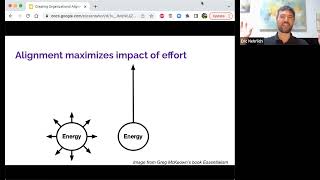
Eric Nehrlich: You Have a Choice: Creating the Relationships & Career You Want, and Why We Get Stuck