Eric Nehrlich on the Art of Executive Coaching and Forecasting
In this interview, former Google chief of staff and executive coach Eric Nehrlich shares how his background in physics, engineering, and revenue forecasting informs his coaching practice. He discusses concrete experiments he uses with leaders—ranging from symbolic identity resets (the Andy Grove "self‑firing" story) to role‑reframing for engineering VPs, and deep personal‑trigger work that links present anxieties to childhood experiences. Nehrlich explains how he harvests actionable exercises from a wide range of books (e.g., Scaling People, Buy Back Your Time, Us Getting Past You and Me) and tailors them to client needs, emphasizing the distinction between functional and dysfunctional relationship actions and the shift from a "you‑and‑me" to a "us" mindset. He introduces his core coaching mantra, "You have a choice," illustrating it with examples of expectation‑reality gaps and the importance of recognizing one’s own contribution to problems. Nehrlich also talks about his personal brand (too many trees.com), his upcoming self‑published book, and how his own career choice—leaving a high‑profile Google role for independent coaching—models the very principles he teaches. Throughout, he blends storytelling, practical frameworks, and philosophical insights to illustrate how leaders can re‑engineer their thinking, relationships, and energy allocation.
Chapters
Hello, and welcome to Commonplace Expertise. This podcast is about expertise in the real world and the people who have them. Today I'm talking to Eric Nurlich. Am I pronouncing that correctly?
Yep.
Yes. And Eric is currently an executive coach. And in fact, the main context that we connected over and decided to do this podcast is his executive coaching experience, because we connected over the judo experiment that I did fairly recently, and he pointed out certain things that I thought more people should know about, which we will get into later in this conversation. But before we do that, Eric has an interesting history. He was the chief of staff on the Google Search Ads team, if I'm not mistaken. And when he was at Google, he did something pretty interesting. He was in charge of Google's revenue forecasting and managed to get the prediction, the forecasting for that revenue, down from 10%, I believe. Error rate when you started, all the way down to like, maybe 2 to 3%. And we will talk more about that as well. I'm probably getting the numbers wrong, so. Eric, hello and welcome. I guess it's not morning on your end, but it's morning on my end. How are you?
I'm doing well. Thanks for getting up early, Cedric. But yeah, it's late afternoon here in California, where I live. And just to quickly jump in and say, like, I did not get the error rate down. It was very much a team effort.
Right.
There was a lot of people involved.
I have many questions about that. Right. Because forecasting in a team, plus what. What bits of. It was intuition that you held in your head. But before we get into that, maybe you can tell us a bit about yourself. Like, how do you turn out? Like, how do you eventually shift to executive coaching and do what you do now? And, like, where do you come from? Like, where do you grow up? Let's talk a little.
Sure. I mean, there's a. I'll try to give the short version. You can ask questions if there's anything you want more information about. I grew up in the suburbs of Chicago and was a science nerd early. And often as a kid, I decided I read. Surely you're joking, Mr. Feynman. The autobiography of Richard Feynman. When I was like 12 years old, and I'm like, that's what I want to be. I want to be Richard Feynman when I grow up. So I went to school. I majored in physics. I then went on to grad school. I'm like, I got to follow the plan. Got to get the PhD, go become a professor, just like Richard Feynman. And there was only one problem. I didn't love physics. He just did physics because he enjoyed it. And he would do it sitting in a cafeteria. There's one great story in that book where he's sitting in a cafeteria looking at plates and he was just doing it. I'm like, that was not me. I did not love physics. And it turns out it's really hard to get a PhD in something you don't love because you've really got to spend all your time thinking about it. So that was kind of a problem. And I kind of gutted it out for two or I think I made it three years into grad school before I was like this really just, it's not working. But I was fortunate that I'd always been good at programming computers. And a buddy of mine from college was running a software consulting company and he was like, hey, come work for me. You know how to program computers and I can teach you the rest. And I was like, okay. And then he was like, and of course, you know, this is 1998. It's the dot com boom. Everybody's programming computers, making millions of dollars. I'm like, I want to make millions. So I dropped out and joined the gold rush. I did not make millions, but what I call my origin story of my executive coaching experience was my second job at a biotech startup that had a great engineering team. It was like, I would call it a world class engineering team. We did stuff nobody else in the world could do. Then based on the strength of that team, we raised $40 million just before the market crashed. And somehow we went bankrupt a year later. Despite having a product that worked that was later released by another company. We went bankrupt because of just terrible, terrible decision making by the CEO and the leadership team. And I was so incredibly frustrated. I was like, we are doing everything right as engineers and all goes to nothing because there's these idiots in charge making decisions like, what's up with that? I have to understand what's going on there, because it doesn't matter how good of an engineer I am, if it all can be thrown away by a bad leader. So that was the start of a pivot in my career. I was like, huh? Maybe the engineering thing is. I mean, I was an okay engineer. I wasn't spectacular, but I was okay. But I was like, I really want to understand this management and leadership thing, because what's going on with that? So a couple jobs later, I managed to get a job kind of transitioning to that, more of a Product manager kind of role. And I started taking classes at Columbia to get a master's in technology management. So a degree that was specifically designed for technology people to kind of learn to speak the language of business and executives. And the most memorable thing from that was a class where one of our professors said, if you want to understand how executives think, you have to understand the money. I'm like, I don't understand the money. Part of that class is like learning to read a balance sheet so you can look at so many statements and go like, okay, I understand the cash flow, I understand the assets, the liabilities, and how it all fits together. And that was the first time I'd ever seen any of that stuff. So a couple years later, I'm looking for a job and I see this job in Google for a revenue forecasting position. And I'm like, you know, I bet if I forecast the revenue, I'm really going to understand the money. So I managed to talk my way into that job, even though I didn't quite have the requirements they were looking for, because they were looking for somebody with quantitative background, which I was like, I'm a physics major. I know how to do quantitative analysis. They're like, somebody that understands technology. I'm like, I've been an engineer. I know how to program computers. That part I got somebody with a business experience. I'm like, yeah, don't got that. I got a couple classes. Is that good enough? So they gave you a chance. And the funny thing is, I joined In September of 2008, just when the entire economy melted down. So Google had been riding high for many years. They never had a revenue forecasting because you didn't need revenue forecasting when all the revenue did was grow 50% year on year, every year. So I joined and the bottom falls out of the economy and the numbers start tinking. And then six months after I joined, our lead analyst, one of our other analysts, and our manager all left the team. So out of a team of seven, we were down to a team of four. While the cfo, the CEO, the VP of product, and everybody else at the company was asking us, what the hell's going on with revenue? What's going to happen? Tell us what's going to happen. And we're like, we don't know. So it was kind of high stakes for me. Like, literally six months after I started Google, I'm presenting monthly to Eric Schmidt, the CEO, the Larry and Sergei, the cfo, Tat Prashant. And standing up in front of them, going like, this is what's happening with revenue, I think. So it's kind of definitely a trial by fire. But I learned so much. I learned very quickly. And because we had some great analysts on the team, I also, like I said, that was when we learned to really get far more rigorous about how we forecasted revenue. Far more understanding of some of your recent blog posts, what was true variation, what was random, what was controllable, and really understand that to a much greater degree. So I did that for a few years, and then a few years after that, I was kind of done with being on the finance side and forecasting revenue. So I was looking for a new job.
Just for context, what was the percentage error rates when you started and then when you ended?
It was, yeah, like 10 to 20% was not uncommon when we started. And I mean, when I left the team, I'm not sure, but certainly by the time, like, by the time I left Google, like that team, their error rates were down to if it was more than half a percent, something major had changed in the world. Like, it was like, you know, the forecast is accurate. The world changed on us.
Okay, I'm going to ask more questions about that, but go on what happened next?
And so just, yeah, I'll just quickly finish off and say, yeah. Around that time, I was looking for a new job, and One of the VPs I'd worked with on the revenue forecasting team, because we met weekly to talk about revenue. So the VP product, the VP product management of search ads was like, I want a chief of staff to help me think about my business. And I'm like, I don't really know what a chief of staff is, but I know your business. He's like, well, come help me. So that's kind of how I became a chief of staff. And I ended up being chief of staff for six years, running business strategy and operations for the search ads business. So I like to say, you know, I helped run a business as a Group, past $100 billion a year in revenue. But even that was a great. I mean, that was a great job. I will never have a job with that kind of scale again. But at some point I decided I was looking for what's next and decided to go the other direction of really going more personal of like, connecting to my passion, which is really helping people succeed. And that led me to executive coaching. You know, the way I talk about it is my favorite part of being a chief of staff was like the hour each week I sat with my VP and we go like, what should we do, like, what's going on? Where are we going to go? Where are we going to place our bets? What should we do? That thought partnership was probably my favorite part. And I did the other 50, 60, 70 hours each week of strategy and operations to get that one hour a week. Now, as an executive coach, I just do the one hour a week of thought partnership and somebody else does all the other stuff. So this is kind of my ideal job now.
All right, so I want to dive into a couple of points in that story, I think. Let's start with the forecasting team stuff. When we talk over email, you had a couple of wild stories from that time. Could you tell one or two of them?
Sure. I don't remember which ones I told over email, but I'll start with one that was kind of funny when I started. So before I got there, like I said, I got there in September 2008. So in March of 2008, the team noticed they were tracking revenue per query as one of their key metrics. And. And that started declining. The growth rate started declining and actually was declining year on year. And that had never happened before in all the years they'd been tracking it. And they're like, what's going on? What's wrong with our ad system? Their revenue per query is declining. And they spent. They called it Code Red, or maybe Code Yell, I can't remember. But they spent the whole summer tearing the whole system apart trying to find everything that could be going wrong. And around about the time I joined, when Lehman Brothers collapsed and Bear Stern collapsed, they're like, oh, the problem is with our ad system, the problem is the world. Because they just hadn't been long. Well, they just hadn't quite realized that they'd never, at that point, it'd been a long time since last recession. And so they just hadn't realized that when you have a dynamic auction system, it responds immediately to conditions. And so that was kind of the discovery. But it's like their system noticed what was going on long before they figured out what was going on. Which is one of the.
A funny story, you know, if maybe the regulators or the Fed should like, ask Google for access to like, oh, can you tell us when there's a Code Yellow or Code Red? Because this is months right before the bank failures.
Yeah, well, it's. It's funny though, because at the time, Hal Varian was our chief economist and how's, you know, economics professor, one of the leading thinkers on auction theory. So at our revenue meeting, when one day we were trying to figure out what was going on. He was like, well, Hal stopped and said, you know, I was talking to Ben last week, and here's what he had said, or like, ben? Ben who? Ben Bernanke, the chairman of the Federal Reserve. I was like, oh, right, one of his former PhD students, it turned out. So we were being consulted, at least in some way.
Okay, very good. What other stories? What stories do you have from that time?
So another good story, I guess, is like, just after I started one of my first projects was actually, this is going to be hilarious. But it's like defining what the heck revenue is.
What?
Yeah, you would think that'd be obvious. It's not why.
Okay, go on, go on.
So I started around that same time we got a new cfo, Patrick Pachette, who I adore. He's an amazing leader. And he came out of, like, 20 years at McKinsey. He'd been the chief operating officer of Bell Canada and had to run a very tight ship there because in telecommunications, it's very tight. So when he first came in, he was like, I can tell you what my revenue is going to be to the dollar on the first day of the quarter. Why can't you do that? We're like, it's an auction. People are changing things. We just don't know. He's like, that's unacceptable. So that's part of why we got a lot better, is he held us to a higher standard. But one of the things he looked at was he was like, wait a second. So I've got a financial forecast over here that we're using to kind of set our plan and our costs and things like that. We've got a sales quota plan over here that is not related to the finance plan. And we've got the product team making adjustments over here, which is using their own definition of revenue. I don't like this. There should be one definition of revenue. And then we ran the numbers, and the numbers didn't make sense. They didn't match. The number for Q4 for sales, the number for Q4 for product, the number Q4 for finance, were three different numbers. So one of my first jobs at Google was to figure out how to resolve them. And so we actually put together a spreadsheet that we called the Rosetta Stone that could translate from finance to product to the fine to the sales numbers. And it has to do with accounting, like, counting intricacies and, like, what's billable versus non billable? What there's quota bearing versus not Quota bearing, like certain revenue didn't count for the quota, and all sorts of very subtle things in the system that you just wouldn't know unless you cared about this stuff. So somewhere at Google there was a shortcut saying, go, what is revenue? Which was a page I put up to say, like, here's all the different definitions of revenue, here's how they translate to each other. This is going to be the way we define revenue from now on.
And then many, many years later, you start writing about coordination problems in large organizations and org design because your very first project is figuring out what the definition is when they talk to each
other
to dig into that experience a little more. So you come in, the world is going through a crisis. You can't forecast anything. Your team is basically. Half the team basically quit, right?
Yeah.
And then now you have the really hard slog of, I think, I don't know how many years was it where you were trying to bring down the error rate? Could you talk a bit about that slog? How do you eventually get forecasting to work given that Google is such a large business, it's in so many areas of the world, and then trying to figure out seasonal variation versus routine variation versus exceptional variation in that kind of format. It boggles my mind how you can even wrap your head around the problem. Right, like, what was that like?
Yeah, I mean, so first of all, I want to be very clear, it wasn't just me. There was a huge team of people. Like, you know, even on that revenue forecasting team, there were four of us that were still around and we hired four or more people immediately. So even in 2009, there were eight of us working on this, not to mention the product teams, not to mention the other, the sales team looking at this stuff. So it's a big cross functional effort. But to your point, like, you just, you have to, you learn, we learn to break it down. So different countries have different seasonal patterns. This might seem obvious, this may not be obvious to everybody, like, but turns out holidays in Japan are not the same as holidays in Italy are not the same as holidays in America. So if you don't have. So there's a huge holidays file somewhere at Google which tracks which regions have which holidays and what kind of effect we expect them to have. And so one of the things that our team did, again, I didn't do the actual coding on this, other people did, but they broke it down to do forecast by region, by country so that we could break it down to that level of detail and have much Smoother trends. Our big tool is just looking at year on year growth rates. So if it's seasonal, then the year on year number should stay the same for the most part. You get into some trickiness when it's a date, not a day of like December 25th is on a different day each year. And there's a different pattern from Monday to Friday. So you have to take that into account.
Right.
So there's like variation throughout the year, like January, February, March, et cetera. There's variation within the week, Monday, Tuesday, Wednesday, Thursday. There's variation by day because it's holidays. And you have to build your forecasting algorithms to take into account all of that. Which people did. You also have to, as I mentioned, with what is revenue? You have to make sure you're forecasting the right kind of revenue. And are we looking at the right numbers that are the thing we care about, the thing we actually want to measure? One other thing that we did that was we you analyze revenue by its components. So one of my interview questions was like, how do you think about revenue? I think it was, it's long enough now I can say this. Like, we see cost per click declining and declining. You know, what's going on? How would you analyze that problem? And fortunately, I had a friend who was working at Google, so she gave me some inside information on how to answer it. But I was like, okay, so the revenue equation is revenue is revenue per query times queries, Revenue per query is cost per click times clicks per query, clicks per query is clicks per ad and ads per query. So it's like those are kind of your building blocks. So we start looking at that. And then I was like, and then let's break it down by country. And then, you know, in the thing, it was like, okay, CPCS are actually going down in London. And then we tie it to the banking industry. And something like that was the actual question. But that was. So that's part of it as well. You start looking at these underlying trends. It's not just revenue. It's like, is the deviation happening in cost per click? Is it happening clicks per query? Is it ads per click or clicks per ad click through rate? Or it's just queries, it's queries going up and down. So there was one memorable time in 2000, I think it was 2009, you'll be able to look it up. But. But where all the alerts went off, like all the revenue per query alerts, ads per query, all of them went outside their bounds. So varied by 10%. The engineering team was like, what the heck is going on? And we bring up the analysis tool we had, and queries had skyrocketed. We're like, what is going on? The answer is Michael Jackson had died, and everybody in the world was searching for Michael Jackson songs, which didn't have ads on it. And so all of our global numbers were tanked. We're like, okay, that seems reasonable. But that's the kind of stuff that, like, it's like, these are the kind of stories that I can still remember vividly 14 years later, because it was just like this moment of panic. Like, what the heck is going on? Like, all the alerts going on. We don't understand it.
Right. And then somebody eventually says, oh, Michael Jackson has died, and that's why the queries are spiking.
Well, actually, funnily enough, it was the other way around. We saw the queries spiking and somebody did an analysis of, like, what is the number one queries happening right now? And they. Because we have the logs. And they looked at the logs and said, oh, the queries are all about Michael Jackson. And then somebody thought to check the news, like, oh,
oh, my goodness. So it's like, through your little team. Sorry, it's like a pinhole view of the world, what the world's interested in, Right?
Absolutely.
When you told me that story, I remember thinking, that's a remarkable story of exceptional variation. But I guess maybe clarifying question first, if you could do that. I mean, there were alarms. You said there were alarms when there was, like, variation broke certain bounds. Right. But what was the level of sophistication? Just for the sake of listeners, when you were sort of trying to figure out the relationship between each of these. What do you call it, Components.
Right.
How much was baked into the code to sort of, like, surface? Like, oh, this is exceptional variation. Or how much was. It was like human eyeballing and then building this intuition and then eventually sort of telling a programmer, oh, can you encode this intuition into this particular graph? Right. What was the split between math, maybe. I don't know if you use correlation variables or correlation calculations anywhere, or it was intuition, like eyeballing and then developing a sense like, this looks wrong.
Yeah. So certainly when I got there, it was no math, no correlation. It was all eyeballs. We had this tool internally, which was great because it was effectively a pivot chart in Excel, so you could split by different variables and graph it in different ways. So it's like, okay, let me look at revenue. And then it would break it out. Revenue per query, cost per click, all the submetrics. And that was like one set of graphs. And like, I want to see that what's happening in the UK versus the US like, let me compare those and see if one of them is different than the other. And so we had a weekly revenue meeting where we'd basically look at the trends for last week, and we'd like, literally bring up this interactive tool and go, like, what the heck's going on? We'd be clicking together, clicking around together, like the VPs and me and the finance team to really understand what was going on. This was again, 2008, 2009, a few years later, all of this was encoded. Like, we had a lot of this incorporated into a regular fact pack that was created before the meeting so that all these sources of common variation were accounted for before we got into the meeting. But in those first years, we were just developing the intuition because we just, like, we don't know what to code until we have a better sense of, like, what are the things that we should be watching out for? What are the splits that matter versus the splits the don't and things like that.
And was it very difficult to communicate later? Like, when you have a fact pack and you have different variations, like, how do you communicate the fact to somebody coming in that, like, hey, this is seasonal variation, or this is the holiday. I think you mentioned in email that it turns out that Easter had a bigger impact on Eastern European countries or something like that, because they were Southern European or something.
Italy and France and Spain are very Catholic, so it turns out Easter really matters, right? And actually Eastern Europeans on the Orthodox Easter, so they're a week later anyway, just random details that I know.
How do you encode all this and communicate it to somebody who's coming in on the team? And it's new to this, right? Like, is it encoded in the software? Is it like, do you have to have a briefing and sort of tell them, sit them down and go like, okay, so Easter is a big deal, by the way.
It's a little bit of all. Some of it's encoded. I mean, like I said, we had this holidays file. The forecasting algorithms were just used. But a lot of it's word of mouth and apprenticing. Almost like, okay, look at this, look at this here. Let's figure this out together. And that may have changed again. I left this team 2012, so it's been over 10 years. So I was actually on the revenue forecasting team, but it was Kind of this funny thing where when I became chief of staff, I still sat in the revenue meetings and I'm still talking to the team because they're showing up and presenting. And now I'm on the other side being the consumers of their analysis rather than one of the generators of the analysis. So I was like, this one weekly revenue meeting, I was part of it for basically 10 straight years, which was pretty cool experience.
Wow. And at some point you told me, I think, that a huge amount of it had been turned into intuition or testing knowledge in your head where people were just like, oh, go ask Eric. There's revenues acting weird. Or should we be worried? Is this seasonal variation or normal variation? Exceptional variation. Go talk to Eric. Right. How did that happen? Was it something due to your role and the number of years you've been there, or was it the fact that you were. You played such a. You were there in the beginning, right, when there was, like, going from eyeballs to algorithms.
Right. So a little bit of both. I mean, so, yeah, at some point, probably, I don't know, 2010 or so, we wrote up a little email that would just report on the previous day. So 6am Every morning, I'd run the numbers for the last yesterday, saying, this is what we forecast. This is what actually happened. This is the breakdown among a few key variables. And it would just send it out to all the key stakeholders. The VP of product, the cfo, the various leads, the various executives that needed to know about this. And so when I was chief of staff, my VP would read it, and he's like, ooh, there's a lot of red here. We were way below our forecast. Should I be worried about this? Actually, when he first started, he was like, oh, we got to figure out what's going on. Eric, tell me, like, go do this. Go do this. I'm like, calm down. It's fine. This is not a big deal. Here's why it's not a big deal. And I would kind of talk him off a ledge, or I'd be like, oh, no, it is a big deal. I'm working with the finance team. We're on it. We'll get an answer to you later today. And so over time, then he was just like, before he reacted, he would just ping me and go, like, should I be worried? Like, no. He's like, okay,
this is really interesting. So basically, he had to rely on your felt sense of the numbers to be able to tell if this is exceptional variation or this is normal variation. Right. That's really okay. Go on. And then eventually what happened?
I mean, eventually he developed his own sense. I mean, we worked together for six years. So after a year or two, he got his own clearer sense of how the numbers worked. Because once you've been through a few years, you just see the common things that happen and, you know, and you get a better sense of what's. What to worry about, basically. So, yeah, so, I mean, it's not like it was kind of like what you were talking about. How do you learn this stuff? Well, you sit next to somebody who knows how to do it and you kind of develop your intuition based on theirs. And over time, that's how it works.
It turns out. The dances, osmosis.
Right.
All the stuff that I've been writing about tested knowledge, the answer to how do you tell between variation is osmosis of tested knowledge from somebody who built out the tested knowledge through trial and error.
I mean, I would hope there's a better way to do it. I just, I mean, that's part of why I've been so fascinated by the things you write about is it's like you're trying to explore how to make this more systematic, how to make this more process driven. And I like, I'm just an intuitive thinker and so it's very hard for me sometimes to go like, well, it's just the right thing. Like I don't know how to explain it. And that's just kind of my brain,
how it works for listeners who are listening and wondering what we're talking about. I'm currently doing, I think for a couple of months now, a series on how to be data driven in business. And the sort of like tread that I've been pulling on was I did a project for Colin Bryan, Bill Carr, Amazon, and interestingly enough, Brian Carr, Colin Bryan and Bill Carr, they wrote a book called Working Backwards. And in Working Backwards, they talk about the importance of being able to tell between routine variation, exceptional variation and seasonal variation. Right. But they themselves don't use the tools from process control, which is really the mindset and the worldview that Colin Breyer comes from. And in statistical process Control, there's this tool called the XMR chart, or the Process Behavior Chart, which allows you to very quickly sort of tell by drawing bounds on a time series whether this particular data point is something worth investigating.
Right.
But the interesting thing to me was that when I was talking to Colin or when we were working on this project together, which was trying to explicate the whole Amazon metrics process, the process he described was very similar to yours. You know, metrics owner were expected to really dig into the metrics and develop this felt sense of, this felt intuitive sense of whether this was exceptional variation, a normal variation. And then during the weekly business review. Right. It's Dell job to say, nothing to worry about here or yes, there's something going on here and we don't know why yet or there's something going on here and we've investigated and here's what's going on. Right. So I thought that was really interesting. Like is there something, I wonder whether there's something wrong with the XMR chart approach, the process behavior charge approach that, you know, Amazon doesn't seem to use it widely. I don't know for sure. I should probably check. And that probably explains like a lot of my interest in your building of intuition, this felt sense of the numbers that you had in your head.
Well, so I mean, you know, I actually read, I read that essay on the XMR chart and I was kind of like, why didn't we do something like that? And I think the answer is the world was changing too fast. Like you need a dependable process for that to be effective. And like when literally. Not literally, but almost everything in the world affects Google revenue. Like every world affects.
That's true.
It's just there's too many variables to like do that. And that's just the external events. Like we also have a product team that's releasing things on a regular basis and each time they release something, it'll make things happen. And so like, oh, we did this thing that rate cost per click go up or our click through rates go up or whatever it is. And that's affecting our things as well. So one of the first algorithms that somebody on my team built or on the team I was on built was like basically an edge detector. It's like when you see the trend line change, take that out of the forecasting trend line so that we can actually forecast. Because you can't, otherwise it would just predict next year there'd be a step change like that. And you can't get, you can't do that obviously. So you have to learn the algorithm had to learn to take out all those step changes, but then you had to make sure it was a real step change that was actually due to a product change and not something else. So it's like all these complications that required really understanding the system and everything affecting it to be able to make sense of it. So it's like the XMR Chart's a really cool idea, but it really depends on no exogenous variables, which just was not the case for the stuff I was working on and I imagine for Amazon as well.
Yeah, or fewer exogenous variables. Right. Like certain company processes. I can imagine you can put an XML approach on it, but then because it's not completely affected by the macro environment, but you know, something like Google's revenue, I could imagine there's too many exogenous factors. One example that I encountered in trying to put this to practice actually was trying to figure out traffic spikes on what to investigate. So what I had to do was I had to actually separate out my traffic from Hacker News versus my traffic from SEO normal sources or direct sources. And the reason for that was because Hacker News was this spiky thing that was completely random because Common Clock would go viral once every, I don't know, month or so. That's basically a random process. I can't control that. There's no way that I can sort of figure out how to make my articles more viral more consistently. It just totally depends on who submitted it to Hacker News. Right. So I had to separate that out because otherwise I can't do any analysis of figuring out like, has my SEO change. Has like certain changes that I made to my website format affected my rankings or my direct visitors? And so I guess there are real limits to that approach. But I can imagine it may be working for something more internal. Like maybe you're trying to figure out some process control of your latency or some computer system thing, which I'm sure they already know.
Yeah, like, I mean, that's why this came out of manufacturing, where it's like really, we, it's in the factory, we control all the variables. So it's much easier to kind of have that kind of approach. But yeah, I mean, like, your example is great because it's like the Hacker News spikes are so big it can overwhelm all of your SEO. So it's like, well, I'm just going to ignore that. But then you're ignoring the thing that's like one of the biggest drivers. So it's like that doesn't seem right.
It's not controllable though. So if it's not controllable, you're supposed to like put it aside and then like focus on the thing that's controllable, which is the more SEO direct traffic, which should dried up over time. But you want to make sure that that's actually happening.
But anyway, I mean, I would say like it's not controllable, except there are things, you know, you can experiment with being more viral. Like, I haven't figured out how to do this, but I listened to an interview with Mark Manson. He wrote the book the Subtle Art of Not Giving a Fuck. And before that he'd been writing essays on his website and he had figured out a way to like go viral basically every month or so on Facebook. And he was like, yeah, I spent days obsessing over the wording of headlines to figure out exactly what's going to make something go viral. And he had like that particular title, how to that Subtle Art of Not Giving a Fuck. He was like, yeah, I spent a year crafting that title and it went viral. It became a book, it set up my whole career. So he took it as like, no, this is not random. I will figure out how to reverse engineer virality to. And it's like yeah, don't get every time. But like my hit rate went up when I studied this. So even things like that feel like something that you know, like, oh, that's not, it's not something you can do anything about. But you know, to our other theme of what we're going to talk about deliberate practice, like he was literally like, I'm going to experiment and try things and see what I can do to drive things right?
So maybe to close this off, this piece about your really interesting to me at least history in Google's forecasting revenue, right? What would you say to somebody who was a novice and was trying to get the get into revenue forecasting maybe on Google side or maybe on another sort of like global business which very complex, exposed to the macro economy sort of situation. What advice would you give to a novice who's trying to start down this path?
Oof. I think it's going to start by really understanding what are the components that matter and the components of revenue. So like one of the things I also did at Google is a little bit of business modeling for some of our emerging businesses which we didn't have the data for. And I had to come up with my theory as to what would be the key metrics that we had to whether we were going to try to manage two. And so it's really like, okay, like in any kind of revenue equation it's whatever price times quantity, right? It's like how many do we sell and like what do we pay for it? So let's start with that. Like what are the things that go to revenue and then what are the things that affect how many you sell what are the things that affect your price and you start breaking it down like that. And you don't want to go too deep, or I should say, I don't think it's a good idea to go too deep. Like, my bane of existence was like these ex McKinsey consultants that would come in and they'd have like a 500 line spreadsheet. 495 of the lines were made up. And I'm like, I cannot get any insight from this. It does wonderfully. Everything ripples through. But it's like, I don't know how to gain insight from this. Whereas I think one of the things my VPs and my stakeholders liked about my spreadsheets were like, I would clearly label here's the five assumptions and I put them in yellow. And if you change these, then they'll ripple through. But let's look at how these five things that I think are the key things affect everything else in the model. This is another teaching from Patrick Pachette, the cfo, because his key question was, what do I have to believe for this to be successful? And he would ask that in every single meeting where somebody was asking for funding. So it's like, okay, if this business is going to be successful, what do I have to believe is going to happen? And I didn't know what that question meant the first time he asked it or the second.
Yeah, I don't understand. Maybe you should dig into that a bit more.
Well, it's what I was just saying. It's like, do you understand the key numbers that are going to drive the success of your business? And do you have a sense of how realistic those numbers are? So it's like, if it's price times quantity and you're like, oh, we're going to charge this much, we're going to sell this many units? And it's like, you look at the units like you're going to sell five units for every person on the face of the earth. Like, I don't think that you're going to get to your numbers
holding them to the standard of like, if you have numbers, what's the basis behind them? Is it realistic?
Yes. What do I have to believe? Can I tie this back to some real numbers where we have a real world data that we can justify that we're going to get to this number. And if so, then he'd be like, okay, here's some funding for six months. Come back and measure those numbers in the wild. Do the experiments and come back. And then you'll get more money. And it's very simple. It's what any VC would do. It's the lean startup, build, measure, learn kind of model. But that's how I learned. It was from Patrick Pachette. But I got very good at answering that question because every time one of the teams I support was going in front of him, I knew we needed to have an answer to the question, what do I have to believe? And if we couldn't really distill it to them, like, here's the three numbers that matter, here's our comparison points that we think were reasonable for us to achieve, and this is how that's going to translate into this kind of revenue. The other funny thing around that time was if the number wasn't a billion dollars in three years, it wasn't going to get funded because Google's numbers were just so big that it's not a billion dollars in three years. It's just not even worth. It's not going to move the needle enough for us to care about.
No, this is 100% true. When I was talking to Colin as well about the PR FAQ process, he was saying that one of the big questions that killed a lot of proposed projects was, is this enough to move the needle? And the answer to Most proposals, most PR FAQs were, it's no.
Well, and it's funny, I got really frustrated with this at Google because it's like back in 1998, Larry and Sergey tried to sell to Yahoo for like a million dollars and they were turned down. So it's like things that don't look like a billion dollars right now could easily turn into something much bigger. And we aren't smart enough to predict that, or venture capitalists would have a much easier job. So it got very frustrating for you that we would apply this lens and threshold and it's like, well, it's just we don't know if we knew enough to do that, we'd all be venture capitalists and able to predict every startup, but nobody can do it, so. So let's stop pretending we can.
That's true. One of the questions that I actually like to ask, which is sort of tied into expertise, which we're going to talk about in a second, is what would a novice get wrong here? Right. So if somebody was going to start out, they came to you and said, oh, you know, I'm starting out this forecasting role in some company. What do you think they were most likely to be? You know, what would they get wrong within, like, the first Year or so.
Yeah. I think the main thing people would get wrong is panicking when the number is below the forecast. So what's going to happen is you're going to have a forecast, the CEO is going to look at it and they're going to say, we're below forecast. Something must be wrong, everybody. And you have a big fire drill. Everybody has to go into alert mode, figuring it out. It's like, okay, if we are trying to make an accurate forecast, one that is actually trying to predict it, we should try to be 50% above, 50% below. Like, we should expect to be below the forecast 50% of the time. Right. And if we're not setting that expectation, if we want to make it a forecast we always beat, then we need to make a different forecast. And so this gets back to the question of, like, what purpose is the forecast meant to serve? If it's meant to be accurate, you have to be prepared. There's going to be negative days and sometimes big negative days, because as we know from variation, like, one out of 100 days is going to be three sigma away. Like, that's just. That's just math. But if you don't have that, again, that intuition that you've developed or that I developed of, like, you know, how often, like, you know, if it's like 5% below forecast a week in a row, then I start to worry, like, okay, there's something going on, that maybe there's some exogenous factor we're missing, something's going on. But if it's like one day below, one day above, like, it's just. It's generally not worth worrying about. So I think that's, you know, kind of the point. It's like educating yourself on that and then educating your stakeholders, like, this is the time. This, this is what we expect. We expect some above, some are below. Or if you want to have it always be above and always be in the blue, then then we're going to set a lower forecast and be less ambitious. But that has consequences as well, because these. The revenue forecast was used to set the financial plans. So if you set a lower revenue forecast, I mean, you can't spend as much money because the costs that are allocated is a function of margin. So this is your revenue. Yes, there's your margin. This is the cost we're going to have. And then it's like, okay, we didn't fund things that we otherwise would have funded. So, like, that was something that people didn't get either. They're like, oh, it's a good thing. When I beat my forecast by a lot, it's like, no, it's a bad thing. They're like, why is it bad to beat forecast by a lot? It's like, well, because if we knew you were going to beat forecast, we would have funded these three other projects that we said no to because we didn't think we'd have the money. So that's why accuracy matters in this stuff. And again, this is not intuitive unless you sit in the finance department and sit with this stuff for a couple of years, which is what I did.
And I think this is useful for other people listening to this podcast to know, but maybe sort of switching gears a bit when you switch to become an executive coach, maybe sort of set a stage, you know, what for people who don't know, and they are people who don't actually know what an executive coach does, like, what is an executive coach? And could you describe that transition? Like, what do you find easy? What do you find enjoyable? What do you find difficult about that shift, you know, to, like, now you're an executive coach, you've been doing this for a couple of years, but before that you were completely in forecasting for 10 years. Right. And then you switch completely to this more squishy, qualitative, like, people focus thing. So maybe talk through that, talk about what an executive coach is and then like, how do you make the transition?
Sure. So I like to say that my job as an executive coach is to help leaders grow their impact. And the first question is like, well, what does that mean? And you and I talked about this in an email. It's like the first question I always ask with the client is like, what does success look like? If I work with you as your coach and we look back at this in a year and you're wildly successful, what does that look like? And it's a different answer for everybody. It might be like, I got promoted, I got more scope, People listen to me more, I make more money. It could be a lot of different things. I got a new job, I got this title, I had this impact. There's all these different motivations that people have. So the first thing we have to agree on is where are we aiming? Because if we don't agree on that, there's nothing that we're not going to make any progress. And then my job is to help them move in the direction they're trying to go. And in particular, to our point about exogenous versus internal factors, I can't control the economy. I can't even control what's happening with other people. So the thing I've worked with my clients on is their own behaviors. So what are the things they are doing themselves that are blocking their progress towards their goals? And that's the thing we can control. So I will never promise, like, I'm going to get you that promotion because like, that's not something I can control. That's dependent on politics and all sorts of other exogenous factors. But if they told you in your performance review, this is the thing that's holding you back from the promotion, you're too aggressive or you need more influence or you need better executive presence, like, okay, we can work on that. And so we focus on the things that they control. And the way I do that is we look at their current behavior. We look at like their default reactions to situations. And you know, a lot of times one of my favorite go to moves is they say, like, I need, I want more executive presence. Like, okay, who is somebody, you know, that has that executive presence you want? And they think of a couple people like, oh yeah, this person, that person. Like, okay, what do they do that you don't? What is observably different about their behavior? And they're like, oh, well, they're calmer when they talk to rooms or they spend more time cultivating relationships or whatever it is. I'm like, great, now you know what to work on. Let's go figure out how you can try that. So if it's emotional regulation, okay, let's work on breathing exercises. Let's work on trying to notice when you're getting excited and learn to channel that. If it's networking, it's like, okay, let's find time to build time as your schedule to reach out to other people and build those relationships outside of your core job. So I mean, these are just some examples. I do all sorts of things because it varies on a client to client basis. To answer your other question about how I got into this, I mean, the chief of staff job was great. Like I said, I did it for. I ended up doing it for over six years, which was very unusual. Most people at Google at that time took chief of staff for like two years as kind of a learn about the business kind of role and then moved on. But I really liked my vp. I thought he was an amazing leader. And I'm like, I get to be in the room with him. Like, this is like, if I care about leadership, this is the best education I could get because I'm literally in the room with some of the best corporate technology leaders in the world. So I loved that. But I was starting to get stale. I was starting to feel like I wasn't learning year to year. I was kind of like, okay, I know what to do, I know how to do my job, I do it well. But it wasn't engaging me as much anymore. And I had a bit of, I'll be honest, had a little crisis of meaning. It's like the search ads business job. And my job in particular was to make Google grow revenue. That was my job. Grow revenue at over 20% year on year, endlessly, forever and ever. And when you're talking a hundred billion dollar, your business like 20% year on year growth means you have to find $20 billion in new revenue. And just think about the challenge of that. Like this is hard.
You did it for six years.
We did it a long time. We did it longer than we expected. Wow. Yeah. Actually, you know, I joke that if when I took the job in 2012, I was like, yeah, the game is up in 2016. We're not going to make it past 2016. Because I mean, well, because I could look at the Internet penetration lines and the demographic lines and like we're going to max out Internet penetration, which was our main driver of growth in 2016. I was like, that was just the math. And the thing that changed was smartphones. And everybody now knows in 2013 or 2014, Google did a big blitz on mobile first and that changed our trajectory. Like in 2014 we were not in a good trajectory and we changed everything to be mobile first. And that gained us another several years of revenue growth because we got involved in revenue, we got involved in mobile. And then mobile became the gateway to emerging markets. You know, the Indias and the Chinas and the Southeast Asias of the world because they were all mobile first.
Talk about the world changing under you.
Right, exactly.
The forecasting seed.
Yeah, so, right. So the job was just getting harder and harder. And I, and I just was like, I don't want my legacy to be I am making the world's richest company richer. Like that's, it was not like, that's not what I want. I want to my tombstone, you know, I hit my 10 year mark at Google. I'm like, and I had just gotten married, I was becoming a father. I'm like, what do I want to. The meaning of my life to be honestly. And for me, I came back to like, what? The things that brought me energy, the things that brought me joy was always helping other People be successful. Like, I am a helper by nature. I want to help other people and especially help them get unstuck. And it's funny, I didn't recognize this at the time, but one of my directors on the revenue forecasting team, he took over the team during a hard time because I mentioned we lost our manager. And then we. We didn't have a manager for, like, six months. And then this guy came in and he didn't do anything. When he started, which I thought was weird, I was like, what is this guy doing? He's not telling us what to do. He just sat and watched us for two weeks because he's like, you guys are doing great. I'm not gonna try to mess up a good thing. And after those two weeks, he came to me and he's like, eric, do you know you're the person that everybody else goes to when they're stuck? Like, no. He's like, yeah, you are. So you're my new number two. And it's funny, in a year at Google, nobody else had figured this out, and he figured it out in a week of watching the team. It's like, oh, Eric's the guy that everybody else goes to when they're stuck. Because the talent apparently I've always had is helping people see. Understand where people are and help them see a new perspective or see some new possibilities that would get them unstuck. And that's basically what I do now as executive coach is leaders come to me when they're like, I'm stuck in my career. I want to get to the next level. I don't know what's stopping me. I'm like, oh, let's look at it, and we take a look together. And I can see possibilities. They can't. So, yeah, when I was starting to figure out what's next, I sat down with a friend and I was telling them, like, actually, I remember that I had a conversation with somebody that was talking about my chief of staff role, and I was like, they don't measure me on the things that matter.
What do you mean by that?
Well, because I was looking at my performance review, and I had gotten kind of an average performance review because they were looking for, like, have you instituted this process? Have you built this structure? Have you done this documentation? I'm just like, that's not what I'm good at. I'm good at this other stuff of helping people figure out what to do, and they're not measuring me on that. So my friend was like, if they're not measuring on the things that matter to you. What do you want to be measured by? I'm like, oh, I've never thought about that. And I came back to this idea of like, oh, I like helping figure out, helping people figure out what to do, help getting people unstuck. And my friend was like, that's called coaching. Have you considered coaching? Like, wait, that's a job? You could do that?
Yeah.
So and then I started exploring coaching and I started coaching some friends kind of for as practice. And then I enrolled in a coaching program which is a year long training program at an institute called New Ventures west here in San Francisco. And then even after that, I'm like, I'm not quite ready because I'm a cautious person. I wasn't ready to just go for it. So I started a coaching business on the side. And after a year of building up clients on the side and building a website and all that kind of stuff, I had five or six coaching clients and they were referring more to me. And I'm like, okay, it's time. And I just had my first kid, so I was ready to leave Google and spend more time with my kids, my new kid. So that's kind of how I made the transition. But yeah, what I love about it is like I said, I sit with people when they're stuck and I help them sort through their thoughts. I mean, like, it's funny the number of times when somebody comes in, it's like, blah, blah, blah, this and this and what about this? I can't understand this. And they kind of like get it all out of their heads and they look at it and they're like, oh, wait, you know what I could do? I could do this. Okay, cool, great. That was really helpful. I'm like, I didn't do anything great. I'm glad it was helpful.
Yeah. So one of the things, I mean, part of why when I was listening to you talking about the shift to helping people, it was, I think it's more profound right now where I'm sitting, given that I've just come off this four manjudo experiment where I develop a really close, trusting relationship with my coach.
Right.
And sort of coming off that, I think I may have said to you in the email that I don't think many people, unless they're in sports contacts, have this kind of profound relationship with their coach where it was total trust. Like, if my coach told me to jump, I will ask how high.
Right.
Because I know that he had my best interests at heart. Right. I truly Trust. And he could be one of the things when I was, when I came back and I started telling my friends about my experience, one of the things that I reflected that I could get from my coach that I couldn't really get in a career context was he was always looking out for ways in which I was failing or not doing as well. And he would be brute. He could be brutally honest with me due to the trust that we had had. He didn't need to, he didn't need to sugarcoat it. In the beginning, he did. But then over time, you know, as he, as he understood that we trusted each other, he could be very brutally honest with like, Cedric, you're not good at this. Or Cedric, you need to work on this. Right. And very rarely do you have this in a career context. And a friend of mine was sort of reflecting on the fact that he has had multiple mentor relationships where, you know, it's a mentor who gives him advice, but he doesn't need to take the advice. So that's slightly different from me with my coach where I would really seriously, to like 95% level of seriousness, consider the advice that he was giving me. Right. And one of the things that I then started to think about is like, what's the difference between a mentor and a coach? Right. Maybe you can sort of talk a bit about that. And then I have like a whole bunch of follow up questions related to like the coaching relationship and this trust sort of thing and why it's weird and rare in career contacts.
Sure. First of all, I want to say, if you haven't read Cedric's article on be good to your mentors, I highly recommend it. I actually send it to people every now and then. It's like the thing that's going to get you a mentoring relationship is you take their advice. Like if you go and ask them a question, take their advice and do something with it. And if you don't do something with it, don't expect them to keep answering your questions. But to your question, I mean, like the way it's often explained is that mentoring is saying, I know how to do this, I'm the expert, let me tell you how to do it. And so like on revenue forecasting, I could be a mentor because I'm like, I have this internalized, I know what to do. I will tell you how to do this. There is a right way and a wrong way, and I will tell you what the right way is. Coaching is different because right is subjective, success is subjective. And a lot of times I Don't. I mean, not a lot of times. All of the time. I don't have the full context. I'm meeting somebody for the first time. I don't know their whole life story. I don't know everything about them. And the. One of the principles of coaching is that the person has everything they need. Like, they can figure it out if. If you give them the support they need and the space they need to figure it out. And so I'll say that as executive coach, I kind of dance between them sometimes. Sometimes I do know better. Like, no, this is really what you need to do. And I'm just going to tell you. But I've even gotten much more careful with that because there are things I got away with in my career because I'm a tall, white passing dude. Like, I could be more aggressive. I could be more brusque and brash because I got. I had more room to fail. If a black woman tried the same thing as I did, they might have been fired. And so if I say do this, that doesn't take into account that context and those biases and things like that. So I'm always pretty careful when I'm coaching to say, like, here's what I might do in your situation, or, here's what I might have tried. What am I missing? Help me understand what's different about your situation. So I'm always leaving that opening of, like, I don't have the answer. I have an answer. But I guess another thing I'll say is I once heard an interview with Jerry Colonna, who's known as the CEO Whisperer. He's a famous executive coach. And he said, yeah, my CEOs come to me and they want me to give them answers. And I know if I give them the answer, I am reinforcing the worldview where they can't figure it out themselves. And I never want to be that coach. And that just. That hit me in the heart of, like, oh, my job is not to give them the answer. My job is to develop their capabilities, to figure out the answers themselves. So.
But it's.
That's coaching versus mentoring.
Yeah, that's really hard. Is that the hardest thing about coaching? Like, what would you say is the hardest thing about coaching?
It depends. I mean, for me, I've gotten better at this, but challenging people is one of my things. I want people to like me, so I sometimes struggle to challenge them and get in their face and say what they need to hear. You know, your. Your judo coach was the opposite way. Obviously, that was not. That was not his problem. He was on the opposite that. So yes, you know, so like there's no generalization here but and the other one that like as I mentioned, it's like I want to be a know it all. Like I want to have the answer, I want to give the. Get the gold star. And so there are times when I have to really watch myself and say like, am I giving the, Am I giving an answer because it's going to help the person in front of me or am I giving it to show off and I have to be very, very clear for myself. Like I do it when it's in service of the client and no other time. And that's the self awareness training that we go through as a coach is to be really, really clear and pure in our intention. Because if we could do that, we create the arena, the space for our clients to develop their own capabilities.
Right. So one of the misunderstandings that maybe other people might have, but I don't even know if this is a misunderstanding.
Right.
But in my head, one of the pieces of value that an executive coach will be able to sort of bring in is if you are, say you are a senior IC and you're trying to become an executive or moving to a more executive leadership role. Right. A person like you would have seen more patterns and be able to sort of pattern match against like certain tricky. Maybe it's an internal political scenario that you don't really have to deal with if you're IC or a low level manager, but if you start hitting the executive levels, there are certain patterns that I suspect you would have seen that most people who are new to the role will not have seen. Right. So part of the value that you give, in my head at least is that you can sort of like, hey, this is a common pattern and you need to be careful about this. Right. But from what you're describing, this sounds more like a mentorship, like you have knowledge kind of thing instead of a coaching relationship. So maybe talk a bit about that. Is that a misunderstanding on my half, on my side or.
No, that's, that's an entirely accurate presentation and that's where it gets fuzzy. You know, it's like, it's like I rec in those situations. Yeah, I have seen the patterns. I know what's holding them back. The number of times I'll meet somebody for the first time on an intro chat and they start talking and I'm like, ah, here, here's what I'm going to tell. Here's some guesses. I have about your situation. I list off, like, three things. Like, yes, yes, get out of my head. How do you know this about me? I'm like, I coached 20 other people going through this exact transition. I know exactly what's going on here. So that's a situation where, yeah, I am mentoring because I'm like, I literally, there is a clear path. There is a clear path to follow, and I can help them get on it. So. And. But, you know, again, I'm always trying to be very clear that I'm not. That that's what I'm doing in that moment. Like, I'll say, here's the pattern I'm seeing. Here's the story that I'm making up. Does that fit your situation? What's different? And so I'm not saying, like, let me tell you what your reality is, because that's where I feel like mentoring crosses the line to being unhelpful. I'm being very sensitive to, like, here's what I think might be happening. What do you think? And it's a partnership, right. And then the other thing that I want to be very. I think it's different coaching and mentoring. It's like a mentor will say, and therefore, you need to do X, Y, and Z. And I'll say, like, here's the pattern. I see. What do you think are some things you could try to do? Do things differently.
Oh, that's interesting.
And I, you know, have them come up with options rather than me telling them, do this, do this, do this. Because like, anything else, if they come up with the idea, they're much more committed to it than if I tell them, you should do this. Because then people get defensive and they're like, oh, who are you to tell me that I don't want to do that? That doesn't work for me. But if you're like, this is what you say you want. Here's the pattern. What would you do differently? They're like, well, I could try this. Great, let's go try that. Then they're more likely to do it.
But what if they suggest something that you think isn't going to work due to your patent recognition?
Then it depends. Sometimes if I think it's going to have consequences, I will warn them. I'm like, here's what I worry about in that situation. Sometimes if I don't think it's going to be okay. Like, if I think it's not a problem, I mean, I don't think it's going to have, like, serious consequences. I'll just let them go do it, and they'll, like, say, that didn't work.
Right. Okay, that makes sense. So I'm getting a better idea of, like, the differences between mentorship and coaching and the value. There's still value in both. And you do. You can switch between the two, but with your clients, maybe we can talk a bit about will, skill, and structure a little. So I'll let you explain what that is so people can sort of follow along.
Sure, yeah. I mean, so the biggest in my training program, we talked about this a lot because at the beginning of the coaching program, we're like, okay, this is where we're going to agree on these outcomes we're going to drive for. These are the behaviors we want. Here are some practices you can take that'll move you along in the direction you say you want to go. And then the client comes back two weeks later, and they're like, okay, what did you do? Nothing. But you said you wanted that. Oh, I really want that. And we said that these are the things that would help you get there. Yeah, I know. But you didn't do them. No. Yeah, it's very, very frustrating situation. And so my coaching program offered this structure of like, okay, let's. Let's identify what might be causing that. No, it's called a breakdown. Like, what caused the breakdown in follow through here. So let's start with skill. Sometimes you just don't know how to do it. You're like, oh, I want to go do X, Y or Z. And they're like. And they think they know what they're doing, and then they start trying to do it on their own. They're like, actually, I have no idea how to do this. And they get frustrated and they give up. So I had this happen when I was in this coaching program. We had to take practice clients and submit our recordings to our mentor coaches for feedback. And I was talking to my mentor coach. I'm like, she said she wants to do it, she doesn't do it. What am I missing? She was like, well, I listened to the recording, and you're assuming she knows how to do something she doesn't know how to do. How does she not know how to do it? She's like, she doesn't. So what you're going to do is that the next session, you're going to do it with her in the session slowly, and walk her through it step by step so she can see it and feel it and understand it. I was like, huh? And sure enough, we did it. And it was like, she was like, oh, I thought you wanted me to do this other thing. And that was really hard. I didn't know how to do it, but I could do this. Like, oh. So that's like, skill is part of it. It's like, you know, if you have a personal trainer at the gym, it's like, you can't just go lift weights. You might hurt yourself. You actually have to learn the proper way to do things. And. And so sometimes it's a matter of like, okay, we need to actually teach you how to do the thing in effective ways. So that is kind of where the mentoring can come in of like, there is a right way to do this. Let me show you how to do this right. Structure is. It's both physical and social and environmental kind of patterns that get you to do things. So it's like, you're more likely to do things if they're easy to do in your environment. I mean, most of us have read James Clear's Atomic Habits. Like, you got to make it easy and visible and fun if you want to make it a habit. And so that's like, his book is a great example of how to build a structure that makes it easy to do something new. So that's kind of the whole idea there. It's like, make it easy and visible. Or in the case, you could also design your social structure. So if you're hanging out with people that do something, you're more likely to do it. So if you have a group that always goes like. In my case, one of my examples was I got into biking for a couple years, and then at some point I joined a biking group and they met every Tuesday and Thursday morning. And when I started riding them, I was like, man, a 40 mile ride is as far as I can go. And a year later, I was doing 100 mile rides through the mountains because that's what those guys did. And I just was following them and I'm like, oh, if they can do it, I can do. Was just kind of like, oh, this is a really easy way to change yourself is you just change who you're hanging out with. So that's structure. And then will. It's a little bit tricky because it's like, Will is like, do you really want to do this? And it's like, well, of course I want to do it, but the real question isn't, do you want it? The real question is, what are you willing to give up to do the new thing because your life is already full. Like, you've Already got. You're doing something 24 hours a day, seven days a week, your time is full. So for you to do something new, you have to give something up. So that's the will question. It's like, what are you going to give up to make space for the new thing you want to do? And that's where people often miss the curve. They're like, well, if I want something, that should be enough, it's like, no, you have to design what you're going to give up to get to the new thing.
That's pretty profound, I think, when you sort of send me. So there's a blog post that I'm going to link in the show notes. So if anybody listening to this wants to go read Eric's post on this, he uses slightly different terms. I quite prefer this term that we're using right now, Will, skill and structure. I think you use competence, commitment.
Competence. Yes. And something else.
And structure. Yes, structure. And I found this quite profound because I thought that this was a generalizable framework, not just for coaching breakdowns, but for anybody who wants to change their own behavior. They want to do self improvement. They want to learn. It's not just learning a new skill. It's like doing being a new person, trying something to be a different kind of person. Right.
Yeah.
And I think the way you sort of broke that down was really helpful. It's clear that sometimes the problem is the structure. You need to change who you're hanging out with or you need to change the habits that you have. Right. So that's where James Clear's book comes in. Right. Sometimes it's, you really don't know the skill. And so you need to sort of grapple with deliberate practice and things like that. And then sometimes it's just the will thing of the tree. Given all the clients that you've talked to, which one is the most problematic that you've experienced?
I mean, oftentimes it's the will aspect. So, like, just to give credit where it's due, like, there's another. What's his name? Robert Keegan and Lisa Leahy have a framework called immunity to change. And they say, like, we basically have a psychological immune system that blocks change.
That sounds very familiar.
Yeah. Well, and, you know, so the example they gave in their training, which blew my mind, is like, you talk to heart attack patients, people that have had a heart attack and are told by the doctor, if you don't change your food habits and your exercise habits, you're gonna have another heart attack and probably Die. Like, that is as strong a motivation as you could imagine. Like, you will die unless you don't, unless you change. Do you know how many people actually change their diet and exercise? 1 out of 7, 6 out of 7 stick to what they're doing. And so these Harvard psychologists looked at that. They're like, this is not a matter of will. It's not just a matter of willpower. If it was willpower, it would just be like, well, I'm going to die. I'm just going to do it. There'd be no question. People would always do it, and yet they don't. So their hypothesis was this psychological immune system that blocks change. And what they talk about is there's a conscious commitment, like, I want to change my diet, I want to change my exercise, but there's also an unconscious commitment to something else that's more important to them. I want to have dinner with my family. My family has these big meals, and I love that. And that's more important to me. Or I want to hang out with my friends. My friends don't exercise, so I'm not going to exercise. And so part of what, the way they describe it, which is a lovely visual metaphor, is like, you have the conscious commitment, like, I want to change. It's like that's putting your foot on the gas pedal of the car, but you have this unconscious commitment to not change. That's putting your foot on the brake pedal. So it's like you have both feet jammed to the ground, putting a lot of energy going nowhere. And the answer is not, push the gas pedal harder. Like, I want to change more. I'm going to push harder on the thing I want. The answer in their mind is like, find the unconscious commitment and pull up on the brake pedal, and then you'll shoot forward because you really want the other thing. You just need to let go of the things you were doing before. Your previous identity.
In some sense, in this particular case, the previous identity might mean giving up the awesome large dinners with family. Is that what the right conclusion here is?
Yeah, that would be an example. Let's bring it back to, like, my executive coaching contest. You mentioned, like, the senior individual contributor that wants to become an executive. So a very common example of a client of mine is exactly that situation. An engineer or a marketer or a salesperson, they're a senior individual contributor. They have built their career on taking on the hardest problems and solving it themselves. They are a doer. They take on the work, and they put in the work to get things done. And they did that in college. They did it as an individual contributor. They've done it for 10 or 15 years in their career. Guess what? It's a terrible trait if you're going to be an executive. If you're the one solving problems as an executive, you're doing it wrong.
Right.
Because you can't scale.
Yes. So what do you do?
Well, you have to change. You have to let go of that identity. You're no longer the problem solver, you're no longer the domain expert. Your job is to set up the people who are now the problem solvers and the domain experts. But nobody tells you this. So, like, I literally, like, I have probably many conversations a year where I tell somebody this and they're like, so the job is different. I'm like, yes, it's a different job. Now you're being judged on different criteria. Like, I literally had a client a couple months ago who came to me and they're like, I just got the first performance review in my life that I wasn't exceptionally exceeds. Like, and I don't know what I'm doing wrong. And I listened to her story.
I'm like, explain this to them.
And I explained this to them. They're like, oh, that's a totally different job. I'm like, yeah, why didn't my manager tell me that? He's like, I'm like, because they probably thought it was obvious because they went through it and they figured it out
and then usually so. But if you explain this to them and then they change, right. Automatically. But then what you've sort of told me as well is that certain people, and I can totally imagine myself in this situation, you know, they're resistant to change. Because you just described, I've derived my self worth, my value from my mastery. And this is what I've done for 10, 15 years. And it's gotten me this far in my career, right? So, like, you're saying that in order for me to change, I have to give up, Give that up. Like, how do you do that?
Well, that's, that's what makes it hard. If it was easy, everybody would do it. But that's, that's the challenge of these phase shifts in your career is letting go of that previous identity and embracing a new identity where the woman I was talking about, she's like, oh, I'm not the problem solver. I seek out problems. My job is to go find problems for my team, sell them to the stakeholders and market them, and then set my team up for success. And as Far as, how do you do it? This is where I come back to this idea of experiments. It's like, yeah, you can't change a decade's worth of habits all at once. Like, it's literally built in your nervous system. But what you do is you're like, okay. Instead of notice what it feels like. So this is where I'll get a little more concrete, I guess, is I use a lot of. And most coaches use a lot of, like, body work, of being aware of the body. It's like when you see a problem and you don't immediately jump in to solve it, what does that feel like? Most people are like, ooh, I feel anxious. I feel tension in my shoulders or I feel dryness in my throat or whatever it is. There's some feeling that can bring up a physical sensation of what it feels like. This feels really uncomfortable for me not to jump in and start solving the problem. Great. When you feel that feeling, your job is to go do this instead. Go tell somebody else to do it. Go teach somebody else to do it. They're like, ooh, that doesn't feel good. I'm like, I know it's not going to feel good, but this is how you're going to change. And then they go try it. And they'll say, oh, actually, the other person can't do it. And I thought I had to do it. One example, I had an engineering director who was like me. He knew all the answers. He wanted to share what he knew. He was trying to be helpful. I was like, what would happen if you didn't? He was like, I have to be in all these meetings. I have to show up. I have to tell them what's going on. I'm like, let's test that. Let's run an experiment. Do you have to speak up? So I want you to pick two meetings this week, and instead of speaking up, I want you to stay silent until the end of the meeting. He's like, okay, I could do that for two meetings. And he tried it at one meeting, and his team freaked out because every time they said something, they looked over to him and he didn't respond. He's like, is he mad at us? What's going on? Why isn't he saying anything? So then he actually had to speak up and explain to them that his coach had told him to try to experiment because it was freaking them out that he wasn't talking. And that gave him one clue that maybe he was talking too much. When his team couldn't handle him not Talking. Then he tried a couple more meetings with that caveat. And then he was like, you know, they got to the right. They got to what I would have recommended. It took them a while, that took them some discussion, but they got to the right place. I'm like, huh, isn't that interesting? So you weren't as necessary as you thought you were. He was like, I guess not. But like for him, the thing that made it viable was that he had too much on his plate. It's like, how do I do it all? I'm like, you let go of something. He's like, well, I can't. I'm like, let's try it. I was like, oh, I guess I can let go of some of these meetings and I can trust my managers to do more than I thought they could. And then with that knowledge, then he's like, oh, and that means I could go take on this big company cross functional project I didn't think I had time for. And that's how you level up is you let go of things you are doing so that you can do bigger things. But it's not intuitive because you're like, if you deliver your whole self worth from solving problems, it's like, well, I've got to be indispensable. It's like, no, that's, that's the trap. That's the trap.
Talk me through this, right? If, if, if, if a huge problem that people face with regard to will issues is trying to change, it's, it's uncomfortable to change, right? And, and that's, this probably gets at the heart of like why people have will issues. Then, and your solution to it is to make small experiments. How would you talk someone through coming up with these experiments? This gets a bit at the whole pedagogical development thing that we talked about over email, which is necessary for deliberate practice. Right, but how would you come up with a good small experiment for somebody who is holding very tightly to a self identity, right. Or derives huge amount of self worth from this of activities that's now holding them back? What's a good experiment? How would you come up with one?
Yeah, I mean I would first start with, I often ask my clients to do like an energy audit. And so it's like you're spending your week at work doing like make a list of everything you're doing at work and then which of them bring you energy and which of them drain your energy? And that's. And people are pretty quick to know what's draining their energy. Like, great, let's pick one of the things that drain your energy and find somebody else to do it. Like, well, I can't do it, I have to do it. Really? There's nobody else in the entire company that could do that job. They're like, well, maybe this one person, well, what would it take? I don't know. I'm like, let's work it out. And that's one place to start. Let's get one thing off your plate that's draining your energy. And the nice thing about that is it's positive feedback loop because if they get one draining thing off their plate, then they have more energy and they have more capacity, which means that they have more energy to get the next thing off their plate. And then it kind of, you know, becomes a self reinforcing process. So that's one example, like get for draining things off the plate. Another experiment I often use because I mean, you know, a very common thing for a lot of my clients is because they're good, they're experts, they're competent and they like saying yes to work, they just end up with more work they can do. It's very common, like work flows to competent people. So if you're competent, you just get more and more work until you say no. And. This is the trap I fell into. One part I didn't talk about. My story was where I burned out at Google because I kept on saying yes to more and more things until I was working 100 hour weeks and just literally my body gave out on me because I didn't know how to say no. So one of my experiments is like, stop saying yes. And instead I tell people, like, that's difficult, it's difficult. But I was like, here's what you do instead. When somebody asks you to do something, say, let me check my commitment and I'll get back to you. And you write it down a list. At the end of the day you look at the list of all the things people asked you to do that day. And now with all 10 things in front of you, you can decide like, what can you actually commit to doing? Because I'm going to tell you, you probably can't commit to doing all 10 successfully. But each one in the moment feels attainable because it's like, well, this isn't that much. There's a couple hours of work, I could do that. But if there's 10 of them and they're two hours of work each, like you've come to do 20 hours of work each day, the math just doesn't work. So just getting a list of, like, here's equipment I'm making is a huge start for people just to see why they're underwater, why they feel stuck, why they feel overwhelmed.
I wonder if what you're talking about. I know that this definitely applies to senior ICs who are trying to shift towards an executive. But say if you're an executive and you're trying to get your organization to change, does the same framework apply. Apply to organizations? If you're trying to sort of get organizations. Okay, so the answer is yes. Could you talk a bit more about that?
So Claire Hughes Johnson, who was the chief operating officer of Stripe as it Grew, recently published a book called Scaling People, which I think is a great manual. I highly recommend it to people who want to understand how to do operations as you grow a company. But I had the fortune to work with Claire earlier on when she was at Google, and she was brought in to take over a completely failing project, which I happened to be the finance lead for. This was Google Offers, which was Google's Groupon competitor. It did not succeed, Let me tell you, it was a disaster. But Claire came in and she was like, we are trying to do too many things. So she took the leaders. We went into huddle mode for two weeks, and it came out and she's like, okay, these are the three numbers that matter. These are the three metrics we're going to pay attention to. And then she started having weekly all hands. And she literally would post them and put a graph up with those three metrics. And she'd say, if you, anybody on this team is not working on improving one of these three metrics, come talk to me because you need to change. And she just made it extremely clear there's only three things that matter, and we're going to do whatever the hell we could to move those and everything else we're going to let go for now. And so bringing that clarity and focus to the whole organization, it was like. It was just inspiring. It was like, oh, it ended up not working. But I was like, man, she gave it a good shot, though. Like, if anybody could have done it, it would have been her because she brought that clarity. She was like, we're going to let go of all the other things. We're going to let go of all these other plans. We're just going to focus on moving these three numbers and that's what matters. Right?
Was there identity issues, though? I don't think that maybe that doesn't apply to organization. Maybe I'm stretching the Analogy a bit too far.
Okay, so I guess the organization version of it, I mean, that's where you get into, like, Clay Christensen innovators dilemma kind of stuff.
Yeah. Okay, that's fair.
It's like, we're really good at doing this. Well, you don't do this other thing. Well, that's not really what we do. Our best customers do this. It's like, that's true, you know, and it's hard. I mean, there's a famous story about Andy Grove, you know, when intel was in the memory chip business and they were getting their butts kicked by Japan and Korea and other places, and he was sitting around with his office with the CEO, and he's like, you know, when we get fired by the board, if a new CEO came in, what would they do? And they were like, yeah, they get out of the memory business, go to microprocessor. I was like, why don't we just do that? Like, why do we have to get fired to do that?
Yes. And I remember that that story was very sort of striking because they symbolically fired themselves by walking out of the office and back in and say, okay, now let's. Let's get on the memory.
Exactly, exactly. So that's part of it as well. It's like, you know, that's some of the things you can do. It's like, you can. Yeah, it can be really powerful to have a ritual of some sort like that, of, like, symbolically letting go of the old identity. Like, this is what I'm going to do now. And that's a. I haven't actually played that much as a coach, but it's an interesting idea. Well, but I guess. I guess I do things like that, but I haven't done it that explicitly. But now I'm like, the wheels are turning. I might want to play with that.
Could you explain, like, what are some of the examples of things like that that you've done in. In the foss?
Well, so the one that came to mind was an engineering VP at a startup who was, again, like a domain expert. He knew his territory, he knew engineering. He knew how to run an engineering team. And I convinced him, like, yeah, you have managers now that are going to run the engineering. Your job is to work with your peers at the VP level to make the company successful. So your job is not engineering. Your job is working with sales and marketing and finance and people to make the company successful. He's like, well, I don't know that. I'm like, yeah, you got to learn. And so he was like, oh, so learning is more important than knowing? I'm like, yes. And he put a big banner, he put a big post it on his monitor. Learning is more important than knowing. So in every conversation he had, he was like, instead of let me jump in and tell you what my idea is, he started asking questions. What can I learn here? What can I understand? What am I missing? And in a few months of doing that, he really, he developed a really strong trust with the other executives because they realized, like, yeah, he's not here to tell me what to do. He's not going to tell me what I'm doing wrong. He just wants to learn and help me. And that was kind of an identity shift for him. The funny story I like to tell with him is like, in his first interchat, he came in as like, engineering is my turf. Nobody gets to go on my turf. I want them to stay out of my business. I'm going to stay out of their business. We got to stay out of each other's way, and that's how this is going to work. Okay, let's talk about that. You guys are all on the same team. You guys are trying to make companies successful. So four months later, he comes into one of our sessions and he's like, I cannot believe these other VPs, they're so protective. They don't want to work with me on anything. They're so defensive. They don't want to collaborate. Why can't they see that we're on the same team? I'm like, I just burst out laughing like you did. I was like, really?
Wait, so since this is so fun, let's talk about a few more experiments. Like, what are some memorable, interesting experiments that you think might be useful? Because I find these very, very useful to hear.
Yeah, let me think of another one. Now I'm going to blink, but, oh, there's. Well, I guess this is an experiment, but this is more kind of in the realm of insight. But there is like one client I had who is like a C level executive at a startup, and he was working with a very demanding CEO. Like, very direct, very demanding. And he found himself, like, getting a little intimidated by the CEO. He's like, felt small, Felt like, oh, I gotta back down. I can't challenge this guy. And that's not a way to success as an executive. You gotta be able to stand on your ground and stand as the representative of your function. So I asked him, how does this feel? He's like, I feel small, I feel little, I feel soft. I'm like, huh? What else does that remind you of? What does that feeling reminds you of? He stopped. He thought. He was like, I feel like when I was a little boy in front of my dad, I was like, oh, tell me more. And turns out his dad was that kind of big dominant personality. And as a kid he'd learned to be small and do whatever his dad said. And just seeing that connection, he was like, oh, I'm not the little boy anymore. It wasn't instant, but it gave him more insight into the previous identity he was holding onto. It's the little son not confronting the dad. It's like, well, that was what I did then, but that doesn't have to be me now. That certainly doesn't apply in this work context. So then he tried the experiment. What if I talk back to my CEO and his CEO loved it. He's like, that's what the CEO respected was somebody that pushes back. And you know, that was kind of a breakthrough moment for him was realizing the experiment was kind of like. But if I had just told him, like, well, talk back more, it would have been hard for him because he wouldn't really understand like what he had to let go. But once he made the connection to this feeling is coming from this childhood experience, then he could have a little more insight into like, what was holding him back.
I think one of the things that you told me that was surprising at first was surprising, but now sort of looking back and thinking about it a bit more, it wasn't that surprising, was that you very often pick up experiments or what you might call it, drill exercises. Not drills per se, but exercises for your clients to do from books.
Right.
And I was like, oh, okay. So it's actually possible to pick up some of these very useful action oriented exercises or experiments from books which normally I would not think about in the, in the coaching context because I think a lot of the, I don't know what context in which or what kinds of books that you, you, you find useful. And so maybe you could talk a bit about that for those of people who are big readers who are listening and would like to find techniques that are useful as well, maybe in their self improvement journeys or maybe if they're looking for a coach.
Yeah, I mean, first of all, like, you look at my background, you see, I love to read. Like, I've read pretty much all the books behind me. I love to read. So that's part of what I do. And one of my clients was kind of like, how did he say it? He was saying, like, yeah, I read all the books, but I don't know what's important. I don't know what's relevant to me. So it's a little bit overwhelming, the books out there because it's just too many books. They have all this different advice. And so kind of what I try to do as a coach is it's really like matching an exercise to where the person is right now, the thing they need to work on. And it's like, what kind of books is like all kind of books. I mean, that's why I read all these different books. So, like, Claire's book Scaling People has a lot of specific things about hiring and metrics and meeting cadence and how do you run your week and things like that. So if somebody's having trouble with their schedule or keeping their team focused, I'll give them something from there. I'm reading a book right now called Buy Back youk Time by somebody or other Martell, Dan Martell maybe. And that one's like, talk about, as an entrepreneur, you got to focus your energy and invest your energy back in yourself. So let go of the draining low value things and invest it in doing high value productive things and energizing things. So if somebody's struggling with their energy, I'll give them an exercise from that book. So that energy audit was something I was already doing, but something he recommends as well. Another common one, especially for executives, is effectively relationship issues, like relationships with their co founders or their other executives. I recently read this book called Us Getting Past you and Me by Terrence Real, who's a family therapist. And so the book's actually about like, marriages falling apart and divorces, but it's at the core about relationships. And I was like, there's a lot here that co founders could learn from through too. So like, wow. One sentence that really stuck with me from the book is, functional actions in a relationship are those that allow your partner to come through for you. Dysfunctional actions are ones that leave your partner completely frozen with no options. And that really came through for me. It's like if you're stuck in a relationship with somebody like your co founder, and you're like, I'm just going to do it for them. I'm not even going to consult them. You're leaving them frozen. There's no more relationship, there's no more. You're not giving them an opportunity to step up. And so I've shared this with several clients. I'm like, so what's something you could give them a chance to step up. Like, what's a request you can make of them to say, like, hey, here's where I could really use your help, and to see if they step up. And that's how you start rebuilding a relationship instead of make it get worse and worse. So, I mean, there's, like, three examples off the top of my head based on, like, books I've read in the last few months. But basically, you know, each of these books, I'm looking for things that, like, catch my attention. Like, ooh, how could I apply that to a client? And sometimes it's not even, like, an advice book like that. It's like a, you know, biography. I'm like, the Andy Grove story. Like, what would you do if you fired yourself? Like, if you fired yourself and you came in new, what would you do? That's a great exercise. It's a great experiment. So there's all these things. Like, there's material everywhere. It's just a matter of, like, as your coach did, like, try to figure out, like, what am I trying to teach this person? Or what do I want them to practice? And then figure out something that seems aligned with what that is.
I want to dig a little into the example that you gave on functional relationships. What happens when you allow someone to step up? Why does that work?
Well, it's in the title. It's us, not you and me. Oh. Because if it's like. If it's you and me, it's like, who's to blame? I'm going to get credit, you're going to get blamed. I'm going to succeed, you're going to lose. It's you and me facing off as competitors. And that's the attitude we fall into with a lot of people, especially when we're stressed, especially when we're overwhelmed. We fall into what I would call a scarcity mindset. Like, either I win or you win, and if you win, I lose. And then we get into this very scarce mindset where, like, it's very competitive and very cutthroat. And so the whole book is about how do we get let go of that mindset and get into an US mindset. We're on the same team. We're working together here. Let's face this problem together. So, like, the engineering VP I mentioned before, like, he came in with that you and me mindset. Like, I've got my engineering, you've got marketing. We're in competition, and if you succeed, I fail. So we're. We're. We're going to, like, face off against each other. And as I mentioned, like, he adopted this. Learning is more important than knowing and attitude. And then he, four months later, he had really adopted this US mindset. Like, no, we're on the same team. Like, we are. Our job is to make the company successful. That's the problem. It's not our individual success that matters. It's like, if our company goes ipo, we all win. So, like, what are we fighting with each other for? That's stupid. But it's that mindset shift from you and me to us. We are on the same side of the table, working together on the problem. Not your fault, my fault, who gets credit.
Okay, I really like that. I really like that. So we are nearing time, I guess, to sort of close up. Eric, where can people find you?
Easiest place to find me is my site, toomanytrees.com that's t o o many trees dot com. I picked it partially because it was available. But I like to say I help people see the forest. You know, there's the English saying that I can't see the forest because of the trees. And so I help people get out of the trees that are blocking them and see the whole big picture, the forest. And so, like, I thought it was a fun analogy and it was a memorable name, so I grabbed it. So too many trees.com is the best way to find me. And from there, there's a newsletter that's a sign up box that you can sign up for and I'll send you something every couple weeks of what I've been reading and writing and thinking on these topics of leadership and personal development.
So I just signed up before because I didn't realize that I hadn't signed up. You also mentioned that you're working on a book. Do you want to talk a little about that?
Sure. Talking about pattern matching, I found that I left Google four years ago now, and I've worked with dozens and dozens of clients. And I'm like, I find myself offering the same advice and the same experience to a lot of people. And so I was like, okay, I now feel like I have enough of a pattern here that I can kind of articulate and write it down. So I'm working on writing a book right now, going to self publish it later this year. And the tentative title is you have a choice. And what I mean by that is in any situation, you can't control everything. You know, we talked about the exogenous factors, but you can control your own behavior and your own reactions. And in that moment you have a choice. How are you going to respond to whatever is happening? The other principle in the book is, how are you the problem? What I mean by that is we often blame things on other people and we don't see how we're contributing to the situation. So the example I give is a director who complains about her vp. My VP does this, my VP does that. She should support me, and she should help me with this. And she's making my life harder. And why a good manager would be doing X, Y, or Z. Like, okay, when have you seen your VP act like the good manager you want her to be? I haven't. So what does she act like? Well, she's covering her own butt and doesn't care if she throws me in trouble. Okay. And then how many times that happened? She's like, I can't even count. So that was like. So why do you keep expecting her to do something different? Like, if I have something here and I drop it, it falls. I drop it, it falls. I'm not mad about it. That's just what happened. It happens every time. You're telling me this happens every single time, and you're still mad about it? That's not her fault. That's not her problem. That's your problem. So that's the example of, how are you the problem? The problem isn't the other person. The problem is your expectations are not updating to meet reality. If she had actually been able to say, like, no, my manager's going to screw me, then she'd do things differently. She would take different actions in response to that reality. And that's when I say, you have a choice. Do you want to keep acting as if your manager is the manager you want them to be? Are you going to start acting as if she's the manager. She is, and take different actions in response?
You know, it's really late in this podcast, sort of like we are nearly at time. But it strikes me that a lot of the things that you talk about, right, are. They're very easy to say. But then it's only when you tell the stories, the actual concrete instantiations of these principles, then you realize, oh, it's actually not that easy. It's not easy to put into practice. It's not easy to see it in yourself. It's not easy to see it in the moment when you're in that moment and when it's your company, when it's your job right on the line. Right? So I really hope that your book has lots and lots and lots of examples because the principles are so easy to sort of like just. Oh yeah, that's obvious. I know about that.
Right, yes, that is part of why it's taking a while is I'm trying to collect a lot of real example stories from my clients to make this real. But yeah, the principles are easy. I mean none of this stuff is new. Like Buddhists have been talking about this for 2000 years. Like every spiritual tradition has variations. I mean like Buddhism, it's like suffering is the gap between expectations and reality. That's a Buddhist saying. It's like it's still true. Like the problem is not the reality, the problem is your expectations. So I'm not saying anything new here. It's all well known wisdom. But I'm trying to make it very, very applicable to people who are hard charging tech executives and tech people that know only one way to do things, which is work harder, solve problems and do things yourself. And I want to point them at like there's other possibilities. You have a choice. And part of the reason I'm the right person to write this book, it's because I had a choice. I was the chief of staff at Google. I was making really good money. I was on prestigious track. The VP I was chief of staff to, he's now the general manager of all ads at Google. He's running a 15,000 person organization. If I was still there, I'd be at his side. That was the path I could have had. And I took a different path. I made a different choice. I chose to become self employed. I chose to do something that I found energizing, something I found I was passionate about, something that allowed me to set my own hours so I could be around because I have two young kids now. And that was the choice I made. And that's part of what attracts my clients to me is that I made that choice. They look at me like I had one guy in my. We have an. I always offer a free intro chat for people to get to know me. And we were chatting about his situation. I was giving him some ideas and he was like, he stopped me. He's like, are you satisfied with your life? Like, yeah. And he was like, he was just like kind of couldn't believe it. Like, how does that happen? Like how? Because this is, you know, like he's been so driven and like kind of driven by fear and driven by anxiety. That's what made him successful. He's like, what, what does satisfaction feel like? And the funny thing is, like I said, yeah. And I was like, wow, I didn't know I was that satisfied that I could even answer that way. Like, it was kind of like the moment of like, oh, man, that is different for me. Like, I could not have said that three years before that. So.
But you have a choice.
But you have a choice.
Yes. And you want to tell them that, like, you have a choice. You have a choice. Maybe the right way to end this is you have a choice. And sometimes in order to see this, you can go buy Eric's book when it comes out. I'm definitely going to buy the book. But also sometimes you need someone else to help you see that you have a choice.
Yeah.
And maybe that person's a coach or a peer or a mentor, but sometimes you're in the moment and you can't see the very obvious truths or lessons that apply.
Absolutely. Yeah. In addition to you have a choice. It's like, it doesn't have to be this way. I'm stuck. It has to be this way. No, it doesn't. Come up with 10 ways it could be different. Well, those aren't realistic. Well, just name them. Name them. And then you start saying, okay, and pick one. What would it take to get to that? And then people start plotting out new possibilities. But, yeah, I mean, a coach, a friend. It's pretty funny because the number of times I will be talking to somebody in one of our intro chat or one of our first sessions, and I'll be like, so it seems like this is the behavior that's keeping you from the next level of leadership you want. They're like, my wife has been telling me that for years. I'm like, maybe you should listen to your wife. It turns out we are the same person at home and at work. The things that are blocking us in one place are often blocking us everywhere. So it's like. It's kind of funny. I mean, I'm not a marriage counselor by any means, but it's just like the same principles apply because it's all just people in the end.
All right, so on that note, thank you very much, Eric, for the conversation. Yeah, we're at Time.
I've really enjoyed this, Cedric. Thanks so much for inviting me on.
More from Eric
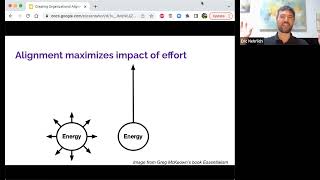
Eric Nehrlich: You Have a Choice: Creating the Relationships & Career You Want, and Why We Get Stuck