The Inner Work - You Have a Choice: Rethinking Leadership with Eric Nehrlich
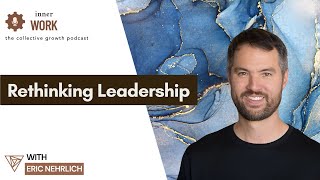
Eric Nehrlich, an executive coach and author, talks with Marianne about how self-awareness and emotional regulation shape leadership and parenting. He describes his burnout at Google and the realization that he always had a choice, and defines confidence as the willingness to make mistakes and fix them. They explore how leaders can set the emotional temperature in a room rather than just react to it.
Chapters
Confidence is no way. I will mess up and I can figure out how to fix it. That's right, because then I don't have to worry about messing up. I can take on new things because I know I trust myself to fix it and clean it up. And I was like, oh, that's such a good way to think about it. Like, some people think confidence is like, oh, I have to never make a mistake. It's like, of course I make mistakes. I just have made enough mistakes. I know I can clean it up.
Our kids push our buttons in ways that nobody else can. So my identity is a good moment. And she's messing with my identity. Oh, yeah, Because I thought Hogan was so easy, so it must be me. I had her on the changing table, and she was in one of her tantrums, and I tried to do the reset thing, and I said, margot, you and mommy are on the same team. Let's work together. And she slapped me across the face.
Oh, wow.
Hello, everyone, and welcome to Do Inner Work, the Collective growth podcast. I'm really excited to be here with Eric Nerlik today. Eric, thank you so much for joining us.
I'm so excited to be here. Marianne.
Yay. Eric, you've also been on the Great Noticing podcast, so I'm so excited to have a repeat performance of the genius that you brought us. You are an executive coach who help leaders increase their impact by challenging the mindsets and habits that hold them back. And you wrote an incredible book. This is how we were originally introduced. You have a choice beyond hard work to meaningful impact. And so your philosophy is very much aligned with what inner work is about and what we're both trying to accomplish in the world. So thank you for being here.
Thanks for posting these places to have these great conversations. Marianne, I think it's really important for people to look at the inner work, not just the outer work. And it's so easy to focus on the outer, because that's all we see in other people.
That's right. Well, and. And I hadn't told you this yet, but I came up with the idea for this podcast, the. How I built this, the. That podcast. I've always loved that. And I. What started occurring for me was we see to exactly to your point, the external, what people build, but what happens inside us, what changes. And I've definitely had this experience with collective growth over the last couple of years is how the pursuit of building something and building something that can scale, that can live beyond me has changed in really unexpected ways.
Absolutely. I think it's there's something different when you have that kind of purpose, and it creates a drive to do something in a different way than just creating the output. Like, there's been a lot of debate about AI and we don't have to go down this rabbit hole, but, like, I saw this take recently that was like, yeah, you could generate a whole novel or a whole book worth of content out of AI, but what you get out of writing a book is not the output. What you get out of writing a book is the transformation you undergo as an author to be the person that can deliver a book, that can be disciplined, that can go through the editing process. Like, that's what you get out of writing a book. And I thought that was. I think it was from Simon Sinek in one of his podcast appearances. It was like, oh, that's good. I like that. It's not about the output. It's about the output.
Is that what happened for Woo?
Yes.
Is that. Did you identify with that and say, yeah, that was.
I identified a little bit with it. A little bit. I mean, the output was really nice. It was nice to get. To get the book out into the world.
Yeah, well, and your book is meant to transform. So it's like this object, subject, thing that's happening in my brain right now where I'm like, it was both.
It's designed to help other people transform, helping other people do their inner work.
Yeah.
But, yeah, I mean, like, there's something to be said for, like, knowing you can do hard things. I mean, like, that it's. Sometimes it's as simple as that. Like, I can do hard things and sometimes I can't. That's okay, too. I'm trying to get more used to that.
Well, but that's the whole. And I've talked about this, so sorry if this is boring to anybody. But the real key quote, the purpose of life is to be defeated by greater and greater things.
Ooh, I like that.
If everything that I try I succeed at, then I'm probably not setting my goals big enough.
Yeah, that was a hard learning for me. That was a hard, hard learning. When one of my mentors told me, like, oh, yeah, you're not feeling enough. Like, isn't it bad to fail? He was like, no, if you're not failing at least once a year, you're not. You're not pushing your limits enough. You don't know where your limits are. And I'm like, that does not make me feel good. Because I'm like, I want the A. I want the gold star I want exceeds expectations on everything I do. And he's like, yeah, I mean, that's great, but you're never gonna. You're not gonna grow very fast doing that. I was like, yeah.
Was this at Google?
No, this was before Google. This. My. Like, just before I went to Google, actually. And part of what spurred me to take more on at Google was that voice of my mentor in my head going like, yes, all right. Yeah. You're not sure you could do it, but say yes anyway.
That's right. The. The. The mind expanding. Like, I'm imagining that gif or gif, however you say it, where the person's head. It's like the thing that stops you in your tracks. Right. Is often that thing that leads you to that next phase in life that you can't imagine not having gone there.
Yeah. And it's so interesting because, like, he said it and it, like, it hit at the time, but it took, like, years for it to kind of actually unfold, so I could actually live it and believe it and understand it. And I think that's something that is easy to forget. And, hey, this kind of creative or leadership work, it's like, yeah, just because we say something doesn't mean it lands. Keep repeating it. You have to hit a person at the right time in the right context, with the right frame of mind, and then the seed will actually grow. But other times, it'll be like throwing seeds onto concrete. It'll just bounce off and nothing will go. Nothing will happen.
Yeah.
And I see this all the time with my leadership. Clients are like, but I told them, like, yeah, you told them once. Come on, dude.
Right. Yeah. And it is frustrating when you feel like you're banging your head against the wall, but sometimes we are. We're just the first or the second time somebody has heard this, and it might be years before they come back and say, this was one of the things that led to a breakthrough for me or one of the things that led to the paradigm shift, like, realizing the light. And I'm looking at your book behind you, the light turning on and saying, I have a choice.
I have a choice.
You know, it's like, we get. When. Before you hit that moment, and we're talking about it from several different angles here, but before you hit that moment, you cannot conceive what you're going to be thinking and feeling after that moment, because it's.
Yeah.
A revelation.
Yeah, it is. And I guess what I'll say on top of that is, I mean, I love that it is a revelation. And then it's so easy to lose that revelation if we don't find a way to incorporate it into our life. Like, I had this experience many times where I'd go to a workshop or a training or something and I'd be like, in. At the workshop. I'd be so inspired. I'm like, oh, I've had this revelation. I know see a new way of being. I know what to do now. I go back into my life, my same habit, my same environment and my same everything. And I fall immediately back into my old way of being because I didn't have the structure, I didn't have the internal support to carry that revelation into my life. And it's something that's like, it's very easy to miss that also. So, like, yeah, this mentor told me this thing. I heard it, but it took me like five years to really put it into action in a meaningful way.
Yeah.
And so like it. I think that's something that's also easy to miss. It's like, oh, I had the revelation. Well, I should just do it every time now. It's like, yeah, that's. You have to rewire the nervous system. You have to retrain yourself. There's a whole lot of work to do before you can take the revelation as an idea and turn it into your life as you live it.
Absolutely. And you're reminding me. So did you ever do the Healing your inner critic workshop? We're both grads of the PCC New Ventures West. Did you ever see the healing your inner critic workshop with Sarita?
Yeah, yeah, I did that one.
I remember being in that program and there were several things that occurred to me. One is loving yourself and supporting yourself. Living in denial or living in fantasy. So that that way of supporting yourself and not being self critical, is that just shutting your eyes to your problems. And. And I remember several of the exercises were just so profound that I was able to in. In the process of that two days say, if it is a fantasy, that's the fantasy I prefer. I. This feels so good. And I feel. I feel like so much more is possible for me that I never want to go back. But I remember being so worried that what would happen was just as you described, that I would step away and fall back and feel the despair and feel the hopelessness of really hating myself is what it turned out to be. And the. That it's been. You were pointing toward practice, right. That there were times over the. The year that followed that that I had to practice. I Chose to practice and I chose to discipline myself to live in the fantasy.
I like that. Great job. Catching the. Had to. Chose to because.
Yeah, I know, I know, I know. But, but there, there's a sense of. I had to. There was a sense of like, for survival, for like what I've seen emerge through watering the seeds that were planted is, is exponential growth. Right. And I don't want to go back to grow maybe, maybe growth at the same pace, but at a higher cost. And so it was like the, the, there was a sense of had to, but it was really like I, I was able to summon the courage to say I choose to. And I want to encourage. I think this is part of your life's work too. I want to encourage other people to make that choice. I'm pointing behind you, right?
Yeah. And what I'm hearing from you is that you, like most of a lot of what you took away from that workshop was seeing the cost of your present. And it's like, I don't want to live with that cost anymore. Now that I see it, I can't unsee it. I see the pain, I see the hatred, I see the anxiety. And now that I'm aware of it, it's like, oh, wow, that's like ever present. And there's another way now. I know there's another way forward, and that's what I seek. But it's so easy for us to become numbed to the pain we experience every day. To like, say, like, oh, that's just the way it is. Yeah, it's never gonna change. That's just what work is. Of course I feel burnt out and exhausted. That's just the way it is. Or become habituated to it and numb to it. Because human beings are remarkable at adaptation, we'll adapt to any conditions, even awful ones, because it's survival.
That's right.
And so unless we have this wake up moment, we're like, wait a second, what's happening here? What am I doing? And that's when the spark of transformation can ignite because we see the cost of our current habits, our current life, of whatever it is.
Yeah. What was that moment for you?
I mean, I've had several, but I mean, the one that comes to mind is the one that prompted the book is when I burned myself out. I had been working almost 100 hour weeks for years trying to earn a promotion at Google. And I was like, well, I just have to get through whatever it is, the next milestone, the next this, the next that, the next thing, like, oh, I just need to last another week or month or two months or quarter, and then things will get better. And of course, they just kept giving me more work because I was like, I was doing work. They're like, great, do more. And you know, good job. Keep going.
Way to go. Keep going. Yeah.
And I was like, this is fine. This is fine. I'm fine. And I didn't notice my body and mental and physical health were slowly deteriorating until I, you know, was in Q4 of 2011 and was pushing to make it through the annual planning process, which is a nightmare for anybody who's ever done it. Like, what? All the forecasts of how we're going to do budget headcan for the next year all has to be settled. And I was like, okay, I just have to make it to Christmas. And I did. I made it to Christmas. And then my body's like, okay, the bill is due. It just collapsed. I was like, had a fever of under 3 degrees on Christmas Day. I was basically in bed for a week and just completely exhausted. And it was just the smack in the face of like, yeah, no, it's not okay. What you're doing is not okay. You can't handle it. And for some reason, I was able to hear that call and not decide there could be something different. And in my case, I went back to work and said, hey, I'm not going to work that hard anymore. To my manager. They're like, what do you mean? Like, I'm not going to work that hard anymore. It's too, too hard. They're like, well, if you can't do the work, you're not getting that promotion. I'm like, I get it. That's okay. I can't do the work. I'm going to find somebody else that can. Great, do what you will.
Yeah.
And there was a acceptance that I had in doing that that was surprising because it was scary. I had never said no to work before. I'd never said I can't do it. And I was. I was hoping I would get support. I did not get support, but my manager took away half my team. I lost that promotion, you know, lost my exceeding expectations perform trading. And I survived.
And you saved your life.
Yeah. And my life changed because all of a sudden I realized I had a choice. Like, I didn't have to do whatever my. Whatever my manager said, I didn't have to get that promotion. And the choice came because I was real. I realized I had been so scared of the consequences that I didn't think it was a Choice. But once I was willing to accept those consequences, then choice appeared.
Acceptance.
Yeah. So that's the kind of the essence, the essential idea of the book is like you always have a choice if you're willing to accept the consequences of that choice. If you don't look at your choices because you're like, well, I could never handle this consequence or that consequence or what will happen if. Then you don't know and you don't have.
And you don't have a choice. Yeah. What's coming up for me is how long was it so your world was rocked by this? Oh, well, you're not. If you're not failing a bunch, then you're not going after stuff you don't know. When was that in relation to your burnout episode?
That was three years before the burnout episode. So I've been spurred by that to go like, yes, I will take on more. Yes, I could do it all.
Which is not bad. Right. So this is something I've been thinking about a lot and part and growth Mindset is something I talk about in my leadership program and we talk about a lot on our team. The Art of Falling and we read Leadership Embodiment. Right. And so that Wendy Palmer conversation around falling and then standing up in a non judgmental position, I'm thinking a lot about how we apply that to. Because what you did was a pendulum swing, right. You were in safety zone and you swung all the way over, but you didn't know it was too far until you crashed. Crashing is considered a mistake. Crashing is considered failing. So it's only through the failing, which is the other bump of the pendulum, that we're able to come back to homeostasis or happy medium or whatever we want to call it. And so that, and I know this is just a different way of saying what you've already said so beautifully, but that, that bump up here, it's just a bump. It's a. And then in your case though, it was a. The, the what spurred you into this time of performativity was helpful and it stayed helpful until you burned out, you know.
Yeah, well, and it, I mean, I think this is kind of a. You know, I, I worked, I worked in Silicon Valley in the tech industry and it's very binary. It's like 01. Either you played it safe or you go all the way to the other extreme. And like, like there's a lot of room to explore in between, it turns out.
Yeah.
And one of the things I talk about in the book is like, how do you Design small, safe experiments so it's not like this all in commitment. I'm going to burn out and kill my. And like, destroy my body. If I do succeed, I was like, no, let's do like 10% more than feels comfortable, and let's play with that. And what we learned from that is one of the things I loved from the Wendy Palmer book is that she talks about being centered and being grounded. And I'd always thought, like, well, if I was truly masterful, I would just always be centered and grounded. And in that book, she's like, no, nobody's centered and grounded all the time. What you learn is to notice when you're not and get yourself back. Like, that's the process. It's not. I'm never leaving ground. It's like, oh, I notice I'm tilted and I'm going to recenter myself. Notice I tilted. I recenter myself.
Yeah.
And doing these small, safe experiments is a way to, like, get used to that dynamic of the homeostasis. Bringing myself back to center.
Yeah.
And I think that, like, to me, that that was such a helpful concept. And it's a helpful concept to a lot of my clients are like, oh, I should never get angry as a leader. It's like, yeah, you're gonna get angry.
Yes.
But are you gonna act out of the anger? Are you gonna notice it? Yeah, let it be. Bring it back, and then figure out what to do with it. Like, that's the part if you're. If you're reacting out of anger without thought. Yeah, that's not great. But if you're angry and you can fuel it to get. Make change happen, that's great. That's. That's effective.
Yeah. Yeah. The. The being out of center, the being triggered is our best. Tell that. And for those of us who. And I'll raise my hand. I made a career out of making everything okay. No matter what was happening. I had a way to solve it. I had. I could put a smile on everybody's face. I could say the right thing and to the point where I didn't really know how I felt about things because I was so hell bent on being positive and seeing the possibility that if I was upset or angry, it was like my brain shut down. It was like a freeze kind of move for me.
Right.
And. And so the. That learning to pay attention and not silence, the negative emotion that we identify as being triggered or not centered, was key for me and relearning myself.
And is it interesting how you identify anger as a negative emotion? It's like, no, it's just an emotion.
It's just an emotion.
It's just a sign that your boundaries have been crossed in some way, and your body is summoning the resources to fight or flight or freeze or fawn, which is what you learned. You learned to fawn. Let me take care of. It's a survivor.
Whatever you need.
Yeah. Because I'm sure at some point in your upbringing, you were told, girls don't do that.
That's right.
It's not ladylike to throw a tantrum, to get angry or something like that. Something. And those exact words. But, like, it's not okay for girls to be angry, so it's a negative emotion, so I can't have it. Y. And then the consequences of having an anger, it's like, oh, I can't. Can't deal with that. I don't have a choice. I can't be angry. And then the anger happens anyway because you're here, human, but you're not allowed to feel it, so you just stuff it away. Stuff it away and hope nobody notices until it all comes boiling out. And that's trauma in a nutshell.
That is. It absolutely is. Yeah. So many. And for. For those of us who are learning these lessons, then to be able to share them in the way that we are is just such a gift.
Yeah. I mean, that's the journey I'm on right now is I've been digging deeper into trauma and what's. You know, things like. Where is it, Kim? Oh, there it is. You know, things like the body keeps the score. Like, you know. You know, it's gonna. Like, your body remembers what happened.
That's right.
Even if you don't. And it knows it's dangerous to let out certain emotions, so it traps it in. It keeps the tension, but that tension prevents us from seeing the possibilities. That tension keeps us in survival mode instead of in creativity or innovation mode. And when we allow ourselves to feel what's trapped inside, the tension slowly starts to release. As it releases, we have more freedom of action. And that's the. That's the trauma healing process. But none of it can happen unless we acknowledge stuff happened.
Yeah. Yeah. I'm. I'm finding one of the key questions, and I don't. I don't think we ever talked about the empowerment dynamic in New Ventures West.
I'm not sure exactly what it is, but tell me.
Okay. Okay. So. So the drama triangle was created originally. Are you familiar with drama triangle? That.
Yeah, that one I know.
Okay. And so David Emerald Wrote the book a number of years ago, the empowerment dynamic. What do you do to get off the triangle? And so key ways of thinking and questions to ask yourself to move from the victim role to being a creator, which is you have a choice from persecutor to challenger and from rescuer to coach. And I've, I, I work with that a lot because I've found it to be so helpful. And so the key questions that I'm calling now, the empowerment questions is if we find ourselves frequently being the persecutor to people, so we tend to blame, we're self righteous, we tend to be angry, which is so bad, then something that we could ask ourselves to inspire the shift would be what if they're doing their best? What if whoever I'm blaming or whoever I'm angry at is doing their best? And that for me has been well, that that helps me shift into how would I coach them? How would I support if this is the best that they have? And people are often like, well it's not good enough. Well then what does that mean? Does that mean person doesn't have resources? Does that mean I haven't explained things appropriately? Does you know, are they having difficulty at home? I mean there's so many different things to explore there that are more about what's actually reasonable and not isolated to this situation. And then for the person who tends to rescue and take on more than that is theirs. And this is some new Ventures west language, ask yourself what is mine to own, what is there's their own.
Yep.
And then for the victim and I couldn't understand how this question could be effective but I've experienced it more and more. What do I want? What do I actually want? And when being a person who had the victim mindset against not not necessarily with people certainly, but really against life like my life and I'm always gonna be in blah blah, blah, blah, blah was I couldn't say what I wanted. So everybody listening if one and somebody says what do you really want? And you can't answer that per that question, you are probably a victim.
And maybe not like that term because it's like I'm not a victim. I have a great life, I've got my family, I've got my job. I'm lucky to be here. I have so many blessings. Yeah, but did you want the family? Did you want this job? Well, I'm so lucky to have it. It's such, it's like that's, it's like it's so easy to. Well, I Shouldn't say. It's easy for some people to fall into that. Yeah, it's easy for me to fall into that.
Same.
And what do I actually want is a really good question. Because it's like, well, what if you could do anything? Actually, that's one of the exercises in the book. It's like, what's your dream scenario? If you had no constraint, if you won the lottery tomorrow, had no constraints, what would you do? And I was like, write it down. Even if you could never, it could never happen. It's never practical. Just write it down because there's something there. Call it a year.
Yes, well. And by the time I read your book, I'd done enough work that that question didn't piss me off because it used to make me so mad. Like, this is so irrelevant. You know what I would do, Eric? I would be eating ice cream on the beach. That's what I would do for the rest of my life. Because I was so burned out because I didn't know myself well enough to know what I actually liked. Because I'd never felt my heart beat fast for something that I loved.
Yeah. And actually I actually name that in the book. I'm like, your first answer is going to be, I would go on the beach and drink cocktails for a year. That's fine. After that.
Hey, noticers. If you're dreaming of glowing healthy skin, you must try Han Aul Korean skincare. Myeong Chong has been transforming skin for 2027 years with facials so good they create the Hannah Azul glow. I've been going to her med spa for years and my skin looks better than ever. Her products use medical grade ingredients that truly nourish your skin and keep it radiant. Visit hennaizul.com to explore her amazing products and services. That's H-A-N-N-A-I-S u l.com now go get your glow. When you get bored with that. When, when you have healed a little bit, right?
Yes.
Oh, but it's such a healed a little bit.
What would you, what would you actually want to do? And they're. That's where the good stuff starts to come out.
That's right. And I've, I have a values discovery exercise as a part of my coaching program too and have a team going through that right now. And I've experienced this more and more where a coach that I worked with early years ago asked what. And this is part of a lot of these exercises. What are early moments, childhood moments where you felt Alive. And it seems so silly to me, but now that I look back, I can see in those moments, the. Those are some of the same activities or the spirit of that thing is alive today when I feel alive.
Absolutely. And I think even if you don't go back to childhood just asking that question, what makes you feel alive right now? Like, what are you? One of the questions I used to love as an interviewer was like, what is something you're really proud of? Like, tell me about a project that you're proud of. Yeah, I didn't care about the project. I just wanted to see some evidence of passion. Something that you care about.
Yes.
And then, like, then I could dig into what exactly was about that project that brought that spark of life. Because if I know what brings their life out, I could channel. I mean, that might not work. It's like, how do I channel that to the thing I want them to do?
Yeah, great.
They get to be passionate. I get work, Everybody's happy. That's like the essence of leadership.
That's right. You're exactly. Yeah. It's bringing. I had this thought the other day around the difficulty of identifying, like, product market fit and how we find the people who need our products, the people who need to read your book. And it. It made me think of a story I heard about Goodwill Industries that they. They have so many donations every year that they cannot get all the product they have to the people who need it. And so much ends up going in the landfill.
Oh.
Or recycle. They've started a whole recycling business which good on them because they receive. And it's like, that happens so much in our world. How can we match up the people who have talents and the people have services to offer to the people who need them.
Yeah. Especially in a world of overwhelm and way too much information. An onslaught of junk and. Well, yeah, I mean, product market fit is something I'm still searching, searching on. It's very, very. It's very tricky, or at least for me. I think there's people that are naturally good at it, and I am not one of them. So. Yeah, that's something I'm working through right now.
Yeah. Well. On how to not give up. Right. To stay steadfast in that. Believing that everything you've offered in your book, everything you're offering in this conversation, in your coaching is so needed and to stay the course and allow. Allow it to emerge.
Yeah. That's much, much kinder to me than I would be.
Well, you know, it reminds me of actually what we were just talking about that when I look at. Because when people would say, I went through this phase and in college and really, hell, until I started my company, what do I want to be? What do. And people be like, well, what would you do if money were no object? What could you do? And I would say and laugh at myself because it was so ridiculous. I mean, I've said this before. I would go have coffee with people all day, every day. And that was, to me, like, I would ridicule myself. Like, can't you think of something better to say? Like, can you have a better dream? But. But it was being with people, talking about ideas and healing together. Right. That's what, that's what having coffee and talking was to me. And. But I didn't think I deserved to be able to do that and make money.
So. Interesting because, like, my answer used to be like, I just would go. I would go back to college and just take courses. Like, I just want to learn and not like, get a PhD. I would. Like, I. I used to joke I want to take the intro course in every discipline, just like the first semester of everything. Because that's like, get the basic concepts and. Yeah, it's one of the benefits I get of being a coach now is like, I get to be just a lifelong learner. Like, whatever sounds interesting to me is probably relevant some of my clients. So I can go down whatever rabbit hole I want. And it's, It's. It's kind of. It's gonna be interesting. Like, this trauma thing is like, super interesting to me right now. And I can spend it. I took a year long class last year and continue to read on it. And it's, it's. It's, you know, it's relevant. It's relevant to some of my clients.
Yeah. Yeah. To be able to do that and benefit. And that's what's so amazing about the work that. That we're doing is we're healing where we are offering things that if other people want to go along on this path with us, will be healing for them as well. And so to. To be able to invest in that is just. Yeah. Amazing.
Yeah, it is. It is amazing.
And to try to prevent the trauma in some ways for our children.
Yeah.
We'll do completely different things to traumatize them.
Oh, absolutely. Yeah. And they will get a different set of traumas, a different set of attachment issues that I had, but I'm okay with that.
Yes. You and your wife now have three kiddos.
Yep.
Was the baby born almost A year
ago, almost a year ago. She. The baby's 10 months and then I have a 6 year old and a 4 year old.
That's right. What has been your biggest lesson over this last year about welcoming a third into your already busy, amazing family?
The biggest lesson, and one I still haven't learned is I can't do as much as I think I can. Like that's, that's been rough for me. I'm like, oh, I should be able to do my business and keep up with the kids and like just there's a lot to do and I just, and I'm older for a parent and I got get tired. I get worn out and it's. And, and yet there's stuff to do. And so it's like, can I let myself relax before all the things are done? And that's been a real rough. Still struggling with that one. You can't. Maybe you can hear it but like my voice is a little raspy. I'm getting over a cold. Yet another cold. I was actually, over the weekend, I'd completely lost my voice. I was like this man, we're going to find out what happens.
Well, you sound great. Good job.
I'm glad. I' glad I sound okay now. But yeah, it's, it's just like that's a consequence of you push yourself too hard and the body lets you know. And I, my wife took the kids yesterday to a friend's house and I had the whole day to myself and I was like, oh, I'm going to go for a trail run. I'm going to catch up on work. I'm going to write these marketing emails. No, I lay on the couch for six hours and it was great. That is actually what my body needed.
Exactly.
But it's so hard, it's been so hard for me to get to that point where like it's okay to take care of myself when there's things to do. So I think, I guess you know the F word for learning. The learning is like I can't take care of others if I'm falling apart. And so taking care of myself is taking care of others. But I just need to have that hammered into my head over and over and over again because I've known this for many years now.
Yeah.
Eight or nine years. But it's still hard for me to really internalize. There's some deep seated just block to that. Like that's not okay.
Right.
Which, I mean, thanks, mom.
Right. Right. But that it's. And, and I do the same Thing with my parents where it's a, it got me there. Right.
That.
That whole idea of what got you here won't get you there. Well, it got me to this point and then now I've got to release it. Like I'm, I'm grateful for it to this extent. But to move to stay alive, to get to the next level, I've got to unravel whatever story that was.
Yeah. And for me not to replicate it because I have my own kids now. And if I do what my mom did, which is the temptation, just model what we're like, that's our model of what parents do, then they're going to have the same issues as me. And I don't want that.
I want them to have completely different issues.
Exactly. And so it's. So I got to keep an eye on myself. Like, oh, yeah, that's my mom's voice coming out of my mouth right now. That's not, that's not who I want to be. Okay. Let's try that again.
Yep. Yep. I'm. You were. I was thinking about the Hogan. Our 8 year old has been really pretty easy. Typical firstborn. Very obedient, Wants to please. Margot, the three year old is so funny, so passionate.
Not that.
Yeah. Not all those original. Not all those first things. Her very much her own person. And I find my. I get so irritated by her and I am. I imagine how the things that she does and the things she expresses and the anger that she has was just squashed out of me.
Yep.
And there's a part of me that's like, okay, good. Because she's a real. But I didn't know what to stand up. I didn't, I didn't have life skills around taking care of myself because I was secondary. And I do not want that for her.
Yeah. I, I mean, I'm going to keep coming back to this theme of trauma, but like when my oldest was five and now my young, my middle child is four, like they're in this mode of asserting themselves. That's what they're supposed to do at this age. And it drives me insane. I get so angry. I couldn't figure out like why. And then eventually with some of the trauma work I was doing, I was like, oh yeah. My inner 5 year old is still mad that he did not get the chance to express himself.
Yeah.
And that's been stored up for 40 something years now. And it all comes boiling out and taken out on this poor kid that doesn't. Didn't deserve any of that. My mom deserves that, but not my kid. And just. And knowing that's been very helpful. Like, oh, yeah, that's. It's. I mean, I'm not saying I'm perfect parent by any means, but, like, it's been helpful to realize. Yeah, this is not about the kid. This is me.
Yeah.
And saying my daughter drives me in. It makes me angry. It's like, no, I was already angry. She's just giving an excuse to be angry.
Yeah.
Doesn't always help to know that. It's like, no, really, go to bed.
Right. Yeah. And. And then. And maybe you. You may have some thoughts on this. How do we help them acknowledge. Because we. We talk about there's no bad emotions. Right. Thing that we. We want to process them. We want to understand them. I want my kids to be able to express to me things that they don't want to do. And I'm trying to just help them do it in a respectful way. Oh, and this is something I've noticed is like, we all. We all hate it when kids whine. Right. But I realized the other day, it's the only way that they can express themselves that we consider to be appropriate. Because they can't say, I don't want to do that, Mom. Right. But they could say, and it's like, it's annoying, but it's not bad.
Oh, interesting. Oh. First of all, my kids have no problem saying they don't want to do things.
Yes.
Yeah. And what I. I mean, one thing I've noticed, which I'm still working through, it's like, they whine because we've opened the door to it in some way. And, like, they've learned it sometimes works. If it never worked, they wouldn't do it.
Yeah. Yeah.
And so it's like, if they're like, I'm not great. I'm not always great about this. By setting very clear lines like, okay, this is what's going to work, and this is not okay. But there's some things where I have. And like, on those, it's actually not. They don't whine. They don't bargain. They're like, oh, that's the rule. But if I say, like, oh, sometimes we can have ice cream and sometimes we can't, they're going to say, but I really want ice cream. Can we have ice cream? Like, why can't we have ice cream today? And they'll ask until I get annoyed and yell at them. Yeah, but if I'm just like, here's the rule. Like, we have. We have rules. Around tv, and they're pretty strict, and they know those are the rules. I'm like, can we watch tv? Is it Saturday? No. Then you know the answer, like, okay, yeah, and it's done.
Yeah.
It's not. No, but I really want to watch tv. They don't push it because they know the rules. So it's like, that's. If there's clear instructions or clear expectations, they. They. My experience, at least with my kids, every family is different. It's like they don't whine as much because it doesn't work. But if we very. If they know. If we know, they push for 10 minutes and then they get what they want, they're going to push for 10 minutes to see if they get what they want. They're not dumb. They're optimizing for their environment.
There you go.
It's up to us as parents to provide an environment with clear feedback so that we get the behavior we want. That's my theory. Still working it out in practice.
Well, I need your parenting book, so whenever that's ready, let us know. I'll help you with product market fit on that because I need it.
I'm definitely don't feel like I'm the parent of the year here, so.
Oh, it's important stuff, though. Yeah. The other morning. So if.
If I think, by the way, I want to make. I want to make an aside, quick aside here. If you're listening to this going live. I came here to listen about leadership parenting. Is leadership parenting about kids. It applies to your people reporting to you.
So 100%.
Just replace kids with your direct reports and keep listening to the conversation.
That's right. Okay, continue. Okay, so I'm going to bring that up real quick, too. Okay. So it. Whatever a kid doesn't want to do for Hogan, for the. My son, it would be collapse into tears. He'd still end up doing it, but, like, he's wanting to express something. So I'm like, okay, as long as we've got time for this, I'm gonna let you have your emotional experience around it. We're still gonna get dressed to go to school. I remember a friend of mine would say they might be one or two hours late to school because she would. She didn't want to force her daughter to put on her panties. And so to. For it. For it to be conscious and calm, it might take two hours. And I remember being like, not doing it. Like, my child is going to get to school. Like, yeah, but there. There's. But I also didn't I'm like, I'm glad that that works for them. She doesn't work, so that's okay. I have to work. I've got to drop off the kids. But I've. I've wondered about that scenario because Margot will throw a tantrum, and she will be screaming and angry. And the other morning, I held her like this. I said, we are getting ready for school, and was very stern. And she stopped the tantrum, which was an angry. She was very angry and just started crying and kind of collapsed. That was. I. I appreciated that more. Like, so I am. I am able to process sadness more than I am anger. So it's something for me to write, like, I can handle.
And would that be different if it was Hogan? Because boys can allow to be angry but not sad.
Right? No, but I've been he.
He.
And, you know, as he's getting older, we're talking more about self regulation and managing our emotions. I've been a soft place for him.
Mm.
So I think he. But his natural route was one that I can handle. And I wonder if she's now starting to see Mommy gets really angry if I'm angry, and so it's better for me to be sad.
Maybe.
I mean, I hate saying that out loud.
Every. Like, every kid's different. Every parent's different. But. Yeah, I mean, I think that's the. This is where the experiments are helpful. Like, okay, normally I'd get angry, but let me try something else. Yeah. Both for kids and for us. Like, with my. My daughter's. Sounds very similar to. To your daughter. And if I'm rushing to get her off to school and say we have to leave, she digs in her heel harder and resists.
Yeah.
And the angrier I get, the angrier she gets. And it actually becomes this battle of wills. And she's really stubborn. She's really. She's not going to back down.
Yeah.
And my wife will just come in and diffuse the whole thing and distract her. It's like, okay, what color are we going to wear? Mm. And it's like, oh, you know, like, oh, I'm not gonna put on my panties. Like, oh, but do you want the pink or the purple? And like, oh, let's do this. And she'll tickle her and just completely distract her. And like, the. My daughter would just reset in, like, 30 seconds because she's done. Because it's out of the fight mode. But as long as the adrenaline is flowing and she's in fight mode, it just escalates.
Yeah.
And it's so hard for me to. To get out of my own fight mode, where I'm like, I have to win and dominate this child and get them to submit to my will. Which sounds horrible when I say that, but that's the. That's what's happening. Like, that's what's driving my emotions in that moment. I have to win.
Yeah.
And my wife doesn't care, so she's like, whatever. Like, I don't have to win. I have a door. I'm gonna do what works.
Yeah.
Yeah. Like, that's a huge difference. I mean, that's like. And when I can calm myself down and be. And change things up and do something silly, it de. Escalates almost instantly because she's reacting to me. I am setting the temperature back to inner work. I can reset. She'll reset. So I can't blame her for this. It's on me.
Right.
I heard this great analogy in some blog post by another manager coach that was like, are you the thermostat or the thermometer? Are you taking the temperature of the room and just responding to it, or are you setting the temperature of the room? Ooh. And I was like, ooh. Yeah. I can be the thermostat on my good days when I'm calm and I'm well slept, when I ate and I slept well. But on my bad days, I'm the thermometer. Like, if it gets hotter, I get hotter. If it gets hotter, I get hotter. Instead of learning to cool things off.
Yeah. Such a great question. And our kids push our buttons in ways that nobody else can.
And as our parents.
Same as our parent. Yes. This goes both ways. And, you know, I'm reflecting on. I've considered myself. So my identity is as. Is a good mom. And she's messing with my identity.
Oh, yeah.
Because I thought Hogan was so easy, so it must be me. And now she's coming in. Where? And I come in the bedroom. Good morning, honey. And I. I told. I think this was on social media when she was probably a year and a half old. I had her on the changing table, and she was in one of her tantrums, and I tried to do the reset thing, and I. And I said, margot, you and mommy are on the same team. Let's work together. And she slapped me across the face.
Wow. Yep.
And. Yeah, that. And so I'm. I'm reflecting on all of the ways that we engage, and I have seen progress with her. She's getting a little bit older. She turned three in May. So we're. We're doing a little bit better on the self regulation, but there's definitely a piece there that you're pointing toward for me on the pause and that I. There's a part of me that's really proud of her for digging her heels in because I want her to always do that in ways that don't inconvenience me.
And then lets you preserve your identity as the good boss.
Yes, exactly.
Yeah. I mean, it's just like, if we could give ourselves a break with the parenting thing, you know, what's her name, Dr. Becky Kennedy is like, good enough parenting. You're doing fine. Fine. Like, yeah, I'm good enough.
Yeah.
You don't have to be perfect.
Yeah.
And stuff. Like it's. But all of us high achievers. Anybody listening to podcast is probably a high achiever. They're like, no, but I'm going to be the best mom, the best parent. I'm going to be. Get everything right 100% of the time.
I'm going to not traumatize them.
Yeah. And, you know, back to the falling off and recovering, like, that's the best we can hope for. I heard some. Some relationship guy was talking about, you know, there's no. A good relationship. One is not one where you never fight. A good relationship is one where you have fights and you repair. Rupture and repair. Yeah, rupture and repair. That's where the strength comes from, is knowing you can repair any damage that's been caused. You can repair the rift. Yeah. And actually I was interviewing one of my former mentors, a different guy. I started now I was CFO of a public company, and we were talking about executive presence of confidence. And people were like, oh, is confident no conf. Somebody asked him, like, in a Q and A, is confidence meaning, like, you, you know, just, you'll never mess up? He's like, no, I mess up all the time. Confidence is knowing I'll mess up and I can figure out how to fix it. That's right. Because then I don't have to worry about messing up. I can take on new things because I know I trust myself to fix it and clean it up. And I was like, oh, that's such a good way to think about it. Like, some people think confidence, like, oh, I have to never make a mistake. He's like, of course I make mistakes. I just have made enough mistakes. I know I can clean it up.
That's right. It's resilience.
Yeah.
Yeah. And I think the. The environment in which we are being imperfect parents is I, I hope, protective against trauma. So the. I am not God. I don't say, don't ever talk back to me. I don't. I don't make these edicts around how I need to be respected. I apologize. We, as a couple, apologize, and we encourage them to have a full set of emotions and to pursue things that they really love. And I hope that sense of encouragement is protective against trauma. But I don't know.
I. I hope so also. I mean, I think the apologies are important. That's the repair part. Like, I messed up there. I yelled at you, and it was not your fault. You didn't do anything wrong. That was daddy overreacting.
Yeah.
And my kids are pretty good about that. They don't, like, come away thinking they did anything. Well, I mean, there's some still times I think they did wrong things, but it's like there's, you know, there's the Brene Brown distinction between shame is guilt is I did something wrong, and shame is I am wrong.
Yeah.
It's identity. Like, I am broken. I'm a bad person. It's like, no, you did. You are not a bad person. You did something bad.
Yeah.
And that's okay. We'll do better.
Yeah.
But being able to talk about all this stuff is so important. There's for. For those that are parents, there's a great book, the Green Monster, by. I don't remember who. Who wrote it, but I'm going to look it up. Oh, Milo's Monster.
Milo's Monster.
Hold on. Sorry, I'm going to delay the whole podcast.
No, we have to know. Eric.
Milo's Monster by Tom Percival.
Okay.
And it just depicts jealousy and anger as a green monster sitting next to the kid that grows bigger and bigger and separates him from his friends. Aw. And then takes over his life. And eventually he was like, wait, I don't. I want to actually be with my friends. And started sharing his emotions with his friends, and the green monster disappears, and it's just, like, emotional intelligence. And like, this kid picture book. It was so great. And, like, that's me, you know, with our. And, like, we can talk about it. Like, when I get angry, I'm like, oh, the green monster took me over for a couple. For a minute there. Sorry about that. But I'm letting the green monster go away. My endomoric son's angry. He's like, yeah, the green monster's kind of here right now. Like, okay, that's okay.
That's wonderful. So Milo's Monster is what it's called.
Yes.
Something to check out there. That's great because I think feelings are difficult to have a concept around for little kids. So something to play with. Like that could be really helpful.
Yeah, I can. I'll send it to you later. That awesome. Um, but yeah, so yeah, I don't know. I don't know how we got went down this rabbit hole, but I think, I guess parenting and leadership and, and,
and not not have. It's psychological safety is, is the most critical factor for healthy culture. Right. Same inside our homes.
Yeah. And you know, to the back to the theme of inner work, it's like we control of it more than we, we control more of it than we think we do. How we show up, whether we show up with compassion, whether we show up with love, whether we show up with anxiety and stress and busyness.
That's right.
Like this affects how other people respond to us. And if you can show up with, with peace and calm and love, people will feel it and they will be different people around you. And they would be. If you're like, why haven't you gotten that report done? Are you idiot? How could you not get this done?
That's right.
You know, like that's, you know, to your point, your question before, like, maybe they're doing the best they can.
That's right.
If you just assume people are not stupid. Right. They're not evil. Like I used to say this, like if you're, if you're assume people are not stupid and not evil, there must be something in their world that explains their behavior.
Yeah.
And if you can guess, figure out what that is. Maybe it's something experience they had, maybe some childhood thing. Maybe it's some incentive. Who knows you'll understand their behavior because I guarantee you they're not trying to be stupid or evil. They're doing the best they can with what they know.
That's right. Yeah. Another way. And our kids are certainly doing that with everything that they're handed day in, day out that I, I know all parents know of this idea that the kids do well at school all day and then they come home and lose it on you. And I didn't realize that had a name, but one. Somebody on my team the other day said they called it restraint collapse. Have you heard this?
I haven't heard it, but I know the phenomenon.
Yes, yes. And Margot absolutely had it. And my first thought was, I'm so glad she's restraining herself in school because I wasn't sure she was going to. So Yay. I'll take it all. Just keep her in school.
Yeah. And when they let it out. And the thing is, once they let it out, they can. They'll return. They'll return to their baseline, but they just need to let it out. And if we can absorb it instead of reacting, then we're a safe place for them to let it out. And that's what I aspire to as a parent, is just being a safe place for them to feel whatever they need to feel, express whatever they need to express. And again, I'm not saying I'm perfect at this. I'm not saying I'm always great, but, you know, it's. It's a practice. And, yeah, one of the great things about having three kids is you see that. Like, yeah, it's. Every kid's different. It's not about the parent. Both personalities. And fortunately, our third kid is like, the most chill, peaceful kid you could imagine. She's just kind of like, how did you. What? Like, what did you do to get this angel of a child over? Like, I don't know. Must be a survival instinct. She knows she wouldn't survive if.
She's a smart girl. She's a smart girl. Well, it sounds like, too, Eric, there. There. You're. You create a safe place for your kids. You create a safe place for clients. That. That's a part of what you're called to do in the world.
Yeah, that's what I try to do, is create a safe place for people to. Let's use the term, unfold. So be who they were meant to be.
Yeah.
One of my coaches, one of my mentors is a coach is Steve March, whose school is called Integral Unfoldment. It's like, that's all here to do. We're just unfolding, helping people unfold into who they were meant to be. The way an acorn is not an oak tree. But under the right conditions and with the right nurturing and support, it can become one. We're the gardeners that help them unfold into whatever they're going to be. And I was like, oh, I like that.
That's beautiful. Love it. So everybody needs. Everybody needs an Eric. Everyone listening. You need a place that as a safe spot. Some of us have that in our spouses. Many of us have coaches, Many of us have resource groups, people that we reach out to. But we all need that.
Yes, we all need that. We have friends. Well, hopefully we have friends. I mean, there's been a lot of stuff about the loneliness epidemic in America that people are losing friends. They spend all their time.
More from Eric
Eric Nehrlich: You Have a Choice: Creating the Relationships & Career You Want, and Why We Get Stuck