Finding Energizing Work

Eric Nehrlich explains how to find work that energizes you, using Brett, a software engineer who coded extra hours for fun, as an example. He argues that aligning your daily tasks with what energizes you makes you more skilled and attractive to employers. A two-minute daily reflection to log energizing activities helps surface patterns for better career decisions.
Chapters
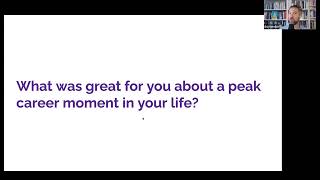
I worked with Brad at a startup. I was a product manager. He was the lead software developer. And he was just really good at his job. You know, he was the kind of guy that would go with a new feature, and he'd be like, this is what I want to get done. And two hours later, he'd have coded it up and it'd be done and released. How the hell do you do it that well? But it's because he loved his job. He was just really passionate. He knew the latest technology. He knew how to get things done. He knew he'd been practicing his whole life to get this stuff done. And I got this really great insight into Brett at one point when we were out for beers on a Friday night, and I said, brett, what are you up to this weekend? He said, eric, you know what's great? I'm like, no, Brett, what's great? He's like, my fiance has to work late tonight. She's not going to be home until midnight. That means I can go home and code for four more hours. Isn't that awesome? I'm like, that's awesome, Brett. But imagine that. Imagine that you love your job so much that when you have an unexpected Friday night, you would go home and spend more time doing that work. I found that incredibly inspiring. And I'm like, boy, wouldn't it be great if we all could be like that? That's what I'm going to talk to you today about. How can we find work like that for ourselves? And how can we move our careers in that direction? But why is this hard? I mean, I think part of this is that navigating a career is increasingly complex. It's harder than it used to be. I mean, this is my dad. This is his career. He went to school, got a master's degree. He graduated. He went to work for Bell labs and retired 35 years later. That's his career. One job. I mean, one company. How many of you here expect to have a career like that? Yeah, it's not like that anymore. Things move too fast. Things are changing too fast. We can't expect to have that kind of stability. In the olden days, there was a career ladder. You went to work for a company, and they told you what was the next thing that was on offer to you. You could pick among the choices that you had in front of you. So that's what my dad did. He's like, do you. You want this assignment or that assignment? He's like, I'll take that assignment and that assignment and that assignment. And that's how he got through 35 years. It's not like that anymore. What we have now is more like the New York subway system. There's about 100 or 1,000 different places you can go. And even if you decide where you want to go, there's 10 different ways you can get there, because there's so many different crisscrossing ways to go. So how do we navigate this? And that's what I want to talk about today. I mean, like, things are changing so fast that new companies come from everywhere. We've got Amazon, Facebook, Google. All these are companies that were created in the last 20 years. If you weren't around, you wouldn't be able to do that. You wouldn't have known you could have joined them because they're new, and there's new jobs appearing all the time and new jobs disappearing. I mean, when I was growing up, travel agent was a very reasonable thing to want to be. Booking.com has kind of put that job out of business. And so if you're not able to navigate your career and make changes on the fly, you're not going to be able to navigate this increasingly complex career space. So what can you use to navigate this space? Let's do an experiment here. I want you to think about your current job. What made you choose this job over other ones that were available to you? Rent, money. Dollars. Dollars. Okay. What else? Work environment. Environment. Culture. Benefits. Personal development. Travel. New challenges. I heard. Kept me in Seattle. Kept you in Seattle. Location diversity. I heard. Room to grow. Free food. It wasn't a contract game. It wasn't a contract game. So stability. What I love about this is, like, every one of you has a different set of answers. There's, like, there's, I don't know, 12 things up here already, and we could go on forever. I'm sure each. I would have to ask each one. You get all the answers. But each one of you has a different set of things that you use to make this choice. And that's why I'm talking about navigating your career. Each one of you has a different set of values or priorities that are important to you. I'm going to skip this because we kind of covered most of these. The compensation, title, team, culture, purpose, impact, all this stuff. But there's one that nobody here mentioned, which is what I was talking about with Brett. What about the work itself? And we're going to talk a little bit more about how we can shape the work itself to be something that's meaningful to you. And how you can take whatever job you have in a form of job crafting to turn it into fulfilling your values. Why is that important? Well, I will contend and try to convince you that finding energizing work is a competitive advantage. And here's why. Let's go back to Brett. Brett loved what he did. He was spending his free time learning more about technology, learning the latest languages, figuring out how he could get better. Not because he wanted to get better, but because he just loved doing it. He spent his time getting better. Let's compare that to me as a software engineer, I didn't love software engineering. I'll be honest, I didn't love coding. And when I was done with the day, I was ok, I did my job, I did it well. And now we go home at the end of the day and do something else. Now, if you're a hiring manager and you're looking to hire two software engineers, who are you going to hire? You're going to hire the person that's up on all the latest technologies, that's putting their time into getting better, or you can hire the person that's like, good but not that excited. It's a pretty simple choice. And here's a problem. In every job, there's going to be someone you're going up against that's more like Brett that loves the work. So how are you going to be that person for the jobs you want? And that's what we're going to talk about today. The other thing I'll say is that if you find work that you love and that energizes you, that means at the end of the day, you don't come home exhausted. You're not waiting for the weekend. You're not so tired that you come home and you collapse on the couch, just want to give me a beer and watch tv. You're actually engaged and you're energized, and that just has rollover effects to the rest of your lives. So I really think it's important. But the good thing is different things energize different people. We don't all have to be like Brett, loving to code. There's a different talent for each of us or different value for each of us that are what matter to us and get us out of bed in the morning and get us excited. And it's actually good that way because imagine if we're all the same, then we'd all want to do the same thing, but that's not the way it is. We all want to do different things. We're all energized by different things. That's what makes us good as teams. The things I'm energized by might not be the things that are energized. Other people are. So, I mean, the example of Brett, when I worked with Brett, I was a product manager, so I was going out, talking to customers, being on the phone, figuring out what they needed, putting together the feature requests, and kind of mapping out what needed to happen to make our customers happy. Brett hated talking to customers. He didn't want to get on the phone. He just wanted to sit there and write code. Great. Now we both do something that we are energized by, and there's a better product for our customers at the end as a result. So let's think about what energizes you. I want you to think about a peak career experience that you've had. One where a project that you were so proud of, you're just like, let me tell all my friends about this is like the best thing I've been part of. Or a job where you just were so excited to come to work, you couldn't wait. You were just like, just wanted to keep going for every day. What did you think about that? What was great about that experience? People. Sorry, I heard over here. Challenging tasks. Thrill of victory. Love it. Helping people. Making change. New concepts. Improving people's day. Improving people's day. Sorry, my handwriting's terrible. I'm just making a difference. Developing others. Sorry, I got it. I can't write fast enough. Others greater than your. Something greater than yourself. I love that. Yeah. Being a part of something greater than yourself. And again, we could go on and on and on. But again, I want each of you to look at a list like this and say, what is it? What really calls to you personally? And think about how you could use some of these to help you navigate your career, to make different choices about the kind of work you do. And that's what we're going to spend the rest of the talk talking about. But, you know, if helping people is really what calls to you, that's may take you one direction, whereas thinking about new concepts or challenge new challenges might take you in a different direction. And what's nice about this is none of these are like things that have to are related to a specific job title or job ladder or anything like that. You could apply some of these concepts pretty much in anything. It could be in customer service like you are. It could be in engineering. It could be in management. It could be in Business strategy. A lot of these are generalizable across careers. And so. But it's something you can hold onto. For me personally, I got a lot of insight at some point recently when a friend asked me, like, what did you love about being an engineer? And I said, the best part of being an engineer for me was when I delivered a feature and handed this to my client and they said, oh, this is so great. I could never do this before. So for me, it was improving people's day, making a difference in that way. It was giving people new capabilities. And then I was like, oh, duh. No wonder I like being a coach. This is exactly the same motivation. So being a software engineer and being a coach are the same for me because of the motivation that it drives for me. And we've kind of talked about all this. I'm going to skip forward in the interest of time. But what I want you to take away from this beginning section is to pay attention to what energizes you, what is meaningful to you, what gets you out of bed, and what's exciting for you, because this is what's going to help you navigate your career. And if you want more data on how to do this, here's an exercise I invite you to try at the end of each day. You can just spend two minutes writing down what happened that day and whether it energized you or drained you. And it's important to write it down because it's hard to feel in the moment what's going on. It's hard to see patterns. It doesn't have to be like on a piece of paper. It could be on a Google Doc. That's what I use. Something like that. The reason I ask you to do this is that you start to see patterns over time. You might see, boy, every time I work with this team, boy, that's not my favorite part of the day. Or every time I do this set of tasks. This is what really motivates me. Or you might see bigger patterns, like, boy, I really love helping people. Or I love when I have the thrill of victory or when I get a chance to develop others, be part of something greater than myself. But you'll start to see these patterns, and that'll help you get a better sense of what energizes you and how to navigate your career.
More from Eric
Eric Nehrlich: You Have a Choice: Creating the Relationships & Career You Want, and Why We Get Stuck