Ep. 6: You Have a Choice, with Eric Nehrlich
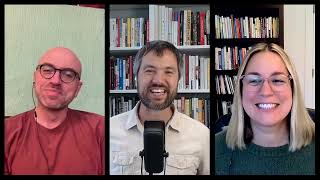
Eric Nehrlich, former Google chief of staff, talks about his book You Have a Choice and his shift from burnout in finance to executive coaching. He argues that working harder isn't working, and that you only control your next action. The book covers how to recognize self-imposed constraints, focus on what matters, and use meaning-making to manage stress.
Chapters
Welcome to Yourself at Work with Kristin and Daryl. Our guest today is Eric Nerlik. Eric is an executive coach who draws on 20 years of experience in the tech industry to help leaders be more effective. Before becoming a Coach, Eric spent 10 years in tech startups and then joined Google, where he led business strategy and operations as the chief of staff for the Search Ads team, during which time it grew past 100 billion in revenue. Eric recently published his first book, you have a Beyond Hard Work to Meaningful Impact. We discuss Eric's own career path and how he learned to build on his natural strengths, his personal story of burnout, and how it informed his thinking on the choices we have, and how the ability to discern what we can and cannot control opens us up to have more impact, and how accepting our limitations enables us to make the biggest impact in the areas that matter to us the most. Here's our conversation with Eric. So, Eric Nerlik, welcome to Yourself at Work. We're so excited to be here with you today.
I'm happy to be here. Kristen. I'm excited to have this conversation with you and Darrell.
Wonderful. So we're going to be talking a lot today about your recent book, you have a Choice. And just as we're coming into this podcast, can you talk about who is your audience when you're writing this book and as we're talking through some of the topics we'll cover in our podcast today?
Yeah. I originally wrote the book for people for whom working harder isn't working. So they're doing more and more and more of whatever their current patterns are. And that's not helping them succeed. In fact, sometimes it's helping them get into worse shape in some ways. I'm writing this to my younger self before I burned out and wish I had known some of this stuff, but I've learned it along the way since then and I want to share it with a wider audience.
Great. Thank you. And I can certainly relate to that myself. Could you share just a little bit with us about your background? So kind of how did you come to be writing this book? What has kind of an overview of your career looks like.
Sure. I mean, I'll try to keep it brief. My career has like four phases. I'll say. I started off as a physics student so scientist trying to study the mysteries of nature and realized partway into my PhD program that I didn't actually love it enough to do it all the time. And that was kind of a problem in doing a PhD and so I dropped out of grad school and became a software engineer because it was Silicon Valley, it was the dot com era, and that's what you did if you knew how to program computers. During that time, I was at several startups, including one that went bankrupt in a spectacular fashion. The part that was frustrating for me at that was I was an engineer there. The engineering team was great, the tech team was great. We delivered on all our promises and somehow the company went bankrupt. And I didn't understand how that happened. The answer is, of course we had terrible leadership and no business plan. And I said, huh, this business thing, this leadership thing, this might be important. I don't really understand that. So I went back to school and got a master's degree in technology management, which is like an MBA for tech people, and then joined Google on the business strategy and operations side to really understand the business side, really understand financial modeling and things like that, and spent 10 years there, first doing business modeling and revenue forecasting. And then I spent six years as the chief of staff for the search ads team at Google, where I really understood. Spent a lot of time working with the leaders at Google to make decisions about the business. After doing that, I decided it was time to go off on my own and become an executive coach. So take what I had learned about business and leadership and help others get better at that. So right now I work as a coach to help leaders grow their impact. And I've been doing that about four years. And what I noticed over the past few years is that the same set of lessons kept on coming up with a bunch of different clients, whether they're in finance or technology or marketing or sales. These are all the same lessons coming across. And a lot of them come down to this idea that what they were doing is no longer working for them. And so that's this idea that working harder isn't working. So we have to look at what you can do differently. And we'll get more into this as we go on in this conversation. But when I realized I was saying the same thing to lots of different people, I'm like, I bet I can generalize this to a wider audience. And so I wrote the book to hopefully help more people who are struggling. And I want to be clear here that I don't just mean struggling and like, oh my God, my life is falling apart. I need to change everything. But this can also include really small minor ways. Like, this doesn't feel quite right and I don't quite know what to do about it. But I'd love to have some ideas of what I could do differently, and this book's going to be good for that as well.
Just a really quick aside, actually, as you were going through that, and maybe this is a personal interest, but I'm a big. As we were prepping for this, I listened to some of the other recent appearances that you made, and you had done a whole episode on the chief of staff role. And I was just curious, did that have anything specific. Specific to do with like your decide to move into, you know, coaching and ultimately book writing? I mean, I'm a big fan of the. I may. I was a. My journey through having a chief of staff and then realizing how amazing it was. And there's a whole thing about like a chief of staff helping an organization scale and stuff. And I think we'll get into some of these things later in terms of like, working smarter, not harder, and all this stuff. But I was just curious, like, how the chief of staff thing specifically made of might have gone in with your.
I guess it affects my journey in a lot of ways. I mean, for one thing, I got to work with amazing leaders. And in particular, I was chief of staff to a guy named Jerry Dishler, who at the time I started with him, had just been promoted to vp. And by the time I stopped working with him, he was running all of ads at Google. So I got to kind of be by his side as he went on this rapid ascent in his leadership journey. And just I felt like it was being in the. Like I said, being in the room with all these great leaders taught me a lot about what it takes to lead effectively. And these are things that most people don't get to see. And the executive coaching has a chance to share that with a wider audience. At the same time, I realized some of the aspects of being a chief of staff were not right for me. And, you know, I'm managing headcount, budget operations, managing OKRs. And I used to kind of joke that like, the best part of my job was spending the hour each week with my. With my VP to kind of figure out, like, okay, where are we? What are we going to do? What's important? And I did the other like 39 to 69 hours each week of operations and budget and all this other stuff to get that one hour a week. And now as the executive coach, I just do the one hour a week and I'm like, this is a much better fit for me. So that's kind of how I ended up here realizing this is a thing I really love doing. And now I can really Focus on that and the other stuff. It became very evident actually, because as my VP was ascending to this bigger role where he was going to be managing a much larger group, we had a conversation around perf time. I was like, okay, so the next six to 12 months you have to think about how are you going to design the processes and operations and that's going to allow him to scale to run a 15,000 person organization. I'm like, that sounds awful. Yes, he needs that, but that is not me. You need somebody else to go do that. I'm going to go do this coaching thing. And that's kind of when we parted ways, was like, this is clearly a set of skills that I don't have. I don't want to build and it's time for somebody else to take on this role.
I'd love to hear more about that as we get into the book. Just in terms of. Because I think one of the questions that I know I have, and we'll get to it later, but was around the kind of like deciding whether it's, hey, I want to maybe build skills that I don't have versus I actually don't want to build these skills and I want to make a change. And I'm sure we'll get into that
a little bit later.
Yeah, I could jump in on that to offer a vignette here. I used to believe like, oh, building new skills is good for me. That's how I'm going to build my career. And at some point I realized I wasn't good at this process and operations stuff. And so I was like, I'm going to take a role where that's my whole job because that'll force me to
get better at it. Interesting.
And this is when I became a finance manager and really focused on this and was doing P and LS and all this kind of process and operations work. And I was right. I did get better at that. Unfortunately, getting better in my case meant I went from God awful to below average. And that was really problematic because it was my whole job. And this is when I was basically taking 90 to 100 hours a week to do stuff that other people who are good at this could do in 30 to 40 hours. And that's basically when I burned out because I was like, I can't keep up this pace because I just can't deliver on the expectations for my role. I'm just not good at this. And I'm not. I mean, I got better, but not at a rate rapid enough to justify being in that role. And that ended up leading to burnout, because I was like, I'm just not good at this job. And, yeah, we can go into the whole burnout experience either now or later. But yeah, to that question, it's like sometimes you have to acknowledge there's things I'm going to be good at and they're easy for me, and there's things I'm going to be not as good at. And just because something is hard for me doesn't mean it's something I should be working on.
I can so empathize with that. And I love that you said that. I think about. With my own history, I've always had a very kind of deep and natural interest in psychology and mental health. And when I was in college, I studied cognitive science, which was deeply interesting to me. But then I was like, well, I don't have enough of a background in the biology and the neuroscience. And that sounds really hard, so it must be really important. And it's almost this, like, puritanical punishment mindset. Like, if it's hard, it must be important. And I did a whole PhD in neuroscience, which is a really important, valuable field. But at the end of the day, I'm not a biologist at heart. I'm much more of a psychologist, sociologist, anthropologist in terms of my interests and skills. And I think it's so common that we sort of are under this myth that like, to do what's important, we have to change and we have to grow. And if it comes naturally, it must not be important. And what we don't often realize is that what comes naturally is very different for every person. And so your uphill battle is someone else's kind of downhill, downhill coast. Right. So I would love to just any kind of response to that, but just like, kind of your path in terms of really, like, who am I and what are my unique contributions?
Yeah, I mean, it's. So I kind of. Yes, I have lots of thoughts on this. I have two particular experiences related to this. So experience number one, I'm a freshman in college. I am taking physics. I've determined I'm going to be a physics major since I was in eighth grade. That's what I was going to do with my life. And I am nearly failing my physics class freshman year. Meanwhile, I'm taking the intro to computer science class and I'm acing it without even trying. And my freshman advisor is like, so you're going to major in computer science, right? I'm like, no, I'm a physics major. He's like, are you sure about that? I'm like, no, I, no, I'm a physics major. That is what I'm going to do. And I continued on that path for another seven years before I was like, maybe I'm not a physics major. I was not taking the signals that were very clear to me. But the funny thing is I also wasn't a computer science major. I was good at it, but I didn't love it. And this came evident to me later in my career or when I was a software engineer. At some point I was working at a startup with some other brilliant software engineers. And I remember going out to beers on a Friday night with my coworkers and chatting with Brett. I'm like, hey Brett, what are you up to this weekend? He's like, you know what's awesome, Eric? I'm like, no, my fiance has to work late tonight. She's not going to get home until midnight. That means I can go home and code for four more hours. Isn't that awesome? I'm like, uh huh. Yeah, that's great. But like, and it was awesome. He loved what he did so much that we had an unexpected Friday night free. He would rather do that than anything else in the world. And I was not that kind of coder. I did not love it. And because I didn't love it the way he did, he was way ahead of me. And he was going to get further ahead over time because that's where his passion was. That's where he put his time. He was practicing his craft more than I was because he loved it. It was fun for him. And the funny thing is, if I'd had more self awareness at the time, I would have looked at what I was doing with my Friday nights and weekends, which was reading books about sociology, business and leadership and writing about it took me another 15, 20 years after that before I realized, oh, maybe that's what I should be spending my time on. But I got there eventually.
Yeah, yeah, absolutely. And sometimes what comes naturally to us and what we enjoy, it's such a, such a part of the water we swim in and the air we breathe, we don't even see it. So sometimes it takes us like that comparison to someone else to realize that there's kind of a different level of passion there.
Yeah. With a lot of my clients who are struggling, I often tell them to go to some of their trusted coworkers and say like, hey, what am I great at? What's my superpower? Because they don't even recognize it in themselves. But as soon as they ask anybody they worked with, they're like, all of them say the same thing. Like, oh, but that's easy. Everybody can do that. No, no, it's not easy for everybody.
If you're coaching someone. I'm just really curious how you help someone through the. Hey, like either maybe this I think is probably going to be a key part of the job that maybe I don't like and maybe I just have to learn it or I think I am not into it, I kind of maybe hate it.
But.
And I've seen, I've seen so many people get confused about. I'm not good at it, therefore it's uncomfortable, therefore I hate it. And it turns out that sometimes confusing the newness discomfort with disinterest. And I know when I attempted several years ago to start surfing and I was just like, okay, it seemed like a good idea. I'd never done it before, right? And then I did it for a little bit and I was like, oh, this is really hard. And I'm not sure if I like it or not. And I was kind of like, eh, maybe I'll just stop. It's like, no, no, let me actually figure out like, if I had stopped, then I wouldn't have. Well, actually this is a terrible story because I ended up not doing it, but terrible example, but I guess I didn't. Had I stopped at the beginning, I would have stopped for the wrong reason, which was a discomfort reason. And later the reason that I actually stopped was because I realized like, okay, I, I took an entire summer worth of daily lessons and all this sort of stuff and I was just like, you know what? I actually think now I understand this and I still don't really enjoy it. And so I guess like, and maybe surfing is a bad example and I don't know, many of my surfing friends will not like this. But, but in a business, business context there's probably a lot better examples. But I guess my, my question is like, in those things where you are deeply uncomfortable because it's new and you will maybe get better at it and then thrive in it and actually turn out that you need it, how do you help someone figure out which it is?
It's such a great question. I remember reading Seth Godin has a book called the Dip, which is about this. How do you push through that discomfort that comes with growth? And when do you give up? Because he's like, you should quit when it's not your thing and you should push through it when it is your thing. And I Read the book. I'm like, tell me the answer, how you decide. And he doesn't give the answer. I'm like, yeah, right. Yeah. And it's often.
It's a key point, right. There's like this key moment where it's like, is it now or is it.
Yeah, yeah. So I don't have a great answer for you because I don't think there's a. I mean, it depends. It's going to be the coaching answer.
And
I do think that the way I kind of frame it to my client these days is like, what is the motivating factor here? What is the reason? What is the purpose that you want to push through the discomfort? So when it's hard for the sake of being hard, that's kind of the puritanical mindset that Kristen says. I'm like, I'm not sure that's a good reason. When it's hard because I really want to build this skill so that I can help these people, then I'm like, then it's gives them something to hold onto in the uncomfortable moments. Like, this is why I am doing this. This is the reason I am pushing through this. And it's kind of this idea of making meaning of our experience. When we can ascribe. There's a quote from Man's Search for meaning. Oh, my God. I'm looking at his name.
Viktor Frankl.
Thank you. The Viktor Frankl book where he's like, suffering ceases to be suffering when we can ascribe meaning to it. And so the discomfort can be managed. When it's like, oh, I know why I'm doing this. This is why I have my meaning and purpose behind it, then I'm willing to push through the discomfort and get to the other side. But in a case like my example where I was suffering in the job, I'm like, wait, why am I doing this? I don't want to become a great finance manager. This is not the right fit for me.
I met a very wise man at Oktoberfest one time who said he always asks himself, to what end? Why am I doing this? To what end? And when you don't have a good answer to that question, it's a moment to maybe make a different choice.
Yeah.
Yeah.
I want to start digging into your book. You have a choice, and one of the foundational concepts that you talk about in your book is around what we do and do not control. So can you talk a little bit about that?
Yeah. I think this is such a foundational piece of my own philosophy at this point and my coaching, which is we only control our next action. And that seems very reductive. But it's like the past has already happened. We can't change it because it's already happened. We can complain about it, we can look for somebody to blame about what happened, but in the end it's happened. And the only way it's going to change things is, is if we take what happened and learn from it and do something different. The future obviously is yet to happen, but I can't control the future more than now. I can take actions now to steer towards the future, but no matter how good my plan is, there's external things out of my control that will affect what happens. I can have the best plan and it may still not work out. So I left Google in fall of 2019 to start my coaching business. I started January of 2020 with all these plans of exactly how my coaching business would go that year I had all laid out. It did not go as I had planned because for those who might be listening later, that was the COVID pandemic. And there's things that are not in our control. So we can't depend on the future and we can't control others. Other people have their own things going on. And no matter how persuasive and influential we may think we are, they may have their own history, their own experiences, their own motivations that mean they're going to make their own choices. So as I put it in the book, if you can't control the past, you can't control the future, you can't control others. That leaves right now and yourself. And when we put about it that way, part of the reason I do that, it really focuses our attention, like, oh, am I going to do next? Not how am I going to handle the next three months or next year, but what am I going to do next and how does that contribute to the outcomes I say I want? If I can't answer that question, the to what end Question, as Darrel put it, or Darrell's October best friend put, Really changes my perspective. It makes it much more manageable in my eyes of like, okay, how am I moving towards my goals in this moment?
If you were coaching me and that was your framing, I think I would say, hey, evolutionary biology, we are mammals who have learned to predict future situations based on past experiences and try to see nine steps ahead. If I go there, this is going to happen. Those things indicate what might happen next, et cetera. And I think my question would be something like, yeah, I can control now, but my instinct is to play forward the now choices, the 19, perhaps different choices I can make and then the 19 choices I'm going to make after that and the 37 choices I'm going to blah, blah, blah, blah, blah. Right. And get. So it's like, yeah, I can control the now and I technically can't control the future. But it's like I'm aiming in a direction and that direction has all these consequences. So how do you, how do you help someone like me who would ask that question back? Like, but I want to. Like, that's going to lead to step 19. Step 19. I have to, you know, how do you bring someone back to the present and not. Because obviously we want to plan for the future and the, you know, the decision isn't just what happens five minutes later. It might be what happens five days, weeks or months later.
Yeah, I mean, I guess my first question would be like, how's that working for you? Because it's like, yeah, you're spending all this time thinking about the future and planning it out and how often is that working out the way you intend and how is it contributing to your honestly, your emotional state into your well being? Because for the clients I've had that are in your situation, like, no, I have to plan everything out. I'm like, you're spending. I guess one way I often put it is like then you're pre playing all the bad scenarios that can happen.
Totally.
So instead of experiencing them once when they happen, you're experiencing them 10, 15, 100 times. And like, is that really working for you? I mean, if it is, great, well, just keep doing what you're doing. But I'm just going to point out that that does not sound like it's serving you.
Yeah, I think it's, it's a good question. I think personally, not to get personal necessarily, but I do think personally it leads to a ton of pain. I am unclear. I guess I'll have to think about it more. Whether it leads to better results. I believe it leads to better results because of intense amounts of future planning. I also definitely believe it leads to unbelievable amounts of pain to that point. Yeah, I mean there's a Buddhist, I don't know, there's a, this Buddhist parable of the second arrow, you know this one, right? Yeah. Where for those listening, I mean, to make it very quick, it's sort of, you know, you get shot with an arrow and there is pain. Right. And then the second arrow is when you, you know, sort of berate yourself for getting hit by the arrow in the first place. And then the third arrow is when you worry about, well, will my arm fall off? And the fourth arrow is, et cetera, et cetera, et cetera. All the things that you create, the additional pain after the one thing happens. I love that example. And I think it's very similar to what you're, what you're referring to in that way. Right? You're living all that pain in advance to all the bad things that probably aren't going to happen.
Yeah, it's. I haven't particularly studied Buddhism, but it turns out a lot of what I've come to realize over the course of my career, my own personal development is basically Buddhist principles that are 1500 years old. So I was reading An Introduction to Buddhism this summer, and I'm like, this is basically my book, dang it. But I apply those principles to the Silicon Valley audience. I hope I'm adding a little bit of value there. But to your question, to your point, I think I believe that all this future planning serves me and it gets me better results. And I would. To a client such as yourself that might be saying that I'm like, can we try something? Can we try an experiment where we let go of that for one situation and see do you get worse results if you don't plan? And then we then experiment and like, let's see how that happens. Because I'm pretty sure you'll definitely get lower anxiety if you, if you don't spend all this future thinking time thinking of everything that could go wrong. So, like, let's see what, let's see how that plays out for you.
Yeah, I may do this and get back to you
and just a clarification, like, you're still taking that one step in a direction. Right? Like, you're still, you're. It is still a step towards something. So. So you're acknowledging you can't control the whole future, but you're not just thrown to the wind either.
Yeah, I mean, the way I like to think about it is I want to pick a compass setting. I want to kind of head in that direction. Do I have to plan out exactly every step I take to get to that direction? No. And this is often something that people get, they struggle with. Like, well, how do I know what the right first step to take is? I better not take any steps until I have the whole path mapped out and that leads to complete stasis. You don't get anywhere doing that, especially because some of those steps lead around corners and you can't see around the corner until you actually take those steps. And the whole world may open up in a completely different way than you expect because you just don't have that experience. So I think it's so important to move. My physics background, I'm like inertia. An object at rest tends to stay at rest. An object in motion tends to stay in motion, take a step, get moving, and then adjust along the way. But if you just sit and think and ponder, you're never going to go anywhere.
I love that. And that's one of the themes that we have found coming up as we've had different conversations on this podcast is this idea of like, we've been sort of thinking of it as experiential living instead of theoretical living. And I think a lot of us who end up in the tech world are analytically minded. We tend to do the multi step scenario modeling. And one of the things that just kind of keeps coming up over and over again is not only is that an anxious way to live to your point, it just doesn't work. Like you just, we just, no one has the crystal ball. We don't know. And so that element of just like living it, taking that step and getting the feedback is I think, really valuable.
Yeah, I'll share a story here that there was a very practical application of this, which was that I was hopelessly single for most of my and part of the reason was that dating was incredibly anxiety provoking for me because I would sit down at a first date, I'm like, is this going to be my life partner? The person I'm going to fall in love with, the love of my life that I can spend the rest of my life with? Because I wanted to see the whole path laid out. And like, boy, that turned out to be really stressful and actually not very effective. And eventually in my, I don't know, late 30s, when I was around 40, I was like, maybe I only have to decide on the first date if I want to go on a second date, maybe that's enough. And it turns out dating gets a lot more pleasant when you think about it that way. And now I'm happily married because I was like, oh, right, this is all I have to decide. Do I want to take the next step? I don't have to decide about the whole future. I just take the next step. And even when I got married, I asked one of my friends that had been happily married for 20 years, I'm like, how do you have a 20 year happy marriage. She was like, you don't. It's one day at a time. Wake up each day and decide to be married. And I was like, oh, right, you can't plan out the 20 years. You can just decide each day. I'm committed to this. And this is, again, that next step. Like, let go of the future planning, let go of the future. Just stay what's in your control, what's right in front of you. Am I committed to this relationship today? And how will I show it?
One of our previous guests, I think I'm attributing this correctly, Linda Furnesse. She said something like, I think this was in a coaching. Think it was in a coaching session with me. I don't think it was on the show. But she said something like, I think I asked some crazy question, like, how do you live?
Like, not her. How does one live right?
How does one live a good life? And she said something like, you just keep doing the next right thing, which I thought was great.
Thank you, Anna. That's actually from Frozen. There's a song, do the Next right Thing. ANNA sings and so another coach actually recently said, frozen tells you everything you need know about life. Elsa says, let it go and then do the next right thing. That's pretty much life in a nutshell.
That's great. And so coming. So the title of your book is you have a choice. And that's a really kind of fundamental underpinning of your philosophy, and you share a really beautiful story about your own experience with burnout and kind of how that led to this philosophy. Can you tell us a bit about that?
Sure. So, yeah, I chose the title in part because for most of my life, I didn't think I had a choice. And in particular, at the time I burned out, I was in this finance manager role, the one with the process and operations that I wasn't actually very good at. And I was trying to get promoted at that time. And so my manager kept on giving me more to do. They're like, oh, to get promoted, you need to handle this, and you need to handle this, and you need to handle this, and you need to handle this. And I'm like, I had two kind of rules in my head. I didn't realize at the time, but they were like, I want to get promoted or I have to get promoted, and to get promoted, I have to do whatever my manager says. And that combination, combined with my lack of innate skill at this area, led to a really bad spiral where I was like, kept on trying to work harder and harder and harder, taking on more and more to try to get promoted and not able to actually deliver as much as I wanted to. And eventually that led to me burning out. And sometimes people ask me like, oh, how did you know you were burning out? I was like, because I woke up on Christmas morning with 103 degree fever and I didn't get out of bed for a week. That was pretty good evidence that something was not right in my body. But the interesting thing for me was lying in bed that week, I actually had the time to reflect and think about what was going on in my life. And I hadn't seen my friends in, like, years, a couple years. At that point, instead of spending time with my family, I was lying in bed sick. I was kind of miserable. I didn't have any time to do anything fun because I was working 8am to midnight most days. Why do I want this promotion so much? I've given to my friends, my family, my hobbies, Everything fun about life. What am I doing here? And I decided, I don't want to do this anymore. I made a different choice in that moment. And I went into my manager after Christmas and I said, I'm not working that hard anymore. And they're like, what do you mean? Like, I'm not working that hard anymore.
I'm going to work.
I'm going to do what I can get done in 40, 50 hours and that's it. They're like, well, if you can't handle the work, I'm going to find somebody that can. Like, okay. And if you can't do the work, you're not getting that promotion. I'm like, I understand. And so she took away half my team, gave it to somebody else, and she slashed my performance rating. And this was everything I had feared. This is why I'd never had that conversation before in my life. Because they're like, these are all the bad outcomes. I'm now a failure. And, yeah, I felt that way for a few weeks. And I was pretty angry for a few weeks, honestly. But then I came out the other side. I'm like, oh, I can actually spend time with my friends. I can do fun things again. I learned to snowboard that spring. I'm like, having a life is kind of fun. This is kind of good. And you know what? I'm kind of still getting the. Paid the same amount of money that I was before, except I'm working half as hard, and this is working well for me. And to kind of tie this back to the book, I realized the choice I could make, which was to modify my internal rules from I have to do whatever my manager says, period, to I have to do whatever my manager says unless I'm willing to accept the consequences of not doing so. Oh. Once I accepted those consequences, I had a choice. And that was just a really pivotal moment for me. It's like it wasn't an easy choice by any means, because there were consequences, but there was a choice that I could make to change my situation. And once I realized it in that one particular context, I realized there was a lot of other areas where I'd been keeping myself walled in with these rules that were more flexible than I thought they were.
I'd like to think of it as, tell me if this makes sense. There's the what rules am I operating under that I might challenge or might need to challenge? And I think we've heard many stories of people who there are, and my story certainly was one of them of almost like a crisis moment that led to the realization that something had to change. I think a lot of people have had similar things, but I like to think of it as almost, you know, you think you're in this box and I'm going to mix metaphors, but you open the aperture. I think these are my little. I can only do these three things because I've got these 19 rules or whatever. And so there's the. Hey, actually, no, there's more choice than you think. And then the opposite. Not the opposite, but what it leads to then is dealing with the consequences of picking some of the things from that wider aperture. And I think that there are two, perhaps different but connected processes of the. Like challenging those. Those assumptions in the first place to open the aperture and then dealing with it. And then perhaps even a third thing of like, realizing maybe it was a good idea or going back and testing. So does that make. Is that a good way of thinking about it, or is it the second you open the aperture, you just start getting worried about the consequences and then close it again or things like that? Because I guess I just. I think of it in terms of the awareness and then dealing with the risks. Right. Does that make sense?
Yeah. If I understand you correctly, the way I put it in the book is you build a cage for yourself out of these constraints and these rules, and then you can open the door to the cage and go like, oh, there's a lot of options out there. And that's also scary. Like, wait, I know how to operate in this cage. I know how to operate with these rules. I Don't know how to operate out there where there's no constraints. It feels a little safer sometimes to come back, let me stay to the world I know and what I try to. When I'm working with clients in this situation, I try to help them pay attention to the downsides of the cage they know. It's like, again, how is this working for you? You're living every day with some anxiety and stress and a lot of bad things that are actually bad for your physical and mental health. Can we try to step out of the cage in this one way to see what we could do differently and how that might feel? To your point, I think then there's a third stage of like, oh, well, if I take in these constraints, how do I decide what to do? And this is where it becomes a really interesting question of deciding what does success mean to me now. Because before success was just like, get the next promotion, make more money. I'm going to be a good capitalist drone and just focus solely on compensation. And once you let go of that, it's like, well, now what? How do I measure my life? How do I know I'm doing good in the world? To your question to Lizza, how do I know if I'm doing this right? And that's a very kind of scary question to contemplate. Yeah, I can go much deeper into that, but I'll stop there.
I wanted to go back to the point you made about you have a choice, but then accepting the consequences of those, those choices. Because I think a lot of times like the Hollywood version of you have a choice is like, I had all these constraints and I stood up to them and then turns out that was the best thing ever and I was rewarded with love and riches and whatever and things, things don't always work that way. Right. Like, like, you know, in the example you gave, it's totally possible you could have said that and lost your job and that might happen to someone else in this who feels a similar conviction. And I think there's something really significant and important about how you talk about acceptance and how you think about acceptance of these very real trade offs in the world. And so kind of setting aside this myth that as soon as you stand up for your truth, just like the rest of the world falls into place. But what does it look like to accept the very real world consequences of stepping into something that, that feels an integrity with yourself?
Yeah, I mean there are, I, I wish we could all get the fairy tale ending where everything just works out as soon as you make that choice. And I don't. I don't think it works that way. I think a lot of times there's real constraints.
And
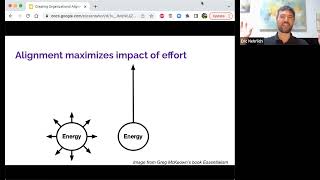
one thing I often tell people that they really don't like hearing is you can't do it all you really want to. Especially the people I work with, who are often Silicon Valley overachievers. They're like, I'm going to be great at my job, and I'm going to be a great partner and a great parent, and I'm going to go do triathlons in my free time. I'm going to volunteer at the nonprofit, and I'm also going to do five other things at once. It's like, okay, but there's this amount of time per week, and somebody that just puts all their time into just work is going to be ahead of you. I'm sorry, that's going to be the truth. But they're like, but then how do I be more effective? How do I be more productive with my time so I can keep up with them? I think you got to make a choice here. You got to decide, where am I going to focus my efforts? And there's a book called essentialism by Greg McCune that has a wonderful illustration that I love. He's like, here's your energy. If you Split it in 10 directions, you make about this much progress. If you take all your energy, put it in one direction, you make this much progress, what are you going to do? And that was really helpful for me to have a visual metaphor of when I'm splitting myself 10 different ways, I'm not being very effective. When I pick a couple most important things and really lean into them, I'm going to be more effective. But that has consequences. That means I can't do everything. When I was, I had a mentor kind of explain this to me. So this was a guy at Google, a director at Google, who was very effective, very impactful, doing strategic work up to the level of the CEO and CFO at Google, and listened to by the leaders of the organization. And more impressively to me at the time he went home at 6pm I was like, how? How do you do that? He's like, well, I work on the most important thing first, and if I don't get to the second thing, that's okay. It's not as important. But unlike most people when they say that, he actually did it, because I thought I was operating that way. But when I looked at what I was actually doing, I would spend. I'd come into work, spend A couple hours on email, then I'd go to meetings, all the meetings on my calendar that anybody could call and put on my calendar. I'd come back to my desk, do another hour of email, and then 6pm I'm starting the one thing that only I could do, the one thing I had to get done that day. And that's why I was working till midnight every night. He came in to work and he worked on that thing and he didn't respond to email. He didn't go to meetings that he didn't call. And then he got it done and he left. And maybe he would do some emails and other stuff at the end of the day if he had time, but if he didn't get to them, that's okay. They could wait. And it's like, oh, yeah, that's a very different way of operating. And there were consequences. He annoyed a lot of people. People were like, why can't I? Why don't you respond to my emails? Why don't you come to the meetings? He's like, I'm working on something else. And he was willing to live with annoying other people and live with people being frustrated with him because he was delivering really high value impact to the people he cared about. So that was a tangible example of like, oh, that's how life could be different at a time when I really needed a model for how to do that. But I think that part where it's like, oh, I can't keep everybody happy, that was the part I was like, ooh, how do I let go of that?
I was just going to say that I completely think that is the key part of just inherent in really choosing what you're going to focus on, how you're going to be true to yourself, how you're going to be excellent at the few things you can be excellent at. Inherent in that is disappointing people and, and dropping. Being the one who dropped the ball on. I mean, ideally you're communicating so you're not just dropping the ball, but. But like not meeting everyone's expectations. And I think that is particularly for the kind of overachiever Silicon Valley types. They've spent their lives with everyone happy with them. Right? And so there's this. I know for me, I have, I. I am constantly doing inner work around. I hate disappointing people, I hate letting people down. And that's. You can't truly be free and you can't truly step into who you're meant to be if you're afraid to let anyone down. And so can you. And I think that's a very real trade off that we don't talk about enough when we talk about focusing. And so can you talk a little bit about, like, all right, so there's the focusing. You're focusing on this one thing. You're doing great. But then conversely, there are a lot of things you're not. You're. You're a really bad triathlon, the competition, or you're not doing it all, or, you know, can you talk about, like, how to get comfortable with the things that you're not investing in?
Yeah, I think part of it is what is getting very clear on your stakeholders and who you will decide. I will not let these people down. And that can't be everybody. It can be a few people. And so getting very clear, like, these are the people that I'm going to deliver for. And that means if I'm going to deliver above and beyond for these people, that might mean everybody else doesn't get what they want. And you can do that in a number of different ways. So, like, in the case of the person I talked about, he was like, I'm just delivering for the CEO and cfo and everybody else can wait. There's a great book by Tiffany Dufu called Drop the Ball. Like, literally called Drop the Ball, where she talks about this. And in that book, she talks about what is your purpose? Like, for her, she was an up and coming executive and she had a husband and she had her kid, and she was like, how do I do it all? And Mary's like, I can't. I can't do it all. And she had to get very clear, like, what am I willing to drop so that I can advance the causes I really care about? And for her, it was like, I want to advance women and children. Like, that is what matters most to me. And so when she's taking something on, it's like, does this serve that purpose? If it doesn't, who else can I
get to do it?
Or can I just let it be and not do it? And that's kind of her focusing mantra that she's talked about in a few podcasts and in the book itself. So getting clear for yourself, what is the thing that's going to stand above everything else that I'm willing to sacrifice other people's reactions for other people's commitments for? That kind of allows everything to drop into place. I feel like if it's not too
personal, I'm just curious how, as you were telling that story about the other person, that in a lot of ways I think you looked up to about, hey, he's having this big impact and goes home at 6 o' clock or whatever. That's not the choice that you made though, right? You didn't make the same type of choice of how you were going to implement your change. Right. Because he chose certain people that he was going to keep as his key stakeholders. And you made a. You chose to go kind of down a different path of the way you were going to structure your work. And I'm just curious, like, in that, because it doesn't sound like you said, I'm going to do what he does. You did it your own way. And I'm just curious how you teased out what that was going to be
just to play things out. So I had this conversation around that time when I was starting to burn out and I had to get hit all the way bottom before I realized, okay, I'm doing this wrong. And actually, I did take his approach because soon after that is when I took on the chief of staff job. And that simplified my life enormously.
I see.
I had one stakeholder. If I kept my VP happy, I could let everybody else go. And I learned to communicate with him like, okay, these are the three things on my plate. You just added number four. Can I drop one of these three or delay it? He's like, oh, you can drop this one, that's fine. I can wait on that. Because fortunately for me, and one of the reasons I loved him is he was very good at that. He was very good at what's the most important thing right now and what can wait. So he was like, oh, yeah, I can wait on that. We'll let that slip. And so long as he and I were aligned at what I was doing, everybody else could wait. And that made my life very simple for six years, because when I had too much on my plate, I'd go to him like, here's the 10 things on my plate. What are you willing to wait on? He's like, I can wait on these. Focus on these. And we would get through the weeks week by week.
What shifted then later was there was a situation where that approach no longer worked because it was essentially, all 10 are priorities, and you must always do all 10. That's where the.
No, I mean, I think later on it was. I was actually very happy with my chief of staff job. The only thing was then the responsibilities that were important were the things I didn't want to do, the process and operations stuff. And that's what the job grew in ways I didn't want. And by that point I started exploring coaching and I was like, now's the time. I think that we, you should find somebody that wants process operations. I'm going to focus on this coaching thing. And we parted ways on very good terms. But now I'm self employed so I have to kind of make these own decisions. I don't have a stakeholder that tells me what my priorities are. But it's very clear for me right now. I've got two young kids so my family is my top priority. My coaching clients are my second priority. And then everybody else pretty much can wait. And that just creates, that is a limited enough set of commitments that I can fulfill them and still have the life I want to have. And that's been very helpful for me to just be very clear about who am I committed to.
So one of the things kind of in that same vein, leaders that I have always really looked up to, especially super, super senior leaders, were people who, and I never figured this out in my leadership journey to the degree that I think some people did like SVP level plus whatever was. There were certain leaders who under what I felt like were the most crippling, stressful, geopolitical, et cetera circumstances. They were just, for lack of a better word, chill. Right. And I would be like completely like frazzled and I would, right. And their answer was like it was as if it was kind of just another day, right? Not even just another day. It was a, even the hardest things. Not that they seemed easy but they remained calm, level headed, et cetera. And I always like Bill Coren is the person who always popped into my head. I don't know if you know if you knew Bill back in the day, right. But like he, every time there was some, for those who don't know him, he was an SVP at Google in my early days there and was there for a very long time and very early at Google. But every time I spoke to him about what felt to me as the world's most stressful thing, he was so calm and so just like he just said the right seven words and made the situation better. And for a person who had literally what I felt like the weight of the world in his shoulders, he was so good at that. And there have been other leaders like Ruth Peratt and people who I've just looked up to that Eric Schmidt who always seemed to be able to do very similar things. So I'm just, I'm curious and I never kind of, I never quite figured out is that a personality Type. Is it a skill? Is it just that at that level, you just have to learn how to manage unbelievably crippling situations every single minute? Because that's the job, and you must figure it out. Like, and it just kind of made me think about the story that you told about the person who was, like, just ruthlessly prioritizing. Right. And, like, no, this is just. Yeah. Anyway, so anything on that? It wasn't really a question, but, yeah,
I have a few thoughts. I mean, I listened to this podcast last year with Deb Dana, who's a psychotherapist. She studies the nervous system and the vagal nerve in particular. Polyvagal theory is her thing. And she had this one quote of, like, change happens one nervous system at a time. And what she meant by that is, like, we as humans read each other's energy levels and nervous systems, and we can influence other people. And so you have a superpower when you can calm yourself down, turn yourself out of fight or flight mode into a resting state, because then other people are like, oh, that person's calm. I don't need to be in fight or flight mode either. And it transmits. And so I think part of what you're seeing is that, yes, this is a skill you can build of learning to recognize. I am panicking. I'm in fight or flight mode. My adrenaline is racing, the cortisol's kicking in, and I'm going to take a few deep breaths, let it go, return myself to baseline, and then figure out what to do, because I know any decision I make while in adrenalized mode is going to be bad. And the reason for that. There's some evolutionary stuff here, but when you're in that fight or flight mode, you literally have attentional blinders on. You are focused on the tiger jumping at you, and you can't look at anything else, which means you can't see more possibilities. So it becomes very important to calm yourself down, get out of that mode, so that you can see the big picture. So I think, yes, it is a skill. And secondly, I think what a lot of these leaders have figured out is this idea of what's in your control. I can't control all the variables, but what's the decision I can make right now? That may not be the perfect decision, but it's going to move us in the right direction. And you look at it and like, well, this seems the best thing we got. Let's go with that. And that's the best I can do in this moment. And they know that because they've been through enough of these situations. They're like, yeah, I can't map out the 19 steps. Let me take one step and then see what happens. And once you do that enough times, you realize that's the best you can do and you can be at peace with that. So I think it's a combination of those emotional self management, physical self management, and then just the knowledge and wisdom to say that's the best I can do.
That's amazing. Thank you. I'm also assuming that the opposite is true, that you can transmit frazzle.
I think we all have experienced that from bad managers,
as I hereby apologize to the thousands of people that were on my team over the years.
Yeah, so it's. I mean, you know, and it's. Again, it's part of. It is also, it's easier when it's not happening to you. Like when you went to Bill Cora and you're like, this is the most frazzling thing. And he's like, it's not his problem. He's just like, okay, that's something that's happening here from the outside, it's easy because he's not experiencing the overwhelm and emotions and adrenaline that you are. So he can just look at and say like, oh, this is what you should do. And I experienced this a lot as a coach. People are like, how do you know what to tell them? Like, because it's not my problem. And then I go to my coach or therapist, I'm complaining about something. They're like, you should think about this. I'm like, I said that to somebody yesterday. How come I can't see it in myself? They're like, well, because it's you and you have blind spot when it comes to your own state.
That's really. I just wanted to pause for a moment on the. Like, will you tell me when you just said it's because it's not my problem. I mean, like, that, that. That just triggered something in my brain that's extremely important because I think the. When I think about some of those super senior leaders who in a way, it is their problem because it's in their org. Perhaps, but the way it's their problem is very different. And there is a distance and there's a perspective and it may be, oh, yeah, that's a 1, 1000th problem of my whole org. So it's not my problem, but it's my. It's my purview. The problem is in my purview. I think that that's really. Because I've seen frazzled senior leaders or mid level leaders or whatever who look at everything down to the pixel is my problem. And then that's where that energy, I think often comes from.
Yeah, they take everything personally. When you take everything personally, boy, all sorts of other stuff gets riled up and so forth and so on. But yeah, I mean, this is a really easy coaching question that I could often use. Like, okay, what would you tell somebody who reported to you to do in this situation? What would you tell your best friend if they were in your situation? They're like, oh, tell them this. I'm like, oh, that sounds like pretty good advice.
That's the, what's it called? It's the third that has a name, that technique, right?
It's the, yeah, it's like the third third person view or something like that. I don't know the name, but yeah, yeah, yeah, yeah.
It makes me think anxiety in general is like this perception that you can control more than you do and then you feel anxious by, by, by the lack of control. As we were talking about the senior leaders, we're, we're coming back on this theme of like accepting what you can and can't control. And I always think of the serenity prayer, right? Like, give me the serenity to accept the things I cannot change, the courage to change the things I can. And it just seems like that is just so integral to this conversation is being able to just discern what we can control and what we can't control and then act accordingly. And with that lens, like with that lens of discerning what we can and can't control. I wanted to talk a bit about the tech layoffs. And so I think for a lot of people there's kind of layoffs throughout the tech industry. And that affects the people who are laid off, but it also affects the people who are still working because there's this sense of like, my employer has an increased level of control right now and I don't feel empowered to sort of stand up and say I'm not going to work more than this amount because maybe I'll lose my job, for example. And so I think like if we play out even using the same example you gave where you kind of went to your manager and said, this is the limit of what I can do. There's a world in which that the consequence of that would have been losing that job. Can you talk about like the two paths there? So there's kind of the path of I lose the job and Then I accept that as a consequence. And xyz or because of my financial life situation, I can't lose that job. So then I have to remain in a situation that is non optimal. And how do I accept that? I would love if you could just tease apart that distinction.
Yeah, Yeah. I mean, I think the consequences would be much greater now because you're right, the employers have a lot more leverage. There's a lot of people on the street looking for jobs. If you don't want your job, somebody else will come take it. And so the calculus is different, the consequences are different. And making that decision doesn't mean you still don't have a choice. But you do have a choice in the sense that you can realizing, oh, those consequences are much more dramatic now. Therefore, I'm going to choose to do what it takes to keep my job. And instead of feeling stuck, then it's like, no, that's bad. I'm choosing to stay in this. So I actually literally had this conversation with one of my clients last week who was looking for a new job but couldn't find one that was going to work for them. And they're like, okay, Actually, no, I think they got an offer, but it wasn't quite the one they wanted. And they're like, you know what? I would rather stay in my current situation, icky as it is, than go deal with that. I'm choosing this icky. And it was an empowering moment because it's like, oh, I still had a choice. I had a choice to do something different and I'm choosing to stay with this and I'm going to make it work the best I can. And even within that, there's other choices you can make. Okay, if the situation is not great, what can I do to accept this is the way it is and work within it? And a key concept I often share is that acceptance is not approval. Like, I don't have to approve the situation, but if my manager is frazzled and overreacting to everything and insecure, I can just accept that that's the truth and work around that and treat it as a force of nature instead of expecting them to be different. So I mentioned this story in the book. I had somebody come to me, like, my manager should support me and they should back me up in this way. They should help me out in these situations. I'm like, okay, you've been working for them for two years. Has that happened? They're like, no, it's not happening. Stop expecting it. Work around that. This is now gravity Just pretend this is your manager. It's going to happen every time and live in that world and make a plan to deal with it. So that's the thing I would say in that situation. But the consequences, you have to take them into account. And I want to add here, one thing I put in the book that I was proud of was a lot of these sections. After giving some advice, I would actually insert a privilege check. This is what works for me as a white passing male. And the consequences would be much greater for you if you're a woman of color. Like try to break a rule. I can kind of get away with that because I love how I do. If a woman of color does that or makes a mistake or pushes the boundaries, in some ways, there's going to be increased consequences for them. And I wanted to be aware of that and point that out in the book because it's still a choice, but the calculus is very different than it would be for me. So I think that's something that I want to be clear here. Like, yes, you have a choice, but the consequences need to be taken into account before you make that choice and be conscious of it and be aware of the potential of your risk mitigation strategy. What are you going to do if it plays out in that way? Can you handle those consequences? If not, consider that before you make that choice. Yeah, I'll stop there.
I'm just really curious. Just to follow quickly is take that down to almost the deepest, slash, most severe version. Someone not of privilege, someone who's in a bad situation. And clearly, yes, you can still control how you maybe how you feel or I don't. Everyone has some amount of choice. But I'm just curious when you get it down to a, like, this is bad there, it's bad there, it's bad there and it's bad there. Someone who might be listening to this thinking, like, I don't, I don't know where to turn because I know the consequences are extremely high. The risks, perhaps for myself or my family are extremely high. I can only reframe to a point. I'm miserable or whatever it is, and I feel, I feel I'm in a box.
What.
Where do you go in. In. In coaching someone that feels that deep into it?
So I have a few thoughts. One, I'll go back to Viktor Frankl's book, Man's for True Meaning. He was living in a literally Nazi concentration camp. So that's the ultimate example of what you're talking about. And he still was able to find A way to make meaning of that suffering and control his own mindset. And so even if you have control over nothing else, the way you experience it can be like, I am enduring these awful conditions for the sake of providing a living for my family, and that is why I do it. That's why I show up to this job every day, because my family needs food, and I'm willing to do this to deal with that. So one aspect is you can make meaning of the suffering. The second thing I'll say is this idea that, oh, we only control our next action can feel very fragile and small in light of big, systemic things, systemic racism and capitalism and all these things happening in the world. And yet this is how the world changes. It's one action at a time. And each of us, by taking different actions, can be a role model for others. So those people in the civil rights era that went to lunch counters and said, I'm going to get beaten up and thrown in jail if I sit at this lunch counter, and I'm going to do it anyway because it'll make it easier for the person after me
if I do it.
That's not an easy choice. And they chose to do it anyway because it meant enough to them that they were willing to suffer those consequences. LGBT activists in the 80s and 90s, like, when I was growing up, the idea of gay marriage was an impossibility. And now it's generally accepted that didn't happen because people gave up and said, I can't do anything. They said, no, I'm going to go out and live my life and show people that I'm just a person and not all of a sudden. I mean, that's an extreme level of bravery and choice. But all of us have the option to do something more. When I was after George Floyd and during the Black Lives Matter movements, I'm like, I don't know what I can do for where I am. I'm not working at a company. There's nothing I can do. But what I could do is I could read up, I could educate myself. So I did that, and I could elevate other voices. I'm like, look, I read this black woman. You should be paying attention to her. I read this perspective. You should be thinking about this. When I'm talking to a CEO and he says something like, can we think about how we might approach that differently based on this perspective that you might not be aware of? These are not big things, but they're little things, and they provide a path for others to follow, because then somebody else might see what I wrote and they're like, oh, I can learn more about this too. Or I learned something from watching Eric learn about that. So all these little actions that we take, the way I often think about it is like, we all know the butterfly effect, like the butterfly flapping its wings can cause a tornado around the world. Each of us is a role model. We don't know the action that we take that might resonate with other people and take off. And so if we live our life with an aim towards the world we want, we might start to influence the world, even with just controlling our next action.
That's a beautiful place to close. Eric, thank you so much for joining us today. I really enjoyed our conversation.
Yeah, this is a wonderful conversation. We got deep on a lot of things, and as you can tell, I'm passionate about these ideas, and I really appreciate you letting me talk about them with you.
And Daryl, thanks so much for being with us.
More from Eric
Eric Nehrlich: You Have a Choice: Creating the Relationships & Career You Want, and Why We Get Stuck