Why You Need An Executive Coach, with Eric Nehrlich
Eric Nehrlich, former Google chief of staff turned executive coach, explains how coaches help leaders change habits through targeted experiments. He shares tactics like pausing before saying yes and delegating, and argues that hard work alone doesn't drive impact. His book and coaching practice focus on choosing impact over activity.
Chapters
Eric Nerlik, welcome to the Work Item. So good to have you here.
Thanks for having me, Dan. I really appreciate it.
I am very excited to talk to you today, and mainly because I have never talked to an executive coach before. So why don't you tell us more about what are you adventuring in nowadays?
Yeah, so I work as an executive coach, which means I try to help leaders be more effective, to have more impact. And you might. And I guess, you know, one of the things you hear these days, like, everybody needs a coach. Like, if you're a top athlete, if you're a top musician, everybody has a coach. And that's finally started to spread into the realm of leadership, which some people think, like, oh, it's too fuzzy and too. Too subjective to be or to. For a coach to help. But I think there's enough people who swear by their coaches that there's something going on here. So. And I certainly have seen that happen with my own clients where I help them deal with their own blockers, and then that then leads to external markers of success. So I always say to clients, like, my job is not to get you the promotion. My job is to set you up to be the leader who will go get that promotion and really focus on what's in their control, which is their own behaviors, which.
We'll get to that. And I think you're alluding to some very important points, that the value of the coach externally is a little fuzzy. But if you're working with a coach, it becomes very obvious that there's a lot of things that a coach can help with. But before we get to that, I want to talk about your career. So you started as an engineer. And I am fascinated by folks that kind of made the transition from engineering to something that is, I want to say, not necessarily not related to engineering, but not as pure engineering. And you had a bunch of different career tracks, right? Like you were chief of staff at Google. So how many engineers went to chief of staff? What were the motivations behind those changes? And kind of. How did you map out your own path there?
Well, first of all, I'll say I did not map any path. I am. I like to call myself a generalist. I'm interested in lots of things. And so my career was less of a plan and more of a random walk into whatever I found interesting until this last move to coaching. That's the first intentional shift in my career. But before that, to go even before the engineering, I was actually trained as a physicist. I had planned to go become a Physics professor. That was my plan as far back as before. Even went to college. I wanted to major in physics to go be a physics professor. Unfortunately, I found out at some point that you really, really, really have to love physics to make that happen. And I did not really love physics. I was like, I liked it, but it was not like the one true thing I wanted to do with my life. And I wanted to look at nothing else. But fortunately for me, it was 1998, it was the dot com era here in Silicon Valley, and I knew how to program computers. So I was able to quit grad school and become a software engineer because everybody who knew how to code at that point was getting a job. And so I did that for around 10 years, bouncing around startups here in Silicon Valley. And the next shift in my career was actually set up by my second job, which was at a biotech startup that went bankrupt. And the really frustrating part to me was that we had an amazing engineering team, like some of the best technical people I've ever worked with. We were doing world class things nobody else in the world could do. We were delivering on what we said we would, and the company went bankrupt. I'm like, I'm missing something here. We raised $40 million and somehow we went bankrupt two years later. And I thought we were delivering what we were supposed to do. So what am I missing? And the answer, not surprisingly, is that we had a terrible CEO who made insanely stupid decisions. And it turned out all of our efforts were wasted because of a bad leader. So I often call that my origin story as an executive coach. That was when I was like, wait, leadership matters a lot. The wrong leader can destroy everything and the right leader can up level everybody. So with that in mind, I started pivoting my career more towards the, the business, the leadership, the strategy side of things. I actually went back to school, got a master's degree in technology management to help with that pivot. So I learned to speak the language of business, to speak the language of management in that program. And then I joined Google on the business side. So I joined doing revenue forecasting and business modeling for a few years. So really trying to understand how the money works. And, and my joke here is like one of my Columbia professors said, if you want to understand how executives think, you have to understand the money. And I was like, I don't have any idea about the money, but I bet if I forecast the revenue, I'm really gonna understand the money. And that turned out to be true. And it turned out executives really really cared about the revenue. So I was like, oh, okay. And then that led to the chief of staff role, because I was in the room with all the executives, and one of them grew to know and trust me, and he was like, hey, come help me out. Be my chief of staff. And this was back in 2012. So it was like, what the hell is the chief of staff? It's now a lot more popular. But 10 years ago, nobody knew what that was. But he was like, I just need somebody to help me run my business, you know, my business. Come help me. So I did that for around six years, and at some point, I started to think about what was next. Like, okay, I've been in my. Been in my career almost 20 years at this point. I've kind of hit most of what I wanted to hit in terms of, like, I earned a lot of money. I'd gotten this prestigious position as chief of staff, and I started thinking about these midlife crisis kind of questions, like, okay, what is the meaning of my life? What is the purpose? Why am I here on this earth? And I decided that making Google richer was not the purpose of my life, even though I was very good at that. So I started coming back to, like, well, how do I want to measure my life? What's really important to me? What. What is the thing I want to measure myself by? And at that point, I came back to this idea to realizing what really fulfilled me, what really gave my life meaning, was, like, helping other people figure out what to do. And I was running this by a friend of mine, and they're like, that sounds like coaching. Have you considered coaching? I'm like, wait, that's. That's a job. You could do that. And it turns out you can. And I went and got trained and certified and started a coaching business on the side and discovered I really loved it. And people seem to be willing to pay to do it. And I've been doing that full time for about four years now.
Long journey. And so what does an executive coach do? Right, because if we think about kind of the role of a sports coach, that might be a little bit more obvious to folks that follow sports, but for an executive coach, because not a lot of us are executives. Not a lot of us are following executives. What's the kind of the inside baseball here? What does an executive coach do?
Well, let's use the analogy to sports coaches. So, like, a sports coach is going to watch what the athlete's doing, see what they're not doing that could be improved and perhaps prescribe some drills or some ideas of like, things they could do to really improve their skills in certain areas where they're not as effective as they could be. That's what I do as an executive coach. I watch my leaders, I see where they're struggling and you know, they tell me where they're struggling. They come to me each week and like, okay, this is driving me nuts. This is what I need to figure out. And I talk it through with them and I'm like, oh, this makes me think that here's an area where you could really benefit from, let's say more direct communication or delegation or how do you influence or persuade this other person? And then we come up with drills. I mean, I call them experiments, but because I have a science background and that's why I think. But they're effectively drills. And the reason I actually, the reason I call them experiments. A lot of times the problem is the executive has some habits, some way of being, some way of approaching and reacting to things that is not optimal for the situation. And I want them to try something new. And so a very common one is solving problems myself and working harder is the answer. That's a very effective mindset. It works really great as a student, it works great as an individual contributor. It works great as a manager. When you're managing 50 or 100 people, it does not work very well anymore. If you take all the problems on yourself and try to do it all yourself, you just drown. And that's a lot of times where people come to me and call me up and say, I don't know how to get out of this. I'm so stuck. I can't figure out what to do. I'm like, okay, let's talk. And it's like, okay, so in that moment, before you say yes, I'll do that. Pause. And instead let's think about who else you could do it. Or even just not volunteering and just stepping back and seeing if anybody else volunteers. And that's a, like, that's a very typical experience. Like one of the first things I'll offer to a lot of my clients, like never say yes in the moment. Just don't do it. Don't commit, just pause, let somebody else step up.
Which goes counter to a lot of the typical career advice. Or I want to say the non executive career tracks as you kind of alluded to. If you are somebody that tries to grow as an engineer, as a product manager, designer, right? Like, like saying yes to things and delivering on them sounds like a straightforward path forward and say like, oh, yeah, no, I can do this, I can do this other project, I can do everything. But then you kind of have to change your mindset. Like, how do people break out of that mindset of saying like, yeah, I'll do it? Because instinctively that's what you want to do to prove yourself and prove your value?
Absolutely. That's why it's so hard to break, because it's brought a lot of success. This is something that's worked for people for 10, 15, 20 years. And I'm saying, yep, that's not the right answer anymore. They're like, but it works. I'm like, yeah, it did work, but your situation has changed. And as far as breaking, as far as like building a new habit, it starts by trying something new. And then you might say like, again using the sports analogy, somebody that does everything right handed, like, that's very powerful for them. But if you're a basketball player, you can learn to do stuff with your left hand too. You're going to be even better. And there's no way to get past that awkwardness except to just try it, practice it, do it over and over again. And so that's kind of what I asked people to do. Let's try this experiment. What if you did? Instead of what you would normally do, let's try something different. And then the really fun thing is that these are really talented, skilled people. So they try it a couple times they were like, oh, that kind of works. Oh, I could get better at this. And as soon as they're off running on that track, they're going to be fine. Like, they'll figure it out from there, but it's really getting through that first mode of recognizing their over reliance on their current skillset is the problem. And then trying something new. That's where it can really help with that transition.
So despite the popular belief, the executive role still requires quite a bit of deliberate practice. Like you get to the executive band and it's not over there. Like, you're not done. It's like, all right, now I can pull the levers and I can manage the company whichever way I wanted. There's like still a lot to practice and change and shift the mindset.
Yeah. In fact, it's a whole new job. Like, that's what really drops. Which really is such a unusual experience for the people I work with. They've like worked by getting ahead, like, okay, reach the next level, get promoted, reach the next level, do this, do this. And it's like more of the same More of the same. More of the same. Get the executive level. And like, all of a sudden, the way they're evaluated, how they spend their days, the things that bring that have impact, all these things change. It's a completely new job with completely new skills, and they haven't been trained for it at all. And our companies do a very poor job. They're just like, oh, you're promoting. Congratulations. And it's like, oh, yeah, you know what to do. It's like, no, this is totally different. This is a totally different job. And, I mean, I'm kind of glad for that because that means I have a job that helps people with that transition. But, yeah, it's kind of interesting. People think, oh, you made it to the top. You know what to do. It's like, oh, no, it's a totally new job, and I'd have no idea what to do. I can't tell anybody because I don't want to look like I'm an imposter. I don't want to look like I'm incompetent. So, again, that's where an executive coach can be really helpful. Like, oh, God, I have no idea what I'm doing. What do I do here?
So do you think in this context, having an executive coach is helpful even before you become an executive? Because I know that folks listening to this podcast, they're probably asking the questions like, well, maybe in my career in the future, which can be five years, 10 years, whatever, they want to become an executive. And for that, there is no very much like an obvious path, as you have for other career tracks. If you think about, like, I want to become a staff engineer, well, there's books on that. There's plenty of experience from staff engineers that blog about this. For executives, it's like, who do you even ask? How do you get there?
I mean, there are a lot of books. I mean, there's like a bazillion leadership books published each year. So, like, for an engineer, there might be somewhere back here is High Output Management by Andy Grove, and there's a bunch of other books like that. But, yeah, I think the kind of process I'm talking about can apply at any point in your career. There's always things that are the thing holding you back. So when you first come out of school, you might have learned, do whatever the teacher asks and deliver on that. And you apply that to your first job as a manager. Like, okay, I'm just going to do whatever they ask me, and I'm going to meet expectations or beat Expectations, that's my job. And of course that's great. Except, you know, a couple years into your career, they're going to be asking you like, okay, you're, you, you take the, you figure out what to do. And that's, you know, your point about saying yes and volunteering and, and that's a shift in mindset. And there's all these micro shifts in mindset that happen along the way. And again, that's where a coach could be really helpful.
It does sound like, effectively, you don't need to be an executive to start engaging with a coach. Like, if you get through the higher bands of your career, there is definitely a lot of value to be had. But in terms of your work, like in terms of your work as a coach, how do you even get started there? Because in my mind I'm thinking, okay, for me to become an executive coach, I need to have access to executives, I need to have experience, managing executives. And you are a chief of staff, so you have a wealth of kind of field experiences, I would call it, where you actually saw how things are made. How should one consider that as a path, as a potential career path without necessarily direct exposure to the C suite room, if you will?
I'm not sure, I guess is my answer like that. That was the advantage I had is I had exposure to a lot of leaders at Google through my chief of staff role. And I'd been in Silicon Valley for 20 years. I'd met a lot of people, all of whom had progressed in their careers and I had a lot of contacts and that's how I got started. If I were starting from scratch, I think it'd be a lot harder. And I've talked to a few new coaches, like, oh, how do you, how do you get there? And what a lot of people do is they start off with like career coaching. And so you help people at the early stages of their career kind of get to the next role, get to the, get the promotion, get the next level. And then as your clients kind of level up, they start getting into these higher level roles and then you can kind of progress into the more executive suite. I was fortunate I could go straight there because I had the contacts to do that. But that's also a very common way to go, is you start as a career coach and as your clients level up, so do you.
And so in that context, I think what's important for folks to consider is sometimes these kind of opportunities can be very serendipitous. Right. Like you're not necessarily mapping them out. You know, we talk a lot about folks that are early in career sometimes on this podcast and what comes up as a question is like, well, you know, I put my 5 year map of like, I want to reach like this level of this year and this level of this year. And sometimes opportunities like you mentioned, like the chief of staff do come up fairly infrequently, but also when they do, you kind of have that fork in the roads, like, do I go and do something that is chief of staff that, for example, is not quite engineering but it can open other doors, or do I stick to the more traditional path, which might be a little bit less, I want to say, like, it's less risk averse. Well, more risk averse, but it's more traditional in the industry, if you will.
There's nothing wrong with that. Following the path that's already there is, as you said, it's less risky. It's more, you have less chances of quote unquote taking a wrong turn. I, because I wasn't interested in that. If I wanted to just keep on following the path, I would have stayed in grad school. And that was not for me. I was really optimizing for what I found interesting and for my own learning. Honestly, I was like, oh, that looks interesting, I want to learn about that. I'll go figure out, take a job there. So that led me to some really interesting places. And that's not for everybody. I'll just be very upfront about that. But if you're saying, here's my five year plan, here's my ten year plan, that's assuming you can predict the future. There's already a path laid out for you. The last five jobs I had, even before becoming an executive coach, none of them existed before I took them. They were new jobs created and then I jumped into them and that meant I got some really interesting, unique experiences. And I think that's a really important point, especially if you're early in your career to think about, like, what's going to make you unique. If you're a software engineer and you're competing with every other software engineer for a job, it's going to be hard to stand out. And when you're trying to get hired, they're looking for somebody that's going to be uniquely able to help them succeed. The hiring manager has some sort of problem, some sort of need, and you have to convince them that you're the best person. Not just that you can do the job, but you can do the job better than all the other Hundreds of people applying to that job. And so early in my career was a challenge for me because I had this really scattered background. And so it wasn't like I couldn't compete with software engineers as a software engineer, I couldn't compete with a data scientist as a data analyst, as a data analyst, I couldn't compete with a finance analyst as a finance analyst because they all had followed the path. So I had to find these weird hybrid roles that didn't really fit in any boxes because that was where my unique brand and background could really set me apart. So, like, when I got into Google, I joined as a revenue forecasting analyst. And originally they were looking for a finance mba. So somebody had come out of school with a finance degree, worked two years at consulting firm, gotten back an mba. That's what they were looking for. That was what was on the job description. And I was fortunate enough to be able to, through my college network, get a coffee with the hiring manager. And we just sat down and talked about it. And he's like, after he talked to me, I was like, oh, this is really interesting because you have the quantitative analysis because you're a physics major, you really understand the tech industry because you're an engineer, you understand all the business partners I'm working with because they're engineers, and you've learned enough the business concepts that you'll figure that part out. And so I brought a unique perspective in because I had this quantitative engineering background that none of his other people on his team had. And he was like, I need that'll help me round out my team in a really interesting way. But, you know, he had to take a chance on me and I had to be able to position myself of why I could do the job, even though I didn't have the requirements on the job description. So anyway, that was kind of a long, convoluted answer to your point. But I think this idea of thinking about what's unique about you and how you can make yourself stand out from the crowd is so important even early in your career to start thinking about
that ties really well to the conversation that I had on the previous episode of this podcast that we've talked to our shared friend Cedric. We were talking about career moats. And one of the piece of advice is always like, find that niche where you have the combination of skills, right? Like the example that I usually talk to folks about is if you know engineering and another field, be it finance, biochem, whatever, that instantly makes you a better person in terms of candidacy for the role than anybody else if you're applying for a given field, especially where you can apply those skills, because that different perspective, the different mindset can set you apart and a lot of people miss it. A lot of people think, oh, I'm not just going to be like, heads down and learn how to write C code and I'm going to be really good at it. And then somebody that is kind of like, they're not the best at C, but they can also write good SQL queries and they can work with databases, they're so much more far ahead than everybody else.
I think part of what is interesting here is it's, it depends on kind of what timeframe you're looking at. Because I think if you look at a five or ten year timeframe, just like picking one path and going full speed down, it's going to put you ahead of your compatriots that are maybe trying a bunch of different things. So in the first 10 years of my career, when I was bouncing around between startups and trying different things and going in a bunch of different directions, I had college friends who were like zooming down the path. They were like becoming VPs at startups. I was like, what do I do with my life? I'm totally wasting my life, I'm so far behind. But then my varied set of experiences started becoming more of an asset as time went on because I could find these really unique positions where there was nobody else that could do what I could do, like the chief of staff role or now as the executive coach. There's very few other executive coaches with the set of experiences that I have and that really makes me stand out. But it took like 15, 20 years of my career before I could really put these pieces together in a way that created some interesting opportunities. And so, you know, again, like, it depends. It's hard for me to say like I had the right path because it was like that first 10 years I was like, what am I doing with myself? And me and my parents were like, do you know what you're doing? You don't seem to like have a plan at all. Like, I don't have a plan, I'm just kind of following what seems interesting. And then when it all came together, like, oh, you had a plan all along? I was like, no, no I did not. Just the opportunity arose at the right point for me to take advantage of it.
But what's interesting here too is that it adds to your, I think, like, credibility. And again, reusing Cedric's word of like, believability and that you've managed to succeed in these, like, several different environments. Like, it's not just one cookie cutter. Like, I did chief of staff and I did chief of staff of this and that and that and that. That's it. Like, you're kind of spread across various domains. And arguably you did well in all of those domains. And that combined creates this kind of amalgamation of skills that allow you to succeed now that a lot of people do not have.
I once heard this concept. I think you may even have talked about it on the podcast with Cedric. But it's like, if you're like the top 25% in one domain, it's really hard to compete because there's people that are top 10% or top 5% or top 1%, but if you're top 25% in two or three domains at that intersection, there's not a lot of competition. And so, yeah, I was like, better than average at a few different things. But I wouldn't say I was never a superstar engineer, I was never a superstar financial analyst, but I was above average in those domains. And also in this area of thinking about people problems, which is what I do now as an executive coach. And that combination, boy, it's rare of like, there's very few executive coaches who, who come out of the tech domain. I mean, there are, there's a growing number now is like, you know, C suite executives retire. They just wanted to kind of run their own schedule. But. But yeah, that's. I think the perspective I offer is this combination of perspectives, which really is valuable, especially as an executive coach, because at the executive level, it's not enough to know your domain. It's not enough to be a great engineer. You have to work with marketing, you have to work with sales, you have to work with product, you have to work with finance. And for me, I can actually embody a lot of those perspectives. Cause I've done all those roles. And so as their coach, I'm there like, oh, this is what marketing is going to be thinking about. Here's what finance is going to be worrying about in this conversation. And they like, oh, I hadn't thought about them. Like, yeah, that's why I'm here to help you see other perspectives, to see around corners that maybe you're not ready for or maybe you don't have the experience for.
I think what you're getting to also is important to call out is that the skill set changes as you progress through your career. And this is once again a misconception of Folks have about the executive role is like, oh, if you are on the engineering track, right? Like you go from staff engineer, you grow to like VP of engineering. And then you become cto. And you think that because it's still the technical track, you still have a good degree of technical work, but that balance shifts. You're doing less and less technical work and more work around. How do you find alignment across teams? How do you make sure that the marketing team is actually aware of what you're building? Like the. That stuff is missed and it's missed very, very often.
Yeah, absolutely. It becomes much more about communication, about influence, about alignment. I had one of my clients who went through this, he's a VP of engineering, and he came to me at one session. He's like, I feel like I'm not a technologist anymore. I'm a politician. I spend all my time doing politics. I'm like, yeah. He was like, what do you mean? Yeah, I got into this being a technologist, I don't want to be a politician. I'm like, sorry, you got to that level, that's what your job changed. And he was really kind of like, had his mind blown that, like, oh, this is a totally different job now. It's not my job to be the best technologist. It's my job to hire great technologists, set them up for success by aligning them with the rest of the company, getting them resources, communicating what they're doing. Yeah, it's really interesting because I've had people at one client, somebody that was interviewing me to be their coach was like, well, how many CFOs have you coached? I'm like, I've coached a couple of CFOs, but I've coached CFOs, CEOs, CTOs, Chief Product Officer, VPs of Sales. Like, the skills I'm working with are not your domain. You know your domain better than me. The skills I'm going to help you with are being an executive, which is cross domain.
Right. So, yeah, so in this case, the help of the coach is not about helping you build a better technical architecture for your product. It's actually setting you up so that you can decide and your people under your team can build that architecture for you.
Yes, yes. And I think this is really important for even people early in their career to understand. I certainly didn't understand this, but like, if you can figure out how to articulate the value of what you're doing to your manager, director, vp, and if you can help them, give them the artifacts, the evidence that you're making a difference. It makes it easier for them to go get you more headcount, more budget, more investment in the things you care about. But if you were like, I was early in my career. I'm like, well, the technology speaks for itself, the work speaks for itself. I shouldn't have to say anything. They should just understand it. I was very pure in this way and then people didn't understand. I would get really frustrated, like, well, they're idiots. They should just understand it. It's like, no, no. It actually takes work to understand it. And I can do some of that work for them. I can make it easier for them to understand if I actually put in the work. So if you're early in your career and you're like, oh, all this stuff is like not really related to what I'm doing, I'm like, if you can help your manager, director, vp, executive be more like, help them with these kind of questions, you're going to be more effective in your career because they're going to understand that you're helping them succeed.
This is becoming like a career myth busting episode and I love it because a lot of these things are precisely what I encountered early in my career and I certainly have encountered with folks that I help mentor is the exact scenario that you're describing. There is this kind of assumption that if only I do good work, then things will get noticed eventually. Right? It was like, it's obvious that like the product is growing and customers are using it. Who knows about that? Your executive certainly doesn't track every single metric that you track. Like I like your manager probably doesn't even know every single metric because they have a million other fires that they need to extinguish at any given time. So somebody that's an ic, an individual contributor that puts their head down, gets work and shells out a bunch of code and then expects to be promoted for it, like down the line. Because like, oh, they'll know. No, they won't. They almost never do because there is so much time spent on other things.
Yeah, your manager's busy. They're running from meeting to meeting. They've got a thousand emails in their inbox. They're like juggling 10 different things you don't even know about and you expect them to go spend several hours to understand what you're doing. Figure it out, Figure out the value and why it's important. They don't have time. Make it easy for them. Give it to them on a silver platter. It's like this is what I'm doing. This is why it's valuable. Here's everything you need to know. You make their job easier and they can help you more. Make it easy for them to help you. That's the message I want to. Want people to know, and especially when
it comes to promotions, like, you know for a fact that there is just, you know, make the case easy. Just, just make it easy. Just, just put the effort, collect the data, get the input. Like, don't have your manager have to do the heavy lifting, because they probably won't, and not for any malicious reason, but again, because they probably have a million other things that, other than like, oh, I have like, 10 reports. Let me go dig for each one of them and figure out, like, who's more worthy of a promotion. Like, make their job easier.
I think this is something that is easy early in your career to do, because when, again, I did this myself, it's something I had to learn. It's like, oh, my manager's like, all powerful. They know everything. They're on top of everything. That's what makes them a manager. And it turns out now that I've been a manager and I've worked with, they're like, no, they're on. They're. They're underwater, too. And the, the thing you, the thing you can, you can do is like, what can you do to make their life easier? What can you do to change the situation? If you want a promotion, don't make it their problem. Make it your problem. Like, if you make it your problem of how am I going to set myself up for brochure? How am I going to make sure people know about it? Then you're much more in control of your career. And that's the point I want, that's another point I want to make. It's like, take control. Don't hope that other people will help you. Don't hope that your manager has it under control. If you take control, then you're much more. At least if things go wrong, then you have some more. You have some level of input into what's going on. But if you're like, oh, my manager didn't do it. Oh, there's nothing I could do. Well, be ready for some disappointment.
Yeah. Be your own biggest advocate. Effectively.
Yes.
In terms of your career as a coach. So going back to kind of the work that you're doing today, was there ever kind of a light bulb moment after you have left your position of chief of staff that you've tried coaching and then you said, you Know what? This is what I actually want to do long term. Because you've been doing this for a few years now. Like, it's not your first month of the job. So, like, was there ever a moment where you were like, yep, this is it. I know for a fact I want to do this.
I don't know if there's a moment. I guess I'll. I'm. So I mentioned earlier in the episode that I. This was the first transition that I actually planned in my career. So it was actually like a three year arc between when I said, hey, this coaching thing sounds interesting, and when I went full time as a coach. And the way that kind of played out was I spent like six months like exploring coaching. I interviewed professional coaches. I did some coaching of like, friends and people in my network of like, let me see if I actually like, like doing this, like sitting down with people, trying to help them. Then I spent a year getting trained and certified with a coaching institute. Turns out you could actually get an education in this and there are people that train you in this. So I went and did that and spent a year doing that. And then I spent another year after that going like, okay, back to that point about, do I have unique skills? It's like, what's his name? Cal Newport, has a book called so Good They Can't Ignore youe. He talks about building rare and valuable skills. And he says the way you try that is, can you get paid for those skills? That is the test if you have rare and valuable skills. So I was like, okay, I like coaching. I knew that after I went through the training program, I've like really enjoyed it. But will anybody pay me to do it? So that's why I started the business on the side. Like, will people pay me to do this? And after doing it for a year, I had five clients. They were recommending me to more. I had enough proof points. I was like, okay, there's a chance I can make this work. And even then I was like, and let me put like a year of savings in the bank just to be sure I can survive while I'm going through this. And then, yeah, after the first year, I was like, okay, I love this. I'm getting enough proof points. I can make this work. And yeah, four years later, I'm still making it work. So I love what I do day to day and I can get paid to do it. Which is, it's not enough to just have the passion. You actually have to be good enough at it to. For people to pay you to do it.
Yeah. I mean, the bills are not going to pay themselves. Totally makes sense. But in terms of becoming a good coach, now that you have the experience now you've kind of. You worked with many different clients. What do you think makes a great executive coach and what separates the good from the great? I think that's the more important questions, like what you know, because a lot of people can claim that they're an executive coach, but ultimately, if you'd have to choose somebody, like, how do you scan for kind of the skills that are truly going to set them apart?
I mean, the first thing I would look at is results. And what I mean by that is it's very easy for a coach to be like a therapist. It's like, I go in, I talk to them, and I feel better afterwards because I heard somebody listen to me and I talked about all my problems. I come back, and then I come back two weeks later and we have the same problems. It's over and over again repeated the same problems. That would be. Some people will get. A lot of people get benefit of that. People call me their work therapist, but that's not what I'm here to do. I'm here to change behavior. I'm here to get them to do something they didn't do before. So a good coach will support you and make you feel warm and loved and like you're doing great. And a great coach will challenge you and say, and here's what you're missing. This is where I can see you getting to. Here's the potential I see for you Wired. What can we do to get you there? And they'll make it happen fast. So, like, one of the things I love doing because I've had enough experience now is I can. In the first 10 minutes I'm meeting someone, I'm like, oh, so this is, I think, what's going on here? Like, how are you reading my mind? Like, because I've worked with 30 other people like you, I can pattern match on this. But because of that experience that I have now, I can accelerate through a whole lot of discovery and curiosity. I'm like, okay, and here's what we're going to do. Boom, boom, boom. I'm driving them to new results much faster. I think that's what makes me really good as executive coach is I'm driving them to results fast. Yeah. So I think that's. It's being able to be with a person, support them where they are, while also challenging them to unblock themselves and get to that next level and jumping
into this non traditional career track. Did you experience any unexpected challenges that you did not foresee getting into the job of a coach?
Well, one was Covid. I quit my job in July of 2019. I was ramping up my business in January of 2020 and did not really plan for a worldwide pandemic shutting things down. So a joke. But that was, that's one of those examples like, oh boy, that.
Yeah, yeah.
Well, my five year plan really got wrench thrown in at that point. But I guess the thing that I didn't really anticipate was I guess I'll come up with two things. One is just how much confidence matters. And I mean that in the sense that like as a coach, people want to come to me and feel like I'm going to help them. And first for me to do that, first I had to believe I was going to help them. So the first year or two, I was a little more uncertain. I'll say, like I thought I had the tools, I thought I could help them, but I wasn't like, couldn't go into the first chat and go like, yes, I will definitely be able to help you. But then after two years of like working with people, seeing results, seeing how they're changing and growing, I was like, oh, I know how to do this. And that gave me more confidence, which helped me show up with more authority, which then gave me more success. Because when I showed up with confidence, people were more likely to listen to me, do what I said, and they do what I said to get the results, which then gives me more confidence. And this kind of really positive feedback loop that happened as a result. And the secondary component of that was that as I grew in my confidence, I could charge more money. When they pay more money, they believe they're getting more value, which means they're more willing to again, listen to what I'm going to say, which then means they're more likely to get results, which leads to better results. So there's this apocryphal story of, I think Tony Robbins when he was in his 20s and coaching these people, business titans and stuff, and he was charging a million dollars a year for his coaching. And people are like, how can your advice possibly be worth a million dollars a year? He's like, look, I know what I'm going to tell them to do will work if they do it. And if they're paying me a million dollars a year, they're going to do it. And that turns out to be true. I'm not Charging a million dollars a year, to be clear. But when I doubled my rates, I actually got better results, which was kind of surprising because people are like, oh, man, I'm committing this many resources to this. I'm going to really follow through, commit to making a change. If they commit to making a change, they make the change, they get better results. It's kind of really interesting.
Well, it's kind of interesting that that also translates to even things like product pricing. I know that we're talking about coaching, but if you think about, like, folks that go down, like, the indie hacker path and they build their own products, and usually kind of the instinct is like, oh, I'm going to charge us like, $0.99 per download or something. And that goes counter to what kind of the less common advice, which is like, charge him what you think the value is, which can be like, oh, charge them $500 then. And if people really find the value, if they're. People really think, like, this is important to me, they'll pay $500. Because then, you know, that is a problem they want to solve. And it's not something that they're just like, oh, I don't know, maybe I'll try it. I'll talk. You know, this person wants to twice, and then forget about it.
Yeah, that's what happened in my first year of coaching. I was charging a lot less. And people show up and they're like, they would treat me like they're worth it. They're just kind of like, blah, blah, blah, and they wouldn't do anything and would just be the same thing over. I'm like, this sucks. Like, I'm not having the impact and I'm not making much money. Like, this is a terrible. I actually took a Seth Godin class on freelancing, and they were like, yeah, be remarkable. Charge more and be worth more. I was like, oh, let me. Let me see what happens if I do that. And it was like. And then that's. That's when that upward spiral started. I'm like, I'm going to charge more. And then people did more and I got better results, which let me charge more, which, you know, afforded my win. I was like, oh, that's really interesting. But to your point about pricing, yeah, it's like, if you get one customer that loves what you do is willing to pay 500 bucks for it, like, that's worth 500 of those 99 cents ones. And it's not as hard as you think to find the $500 person because you're like, this is the person I'm going to help so much. I'm going to be the perfect product for this person. I don't need 10,000 people. I just need, like a thousand people with this problem, and I'm going to be doing just fine.
And that's a good validation that this is actually a problem for those people. It's not something that you create in your head. It's like, oh, I think they, like, no, no, no. If they are paying this money, that means there's pain that needs to be addressed.
I'm so glad to hear you say that. That's the number one thing I tell people. Like, it's not a business until you're solving a problem that people will pay you to solve. If it's not a big enough problem for them to pay you, you don't have a business. And engineers fall into this all the time. They're like, let me show you this cool technology. I'm like, that's nice. What's the problem you're solving? They're like, no, no, look at the technology. I'm like, tell me the problem you're solving.
This again, very common in our industry, especially in tech. I can't speak for any other industries, and I know that, like, product ninja engineering is applicable to any other field, but specifically in tech, the desire to, like, let's just go build this stuff and they'll come. That's kind of a myth. Kind of a myth. Like, you know, you might get lucky and you'll actually build something that people needed. But more often than not, you're just going to fail because, like, yeah, who cares? Yeah, you build, like, 10 features. Like, who. Who cares?
Well, and it's funny because it's the same myth as we talked about with your career. If I just do the work, I'm going to get promoted. It'll, like, the promotion will just come. It's like, it's the same myth. And it. And it's like, no, that's not how this works. Like, you need to do the work to go out there, figure out the problem you're solving and how you're. How you're going to deliver value doing it. And if you do that, then the promotions will come, then the customers will come. But if you're not doing that, you're putting. Leaving a lot up to fate a lot in the hands of other people.
Right? And especially, especially the something that you just said clicked with me, and that is the mistaken belief that work equals impact or activity equals impact, because there's a lot of folks that I've also talked to you about their own career growth, and they talk about like, well, I'm doing all these things and like, I have this giant list and I still don't get promoted. Like, what's up with that? Why is it like, okay, but like, what was this work that actually, like, your company cares about? Is this something that is impactful? Like, well, no, but look, I shipped like 50 features in last year. It's like, okay, but if nobody's using them again, who cares?
I want to share a story and I'll in a point. But the story is. So I was chief of staff at Google, and at some point, the person who took over for me was doing the role after me came to me, was complaining like, man, this is so hard. I don't know how to get all this done. And I asked her what she was doing, she started describing it and I told her to go talk to her vp and she went to the vp. She's like, man, how did Eric do this? Like, I'm doing so much. I'm. I'm like, busy all the time. And how do you get it all done? And people are like, yeah, Eric didn't do half of what you're doing. They're like, wait, what? But he was having so much impact. It's like, yeah, he did the part that had impact. He didn't do any of this other stuff that you're doing. I mean, it took me a while to figure that out. But if you don't mind, I'm going to put a plug in, because this is what my book is about. My book is called you have a choice beyond hard work to meaningful impact. And it's about exactly this. Like, working hard is not enough. You have to think about, like, what is the problem I'm solving? Who am I affecting? How am I helping them succeed? If I do that, then I'm having impact. But if I'm just doing work for the sake of work, you could go dig ditches. You don't get paid very much to get dig ditches. Is it the right kind of work? Yeah, it's like, working hard is not the point. The point is, what difference are you making? And so that's just such a common problem that I ended up writing a book because I kept on hearing the same mistaken myth that we're talking about here, that working hard is enough and people will see it and recognize it. It's like, no, that is not enough.
And we'll make sure to include links to the book in the show notes. So do check it out. Totally worth your time. And on that note, about, you know, speaking of careers and these kind of changes, as you worked with your clients, do you see any common blind spots like we talked about, you know, just now about, you know, activities, not impact. And, you know, the amount of work does not translate necessarily to kind of your performance as an executive. But do you see any others that folks often miss?
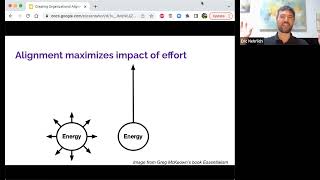
Those are, those are key ones, like working hard. Working hard is not enough. And people don't know what you're doing unless you tell them that. Those are like, if they have to read your mind, you're doing it wrong is the way I often put it. I think another one is you can't do it all. And there's a book called essentialism by Greg McKeown who's like, do one thing well and you're going to be so much more effective than someone trying to do 10 things a little bit. And I've kind of said that this is like the equation to success. It's clarity and focus. Clarity of like, this is what's most important to me. And I'm going to really put my time into it. And focus means saying no to the other stuff so that I can put my time into the thing that really matters. I had this explained to me by one of my mentors at Google, who was remarkably impactful at a time when I was burning out because I was working 8am to midnight every day. And I asked him, and the thing that was impressive to me is he was impactful without working all night. Every night he would leave at 6pm I think he was in a band. He was having a life. I'm like, how do you have impact and have a life? Like, I don't understand because I was making the mistake we're talking about activity is impact. And I asked him, how do you do it? He said, well, Eric, I come into work and I work on the most important thing first. And if I don't get to the rest of it, that's okay. It's not as important. And it sounds so simple and it's so hard to do because what I was doing at the time was I would come in at 8am and spend two hours on email responding to everything in my inbox. Then I'd spend six or seven hours in meetings, going to anything anybody put on my calendar. I come back to my desk at 5pm, there's more emails. I deal with them then 6pm and I haven't done the one thing, the one thing I had to do that day, and that's why I'm there working till midnight every night. What did my mentor do? He just did the one thing. He didn't respond to emails. He didn't go to meetings unless he called them. And, yeah, he pissed off a lot of people. Like, people were like, why won't you. Why aren't you responding to me? Why aren't you listening to me? He's like, because I got this really important thing to do, and you're not as important. Sorry. He was willing to take that hit of annoying people, of telling people no in response to doing the most important thing. And that's. I think, the really hard part here is that a lot of us have this unconscious commitment to pleasing others, making sure other people feel okay, not hurting their feelings. And to us, unconsciously, that's actually more important than doing the work, doing the impactful thing. It's like, yeah, we can do that, but you're not going to get the results when you can cautiously say, like, no, I'm willing to disappoint these people to have this impact. That's when you can really start to unleash your career and have greater impact than you ever imagined.
This reminds me of a conversation I had with Jason Fried of Basecamp, and his analogy to that was, when you say yes, you automatically say no to a lot of other things. And when you say no, you just say no to that one thing. That's it. And it's okay to piss people off sometimes. People are sometimes hesitant because they're like, well, yeah, like you said, I'm gonna answer emails. And that's precisely an example of activity. It's like, okay, you answered, like, 300 emails in the last day. So what?
Yeah, the one that's become on the rise in the last few years is Slack. I spent all day in Slack. Yeah. What did you produce? I answered all these Slack questions like, yeah, but what did you produce?
What problem is that?
Right. Yeah, but I think the hard part about it is, like, it's really getting this idea of prioritization. Steve Jobs has a great quote about focus, which is something like, people think focus means saying yes to the most important thing, but that's not what it means at all. It means saying no to the hundred other good ideas that there are, and that's what makes it hard. It's like, these are not bad ideas. It's not, like, automatically stupid. It's like, no, these are good ideas. They're just not the most important thing for me right now. And that's what makes it so hard. It's like, early in your career, you can do it all. You can take all the expectations and satisfy them. So you do that. And I did this too. Except there's a certain point where as you gain in scope, as you grow your career, as you take more on, you can't do it all. So you gotta let go of some stuff that you used to do. And that doesn't mean it's not valuable. It doesn't mean that you're hoity toity. It doesn't mean that you're, like, above it all, but it just means, like, I have more valuable things to do with my time now. And, you know, one of my. I heard a question at one point that was like, are you doing $80 an hour work when you could be doing $8,000 an hour work? It's like, $80 work is valuable and somebody needs to do it. It's not worthless. But if the opportunity cost is, you're saying no to $8,000 an hour work because you're doing $80 an hour work, then you're just making the wrong calculation, right?
And especially sometimes you hear, like, comical situations where, like, time is spent in, like, meetings. And you call, like, yeah, we have a meeting with, like, six different executives to decide on, like, the name for this product. It's like, all right, you spend an hour and a half with, like, six or seven executives debating a name that could have been decided in email in, like, 15 minutes. Is this the best use of time? Like, really?
And I mean, as a former finance guy, it just drives you nuts because, like, those people's time is worth, like, a thousand dollars an hour. Like, you just spent. If I told you you just spent $10,000 on that meeting, would you have done the same thing? Like, well, I didn't think about that one. Like, how come, like, time is money? Like, it's irreplaceable, you don't get it back? Like, you gotta be thinking you don't have to. But I really want people to start thinking about what is the opportunity cost to be doing this? What else could I be doing with this time that could be more valuable? Because that's the calculation. It's not, is this valuable? It's, what else could I be doing? And is there something else that be having more value?
Right? And we're talking about all these points, and they sound so, like, obvious, like, well, yeah, but it's so hard to put them in action sometimes. Like, you see people just Saying like, yeah, I read these books that makes sense and they do nothing about it.
Well, it's hard to catch because a lot of this happens unconsciously and that's what makes it really insidious. It's like, oh, well, of course I just respond to, I'll just respond to a few emails and then it's like two hours later. I'll just go to a couple meetings and it's three hours later. And it's like they don't realize the impact it has unless somebody wakes them up to it. And sometimes there's some people that are self aware enough to go like, wait, what did I just do with my day? But again, this is where like a coach can really help and like say, okay, what did you do? Like, I had a CTO of a startup who was telling me that he had this strategic work he needed to do. He'd been putting it off for months, but it was really important to the company. I'm like, what are you, like what are you doing? If this is really important, the company, why are you putting it off? He's like, well, I gotta do the slack. I gotta do this, I gotta do. I'm like, okay, here's what we're doing. This Friday, you're gonna be sick. He's like, what? I'm like, you're taking a sick day on Friday. He's like, I can't do that. Well, if you were sick, your team would cover for you, right? He's like, yeah, okay, you're sick on Friday and you're going to do this on Friday. Because he was like, I just need five hours of focus time. Like, great, I just found your five hours of focus time. He was like, he just really didn't like that. He's like, I can't. And I'm like, why not? And in trying to explain why not, he was like, oh, actually I could let me just block off five hours on Friday and do this. And then he did it and got it done. I was like, was that so hard? But it is. Because in that mindset again, the most important thing has unconsciously, I gotta be responsive. I gotta make sure my team gets what it needs. I gotta respond to all flex in five minutes, all emails in 30 minutes. And those were like the top order bits in his mind until I like shook things up and said, no, you have said this is important, put this above that.
And oftentimes you do need that external observer to remind you of these things. Because oftentimes folks are so in the weeds of the Process. And everything needs. Everything is important, right? Like, everything is P0. I have this list of 50 items for today. All of them are a priority. If all of them are a priority, nothing is a priority. Like, period. Like, that means you're scattered around, but it needs that external perspective, like you're providing as a coach that basically comes in and says, look, what you're doing is not actually important. Like, you have all these things on your to do list that are not important versus this one thing that keeps being shoved down and down and down.
Yeah. And I would even say some of that stuff is important, but it's not the most important. And that's why that's really important, this prioritization thing. And I want to give people a break here because, like, we have very few people who are good at this. We have very few leaders who actually do this well and can prioritize like that. I was very fortunate to be the chief of staff for one of them, and he was fantastic at this. It was like one of the first leaders I worked with that actually could prioritize on the fly. And so when working with him, it was a great experience, actually, because I would be. We'd have, like, plan the week. I'm like, okay, here's the three things I'm going to get done this week. And then something urgent would come in, like, some request from somebody else, and it needed to happen. I'm like, okay, this is what I was doing. Here's the new thing. He's like, okay, drop C. I can wait for that till next week, and then put this in instead. I'm like, great. And he would just. Instead of saying, as most of my other managers did, like, no, just get it all done. He would actually say, like, no, you can't get it all done. Here's what I'm willing to wait for, because this is now more important. And that was what made him fantastic as a leader and the reason I was his chief of staff for six years, because I was like, oh, this guy can actually make decisions. He could prioritize. He understands this idea of focus. And that's kind of where I learned it was just following around for six
years and that the bandwidth is limited and 24 hours in a day, not more than that.
You know what? Yes. And you also have to sleep, and you're not going to be very effective if you don't sleep. So really, it's like 14 hours a day.
This podcast reminds me that I need to cancel, like, 90% of our meetings that I have on the calendar, and then probably not listen to as much hustle culture stuff.
Yeah, it's so interesting. Like, I feel like all these productivity people that come out the other side go, like, none of this is actually the wrong approach at all. Like, what's his name? Oliver Berkman was a productivity columnist, and he wrote the book 4,000 Weeks, where it's like, we got 4,000 weeks on this planet. Like, what are we going to do with them? That's the question. It's not how do I be more efficient and squeeze out 5% more productivity. It's like, wait, how? What am I actually doing in my life? What's important? What is the thing I want to actually live for? And that's, I feel like a really essential question that it's easy to miss. And again, I didn't really think about it for most of my life and really wasn't until I burned out that I was like, wait, what am I doing? So it's easy to miss because it's like, oh, if I could just be a little more productive, then I will get what I want. But that's that myth of activity. Like, being more productive is not the point.
No. This is a wonderful note to put a pin in our conversation because I feel like there needs to be a part to you this. But I want to ask you, like, if you. If we think about kind of unconventional advice for our listeners about coaching about their careers, what would it be from your perspective?
I guess what I would say is it doesn't have to be this way. And what I mean by that is a lot of people, even in these very lucrative and prestigious technical roles, feel. Even they feel stuck. Even though they're getting paid a lot of money and they're stuck, but they're, like, buried in meetings, and they're, you know, emails, slacks, meetings, they're just, like, getting bombarded in all directions, and they believe they're just stuck. There's nothing I can do about this is just the way it is. And this applies all the way up the chain. Like, I was coaching a VP of marketing recently, very talented person who's like, I'm so stuck. I don't know what to do. I'm like, you have so many options. Like, how could you be stuck? But in her head, she was stuck. And what I want people to think about in that situation is like, okay, I feel stuck, but what's one thing I could do differently? What's one change I could make? And let me see how that changes the world? And I call these experiments. It's like, again, let me try one experiment to see is this rule as hard as I think it is? Is this rule as stiff as I think it is? Like, what will happen if my manager's disappointed this one time? Oh, I could live with that. Huh? What else is I. What else have I been taking for granted and thinking is true, that's not. And if you really believe this idea of it doesn't have to be this way and you're willing to try one experiment, you might find your whole world can change.
What a wonderful piece of advice to wrap our show on, Eric. Where can folks learn more about what you're doing? Any websites, resources you'd recommend they check out.
My coaching website is toomanytrees.com and on there there's actually a link to my book. There's a link to resources I recommend, including books, articles, things like that. And if you want to, you can follow me on LinkedIn, but nobody can spell my name. So go to toomanytrees. Com because that's easier to spell.
And we'll make sure to include the links in the show notes so you can just click and you're going to be right where you need to be. Eric, thank you so much for joining us today.
Thanks, Dan. I really enjoyed the conversation. Thanks for having me on the show.
More from Eric
Eric Nehrlich: You Have a Choice: Creating the Relationships & Career You Want, and Why We Get Stuck