Focusing on what is most important
Eric Nehrlich argues that focusing on what you control—your daily actions and decisions—beats chasing external outcomes. A Navy SEAL story shows how a leader's focus transformed a losing team. In job searches, measure progress by cover letters and interviews sent, not offers received.
Chapters
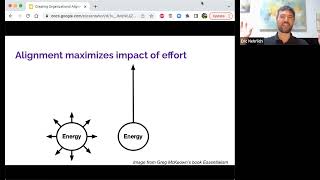
There's kind of two ways to think about how to navigate your career. One is thinking about the world acting on you, so focusing on what's happening to you. You've got customers yelling at you. You've got your manager asking you for things to do. You've got different teams asking things of you. You've got family obligations, you've got rent to pay. You've got all these things that are acting on you and kind of driving how you get through your day. It's exhausting. You feel like you're being battered every day by all the different things. I want to tell you a story. I read this story in a book called Extreme Ownership by Jocko Willink and Leif Babin. These guys are Navy seals and now they do leadership trainings. But they told the story of one of their SEAL leadership classes that I thought was really inspiring. And the story is, as part of the Navy SEAL training, they do these trainings with these boats. These boats are really heavy. They do it in six man teams with a leader for each team. And they have to go out and do these mini missions. And for each mission, the crews go out there and they're racing against each other. And the crew that wins gets time off and gets a chance to relax. The crew that loses basically has to do push ups and a lot more work. And plus they get yelled at by the instructors. So everybody's trying to win. And in one class, they had one boat that was winning every single tide. They had one boat that was losing every single time. And no matter what the instructors tried, the boat that was losing didn't improve. They yelled at them, they made them do extra work. And all they heard from the boat that was losing was complaining about each other. They were fighting with each other. They were blaming everything and it wasn't getting better. And they're like, man, we got to turn this around. How can we turn this around? So they said, let's try something. Let's switch the leaders of the two boats and see what happens. So they did it. Said, you are working there. You here. Stop for a moment and think about what happened to that boat that was in last place. It started coming in first. The new leader changed everything. And interestingly, the other boat, the boat that had been coming in first with the new leader, still was doing very well. It was pretty much in second place every time. So the new leader didn't drag down the old boat because they'd figured out how to get things done and they had taken ownership of getting the job done. But the reason I like this story is because it kind of illustrates this idea of what happens if you focus on what you can do. So the leader of the boat that was finishing last, he was blaming everybody but himself. He was saying, this team sucks. I was just given a bad team. That's why it's not winning. Our equipment's not doing well. He was finding all the reasons that were working against him and saying, this is why I'm not succeeding. The other leader, the one that was on the fast boat, the instructor said, you're going to be on this boat. And he's like, he could have said, this is unfair. I'm getting stuck with a slow boat. I've already trained this other boat. Instead of feeling sorry for himself or saying all the reasons why this wasn't a good idea, he just said, ok, let's see what I can do. He said, okay, what can I do with this team? How can I make this team better? What are they doing well and how can I reinforce that? How can I help them get faster off the beach, to the next milestone, to the next milestone? And by focusing very closely on what he could do to inspire them and motivate them differently. That boat started doing a lot better because he focused on what he could do, not on what was not in his control. So the concept I want to kind of share with you here is focusing on what's in your control, which sounds like very little. It's your actions, your thoughts, how you frame what you're doing and what you consider to be success. This doesn't seem like much. And I'll go even further. It's not even all this. It's what you're doing right now. Because the past has already happened. You can't change it. You can learn from it, but unless it affects what you do in the future, it's not going to help you. And the future hasn't happened yet. All you can do is focus on what you're doing right now. And that is the most impactful thing you can focus on. Notice what's not on the list of what's in your control. Everything else. You can't control what other people are doing or feeling or thinking. You even can't control your results because that depends on other people most of the time. So let's take an example of applying for a job. I had a client who was looking for a new job, and he's been getting super frustrated because he's doing everything right. He's, like, making connections. He's doing informational Interviews, he's sending out great cover letters and he even got interviewed for a job at Google. And the team said, we love you, we're great. You're somebody we'd love to work with, but we went with somebody internal. He was pretty frustrated by that because he was like, I did everything right and I didn't get the job. But what I wanted him to then kind of the way I wanted to flip his attitude is like, you are doing everything right. You are qualified, and if you keep focusing on that and reinforcing that, you're going to keep moving forward and you will get a job. So when you're looking for a job, you could say, I'm going to measure myself only by getting a job offer or interviews or things like that. Or you can focus yourself on what you control. I'm going to send out five cover letters this week. I'm going to do research on 10 companies. I'm going to set up coffees with three different people who are in industries I'm interested in. If you focus on that, you're going to keep making progress each week and eventually it's going to pay off. And you're focused on things that you control so you can stay motivated, stay motivated in moving towards your goals. So just summing up this section, I want you to consider focusing on what's in your control, not what's not in your control. And again, I'll pause here to see if that made sense to people. Okay, I'm seeing a lot of nods. Great. So with that, we've talked about finding what energizes you. We've talked about focusing what's in your control. So what do we do with that? Now, I know each of you is already incredibly busy. I've talked about all the things that might be going on in your life. You may have too many people asking for things that work. You've got a bunch of angry customers. You've got a pile up of issues unresolved. I guess that's if it's been more than 24 hours, that's a problem. Apparently you've got your manager asking for things. You've got your family, you've got friends. So how do you make progress on finding energizing work when you're so busy already? It's hard. I don't have an easy answer here, but I'll point out that oops, focus is incredibly important. So this is an illustration from a book called essentialism by Greg McCown. And it shows what happens if you take your energy and split it eight different ways versus putting it into one direction. And you can use energy, you can use time, you can use capacity, whatever the words you want to use for it. There's only so many hours in the day, there's only so much each one of us can do. And if we want to make a lot of progress, we're going to have to pick and choose. We can't do everything. And this is where it gets hard. You have to choose. Steve Jobs has this great quote. People think focus means saying yes to the thing you've got to focus on, but that's not what it means at all. It means saying no to the hundred other good ideas that there are. That's what I'm going to ask you to think about. What is the thing that's so important to you right now that you're going to say no to other things? And what I'll tell you is that if you don't choose what's most important, if you don't consciously say no to other things, you're going to let other people control your life. I had this illustrated to me pretty erratically in my early days at Google. I was working crazy hours, working like 8am to midnight every day and just like dying under the load. And I talked to my director. I'm like, he was a guy that somehow managed to have work, life, balance. He was going home at 5:30 every day and was still well respected. Like everybody up to the CEO and CFO loved him because he always had a huge impact on his teams and on everybody around him. I'm like, how do you do this? Like I'm working my butt off. I'm not having half the impact you are. What's your secret? He said to me, eric, it's pretty simple. I come in and I work on the most important thing and if I don't get to the next thing, it's okay. Wasn't as important. Sounds simple, but it's really hard to do at the time. I would come in and I'd do two or three hours of emails and then I'd spend four or five hours in meetings and then it'd be 5pm and I hadn't started on the most important thing that had to get done that day. And that's why I was staying till midnight because I started on at 6pm what he did is he just ignored the emails. He said no to all the meetings that weren't on the short list of what he had to focus on. But because he got the important thing done the other stuff wasn't as important, and people respected him for getting the important things done. But it's hard. There are consequences. You have to say no to people. You have to disappoint people. You have to say, you know, that's not on the top of my list right now. It'll have to be later. It's not a hard no. It's just later. It's not now. And that's, I think, where it gets really hard is you have to say, this is so important to me. I'm willing to sacrifice other things for it. But until you can do that, you're not going to make the kind of progress of focusing your energy. So spend your time on what's important to you. If you say it's important to you and you're not spending time on it, you got to think about that. What's more important? Is it saying yes to all of your friends? Is it going out? Is it spending time going to movies? Or is it making progress towards the career that you want? Most important thing to you? And I'm not saying there's not a right answer here. It's fine to say, you know what? That's not important to me right now. I want to spend time here. But what I implore you to do is do it consciously. Make the choice. Don't let it be made for you.
More from Eric
Eric Nehrlich: You Have a Choice: Creating the Relationships & Career You Want, and Why We Get Stuck