Leading @ the LEGO Group - Behind the 2019 Results
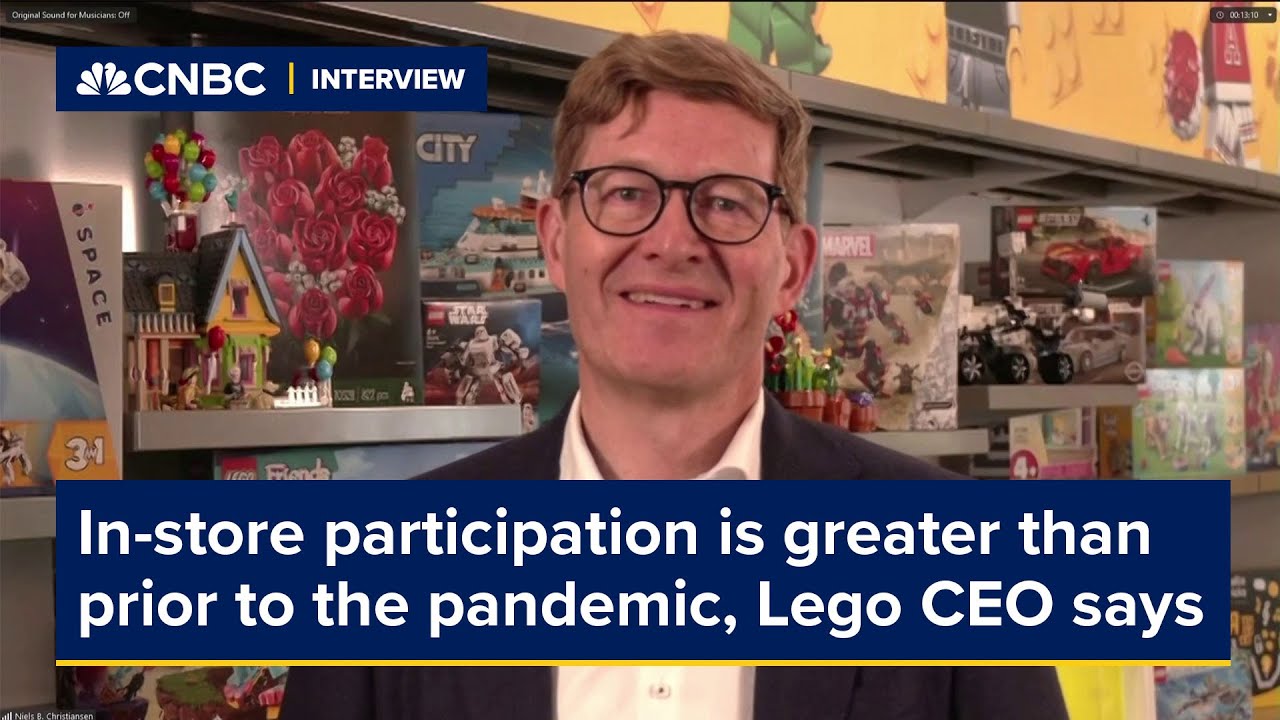
In this podcast episode, LEGO Group CEO Niels B. Christiansen discusses his leadership journey and philosophy during his first two years at the helm. He highlights early empowerment initiatives that shifted decision‑making closer to customers, explains how his childhood experience of trusted autonomy shaped his leadership style, and articulates his purpose: “discover winning algorithms and ignite the courage to pursue.” Christiansen reflects on the rapidly changing toy market, the need to balance agile, experimental approaches with the stability of legacy systems, and offers practical advice for colleagues navigating this paradox. He reviews the 2019 results, emphasizing the record‑high employee pulse score, consistent market growth, and strategic investments in sustainability, while noting key learnings about owning destiny, staying the course, and executing with clarity. The conversation also covers his role in leading upwards to the board and family owners, his approach to leading the Executive Leadership Team (ELT) through authenticity, trust, and purpose‑to‑impact exercises, and the importance of coaching. Finally, Christiansen shares personal habits for work‑life integration—limited email, short meetings, Pilates, and protecting weekends—and outlines his current development focus on digital transformation that preserves LEGO’s core values. The interview provides concrete examples of leadership decisions, cultural practices, and strategic thinking that underpin LEGO’s performance and future direction.
Chapters
TranscriptAuto-generated · 35 min
Welcome to Leading at the LEGO Group podcast. It's a great chance for everyone who is interested in leadership to connect, reflect, and learn about how it is to lead at the LEGO Group. Today, I'm talking to our CEO, Niels Bjørn Christiansen, about leading the organization through a very dynamic marketplace across the globe today and in the toy industry. Welcome, Niels.
Thank you very much, Loren.
I'm thrilled to have you on board. It's a critical time. We've just released the annual results. I'm sure you have a lot of perspectives to share. But before we dive into that, let's touch a little bit upon your LEGO journey so far. Niels, you've been our CEO for just over 2 years now. What would you call out as one or maybe a few of your key LEGO leadership moments so far?
I think there's already been a few, even though it's only a bit more than 2 years. And I guess the first one that comes to my mind would be actually pretty early on in my tenure around the fact when we started to try to empower or move some of the decisions closer to our customers or the consumers, allowing business units and a lot of people around to make more decisions close to where they work. That was, for me, interesting to see how important and how quickly that actually helped shift and how visible it was to everybody that we were serious on actually making more empowerment and also how the organization was ready and leaders were ready to take on that and actually perform very good decisions off that, much better probably than what we could have done more centrally. So I think that shift was, in hindsight, probably easy. than I had thought. But I think we were lucky and good in hitting that in a way that the organization really took. And I think that has been really important in our journey and as important as many big investment decisions or so. So in terms of leadership, I look at that as a really interesting, good thing.
And how did that influence maybe how you decided to lead or empower after that based on how you saw the organization respond or embrace
I think it's always like you always feel like doing more of what is a success. So I think in terms of leadership, that's one of the best things to do. That is actually multiply things that work well or successes. So I think it made it easy to go further down that route and looking at how we allocated money, how we fund projects and do. And I think it actually energized me to see also the— Mm-hmm. how that energized the organization to do that. So it was good earlier on. It was something for me to carry on also and remember. Yeah.
No, and I think it was a great example because I remember at the time also when you joined, a lot of people, me included, frankly, were so interested. What's your leadership philosophy? What's your leadership style? And you didn't— or you chose not to be drawn into academic discussion. And you did mention that empowerment was important to you, but it was more important to kind of walk the talk than to talk and to demonstrate through example. And I think empowerment now is something that we can all relate to in the organization on the back of that decision to create more flexibility for the business and then all the subsequent choices after that.
It's actually interesting when I think back. Remember, some of the dialogues we had very early was around, let's not spend so much time in meetings. Let's have fewer meetings. Let's not necessarily have so many people in all meetings. And I actually remember myself feeling that it was extremely important, but also thinking that it was a little bit of an odd thing to discuss also in a time where we had so many issues and so many things that we chose to do that. I actually do think it actually helped us focus. And it was, again, as you say, I felt a little bit that if the ELT could actually do that, a lot of LTs looked at that and said, OK, then if they can do it, we can probably also do it. Yeah. So let's give it a try. And I actually think that That has helped a lot and I just feel that we have a different and more— maybe a more constructive way of talking about being busy today and having a lot of things to do because everybody has a lot on their plates. But it's kind of being dealt with, I think, in a more positive fashion.
Yeah. No, absolutely. And we'll talk to some of the outcomes associated with that. So we'll come back to that. So Niels, if you look back on your life, and this could be your professional life, your personal life, when you were younger, when you were in university, you choose, but from whom in your life did you learn one of the most— or your most valuable leadership lessons from?
I think I'm carrying something probably all the way from childhood in a sense. I have always been I've always been trusted also by my parents to do stuff and control things. I was never told you have to be home by 10 o'clock. It didn't mean that I came home in the middle of the night, but I could choose and it was really— I remember feeling really privileged in the sense that I didn't have to leave on the minute if we were in the middle of a football match or something like that. Mm-hmm. I dealt with that and I think this feeling of being trusted to do something and being trusted to make a decent decision on that and go Gosh, I made mistakes as well, but I was never punished in the way that now you cannot make that decision anymore. But it actually worked on me in the way that I think I didn't do the same mistake twice. Mm-hmm. So I think this— I've tried to raise my own children a bit the same way, but I also think it finds its way into how we lead as leaders and how we would like as individuals to actually— I would also like to have some space and some trust and belief from my leader that I can make some decisions and I would come and ask if I need to. And I think that's— I'm trying to create that same room for people around me. So I think that has formed my leadership in a way. And then there's one particular case where I actually once changed job basically to start to work for a very particular guy that I knew could teach me something on leadership. Hmm. Even I think today, when I think about my own purpose, it's really— I think it meant a lot, this ability to actually work with people and help energize people around a certain direction. That was something I was taught and I just felt there was a person there doing that really, really, really well.
Interesting. And I could attest, obviously, having the opportunity and privilege to work for you, that You have created that space for us in ELT, and I think it has had a trickle-down effect. And, you know, I really admire your parents. I probably had what is more helicopter parents, as they're known today, who try and control more aspects of their children's life. But, you know, by giving space is a great demonstration of trust. And Niels, you just referred to your purpose. And we've done some work in ELT on Purpose to Impact. We have about 500 colleagues who have done a similar program as well. And that's been embedded in terms of parts of the organization. Can you share a little bit about your purpose, since you mentioned it, and what it means to you and how it impacts the way you lead?
Right. No, I can. And it's actually interesting because in a way, I feel now that I always knew my purpose, but I never found a way of actually being able to express it. So my purpose as I speak it out is to discover winning algorithms and ignite the courage to pursue. So basically trying to figure out— I mean, said in plain language, trying to figure out what it actually— what should the formula be for it actually working or what is the model or whatever can be replicated that actually would be— you can also translate it maybe into what is the direction we should be following. And the second part is really how do we mobilize and energize people in the broader organization to actually do that? Mm-hmm. And if I look back at my moments in my career when I think I have done best, then it's been kind of helping extract out of a complicated, complex situation what would be the right thing to do here and then trying to win the hearts and minds of everybody to say, that's probably a good way to go and let's get behind that. And so that's crystallized. in this purpose. And I really think it fits well. And sometimes, I'm thinking also in terms of— often, if we think about startups, I think a startup by definition has a very strong purpose because you're quite explicit in— it's very small. It's very easy to say what it is we would like to do and get behind. Sometimes, you can even say that a private equity-owned company would have a little bit the purpose, that purpose being very financially driven, but it's very clear. Yeah. It's not always I like them too much, but it's very clear from a what are we trying to achieve point of view. I think when it gets difficult is when it's kind of larger companies that's been around for a long time, that's been through different phases. To extract this direction and get clarity around it is not that simple, actually. And I think that's where I find a lot of challenge.
If we look at the toy market, it's clearly going through rapid change. you've joined, and most notably in pretty much all over the world, it's either flat or contracting market. And this is your first time leading a consumer products business. Can you speak to what it means to you to lead through this type of situation where the market is not providing much tailwind, and also what you've learned about leading in our industry, maybe versus some of your previous experiences?
Yes. I think there's many things. It's not like I think one industry is totally different in a company point of view, but there are definitely some things that are new to me that I had to learn. But I think probably the biggest challenge in what you also say is there are some things that now has to change or evolve very quickly or change very quickly. So the entire channel shift is happening much quicker than we had anticipated, and we basically redefine redefining how we look at channels and what channels are important with the entire race of digital and e-com. And it demands on us to be agile. We talk a lot about being agile and working in agile fashions on the one side. Then, of course, we have an operating model in between that on some— I mean, basically needs to be rather an anchor point, so it shouldn't change every day. It's our money-making logic. It's what ties kind of the markets and PMD and operations together. But it needs to evolve. for us to stay relevant and innovative and cool and fresh and whatever we say we want to be around that. So that is at a different pace. And then, of course, there is kind of the value system and the culture, which we are in a very privileged situation and have very strong values and very, in my mind, good values. I mean, they should migrate very, very slowly, if at all. Mm-hmm. So we have this— something is very static and needs to be very, very— Very much the same. Some things need to evolve, but it's at the heart of what we do, so it's quite crucial we do that in a controlled fashion. And something needs to be very quick, agile, change all the time, with almost like it's a trial-and-error type approach that we can allow for the failure over here because we want to get bigger. And we need to be living all 3 of those. I think that's an interesting thing in our industry right now.
And do you have some advice maybe for What advice do you have for our colleagues around the world who are dealing with this paradox, are having to operate both in terms of having to rapidly adapt and change the way in which we're going to market, and at the same time, understand that we need to preserve and hold on to certain legacy ways of doing things that are still serving our purpose?
Well, I think it's an interesting thing. I don't think there is like a cookbook for that. So I think it's something for all of us to be aware of and be also allowed to ask the question, basically, listen, if it's not obvious to me, are we rather in the operating model thing involvement or are we here on agile? Because I guess overall, all of us as leaders will be pushing also, of course, a bit for the agile thing because that's the new thing for us. It doesn't mean that agile needs to be everywhere. I think that's also important. So not everybody needs to do everything in an agile way. Right. Then I think it would be confusion. So we need to figure out where is it, maybe close to customers, maybe where digital or new channels are very important. That's where we need to allow ourselves the experimentation and the agile approach to it. And then, of course, the closer we get to values or the closer we get to our delivery system in supply chain, maybe it's not trial and error. Maybe it's a more controlled, forward-looking thing. Yeah. I think everybody would try to think about it like that, but really also open up that dialogue if in doubt.
Yeah. Absolutely. It reminds me, a teacher once said to me that at least his definition of intelligence in leadership or leadership intelligence was the ability to navigate the paradox, to hold these opposing forces. And as you say, first be aware of it, then hold it, and then be able to surface it to The rest of the team into dialogue, as you were suggesting. Let's go to 2019. And, you know, obviously everyone's now heard about the results, which have been fantastic across many, many dimensions of the business. But for you, what would be some of the highlights from 2019 and maybe some of the learnings as well?
Yeah, I think that's— I mean, the ultimate highlight, I think, is the people pulse. Hmm. The fact that we are sitting at 79, that we are at the same level, the record high level we had back in '14, '15 under very different circumstances. The fact that we are there now under these market conditions, achieving what we are achieving, that makes me very proud as a member of the organization, and I think everybody that has worked really hard to make that happen. I think that's important.
And what do you attribute that to?
The fact that we are staying our course. We are all the time looking— I mean, I think we've taken our destiny somehow in our own hands in a way, if I can put it like that, where we've not just accepted that the market is difficult or we were not as successful with LEGO Movie 2 as we thought or we had a product or two we couldn't launch. We kind of turned it around. And we're instead, I think, asking ourselves the question, OK, we see some headwind. What does it take to get there? What is it we need to do in gap closing or mitigation or new ideas? And having the positive attitude of saying, OK, if we had a bit more funding, what could we do with it? How could we go about? So this destiny thing, I think, is important. I do think that our very brave and innovative approach to the Leadership Playground has made a great difference. I'm actually very, very proud on behalf of the organization the way that has been pulled off. And I think if we in ELT can take any credit, then it's that we allowed a process that we couldn't really know where it would end of grassroots actually develop what it takes. And I think in return for that freedom, I think we've gotten something that is just amazing. That really stands out and that has been so embraced by everybody. I think that helps.
Fantastic. And something we need to continue to invest and focus on. So maybe some other highlights?
Yeah. I mean, I think there are actually many. I think we can be very proud of the results as such in commercial terms. And it goes everywhere. So I noticed the fact that every market group is actually growing. By and large, across the board, we've been taking markets here. The fact that we kind of laid out the direction, we said, this is what we want to do, and we all got behind that and lifted the execution and landed, I think that feels really good. And I'm very happy with that. And I hope, of course, that it also means that there's a lot of logic for everybody in what we're trying to do. Mm-hmm. And more and more, we can actually see, as we go on our journey, it works, and we invest behind it. And I think, also, as a leadership team, the fact that we are able to invest the amount of funds that we are able to invest, not only in short-term things, but things that actually strengthen ourselves in the longer run, now come 2020, on sustainability, I think that's really noticeable. And we earn the right, I think, to do what is right.
Absolutely. And should give us a lot of confidence for what we need to deliver in 2020. And maybe, Niels, could you share a few of the key learnings for you, either personally or on behalf of the organization, from 2019?
Yeah. I think this— for me, I think we've all gained a lot of confidence and belief in the fact that we actually— we have an influence on our own destiny here on hitting our results or not. And we are not just taking it from the outside. That's a really impressive one that I think— Well,
the market's certainly not helping.
It was not the market that did it, no. So it was really what we did. I think that's a very good learning, I think, taking away. I think also the— I mean, staying the course in the sense that we are basically— we are saying what we want to do and we are somehow, as an organization, doing what we say we would do. That leads to less surprises, less stop-and-go or zigzagging in the organization. It allows some of the initiatives to actually being funded, being recruited to, being carried through all the way to results where many organizations and maybe sometimes ourselves included start some things and too many activities and they don't really get to impact. I think we're starting to see that it's getting to impact. We keep at it all the way through. And we're not only starting, we're also executing and landing. I think that's good learning for us as an organization. And I'm really excited to see the energy it creates and the pride it also creates, because there's a lot of individuals and leaders around the organization that really have pulled off amazing things. And I think that's a super learning. It's a super starting point for 2020.
And it makes it a challenge. a great place to be. So, Niels, let me transition to a couple of questions that I'm sure a lot of our colleagues would be curious about, which is really some dimensions of leadership that are truly unique to the CEO position. So one important role that you play as CEO is to act as the main interface to the board of directors and the owners. Can you talk about what leading upwards means for you, which I'm sure many of our colleagues couldn't imagine? Oh, our CEO also needs to lead upwards. So maybe share a little bit of insight for all of our colleagues listening.
Yeah. I think that is a very good question and maybe something we don't necessarily think too much about. I actually spent a pretty large part of my time leading upwards or at least interfacing with family, with the chairman, with chairmanship, with board of directors, even with different functions in the family office of different ways. And I mean, there are several ways around that. I think sometimes by making sure that they are in good understanding of what we're trying to do, that there's a full buy-in to the strategy, that also actually creates for us that space that we can operate in. So a bit back to when we talked about I was happy with my parents giving me a certain room to maneuver or to be myself. Yeah. I think, as an organization, to be successful, we also need that. So we need a certain trust that we are investing behind these initiatives because we intend to actually do them and they can trust that we are following up for results or that We will come back if things look very different, and not being micromanaged on that. And I actually spend a lot of time to also make sure everybody there understands the 2022 plan in some detail, commits to 2020 so we don't have stop-and-goes around that, and also serve them in a way so they have the trust that we are actually then also doing that. And they don't need to control or second-guess or— or be in doubt about their decision all the time. So that's a big part of my role to do that. And I must say, given that we are family-owned and given that we have a family like ours with so much focus on culture and values and the longer-term building the right brand and the strongest brand in the world and wanting to do good for kids all over the world, I think that makes it easier— Mm-hmm. —because we can have the right type of discussions, but they still need to happen.
Yeah, no, absolutely. And that creates, of course, the runway for us to then pursue our plans with confidence. Great. So let's take a peek into another dimension of your role that is unique, and I'm sure a lot of our colleagues are interested in. So as CEO, you're not only a leader of the wider LEGO Group, But you're the team leader of the executive leadership team. Can you share some of your leadership approaches to leading senior executives? And you have EVPs reporting to you, who many would see also as very senior and not needing maybe to be led. Right. And maybe how you've led ELT over the past 2 years and what are you doing to ensure that ELT can increasingly improve and become more effective and a higher-performing team.
Right. It's true. I think, I mean, in some circumstances, an ELT is no different from any LT or leadership team around the— I think it's a team of highly motivated individuals, each here with great responsibility. There's different elements, I think, of that. I mean, it's pretty clear that every CEO or every leader has a style. Mm-hmm. I think many different styles can be successful. I think it actually is important being— have a self-awareness of one's own style and actually dare to be authentic about that because I think that's a dynamic in a team that's important. And I realized coming in that my style was quite different from what had been before. And so I think that's one way to work around and actually make everybody comfortable, that this is the style and this is how it actually works and this doesn't mean that or this means exactly that or whatever. So there's a language in a team that needs to be there. Then, of course, I think it's about— It's really about making sure that the team has a trust together, but also really are aligned on where we would like to go. And that's something that's really important for me, that if we want to get us into a situation where there is a certain room for everybody to maneuver and make decisions— Yeah. Then we better make sure that on an overall level, we are strategically aligned of where we're trying to go. So we don't have a team with a lot of people with a lot of space to make decisions and they make them in all kinds of directions. So typically, I would be focusing a lot on the direction, the clarity of the direction, what we call strategies of what we are trying to achieve and try to get the team to have a good in-depth agreement on that because that allows everybody to be good at executing or free to execute. for themselves. We have, as a team, done different things actually over time. We did do this purpose-to-impact exercise that allowed us to— I think what worked well for us to share some crucial moments from the past where we created our personality or our leadership, some of the leadership moments that have created our belief in how to do things. I think that was— That was a good, for us, also trust-building exercise to get closer to each other. Now, we've created our ELT ways of working. I'm not sure they're very different from good practice from many teams, but it allows us, again, to have a dialogue and conversation around what works for us and make sure that every individual fits into that. Yeah. But we can continue down that road. I think we still have things to build around the team to be truly seamlessly world-class working together. But I feel we are on the right journey also there, and I think it is a journey. Yeah. I think it's very hard to kind of go in and come together as a team and say, we want to be world-class. the first day because it's also about getting to know each other and playing each other's strengths over time and have the trust in doing that. So it is a journey. And right now, we've actually taken a coach that helps us and holds up the mirror in front of us and pinpoints when there would be places or cases where we can do better. So of course, it takes that openness from all team members. And for me, that's one of the areas areas where we are quite privileged in the LEGO Group that we have many people that are open, creative, and willing to develop as individuals. And that's what it takes, I think.
Absolutely. And thanks for sharing so transparently. What I try and communicate whenever I get the opportunity is exactly that. ELT is a team like any other, and we need to invest in ourselves and our ways of working to So hopefully that will encourage others to continue on their journey. There's always more work. There's always more emails. There's more instant messages that we all need to relate to. How do you ensure that you maintain a well-integrated approach to work and your personal life? And, you know, what do you do to stay energized and fit so you can navigate the intensity of not only the modern world but being a CEO or senior executive in the modern world?
It's a super question. And here, I wouldn't say that I do everything right. So let's not consider this necessarily that I have the answer for everything. But I think you are saying it's about you need to keep fit, in a sense, to cope with the— and I think that goes for— Yeah, for basically everybody around the organization now with the type of jobs and the workload we have. I like to do Pilates where I keep my core as fit as I can and train through that. I try not to spend too much time getting into very long email trains of things. So that's part of my style. Also, I think an element of my style that's different from Maybe the past and also that I know many colleagues have had to get used to. So I will often be quite short in my emails. I like better talking for 10 minutes on the phone than having to express that in a written fashion. I typically would not sit in a meeting making minutes of everything that happens on my own. I would try to be very present in the meeting and make sure that I really— relate to what's being said and the decision we are making and make sure we move forward as quickly as we can in the meeting. I'm relying a lot in that sense on those who make the minutes to make those in a good way. And I would rather work with them to improve those if I don't find them fit for purpose. So in that sense, that's an area where I know one can easily spend all evenings and all weekends doing inbox and mailbox. Yeah. I try to really keep that to a minimum. And some will think maybe I'm overdoing that, keeping it too much of a minimum, but that's my style. That's one of the elements for me to—
I think one dimension that I think we all appreciate is you rarely send email or communicate on weekends. Could you share a little bit about how you do that and control— I'm sure you have the impulse sometimes to be communicating. Because you're action-oriented, but I think there's probably something for us to learn from your role.
Yeah, I don't know. For me, it works. It's easier for me to work kind of longer days or take evenings where I work. I would really— I need a break during the weekend. So my weekends are— I try to keep them sacred or at least a certain period where I don't have to work because I need to get my mind out of that. I also need to be with my family and be there. I feel if I run in the office, out of the office, in the office, out of the office, then my head is there all the time and then it's not real time off. So that's also why I believe that— I also actually believe that I don't like either if I have a leader that I get shot these messages in the weekend because I kind of feel I have to answer it. Even if I choose not to answer it, It's still there in my mind and sometimes then it's okay. Then I will go answer it because then I get it out of my mind. But then I'm actually controlled by when it fits somebody else to do that. So that's why I try. Sometimes I do write some but then I put them in the outbox for Monday morning so that they can come there. Yeah. So that's what I do. I actually have a lot of time in my car where I work and that would typically be where I I get a lot of that thing done. So when I'm in the office, I'm very rarely doing email thing in the office. I'm always doing that outside. That's one of my ways to make sure I have an effective day in the office. I'm trying to do that outside. And my weekend is sacred as far as I can.
I think some great insights, both in terms of how to ensure you're present for whoever you're engaging with, whether that's your personal life and your family at home or in the office, and also what kind of signals you send. I know that those of us that work closely with you truly appreciate not getting those emails on the weekend and allowing us the space. So that's been really, really positively received and something I know that I could do much better at. So, Niels, final question. Which is a question I ask all my guests. You can't escape it. Leadership is about lifelong learning. What development edge in your leadership are you exploring right now, and why is it of particular importance to you?
What comes to mind is really this— it's a much-used word, I think, this digital transformation, but really making sure that 10 or 20 years out, the platform we are standing on, in a digital world or in a world with a much higher digital content in everything we do and how we do it and how we connect, that we make that migration. And I think it's really interesting how we can transform companies and teams and leadership teams and organizations in a way that we don't lose all the good values we have around them. But we still move on to a more digital setup in total. And I don't think we know the answers of that. It's something we have to kind of learn while we go, and many companies are doing. And that, for me, is a very interesting leadership challenge that I think we are— we could be a school example of how to do that if we do it right. And that's something I'm leaning into a lot right now in different ways, actually. Great.
Well, I think that will serve us all well. Well, Niels, thank you so much for engaging in such an open manner and providing such a high level of clarity in your responses, which I think both being open and being clear are 2 of your amazing qualities. And on behalf of the whole team here at Real Vision, whole organization, I just want to acknowledge the vital role that you've played to get us where we are today on our journey towards achieving the ambitious 2022 plan and really creating a platform and a context for all of us to thrive and to, to reach our potential, and ultimately with the intent to unlock even more potential in the LEGO brand. So thank you very much.
Thank you.
More from Niels

Niels B. Christiansen | Podcast | In Good Company | Norges Bank Investment Management




Leadership Award Presentation with Laura Bush & Amb. Paula J. Dobriansky | 2021 Concordia Summit