In a YouTube interview, LEGO Group CEO Niels B. Christiansen explains how the company is navigating global inflation by implementing limited price increases on parts of its portfolio while striving to keep entry‑level sets affordable for children worldwide. He confirms that LEGO’s aggressive retail expansion—165 new stores last year and plans for 150 more this year, including a flagship in New York City—remains on track. Christiansen outlines the strategic shift toward localized, sustainable supply chains, highlighting the recent announcement of a new factory in Vietnam and a $1 billion carbon‑neutral plant in Virginia, slated to open in 2025, to better serve the U.S. market and reduce CO₂ emissions. The conversation also touches on the pandemic’s mixed impact: lockdowns spurred demand, but factory and store closures temporarily hampered sales, with a rebound now evident as restrictions ease. Finally, Christiansen discusses LEGO’s collaboration with Epic Games to create a safe, creative metaverse experience for children, aiming to blend physical play with digital environments while maintaining the brand’s trusted safety standards.
Chapters
TranscriptAuto-generated · 9 min
Even the world's largest toymaker can't avoid pricing pressures. Lego says it will raise the cost of some of its Lego sets to offset rising raw material and operation costs. The company saw its profits jump by a third last year thanks to an array of new products. And of course, it was a pandemic winner as families found fresh ways to entertain themselves during lockdown. Now Lego is working on building a better future piece by piece with a $1 billion carbon-neutral factory in Virginia. The new plant is set to open in 2025. Plenty to discuss now, and I'm pleased to say joining us is Niels Christiansen. He's the CEO of the LEGO Group. Niels, always fantastic to get you on the show. Much to discuss. Let's talk about the decision to raise prices. What led to that? What kind of price rises are we talking about? I know it's a tough decision at any point, but decisions have to be made.
Yeah, no, you're right. It's like, I mean, over the world right now. We do, we do see inflationary cost pressures on, on everything from freight to energy to, to material costs. And of course, we've had the same. We've actually been trying for a period to absorb that, not to having, having to, to lead that on. But we will do some, I would say, limited price increases right now on parts of our portfolio this autumn. And we're still trying to, we're still trying to protect as much as we can because, you know, our basic mission is getting the LEGO play experience and our LEGO sets to as many kids as possible throughout the world and allow them to indulge themselves into, into playing. So we are, we're trying to do this in the best possible way. But of course, have to make sure that we, that we somehow, somehow compensate also what's happening all around us. So, so that's what's happening right now.
The beauty of LEGO is the varied price points. So if you perhaps can't afford one of the more expensive pieces, you can trade down and get smaller pieces and still have fun. Are you seeing some of the substitution effect perhaps of the pricing pressure already happening for consumers? And if so, can you give us a sense of where in the world?
No, I wouldn't say a lot of things are happening like that. We are, of course, trying to, to, to the extent possible, protect the sets that are primarily positioned for younger kids so that we, we don't impact that much. But we are all in all, I think we're doing less than most. So it's, it's actually we're doing it pretty late in that sense. I think we are trying to protect consumers the most we can. So I haven't seen much of that, that impact. And I'm not expecting to see, to see a lot of that. I think we are, we are actually relatively seen pretty well positioned, I think, also on pricing.
You're a calm voice amid, I think, huge concerns globally, which is very welcome. Does any of what you're seeing in the broader backdrop change your investment plans? And I mentioned the Virginia plant and you can talk about that. But I, I I watched you rapidly opening stores last year. I mean, I believe it was 165 new LEGO stores, 150 new bricks-and-mortar stores planned this year. Is that still the plan? Nothing's changed about that?
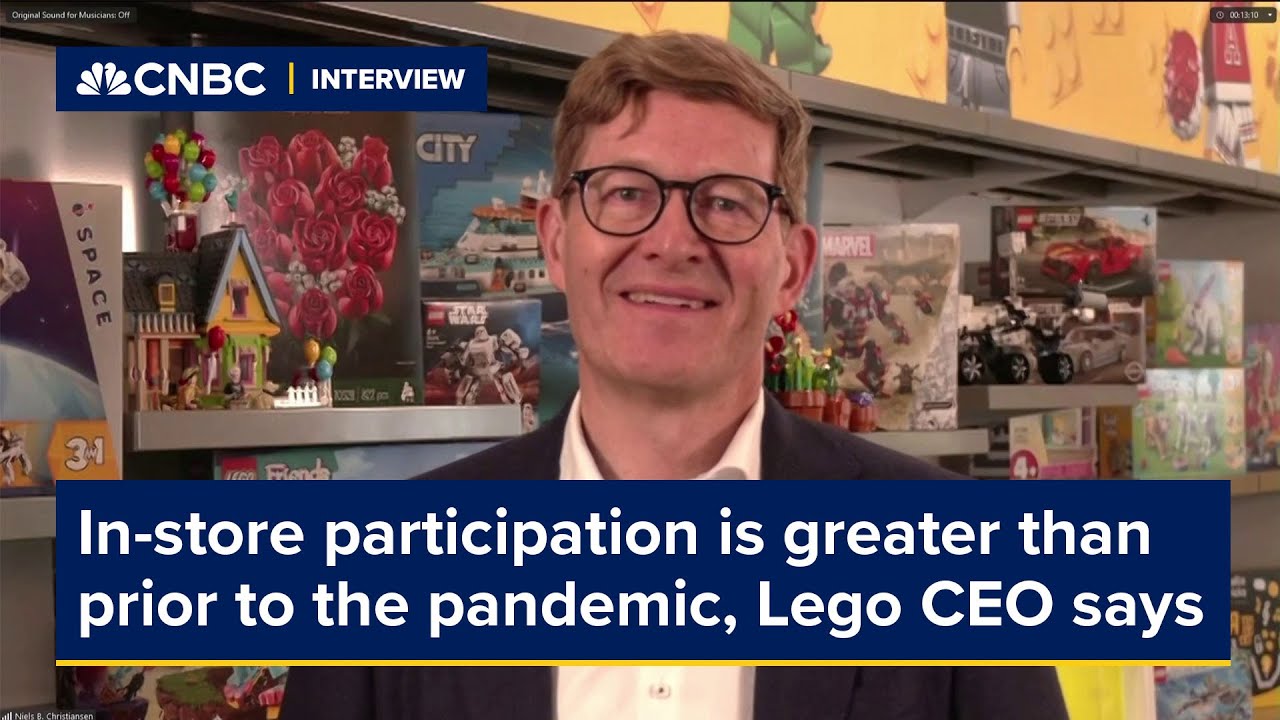
No, nothing has changed about that. That's really— I mean, we have a— you've seen that over the last couple of years. We have a great momentum behind our brand and our portfolio and our ability actually to get, to get really exciting stuff to kids all over the world. So we're driving that momentum and we're continuing along those lines. So as you said, we've opened a lot of stores. I'm right now in the New York City flagship store that we opened within the last year. So it's, so it's really, really exciting. And it, it is a great way now to, to, to allow kids to come in and experience everything we do and, and really get the brand under the skin. And I think that excitement is super important. So we're continuing along those lines. We continue to open stores. And as you said, we are also trying to follow that surge in demand by providing the capacity. And it's only half a year ago we announced to build a factory in Vietnam. And yesterday we announced to build a huge factory in Virginia, US. And I'm super excited about that.
Yeah, I mean, this is part of the plan to shore up supply chains and light in particular of what we've seen over the last 2 years. You try and produce as much as you can. Near where the client or the customer base is that you're producing for?
Yeah. Yeah, exactly. I think there's several elements of that. That's been our strategy for quite a while. And, and with the— I mean, we have a great success in the Americans. There are so many American kids that are really falling in love with the brand and, and wanting to play. So we just want to make sure we have the supply chain to support that. And that needs to be a localized supply chain. Both from our ability to react very quickly to what is actually in demand and what they want and what they need, but also in our minds, sustainability is really, really important. So it doesn't make much sense to have a supply chain where we would be shipping LEGO elements all over the world. We would much rather produce those packages very close to where the consumer actually is, to react quickly and to have an efficient supply chain, but most of all, a very also CO2 or sustainability efficient supply chain. And that is what we're getting, I think, by, by establishing ourselves in Virginia.
Now, I believe more than a third of your LEGO stores worldwide now are, of course, in China as well. And there's a dual story there which I want to talk to you about, which is this blending of the physical and the digital for LEGO and what that means for the future, but also the challenges that we've seen in lockdown in China specifically. Have you seen the same kind of pandemic bump effect that you saw there with people trying to entertain themselves at home? Just give us a flavor of what you're seeing there in particular and the importance of digital growth too.
Yeah, no, I actually, I know a lot of journalists have been writing about the fact that it's been super positive that there was a, that we have seen demand surging from COVID lockdowns. That I think is a, and there's 2 effects actually. It's been quite negative when we've had our factories closed and we've had stores closed and people could not get in. So on the contrary, we've actually seen quite a bit of, of new demand and excitement coming when stores would reopen. So right now, when you point to China and the lockdown, that's a net negative. You cannot get people into stores. You can actually not get product to people. So in that sense, it is, it is, it is looking better now that they're actually opening up again. And we've seen that throughout the world that as COVID eased, as we all got back on the street, into stores, into offices, out of our homes, that has actually been accelerated. The, the wish and the, the, the, the, the, for kids to come into the brand. And so we've seen that as an increasing momentum and not the opposite, actually.
It's such important clarification as well. In the end, this is a physical product that requires making somewhere, and those warehouses and things have to be open, as do the stores, never mind the growth that you see in digital. Okay, let's talk about that blending of the digital and physical in terms of where children play. I believe you're talking to Epic, the maker of Fortnite, to work out how LEGO plays into the metaverse and what role you can play in building that. And a safe one too, Niels, because I think for, for parents out there in particular too, we know a lot of young children, too young perhaps one could argue, are playing Fortnite. How do you create a fun, friendly, safe environment in the metaverse? What's the game plan?
It's a super question because, I mean, that is exactly the mission we're setting out to do. We believe actually by blending Epic, that probably has the strongest technology performance within the entire metaverse creation, with a brand like the LEGO brand that really is trusted by parents and kids for being safe, to making sure we look after look after kids in the best possible way. Combining that, we set out with this mission, as you say, to really create also digitally a super safe space where kids can actually be and they can be safe. But it needs to be fun. It needs to be creative and imaginative and, and create everything, give the same experience as when you run into a store like the one I'm sitting in and you see these big LEGO builds and you get super excited about that. We need to create also in a digital environment. And what we know is really that the kids, the kids can seamlessly jump from one to the other. They don't think about, now I'm playing digitally and now I'm playing physically. They really like when they can see something digitally, they can move to the physical world, they can actually do something and they can move around and then they're back into digital and they can do stuff. And I think we are as a company super positioned to be the ones to build that, right? No small challenge. But it's not a small challenge. And I was actually down in North Carolina on Tuesday to work on exactly the mission that you, I think you put out really well on how we solve for that. Come back and talk to us. Give us a little bit of time until next year.
Yes, come back and talk to us when you're ready to do it. And I know there's a little Lego Niels watching you firmly from the camera so you can get marks out of 10 for your performance. It is true. Niels, great to chat to you. chat to Niels Christiansen there, the CEO of LEGO Group. Great to chat as always, sir. Thank you. Thank you.