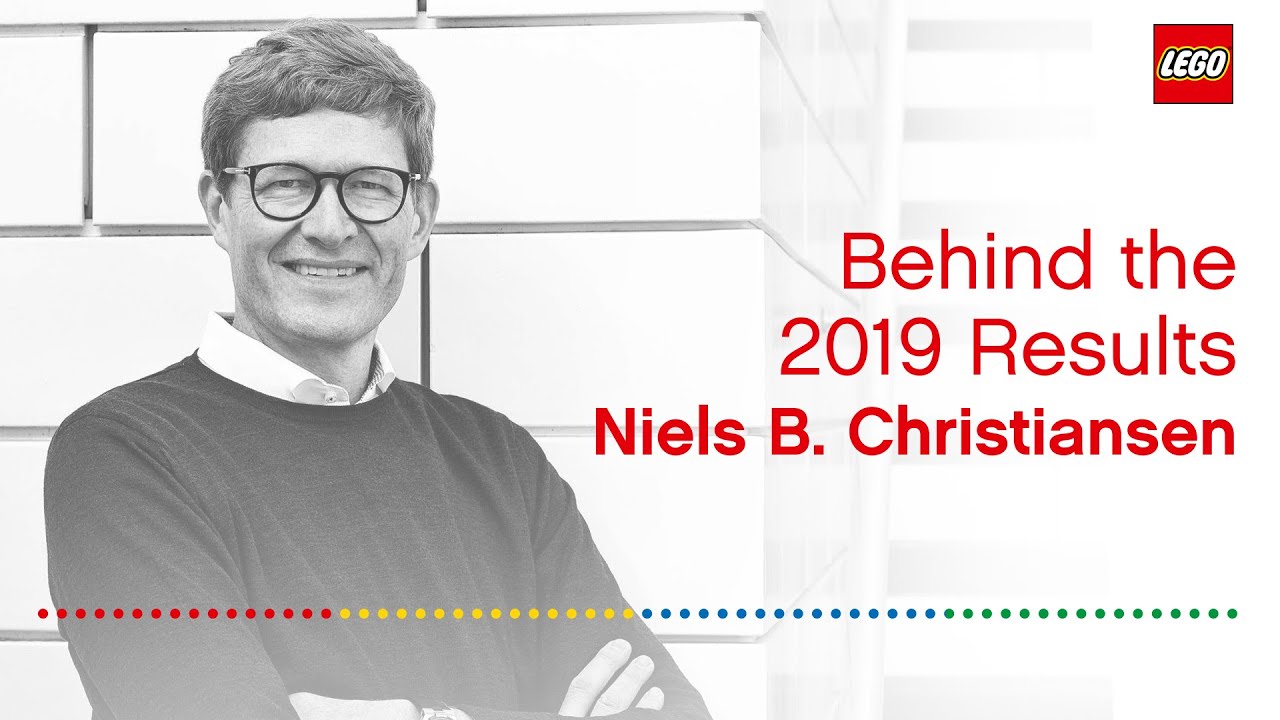
⭐ Profit and Purpose: Accelerating Equity of Opportunity #WEF23 #Davos

In a 44‑minute moderated panel at the World Economic Forum in Davos, Stephanie Flanders convened CEOs Niels B. Christiansen (LEGO Group), Joe Ucuzoglu (Deloitte), Stanley Bergman (Henry Schein) and Amy Goldman Fowler (GHR Foundation) to discuss how companies can operationalise the “S” (social) pillar of ESG and accelerate equity of opportunity. The conversation covered the need for concrete metrics (WEF‑endorsed ESG metrics, Bloomberg Gender Equality Index), the business case for stakeholder capitalism, and examples of purpose‑driven models: LEGO’s 25 % profit allocation to the LEGO Foundation, employee‑paid volunteer days, and Build‑to‑Give programmes; Henry Schein’s five‑constituent model linking suppliers, customers, team, investors and philanthropy, including disaster‑response supply chains; and the GHR Foundation’s use of patient‑capital to de‑risk Alzheimer’s prevention trials and improve diversity in research. Panelists debated the political backlash against “woke” corporations, the importance of long‑term resilience and maintaining social commitments during economic downturns, and offered guidance for emerging leaders on taking principled stands without over‑extending. Audience questions highlighted challenges in measuring social impact and ensuring DEI initiatives survive recessions. The discussion underscored that integrating purpose can reinforce relevance, talent attraction, and long‑term shareholder returns.
Chapters
TranscriptAuto-generated · 45 min
Okay, we are going to start on time. Thank you very much for joining us at the end of the day. I know you're just teetering on the brink of all those great drinks parties. I've encouraged the panel to, well, in the words of one, keep you all awake. I've also asked them— my old boss Larry Summers used to talk about committing substance, which would send fear into the hearts of his junior officials. when we were all at US Treasury, but I think in this context is important because it's very easy to be dancing around the surface of these topics, so I hope that we are going to be concrete and impactful in what we say. Our job in this panel, I've been told, is to highlight key actions that businesses can take to operationalize the S in ESG and contribute to equity of opportunity, so no pressure. We have a big job to do in 44 minutes. The panel is— on my far— on the far side of the panel— of the stage is Niels Christiansen, who's Chief Executive Officer of the LEGO Group based in Denmark, but obviously everywhere. Stanley Bergman, Chairman and Chief Executive of Henry Schein in the US. And Amy Goldman, who is Chief Executive and Chair of the GHR Foundation, which I'm interested in hearing more about, having looked it up, and it just looks like you do amazing things all around the world. So I'm I'm interested to hear. And Joe Yukazoglu, who's the Global Chief Executive of Deloitte. There's always a lot of talk about the S, actually, and the E and the G at Davos. We're a few days in, but Joe, maybe I should start with you. I mean, in these tough times where a lot of the discussion about your relationship to your employees and to people is all about wages, how do you make the case for this broader S or equity commitment from companies?
Well, I have to acknowledge you've set the bar high. So keep everyone awake and ground this in substance. So maybe some straight— we'll try. And I think straight talk is important. We have a world with a lot of problems right now. And you see some pretty fundamental questions being asked about the economic construct that underlies our economies, a free market capitalist system, critiques as to whether that's led to unacceptable levels of inequality, whether sort of all cohorts within society are actually able to prosper. And so nothing short of our license to operate is on the line. And I've always been a big believer that the free enterprise system is the key to giving people opportunity to sort of ultimately uplifting all communities. But we've got to demonstrate that business operationalizes that and makes it real so that there is, broadly speaking, economic participation and communities are seeing family-sustaining jobs at wage levels that are appropriate, that ultimately business is part of the solution on big issues like climate. And then we have to hold ourselves accountable. And that's why the WEF has really been the catalyst to put together a set of metrics that actually quantify this stuff and report report out to stakeholders across not just financial metrics but a whole host of non-financial metrics that are grounded in the UN's SDGs, that are actually grounded in the Sustainable Development Goals so that we can be measured and we can be held accountable for achieving that aspiration.
And just quickly, I mean, again, on this sort of change of environment, I mean, I'm sure that many of your clients, you've had that conversation with them. They've got their strategy that you helped them with, right? Do it brilliantly over the last few years. How many of them have come back to you in the last few months and said, how can we do this cheaper? I mean, what is that conversation like in a tougher environment?
Well, you've raised sort of what the skepticism has been. It's easy to do when the economy is booming. Will this be one of the things that gets ratcheted back in a more choppy economic environment? But that's the, the beauty of having commitments and having measurements so that there's accountability. Just take as an example, I know we're focused on the S here, but Deloitte just did a study of C-level executives relative to climate and asked that question, are you ratcheting back your commitments? And the answer we got back consistently across a couple thousand senior executives around the globe was no. They continue to rank that as a priority. They've embedded it in their strategy. They've laid out roadmaps to meet these commitments. And so we have been somewhat encouraged that even in a more difficult and complex economic environment that companies are making good on what they've pledged.
Niels Christensen, what's this conversation like on the board of the LEGO Group?
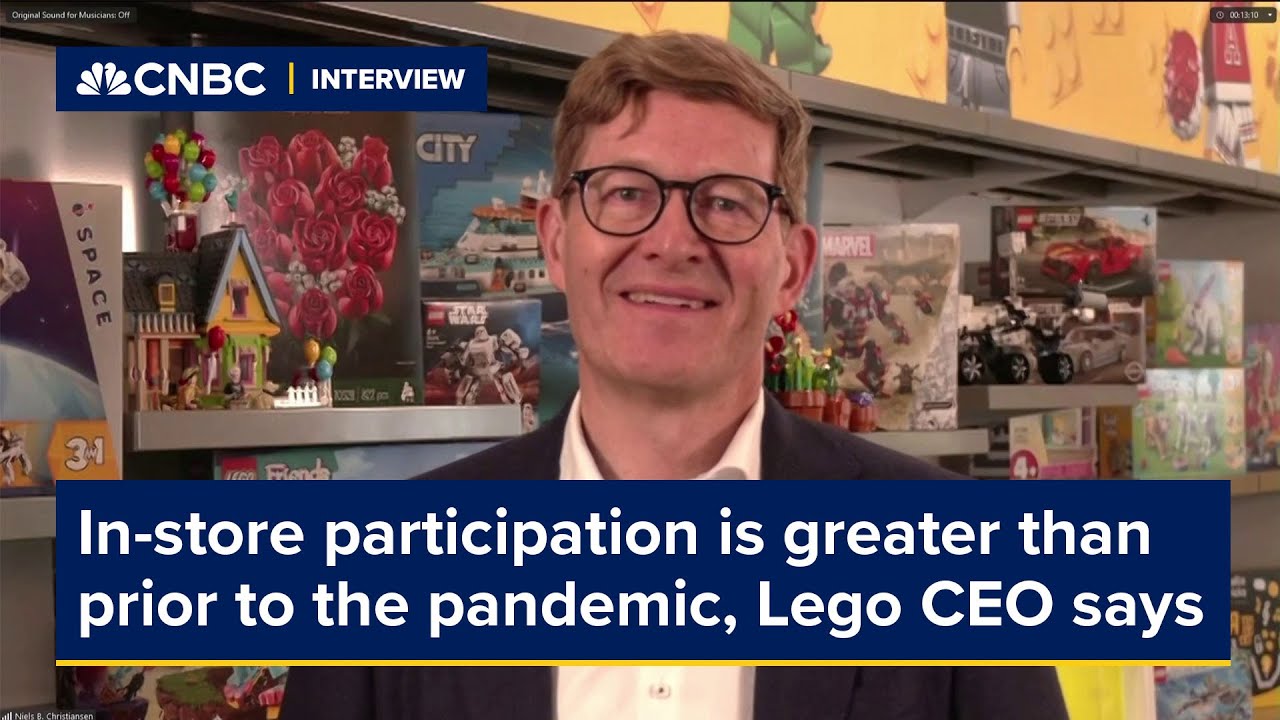
I guess it's interesting. I mean, everybody knows the LEGO brand throughout the world. Not everybody knows the story in the sense that we were created 90 years ago and the founder all the way from the beginning really, really wanted to provide kids with something that could inspire them and develop them. And actually, we call them the builders of tomorrow, give them the skills that they needed. And so I would say, in a sense, we're privileged in this discussion because it is our mission to do good and have a social element. We're still family-owned 100%, and the family has decided that 25% of the ownership of the company sits with the LEGO Foundation. So they literally get one quarter of the profit, and they donate all of that out to do good for kids in many different ways. So, we're kind of born into it, and it's very much in our purpose. So, that said, that makes it a little bit easier, you can say, to have a board discussion around because it's not a matter if, it's more a matter how do we then get most out of it. Now, with all of that being said, I actually believe that for a brand like us, serving fans throughout the world and being so much there for kids, it's important to be relevant. And you cannot be relevant with kids and young people if you don't take a social responsibility. That's their starting point. They just don't see it anywhere else. So I don't feel that I'm taking away from profit because now we're doing social. I think it comes together and it provides us with purpose and relevance and also resilience and long run because we can see more and more— also more and more young people want to work for companies that actually do this, not because they speculate that it's worthwhile, but they do it out of a well-meant, deep-down feeling that this is what we do. We have a place in the world and we give and we take, and that allows us to be the business and have the impact that we have.
And just to get a sense of it, I mean, what would be a project or part of your commitment that you do that you think if you had— if you were a more traditional company or you had a different kind of mission, you wouldn't be doing?
Yeah, I think it's like we do things— I tend to think about them as being local or really engaging around that or be more systemic in size. So we do things where we actually donate a lot of money to educational systems in different countries. We've been donating a lot to Ukraine to make sure that that kids actually could go to school, they could learn, and they could play. But we also, every year, we give all of our employees throughout the world 2 days off where they're paid just to go and do social work. We call it local community engagement work. So they can actually go out and we do different sessions with kids. We have built the chain so we help children actually express what they believe they— how the world should be looking. What the— how sustainability is for kids. So we do Build to Give programs. So here during Christmas, any kid throughout the world that would build something and either show that in a store or upload it, we would give a gift to another kid somewhere in the world where they would not have the opportunity to play. And we actually gave away 2 million LEGO sets on that. So this allows kids to give and to be part of something social, but they have to do something. They actually have to go in and build something and participate actively. Then they are part of solving a social issue. So we can do both systemic and much more down-to-earth programs.
And Amy Goldman, how does the GHR Foundation work with, I guess, not just businesses but people all around the world? towards these kind of goals?
Well, we are a mission-driven organization. We spun out of a business, so I like to think we retain entrepreneurship in our DNA. And I will just get to substance as requested. When we think about all these crises around the world— I know it's late in the afternoon, but to add another one is Alzheimer's disease, and that's an area where we work in to help put together prevention trials. Now, Alzheimer's disease is the number one cause of death. It is the most expensive disease, and the numbers of people with it are just growing. So, when we think about defining a large social problem to be responsible to, Alzheimer's, to me, fits that category. So, when the GHR Foundation looks at that, We think about how can our capital be deployed by the private sector and by the public sector to do something bigger than what would need to be— what could be done, you know, individually. So, again, for an example, we can come in and be seed funding for industry so they can start doing feasibility and planning studies around prevention trials, because trials are big and expensive, and they're very long-term. And we can be patient capital to accompany that, bring in government funding. And then in the case of the AHEAD study that we've funded, we've added a module on diversifying the participation of the participants in the research trial so that we have a more diverse set of participants who then, you know, for Again, to be more concrete, incidence of Alzheimer's among Blacks and Latinos and Latinas are much higher, and yet their participation in research trials tends to be much lower. So because we had partnered with industry and government over a long period of time and this need was there, we were able to come in and have this flexible capital. We've also used that for innovation in the US,
or is that—
It's a US based— well, I shouldn't say it's a US-based trial because in the AHEAD study, the industry partner is Eisai, which is out of Japan. The government funding is National Institutes of Health, which is US-based, but the trial sites are all around the world. Hmm. So, it's developing therapies for a global issue. But I think my message to business and to philanthropy is that the capital that we have can be deployed very creatively. We can de-risk, we can be long-term, and we can really be visionary and innovative.
Hmm. Stanley Bergman, I know, or I'd read, that of the many pieces that you advise companies on, you're trying to incorporate the supply chain element as well as some of the more sort of closer to home things and broadening out to people affected by your supply chains or by our company's supply chains and communities. So maybe say a little bit about that. Should we have a broader sense of what this agenda is about?
Yes, thank you, Stephanie, for that question. So Henry Schein is the largest provider of products and services to office-based healthcare practitioners. That's practitioners outside the hospitals. This is where healthcare is moving and in that context, we're the largest provider of products, for example, to dentists. Now, the company has been built on the concept of our 5 constituents working together. We have our suppliers, they provide us with the products and they're very much engaged with, for example, not only our business but with our philanthropy. Then we have our customers, we have a million customers around the world, that's 1.5 million practitioners. The chances of you— your dentist buying products from us is pretty high. And we engage our dentists in our philanthropy. So our job is to help our customers operate a more efficient practice so that they can provide better clinical care. But at the same time, we talk to them about not only being in the business of providing healthcare but working with us on philanthropy and our team. We have a very deep Team Shine culture and I would submit that being a company engaged in philanthropy has helped us significantly in this battle on labour and we've had pretty good retention because our team is engaged in our philanthropy. And then we have our investors. was founded 90 years ago, but we've been a public company for 28 years. We've had a pretty good consistent rate of return, compounded annual rate of 12.5%. We had our IPO 28 years ago and we spoke to the public about the notion that our investors are important, but one of the 5 constituents that make up our mosaic of success, and we work towards giving our investors a good rate of return. concern, but one of 5 constituents. And then our 5th is actually our philanthropy, and this is where the supply chain comes in. We, of course, work with our customers and we help them in running their practice, but we work with them on being engaged with social programs. So on the children's side, for example, we founded a program in the United States called Give Kids a Smile. Believe it or not, richest country in the world, has millions of kids that don't have access to oral care. Prevention is critical. Leads, you know, if you don't have oral care, you can end up with Alzheimer's. So we engage with our customers on providing services, healthcare services. Then we involve the communities that we're in in activities that our team gets involved with. For example, back to school, holiday cheers, but this is not a situation the company writes out a check and says goodbye. We do that, but we engage our team. And then in the community, the world at large, and here we play a key role in emergency response. So, for example, in most of the hurricanes or the earthquakes we'll be there working with the doctors. Any physician or dentist that wishes to go and do work, outreach program, will get their supplies from us free of charge. All they have to do is be a member of a recognized healthcare institute or registered as a practitioner and they'll get their products. So, for example, in Haiti, we were probably one of the first providers of healthcare products because we work with NGOs but our healthcare— any healthcare practitioner can get the products. Now, in Ukraine, you will not see Henry Schein per se, but we will provide healthcare practitioners that are going into Ukraine or that are there, or more important, in the communities such as Poland, Moldova, where there are healthcare practitioners that need product. We'll figure a way to get it to them. And I would submit that this has made us a company that has gotten all of our constituents involved, our 5 constituents, and has resulted actually in a great return on investment for our shareholders, public shareholders. We're almost 98% publicly held and it's this engagement with society, sustainability. We advance supplies of products. We've heavily engaged with supply chain and the bottom line is that we found out years later that what we were doing was ESG. Somebody gave it a fancy name, I think it was Larry Fink.
But isn't it fascinating that somehow this has become a polarized topic in society? It's stakeholder capitalism, versus shareholder capitalism. And if you're focused on this set of issues encompassed by the S, the social issues, is that taking away from your obligation to shareholders? And yet, there was a commonality that struck me across the Henry Schein story and the LEGO story, that by virtue of leaning in and trying to take good care of constituencies, good care of employees, good care of communities, that ultimately that's had a business payback. So it might not be the next quarter, it might not work if you look at this through a short-term lens, but if you really look at this through a long-term stewardship lens, by embracing stakeholder capitalism, by making the investments in the S that we're here talking about, that's ultimately the path to deliver sustainable premium long-term returns to shareholders.
But that's interesting you said that because I was going to say, do you resist? You know, what do you do with the debate around woke corporations and the kind of the backlash? But you
don't owe them a return on investment.
Should you reclaim that? I mean, should you reclaim the term? Should you run away from— I mean, I think because it's put a lot of people, you know, you're a company that's obviously been committed to this for many years and can point to all the things that you've done. But a lot of companies that kind of thought they would doing the right thing and we're walking in the direction and now facing this backlash from a sort of interesting place. But you, as far as you're concerned, when your clients come to you, you say ignore them?
Well, what's interesting is business is actually serving as a punching bag from both directions.
Yeah.
So, you know, in one direction you have a critique that, you know, are these commitments genuine? Are these just words and are they really making a difference? Then on the other end of the pendulum, you've got this question of, have these corporations gone woke? Are they backing off from capitalism and their obligation to shareholders? Businesses are actually demonstrating on the ground, apart from the theater of everybody having to be polarized and take sides, the ability to execute this, the ability to do this in a way that meets the need of a broad cross-section of stakeholders. And at the same time delivers for shareholders. So is ignore the right? I'm not sure ignore is the right word, but the reality is business really doesn't benefit from trying to wade into this when there's other motives relative to why the attacks are coming from both sides.
Investors want one thing: return on investments. Customers want one thing: they want to do business with. companies that help their needs, service their needs, and are honest. And the best way to prove you're honest is to have a track record of doing good for society. And customers figure that out pretty quickly.
We are— I think the other discussion this week in Davos is about a more fragmented world, and I guess with that comes potentially more variation in values, or maybe we kind of went on the assumption that we all had roughly the same values and we are moving in the same direction. Now we no longer have even that illusion, perhaps, when you think of like the G20 economies or others. Does that affect what— I mean, you're all in different ways active around the world. Are there now— are there differences in the way you think about this agenda? depending on where you are? It doesn't— in your case, Stanley, it doesn't sound like it, but like for the LEGO Group?
It's a super good question, but I think it depends probably a little bit who you are and what you do. I think in our perspective, if we consider kids the role models, then it's really about allowing kids the ability to play and learn through play. And that cuts kind of across different values. It's not dependent on this particular political system or value system in a country because it's actually taking the kids' perspective and helping out of that. So I think many of those things are less debatable from that point of view. Now, of course—
I'm resisting the temptation to get into the pink Lego for girls debate.
Yeah, but I think this is— we haven't been there, and I was just thinking about this entire diversity and inclusion area is, of course, one that we We feel an obligation there to do stuff. And that's an example of where we've actually had to make sure that we also somehow play by the values in whatever country we're in and are not just trying to overlay, again, to make sure that we are there for the kids. So we've gone a long, long way to make sure that we are truly inclusive in what we do in all LEGO sets. And we don't assume that anything we do is particularly for girls or particularly for boys. So we've kind of taken that away. So you cannot tell me today, now you're doing LEGO Friends for girls. It may be that what happened like 15 years ago when it started. But today, we're talking about consumer groups. We're talking about play patterns. And if there are boys that really like the role model playing of LEGO Friends, then that should happen. And it happens. And LEGO Harry Potter is 50/50 for boys and girls. So we think about it in a different way and try to be truly inclusive, both in terms of product and how we market. And we're working actually together with a lot of organizations that are more experts than we are.
And it all feels exactly the same when you step on it with bare feet, probably. Amy?
I'll just add on that. I said, you know, at the beginning that we are in service to people. And we really, as a philanthropy, always focus on the human at the center of everything we do. And it is remarkable. It cuts across everything. We work in a very broad geography. I try not to distinguish between being a U.S.-based philanthropy because we are learning globally all the time. And again, it may sound very simple, but if we rise above above some of the terminology and just prove through our actions that we are very strong partners in service to those that we're working with.
This is a developing issue. I mean, this question of the role of business in global geopolitical tensions and whether the greatest impact is achieved by businesses picking sides and choosing, I'm going to do business here and I'm not going to do business there, or whether businesses actually have more impact by operating broadly as global organizations and being part of the conversation. It's really hard to drive change when you're absent from the room. And frankly, in a world where there's more and more tension, I think business actually has a role to play of being one of those bridges that cuts across and brings people together and tries to rise above some of the sort of nationalistic political tensions, this gets hard. So you take, for example, Russia's invasion of Ukraine. There was a reasonably consistent response that relative to companies in many types of industries that given the sort of nature of the action that we wanted to do something and pull out and demonstrate the consequence of this type of behavior that's so catastrophic to the world order. But does it really make sense to deprive kids of Legos? It's one thing to say, okay, we're not gonna do business there and export chocolates or luxury cars, but it gets a little harder when you're talking about, you know, basic goods or, you know, things that are needed by innocent members of society, which is why the trade-offs here are so difficult.
Well, that's actually— that is a difficult example. I mean, I think you do get the impression here that whether it's for the ESG or any other purpose, businesses very much want to continue operating in all the places they've been operating and following the logic of integration and globalization. And it's more a question of whether their own governments will allow them because politicians are sort of marching to such a different tune in some cases. Questions? Comments? Yes, so here, if you just wait for the mic.
Harriet Moynihan from Chatham House. Thank you very much to the panel. Very heartening and positive stories from all of your companies. But of course, not all companies have that story to tell. The fact is that the S in ESG is generally the poor cousin. Much less is generally done on it, and it's been a lot slower to get action on it than the E and the G. And one of the reasons perhaps for that is that it's harder to measure, perhaps harder to define as well. Many companies who are operating in authoritarian regimes are, whether directly or indirectly, consciously or not, causing human rights harm perhaps having an impact on civic space and individuals. So my question, and particularly to Joe who mentioned metrics, is how do you measure social impact? It's harder, isn't it, than the E where you might have particular non-financial reporting which shows how companies have done measures for carbon capture, whatever it may be. I went to a session earlier on responsible capitalism where it's clear there's a lot of change going on in terms of that non-financial reporting. What's being done on the social side, and do you see positive developments in that way to try and force some of those not-so-good companies to have a better social contribution?
It's a wonderful question, and one has to acknowledge that there are things that are more credibly capable of quantification than others. So you mentioned climate, carbon— those are things subject measurement. We can put out metrics. There's reasonable, at least growing alignment of agreement as to what those metrics are. But under the WEF's leadership, we actually have created a broader set of ESG metrics that have been endorsed by a couple hundred companies under the WEF umbrella. And there is an S pillar. So there's an E pillar, an S pillar, and a G pillar. And it does start to get into things like commitment to diverse workforces and ultimately commitment to sort of ensuring the broader impacts of supply chains. And so I'd be interested in your feedback. This is early stages. This was a good faith attempt to try to put some measurements around all 3 pillars within ESG, but no doubt there's still work to do.
Niels, you wanted to come in?
Yeah, I was just thinking the— I mean, I'm old enough that I was also part of, back when we were 5 companies, thinking about environment and the 99.9% were not there. And I think you can also find measures on the S. They may be a little bit more different company from company, but I think what I would imagine will happen is a little bit the same thing, that those companies who maybe carry a consumer brand, and I consider ourselves one of those, will actually be out there for the scrutiny of what happens. And we do things— I tell you, I get 50 emails in my email box on afternoons of something being debated or something is being launched as a product and we take a position on something. And that means that we act, but we also start to look backwards, like we do on the environmental thing. I mean, we are asking our suppliers throughout the supply chain to act environmentally better, to lower their carbon or whatever. I also think now that we are also taking some of these social things and we're going back into all our suppliers and how they work, how they treat their employees and how we do stuff. So I would imagine that you could hopefully see a little bit of the same effect, maybe 5 or 10 years delayed, but that the same dynamic could play out.
Stein?
Yes. So, of course, we need to have some form of metrics, but I'm very worried about it. I'm very worried about, for example, the SEC getting involved and having people that really don't understand. There's a regulation in the US that we have to comply with through the SEC and relates to certain minerals that are mined in the Eastern Congo. You know, who wants to buy minerals? You know, you cannot support that part of the world. But to have the SEC monitor that, they don't have the capabilities. You take something like D&I. I think the D is relatively easy to comply with. You get statistics, you check it off. And of course, all companies in the U.S. that do business with the U.S. government have to fill out forms. But it's the I that's important. Are women really included? Are they— when they sit at the board meeting, are the women really the ones that everybody looks to? Are they the real chairs of committees? And in the companies, in the actual organization, are women really being looked at when people talk in the conference room? Are they looking to the women or are they just there? And that's my concern and that's very hard to measure.
Yes, you made me think about the Bloomberg Gender Equality Index, which tries very hard to capture that, but it is— You're quite right that it's difficult. Sorry, Amy.
Oh, no, just again to maybe put a little bit of a different perception on it from more of the global development philanthropic side, but also we really focus on localization, which is, with the inclusion piece, is really bringing in the people who are closest to the problem, the issue, into the leadership into that. And we are always thinking, who's not at the table that should be at the table? And that holds us accountable. So just another aspect to it.
I think there was a question here.
Yeah. Hi, good evening, ladies and gentlemen. My name is Sarah Chen Spellings from Washington, D.C. I run the Billion Dollar Fund for Women, now called Beyond the Billion, the world's first and largest global consortium investing into women-founded companies, venture capital. So I come from the lens of venture capital, technology, Silicon Valley, so on and so forth. And the topic that you picked on actually caused me to want to push this forward as a question to you as leaders, global leaders. There is this terminology of a nonpolitical leader. And today we're faced with so many issues from Asian hate crimes to Roe v. Wade and all these issues that stakeholders have a view, right? And as representatives, as the face leading your companies that touches so many lives, you're looked to to take a stand. And recently, you know, 2020, 2021, with George Floyd and all that, we've had instances in the Valley where a third of the company left when a CEO of Coinbase and Basecamp actually decided the workplace is not for politics. How would you advise a young leader who is at the forefront of building a company that's not yet, you know, 60,000 employees struggling with resources, but also with a growing generation of stakeholders that care about who this leader represents and the values that they represent? Thank you.
Nice simple one.
I think in England that's what's known as a core
Welcome. There's probably no topic that corporate leaders are spending more time on than this one because it is such an imperative. You have a war for talent. People want to work for organizations that align with their values. Simply staying silent isn't one of the options. You've seen large cross-sections of the corporate world speak out on big issues, make statements about the values of what the company stands for. Now you're seeing some backlash of companies gone too far. Nobody's got this completely figured out, but I will give you a few thoughts just in terms of what we see at clients right now, some of where the dialogue seems to be headed. Really important that companies continue to be willing to speak out on values. It's also not reasonable to expect that companies can become the arbiter of every divisive societal issue. So there's issues upon which society is split pretty evenly down the middle, and business is actually going to lose trust if it comes out and is viewed as politicized and wading in on the most contentious issues that divide communities. Now fortunately, there are big cross-sections of these issues that should be pretty inclusive, that should draw people in from across the political spectrum, that are grounded in values. If you tune into various forms of cable news and social media, much of the conversation is grounded in the 5% that's highly divisive. That takes up a lot of the airtime. Takes up most of the oxygen, but that leaves the 90 to 95% where you ought to be able to have statements that are unifying, statements that bring people together across different political beliefs that demonstrate to employees you do stand for something and you are a values-driven organization. All of that's easy to say at 30,000 feet. People generally wouldn't object to those things. Then it gets real when you talk about particular issues like the ones you mentioned and Well, did a company go far enough? Did they go too far? And those are the debates that are happening within C-suites and boardrooms every day.
So, Joe, you're right. We have to be careful that these issues do not become politicized. Having said that, there are obvious areas— hate crimes is one. I cannot see how an ethical CEO can avoid that discussion. You've got to weigh in and I think business needs to play in that world. You can't leave it up to non-business leaders to deal with that issue completely because it is— if you don't stop it when it's small, it will become big. So I think business has a role. You've got to be very careful not to be on one side of the political debate or the other. But there are certain things that if you cross the line, if society crosses the line, or elements of society cross the line, you've got to be very, very strong.
But it's a great example of an issue that should be unifying— speaking out against hate. Hate against the Asian community, hate against the Black community, hate against the Jewish community. That shouldn't be a political issue. That should unite people across the entirety of the political spectrum. And I think you've seen a lot of pride of employees of organizations that have chosen to stand up and demonstrate allyship?
Hate crimes is one particular example where legislation has been passed. Business played a key role in getting that legislation passed, and it was passed with bipartisan support. The documentation of hate crimes, which was not something that was really important at one time, Now, you can get into a debate as to what's political or not, but the actual reporting facts on hate crimes is not a political issue. Law enforcement needs to know about that. And that's an example of where business played a key role.
Niels,
yeah? If I can just add, I think it's like— I agree, I think businesses need to weigh in, but it would also be important in my mind that businesses or leaders weigh in where they actually actually have a credible stance based on the business they have. So you don't want to have CEOs that have an opinion about everything. And we have actually— we have what we call a brand board. We actually sit there and we have made specific decisions on what are topics where we believe we would be a good spokesperson for business or where we stand— I mean, taking children's perspective— where would it be important that we have a position And then we leave other positions kind of more open, not to have me profiled as somebody that has a position about everything. And I need to be very careful that I don't mix up my personal political belief with the stand we have as a company. And that's something that is difficult. And you just have, I think, to involve that and have your board or whoever you have around that to try to get some of that agreement pre-made so you know what to do. If you're a— I think the question was a young founder of a company— then I think I would pick a few areas close to what the purpose of that company really is, and I would focus in on that because you don't want to be starting a company and then fiddling around and having opinion about all things in society. Then I'm then you may not be successful with your company. So I think there's a certain element of focus and credibility around that.
You wanted the debate to be a little bit livelier.
Yeah, okay, all right, but I also— we've got people who are desperate to come in, but yeah.
I disagree with you. Yes, Henry Schein should have an opinion on healthcare, but when it comes to things that, for example, you did mention hate crimes, in the United States it's a big issue. I think business can't be silent. And there are other examples. I don't want to get into too much detail, but yes, Henry Schein has a very significant active role in providing and advancing access to care. I mean, we're involved in— you name the organization we're involved with. Yes, that's our domain, but there are certain items where society crosses the line where I think business has a responsibility to speak out.
Sorry, was there someone behind you? Okay, yeah, sorry.
Hi, I'm Sangu Deli, YGL from Ghana, and my question is this. I noticed that in good times it's easy to have these conversations, right? In bad times it's more difficult. I serve on the Board of Overseers of Harvard University. A few weeks ago, we elected our 30th president, who is the first Black woman president in our almost 400-year history. And that was— I'll tell you, it was unanimous across the board. Everyone was happy to support that. But when it came to having discussions about DEI with our $52 billion endowment, I saw how discussions were different when the market was up. And how discussions are very different when the markets are down. So realistically speaking, especially now that economists are saying we're heading into a recession, frankly speaking, how do we ensure that in downturns these things, these important things, don't get thrown to the side as nice-to-haves and are not, you know, it's often presented like it's mutually exclusive, and we often see that during downturns. I would love your perspective on that. Thank you.
Can I just check, because we're going to run out of time, I'll just check there's no other pressing— all right. We started with this, so I guess it's quite good to finish it. How do we make sure that this agenda doesn't get lost in tougher times, which I suspect we haven't quite seen yet?
I would recommend that you talk to the people that manage the funds, have them look at companies where purpose is important. There's a very good Harvard case study and a Babson College study which shows that those kinds of companies actually have a better return on investment. So I don't think there's a conflict between good return on investment and companies that have a purpose and are socially responsible. In fact, I would submit those companies have done extremely well during the COVID period because they were able to retain their workforce because the workforce is engaged in the purpose of the company.
I think this is a real question because I think we have all seen some of that coming. I can think of a couple of things in our own system that that maybe at least should help. One is if you can make it purpose-driven and you can create an organization where the broad organization actually wants this, then it becomes less of, yeah, we do this, we sacrifice some profit to do this. This is not how we think about it. It is closer to the DNA and it's part of what— I mean, maybe it's a privilege being privately owned by a family who wants this. So it's part of our success criteria. It's also part of what I get paid on. So it's not only success to create the bottom line. So there's less of a trade-off to happen. And then I think if you can systemically do some things, like in our case, with 25% of the profit going to the foundation, yeah, then there may be difficult times. The profit may be a little bit less. But it's still 25% of it that actually goes and will be donated out. So yes, there could be a little bit of what you say, but it's not like I could sit and say, OK, then it's got to be zero for 2 years because now it's bad time. It won't happen. And maybe companies could actually commit themselves a little bit, make these irrevocable decisions in good times to preserve that it continues in bad times.
Amy? I'll just add on to that. Hard times drive creativity. And I think now is the time to be more creative around the types of partnerships that can be formed. I think the private sector can think more creatively around that. I mean, you're talking about having a foundation within your organization, but I think partnering with, again, philanthropy, with government, in a much smarter, more nimble way is what will be incumbent upon us, and it has to happen because these problems have to be addressed.
It could serve the same purpose if you committed the funds I agree on that.
Joe, you might get the last word, but it does occur to me, I mean, the other buzzword is, which we've already mentioned, is about resilience, but it seems to me that is another one when one thinks about resilient supply chains and resilient workforce that can help this. I mean, that can be a sort of supportive word for this agenda.
I've heard that word resilience probably on 6 or 10 occasions today. Which tells me there's something here and people are expecting—
But you can inject a sense of optimism into it.
—little choppier waters. I'm glad we're getting these questions. Frankly, there needs to be a skepticism. There needs to be a holding of feet to the fire. And ultimately, there will be a lot more information available for all constituencies to be able to judge whether that commitment is sustained in a down environment than we might have had historically, given the proliferation of these non-financial metrics. And so my, my ask is, you know, hold us accountable.
And in the 28 seconds that remains, I just am overwhelmed with the need to tell you that Bloomberg is, of course, owned 85% by Mike Bloomberg. And one thing that you only discover when you go to work at Bloomberg is all of his profits. So 85% of the profits go straight to his foundation and have to be spent in pretty fast order. And I have to say, it changes the way everyone feels about what they do. We're embedded in the financial system, but we're effectively a nonprofit, and it makes a— it makes a big difference. Purpose. Purpose, and a lot of volunteering as well. So thank you to all of you for some great stories, for keeping everyone lively, even a little bit entertained. That's right. Enjoy, enjoy your evenings, and thanks again to the panel.
More from Niels

Niels B. Christiansen | Podcast | In Good Company | Norges Bank Investment Management




Leadership Award Presentation with Laura Bush & Amb. Paula J. Dobriansky | 2021 Concordia Summit