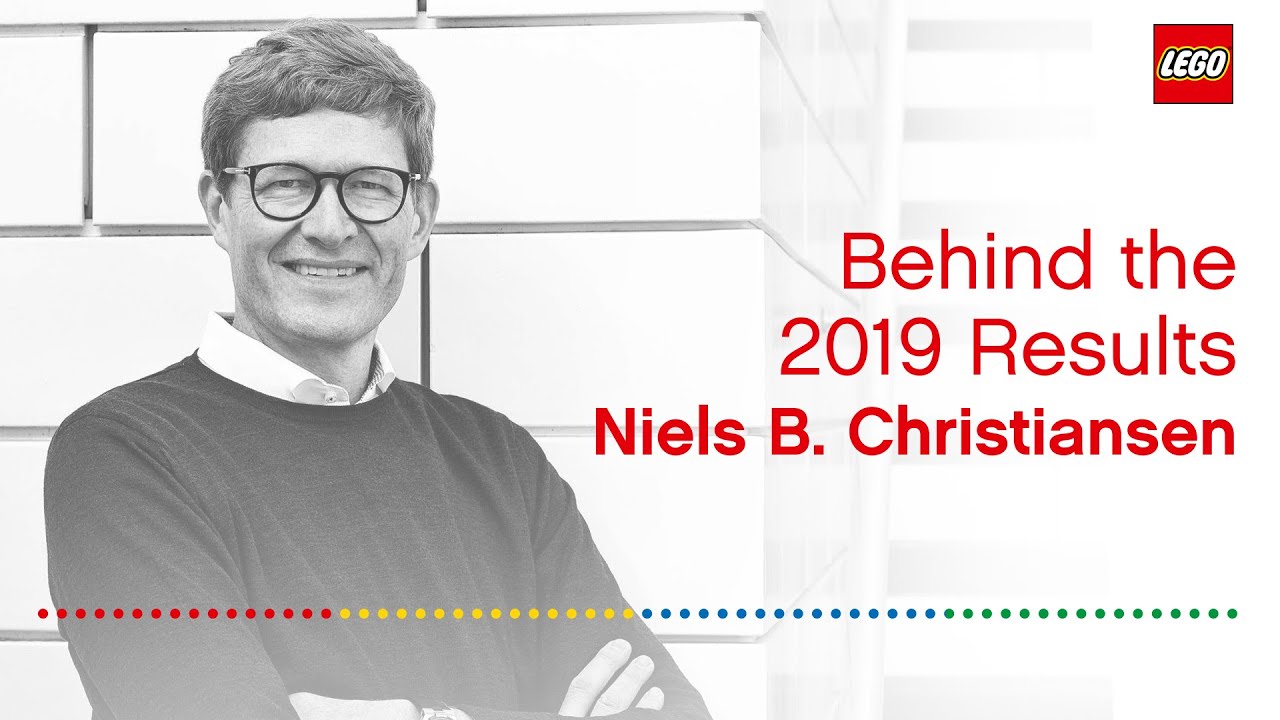
In a Yahoo Finance interview, LEGO Group CEO Niels B. Christiansen reviews the company’s first‑half 2023 performance, highlighting a modest revenue increase to just under $3 billion and a 3 % organic growth despite a 7 % decline in the overall toy market. He explains how LEGO has consistently outpaced the market, gaining roughly 10 percentage points in share each year, and attributes this to a broader capture of children’s play time. Christiansen notes that post‑pandemic play patterns have not dramatically shifted, but children now exhibit a wider range of passion points, which LEGO addresses through an expanding product portfolio. He cites the relaunch of LEGO Friends as an example of design evolution toward greater gender inclusivity and representation of disabilities. The CEO outlines strategic investments in the United States—a new headquarters in Boston and a Virginia factory—to bring production closer to the world’s largest toy market, reduce transportation emissions, and improve inventory responsiveness. He discusses inflationary pressures that briefly dented EBIT by 19 % in H1, but stresses that raw‑material costs have normalized and that long‑term investments in sustainability, digital capabilities (1,800 digital experts), and factory expansion remain on track. Regarding China, Christiansen admits growth has been slower than expected post‑pandemic, yet LEGO continues to expand its retail footprint, aiming to surpass 500 brand stores by year‑end, while also investing in Vietnam and other regions. Finally, he reflects on LEGO’s enduring brand love, rooted in family ownership, consistent values, the LEGO Foundation’s charitable reinvestment, and recent recognition as the world’s most reputable company.
Chapters
TranscriptAuto-generated · 12 min
LEGO had a stellar first half of the year. The Danish-based toy company reported stable revenue of just under $3 billion for the first half of the year, up around 1.5% from the year prior. Yahoo Finance's executive editor Brian Sazzi has more on the company's latest results.
Joining me now is LEGO Group CEO Niels B. Christiansen. Niels, great to see you here off of your latest results. You know, we've gotten, I think, From a U.S. investor perspective, a lot of different mixed reads on the toy industry, some doing good, some doing not so good. From your vantage point, what's the state of LEGO?
I think I'm very satisfied with where we are. I think we've continued our 5-year stride to take market share, growing considerably ahead of the market. And we've done that again. Now, this time in a market that has been slightly more negative than it has been for, for the years before. But I just think we have to keep in mind that we've had a kind of rapidly growing toy market. for 2 or 3 years now. Maybe this is a little bit of an adjustment to that. And the 5-year average growth in the toy market, I think, is pretty much where it should be. Now, we've been able to every year take market share to the tune of growing 10 percentage points faster than the market. And the same is true here in this, in this half year. The market is down 7. We grew 3. And I'm pretty satisfied with that.
You talk a lot about in the release taking market share and you just mentioned it now. Where does that market share come from? Is it other toymakers? Is it other play experiences?
I think it's a combination. It's kind of— it's a bigger share of the total toy market. So everything that's included in the toy market, that's where we fight over share. And at the end of the day, I think it's also— it's children's time. It's what children do. It's what they play with. And we are just owning a bigger share of that year by year. And I think that's right on our mission.
You know, we're still trying to get beyond the pandemic, Niels. How are children playing differently than before the pandemic? I imagine you do a lot of studies and a lot of observations inside the company.
I don't think we can say that they're playing dramatically different. I think there's been different patterns, you know, during the pandemic where we were all at home and their parents were at home and maybe there was a tendency of playing more together as a family. Now maybe it's back to normal in that sense. But I think for, for us, we see kids having a lot of different passion points. We, and we serve those every year. We grow our portfolio of LEGO products and that allows us to tune in and focus in on, on passion points that are there. And I think that together with the brand works really well for us.
How are you designing LEGOs differently? How are the sets different? Today compared to a couple of years ago?
Yeah, I wouldn't say there's a big difference to a couple of years ago. But I mean, maybe one example on your question is we relaunched LEGO Friends. LEGO Friends has been around for more than 10 years. It is what we call a girls-first product. It really tries to be into how characters interact and what capabilities characters have. And we updated that to really better reflect the type of characters, the type of interesting Yeah, topics for particularly girls, but for kids today. And so in that sense, I think it is moving, not year on year, but it has over a decade really moved. And I think we brought some interesting characters. We also brought different disabilities into the picture. So it's a better representation of real life in the sense. And we just know from all our studies, kids really like to see themselves and real life things happening also in toys.
Why do you think the US toy industry has been challenged this year?
Yeah, I wouldn't say the US toy industry has been particularly more challenged than the rest. But I do think, and you were alluding to it, the fact that we've had a pandemic and we've seen different spending patterns throughout a pandemic, and now we are back to what I would consider more of normalization. And I think that's what it is. And looking over the 5-year period, including the pandemic period, I actually think things are pretty developed pretty well. There's just been spikes and spikes and valleys on the journey.
The major retailers that you sell into, they remain pretty focused on lean inventory. Target, Walmart, you name it. How how are they planning for this holiday shopping season?
No, I think I mean the signals I'm getting are pretty good. I think our brand is doing pretty well right now, so we can also see in our results we haven't had a big. Between consumer sales and, and revenue. That's where you would normally see building up and down of inventory. We haven't seen a big issue on, on our stock because it's been quite— it's been quite relevant all the way through. We didn't build it up big time during last year. So I think in that sense, it's relatively balanced. And I don't see a big difference to, to normal when I look into the in-season and how they prepare for it.
Speaking of the US, your company is making a big push, a big investment, a new headquarters, what I believe in, in Boston, a new factory in Virginia. Why these big bets in the United States?
I mean, the US is the world's biggest toy market and we've made really, really good progress. We have— we've really gotten to many more kids around the US and we want on supply chain-wise, we want to be close. We want to produce close to where we actually sell the products because we don't want long transportation. We want— we want a low CO2 emission around that. And we like the proximity to consumers. And that's— I think it did us really well through the pandemic period that we were not the ones that had to transport products throughout the world from Asia or whatever. We produce close to consumers. We produce also close in time. So when we approach in-season or Christmas and we know what's actually high on the wish list, then that's what we produce. And that helps us not to sit by January 1st with a lot of wrong stuff at inventories at our retailers. And I think that is a— that's kind of our business model that works pretty well. And there, Virginia is really key to this huge market, the US is, and the And the progress we have. So I'm looking forward to get that on stream in '24 or '25.
Within the factories that you currently operate that are open and the Legos that run through these factories, what are you seeing on inflation? Because I imagine, you know, folks that are reading the release on earnings, they see the operating profits down double digits, whatever it might be, and they think that inflation is still a problem for the toy industry. How do you see it?
Yeah, I think there's a couple of elements. I think just to put the 19% drop in EBIT into perspective, you really like the 2 years before we doubled it on 2020. So it's like, it's 100% up and 19% down. That, in my math, is still 81% up on 3 years ago. That's not that bad, actually, in this industry. So in that sense, I'm actually— I think we should be more focusing on the level. I think it's a strong level, but it has been impacted by the higher input costs. I mean, for instance, the raw materials that we brought into factories, some of that has spilled over, had a tail into into this first half. Now we are out of that. The prices have normalized a bit. So I don't think we see it in the second half. But there was a bit of pressure on the first half from that. Going forward, I think things are looking better on that point of view. The other part is really all the investments we have decided to do ourselves. And that's in the factory expansions we talked about. That's in sustainability across all the different measures. That's building our digital capabilities. We have now 1,800 digital experts working just on providing digital experiences, for kids and digitalizing the company. That's an investment that's not for this year or next year. It's an investment for the long term. And we have just decided to take those and to run them through and not make those kind of longer-term investments dependent on whether the toy market does better or worse in a half year.
China, a key market for LEGO. Have you seen the slowdown there that a lot of other multinational companies have seen?
Yeah, I would rather say we haven't seen kind of the acceleration out of the pandemic as fast as we had anticipated. So China, as you know, was a little bit later in the pandemic, came out of the pandemic later. And we had kind of assumed that they would return to traffic in stores and consumer spending the way we've seen it in other countries. And I think we've been a bit disappointed that that happens quite a bit slower. So we're not exactly where we thought we would be at this point in China. I don't think it changes the fact that it is a— it's a big market with a lot of kids and an opportunity for our brand. So we, we're keeping our investments going. We're building stores in China, but we have seen that happen a bit slower.
So you're still— so you're not pulling back on investments in China. So how many stores will you open this year and how many stores do you have there now?
We have now just short of 500. We opened 54 this first half and we'll be opening another 30 this year. So we will— we will get past 500 LEGO brand stores in China by the end of this year. And as we talked about, we are increasing or expanding our factory in China. So we are building to get the brand out in China. But, you know, we are building everywhere. We're also making investments in Vietnam and in the US. And so it's not kind of a— it's not a single-minded China strategy. It's an opportunity to get to as many kids as possible. And China is just part of that strategy.
Before we let you go, this is your first time on Yahoo Finance. So again, thank you for coming on. You know, as the CEO of LEGO Group, how long— what sets do you put together? How do you interact with the brand? You know, how long does it take you to put together, you know, something like that starship behind you? I mean, give us some of the secrets behind the curtain.
Yeah. I'm afraid I cannot say that I'm the fastest builder in the world. I'm sometimes really impressed when I see some either kids or adult fans that are really, really good at building. I would like to build more than I do. I like to build vehicles. So I'm into vehicles. And I think some of those we've done have been just amazing. So those have been most of my builds. But I really do like it. And I'm just amazed about the— when I take a walk in our innovation department where the LEGO designers sit, that is out of this world, the kind of creativity they bring about and how they do that. And that almost is as good as building.
Why do people love the LEGO brand? So I just went around our office. And as soon as I said the word LEGO, People's faces light up. It's a brand that I think you go to many other places and they have that same emotion to it. Why do you think that's the case? Have you studied why?
Yeah, I mean, we are of course we're looking into that. It's a I have I have the same experience no matter where I go, no matter who I talk to. I always get the Lego story. I get this smile and I get an an a positive attitude to the brand. I think I think it has to do with the fact that I mean we are family owned. The family has owned the company for ninety years and there's been a a very strong red. thread on values through that. So the brand has not been built overnight or changed a lot overnight. So it's a matter of being, I think, super consistent and having been that all since you and I were kids and we were playing around. So it is, in essence, the same brand. I also believe that we are honestly investing a lot and investing a lot in the brand, in sustainability, in providing experiences for kids that really matter. We are into learning through play, that we want to make sure we are part of allowing kids to build skills they need in life. So I think there are a lot of things undergoing. The LEGO Foundation owns 25% of the company, and that 25% of dividends goes to the foundation and it's donated out to kids in need, to things that would benefit kids. So there is a real authentic, thorough reinvestment into society and into kids that I think really benefits the brand as well. And then I'm super proud that in April, You know, in Reptrack, we were named the most reputable company in the world. Now, that's something that humbles you, and I'm super keen to see if we can stay high on that list, at least.