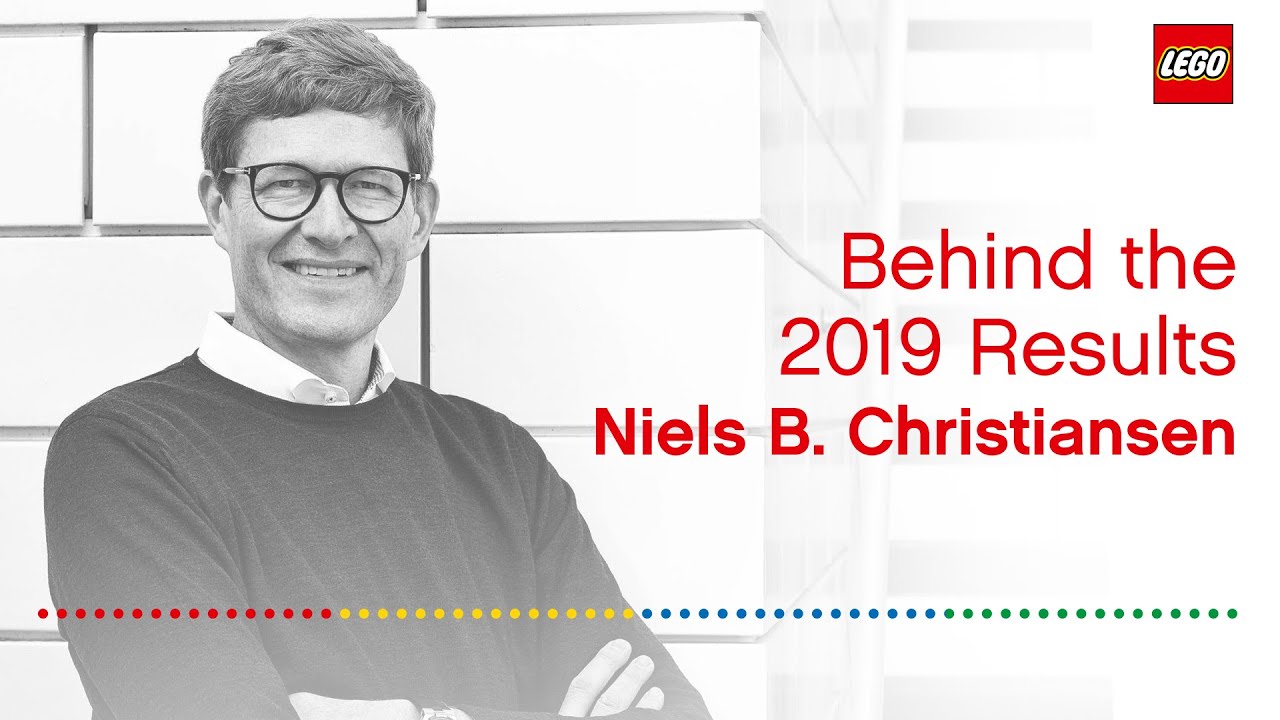
In a Yahoo Finance interview, LEGO CEO Niels B. Christiansen explains how LEGO achieved a 13% year‑over‑year sales increase in the first half of the year despite a stagnant toy market. He attributes growth to strong brand equity, a diversified product portfolio, expanded retail and online presence, and gaining market share. Christiansen discusses why building sets remain popular—highlighting creativity, longevity, and the sense of accomplishment they provide. He notes that parents are seeking more physical play for their children and that LEGO serves as a bridge between digital and physical worlds. Regarding AI, LEGO is building internal digital competence to enable future AI‑enhanced creativity tools for kids. On the holiday season, he expects normal seasonality with a solid Christmas performance. He outlines LEGO’s sustainability push: 30% of resin used in H1 was certified mass‑balance (non‑fossil) material, translating to 22% of a brick’s mass being renewable, and the company aims for 100% sustainable materials by 2032. Finally, he comments on China: growth is flatter compared with the US and Europe, but LEGO continues to open stores at a slower pace, maintaining a long‑term commitment to the market.
Chapters
TranscriptAuto-generated · 9 min
Lego continues to defy the odds in the toy industry. Let's bring in Lego CEO Niels B. Christiansen. Niels, I can't believe it's been 6 months since we last talked. Good to see you as always here. So really, one number among many that sticks out in this first half results is your sales, simply sales up 13% year over year against the backdrop of a struggling toy industry. Help our community here at Yahoo Finance understand how you're able to outperform some of those broader trends.
No, it's clearly taking market share in a toy market that's not growing right now, as you say. And it's about our brand standing really strong right now. We have a portfolio of products that cuts different age groups and different interests that really is performing very well. We've been increasing our store network. We've been investing behind LEGO.com. And so I think it's all coming together and really, yeah, really helping us to take the share that leads to growth right now.
Why are building— maybe this is a simple question or maybe it's not. Why are building sets so popular? I go into a Target here in the US, a Walmart. There's a lot of interesting things that children can play with. But what is— what do you think is pulling them toward LEGO sets?
I guess at the fundamental, it's really the creativity that is there. The fact that you can, you can build, you can rebuild, you can take apart. It's— it has longevity to it and it really gives you this sense of the pride of creating something and showing you can do it, accomplishment while doing it, but also being creative and build whatever you want to. So I think it does actually deliver on a lot of different, different things that actually makes it very good value and very, very fun to do.
You mentioned in the, in the earnings release, and this one really resonated with me, that children need more play. I mean, I imagine you, you sit with many parents, moms and dads, and try to figure out what kids are doing, why they're not doing it. What are you hearing from parents? You know, how are kids using or interacting with toys differently? And what do you think that— or what changes do you think that's causing to LEGO?
Yeah, it's, it's clear no matter whether we ask kids or parents, they would actually like kids to play more. I think the, the appreciation of the fact that playing allows you to gain some skills and to really develop your your brain, but also a lot of skills that you need through life. I think that's actually well appreciated by parents, and kids really like it. So all are actually asking for more time to play. And when they play, parents would also really like kids to play in the physical world, to use their imagination and do stuff. And I think the LEGO brand is just such a good bridge between digital and physical. We're present in both worlds. We can combine the two things. And the same, the same LEGO universe actually covers both. And I think kids really like that and really enjoy being able to, to jump that. So there's something I think we can do that is, that is pretty attractive to kids.
How will LEGO or how are you preparing the company for the age of AI where kids may get even more engrossed in video games amongst many other digital activities they can do?
Well, we are. I tell you, we're preparing for that. So we were actually— we're beefing up our own digital competence quite significantly and have been doing so. Over the last 3, 4 years. Because you're right, you can imagine all kinds of things where you can get different— I mean, AI or different, actually different help to be creative. It can just lift the creator level of kids probably sometimes in the future. And if anything, building with LEGO bricks actually would lend itself entirely to this creativity and this building thing. So I think there are good potentials there, and we make sure that we are front-running that.
Niels, I wish I had some AI when I was a kid using my Legos to build various cars. There are still some sets, Niels, I couldn't put together. And maybe even in my advancing age, I probably still couldn't put them together. Some of these are tough, man.
No, they are tough. But today, you know, kids have help of either physical building instructions or you can do digital building instructions. You can build together as a family or whatever. So there's many more opportunities today, but it's still about also kind of the kids using their own intelligence and imagination. So it's not all about artificial, but I think we can, we can definitely, we continue to move along that. That makes it interesting. Just the fact how they combine physical and digital even today with some of the things is pretty exciting.
Now I'm just realizing in real time my parents never helped me put my Lego sets together. They just watched me struggle on the floor. But that's a discussion for a different day. I'm going to, I got to mention that to my parents. What is your What's your sense on how the holidays— holidays are going to come up fast. When you talk to these big retailers, how are they planning the toy category for some of that peak buying season?
I think it's hard to say. It's even 4 months out. That's a long time in our industry. But I think at least when I look at it with our— from our lens here, there's good momentum and it doesn't seem like things are very different when I look 4 months forward than if I look 4 months backwards. So in that sense, I would expect a bit more of the same and kind of the normal seasonality, if you want, throughout the year with a— with also, I think, for the LEGO brand, a very decent Christmas season as well.
Take us inside some of the numbers in your business, Niels. You know, we've started to see inflation come down across, across the world, which is, of course, a very good thing. How are you— are you seeing that as well in the materials that are used to make LEGO bricks? And are you passing on some of those savings to shoppers?
Yeah, no, we— I think we saw most of that last year. So we're seeing that continuing into this year. And therefore also, we were never actually— we were never loading any of those material cost increases into products. So there's not been a big, big thing. We kind of kept our level through that and we're doing that now. But we are also, if you think about the business in our materials, We're investing heavily into sustainable materials. So in this half year, we've actually buying 30% of all the resin or the raw material for LEGO bricks have been what is called certified mass balance material. So material that has a very high element of non-fossil-based materials in it. So either renewable or sustainable bio-based materials. So 30% of everything we we had bought for raw material. That translates into 22% of a LEGO brick on average being non-fossil or not being dependent on oil being pumped up from the ground. So we've been able to grow 13%, as you say, and we have spent less oil-based plastic for the same period. And that's a milestone for us to be able to grow while spending less fossil-based materials. That's a major thing. We've been investing heavily into that. Those materials are more expensive, obviously, than normal materials. And we've been able to do that and decided not to unload that cost either to consumers to really make sure we are, we are standing in there and trying to push the industry in the right direction on materials. So I think that's probably one of the biggest shoutouts for this half year apart from the financials. Then that's a big milestone.
Do you think in our lifetime we will get that fully Sustainable or renewable LEGO brick? Yes. How do you get there?
I think, I think we are. We've actually spent— if you go 5 years back, we spent some years really investigating. I think we were deep into 600 different materials to really figure out what would be the way forward to take the brick that you and I played with when we were kids and make sure that it's compatible with the one you buy tomorrow. And that's the case. That's not so easy with some of these new materials. So By really doing the groundwork, we've been able now to focus in on what we think is the path to a solution. And now we are investing heavily behind that. So getting to 30% this year, we're committed to increase that percentage again in the second half and into next year. I think there is a line of sight to us being 100% sustainable on materials by 2032, which is, which is our ambition. So it won't be, it won't be inexpensive, but we're committed to take that journey.
That's good to hear. And lastly, before I let you go, you and I in the past have talked about your expansion plans in China. You've opened up retail stores there. I didn't see it mentioned in the earnings release. What are you seeing in terms of growth in China? Of course, that economy has slowed down. And then what do your expansion plans in China look like over the next 6 months?
Right. I mean, it's clear we are growing rapidly in the US and in Europe. We are more flattish in China. I think that's even taking markets here, probably in China, where the economic environment is more is more strained. We believe in the long-term potential in the Chinese market. There are a lot of kids in China that, that would benefit from LEGO Play. So, so over there, we continue to open stores at a slightly lower pace than what we've done in recent years. But we open stores, we build the brand and, and invest into the longer-term potential. While right now we see more momentum in, in the US and most of Europe. All
right. We'll leave it there. Always great to get some time with you. LEGO CEO Niels B. Christiansen, good luck this holiday season. We'll be in touch.