Architecting Growth & Leadership Bootcamp (H2R Series)
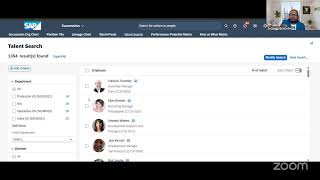
In this session of the H2R series, Dr. Niladri Bihari Nayak walks participants through the next phase of the Succession Planning Bootcamp, emphasizing an AI‑native learning approach and a structured, multi‑track curriculum. He introduces the HR Transformation Capability Matrix, which maps HR functions (workforce, payroll, talent management, etc.) across four proficiency levels (Foundational, Essential, Advanced, Ultimate) and aligns them with product‑agnostic skill matrices and certification pathways. The core of the session focuses on the architecture of succession planning within SAP SuccessFactors, demonstrating the Succession Org Chart, role‑readiness assessments, and the process of adding successors. Dr. Nayak contrasts position‑based and person‑based nomination methods, illustrating each with industry case studies from Indian banking and U.S. manufacturing, and discusses related policies (e.g., RBI). He then details the creation and management of talent pools, showing how to define pool attributes, owners, and readiness flags, and how these pools feed talent pipelines. The session also covers talent cards and matrix reports, including the configurable Succession Talent Card, 9‑grid performance‑vs‑potential matrix, and lineage charts. Throughout, he provides hands‑on demos, AI‑prompt exercises, and outlines assessment criteria for participants, reinforcing the integration of data‑driven decision‑making in HR leadership.
Chapters
Hello everyone, everyone. So let's then get started, and we are going to continue the session. With the previous session, we talked about, um, the foundations of succession planning, and now we are going ahead with the next concept. Okay, before we go there I would like to highlight that everything whatever we are learning, the AI-based, we are actually taking help. Discover, learn, apply, and build. Today we are in a learning phase, okay? The discover phase was all about the webinars what we conduct every Monday for HR track, okay? And we have, uh, people who are joining for the first time, that there are free webinar going on every, uh, days, uh, for us. So you will be knowing that, that we have multiple You know, uh, these webinar every day we conduct a webinar. If you have not subscribed to my channel, I will highly recommend at this moment go to YouTube and search by my name and you will be getting the update directly. Okay, so just to subscribe the notification and just to check it out. So we will be having everyday session. So now the— if you go to the my playlist also you will be finding that track— there are different, different tracks, okay? So every— from Wednesday we conduct finance track, okay? And every Thursday we have procurement. Similarly, we have similar tracks for every day. So you'll be finding all the live sessions which you have conducted recently, you would be finding. And this is, uh, whether it's a payroll, whether it is your typically— that all these things you will be finding here, okay? So this is what I will highly recommend to go through. And before that, so we also have all the links available here. You will be finding if you want to go to our school platform, if you want to know more about this, you will be finding all the details. Okay, you can connect with the different medias. Now before that, now as we continue the bootcamp, before we go to the next segment, I just like to highlight that check out what are the new innovations we are doing because we have to be AI native at any cost for this moment. And, uh, we are now learning with AI, whatever the module, whatever the modules we are going through, right? So now let's— then we will talk about another matrix today, the HR Transformation Capability Matrix. Okay, so in this matrix, whatever we are learning is— whatever you are learning, you are having— there are different, different, uh, you can see there are groups here, right? Workforce, HR operations, payroll, reward, talent management, learning, employee experience management, HR technology, Okay, so there are so this many groups we are having, and also it has different levels— level 1, level 2, level 3, level 4, right? So this is irrespective of the technology product, whether it is SAP, SuccessFactors, Workday, Odoo, Oracle HCM Cloud— irrespective of that, we have done a mapping exercise, and what we are learning, you will be based on this. And this is all sort of different 4 levels. There are certain materials which will be in the learning. People who are very basic, they will be going for the foundational program. Then there is an L2, level 2 is an essential, okay? Level 3 is an advanced program, and level 4 will be kind of an ultimate program. For everything, we will be finding similar kind of one. This is how we have redesigned our entire learning structure. And, uh, coming to the current topic, okay? So coming to the current topic, if you talk about, so we talked about your talent strategy, leadership talent, okay? Talent acquisition is a recruiting, onboarding, those stuff, but okay. But talent strategy, we have to talk about succession planning will be coming here. And also there are concept of internal mobility, we also discuss it about. Then career development. So career development, which is maybe in the part 2, we will be discussing the day 2, okay. And this is the way there are, you know, update you will find in this category, okay. So each and everything we will be publishing very soon in our premium platform. And this is the strategy which we have taken. I just thought of sharing the back end of it, which is currently, uh, I'm working on that. Okay, so this is so that it will be holistic, and also at the same time, irrespective of the technology product, because product will come and go and they will keep on changing, right? But this is the way we have to understand. And also we have different, different views also if we have see the badge point of, if you talk about. So we are having skill-based organization, so we're talking about also skill management essential and all of these things. So in your learning journey, the level 1 is whatever we're discussing, that is the L1, these are all L1 thing, okay? Skill management foundation, you must be knowing all of this basic thing, okay? Then we go for level 2, level 3, level 4, okay? So level 4 is all about the leadership, okay? And all of those strategic things, and they also know on the lower level also, okay? It is not like they will— okay, so this is the kind of overall skill matrix which we designed for our learning platform. And also we have done similar kind of certification mapping also. So certification in the sense, there are product-specific certification like your SuccessFactors one day, Oracle HCM Fusion, ServiceNow HR SD, must knowing all of this thing. But this is the way we have done a mapping for your typical thing. And also people who are into business side of it, you must be having your SHRM, CIPD, and there are so many certifications. Even my, many of my students also have done those. Okay, I'm very much proud of that. So this is, uh, some ATT certification from business point of view I'm talking about. Okay, so these are the mappings we have, and these are the possibilities that you can learn anything and everything. Okay, so whatever they depending upon your how much curiosity you have, right? So this is what exactly I just thought of having a view before we go to the next segment. Okay, and we are also taking constant feedback from the different communities, students, your university faculties, corporate HR and CHROs from different industries, how we can enrich these things and it will reach out to more and more people. And so they can get a benefit out of it because HR itself is a very vast, okay, people even retire in one of the segment, one of the thing, okay, one of the functions in, okay. So what we're trying to aggregate based on our research, based on our multiple understanding from different, different stakeholders and all, and we have designed it, okay. So there also there's a learning intent also we have defined, whether it's a design related, whether it is leadership related, it is, uh, we can find out those things also. And also for each and every segment, what kind of a case studies we'll be solving with the Design Lab, Boardroom case study, or is it demonstration? You're hands-on oriented. So this is the way we have defined it. Okay, so now without any further ado, let's then go to today's second topic. The first topic we have covered in the previous session was all about Concept 1. I'm sure you must have already— that segment, you enjoyed that session, and we have already understood that concept. Now we will go to the next segment, that is our Concept 2. Concept 2 is all about architecture side of it. Okay, so typically SuccessFactors architecture point of view, we'll be focusing SuccessFactors, but it is pretty much— we will also understanding from a meta model point of view. So what are the different concepts we have? And in this topic we will be discussing, we highly focusing on the second topic, that is your SuccessFactors succession architecture. What is architecture behind it? And that focus is now today. Okay, so this is the success factor architecture. So this is the second concept which you are going to learn today. Okay, so now in the boot camp, as I also update same thing in our platform as well, as I keep on updating this thing. So let me go there in our Node sections. So let me go back. To our class. This is our bootcamp planner. So I will go to the class. So current bootcamp, so current bootcamp we are having now, so Succession Planning Bootcamp. And inside this we have, uh, first concept which we have learned is already This was— we're done, right? So I will just mark it as completed and, uh, is ready. And, uh, this is done for us. Okay, so the basic things we already understood. And now we will go to the concept number 2. So this is the concept number 1. Then we will go to the concept number 2. Now, new lesson, that is your concept number 2, SAP SuccessFactors Success and Architecture. So I will be not be giving the name of like this, rather I will keep the product as different, and maybe I will be adding a product so that later point of time, uh, we can update it with any other product. It doesn't matter, only success factor. Okay, so this is the product. I think it's not updated product. Okay, I will clear it all at a point of time. So here, what we are going to learn here is in the Succession Architecture. Let's then go to our presentation. So let me present it. So the second concept is all about— we'll be understanding the architecture of succession, um, from the SAP's point of view. So we will be understanding what are different building blocks of succession planning, from org chart visualization to talent pools, what are the role readiness, and beyond that. So it will be having a conceptual review, and also towards the end we'll be having a quick hands-on demo walkthrough. It will not be very detailed, but we will be having a demo walkthrough. Okay, so we'll cover that. So stay ready, and if you're already having access to a SuccessFactors platform in your organization, whatever industry, whatever geographies you're working, you just have to stay tuned that, open your succession planning, that module, and whatever you're learning, just to figure it out whether how you can track it, how, at what place you are in. And what we'll be covering today, it will be two part. As I say, conceptual deep dive, then we will be followed by a hands-on, guided hands-on demo. We will be doing it. Okay, so with that note, the first one is succession org chart. So succession org chart is all about your visualizing the entire organization landscape, succession landscape, how we are going to check it, because we have a different, different chart, right? So you will be having— this is something called as a Succession Org Chart. So how do you see that? So we will be quickly looking at that in the system parallelly, so that I think it will be easy for you if I do a parallel demo. Okay, so maybe I will refresh my current page and I will quickly show you parallelly. Successive Org Chart. Okay, so this is— before we go there, so let me log in and, uh, to the system, and I will quickly share my screen. Uh, just give me a minute. Meanwhile, I'm logging in. So you can also have a prompt. Okay, I will give you an AI prompt. So the first prompt today which we'll be doing it is check it out, uh, The search for an architecture of— you can go to any AI tools, okay, and check it out. Your, uh, basically, so what is the architecture of a typical succession management module? Okay, it is a success or not doesn't matter, right? So because we are talking about architecture, so let's first discover that what is architecture, then we will go to the So those things. So for that, I will be utilizing two tools. So one is industry-specific tool, another one is a general tool, uh, AI tool we utilize, is aggregator tool. So we have multiple tools, but let me go through that first. Let me share my screen now. Let me, let me, let me go through. So development, career development plans, or succession planning point of view, let's talk about the architecture side of it. So we'll talk about now, let's go to the system. Now I will be able to show you. So if I go to SuccessFactors, and if I talk about here, so let's say succession org chart. So where do I see that? So if I go simply search for succession, you will be finding, uh, view succession org chart. There are two things you'll be finding: view succession linear chart, view succession org chart. Okay, so we will see this first. Okay, so in the succession org chart, uh, you will be finding— so you will see how does it look like first. Okay, otherwise you can also from your dropdown you can go your wherever your succession is there, you can check it out from there also. Okay, so this is how the succession org chart looks like practically in SAP SuccessFactors. So how does it look like in your system? Maybe Workday, Odoo, or people, or you are working in DarwinBox, Cornerstone, HCM Fusion, Oracle, right? Whatever module, you just check it out and maybe you can share your screenshot in the community piece at a point of time. Make a note of it. And this is how the succession org chart looks like. Okay, you can see that succession org chart. And here we have a different, different— this is the role. And this is HR admin. And see, Aditya Singh, he is having 3 successors already, okay? And they are also in different, different parts, whether somebody is ready for the succession or somebody is not. So for this role, we have— we can see that there are 3 successors: Faith, Suzanne, and Emma. They're already— out of them, 2 are already ready for the succession. Another person is— he is not yet ready, and maybe in the next 1 or 2 years he will be ready. So this kind of readiness we can have for an org chart. Okay, so somebody's already ready, we've identified who is the ready, and all these things, these things we do it. Okay, so then what happens, uh, uh, if you is already having this readiness, okay, now what we can do, so you can also see for this, okay, if you want to add any new successor. So already we are having 3 successors, okay, so for this employee, okay. And you can also do, and, uh, their names, success of 3 total and 2 ready. Now you can see. Yeah, so this is the detail part of it. I'm sure you must be also having similar screens and similar details. And also if you want to have something, you can see that. So all the details you'll be finding nomination history, who has actually nominated. Okay. And there's no, I think it is, uh, you can see that and who is ranking what. Okay. You can see that for the last timeline nomination point, who has nominated, who is approved, readiness. Readiness check is very, very important, whether that person is ready. Okay, so in case what happens, what the meaning of the readiness is, so let's say Anya Singh is leaving the organization now, so immediately this person will be out of the ready now. These two people, the organization who can decide that who will be the next successor for that, for this employee. Okay, and this is my nomination method, you can see. Right? So this is the understanding here, okay? And, uh, yeah, this is the succession org chart. And also you can go one level and you can check more details about it, the upper levels also. This is your typically for everything, refining, there is a successor. So there's AI program lead, I can see, okay? So these are the different, different, uh, you can see, okay? And for this person, Charles Brown, I don't see anyone is a successor. So what I can do, I can simply click Add Successors here and I can identify, okay, who can be the potential successor, right? So either it could be internal or external. Okay, I can do a search if it is next to internal and I can search from that and I can assign a successor here. Okay, so I can search here anyone, okay, who is meeting the criteria. Okay, and based on the match also the score will, it will be based on, I can also put the filter and all of these things. Okay. So let's say I decide that, that, uh, Rick Smola from Philadelphia, okay, so he or she can be a part of it. So I can simply check it out, but he is under development manager, so I can think somebody else. So let's say this person is more senior, maybe I will think that this can be possible potential, okay, so successor, right? In this way I can go and check it out, okay, I can nominate, okay, I can update that. Okay, so readiness, let's say I will say that this person is already ready. Okay, and ranking, I will give it— this is a manual process. Okay, but you can do that. Okay, so this is the way we can add a successor. Okay, for any of the role which you do not have identified any successor, this is a manual process, but still we can do. Okay, system will suggest, but you can put it here like this. Yes, there may be an additional successor, you can also put it. Suppose you're outside, you can create candidate and all, but ideally internals are preferred. As a process. Now in this process, if you go further, you will be finding all the details, okay? So, but this is a very comprehensive understanding that, uh, for everything you will be having this kind of, uh, this person is already ready and likely to be, okay, all the things actually promoted under all these things we'll be finding here, okay? So then this way you can add successors and all. So this is the successor org chart we talk about, right? This is how you visualize your organization's success landscape at a glance. We have not gone too deep, but at least you understood. Now we have something called MDF, position-based nomination. So understanding the position versus person nomination approaches. So the nomination already we have seen it, right? So how we have done a particular person as a nomination, we have already done that, right? So that is actually, we, we can nominate people, okay, at any point of time. So the nomination process can happen through this, and it's all about— you can say any of the successor, if you are the plant, and you can nominate people. You can see that, and add by adding successor, you can search for people. For this, actually already have— the system has suggested. In some cases, system will be already suggesting that based on their skills and all of this different factors, right? System will also suggest. You can simply add them, okay? Whenever you're adding them, so you will be seeing all of these things detail, okay? Person is already ready, maybe, okay? Or you can give them a ranking, okay? And also maintain their development objectives like this, okay? So this is the way you can do. This is a kind of a— also there is a nomination, okay? So what you can do for that, we also have a— let I say nominations, nomination setup already there, okay? But I think this is a different— let me check it out. Uh, we also have a— this is a role readiness assessment is already there, right? As I was talking about. So these details, yeah, definitely we'll be doing in the hackathons. We will be going deep dive. But for now, just to understand that the nomination can be set up based on your position or the person. So that is what exactly, yeah, we are talking about. Understand the position versus person-based. So maybe we can go into it in a quick exercise, AI exercise, Discover AI exercise. What is the difference between your position versus your person-based nomination approach? So let's do that activity together, okay? Position versus person nomination. Let's say the name itself is sufficient to understand. Position versus person nomination. uh, with the example in banking industry. Let's say, because today we are going to focus on banking industry, uh, banking industry in India. Then I will talk about retail in, uh, US. Okay, so same example, if I try to— people who are joining from US, this is for you. Maybe manufacturing I will talk about for US today. Manufacturing for USA. So we will understand this example so that it pretty much clear for us. So the first thing is, uh, we talk about, as I say, position-based, person-based, right? So little bit I will expand it, we'll learn about it. So part example they have given is that position-based nomination and person-based nomination. So person-based nomination is like an exact person. Suppose there's an individual, okay? If it is a position-based nomination, it's based on your exact position, like a branch manager in Mumbai or one of the bank. And what is exactly— so here, uh, position-based nomination, we actually allow certain persistence. Successor stay with the position even if the incumbent leaves or the seat is vacant. Okay, but in the person-based nomination, what will happen? So successors are dropped or the plan is lost if the incumbent moves to a new role. That is the persistence point of view. Okay, and this is actually which is the best. So basically, if you're talking about startup, okay, startup industry, okay, startup company, rapidly changing startups, so it is best go for a person-based nomination without any rigid positions and all. But if you're already a stable structure, if you're already having, especially the banking point of view, in that case you can have position-based nomination. So there is nothing wrong and nothing right. So you can, based on your situation, you can plan for it. Okay, and vacancies point of view, in the position-based nomination, it will allow you further to be hired for a vacant role. But in the person-based nomination, you cannot do that unless it happens until a new person is hired into it. So the person has to wait for that, right? So this is a typical example from a banking industry in India. Okay, what's the difference between these two? And more details are there, I will not be reading out, so I will be sharing this note. Similarly, when it comes to the manufacturing industry, if I'm talking about, okay, in US, similar example you'll be finding. And for this also, we have to have a position-based thing. And also there is a context— I see that there's an RBI policy also. I'm sorry, I was not aware of it. So let's see that. So you can check it out. This is also very interesting thing to know. That the RBI also having some policies for that. Okay, so it's good to know. So in government of— government public sector banks, okay, they must be having some kind of a policies for that reason. Okay, so we can go through the time. So I will definitely now go through the topic directly. So there is a policy part also you will be finding. It may be interesting. At point of time I will be sharing this. Okay. Let's check it out first. This is your typical nomination based on your— let me go back. So person-based nomination and all of these things, but I'm going to discuss this industry's part of it. I will definitely be sharing this with you in a US-based example also. You will find me that similar principle. So same is also applicable for a plant safety director in Detroit, and that's the position-based example they have given. And, uh, machine and plant function. But if you're talking about focusing on export, right, so it is difficult to manage when it comes to sick point of view, such as nausea, we need someone to replace so-and-so, right? So we will say that from a position management point of view, from a position-based nomination point of view, manufacturing plant they will be asking that we need someone to run that particular assembly line. Okay, so SIP management point of view, that is the difference. Okay, and the compliance point of view, it is always better to track position-based because easy, and because it's a seat-based. Okay, but it is a person-based, right? So for the reason, then even an example like this. Okay, so these two case studies I will be putting in our notes section, um, for your future reference. So let's include that. This is an India-based banking sector example which I will put it in our notes section. And now for this is a whole materials as well as the— I will be giving a homework, okay, later point of time to expand this case study. But, uh, here the material point of view for this concept, whenever whatever we have learned, I will be giving you saying that banking sector, banking. So I will be saying that Banking sector, for banking sector example, we have studied banking sector India, and second one is manufacturing in, manufacturing sector in USA. So both the example I will be sharing with you for your reference, a latter point of time you can expand your upon. So on this page, this is the page for manufacturing sector. Banking sector is here. So this is an example, uh, I have talked about. And also what we have seen there is another thing. Okay, so now, uh, they're also having a policy, okay, some of the banks. And also it's another bank board of director. Okay, so this is a good material. Okay, so maybe this is— I will be giving you the sample document to refer. Okay, how actually the nomination happens. And this is from one of the Indian banking sector. Okay, from a succession planning point of view. Okay, so how they identify these things. This is a publicly available document. Okay, and I will be sharing this also as a reference material. Okay, so maybe you are going to implement succession planning for this organization, you may have to follow this, okay, all these rules and regulations, whatever they have talked about. So now with that note, let's move on to the next part of it. Next part, we will talk about, you know, payroll. So this is the entire banking sector example we have seen. So let me copy the entire sheet and I will be updating here. So, so only table was earlier maintained, so I will remove it. This is the banking sector example in India, okay? If you're planning, then how would you do that? So then another example which you have learned is specifically for, uh, manufacturing sector in US. So the example which we have seen is the Detroit, uh, in that we have seen one example, okay, that is your, um, this one, USA manufacturing sector. I will copy this and I will update it here. So any of the geography, and you can continue based on your choice. And later point of time, I will be doing some similar case studies for European countries or Middle East and Africa, Australia, New Zealand as well. So, but for now, this is the two things. So for now, to start with, you can go through, okay? And these two case studies you can go for. And now going to the next topic here, what we're talking about is Let's move on. Is, uh, this is the MDF position-based nomination and person-based nomination. Try to understand. Next is the concept of the talent pools and role readiness. So role readiness, already we talked about that, whether the person is ready for the next role or not. And the talent pool is actually, we, you have, if you've observed it, so that you will be finding here in that process when it comes to the succession management also. You must have observed whenever you're going to the chart, Succession of Chart, right? So in that, if you have seen in the view of Succession of Chart, inside that what we had is there is a concept of a talent pool also, if you might have seen. So you can have a talent pool, okay? And in the talent pool you can see that for this role we also can have a talent pool. And inside the talent pool, we can also maintain the remaining. So whenever you are actually bringing in people, adding the successor, okay, so you'll be finding also for that particular thing, you will be having a particular talent pool also, okay. So that is where exactly it's, uh, equivalent or kind of a, kind of a bench, you can say, that where people— you can nominate people and successor, all those things you can find out. And in some cases, you'll be finding there's a talent pool. In some cases you will not be finding a talent pool. Okay, what could be the reason? I'm just throwing out this question for you and just figure it out. Okay, let me know at a point of time. So we'll just check it out in the system. In some cases we have a talent pool, in some cases we do not have a talent pool, even if there is zero successors, right? So here also I have zero successor for HRBP Global, Krista Walker. I do not have any successor, but here we do not have a talent pool, right? But if you go here, there is a talent pool tab here, you can see that Okay, and inside the talent pool you will be finding all the details part of it. Okay, so that is exactly just like having a tab even in our platform. If you have seen that, we also having a talent pool. How many of you really observed it, right? So whenever I published our this, uh, ad on our post for in the LinkedIn also, we are actually posted. So we're also searching for people who want to like, uh, talent pool. So we have also our own talent pool. Before I go to that So you can see the other talent pool which you are having— business AI, leadership, time tracking, top ladder. Okay, so we can come here and you can check it out. Okay, so for each and every talent pool, so you'll be having certain people. Okay, so like digital experts. Okay, and inside that, these are the 7 people they're having already nominated for this particular talent pool who are already ready. Some are already, you know, some are in the— on the way, 1 or 2, uh, the years they will take. And here you can go and add talent pool nominee. Right? So you can search for the incumbent and you can basically, uh, go for anyone who will be, uh, you think is good for that. Okay, you can know nominee for that particular digital export role. Let's say I only going for Aran Shan, okay, who can be the potential, uh, good, okay, for this. So I will say this person is already This is the kind of readiness we're talking about. And what is the emergency cover? So if in case somebody's— so emergency cover, yes, I would say yes. Okay, so that person can cover that immediately, the capability that person having. So in this way you can add a talent to the talent pools. Okay, so you can maintain your talent based on your particular skill set or based on your particular roles, mostly roles and all. You can create that high potential. Okay, if you want to create a new talent pool also, you can create a new talent pool here. Okay, so like this, so you can come, simply click that the right-hand side, and you can create your own talent pool as well. So the talent pool, let's say again the same case study which you're talking about, let's focus on the case study. Okay, so let's say I want to create a talent pool, okay, for the Indian banking sector. Okay, we will continue with that exercise. Talent pool. Example for Indian banking sector and US manufacturing. So that I will come at a point of time. US manufacturing, banking sector, talent pool example. Uh, let's see. So the talent pool, as I say, that the pool name can be the Indian banking sector, the risk and compliance, digital banking and fintech, retail leadership, These are the possible niche credit analysts, okay, where it's very difficult to find out, you know, the role, okay. So I will say that the talent pool, maybe I will choose this appropriate name, niche credit analyst. This is my talent pool for Indian banking sector, okay. So I will do that. And these people are actually, so let's say I were to create it from today, and the description could be like these people are specialist in MSME, you know, corporate lending, Okay, from a banking sector point of view. Okay, so these people are also responsible for rural credit assessment. Okay, who is the owner of this? So maybe I will check someone who can be the possible owner. Okay, so I will give it to this person, Sunil Singhal. And the type can be— so whether it's a default one or it can be successful, I will say that is successful point of view. And I will say that enable readiness, I will say that I can also keep it enabled. Okay. So now this is the process how we can create a talent pool. Okay, so practically we have seen that for banking sector in India we have created it and more things are there. I'm not going there, but I will be sharing this in the notes as well. Then we will be also doing a similar activity for, as I said, we can also do the same thing. So now I will copy it. How do you create it? This is a concept of a talent pool and a talent pool. If I go here and directly I will maintain here the talent pool concept. So this is, uh, I will maintain in the banking sector. In the example, concept of a talent pool, whatever we have studied now. So I will take a studies, uh, not relevant example here. So this is the relevant example of a banking sector which you just maintained and created. This is a talent pool scenario. Talent pool. Okay, so I will quickly update it. Talent pool here. I will make it, uh call out Talent Pool concept. Now after understanding this, we will be also updating this as a skill sort. So I will be just maintaining it so that it is properly seen. Okay, so these are the details I have filled up. Okay, if I try to edit it here, so I will not edit now, but this is actually supposed to be visible for me. Okay, so, uh, in your certification maybe you will be asked to create a talent pool Okay, they may give me a case study, something like that. So you should be able to, uh, do this, and, uh, you have to demonstrate this, by the way. Okay, in our case, what we will do, we will be asking you— so in your typically, whenever you're going through a challenge, right? So as a part of the bootcamp, you will be coming across, you will be going through it. Ethical, I will be giving you a challenge. Okay, so that challenge, whenever I'm filling it up, I will be asking you to maintain all of this thing, right? And based on the submission and verifications, you will be getting your score. Okay, so this is how we do it in our platform, it's Success Labs Academy. And now we will go and update this. Let me go here, I will update here directly. This is the banking sector example, what we have understood here. Yeah, great. Okay, so I will update it for the banking sector so that it will be relevant and you'll be understanding this as well. So now after understanding the talent pool, now we will go back to our the concept, uh, the US case study. So US case studies, so we'll be also going through the same way we have done it for, uh, banking sector in India. Now manufacturing sector in US. So here again, the same thing we will be doing, another example we'll be starting, and that example goes like this, okay? So the talent pool example, if I go here, where is that? So same way, so you can continue with that. So I'm not going to repeat, but you can also do the same thing. So this is GIC, this is for your typically Indian example, okay, talent pool. And as I said, you can also do the same thing for multiple sectors, okay. So this is the talent pool for US manufacturing. Manufacturing sector. So we can play around this, and definitely while we're learning, and we can update this as well. So this is the US manufacturing panel, you can see that. And just to copy it, and this is what we have for Smart Factory Pioneers: Operational Resilience, Next-Gen Tech Labs, Strategy compliance. Okay, so these are possible talent pools they can have in US, and we will respect that and we will update that in our case studies as well. So for case studies point of view, so we will update here. This is our case study point of view. This is the talent pool which are having talent pool for US-specific example or scenario, you can say. Right, so now we will be creating, let's say, let's say I will be creating a talent pool which is actually the leaders driving the adoption of Azentic AI, IIoT, and digital twins in the shop floor. Okay, so let's say I want to create a talent pool on this, a very similar example. Okay, I'm just showing you, we can create this as well, Smart Factory Pioneers. Okay, so this is my talent pool name. Okay, I will go and simply create again. So it is refreshing, taking some time. So the previous talent pool already is in place, which is we have created for an Indian banking sector, and the owner is Sunil Singhal. Okay, this is the one which you have created. Now we will be creating one. So this is why the name is not appearing. So we'll edit the talent pool. So this is already done. Niche Credit Analysis. Now I will be creating another one. Let's say this one, Smart Factory Pioneers. And let's say I will be doing it from the start date can be— I will give you a backdated date, 14th of May. And the code is here, talent pool name, and the transitions. Okay, I think I might just left that name of it, so that is why it is not coming. So I will be putting the name here, and the description of this is leaders driving the adoption of agentic AI, IIoT, and digital twins on the soft road. That is the description. And this is the owner. I will give it someone in US. Let's say Kaylee Thompson. So she is, let's say, taking care of it. And this is the section ready, and readiness is yes. So I think this will be okay. So I have in the previous talent pool, I think I forgot to maintain the name. So you can see the name is coming here, Smart Factory Pioneers. But here, this one which I have created, right? It is not having any name, so I forgot to maintain the name of it. I can go and edit it. Let me try. Yeah, the name is missing here. So what I will do, I will update actually and edit it here. Post it, update the name of it. I forgot to maintain the name of it. Okay, so we can also have this code. Can be also, you can do Now I have to have a question for all of you, as you know, nobody have asked a question. Can this score be automatically generated? Okay, maybe you can try. Okay, verify this. Okay, so let's say I will be asking this questions here also. Can this score be auto-generated? You can try this out. So it is an exploration question for all of you. When I say generated, it's a Talent Pool, uh, Okay, the code. Okay, can this code be— can this code means, uh, talent pool code. You can check it out. Okay, so now this one also I will save it. Now, now we have created two talent pools. We understood clearly. And, uh, so I'm not going through the answers, but you can figure it out. So I'm not going through. But let's say now this is also— we have done. So we'll back to the talent pool. This is how a typical talent pools look like, okay? We created this two only: Smart Factory Pioneers and Niche Analysts, okay? So we'll take a snapshot of this overall talent pool, how does it look like in our system, and then we will proceed to the next part of it. So this is the second part which is actually talking about the talent pools, okay? So where we can maintain inventory, the talent. Okay, so this is what exactly understanding here. Uh, let me now update this in our presentation. So here, this is what we have studied. Okay, and Smart Factory pool, I will be adding the screenshot. Okay, so this is what we have learned today, the talent pool point of view. Now moving on to the next part of it. Okay, talent pools and role readiness. Now we are very clear. So the next is the matrix reports and the talent cards. So there are different reporting tools, and typically individual talent profiles you will be having, and those are actually called as a talent card and matrix report. So where do you see that? So if you go here in the system, uh, there are different, you know, charts are here in a chart. But if you talk about So let's say matrix reports and talent card. Okay, so talent card and matrix report, where do we see that? Okay, so let's see that. So manage talent card is there, but this is a different— let me check. Huh, so whenever I'm talking of the talent card, you can see that there are 3 types of talent card. One is a Succession Talent Card, then there's a Presentation Talent Card, and Calibration. So we're focusing on Succession Talent Card for now. So this is the Talent Card. When you see, we have seen already this kind of structure, right? So basically in this, so what are the things, how we can design that card? You have seen that while doing that exercise, people are having all of this structure, right? But how actually it is coming in, okay, what you want to showcase, what you don't want to showcase, right? You can always design it. You can see that you can edit it, you can remove it, you can move up and down, okay, like that, okay. So you can do that, okay. Similarly, there is a 9-grid matrix, okay, which we'll be talking at a point of time. Performance versus potential matrix. So, okay, this is our 9-grid matrix. Those things are there in competency objective matrix, potential versus performance matrix also. You can always come here and you can always edit it. Okay, if you go here and if you want to add another field, you can always add it here and you can simply— okay, so check it out. If any additional field you want to add, okay, you can choose that here. So, so many things are here, you can see that in the selection option. So in this way you can basically design this talent card. How does it look like whenever you're nominating someone and against him or her, how it is showing. right? The card which you have seen during the nomination process just before this. So you can see that these are the different sections we are having. Risk of loss, you know, future leader, which is here, okay? And impact of loss, all those factors, fields are actually available here. This is just a sample data, right? So in this way you can design the talent card. You can click here to expand if you want to do that. You can edit any of the extended information. Okay, so this entire thing you can basically technically redesign if you want. Okay, what to show, what not to show. Suppose let's say I do not want to show basically the country or a particular field, risk of loss. Okay, anything you want to not want to showcase, you can always control from here. Okay, so this is what exactly you will be finding. You can redesign the entire page, entire card actually. So we can go here and you can, if you want to delete, I do not recommend delete, okay? But you can choose also, there's a logic also whether you are utilizing employee-based configuration or this kind of the things you are doing it, right? So we can always check it out from here. So I think this is pretty much straightforward and you can explore more about it. I'm not going detail about it, but this is the talent cards. Similarly, So whatever already we have done it, I've already shown the entire demo or hands-on. You can practice all of these things and definitely the case studies which I will be sharing, you'll be going through that and you have to tell me what are the details. Okay, now Success and North Star, just to do a recap, already we have seen all of this thing, real-time visibility, coverage indicator, all those things are actually we have seen. Okay, and also all the drill-down part of it also we have seen. Okay, nomination framework, there are nomination framework, position-based nomination or the person-based nomination, we have already seen that. And the technical side of it. It's an MBA-based the way, basically, and it is again taken care. So this is a very simple concept. We already seen that position-based and person-based, and where exactly it is required and all. We have already seen this in the— based on our case study. Okay, so we can go through the detail. Talent pool concept we have already gone through in a detail. Okay, so those different segmented by function, geography, leadership, depending upon a criteria, you can define this. Based on your membership. And also, there is also linked to nominations, okay? It will be all kinds of people's capability, potential, and strategic readiness. Based on those factors, it will be— you can design this talent pool, okay? And then we have, um, basically, uh, we have access, governance, all those things are also taken care. So role readiness is something we can— we already seen that, right? Some people are ready already, some people are 1 to 2 years, some people are 3 to 5 years. Those kind of things. And for this is actually taken care from the multiple inputs. It could be performance rating, it could be potential assessment, if there's any gap analysis there, or the manager is nominating that with some qualitative readiness as well, right? So based on that, this readiness assessment is done, okay? So also we have seen the talent card, okay? The lineage chart, it is something we will be seeing, uh, here. So you'll be finding in the— wherever you go to the org chart, succession org chart, right? In that chart itself, you will be finding there is something called how these are, um, who is the successor of whom, and who you will be finding here itself. Okay, so the lineage chart is here, and in the lineage chart itself you will be finding all the details. Who will be— this is how the visualization will be happening. Who is the successor, upcoming successor? Okay, this is like in this way you will be getting. Okay, right, right to left. Okay, and for this employee you will be finding these are possible potential successor. Now this is a kind of lineage structure you will be finding here. Okay, this is called— we call it a linear chart. Similarly, the performance versus potential matrix is also known as a 9-grid matrix. And also in the next session I'll talk about it, whether it's relevant in today's date or not. Okay, so you can also create— you can create your— based on groups also you can create a typical group. Okay, and based on the group you can also have your rank based on your— that you can generate a performance versus potential. You can see that it's generated your 9-grid matrix. One side we have a performance, one side we have a potential. People who are in the excellent category, they are actually in both. They are high performer, also the high potential, right? Hippo. Okay, similar in the bottom section, you can see there are underperformers. So fortunately we do not have anyone with underperformer. Okay, but Rising Star meant— so if you're getting Rising Star award, you can think of you are here. Okay, so I'm just joking, but there are different, different— you can see that. So this is 9-grid matrix. Similarly, we have how was the part matrix. Okay. So these are things, uh, you can go through. And typically these are charts available, and competency versus objective, whether, okay, whether how you are managing and what kind of objectives you have based on that, how you perform against that. So this kind of charts also available, that is actually called as well. So there are different, different charts already we have seen. Nine Box, Performance, Potential, Greed, that is your Nine Box Matrix. Lineage chart is how single employee occurs across multiple system flat. Then we have seen the talent plan. Okay, so this is what exactly we are supposed to cover in this section. Already we have seen all the 3 things today. And the talent search is similarly nothing but your typical how you search your talent in recruiting also. Very similar also we do it here also. So there is nothing new here. Okay, just like you search people here and you will be finding people and based on the different criteria you can filter them, right? So this is more from a— earlier it was from a recruiting point of view in a recruiting model, but here also is a kind of a recruiting model. If whenever someone is leaving the organization, you are actually identify the person and you are also technically recruiting only. Okay, so that is something you will be finding here. Also have a talent search based on different filter locations and different department, we can have it. Okay, so I think this is good for now, and I am hopeful that it is very clear for you, it is beneficial. And the key takeaways, so you can see that the entire talent pool will feed the talent pipeline. We already see the data-driven decision, everything. So now this is all about now, so you can continue with the case studies, and I will see you in the next session. Take care. And make all the notes, share your notes, okay? And do not skip any of the topics and check everything in your system whether you are able to understand everything or not, okay? So with that note, we will stop here and see you in the next session.
More from Dr.

SAP Procurement with SAP LeanIX x SAP Signavio Webinar | Architecting the Future of Procurement

Global Compliance Navigator by Dr. Niladri Bihari Nayak | SAP LeanIX Sep 2026 Contest Entry

SAP LeanIX to SuccessFactors integration Webinar | Architecting the Future of Work

2027 Leadership for Enterprise Architects : What Changes ? | Architecting the Inner Transformation


Reporting in SAP LeanIX Webinar | Architecting the Future Autonomous Enterprise



20 SuperLabs for Architecting the Future Autonomous Enterprise (Business Arch & Enterprise Arch)

