Architecting Growth & Leadership Bootcamp (H2R Series)
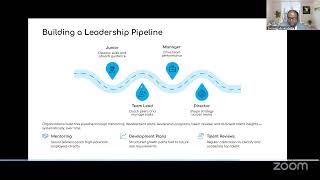
Dr. Niladri Bihari Nayak opens a 3-day bootcamp on SAP SuccessFactors succession management, career development, and mentoring. The program covers 12 concepts, targets THR85 and THR95 certifications, and addresses core problems like single-point dependency, leadership gaps, and hidden talent. Participants learn configuration, case studies across 11 sectors, and build a 90-day action plan.
Chapters
Hello everyone, good morning. Thanks for joining in. So we are going to start today the first boot camp of the series, and, uh, so let me get started. So welcome, welcome everyone. If you're joining for the first time, you can say the chat, and if you're watching it from the YouTube, you can say where you are joining from. So this is a 3-day boot camp, 3 intensive days of boot camp exclusively for talent management area, okay? And we'll be focusing on success and planning, and this will be from a product point of view. SAP SuccessFactors, Success and Planning, and career development, okay? Succession management, career development, and mentoring part of it. And this is a 3-day intensive days. We'll be covering 12 concepts. And the target is also for certification point of view, those who are targeting the new pattern certification of THR85, THR95, that is Accessible Management and Career Development Planning and Mentoring, right? So what we are going to cover in the 3-day curriculum. So the 3-day curriculum will be purely hands-on oriented and with some set of context setting, and we will do that. The first, today is the day 1, and we will be covering today the setting the context. In the first session, the first 90-minute session, we will cover context. What is the foundation of the succession management and what is the architecture behind it? The succession management, what are the different dominations? Those parts we'll talk about. And the third part of it, definitely, as we are focusing— as you are a community focusing on architecture, right? So we will not leave behind anyone to understand the architecture behind it, right? So we'll focus on architecture lens, enterprise architecture lens. How does it work, right? The workforce, talent intelligence, skills architecture. Now, let's do everything, right? And how AI is used for the entire talent planning process and what are the different 12 streams of architecture. This is not in the SAP curriculum, but from an enterprise architecture lens point of view, Success Labs Academy will be focusing on that. Then we will be in the second, then we'll be taking a break, and after that we will be having a session. We will be going deep dive into the succession configuration, the implementation strategy, AI and future of intelligence, and we'll— today we will end up with the Understanding the career path, salary positioning, and there will be also a homework will be given to you. So this is the first, uh, day, and the next one will be your next session tomorrow, which will be happening again, uh, two major sessions. So we'll be revising and we will be talking about the career development, development goals, career worksets. Then we'll be having a short quiz, then followed by the opportunity marketplace, AI skill ecosystem. We'll talk about what is skill ontology. What is the mentoring architecture we are having, and the entire things. Although the entire boot camp is designed for SuccessFactors, but even if you're coming from any other product, let's say Workday, Oracle SCM Fusion, or any other, uh, Jira, any other Jira people, or any other cloud platform, anything are coming up, so you can still— it is relevant for you. So stay tuned and we will be— you can do the same activities in your system. I will also come to you, okay? So don't worry. So this is the life of study. Live activities also we do. Then we'll be debriefing tomorrow, and, uh, people who are interested to carry on this journey, we have a session for you at the end of the tomorrow. And then we have the day 3, we'll be focusing more on the career side of it from implementation point of view. We're focusing on theory, case studies Okay, within the 3 days you should be able to follow the case studies, should be able to film. I know there is a lot, but so this 3 days is like an awareness session. So we are creating awareness for you, and this is also— we are using AI a lot. Okay, so you must have seen that in our platform we have an architecture. Okay, so I will talk about that shortly. If you go to architecture.successlabsacademy.com So here you will be having 4 parts of it. We start with Discover with AI, and then we just Learn with AI, Apply with AI, Build with AI. Okay, everything we are doing is like Architect with AI. And in this, what we are going to do here is, uh, today this is the awareness session. Already we covered the awareness system earlier. In the every Monday we're conducting for HR, and, uh, the 8 PM IST, Indian Standard Time. And today, whatever we were doing, it's a bootcamp. Bootcamp is like for every, uh, who are already part of our community. And for a few sessions, we are opening it for everyone, for public. So today is one of those sessions. We have opened it for public, but this recordings will be available only for the Silver members and beyond. Okay, so this is, uh, Learn with AI. We are doing it and, uh, this is what exactly we will continue. So this is, uh, the third day. And after that, it is not the end of the day. So those 3 days after that, we'll be also having people who are qualifying the bootcamp. So boot camp is a qualifying criteria to move into the hackathon. So till that time, whatever we have done, everybody was entering into the hackathon process. But now we have seen that people, everybody is not completing those hackathons in the midway, they leave the hackathon. So for that reason, we have a criteria. People who are qualifying this 3 days with all the submissions, then only they will be eligible for this 90-day action plan. And they will be going for the hackathon process. Okay, so these 3 days strictly we are doing, and we are extending all kind of support. Apart from all these 3 days, after completion of the 3 days, you will also having a follow-up session 7 days after the day 3. Okay, where we will be doing a recap and also any kind of a Q&A. Again, we are to ensure everybody is aware of everything on the setup and everything. So 3 days followed by one catch-up session, you know, 7 days, within 7 days of the week. Then, uh, we expect that you finish the entire thing, okay, within the next 3 weeks, okay? 3 days to 3 weeks, that's a journey. And 3 weeks, even if you're not able to finish, for maximum 90 days is your action plan. So we have to have also, we'll be sharing with you 30, 60, 90 days of action plan, and followed by all the support, community support, everything you will be probably getting here. Okay, so the expectation is by the end of the 6 days you should be able to understand the entire Succession CDP, Succession Management and Career Development Planning, end to end. Okay, and you should be able to configure the core functionalities of SuccessFactors for these 2 modules. And also at the same time you're understanding the business processes. Okay, and architecture end to end of these 2 modules. At the same time we're able to understand how we are able to implement this strategy, implement this configuration in a system in real-time scenario. So you'll be getting our talent transformation use cases will be provided to you. There are 11 GICS sectors, okay? And based those sectors, you'll be getting different, different case studies. And also you'll be ready for certification, those who are not certified. If you're already certified, if you're joining this bootcamp, I'm more than happy. But actually those who are certified, they have an exception. You can skip the boot camp, you can directly enroll for the hackathon process. Okay, only that is an exception. If you're not certified, you must go through our 3 days, uh, this immersion program, or you can say the boot camp, intensive boot camp program you have to go through. Then also we expect that everywhere is AI is there, we also understand the different AI-enabled talent ecosystem to understand. And at the end of the day, you have to have a mindset of a enterprise architect. Okay, so this is the what you will be walk away with by the end of the 3 days. That is my promise. So that is the thing. And, uh, this is actually for whom the audience. It could be anyone who are HRIS consultant, your HR transformation professionals, you're a talent management team for a business side of it, or you are a digital HR, or you already an SAP HCM consultants who wants to move towards SuccessFactors any SuccessFactors consultants, maybe Employee Central you are doing, or any other module you are doing, you want to learn another module in your skill wallet, right? Then this is a module, this is a learning journey for you. So there are different audiences who are actually— this is who wants to architect the modern HR system, okay? So this is the audience point of view. Certification point of view, if you talk about, so these are two targeted certifications we are focusing, and it will be primarily focusing on the hands-on, the latest, uh, the latest understanding of your thing. So you will be going through all the hands-on and you will be having enough practice so that you can crack those, uh, hands-on oriented certification process in the first attempt itself. Okay, so that is the expectation from this boot camp today. So with that note, without any further ado, let's get started. And we will be starting today with the day 1. As I said, that we will be starting with your success and planning. And this is the bootcamp, uh, all of those who have registered, uh, officially, you will be getting this access to this platform. And this is the 3-day bootcamp blueprint, as I have suggested, as I have mentioned. And we will be going through detail about it as we progress. This is our strategy, as I said. For our entire bootcamp. And, uh, from a bootcamp point of view, so you will be going through today is the promises that we are helping to master all of the skills. Okay? So the 6 things which I have told you. Okay? And, uh, as I said, okay, so now before we go anywhere else, we will go with your typically the foundation part of it. Okay? So for that, let me go to the first concept. Which are going to learn today is this one, the Succession Management Foundation. So before we go, so let's say, uh, what do we mean by succession? Okay, anyone in the group, if you want to understand what is the meaning of a succession, right? So can anyone give an example, or what do you mean by the word succession itself, right? The English word succession, anyone? You can put in the chat, or you can, you know. So this 20 minutes, uh, I will— first 20 minutes we'll discuss about the foundation part of it. Okay, I know there are some people have actually, okay, posted that the next person— is it only for, uh, okay, somebody's a question, is it only for the people who are in leadership or is for everyone? Okay, so we'll discover that. So I will keep it secret. So succession management foundations, this is the leadership continuity also we call it. And but popularly, so let's say having an opening question for everyone. So what happens if— think about a cricket team, okay, or any other team, right? If the captain is suddenly leaving tomorrow, okay? So you are again— now I do not watch cricket, by the way, but I used to watch earlier. But if, let's say, people who are watching cricket or fan of cricket, okay, if the captain is suddenly leaving tomorrow, what will happen? Confusion. There will be who will be leading the entire team immediately, or there can be a distraction, the performance drop may happen. Okay, all kind of— there is no backup, we call it. There's no backup resource. So even also in the projects, if anybody working, we have to have a backup resource. That is a simple meaning of succession. Who is the backup of that particular resource? Okay, and the same thing happening in the organization also every day. Okay, so a few days back somebody called me that somebody has you know, there's an absconding happened in his organization. He was in a responsible project and there is no backup for that resource. That happens in many of the cases, okay? So that is what exactly the succession concept comes into picture. Now let's say, think like, uh, you're another mean good, very simple example I will give. So think of a school, okay? So school principal may retire, it's education sector example. A teacher also may leave suddenly because of the hike right? Some other schools, private school I'm talking about. And, uh, they also— but at the same time, your students also need grooming and everything, right? So preparing your entire thing, school also have to prepare some backup. So everything has to be— there will be a backup always, right? So in the company also, in the organization also, the same thing. I talked about a cricket example, cricket captain. Also I talked about school example, right? Similar in organizations also, succession management is a module where exactly It will be responsible, it will be responsible for identifying and preparing your future employees so that they can step into the any kind of a critical roles. If you are doing before the vacancy happens, you don't have to wait that somebody will be leaving and the vacancy will be there. It's not like that. So for that, from that point of view, it is very, very important to understand what is the meaning of succession management. It is very— I know many of you already knowing it, but it is for beginner friendly, for people who do not know anything about succession. So this is means identifying and preparing the future employees to step into the any critical roles before actual vacancies happens so that the business will continue. Okay, so that is the technical definition of a succession plan. The simple formula, so the important role plus ready backup. The role is already identified and also have the backup, then only the organization will be stable, right? So because business will never, never stop, the operation will never stop for any organization, so business will definitely continue. And also from a leadership point of view also, there should not be any gaps in the top point of view. The growth also cannot be ignored, right? So from all those aspects, succession is very, very important here in this case. And also there is a smooth transition happening, okay? Suppose somebody is leaving and there is a proper knowledge transfer, proper experience transfer, it should happen, right? So that disruptions would not be there, business will continue as usual. And that is what exactly the simple formula of this is: role plus backup Okay, then only we will be having a stable organizations. Okay, so this is the very concept, very simple concept here. Now moving on, so why organization need it? As I say that if any from SAP point of view think about your payroll lead is resigning before your actual payroll run, right? What will happen? Okay, then nobody knows about how to run a payroll in SAP. It's a disaster, okay? Even if same thing happened at the leadership level, also at the CXO level, Ito's Chief Finance Officer, he is retiring without a successor name, okay? That is also an issue. So a similar factory operation head also exiting the middle of the project. If there is no plan, definitely the result will be chaos. All this kind of activities and all these things will happen. And how this module will be helping? The module, the succession planning, will be helping you identify those future leaders in advance so that the dependency will be less for the other talent and all. And all, there is always a pipeline, there's always a pipeline of the talent leadership, okay? And also you are also able to retain the talent retention, so also should happen. So that is very, very important, and hiring weeks also will know, and cost of the hiring also will go away. So this is why we need succession management, succession planning, by the way. So this is very, very important here. Okay, so now 4 things we taking away. So as I said, single point dependency, the key business points you're having. So if a person— imagine that, uh, it happens in many of the cases, okay? People not do not share the knowledge, uh, especially in the corporates and all. So the critical knowledge about it, okay, whenever they are leaving, the knowledge also goes with them, okay? And so that is the first pain point today in the business, okay? And second thing is, uh, leadership gap. So if the retiring leaders, if there is executives and there is no, there is no next generation of talent already stepped up to will be, you know, going to the next step, right? If it is not made, that's another pain point in some of the country where the aging population is on higher side. Third thing is high attrition, okay? Employee, there's definitely they will be always living for salary growth as for their own thing, right? And they burn out also, then organization can replace them also. So this is actually the should also think. Fourth is no career visibility. Sometimes we go and, okay, there's no end to it, okay? I— people think that, oh, I don't have any future, or whatever I have to suppose, uh, okay, I have to learn. I learned everything, whatever, from the organization. I don't have any new learning in this organization. Many a thing— many times people come to me also, same thing, they're saying, okay, I'm getting good salary, but there is no growth, uh, I do not learn anything new there, okay? So that is also— there is no career visibility point of view. They do not understand where to go. Right? What is their next, right? So those are the key pain points from a business point of view, okay? So that is from a— okay, so now, now after understanding sports education sector, now let's talk about another sports, okay? So football team, talk about a football team, and let's say one goalkeeper is there, and if they are absent, entire team will be struggling, right? Whatever the strong, the rest of the people are, right? So this is a very common thing. Organization also face the same fragility every day. There is, uh, there are different kinds of risk. You are having a retirement risk, there is an attrition risk, there is a skill risk, there is a growth risk, right? These are the what pain points, whatever we have seen in the previous slides. So this is what exactly that— these are the kind of a risk you can have in an organization, right? So it is pretty much easy to understand critical, hard to source, the skill risk. Skill risk is actually AI and SAP, and there are modules in SAP or any other modules, we have very new skills. Very difficult to get those people in the marketplace, right? So that's a skill risk. If they're hard to get, they're also demanding the higher salary, okay? Similarly, if the growth point of view also, company will be— if they're expanding globally but they are actually lacking the leadership, there is also a growth risk, okay? So these are 4 risks, okay, related to the previous side. These are all interrelated. So this pain points relates to your— these are the 4 different, uh, risks for that also from a talent risk point of view. Okay, so now how the workforce will continue. So definitely why there is a need for the, the need for the succession planning, we'll talk about. So previous examples also I talked about, if do not have a succession planning, if the payroll lead is leaving the organization or the production manager is leaving the organization, so what will happen? The payroll, the fail to run, there are delays in the project delivery, right? So but with succession planning, what will happen? The backup is already ready, they can immediately replace and, uh transition will be very smooth and people will not be knowing that, okay? People, business will keep operating, okay? The business as usual, right? And even if there is so much of changes in the people and transitions, so the disruption will be minimal, right? And people will be having a trust and confidence for the organization, right? So that is the thing which we'll be talking about here. Then the entire— whenever I'm talking about the building a leadership pipeline I'm not talking about only a junior or senior, it's across the organization. Okay, so this is a culture. Leadership, it doesn't— I say it's not a title or entitlement from my point of view. So this will be across the organization, across the hierarchy of the organization, right? At a junior level, they may be having a skill development, they will be having doing some kind of, uh, under somebody's guidance, they will be doing that. And next level, the team lead will be doing mentoring, coaching, those kind of a thing. And the next level manager will be driving the entire team performance and all. Then the director will be more of a strategic thing. Then he or she will be doing this entire across the team, defining the strategy part of it. So whenever organizations are building the entire this pipeline, they do with their mentoring development plan, leadership program, they do talent reviews. And nowadays a lot of AI-based talent insights, which you will be seeing at a point of time, the upcoming sessions. And they divide. So this mentoring, actually the senior leads coach high potential employees directly. And another, other way around also, the reverse mentoring, which I have not mentioned here. The reverse mentoring also happens. Even I have done a few reverse mentoring, and from the communities, people who I have learned, uh, from someone who is 10 years, 15 years younger to me. Okay, so, but you should be open for that. Okay, so those kind of mentoring can happen. When it comes to development plan, the entire structured growth plan also can happen. It will be very structured. There are mechanisms we will be learning about that. So that is— that these things will be coming more in the CDP. The next day 2 will be coming up. And also there will be regular talent review happen, the calibration. This is actually more part of PMGM part of it. It is there, performance management, goal management. But the calibration will be helping you to identify and accelerate the top talent also. Okay, so this is the things— how do you build the talent, typically leadership pipeline I'm talking about. Now, succession point of view. So from an industry example point of view, from a banking point of view, so this is very pretty much easy to understand. So if the banking industry, so you can see, just to take 2 minutes and you check it out, what are the industry impact, okay? What will happen in the bank, the branch manager is retiring or leaving, okay? Compliance is there, okay? We don't— we have no succession, what will happen? So we can think about it. Similar to these things, actually, we— I will be giving as a case study, okay? So banking IT service is very critical, by the way. Because these are all knowledge-intensive industries— consulting, IT, okay? If you do not have a proper succession planning and all, lot of challenges you will be seeing here, okay? And these are all again client-facing organizations, right? And same thing if manufacturing is happening. So in the manufacturing sector also, if a plant expert is leading the organization, the production also impacted, okay? And this is what exactly we will be seeing. These case studies is a homework I will be giving to you which you can start Okay, during this session, now whenever I'm saying the, the keynote is here, the succession management is not about replacing the people. People always think about, okay, I will pass it on and somebody is actually replacing, but it's not about that. It is actually ensuring organization never loses its ability to grow, lead, and operate. So that is the how I see it, okay, from succession management point of view, you have to always identify the, for the future leaders early in your business, okay? And also at the same time, these two are very interrelated. Succession management, it is not about only identifying, you also nurture them, you also develop their skills. What is their current skill and to go to the next role, what is the skill gap, okay? So, so those things also they have to build it systematically, they have to develop And also you have to sustain the same thing, that keep the organization strong, right? So that is what exactly, and this is what, uh, is all about the first part of it. And now what I will do, I will be now showing you something. You have to go to, uh, we will be taking a, a break, or then we will continue. So what you have to do is you have to, we already talked about the context. Now we understood what is the trend, what all the things we have talked about. And the next session we will be continuing with your succession management. This already we covered, succession management foundations. We have already understood what are these things, okay? So now in the next session we will be continuing with your succession architecture, okay? SuccessFactors from SAP SuccessFactors point of view. And in the next session we'll be having a hands-on demo flow as well, okay? So this is what exactly we'll be covering in the next session. So stay tuned and we will be covering it in the next session. Thank you very much.
More from Dr.

SAP Procurement with SAP LeanIX x SAP Signavio Webinar | Architecting the Future of Procurement

Global Compliance Navigator by Dr. Niladri Bihari Nayak | SAP LeanIX Sep 2026 Contest Entry

SAP LeanIX to SuccessFactors integration Webinar | Architecting the Future of Work

2027 Leadership for Enterprise Architects : What Changes ? | Architecting the Inner Transformation


Reporting in SAP LeanIX Webinar | Architecting the Future Autonomous Enterprise



20 SuperLabs for Architecting the Future Autonomous Enterprise (Business Arch & Enterprise Arch)

