Architecting the Inner Transformation - Reimagining Identity, Leadership & Human Potential in AI Era
Dr. Niladri Bihari Nayak introduces a framework called Sambandha, Abhidheya, and Prayojana, adapted from Sanskrit, to help professionals build inner resilience in an AI-driven world. He offers concrete practices like 5-minute journaling and role-free introductions, and argues that AI should amplify wisdom, not replace empathy and ethics.
Chapters
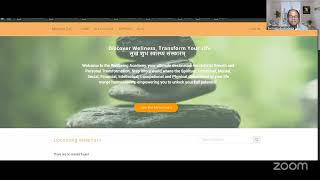
So welcome everyone, so welcome, welcome, welcome. So thanks for joining in. So welcome to this, uh, Source Sunday. So Sunday, welcome, welcome to Source Sunday series. And if you're joining for the first time, so say FT in the chat if you are joining, uh, from the YouTube. Okay, so this is the first series of our Source Sunday series and we topic, we're starting the first episode today. And people who have seen earlier editions in my YouTube channel, we have different themes for different other days, but most of the themes are like professionals transformations, like your Monday is dedicated for HR and workforce transformation. This entire hire-to-retire cycle, we call it Workforce Monday. Revenue Tuesday is for your entire customer experience and revenue transformation. Wednesday is dedicated for finance. Finance, Wednesday, Thursday is dedicated for procurement, Fridays for supply chain, Saturdays for the entire business transformation focusing on enterprise and business transformation. So among of all of these things, Sunday is very, very special because it is not about the external world. So we specifically dedicate one day for our inner transformation, for our own human transformation. Okay, so this is the series which will be dedicated for everyone. You can share it with anyone and everyone irrespective of the background. It could be students, be professionals, it could be leaders, coaches, for everyone. And we talk about different types of leadership, mindset, purpose, human skills, self-awareness, lot of other topics which we talk about in this series, entire series. So this is all about Resource Sunday, and this is the first series, first session for the series, and we will talk about this, and we will have different, different themes. We'll talk about, as I say, mindset, habits, inner growth, resilience, in more a practical way rather than only understanding those things. And those who are staying till the end, we will be sharing this the Cloud Workbook for you, the Cloud Playbook for you, especially so that you can practically apply whatever you are learning here. So stay till the end and you'll be getting those bonuses. And you're watching it from YouTube or any other channel, you can direct— directly LinkedIn DM me and I will be sharing those gifts for you. Okay, so with that note, let's then get started. I'm very much super excited for this session because it's something really, really special for me as well, because for the first time I'm doing for the community. And I'm sure it will be helpful also more than you. It will be also helping me to also grow in my spiritual area, area part of it. And definitely whenever I'm spiritual, every aspect of it very important life. Okay, so with that note, let's then get started and go to the Soul Sunday series, right? So let me then get started and let me present my presentation. And the topic is today, the theme is actually we call it Architecting the Inner Transformation. We talked about enough about HR transformation, finance, transformation, all those things, right? But again, in the same thing, being an SAP professional, we will be seeing from that lens, okay? And also, by the way, this is something I have learned from my mentors, from my spiritual mentors, from my spiritual organizations. So I'm just trying to, um, say the same thing. I'm not adding anything or subtracting anything. Whatever I have learned, I'm just sharing with everyone, okay? So I will pass on this to my, um, Guru Maharaj, my, my spiritual masters, and to all the masters, mentors, coaches, to whoever, from whoever I learned. Okay, so this is actually— I'm passing it on. So in this entire Soul Center series, we'll talk about— today is focused the debut session, and you talking about the 3 things. Again, coincidentally, it matches with my theory as well, and I discovered not now, 5, 6, 7 years back, whenever I was doing the activities in one of— in my learning program in spiritual— spirituality, and I discovered it, and there is a specific session for it also. SAP— Sambandha, Abhidheya, and Prayojana. Sambandha here means relationship. Abhidheya here stands for process or practice. Prayojana stands for the goal or the ultimate purpose of your life. So this is an ancient wisdom framework reimagined for the modern professionals, leaders, change makers navigating today's business in the AI era, so for a better clarity, purpose, and impact. So we think beyond our roles, and we are thinking about the impact, what impact we are going to make. Okay, and that is with that note, with that intent, we are starting this series. So let's then get started. Now this picture says everything. AI era has changed everything. Lots of layoff happening day in and day out in the different newspaper, media channel, social media is happening, right? We have more than enough, more than ever, the kind of Enough of technology, enough of automation, enough of AI agents we're talking about, okay? And we have all the information in the fingertip, right? So I don't have to go— this is not more, uh, just anything you go to ChatGPT or any AI tools, you'll be getting all the information at your hand. All lot of productivity tools, lot of AI system, lot of connectivity across, right? But still, the increase— there is an increase in anxiety. If you see that in the newspaper, if you read the trend here Okay, there is people are still struggling with anxiety, chronic burnout. They do not know who they are. There is identity crisis, there is emptiness, hollowness in this, in their world. They are meaningless despite— so they don't know the meaning of it. What is that? So in spite of having a lot of achievements, lot of everything, right? The relationship also breaking down. So leadership crisis, a lot of these are though— you are, you can relate to it, okay, as I am speaking, and you can also relate with, with this. Okay, so what is the essence of it? So essence is here, whatever the external transformation, whatever that is having, without inner transformation, it creates your imbalance only. Okay, although we are advancing a lot, but we are still hollow in our inside, right? That is something we do not want. Okay, so with that note, we have a lot of optimized systems. You do— I know people, most of our community members, they are into technologies and all. We optimize the system, but we forget ourselves, who we are, right? We, the organizations also, corporates, okay, they teach a lot of technical skills, certifications, frameworks. Nowadays they're also doing a lot of well-being program, but in the paper only. But it's not— I have not seen that much. I don't know what is the ROI of those, what is the value out of it, okay. Only the HR people will be knowing, but it's a checklist in the paper or no. I'm just, uh, not blaming anyone, but there are— I'm saying that I have experience of the same thing. Frameworks, there are a lot of AI tools, productivity, performance, definitely increased, okay. Organizations are teaching, and that very— are very so many high performance, very much successful, right? They are equipped with everything, but are they really teaching the self-awareness? There is adaptability, emotional intelligence, whether they are aligned with the inner leadership, purposeful alignment, okay? Those things are really, really missing, okay? What kind of really conscious— are they real meaningful relationship? Are they meaningfully contributing or not, right? So they do not teach that, okay? Even if they're teaching, but I have not seen it's going to that scale. Very few organizations— I'm not saying every organization, but very few organizations do that. So in this note, as I said, we'll be coming to the core framework today. We'll be learning the core framework. It's very easy, people, because many of our committee members, they're coming from technical background, they're coming from SAP background, most of us. And if no, so it is a good easy for you. SAP, we'll talk about the three Sanskrit word. I will say samanda, aditya, and prajna. Samanda stands for this universal framework, says that the relationship and identity, who you are at the core, how you are connected with others, at your work, or what is your larger purpose? That is all about the sambandha. In the S stands for that relationship and identity. Avidhya stands for what is your daily architecture, what is your daily discipline, habits, what is the system, what is your— how you are actually practicing everything, right? How you do it. So, uh, every day, okay, all those practice, regular practice and regular process, what you're following. Okay, what is the— okay, then PRIOSEN stands for purpose and impact. What is your ultimate goal in your life? What is your— how much impact you're going to— how much you contribute to the world? Okay, so you are— are you building towards that, right? So it is applicable for every part of your career, whether you're a students, whether you are a professionals, whether leaders, or you're entrepreneurs, or you are for the entire organization. It's for everyone. This 3 dimensions of human transformation, SAMMAN, ARIDHAN, PRIOSEN, for everyone. Okay, so you can do that exercise. Maybe we can do an AI exercise. As many of you are into AI, so I know that it will be— I do not want to— it's like a typical lectures, rather doing an activity. So you go there and you check it out while I'm doing this activity. So let's say that I will be talking about a student. Okay, so let's say I'm a student. I'm a student, maybe a final year. We have final year. In B.Tech. Most of us are B.Tech, okay? How I'm worried about my placement, that's the reality. And, uh, how this framework, okay, Samana Can help me framework. This is SAP framework. Let's see how it is answering. So you can also try it out. This is the Codex for the AI prompt. You can check it out. And let me know how it is relevant for you. Okay, this is pretty much, you know, natural feel to answers during your final year. Even including me, I was also worried about that during those days, but the situation is more difficult these days. Okay, so as I say, sammanda means you are actually the phase of self-awareness— who you are and where do you fit. Okay, so typically your identity. So are you naturally drawn to, or, you know, you can identify. So instead of applying every company and out of fear Okay, sit down and establish 3 things, these connections here. Especially identify your core. Okay, are you naturally— suppose you are into more into interested to coding. Okay, are you really— suppose, or you are, but you are coming from a background of, let's say, mechanical civil. Okay, are you really going towards— okay, so, or if you are coming from other background, right? So what is the natural interest, natural tendency, whether towards a deep coding like data structure, algorithm, system design, data analytics? Okay. or if you are more into functional consulting, business process side of it. Okay, so this is a choice you have. For me, when I started my career initially, it was initial 2— I didn't like the coding. For that reason, I switched between. Okay, so after 2 years of SAP ABAP and all, I moved towards functional consulting, like human capital, HR, and all. Okay, so this is again you identify, but because that identification is very important, it is not like everybody is going coding and all this data science, craze of AI. So it's not like that. I know you should be knowing this, that as with the market trend, but What is your interest? Okay, so you have to identify that. Then bridge the gap, understand the relationship between what your college syllabus has taught you, I know, and what the industry is demanding. What gap? Okay, there is— I know there are gaps, but again, uh, you have to bridge that gap. And that is why we are here, we support you. Success Labs Academy, we are supporting you to bridge the gap. Okay, and shift your mindset that your identity is not defined by a single rejection. Even if you are rejected in any of the previous interviews, or a single test is not going to tell you that that is yours. So you're an engineer solving a matchmaking problem between the skills and companies' needs, right? That is your samana, that is the practical application for you, okay? If you are a corporate professional, you can try the same thing, okay? And I will be not repeating the same, but I am showing you how this works, okay? Avyayana means one exam with the practice you are doing, okay? What is the routine, day-to-day routine? How much time are spending learning? How much you are Are you able to explain those things in a typical interview? What is the communication style, protocols, all those things? Are you preparing enough for any kind of mock interviews and all? So that is a practice and process, that's all the way up. And purpose is actually what is the actual goal, what is the long-term goal, what is short-term goal, right? So view your first job as not your final destination. People switch the jobs like anything these days, right? And, uh, that's like a lab for you. So you're just entering and you are really developing architectural mindset from the beginning of it. You understand, you instead of praying that I have this level, select me, how can I add value to your projects? Okay, so that is something you have to talk about it. See the bigger picture, right? So your career is a marathon, not a 100-meter sprint, as I say, right? So this is your SAP for you. So someone for you here, actually, okay, these are three dimensions, okay? And same thing, you can repeat it for whether you're a housewife, whether you are a leader, CEO, CXO. What is the someone and for you? That means relationship and identity for you. Practice, what kind of daily practice and daily rituals we are following, and what is the ultimate goal, purpose, and impact for it. So there are three dimensions of human transformation from a traditional scripture, from the traditional ancient literature, right? So this is the activity which you have done. I hope you have already done this activity, and depending upon where, in which career stages you are in and all. So I hope this will be, uh, eye-opening for you. It's a mirror for you, okay? So now with that live activity, we will move on. So we will do that reimagining SAP. So it is not about the tech in this context, not about the ERP point of view. This is— they are doing amazing. I'm really, really proud of that being an SAP consultant. And but at the same time, you have to also think about the other side of another SAP. Okay, so I will not say the traditional, but in the traditional, both are important for us. Traditional plus new, both are important for us. Okay, so though you have to also powerful upgrade So upgrade of this era. So because you know that SAP also upgrades every time, and also essentially they have done a Sapphire program. People who are watching, so they have a very good Sapphire program and they had autonomous system, everything. Okay, but here the new— what is the SAP for you in your life, in your career, right? It's a new operating framework for the inner enterprise. In the external enterprise, we already done people especially who are doing SAP and almost ERP products and all these things, all right? But it is built to develop the human being at the center of every organization. What are the organization roles, relationship, whatever you are having it, right? So we are reimagining necessity for your inner enterprise. Okay, so that inner enterprise is more, more, more, more sophisticated. Okay, and that also requires an upgrade. Okay, so we might have done a lot of S/4HANA upgrade in our external enterprise. Okay, for many of the organization, many of the industry spending a lot of time, but your inner enterprise requires more consistent upgrade. Okay, and also the roles and results also have to be purposeful and presence. Okay, you have to have your own requirements. Nobody will— external people will tell you what is your inner requirement, right? So that inner enterprise is more, more important than your external enterprise. Okay, so that also requires an upgrade. Okay, so with that note, we will be going further. The part of the possible example is, I've already mentioned this one. So for a, just like a student, it can be also a corporate professional. What the corporate professional, what is the example? Can be, am I the job title, whether, whether I'm analyst, whether I'm a consultant, whether I'm an architect, solution architect, or either a partner, or I'm a customer experience, or, you know, a representative, whatever may be. Am I beyond my job title? What is my relationship? What that is defining me and sustaining me, right? Do I know my values and it is independent of my company or designation, right? So that is your real sadhana. What is your identity? Second thing is A for you, Avidya. Avidya, again, what is the daily practices that is setting your mind? It could be daily learning. What is your daily emotional state of you whenever you are working? What is your leadership presence, executive presence, right? Am I investing enough for my inner architecture. Okay, the way I invest on my certification, that is the professional skills, am I really investing in my inner architecture, right? So whether I'm doing all those journaling, all those, you know, affirmations, whatever is really required. There are different, different tools available in the market— visualization. Okay, a lot of things are available, a lot of tools nowadays, uh, you can practice, right? And the prayers, everything, right? So third thing is the PP for privacy. Privacy means actually part of the legacy or impact you are creating. Okay, am I really creating— am I creating the value for the society? Whatever the work I'm doing, whether it's beyond my career, for my family, for my team, or for the world around me, right? That is also the key question you have to ask. You are a corporate professional, if you resonate with me, say me, me, me, me in the chat. Or if you're watching in my YouTube channel, just you can relate to it. What is the meaning for SAP for you? Someone, the entrepreneur, for you, right? So I think that is really, really helpful for you. So now same thing for human, so typical human transformation point of view. So basically you have to think first of all, uh, identity and values. What is the self-awareness? What are the beliefs? What is the ethics? Then you convert the habits that will be leading you on a daily practice. Okay, and these are not random, by the way. It is a layered intentional architecture, or it is pretty much each layer builds upon the below it. You cannot go to the top and lead others before you learned how to lead yourself. Only there are two things in the world you can see how you lead yourself and how you lead others. Okay, so that is the two things from a leadership point of view. Okay, so self-leadership and actually how people leadership, right? So you have to be self-aware, you have to identify your values, identify according to that, aligning that with your habits. Then according to that, bring your influence and responsibility. I have a lot of learning from different other leaders as well. And regarding leadership, leadership like here again doesn't mean a title. Okay, you do not need a vice president or a CEO to become a leader, right? Even if you're an analyst, a beginner, a professor, you can showcase those leadership. Okay, and in terms of thought leadership, it could be anything, whatever you are. If you're creating your influence, you're creating, taking the responsibility, then you are a leader, right? So it could not— this is depending upon your age. Okay, that doesn't depend on your title, nothing. Okay, it's not an entitlement for sale. Okay, and next level is a contribution, how actually you are contributing to the society. Maybe you are implementing a project by that How it is impacting the industry, how it is impacting the, you know, people in that organization. Okay, and so you think beyond that. And at the end, you are actually— your meaning, your legacy, what exactly you're leaving behind, what is the contribution people can remember you, meaning beyond yourself. Okay, so this is the entire— I will say that each layer, okay, building upon the one below it. And you cannot sustainably lead others before you have learned to lead yourself. So leading yourself is very, very, very, very important here. Okay. Which is very difficult, okay, when we try to lead others. But if you lead yourself, that is most important for now, then you can lead others naturally, right? So that is the framework, that's the architecture from a human transformation point of view I'm talking about. So now let's try to understand the first dimension here, the first dimension, the SAP, which you've talked about in more— in more in detail. Samanda, samanda means relationship and identity. So we need to understand who we are. Are we the job title? Are we the LinkedIn profile? Okay, so whatever you are having, or I have a performance review, I have seen, I, that's my, I hate that cycle in my corporate career, right? People were rating 3, 4, 5, whatever. So those kind of ratings are not your, your ratings is not going to define you. If you're any, uh, forgive me, if you are actually any, any of you are a performance manager and also you will be also resonate with me practically. Okay, and, uh, you are not inside that box. Okay, or if you're talking about the 9-grid matrix or calibration window, so you are not that person who was in that calibration window of those quadrant and all. Okay, so HR will be understanding that point. People who are coming HR background or performance manager in corporate, right, you'll understand me, right? So you are— it is a stable authentic core from which all action, decision, relationship flow, right? So you understand yourself, you are not that Also understand the interconnectedness. So all the professional achievement, whatever, report personal achievement, right? So they are not created in isolation. So someone reminds us every time that who we are and our relationship are not peripheral to our— they are also interrelated, they are not isolated, right? They are all— they're not in silos, they're integrated, I will say, right? So for the reason, so you have to think about it, how we connect to how we, what we are, how we connect with others. Those kind of invisible threads that binds us, then something bigger than ourselves. So that is all about Samana, how your, your, it is all of your identity, how you treat the relationship within you, with yourself and others. Okay, so that is the dimension one, yeah, we talked about. So in this context, um, what will be going deep dive? I have a career, but we have a clarity. So that is all about Samana. Right, so this is a pretty much question people ask about it, whether I'm in the job title, whether many times people compare whether I'm in whatever designation they are having, or in the org chart. In HR, people can understand that whether I am that mini window, mini profile, or a card, talent card in that org chart. No, you are not. So many times you compare, okay. So depending upon their, you know, status, social media, they are killing us, okay. So although we are using it, we have to be consciously using it, okay. So You should not fall into the comparison trap. Be— stay quiet and whatever you are having, and you will have a clarity what exactly you need it, okay? Your clarity. So that quiet question is very, very important for you, okay? And instead of productivity, so do not equate busyness with your meaning and value, okay? So that is what exactly you have to talk about. And also do not seek any approval from others. Do not validate anything and everything, okay? Whether you're capable or not. So you know what you are, and you have to have a clarity. What is the clarity, right? So it sometimes many people look Many times they look very successful in their career outside, but they have inner vacuum, right? I have seen so many people in the different, different communities and in my Dany platform, in other platforms from where actually we are learning, okay, from different areas, different geographies. There's a growing gap between what we do and who we are. There should not be, okay? So that is the Sambandha all about in detail. But in the modern life, as I say, the relationship itself, your family, society parameters with yourself, the relationship with yourself, with the family and society where you live in, your nature and work as a professional, professional, and your natural, uh, natural world work. And highest is your, your relations with the divine. Okay, so that is a sambandha in modern life. Now there is a small exercise for activity for you. You can do a journaling exercise. So who are you without your designation? So you have to— do not have to whenever give me an introduction. So let's say this is— you can talk, you can also do with your any other friends. You have to— whenever you're giving your designation, you are giving an introduction, do not say your title, company, or role. Whatever is remaining, that you could introduce. So just to try this out, or you can journal it. This is a 5-minute journaling exercise. You can do that. Take a 5-minute pause, okay? And if you're watching this online, uh, watching the recording or watching the YouTube, pause the recording, pause the video, reflect upon who are you without a designation. Visualize that, okay? Are you that person? So you just— what exactly truly energizing you? You are not going to impress anyone here, right? What is actually genuinely bringing alive? What feels your presence? What makes you, you know, you forget time but you keep on doing that you love to do, right? So that is giving you energy, okay? So also what you're neglecting today, okay? Maybe it could be relationship, practice, aspiration. It could be part of yourself. You are constantly ignoring that for a while, quietly, in the rest of productivity, in the rest of getting those, uh, next level of designation, next level of promotions. It could be directors, director, partner, if you're working in Big Four. Okay, so those kind of things, just to journal it, take a pause. No judgment, we are not going to see your journal notes, no audience. Just be honest with yourself. Hope you have done that. Take some time, take 5 minutes and keep on. Hope you completed that. So these are all not theoretical questions, so just to invite your honesty, invite your inner inquiry, try to bring answers. Do not edit anything, so whatever comes to your mind for the first, you just stay with that and you reflect upon that. So this is a reflection exercise you have to have it. Okay, hope you have everybody done it. If you have not done it, repeat it once again. Watch the recording again. Watch this, play it again and do this activity. Okay, I hope you've done it. So if you've done it, now let's move to the dimension number 2. So the dimension number 1 was all about is, amanna, the all about the identity and our relationship. Then now the second dimension today will be learning the Avidya. Avidya is all about process and practice. How many of you are your process consultants? Or if you have done any of the— all the 6 days we have always done that business process consulting, right? Whether it's HR process, finance process, supply chain, procurement, customer experience, uh, everything we have done all possible way. People who have done Aries, uh, or SAP Signavio, all process modeling, process designer, process modeling, process mining, you have done enough Okay, so now this is time to do that same thing for your inner architecture or inner self, right? So here, the process and practice. So whatever transformation is not accidental, it has to be a process, it has to be a practice, it is architectural. Okay, so here, Avidhaya, Avidhaya refers to prescribed path, whether you are having a daily discipline, daily deliberate practice, if you're having it, okay, or you're having those consistent processes, you are actually doing that every day and every day. Okay, without any failure, right? We are doing that gradually, okay, irreversibly, okay? And it's all about inside out, okay? You don't do— become a conscious leader, you know, accidentally. You design it, you practice it, okay, consciously, right? One at a time. So this is the second dimension of your— the framework of SAP framework for our inner transformation. And we talked about avidhya. Okay, so how does it actually— daily system works, uh, and that will design your— design your destiny. They say that there's a pro— I have attended some of— some few days back, not few days, I did not remember, uh, design your day, design your destiny, they used to call it. Okay, so what exactly, whenever your thought crosses, how— what you consume daily, that is an input. Okay, that was inputs actually interpreted in the thoughts process, and those from that, your repetitive actions from those thoughts becomes a habit, and your habit becomes a character, okay? And that is by building your consistent habits, and that becomes an influence. And because that's the style of leadership, you want to change the leadership, you change the inputs, okay? And it's the entire chain, from entire daily input to your entire, uh, okay, it's unbroken. So we have to manage, manage the output results and performance, reputation. We have to audit your input, okay? So that auditing your input is very, very important. What exactly What thoughts you're allowing you, okay? What habit you're repeating, okay? Every conversation, whatever you are having it as a leader, right? As a person who are becoming, right? So we have to have that thought process, that input. You have to think about it, right? So what is your inner operating system? So again, it comes from different way. It could be mind, body, spirit, and environment. So my mentor always say to me that, um, your environment is more powerful than your willpower. Okay, so how— it's all about how you use your physical surrounding, your physical workspace surrounding. Okay, the social circle, peer influence, what you exactly are consuming digitally, right? It's a consumption pattern. It also influences you, your inner operating system, right? Just like any computer's operating system, uh, it almost depends upon the— depend on the quality of the operating system. Similarly, our leadership and life also that outcome depend upon the quality of our daily input. Okay, so people always optimize the external tools, but they always— I have seen the neglect, uh, to upgrade the inner OS, the inner operating system, right? So specifically the mind, body, and spirit. We talk about if you are consuming the content randomly, it also depends upon what kind of a quality of composition you are having, what kind of learning and reflection habits you are having. That's the mind game. Similarly, body also requires food and nutrition choice. What kind of food you are taking, what is quality of sleep rhythms in your life, how much you take— we're taking care of your body movement, physical care. It's a body part of it. Similar from a spiritual, spirit point of view, irrespective of religion, faith and all, are you doing all those meditation, silence, you are having digital boundaries, gratitude, replacement practice? Those are different, different inputs for you. So these are different elements of a typical inner operating system of yours. Right? So similarly, there are some universal practice for this uniform. It's not specific to any of the religion, as I said. So people do mental practices. There are so many tools available for reflection, journaling, okay? You can do that. So emotional practice, you do a gratitude journal, share your thought process, empathy, show empathy someone, forgiveness, okay? Spiritual practice is always really helpful— prayer, meditation, silence, mindfulness. Okay, you can create that space for you, you can connect that deeper sense of meaning for you. Okay, so that is something you can do, that is spiritual practice. From leadership point of view, integrity, accountability, all this service mindset, really we can require. These are all kind of outward expressions that will help you and to deeply cultivate that kind of inner character in you. These are the universal practice for your inner transformation. They appear in different, different format, okay, but you have to choose whatever suitable for you and you have to be aligned with that. Okay, so if humans do not upgrade consciousness, technology will amplify chaos, right? So now back to AI again. So AI has again come in. So AI will definitely amplify your human strength. So in terms of intelligence, productivity, part of the output we are having it, but also it will amplify your youthness. Okay, so it could be your ego, you know, tribalism, confirmation bias, distraction, addiction. If you are having misinformation, everything, that is also the other side of AI. Okay, so it's just a mirror. Yeah, I just have a mirror for you. It will reflect in a magnetic way whoever is holding it. Okay, suppose it's the quality of the human using the tool determines whether technology becomes the wisdom or weapon. So it's all depends. Okay, so there's a science in the traditional days. They also have— science has developed the atomic bomb also. They also develop electricity, all of those things. But again, depends what exactly, how you're utilizing that. So here, utility is the principle is my one spiritual man, uh, guru, spiritual mentor says. So this is what exactly. So for that, you have to create yourself first. So you have to regulate your emotions, you have to have clarity and discipline to follow that, and knowing what exactly matters, what is urgent. Okay, but don't be distracted. Maintain your, the invisible character. There's a trust, builds all around integrity, accountability, and genuine how you're caring for others, right? So Lead yourself first. Okay, so that is a lot about meaning managing the teams and deploying technology XYZ, driving strategy, uh, being a strategy consultant in those MBB and Big Four companies. So first things first, you could lead yourself first. Okay, the unglamorous essential work of anything. So you have to do that, right? Then comes your scenario. So there are different, different case studies there. So definitely Whether you're a burnout executive, whether you're over-understood in universities, okay, what they are missing, we'll try to understand here. Suppose there's a burnout executive, they're highly performing, they're already highly paid, they're extremely admired, okay, but what exactly missing there? So they are missing some mandal, that means their identity is lost, their relationship, depth of relationship is lost, right? So they're quietly wondering, that is why, is that what I'm working for? So whenever, if you're a burnout executive, you can relate to it, you can say yes, yes, yes, yes, Okay, so we are not going to judge, but these are real-world archetypes. Okay, so outer situation may be successful, but something is missing. Okay, so you will understand in this scenario what is really missing here. Okay, the first scenario, one of the executive S is missing. Okay, second scenario, the overloaded students. So nowadays students are accumulating certificates, skills, degrees, but they are actually lacking the direction many times. Okay, so if they are not properly guided, they do not know what is the purpose, what the orientation. So for that reason, a lot of career counseling is happening and skill Also, apart from your skills, you would also understand what is your interest and based on purpose, what exactly you're going to achieve, right? So if you are such a kind of open-minded student, what is missing? You are missing the priority part of it, the P part of it, of SAP framework, okay? Purpose and orientation, you are missing, I tell you, okay? The third part is Abhidheya. Abhidheya is actually a very successful leader, but, uh, they're unfulfilled, okay? So they are not burned out, but I will say that they already have experience, actually all milestones, all the goals, whatever, okay? But other part of it. They're not fulfilling this lot, okay? So they feel that the fulfillment has never arrived. The achievement is real, but meaning is missing here in their life. Meaning is absent in their life. So they are missing avidhya, a part of the inner practices. Actually, that creates a depth, and they are missing this entire thing, okay? So that is the third scenario. Now, after understanding sammantha and avidhya, we will be having the next part is the prayer journal. So again, a quick recap. What you understood. S stands for— used to type it out if you're watching from the YouTube, if you're watching the recording, type it out. S stands for sambandha, sambandha here, okay? And what does A stands for? S stands for sambandha, that's the relationship, okay? A stands for avidhya, that is your practice, whatever actually practicing, okay? And now we talk about the prajna, that's all about the purpose goal or impact. Okay, so the goal of human life is not about only for survival, but for a meaningful contribution. We are here, okay, and this is the ultimate game, ultimate aim for our life, and what we are actually fundamentally here for. And move beyond our whatever the achievements, maybe for a higher cause, higher impact, social impact, or making meaningful contribution to the society. Okay, whatever that is beyond our comfort level, beyond our security. Okay, so that is actual— it's not about idealism, but becoming that deepest human need we're talking about. That's a priority, okay? So now here we will understand another shift, actually. So maybe you are successful, okay, maybe, but what is significance here? So we'll be shifting our thought here from success to significance, okay? How significant? So whether it may be from achievement to contribution, from income to impact, from recognition to legacy— what legacy you're leaving behind. Right? From a position to purpose, from having more to becoming more, right? Rather than climbing higher, lifting others. How we can help each other? How can we lift others? We are being in the— in this life, both success and significance matter, but life oriented only around success without significance will eventually feel hollow regardless, regardless of the titles on— whatever the titles you may be having. You may be a CEO, CTO, CXO, all this, you have everything in your life, success, but you are not helping others, you're not lifting others, you're not having that impact or contribution to the society wherever you are living, in town, everything, right? Then actually, so that is not— we will not say that is success. So we have to be both success and significance. We should be having both, okay? Both matter a lot. Now, the level of impact, as I say, that, uh, this is again like Maslow's hierarchy which you have studied earlier. It's not like a Human purpose is not a fixed destination, rather from survival to succeed, to serve, transform others, to last, leaving a legacy. Most people live, stay like they are at a level 2, to succeed, okay? They're going to succeed, but after that, that is where exactly the servant leadership is coming to picture, okay? Serve others, okay? Contribute whatever beyond your personal needs. Serve on that, okay? So transform others, and every transformation, okay? okay? Even if you've achieved everything, we just try to serve others, contribute for others, okay? Leave a legacy for that, right? That is really, really, really important. So this is a level that we can talk about. Then human must become more human in the AI era, okay? So you become— whatever you are having the knowledge, empathy, ethics, conscious leadership, these are something looks theoretical, but you have to practically apply this. How we can— machines can do a lot of things, they can handle computation, everything can do it, but what is the meaning of it, okay? All those speak, you have to also understand that. So your inner transformation journey, how it will happening? So first of all, the discover yourself starts with you, okay? Awaken, okay? It's not a linear process that will be ending, but it's a living and ongoing expansion of consciousness. You have to expand your consciousness and character, right? Everything, every stage will open to the next, okay? And the journey is the practice, practice, practice. So practice, practice, practice is the mantra here. So you have to align yourself, anchor your values, okay? So you anchor your values. There are many, uh, I think if you do not know the value cycle, what what is your true values and also there are tools, uh, you can determine your values also. So there is a values, uh, um, you can also identify how to identify values, identification, determinations, right? So there are very lot of exercises are there, value identification worksheet and all, you can always identify. So there are quizzes, you can always do that, okay? You can do the psychology, they're all psychological thing you can practice, reflective tools are available tool you can practice. So maybe I will be sharing at that point of time, but there are many tools available so we can uncover your core values. What is the core values? There are guided seats available, authenticity, achievement, all of these things. There are scoring scientifically designed, many tools are available, but from that exactly you can identify what the core value, one value, two value, three, okay. So there are pretty much tools are available. Maybe you can choose any of the tools, and maybe I will be sharing a couple of tools in my upcoming session. To practically understand what exactly those you can identify. And, uh, okay, so those things, okay, anchor your true values, okay, be grounded anchoring those values. Then you transform your habits and mindset, part of lead yourself and others, elevate, then you inspire, elevate people, others. Then you can only have a meaningful contribution. This is your typical transformation journey, okay? And for this, it also doesn't happen in one day, right? It has— transformation is not a weekend, weekend treat, okay? So we may be having it as a daily architecture, I say. If you're going for a weekend retreat, it is not going to solve your problem. Rather, it has to be daily practices, which is not so easy, okay? And including me also, it's sometimes difficult to practice everything. And although we have a lot of tools, technologies and all, but it's not so easy, okay? So we talk about the 6 micro practice. I'm sure you'll be practicing this, and which is done, let's say, to take a 30-day challenge for us, and we'll be creating 30-day challenge for all of you so that we can begin to sift our inner landscape, inner landscape in measurable, fair ways. 10 minutes of silence, reflections, 3-4 skills. It could be meditation, could be prayer, anything. So let your inner voice surface on that. Do a gratitude exercise. It could be 3 specific genuine observations of gratitude, not very general, but whatever the moments, people, gifts you have received, okay. Do a gratitude journaling every day for the next 30 days. The third thing could be designated, it means, uh, 60 days, 60 minutes, uh, you should be not be having any screen. Don't take that timing, talk to someone, but digital detox window. Okay, do that. Fourth thing is intentional learning. Read, listen, listen to podcast, do Audible or whatever, read something new, but it could be, uh, Beyond your technical norm books and all, right? There are so many, or, you know, books, uh, or intense audible, you find self-development books. Uh, I use a lot of those, uh, different application. I talk about it like on the upcoming sessions. But, uh, not only just skills, and forget about that for a while. Also intensely grow your wisdom in that area. Also have one concept conversations, engage daily with maybe one person one day in full presence. Genuinely, if you are helping them without expecting anything from that person, no distraction. Okay, last is— last micro practice would be one act of service. Serve, serve, serve. Do one thing today that will benefit the other person with no expectation, recognition, reward, or those returns, anything. Okay, just serve, serve them without expecting anything in the return. Okay, so there are 6 things you can do practically and to have this. Now, how we can apply this thing? So as I said, that at workplace, how can apply? Basically, know yourself, lead with authenticity, have genuine human connections with your colleagues, team stakeholders, uh, talk to them as a human. Okay, second thing, Abhithya. So build your personal professional rituals and learning, feedback, emotional self-care, but it also have to be as the schedule. Okay, third thing is the project, that's the purpose-driven leadership. Anchor every initiative, whatever your decision, whatever your daily work. Okay, meaningful contribution, talk about that. You transcend from the bottom line, right? So this is how we can apply the SFP framework in our, uh, thing across your inner transformation point of view, right? Then students, for students' point of view, I know you people are in different time. So your highest value of education is not your whatever this resume or whatever the degrees. Those are good, but think beyond your degrees. Identify your value, strength, what is your voice, okay? And according to that, practice yourself in the signal of market, understand the market signal also, right? Where exactly it is leading, okay? And if the market is telling you X direction, go to that direction and check it out also. Whether it's aligned with your value system and strength or noise, right? Develop a clear sense of where you are, why you are. Think about beyond grades, placement, and social compact. Do not do that. So definitely there are career for everyone, so don't worry about it. So emotional resilience, okay? We also conduct time to time those sessions, career sessions. Do join those in the upcoming days. Definitely it will be helpful for everyone. And build the inner durability, that resilience. That you can navigate any failure. Personally myself, I have survived two, uh, people who know that, two layoffs, okay. One was at the beginning of the career, uh, just I was 2 years, uh, experience, having 2 years of experience in work in the first company. Another one is the last one of the last Big Four, okay. So you have to be resilient. In the first company in the 2012-13, so even I didn't tell the same thing to my parents, it took some time, went to Although I didn't go for depression because I was staying in a place surrounded by people who value spirituality a lot. So thankful, I'm thankful and gratitude for that. So, but inner, actually, so it was very tough time for me. I was staying in Bangalore at the point of time. Similarly, but it didn't happen with me when I lost my last job in 2023, one of the big four, those days. So you have to be resilient, whatever's coming, that's not the job title, as I say, right? So you are beyond that. So those kind of resilience should be there. Okay. And the last thing here is the AI plus humanity balance. So you learn AI as an amplifier of wisdom. Okay. Not your— do not replace your thinking, empathy, and ethics for the case of AI. So you are the human being. Okay. So that is why these are some of the message for the students and which I have learned. And also from a leadership point of view. So This segment is that future organizations, they need more and more conscious leaders with today's era, okay? And you have to have that conscious leadership at every level, every— you can combine your technical— I know you people are called technically very sound, capable, and if you are not even so, so AI can amplify that. It can be, be the assistant for you, but do not leave behind your emotional intelligence, your ethical grounding, okay? Which is really, really missing in many of the cases. Genuinely care for people. Okay, very few people you will be finding, okay, who are really flourishing and they care for others, right? Then do not forget about the human-centered cultures. As HR, as organization's head, invest your— in their inner development, not only for the extract, extract all the productive— those billing rates, the monies, uh, that's okay for your business growth, but I understand but treat employees as a whole human beings. Okay, also meaning, uh, driven work. Okay, so your purpose is clear, you understand you're adopting AI, but also you are using it ethically, and the system is designed to serve human dignity or collective well-being, focusing on the well-being, happiness of the employees as well. So there are different paths there, but the shared aspiration, as I say, across every civilization, tradition, or wisdom, the lineage is different, and we understand that, but the core value, core virtues truths emerge again and again. The pattern we have seen that not only any cultural or caste, your typical religion, but either the human truths, okay? Compassion, discipline, service, integrity, self-awareness, purpose, okay? So you will be finding across, uh, everywhere in those 6 different paths, you will find aspirations point of view. So you'll be finding across, okay? Then now you ask yourself, what actually I'm becoming, okay? What kind of leader I'm creating. It's not a title by organization, rather I'm launching. I am deliberately, I'm practicing with habits, integrity. What I'm willing to develop myself first. Character is also built in a typical quiet moment. It is not a fancy thing, those Instagram reels or social media, okay? So those are not the reality, okay? Many of the cases, okay, people maybe follow, follow inside, okay? But from outside they look different. What legacy will remain when titles will be disappeared? Think about— I have seen, I talked to people who are servants already, 60, 65 plus, even 70 plus years. They were the CEO, CTOs in some of the companies, okay? So they think that whatever I've done, I could have— I realized I could have done it better, right? So whenever there is no title, there's no officer, no— okay, your careers are accomplished. What are you without your those titles? As I say, in fact, like reflection we did earlier, Introduce yourself without those fancy titles, designations, your— okay, in your, you know, that's like people in LinkedIn write it, right? X, their name, their current role, then XYZ company, XYZ company, right? That is not your designation, to be honest, okay? You might have achieved that, but it is not your— you know, what impact you're making, what wisdom you're having, how you're love for others, you're outlasting professional biography, whatever you are having. Okay, so I think it was the past negotiations. Uh, hope I'm not boring you, and also I'm not very much perfect. I'm also work in progress. Okay, I'm also learning from you and from my spiritual mentors, from different others, mentors, multiple mentors I'm learning from, and different, different areas for my community, for my external communities. So this is— you are actually the beyond roles, you are actually into the impact. Okay, so in this session we focused on the architect, how you architect your inner transformation. It's all about inner transformation. Summarize, if this series will continue, we do not need any optimized professional, we need a more awakened human beings, okay, who can lead inside out, who can build the wisdom, can serve with love, compassion, and who will be leading the world with luminous, then the found— that is the golden age, okay. So for that reason, the center presentation also kept it in golden color. And so that's the golden age for us. And to summarize what we have learned today, samanda, avidhya, and samanda. That means know yourself, the relationship, deepen your relationship, reconnect with what it is real, okay? And avidhya, practice with intention, build the inner architecture daily, let transformation deliberate here, okay? And the last thing is prajna. And, uh, there is a line for something larger contributes Leave a legacy worth remembering. So I think with that note, uh, I think I have done my best. So whatever possible way, I tried my best. And if any mistake happens and all, just forgive me. And so if, uh, just let me know if any queries at all. I'll— I'm not able to answer, I will try whose answer from my mentor and I will share with you. So this series will continue and this series will be different No, we not talk about anything technical and all, rather than our inner transformation. That is also very, very important. I was thinking this for a long time, this also really required for our, uh, rituals. And so this is a kind of practical how we'll do this. We'll also talk about it and we'll be also designing for something specific. Especially who are, um, Diamond members, you'll be getting as a complimentary in our platform. And, uh, we are also having— I think this already I have started, but I couldn't hosted for a long time. So there's a well-being portal which actually we have been designing, Well-Being, uh, Success Labs Academy. So if you search for that, it will be coming out, well-being success academy, successlabsacademy.com. So we have been designing it, it's surrounded by the concept of core principle of spirituality, and, uh, but in a different way. Irrespective of your religion, path, faith, whatever you're following. So that is something, uh, so I'm still— I think it's not working, so I will talk about it maybe shortly. So there is a dependency on it. So I will— newgenerator.com. So this is— I maybe I will show you, okay? So this is what exactly we're designing. Discover Wellness, Transform Your Life. So this is something we are building upon, and we are talking about different, different states of whether it's mental well-being, emotional well-being, or spiritual well-being. Okay, that is exactly— we will be doing shortly. And this kind of a well-being, we'll talk about like spiritual well-being, emotional well-being, mental well-being, social well-being, financial well-being. So some of the things which you really partner with someone, okay? And it's not practically possible for me to deliver everything. So we will be having people and from different— we'll be inviting specialists in those area. So stay tuned and, uh, we'll talk about it. A lot of things are also— time, time will be studying different scriptures and you can also think about that. I guess I will do comprehensive study of that. It's not practically possible to because I'm also learning those things from my spiritual mentors and all of this thing. We'll be having a summary study of that initially, then maybe as we proceed, maybe in upcoming. So pray for me that we can also deliver something special for you from taking from the scriptures, and we'll talk about that. So these are the 8 areas, uh, we have identified: spiritual well-being, emotional, mental, social, financial, intellectual, occupational, and physical well-being. Okay, so out of that, uh, few of we will deliver, and some of those we will be having the specialist, we'll be inviting them to the guest lecture or guest webinars and we'll even follow it. Okay, so this is a special gift for everyone who are already in the part of the community. And also this is nominal if you, even if you are not part of our main community in SuccessLabs Academy, many of the courses are nominal and you'll be also getting complimentary all of these things most of the cases. So you just join the movement, this is our well-being academy. And in this month of Pushyatham month, we call it in Hindu scriptures, and we are dedicated this thing to the entire community. On this day. And this is— I'm hopeful we'll be finding it very, very helpful. And whatever we have learned today, I have learned from my spiritual mentors, everything. And whatever the Sammanda Avidya Project also, we have done research based on that, uh, we have talked about. So also there are different finding in our scripture, Sammanda Avidya and project. So there's something really finding. And Sammanda, the— there is also dedicated and there are prayers, there are, you know, practice that dedicated, you know. So you'll be finding, as I said, you'll be finding them in our channel, okay. So Govind Ji, so Radha Gopinath Ji, you'll be finding, is actually a Sikh Guru and he's the original preceptor. Govind Ji, so you'll be finding, they are, you know, if you have visited Vrindavan and all, so you'll be finding. So Diksha Guru for personal and especially Mother Mohanmigraha So both are versed in Vrindavan. You'll be finding Srila Gopinatha's ultimate textual scripture. So this is something you'll be finding here. Sammantha, I'll be having more about it. Sammantha and Radha Mohan ki— Sammantha for everything, we have a structure, by the way. In our scriptures we do have. So Radha Mohan in Karoli, you'll be finding that the deity of Sammantha, Madhan Mohan, okay. And similarly, Avidya, Avidya, you can see that Radha Govinda, Sri Radha Govinda, group, okay? So Abhidaya also has specific people, deity for that, and they will be doing the devotional service. You'll be finding and all the details are there. So even I'm also learning all of these things, I'm very practicing, I'm trying to practice, I will say. And Sambandha, Abhidaya, and Trajan, right? So you will be finding the details in— if you just do a research on this, you'll be finding a lot, lot of materials, content around it. So that was my base but we have tried to present it in a different way for the audience because in fact all of the scriptures— this is what there is a background is all of the scriptures, whatever that is the base, and based on that we just try to present in a corporate style, I will say. I can hope you have liked it and we will continue with the series and we talk about more inner transformations, more of these topics, and what topics you actually want You can also share with us, and according to that, we prioritize those topics for you. Okay, and with that note, we're signing off here. Thank you very much for staying till the end, and wish you all the best, and see you in the next Source Sunday. So stay tuned, like, subscribe this channel, and you share with everyone, anyone who know. Okay, and from a different, uh, so it's a different type of session. Even I, uh, realize I could have done it much earlier. On, okay? But, uh, sometimes the delay is for a reason. So this is— you can consider it as a divine delay, you can say, in this case. But I think you architect your inner transformation. Now, inner transformation is really, really, really important for you in this case. So with that note, stop. I'll be closing here. Thank you very much for joining in and listening me to the end. Thank you very much. Take care.
More from Dr.

SAP Procurement with SAP LeanIX x SAP Signavio Webinar | Architecting the Future of Procurement

Global Compliance Navigator by Dr. Niladri Bihari Nayak | SAP LeanIX Sep 2026 Contest Entry

SAP LeanIX to SuccessFactors integration Webinar | Architecting the Future of Work

2027 Leadership for Enterprise Architects : What Changes ? | Architecting the Inner Transformation


Reporting in SAP LeanIX Webinar | Architecting the Future Autonomous Enterprise



20 SuperLabs for Architecting the Future Autonomous Enterprise (Business Arch & Enterprise Arch)

