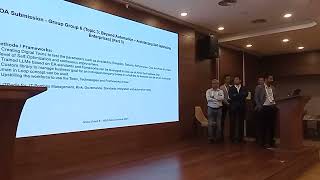
Short presentation proposing a journey toward self-optimizing enterprise architecture using digital twins, automation, and AI. Recommends building LLM-based feedback aligned to EA standards, creating custom business-goal languages, and upskilling the workforce; emphasizes tool selection, governance, and accuracy to realize time/cost savings.
Chapters
Optimizing this is, you know, something as difficult as an automated car, also optimizing the pedestrian tools. But we still, you know, try to make it. So to introduce, we are considering enterprise architecture as a whole, whether it is application technology or any of the architectures. How can it be self optimized using, you know, this particular setting, so this journey. So it takes a long path which includes automation, use of AI, deep and complex implications while addressing the challenges of EA governance and most important, accuracy. Yeah. So objective is pretty here, self optimizing enterprises to deliver the right and expected outcomes. Yeah. So the methods and frameworks. Now here we are giving some examples. So first is how to make use of digital twins. So one is that creating digital twins to test the parameters. Let's say we are testing it for applications so certain parameters such as availability, reliability, scalability, security, performance and cost. Second is to automate it. Right. To reach to a level of. IT becomes self optimized with continuous improvement. Right. That's the first thing that we suggest. Second is making use of AI with a trained LLM based on the ES standards and with all the learnings that architects have that can be level established to train the LMS and make use to get the feedback. The third is using the custom language to manage the business goal for an individual company which is based on the AI feedback which we already put in into the elements. Example which we have used is use of, let's say IT PDF or IT code for client or technopedia for risk and so on. And the last one is basically upscaling the workforce to use these tools because this is, you know, going to become complex, it's not going to be easy because self optimization as, as I mentioned is a journey which actually uses a lot of technology implementations. Right. So upscaling is extremely important. Go to the next one. Yeah, so the findings that we have is a lot of information and selection of right tools and adoption of this whole process is extremely necessary to make it successful. Yeah, Next. So the conclusion is basically a strong AI use case can actually drive the enterprise architecture to a level of automation which will save a lot of time, cost and improve the speed of. That's it. Thank you so much. Thank you.