Day 3 Certification Prep Bootcamp for SAP Succession Mgmt and Career Development
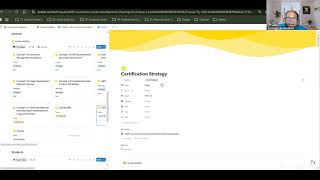
Dr. Niladri Bihari Nayak walks through SAP SuccessFactors certification for Career Development and Succession Management modules. The exams shifted to scenario-based case studies with 60% and 58% passing scores. He covers the official 24-hour learning path, hands-on configuration tasks, and using AI tools to build comparative case studies across banking, manufacturing, and energy sectors.
Chapters
Hello everyone, so thank you for joining in. So welcome back, welcome back to our day 3 boot camp. Welcome back everyone. So now we are going to talk about today the certification preparation. So especially for professors, or if you're navigating to SAP SuccessFactors section and career development. So there are two different certifications approach. I mean, for that I will talk about today. So the plan was here, uh, I will be showing you the plan. So in the previous session, we talked about the case studies for the different practical case studies. Why I have kept that session before? Because you must be knowing that from the current year, SAP has moved towards certification based on scenario-based, the practical certification process, no longer MCQs and all. So you have to demonstrate what you have learned. So for the reason, we are also taking that approach. So case studies approach only we are talking about. So based on the case studies, based on scenarios, you'll be asked to develop those, configure those, demonstrate, you submit those kind of activity. Okay, so that is why this is very, very important for everyone to understand the approach here. So how we can go about that particular certification process so that you are confident about it. So the certification strategy, as I have said, it has been evolved, it has gone to a more practical aspect of it. So now we will be focusing on that, how exactly you can practice or you can plan. Okay, the straightforward, you have to go to the learning.sap.com, and in that you have to simply search for— there are two different certifications. Okay, so simply go there, like learning.sap.com, and you browse, okay, from the browse SAP certifications like this, and from here you can search for product. Okay, so product category. Okay, so SAP Human Capital Management. So you have 15 certifications, by the way. Okay, so Employee Central, we have onboarding, we have a career. This is a career development planning which I was focusing on this particular boot camp, THR95, C_THR95, remember the code. And similarly we have management reporting, learning, compensation. So success management, current boot camp we're focusing on these two, THR85, that is succession management, and THR95, which is a career development planning module. So we will go one by one. So ideally, so you can see that they also provide a path for it. You have to complete the learning track, which is free, but the certification is not free. So certification, so you require proper, uh, those, uh, it's a complete— you can see that it's a new format exam. Clearly it says new format. It's a scenario-based assessment, okay? And cutoff score is 60%, okay? So you have to score 60% in this entire assessment. And when it— this is for SAP SuccessFactors Career Development Planning and learning module. Okay, so if you see that, uh, what exactly— it's a consulting level, okay, and associate level certifications. And this will be, uh, based since January 2026 they have started. And, uh, you for to do that, there are some readiness preparation you have to have. And this is valid for 12 months. And after completing us on this 12-month certification, it will also give the Delta exam periodically. So that you can retain your certifications for a while, okay? So for as long as possible, okay? So that is what exactly. And skills you will be gaining, as I already discussed, we have a talent training, the career development is focused here, okay? And, uh, so this is the learning journey we have to ensure we are completing. And this is the intermediate level learning journey, 24 hours, so we can finish it, okay? And there are two courses, as I said. We have, uh, one is your introduction. Definitely this is something As I said, every consultant, if you're not familiar about the platform foundation, which covers the basics things, okay, ensure you're covering that. Then you actually, uh, they do that hands-on for that platform foundations, okay. Then you go for your typical career development planning mentoring academy, which is 10 hours. Then again, you have to have a plan, some practice, practical exercise. Then you get your— go for certifications, okay. So this is the learning journey. At the end, you'll be getting a career development planning certification, the digital badge for this. Okay, so coming to— so this is a flow for this, uh, Career Development Planning, Dr. Niladri Bihari Nayak mentoring certification. This is the certification and platform foundation must be aware of it and all. So in the Career Development Planning, also from preparation point of view, how do I prepare? So just like we have talked about different case studies, right? So simply you can go into each and every topic. Okay, so there are definitely concept. And what I've already— we have covered similar concept already in our platform. So go to the concept, try to understand, and how it is related to the case study, and link it to the case study. So we talked about our Indian bank, right? So let's say, uh, the audio manufacturing company in US. In current case studies, we're focusing, right? So you can directly go here and understand these things, okay? What are the possible things, and how do you, you know, parallelly open your AI, okay, side by side, and you can go and contextualize, as I say, contextualize. So, okay, and you can also get a question, just interact with using AI, okay. You will be also having AI options in the certification exam also, you can use AI, okay. And definitely, but there are certain things you have to submit, okay. And we will be also planning similar kind of an activities for you, role play activities Okay, what are the different— you can see that. Okay, so based on this benefit of CDP tools, they're talking about. Okay, so there are also questions, strategy. So interact with AI as well as possible, parallelly. Okay, while doing this activity. Okay, and also contextualize, as I said, business. You say your context and intent, as I always, always talk about. Context is, let's say this time I will talk about manufacturing sector. So in the many previous exercise, I talked about the banking sector. So manufacturing, uh, sector in US, okay? And, uh, I will say parallelly I will be talking about banking sector in India. Banking sector in India. And one is manufacturing sector in US, and second, third is I will give a energy sector sector in Europe, European countries. So for now, let's see, I will give this much and give a comparative in Notion with relevant examples. Okay, so somebody is telling from a metalist, some they want also some case study. So it doesn't matter which of the geography, which the case studies. Okay. So I will be also accepting that. Let's say oil and gas, okay, oil and gas in Middle East and mining in Australia. So almost every geography we cover, almost. And, uh, it's okay. So you can think about it and, uh, So I'm just checking every— whether I have written right or not. Okay, energy sector in Europe. So almost every sector you can do one by one also. So I'm just giving a hint here, relevant examples in Notion table format. Always ask for a table so that you can always easily compare it. Okay, and you want to understand these things also, whatever the module you are doing it, right? So at present I'm doing a career development plan, right? So it's all about, uh, personal growth, corrective remedies, career planning, successful candidates, development relationship. All those things are really, really important for us, right? So this is how we can access and all this thing they're talking about. So parallel, if you're doing it simultaneously, case studies point of view, it'll be easy for you to do all of these activities. Okay, so now what you can do, so this entire thing, whatever we are talking about, okay, so first of all I talk about the context, then I will be giving you business intent. Okay, so remember there are two things I'm talking about while preparing this, any kind of such kind of an exam or preparation of learning myself. Okay, so I will say that the business intent is, is give employees freedom in learning growth of their career leading to business revenue, happy, happy, fulfilled career or employee, then leading to prosperous society. Okay, so this is the intent I have given, right? So context I have given, intent I have given. So now we will see that, uh, table I needed. Okay, so give a comparative. Okay, so let's see that. This is the prompt which I have used. I will just share this prompt. In my homework, uh, you have to do— I will be giving this intent in the AI prompt I will be giving you, so you can do this. Okay, so AI, uh, Codex, or the AI prompt which I have used, and you can try with any of the sectors and all while doing this activity, while preparing the any of these things. Okay, this is the first step which you can take it out. Okay, so now coming to the next part of it, then it becomes easy. We just interact with the AI and you'll be finding, right, So nicely it has done. So I will be— there are 3 windows for me, I can see that. So global talent and career development comparative study we are doing, okay? Comparative framework we are looking at from multiple sectors, okay? Banking in India, manufacturing in the US, energy in Europe, oil and gas Middle East, mining sector in Australia, okay? So we can also export this to a sheet, Google Sheet, okay? And we can check it out. Otherwise, uh, I will simply copy this and, uh, into our Notion, and you will be getting a copy out of it. Okay, so I will do that, and, uh, it will be a comparative study, and you can pick up any geography. And I know people who have students from multiple geography, you can collaborate and you can always, uh, learn each other. Okay, so this is the comparative study we are doing. And, uh, let's see how nicely it has done. So let's say energy sector I'm talking about. So there is a massive structural shift from traditional fossil fuels to renewable energy. Everybody's talking about renewable energy these days— hydrogen, wind, wind energy, solar energy, and all. And they are having a— what is the, uh, thing they're having? So at present, strategic talent lever is internal opportunity marketplace. So they are actually allowing traditional engineers to self-nominate so that they can— or great engineers, right? They can nominate themselves. So from a succession, career development, planning point of view, they can go for gig assignments, or they can go for a greenfield projects or cross-border mentoring, okay, in renewable division. That's an opportunity for them. And also revenue point of view and fulfillment point of view, by doing this, what is the fulfillment? Their climate anxiety, by giving employees an active part in sustainable— active part in sustainability is also a goal. And you can also see that revenue definitely, because I have given a business intent that I need both business outcome as well as a fulfillment of a career option. Otherwise, the employee will not continue in the same organization for a long time. It is very much straightforward. And also we are showing them the social, society impact, social impact also we are showing them that the business intent actually I have set it, otherwise it should not have given this kind of an outcome, right? So we'll see a societal impact also. They will using a clean energy transitions and all, they are contributing to the net zero goals and clean environment for the society. And reference, most important part, the last one, you can see that. So the last one, they've also given us some of the example of the name of the company, okay? Especially if you see in another sector, they have even taken a leading name, BP, Shell, Enel. For manufacturing, they have given like General Motors, Boeing, Okay, for a banking sector in India, they have talked— we've given a name of HDFC ICICI to give an example who can be a leading example for that particular sector, the relevant architectural industry example point of view. Now from an oil and gas point of view in the Middle East, the company— the leading company could be Aramco and Noc, those are national oil companies, the reference architecture or reference example for this understanding. Okay, from a career development point of view, similarly in mining sector in Australia, we have Rio Tinto, BHP, those are leading mining houses who are deploying this kind of, okay. So this kind of a reference you can have, those case studies you can take it up, okay. And then it will be very much helpful for you to understand this entire thing, okay. So now with this, what you have to do is we already asked this, okay. This is our framework. Okay, now based on this, what exactly you can do, you can start your preparation. Okay, so go to topic by topic. Okay, and what you have to do is now let's say I have to implement any of this thing, solutioning for any of the company. So, so I can go to the respective topics. This is actually, I have now understood this topic. I under— at least I've set the context. Okay, so now what I have to do, uh, this is from a configuration point of view. Definitely these are all, uh, you will doing in your own act way. Right? There are some course files SAP has given, and you will be practicing those, uh, typical XML thing and all this thing there. So this is a sequence, definitely is an official guide to follow. And you would also see the timeline, what are the time they're given. Within that time, stipulated time, ideally, ideally you should do it, should take more time, but it's okay. So what are the provisioning settings, everything they have given, by the way, okay, step by step. And what are the simulation exercises also you can do whenever you're doing the career development planning, what exactly you will be doing. There's simulations as well. Some business exam. So this is very, very important. Okay, so what are the steps you follow? Is pretty much same across any other module, not so different. Okay, and after doing this, so what are the activity, what are the box you have to activate and all of this they talked about. So similarly, AI capabilities, AI is everywhere now. So AI point of view, what are the big scenarios you have and how you can utilize, what are the use case. Okay, in Jule, what are the use case. Now what you have to do for this case Jewel use case example they have given here. Okay, so now here what you can do for Jewel, uh, whatever possible use cases for all sectors, whatever we mentioned. Okay, and how do you implement it on all these things? You can basically interact and use cases, sectors in Notion. I will always ask because I'm using Notion for that. Notion table. Okay, then you don't need to implement everything. So in a real project, you will be basically discussing, but for now, understanding point of view, you will see which product is offering what. Okay, so your product is different. Okay, you can see there are some, uh, product, some scenario use cases given by the— solved by the development, that is career development here. Okay, whenever I say development, it's a career development planning, and there are certain things which is fulfilled by the Opportunity Marketplace product. Okay, so which product is fulfilling which scenario, which use case, you have to be very much clear about it. Okay, so you can see that they have also created something like that. Okay, and I can control that. I can basically copy that and also have to check your, whether your Lattice Call Manager is enabled or AI, because Business AI also require your license. Okay, whether you're having enough SAP AI unit license or not, right? So those things also you have to think about it. Okay, so that is from a certification point of view. Also you can check it out, which will be, which is the services fulfilled by which. Okay, so this kind of question they may be asking you. And also you, and this is also the AI service. How do you, what are the things you activate for Talent Intelligence? How this is your entire AI service administration for different talent module. You can see that for the entire talent module, recruiting, Talent Intelligence, how, okay. Business AI, everything is here. Okay, so based on that, you be ready with the preparation. Okay, so this is all about the first one, configuring the SuccessFactors Career Development Planning. Okay, and same thing will continue here also. So job architecture, this is very, very important topic. So you can always extend your notes like this, the way I am showing you, right? Basically, you can extend your notes and start preparing your notes like this, the way— because this is certification preparation, right? You will be asked the questions very in-depth. For each and every topic. Maybe in the projects you may not be utilizing every, each and every field. So everything, whatever you are having it, right? So you'll be finding those things serially. So you go page by page, topic by topic, okay? And use AI, okay? So managing job architecture, right? So how do you actually, what are the different components of a job architecture, okay? So you can see this is a very important diagram, okay? In the context of career development planning, right? So these are different components of the job architecture. So I will say that give examples of, uh, suppose you have to create this kind of things in your system. Maybe SAP will be asking you to create all of these things in a scenario, uh, you have to create all of this. You should be knowing how to create all of these things. Okay, give examples of, uh, let's say all main components. Okay, main. So same thing I will be asking here, main components of the job architecture. Main components of the architecture for all case in motion. Okay, then I will be utilizing that. Okay, so you can see that job family, they may be asking you how to create a job family, job role, job profile, job code, position, and that could be a 10 marks. Okay, so I'm just saying, okay, because I qualified in the earlier exams in the MCQ format, I don't have to give this exam anymore. But, uh, I'm expecting this kind of questions very much. You should be able to enhance and also how to link it, all of these things. Okay, ensure you are in one of the case studies, whatever you are doing, you're linking everything— competency skills, job role, job core, position expected, rating, may have your job profile, your family, job role, all the things actually enter, then you're able to trace it also. Okay, so similar examples I think they have already developed. So what I will do, I will be also using that, okay, in our Notion. and I will go back to my Notion page and I will be updating there so that you can also have a reference point for this, for a job architecture point of view. Okay, so whenever I'm preparing for a job architecture, ensure you are expanding it like this. Okay, and also they've given an example. Maybe, uh, they will be asking you create a digital banking and fintech job family. Under that, create a job role fintech product manager. Under that, you create 3 job profiles: API management, digital compliance, agile product delivery. And you create a job code with a job code Fintech PM, and you create two positions linking to that particular— all of these things. So that will be a hands-on, okay, in a real certification. So that is how you have to do. And same thing is for also other sectors like energy sector, mining sector. They will be asking you, they may be asking you for this kind of an activity. If I had been there, I could have asked this kind of a questions, okay? So this is what exactly you have to accept. This is the same, the job architectural component point of view. So now in the same context, if I talk about the next part of it, uh, I will go topic by topic, by the way, in this case. Okay, skill, be competitive, skills, competencies, and behavior, right? What are the difference? Okay, how do you actually contextualize this in the context of our case study? What are the different skills versus competency skills? Okay, and, uh, how much— what the do's and don'ts? Okay, so those kind of questions. Okay, so this is what exactly they will talk about. And we can also do the same thing, okay? So put the topic name, the skills, competencies, and behavior. Give an example, ask me an example, okay? Give examples, uh, examples for each sectors. So you can continue with like that, continue each sector in Notion table, okay? So I'm asking that in tabular format because it will be easy for me to reference, okay? So that is what exactly What is— that is how I'm looking after. Okay, so after that, what I will do, I will not be going to each and every point. So I've just told you the process, okay, how would you do it, okay? If I have to prepare an exam today like this, I could have prepared like this only, okay? So this is how you can leverage AI to the full of its capabilities and use documented note, prepare all your notes like this. I'm just teaching you today how to learn anything very fast, okay? So That is the thing. It's not about— you can see that pretty much they have given a skills competency focus job role like that. Okay, in the same way we'll continue like this. Okay, so that is the skill competencies part I've talked about, defining skills, competencies, and behavior. Then your attribute content, how do you manage your attribute content, all of these things. So give an example of all of these things. So I can simply go here and I will tell that I need all of these things, give me an example for each and everything, whatever you are saying. Suppose I have to take a business requirement, okay? And let you act like my client, okay? I will simply tell that, act like a client, act like my client, client in respective sectors, respective— this, this is called a role play, okay? And, uh, respective sector. And, uh, give me tough business requirement, requirement like a client. Requirements in the area of, area of this. Okay, so I will be giving you 3 frameworks here in the— this 3 framework, but maybe the client will be having all of this thing. Okay, so all these things I will give you, JPB, and all these things are okay, uh, in the context of this, okay, uh, in the area of this, in Notion table format. Notion table format, then it will be giving you the all the details things. Okay, so this is attributing content. So then that you can utilize to configure all of these things in your system. Okay, so this is the client requirement matrix. Okay, so based on that, actually I have given the requirements here. So this will be giving you the all requirements. And maybe I will be also go one step ahead. I will tell that utilize your Agile user stories and you give convert. So that point of time I will that. Now I'm not— for now let's focus on certification so that you clear certification in a 100% confident way. So in this way I have done it for the this requirement. So let's say the client is saying we are launching aggressive fintech branch network. I recommended that 15,000 retail staff pick up digital risk assessment skill, map it to their roles, ensure that it can be tracked. How we cannot disrupt our current active performance management cycle? And those are deep technical legacy JDO companies, so they are having already a job description, manage competencies and everything. Now they actually— so you have to track it, you do it. And same thing, you can think about it, okay? How you will be doing this. So this is how, uh, these are the question paper for you. I'm setting a question for you, for you, and you think about it. So it's all about thinking, because in the AI era, answers are easy, but the thinking is very, very, very, very critical, okay? So you think logically, think practically, okay? And how do you actually answer this kind of a question? Because this kind of questions ideally should come in the certifications, okay? So This is what exactly we can keep on doing it, but I'm not doing it. So I will be anyway enhancing these things for the entire module, okay, for your opportunity marketplace, career website, mentoring program, all these things. But this is a process you can follow in your journey, okay? And same thing you can repeat it for succession management also. Succession management also, they have a similar thing. It is system-based assessment, okay? So this is where exactly you will do all the activities and all, and this is 58% cutoff score is there. Okay, and for that you have to go through this particular learning journey, and this is where you have to go through those entire activities, and they will be asking to do some activity in the system itself. Okay, so this is what exactly they're expecting. And if you go inside it also, Success Management Academy, and you'll be finding that what are the things they have— they are supposed to do. People profile nomination method, which you already have covered. Section talent pools. Your talent search, your lineage chart, all of these things you can see that, right? So you can crack the exams. Now it is very easy, by the way. People actually— I really, I'm really, really happy that SAP has stopped those memory-based questions, okay, which is actually not at all relevant these days. So remembering questions, I have seen people buying dumps, reading those exams, remembering those by hearting those exams. And this should be followed by across, okay? Even for any Indian or any outside education system, you should not ask these days memory-based questions, okay? Practical. Give them all of the tools and technology. Let them think, okay? Let the student think about it, okay? Because thinking is missing everywhere, most of the cases. So thinking, the— should be encouraged, okay? How people think, okay? So we should not— we should encourage those kind of rote learning anymore. It is gone, the gone are those days, okay? People are remembering, but still I see still you have those kind of policy principles in some of the education system. I do not, uh, debate on that, but this should be the way of learning, okay? So understand, because information is not challenge these days with this AI and everything. The challenge is the transformation, right? So that is why whether you are internal transformation or external transformation or a project transformation, HR, finance, whatever it may be, right? That is a real thing here, okay? So in that context, so I've just given you— I hope this session was helpful. I was able to explain how I could have been prepared if I had been going through this exam. But anyway, I'll be also going through a few other certifications, not from SAP SuccessFactors, maybe some other modules and planning. But, um, so especially the business transformation modules like LeanIX, Signavio, that is on my wishlist in upcoming days. I will be preparing like this and also I will keep sharing my learning with you. Okay, but having said that, you prepare something like this and I'm sure you will feel confident and definitely crack your exam seamless. They may not be asking this much in-depth also. You may be getting, if you're lucky, and you will be getting our questions, straightforward questions, and just simply have to configure it because they will focus primarily on the configuration side of it, not too much towards the business side of it. Okay, but as a consultant, as an architect, because we are going for a little ahead And beyond those typical certifications and all, you have to think like an architect. We are using a certification rather as an architectural thinking we are developing, right? So that is our priority, and definitely certification will be taken care, okay? So just, it is just like people say that, right? I have seen all fine best spiritual schools also. If you're having, uh, say, let's say 500, like it already 10 rupees is included that in 500 USD you're talking about. 10 USD is already talking Sorry, but because we are going to the higher plan, then this lower activities will be already taken care, right? So in that context, actually I just told, shared my strategy, the practical strategy, how you can leverage it, how easy it would be, will be enjoy the process also. It is not about the getting the certification, also the process, how, how you have gone through the entire process. The journey itself is rewarding if you follow and if you are— it is fulfilling for you. Okay, so with that note, we will stop here. And in the next session, so we will be talking about the career aspect of it. So already we talked about your typical career point of view, especially the salary point of view, or the market research, salary negotiation, all those factors we have discussed. But in this next session, we're talking about in our ecosystem how you can accelerate your career, and I will also talk about our, uh, the new initiatives we are taking in. So that I will talk about in the next session. Okay, so thank you, thank you for joining in. And also Stay tuned to our platform because, so which I've told you, resume and LinkedIn branding preparation, that is actually, I do it mostly for our Gold and Diamond members. If you're not a Diamond member, so I encourage you to go for that. And, uh, so if you're already a Diamond member, take the advantage of the membership, okay? We continue to do this activity and, uh, let me know what is your feedback, and according to that we will continue. So thanks for your time and we will see you in the next session. Take care, bye-bye.
More from Dr.

SAP Procurement with SAP LeanIX x SAP Signavio Webinar | Architecting the Future of Procurement

Global Compliance Navigator by Dr. Niladri Bihari Nayak | SAP LeanIX Sep 2026 Contest Entry

SAP LeanIX to SuccessFactors integration Webinar | Architecting the Future of Work

2027 Leadership for Enterprise Architects : What Changes ? | Architecting the Inner Transformation


Reporting in SAP LeanIX Webinar | Architecting the Future Autonomous Enterprise



20 SuperLabs for Architecting the Future Autonomous Enterprise (Business Arch & Enterprise Arch)

