National Level Award Winning EA Case Study from Team ArchFlow mentored by SuccessLabs Academy
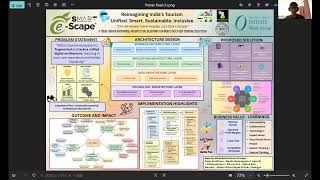
Team ArchFlow presents Smart Escape, a TOGAF-based travel platform for India built on four architectural layers with features like an AI itinerary builder, eco-rewards system, and blockchain smart contracts. The project prioritizes sustainability and includes rural service providers and government dashboards. Dr. Niladri Bihari Nayak mentors the team through final Q&A prep and publication strategy.
Chapters
Foreign.
So thanks for joining in everyone. May also join. May. Thanks. Congratulations once again to the entire winning team. So finally we are meeting in in virtual again. Again we will be meeting in the of Bangalore event. So I'm waiting for that moment. I'm really happy and the kind of efforts you people have put. Okay, really, you know I don't have any words for that, right? I mentored many people in the past. But the kind of commitment you people have really exemplary for others. Okay. So you people have you know I cannot you know express in those words. But definitely you carry on this momentum and definitely we will. I know you will be doing very well in the future in because I never got a chance such a kind of activities to do in the during graduation days. People are doing this right. It's really, really very good. So now over to the team. So you want to. How you want to proceed? Floor is yours.
Maybe we'll just show you the presentation poster. Presentation, sir. Kitty, you're going to share the screen?
Yeah.
You have authority to host or shall I give you a co host?
I think I can share my screen.
You're able to share your screen. Otherwise I will make you co host if required.
I think I can share my screen.
Okay. If no, let me know.
Yes sir.
I'm making a co host anyway. So you should be able to present. Yeah. Your screen is visible. It's coming up. Yeah, let's go ahead.
Oh yes, yes. So let me begin. So hello everybody. We are from Team Upflow. So here we are. Not just here to present a project, but to share a movement that reimagines how people experience, access and shape travel. In India, tourism is one of the most powerful tools for unity and growth. Yet today it feels fragmented, outdated and inaccessible for many tourists. So let me introduce you to Smart Escape. A unified, sustainable and inclusive digital travel ecosystem powered by architecture. And not just another core. Today, India's tourism suffers deeply from sea lice. Abstone talk services don't sync. Rural voices are rarely heard. Our analysis showed four layers of dysfunction. Celoid services, isolated applications, decentralized and underused data, our data tech infrastructure. At this point we made a conscious decision that we would not be a feature driven but we would be an experience first and community powered. We aren't building another travel app. We are designing an architecture that listens. A togaf driven architecture. One that empowers every stakeholders in its journey. So let us dive into the backbone of smart scale, its architecture.
So let me now walk you through the architectural blueprint of Smart Escape. Which is built using TOGAF principles. So it's structured, layered and it's driven by stakeholder needs. Our architecture is designed across four key business, application, data and technology to address the fragmented, search, siloed nature of India's current tourism ecosystem. So the first layer, business architecture, we focus on defining the core business capabilities that the ecosystem must deliver. Sustainable tourism, inclusive service providers, transparent operations and gamified records. So sustainable tourism, we prioritize responsible travel practices and we also focus on bringing rural heritage and small players into the fold by being inclusive and transparent operations and gamified eco rewards to build trust and engagement. So this layer ensures we align tourism goals with citizen centric outcomes like equity, empowerment and sustainability. The next is the application architecture where we define the functional software components and integration mechanisms. So some of the highlights include mobile first apps for travelers and service providers, DevOps and automation to ensure agility and continuous deployment. AR VR for immersive tourism, think virtual previews or AR guided tours, API gateways and services to enable secure and interoperable systems. So this layer ensures flexibility, interoperability and rapid innovation across channels. The third is the data architecture layer. So the heart of smart escape lies in data driven intelligence. We use IoT and sensor data for real time feedback, crowd control, air quality, footfall, AIML for personalization and predictive analytics such as itinerary recommendations and blockchain and smart contracts for secure and verifiable bookings and service delivery. So this layer helps us move from reactive operations to proactive intelligent governance. And the last is technology architecture layer. The foundation layer ensures robust infrastructure and security. So cloud edge infrastructure enables distributed processing which is crucial for rural areas with low bandwidth, security and identity management. So with zero trust and MFA to build digital trust, IoT and emerging tech connects stakeholders in real time, making tourism safer, smarter and more inclusive. So this layer aligns with togaf's emphasis on scalability, risk mitigation and technical feasibility. So what makes this architecture powerful is that it's not just about technology, it's about orchestrating people, process data and tools into a unified adaptive ecosystem. By following the TOGAF methodology, we ensure alignment with stakeholder, stakeholder needs, governance standards and long term scalability. So the next would be the implementation highlights.
So I'll go over the implementation highlights. So there's three main pillars for our implementation which is governance, agility and security. So firstly we have the architecture governance. So this is ensuring that the platform is aligned with our stakeholder needs and enterprise standards. The Architecture board defines the direction and major decisions and the stakeholder engagement which is like talking to the stakeholders and finding out what it is that they require. And we can set up changing management processes and quality assurance. So then there's agile methodologies where we follow an iterative development model with continuous improvement and monitoring and evaluation is in each phase so that we can improve upon our previous works. And then data security as we're dealing with financial transactions and personal data security is very important so there needs to be access controls and role based user access, encrypted data and continuous and regular audits including security reviews by third parties and governance feedback. Finally is a loop which which we can talk to the government and find out what they require from us and how we can improve the system to give them more feedback and let them implement future like governmental plans to improve the tourism system in.
Now let's walk through the heart of the Smart Escape solution, what we're building and who it's for. So our proposed solution combines six intelligent modular features, each addressing a specific gap in Indian tourism ecosystem. So all in one Travel assistant A single platform for booking flights, stays and activities, eliminating the need for multiple apps. Think of it as a smart travel dashboard that unifies everything a traveler needs. Next the smart itinerary builder uses AI to plan trips based on time, weather preferences, crowd data and even real time disruptions. This ensures hyper personalized and adaptive journeys. Next is the Eco Reward system. Travelers earn points for sustainable actions like using public transport or staying in eco certified hotels. These can be redeemed for discounts. Nudging behavior towards responsible tourism. Voice and text Chatbot Multilingual real time AI assistant that supports user throughout the journey. Especially critical for non English speakers, the elderly or rural tourists. Verified contracts and transactions Blockchain based smart contracts ensure tamper proof bookings, traceable payments and verifiable reviews. This builds trust and transparency into every transaction. Live safety and environment feed so IoT sensors offer real time updates on crowds, pollution, weather and emergencies. Ensure safety and smarter decision making during travel. So to support this solution we've designed an inclusive ecosystem that brings together all key stakeholders. The stakeholders being the travelers first get a seamless, personalized and secure journey. Benefit from real time updates and sustainable travel options. Next are the service providers from rural home stays to big hotel chains, everyone is on board through a low tech language friendly interface. This levels the playing field enabling SMEs to compete and thrive. Government authorities access dashboards showing real time tourist flows, environmental stress and travel patterns. Enables policymaking based on live insights. So NEXT will be the environmental organization. The platform embeds carbon tracking and eco behavior, not just aligning with broader ESG goals. Now the final the local communities, previously invisible rural and cultural destinations now get digital visibility and increased footfall. So this solution is not just a tech stack, it's an ecosystem blueprint. Each feature is modular and togaf aligned. Each stakeholder has a clearly defined role and benefit. Passing it on to Dhanya.
Yes sir. So now moving on to outcomes and impact of our project. Our solution will fundamentally transform India's tourism landscape across multiple dimensions since it provides seamless travel experience for end users through enhanced unified digital journey. It also has advanced contextual intelligence as it takes into consideration historical preferences and past travel behaviors, environmental conditions, cultural compatibility, etc. It empowers the rural and underrepresented stakeholders through diversified micro entrepreneurship. It also has collaborative destination ecosystems. Our solution also involves data driven policy making and smart governance because our solution focuses on predictive usage modeling and impact assessment. It has precision resource optimization which can include virtual queuing systems, pop up information centers, etc. It has an integrated cross sector coordination. Some services include transportation services, healthcare facilities, security services or utility providers. It has reinforcement of sustainability in tourism practices as there is eco certification and then there's gamification where we reward for choosing lower impact transportation, accommodation and activities. There's economic resilience and market transformation in our solution. Two of the key important things in this section is the value chain optimization where there's transparent pricing models that build customers trust. There's risk mitigation framework. The benefits of our solution are economic benefits like tourism revenue growth, rural tourism expansion. There's efficiency benefits through operation optimization which is brought about by demand forecasting and reduced overcrowding in major tourist sites. There's strategic benefits since our solution will bring about an enhanced position of India in global tourism competitiveness rankings and their sustainable growth. The learnings of this project which we have understood is that AI agent orchestration in which like AI agents handle discrete tasks. There can also be decentralized decision making and we promote personalization. There is a government private partnership which seems essential since government provides legitimacy, data access and policy alignment and private partnership focuses on contributing to the technological agility, user experience, expertise and operational efficiency. We understood that system thinking is greater than feature thinking because focusing on understanding how different parts of a system interact and affect each other as a whole is important and we also understood that true impact comes from how technology is applied, integrated, adapted within societal, cultural and environmental contexts. Our solution transforms travel chaos into intelligent, inclusive and Sustainable tourism for oil. This is our solution and presentation, sir.
Okay. Okay. So thank you, thank you for orchestrating the entire thing in a very crisp way. And I think you will be also getting 10, 15 minutes only there also, right? If I am correct to present your solutions.
So nothing about the time was informed.
So we don't know most probably 10, 15 minutes only you will be getting there, right? So but here you have articulated very well. But also I think it will be a presentation at the same time, okay? If any Q. I don't think any. If anyone asking questions, be ready with your answers. Okay. Anyway, it is already a winning project, right? But still different sections. So maybe I will be having also preparation some Q A for you so that we will be ready with our. If suppose there will be also people who are entrepreneur coming there, right? And they may be asking in a different way questions because the way academia thinks, the way the entrepreneur thinks is different. So they may ask if suppose somebody is coming, okay. I'm sure they will be coming people like that, right? So we should be be ready with your questions and especially the implementation side of it, right? Conceptual architecture wise, it is okay. It is good, right? But execution part of it. Okay, so maybe we may get some questions. Okay. Otherwise it is good. You talked about agentic things, AI agents. But I don't see. Is it something where I missed out or. In this chart.
Sir, in the proposed solution, we haven't mentioned it as agentic AI, but all of the personalization and so.
Okay. Oh, got it, got it. So in that case, you have to articulate if you're mentioning certain things. If it is not there, you have to connect. Connect. Actually feature proposed because you people know your solution better. Although I have guided you as a mentor, right? But right. How the pieces are connecting with each other or whether it's a data architecture point of view. We have mentioned sensor data, IoT data. Somebody may ask what kind of sensor data, right? What kind of can you give an example, right? You should be in a position, right? It could be weather related. Sensor will be more related to weather, all those kind of example. I'm just saying there could be many things else. Also similarly, if you talk about blockchain and smart contract, right? We have mentioned the block, but we should be ready. Our answer should be, you know, we should be able to answer it immediately whenever somebody will be asking. So this is your, you know, work and I think that is okay. The flow was good. Okay. And let's see how the situation is there. And in the project at WIPRO Campus. And I think this is good. And also you have. You people have submitted. They didn't ask anything to submit it, right? This is the. You're just a final presentation, right?
Yes.
Only the poster that asked us to submit. So we.
The poster. Only the poster they have asked you to submit?
Yes.
Okay. Okay. And before that already the whatever the documents, the PPT and whatever submitted. I think those before during evaluation, already people have submitted those things, right?
Yes, only the report we submitted. We never submitted the ppt.
PPT only reports part of it.
Yes.
Okay. Okay. Okay. Now this is good. This is the final outcome of the presentation. I'm really happy. Okay? And. But I will be also. We will be also checking with. I have not checked with last year Matchmak. They have done. If possible, maybe we will be also publishing maybe kind of a white paper. Maybe in the upcoming days. We have to think about it, right? So whether open group will be allowing us to publicity as a paper combining all of it. Because all of you have put a lot of effort, right? I do not want it to be lost in only this event. Rather we have to continue with this, okay? So I will be giving a good, very good plan for all of you. So I will disclose that surprise on that day. Okay? So good. Very good for all of you. But the thing is we have to continue this. Not only this and also another thing I would like to highlight here. What are the transferable skills? Okay? From whatever you have learned, it is not limited to this huge case. Suppose tomorrow you'll be getting a huge case on let's say High Court modernization. I'm just giving a random use case. So many files are there in the High Court, Supreme Court, whatever in India, right? How do I say? Same principle of togaf, same principle of architecture. Okay? If you. If you want to utilize what are the skill set, whatever you have learned, how it can be there also utilized. Or it could be handling any kind of waste management, okay? There are so many huge cases, so many problem statements. Not only in India, outside India, but let's focus on India first. Because we have a lot of things to solve in this country, right? So that is something you can also tell in the learning. Whatever you have mentioned is really good, okay? System thinking greater than feature thinking. Data suits are people, okay? And data for good, okay? So all those things are good. AI for good. A for social good, actually.
Okay?
But at the same time you can also tell that whatever you learned the transferable skills like thinking holistically, thinking from a different angle, right? So Those kind of skills are actually helpful. Not only a professional carrier. In the future, whatever the job or whatever the profession you'll be choosing, opting for, it will be going with you. Okay? It is like you are your. It is not like you're learning, you are not only doing, you're also being actually. So there are three stages, right? Learning, doing and being. Okay now actually are leaving this. Okay? You have already learned architecture in the initial sessions. Whichever we have conducted. Then you did the thing in the project, in this workshop, in this a lot of series of sprint. We have gone through a lot of iterations. I have given feedback to all of you. Do this, do that, change, do that. Okay? Lot of changes you have done. That's a doing part. Now your being part, learning, doing. The third stage is the next stage. That means you are being now you are day in, day out. The principles, whatever you are sharing here, okay? This is your living also. That means you are actually demonstrating in a. In your. Not only your going as you proceed further, you know, future carrier, right? Whatever profession you do, it doesn't matter, right? So because the same principle will be applicable not only professional career, but your personal life also it will be very much helpful. Certain lot of things will be helpful for you, right? So that is something I would like to end off with. But you people have done a very good job, okay? And I really appreciate to all of you and you have people at the top bearer, okay. Of our entire, you know, student community of enterprise architecture. I know there are so many people in the Togaf certified people and 1 lakh plus people globally. Okay? But the kind of interaction, the meaningful interaction, the kind of contribution people have done at a very young age, right? It's really shows your curiosity, shows your enthusiasm, all those things.
Okay?
I always give this example whenever I go to the other side, your team and other teams, okay. With the winning team, I always tell about it and also I'll be speaking about it lot. Okay. So but anyway, so any last comment questions from me, I'm okay with this. So it's very good. Presentation and flow was good. Really appreciate anything for me, I don't know others.
So what was the other team's solution like the other winning team from our problem statement.
So that team also had done good job. They also have a demo so they will be coming up tomorrow. So they have some going on something. So similar things they also have done it. But also they also done a web similar kind of a prototyping also they have done it, right? So they will so These people, those people are not having presenting some kind of a poster like this. Okay. It is good. But they also have come up with prototyping. Okay. So that is also. You can think about it like a solutioning point of view. Okay. How you will be okay using it. Okay. So that is something. I could have invited them but it is a lack of time. I couldn't send this to them. There are not people available. But anyway, so we will be having again a good time in Bangalore event and seeing there. I cannot wait. Okay. It has been almost five, six years. I'm going back to Bangalore once again. So it's. Yeah. Okay. So anything else?
I think sir, while presenting, can we also like present with the PPT or is it just the poster? Because we haven't really gotten any information.
The poster is good because it summarizes everything, right? And I don't think people will be having time to go through PPTs and all in that. Because I understand there will be over 90 minutes time and 19 out of 90 minutes. 30 minutes is for the mentors. Okay. So we have 60 minutes. In the 60 minutes there are around how many four or five team will be there. Okay. And if you talk about it, you'll be getting only hardly 12 minute. Okay. So whatever you presented, okay. In this poster is good actually. So it is. It is covering everything. It's a very crafted very well. Okay. And everything is there. So I think you. Let's focus on the what you're speaking. Talk about it, whatever you're talking about it. Okay. Just to you done it very well. But this is something. Okay. This is good. Okay. I don't have anything to say. Okay. So let's continue with that. Okay. Just 10 minutes, 15 minutes. But also let's focus on what other panels are saying. Because it's a full day session, right? So definitely you'll be enjoying it. Yeah.
Sir. And what about the MVP that we made?
Can you see? Can you repeat?
So the mvp, whatever we meet the mvp. So. So like do we have to present that as well?
Mvp, I don't think. But other team is only showing the mvp. Okay. So that is what they are. Because they have not prepared any, you know, entire poster. Okay. So they're showing only the mvp, right? So you can just keep it ready. Okay. I don't think anybody will be asking for that. Okay. But keep it ready the way we have presented and all. Okay. And maybe you can create a small video about it. Okay. So all of you maybe can combine together and about the mvp, right? If you've ready that MVP still. You can show that now in five minutes.
I can show you, sir.
Yes.
Yeah, please. That MVP is there. You can show that also. Let's cover it as well.
One second.
Stop.
We sharing screen with Metha. Are you sharing?
Yeah, it is loading.
So. Okay, no problem. Meanwhile the regarding the mvp, I didn't ask this question like I know it is a joint effort but actually out of five all of you, what are you. What do you think actually what became your strength area? Because everybody contributed, right? So how is it somebody I know Kriti is very good in the canva. She has done a very good work there. At least I know. But how about others? Through what is your strength area? It could be data you can say or anything.
So making the flowcharts and all with the mermaid.
Okay. Okay. Okay. Okay.
Great.
Oh, now I can see the smart escape now. Yeah. Please go ahead with your Firebase studio.
Yes.
So.
We basically have two things. Is this visible?
Yeah, it's visible.
Okay, so we basically have two things. One is Explore India and there is a dashboard. So let me first take you through our dashboard.
So.
Yeah, so there is personalized dashboard for each user. And this in my trips there are different. Whenever the user goes to a trip, his previous trips are being stored here. And then he can add the trips and favorites from exploring the explore page. I will show you later. There is a feedback and experience thing as well. There is a custom booking trip. We'll look into that. We've tried to incorporate something called as on Greenpoint. Suppose the user uses something recyclable or something environment friendly or anything. Then the user gets a badge or it's like a motivation kind of thing for the user to make it more sustainable and eco friendly. So let's see how a customer can book his trip. Okay, so we have given the customer for him to explain what or how his trip needs to be. So let's say maybe beach trip and then destination beach maybe I don't know. And then we. Okay, so now this is the step two. So here the customer can choose what kind of trip he wants to make it as maybe peaceful adventure trip, let's say very big peaceful and family that and then budget let's say. Okay, so family. So let's put number of travelers as three. So the customer can choose their travel types. Suppose the customer is going with children. Then your, your trip advisor will give you the locations or the areas to visit with respect to the children or senior citizens or something like that. So let's say adults and youth for now. So again dates let's say for two days and there is a sustainability preference. So maybe by choosing this he can again eco friendly save environment. And also this adds to his points and badges. Now here we'll be using the AI. AI will be helping us generate the places where the customer can go visit. It is a very detailed plan. So this is the trip overview. So it says Destination Goa 2 days travel travelers 3 adult and youth is the travel people budget travel style. So as we chose for two days so there is a day one and day two. As of now this is a dummy output but we can again personalize this according to the user preferences. So as we said it is AI driven. So this is where our AI can help. So it gives suggestions like how to reach there and where the where to have lunch. So we are promoting rural services so we will always look into the local lunch areas, authentic local places. And we're basically trying to promote local markets. So the most famous places can be given here. This is a general itinerary plan for two days of so and so budget. And there are options, there is travel options and stay options. So if the person approves any of this, so you can go and book now and then it can redirect you to the page. Or maybe we can integrate that in our own website. And then if the user chooses eco friendly stays, like let's say I want to go with home stays. Home stays are not eco friendly but let's say again supporting the rural areas. So home stays you choose rather than a luxury or again it depends on the user's preference. He wants a luxury stay, you get a luxury stay option, etc. So and then there is a final booking thing. So this is about our dashboard. This is basically what we would be liking to do. And then there is another explore page. So we just thought of this. So it's like in each places we might on Google or anywhere like that on your browsers you might not get all the locations like the hidden gems. So let's say I want to travel in Karnataka. Yeah. So in Karnataka, suppose let's I know. So in my locality I know what are the hidden gems. So maybe I can add few places which are hidden and which is not really famous but you should really go visit it. So those are the must visit places. And then again same thing with the local food and drink and all other things. So suppose he likes something from here, he can always like the place and then it'll go into his dashboard, personalized dashboard. And then so yeah, this is how we've thought of it. So let's book. So it will redirect you to the. Again, the same booking page. So as of now.
Yeah.
And one more thing. So there is a chatbot. So in the chatbot. Again, this is your personalized chatbot, always available at any given point of your page or booking step. So this can be multilingual. So there are language options we have not yet integrated. And then there is a location thing. So when the user is searching for places, let's say he doesn't know where each place is. So he can go to the map, look into the places, see how far they are or how close by they are, and maybe he can get an idea of where he can visit and where he can't visit. So that is it for now.
Okay, good. So these pictures are not coming because is it not loaded or some Internet?
No, sir, we haven't added any pictures.
Okay, that's okay.
So like just a prototype.
Yeah, that is fine. That is perfectly fine. I was wondering, and this chatbot, is it a normal chatbot or it's an AI agent, something like that?
This isn't for now, this is just a normal chatbot. So it can. If we are planning to add AI into it. So okay, again, AI driven is what we are giving our solution as.
So, okay. Because normal chatboard, if you're training certain things, only they will answer that. Only correct. If you're using AI things, they will be also having, you know, so it will be just like a more human, you know, that kind of feel experience. I am also testing with this with my other projects. Okay. But I have seen that experience. But it is good, some working demo. Okay. Be ready with this as well. Suppose somebody may out of curiosity if they want to see the solution, the prototyping, right? Be ready with this and put some pictures also.
Okay.
If possible. Okay. For you. Okay. Because it will be looking much realistic.
Okay.
So otherwise this prototype is good. And for the second time I'm looking at. But anyway, so it is good. Really? Yeah. Thank you. Anything else? Anyone like to. Say something? It's all covered. Okay. Maybe we can take a picture together because we missed that opportunity in the project. So you can come on and all people. 1, 2, 3, 4, 5. And we will be. Just give me a minute. We can. We have already put our heart and soul to this project. Right. So I will be using. Just a minute. Celebrating. This is celebration time. Okay. So why it is not coming in? Yeah, it is coming. Sorry. Everybody should use that emoji no celebration emoji. So you can put here and I will meanwhile I will be taking a picture.
Okay.
So all of you, all of you can put your emoji. Okay. So that, that data emoji. Okay. So now let's take a picture with that. Okay. So this is good. I think your picture was cut you. I cannot see you. So again I'm taking another picture. Just a minute. Once again I'm trying. Let's celebrate virtually also. Definitely we will be celebrating there in person. But yeah, I think that is good. So thanks, thanks everyone for your quick wrap up and presenting everything once again and going through this. I wish you all the best and looking forward on the event day and more surprises on that day. Okay. So yeah. Thank you. Thank you everyone. And let's inspire others as well as the community. As now you are torch bearer of this programs still I want you to continue this momentum so we inspire others. Definitely you will be inspiring others in your college for sure. But outside our colleges also as a community in your state. In outside state. Right. Definitely your story will go. Right. So also I'll be inviting the upcoming days I will be having my own publications in medium so you can also share your journey individually. I'll be inviting you as a gift. That's the first gift actually. So inviting you what is has been your journey and what are the use case definitely that you will talk about a little bit and how it has been transferred you as a person. Right. You think about it. Okay. So it will be. It is not to be a technical. It has to be a little bit of, you know how it has impacted. Okay. In your journey. And so you just think about it whatever you can. Okay. So I'm expecting all of you to contribute 1, 1 blog each to start with. Okay. Student publication. So that will be an online digital publication. I have just launched it. But you will do people first to contribute to that paper. Then I will invite senior people. Okay. So yeah. So thank you once again. Thank you for your time and effort. Okay. And really happy for all of you.
Thank you.
Thank you.
Thank you for your guidance. Thank you.
Thank you. Thank you. Take care. Bye bye.
Thank you.
Welcome.
More from Dr.

SAP Procurement with SAP LeanIX x SAP Signavio Webinar | Architecting the Future of Procurement

Global Compliance Navigator by Dr. Niladri Bihari Nayak | SAP LeanIX Sep 2026 Contest Entry

SAP LeanIX to SuccessFactors integration Webinar | Architecting the Future of Work

2027 Leadership for Enterprise Architects : What Changes ? | Architecting the Inner Transformation


Reporting in SAP LeanIX Webinar | Architecting the Future Autonomous Enterprise



20 SuperLabs for Architecting the Future Autonomous Enterprise (Business Arch & Enterprise Arch)

