Plan-to-Deliver: The Framework That Fixes Fragmented Operations
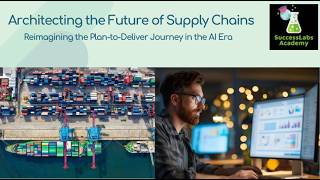
Dr. Niladri Bihari Nayak introduces the Plan-to-Deliver framework, a five-step supply chain model applied to Zomato, Amazon, and healthcare. Supply chain professionals get stuck in silos and jargon; the fix is simplifying, balancing trade-offs, and thinking in systems.
Chapters
Hello everyone, thanks for joining in. So welcome to our Supply Chain Friday. So let's then get started. And this is our first episode. I'm excited for you that you are joining these sessions, and let's then get started with our discussions, and we will proceed accordingly. Since this is also part of Pure, you can see that— just a minute— we can have to go through— this is our primetime webinar, what we call it. So typically every day we have a theme, okay? So every Monday we do for all HR transformation webinar. Or Tuesday, it's all about the customer experience as customer service lead to opportunity value stream. Then Wednesday we do it for the record to report, is all kind of finance transformation related topics. Then we have a Thursday, we do all kind of procurement related topics. Friday, today, that's the supply chain and operation side of it. Every Saturday it is all about the enterprise and business transformation topic, focusing on layers of enterprise architecture and business architecture. Then we, uh, Basically on Sunday it is inner transformation, all our inner game, basically identity, leadership, and all those. Okay, so this is a series and today we are going to start with today's name, Supply Chain Friday. Okay, so this is the first episode of the series, of this Friday series, and today stay till the end, you will be having an awesome bonus for that. So we will be having a playbook for you which you can utilize in your plot And this is whether it's a job search or planning or your delivery project point of view. So these are entire series and also a practice lab you'll be getting an access. This is what exactly you will be having. At the same time, if you're still, uh, staying till the end, you will be having a lot of other bonuses as well, which is surprise for all of you. Okay, so with that note, let's then get started. And today, um, being the first sessions Basically, I will take you to the very basics, fundamental of, for typically the future of supply chain in the AI economy. Okay, so let's then get started with this. And yeah, so stay till the end. Let me start. How many of you have joined this session for the first time? Okay, and especially for the supply chain, right? So any of you have any background of the supply chain, you can write down in the comment box, or if you're watching in the YouTube, you can write in also to livestream comment, right? So this is a purely end-to-end supply chain sessions exclusively for the beginner. Okay, and in this sessions we will focus beginner-friendly language. If you're already a veteran, I know that, I respect, and still, uh, you can contribute. And what the fundamentals of supply chain, because I remember I studied, when I studied supply chain, uh, from academia point of view, postgraduate diploma in supply chain from Samhauses, as a point of time, uh, so it was very much theoretical. I could realize for me it was a little bit of a jargon because I did just after my MBA in HR. So to understand the scope of supply chain, but for almost 10 years I didn't use this particular skills, okay, almost 10 years, because I was doing almost everywhere in SAP side of it. But now still, that is, I got a lot of jargon, but we are going to decoding that in a very simplified manner, okay. So what is the supply chain and what is logistics, okay. So is it a logistics? No, it is not a logistic lecture. So today You may be— whenever you're talking about supply chain, what comes to your mind? Usually we'll be talking about mostly transportation, warehousing, procurement, all those kind of things. But this is not— today's session is not about that. Rather, we'll be talking about how enterprise actually moves the entire value and how you as a supply chain professional fit into that picture, right? Whether you're a fresher, whether you are already a veteran, already a mid-career professional in this domain, we'll talk about that. So this session is not for teaching logistics. Already enough of materials are there in the grad— in your graduation, post-graduation, or a typical certification courses in the public domain. Lot of topics are there. But today we will be learning this more from enterprise point of view as a— from an AI perspective to those era, and also from a career perspective, how does it matter. So that is the lens we'll be looking at. So before we start, we'll be having a quick pulse check. How many of you think supply chain management means the transportation? You can put— you can— that's a chat, and you can say that. I see that there are some yes, no. Okay, so great, great. Thanks for sharing those checkpoints. How many of you already faced the delayed deliverings? Okay, so it is not very often, okay, but still if you have faced, I'm sure you must have. This is especially during the festive seasons, uh, you may might have. Okay, so how many of you want to move from execution roles into transformation role, especially for the career point of view? Okay, I see. Okay, yes, yes, yes, yes, yes, yes, yes. Okay, good, good, good, good, good. So after understanding the audience, now let's move on to the— what is the expectation, what's the promise today? So you'll be understand supply chain management pure in pure English, okay? No jargon. I, my promise is no confusion, no technical jargon at all, okay? And we'll be understanding what are the different 5 levels, okay? Strategic levels. Every architect Solution Architect, Business Architect use it daily life, especially from a supply chain management point of view. And also we'll be connecting the ERP with AI. All being as SAP consultant, definitely I will focus on SAP side of it. But the thing is, it is not limited to SAP. You can also— it can be go to other modules as well, like other products. So we are not biased about SAP, but the idea is You can also do the same thing other products like Oracle, any other product, right? So supply chain point of view. So we are taking SAP as an example of, as an example we are talking about, but we are not saying that it is the only product in the market for supply chain. There's so many products in the market. So we have to think like an architect, like an architect, we shifting our mindset from execution to a transformation point of view. And also we'll be walking away with a practical roadmap for the future for this particular stream. Okay, so that is the expectation for today. Now let's talk about— do you think that every industry runs on supply chain? Yes, no, yes, no, yes, no. Okay, okay, I see that. Okay, I see that. So the winners are not companies with the best products, but the winners are the companies with superior flow systems. So the word is flow. Flow. So you can, if you are agreeing on that, you can type flow in the chat box, or if you are watching the recording on the, in our platform, you just mention flow. Okay, so what does this flow mean for you? So we'll try to understand that. So in this entire webinar, we will be focusing on real world, real supply chains, not theoretical concept and all. Rather, we focus on 3 industry, 3 different context, but we will be identifying the pattern among all of those things, even if the industries are different, right? But we'll be identifying a pattern among all of those things in this particular webinar, okay? And what is the, uh, hiding inside the everywhere, people cannot see those hiding pattern also, we will talk about that. Okay, so pretty much you're familiar, especially in India, Zomato, Swiggy, right? So they have their food delivery demand routing. We have real-time fulfillment. So that is the one thing, food delivery point of view. It's, uh, one industry. Then the e-commerce, no need to explain about the Amazon globally, right? They want about their warehousing, their forecasting capability, their last mile delivery. Okay, so, so similarly, you can also agree on that. Mostly this is not exactly Amazon with twins. So even including me, I prefer Amazon over any other delivery, especially from e-commerce point of view, although there are so many now in India. And also you'll be agreeing on that, right? The kind of warehousing, the kind of forecasting, kind of mistake happens, but still they are, I will say from my point of view, okay, the number one e-commerce in the world. So now the next is the healthcare. Healthcare is another segment. So these are the 3 case studies we will be getting. Mostly people will be going to the boot camp. I will talk about the boot camp in the upcoming, uh, towards the end of it. We have an option to go for a boot camp. So this webinar is just an awareness session, so we're not going to do technical side of it. Just make yourself aware that we are going to apply the real world, real, real case studies in our actual projects, how will you apply, how do we implement those things, how do you execute those things, because execute make the difference, right? So that side of it we will talk about. We talk about cold chain compliance, life inventory management in the healthcare sector. This is also case studies we'll be focusing on. So now think about the Jomato Swiggy, okay? So basically whatever the every order, whatever you're making it, right, it's a live supply chain actions, isn't it? So So the entire thing is, you may not be thinking, but how does it actually work, right? Supply chain point of view, you will be having in the entire supply chain. So you have 4 things here. It starts with here. If you talk about the flow, the time you order and Swiggy or Zomato, even in Blinkit, right? So till the person reaching the kitchen, preparation happens. Whether those items are available or not, delivery routing will also happen automatically. Assigns you the rider and also automatically optimizes your GPS. Everything happens in the flow, okay? At the end, once you receive everything, again also you have to give your feedback. So if anything has happened, anything wrong, then you get actually return, right? This entire cycle happens from a customer experience point of view. This is a typical case study in the Jomato or Swiggy. So we talk about more in the boot camps, but here at least at a high level Similarly, if you talk about Amazon, right, how smartly they have done your entire warehouse, the fulfillment center, how they maintain all those things, your demand cluster, everything. Talk about that. And also what kind of predictive models they are using in the entire forecasting, whether it is seasonal or any festive time, right? So also how they take care of the entire last mile optimization. So the speed, cost, um, customer promise, everything, how they maintain the entire harmony, right? We'll try to understand that in that case study. And, uh, It's not about the product, okay? Amazon is not about the product. Rather, it's focus the— with the heart in the flow engineering. That's the entire— the flow part of it. That is what exactly the supply chain is, their product, okay? So this is actually thing, okay? So when it comes to Amazon, how optimally they have designed everything, right? So now coming to the next part, the healthcare. Healthcare is a different sector, and, uh The stakes here is not the speed, okay, but the lives of the people, okay? And the constraints also pretty much different here. We have zero stockout because these are all life-saving products, you cannot ignore it. Also, there are a lot of compliances you will be seeing in the healthcare sector also, okay? At the same time, you also require audit trail from end-to-end traceability point of view. So these are 3 case studies. Although there are different, different industries, but the supply chain pattern you can see that pretty much, uh, similar, okay? And there are different, different constraints, okay? So that is the 3 case studies we will try to understand, okay? Same pattern, but it impacts every industry, right? So starting with planning, sourcing, making, delivery, and if any case in the return. So this is the entire pattern we'll try to understand, and it is relevant in every sector. All the 11 GICS sectors which you're talking about, the same pattern is repeating, and same every industry, the supply chain point of view. To, right? So now we will talk about, um, before we go there, the part 3, we will be having a live activity. You can go to your any of the AI tools and we will be doing an activity live, okay? So that is, uh, we will be going to our, um, specifically, uh, to our notes. So make ensure you're having your notes and ensure we will be going to a particular topic. And let me go through one of those activities, okay? So just like in the earlier session, we have done similar activities for procurement in the earlier session. So we will be doing a similar activity today. So let me do that. So the same activity which you have done in your procurement Thursday, okay? So if you remember, so in the procurement Thursday, what activity we have done? We have done an activity of how it is actually happening for the entire industry, right? So if you see that that particular activity. If you remember, how procurement differs across 11 GIC sectors, pros and cons with an example, right? This is the part example which you have actually studied, which you have already did an AI exercise yesterday in the previous session. The same activity we are going to repeat for how it is actually differ across, uh, how supply chain differs across 11 GIC sectors, the pros and cons with an example, right? So we'll do an AI activity here. So let's do that. So the prompt will be like this. So I will be using here, so let's say, activity: how supply chain management differs. So maybe you can put any AI tool, you can figure it out and identify how supply chain management differs across 11 GICS sectors, okay? So today is, uh, go to any AI, okay? Across, you'll be finding. And this is like, I will be creating a Notion page for this because I use Notion for that. And you'll be getting a copy of it also in tabular format. Okay, so this is what we are going to do as an activity. And simultaneously, Supply Chain Friday, we will be doing this activity together. Go to any AI, so you can go and check it up. Okay, how supply chain is, uh, different across 11 GIS sector pros and cons. We're developing in tabular format. Okay, so you'll see that shortly. Meanwhile, it is preparing that, we will be also continue, and by the time it is ready, we will come back again. Okay, so part 3 today will be also focusing why supply chain management process stays stuck in their career. Okay. People think it is a skills gap, but it is not a skill gap, rather the thinking. It's all about the mindset gap. And today also we're talking about what are 6 different problems, what are 6 different problems which they are holding. There are so many talented people also. I, I talk to many people who are supply chain experts, SMEs, subject matter experts in their area, but what is actually holding them back? So we'll try to decode that. So it's all about, if we talk about problem point of view, The first problem is the jargon. Okay, people actually get stuck with the jargon. So there are so many jargons in supply chain, SKU, 3PL. They remember the old terminologies, but they cannot explain how value actually moves across the cycle, across the move, right? They also understand levels, but they do not have system thinking. The first thing is system thinking. The system thinking they do not have. They always think about memorize the terms, they prepare for interviews, okay, all those things, but they do not understand the flow actually. That's the problem. First problem. Second problem is transition without operations, okay. So you talk to any ERP consultant, whether it's SAP or non-SAP, doesn't matter, they know how to click through the screens, okay. Even I have seen the interviewer also asking those things, okay, which should not be, okay. But they cannot connect a transition to the real-world operational impact. Okay, if you ask them real-time, very difficult to do that. So I have seen, and very much transactional mindset. Okay, they do not have connected how this is actually connect in a real-time, real world. Okay, so that's the second problem. People think too much about the transactions, operations, even though they do not able to— they're not able to connect both. Okay, so then we also talk about department optimizations. Okay, so organizations actually into silos. So So procurement, whatever we have seen, right, the department optimization happens. So procurement, we talk about 5%, logistics around 3%, okay, while destroying end-to-end value for the process, okay. So this is another thing we have to have a department optimization point of view, they think about it, right. So they— it is a silo, is not good for any of the organizations, right. So they have to work together, end-to-end understanding should be there, right. That's the third problem. About, right? The next is cannot explain SCM simply, especially the freshers and the beginner. I have seen if you ask them explain supply chain to a non-supply chain professional, like just like people do, uh, finance for non-finance, right? There should be also course. I, I don't know whether it is existing or not, supply chain for non-supply chain professionals. Okay, so this would, uh, learn it. Okay, this would be able to explain 60 seconds. So I believe that if you cannot explain in 60 seconds some topic, then you do not understand it properly. You cannot simplify, you cannot own it. Okay, so that is the my perspective. So that's the problem number 4. Problem number 5, AI is coming also, AI is here, but it is flooding every function. Supply chain is not an exception, right? So whenever you're talking about any other model also, right, so to anchor, so mostly all professionals will be replaced, okay? Especially the supply chain point of view. They're not— if they are not knowing that how to use AI in a professional way, in a proper way, with the system thinking approach, with an architect, architect mindset, right? Then that is also a problem that they are going to replace very soon. 6th problem is a tool-focused career segment. So they talk about mostly other tools, technologies only, but there is a growth ceiling happen that at one point of time, maybe 3 years, 5 years, 10 years, 15 years, you already understood every tools, but the career becomes stagnant, okay? You cannot hold that career anymore. So if your identity should be linked to a tool, then you are not— you may be calling yourself SAP or any particular ERP supply chain management consultant, architect, like that, but you have to come out of that. So the thing, whole end-to-end, right? So you have to have an architect mindset. Okay, so that is what exactly the tool-focused carriers stagnant over a period of time. So it's all about, as I say always, people always focus on the transaction screens and all, but the market is not going to react because all the screens, even any AI tools, any AI agents these days in the age of agentic AIs, in your typical application, lot of any super applications you can create using live coding. All of those things is happening, right? So market is not going to reward people who only do the screens and decode the transactions and everything, right? So it has to be an architect mindset. As I always— people, people who understand the system, they are actually system think— having a system thinker, right? So that is the path we have to go for, okay? So you just reflect your career at this point of time and which path you are in, okay? So this is a reflection. Meanwhile, you reflect, let me check whether our— this is ready now. We can see that. So our supply chain GICS activity table is ready. We can see that across 11 GICS sectors, how does it actually matter across all the— your 11 GICS. People who do not know GICS, so actually this is a taxonomy. People who do not know, the GICS is a taxonomy. If you go and search anywhere, any AI tool, you know, so there's a pictorial representation you will be seeing on. Called as the Global Industry Classification Standards, GICS. Okay, and if you go inside the website in the MSCI, so you will find a picture like this. And every sector, actually, if you talk about this, is just like we have in a chemistry in the school days, college days, we had, they also have their own standards, right? Okay, their organic chemistry, there's a particular standard. In the C, whenever learning a language like C++, we also had a ASC, ASC standard. This is particular standards we have. Similarly, the— it is an industry analysis framework, okay? And this is actually, uh, primarily designed for the investors, but for, uh, understanding the business activities, actually we are utilizing it for our learning, okay? So we have adopted this, and in our learning, all of the curriculum design, whatever we do at Success Labs Academy, we follow this as a standard for our curriculum design. And also the case studies, also because it is a We are following the same standard for giving all of the case studies. So total we have 11 sectors like you're starting with the energy, materials, industrials, consumer discretionary, consumer staples, healthcare, financials, IT, communication service, utilities, and real estate. And under that we do have 25 industry groups. Under that again further we have 70+ industry, and under that the last layer is sub-industry. 163 sub-industries are there. Okay, so this is something you can go through if you want to, if you're interested. So it is a 4-tiered hierarchical industry classification system: sector, industry groups, industry, and sub-industry. So all of our use case, case studies, whatever we are designing, you will be finding across, uh, this way. Okay, so same way we'll be finding also whatever we are using our case studies. So we are following the same standard, and also in our entire projects also, whatever you'll be getting, so across 11, all the sectors you'll be finding. Same way we follow energy sector, we have typically a material sector, financial sector, and based on that we use all of the case studies across our platform. Okay, that's in the same case study we analyze study, and with AI also, that is a knowledge graph also, we use it and so that it will be very much relevant for you and you stay ahead across others. Okay, so that is actually the intention. You will be understanding this GICS structure very much. Okay, so that is all about the GICS sector which I was talking about. So across GICS sector, whatever we have understood, now we will try to see how does it actually matter. So you can see that what supply chain typically manages— the flow and category mix. Okay, so you can talk about basically, if you talk about supply chain of consumer discretionary, right, any kind of seasonal demand planning, omnichannel fulfillment, imports, vendor managed inventory, Last Mile Logistics, Returns Management. So these are the different category or flow category mix in a consumer discretionary industry. What is the whole Flipkart, Amazon, Reliance? Okay, so those are the typical examples. Okay, and, uh, all these kinds of examples you can see. There is an Indian example I have given, also the global example. Okay, and what are the pros and cons? Also you'll be finding. So what are the pros and cons? We'll read out only one. So let's say healthcare. So the pros can be— the pros will be your typically strong resilience benefits from the dual sourcing. If you're doing a dual sourcing and risk mapping, high value from standardization, inventory visibility, stable long-term demand in any of the segments. Okay, what are the cons? You will be also finding for the possible risk, because in healthcare we do have a lot of regulatory risk, cold chain failure, if there are high impact. Also there are ethical compliance burden across the part. Right? So in the US, you have Pfizer for infusion, in my opinion, those are typical examples. In India, we may have Apollo Hospital or any other hospitals, okay, regarding the consumable standardization point of view. So this is a kind of an activity which you have done. Now on with that, let's continue. So if you talk about that, so now a little bit about— so we will be seeing I will be sharing my experience point of view, how I encountered supply chain. Okay, so long back in 2010, when I was— this is my first job, and from campus placement from NIST University in Odisha, I joined Wipro at Hyderabad. Then I moved to Bangalore for the projects. During that time, I was doing SAP ABAP. I was into development. I was doing all the coding, and in those days I got an opportunity to learn multiple domains. Because whenever— if you remember that, you're especially— if you're watching this video, you will be understanding that you get a lot of functional specifications from different domains. It could be finance, HR, supply chain. Okay, supply chain in the sense you would be also having a material management, sales distribution, CRM. Irrespective of the functional, they will be reaching out to you for your technical development. Okay, so there are standard modules. If the standard is not fulfilling the requirement, or sometimes if there is a standard report, it is not fulfilling the requirement, you have to basically create those custom reports, create those custom RICEFW. Okay, whatever we call it, right? The reports, your any kind of interfaces, conversion, enhancement, your forms, workflows. Any kind of those days, it could very well be designing. So I was in both those stages of the project, early phase of my career. So I found it a little challenging because technically I was good, but understanding those topics, uh, and also it was a little challenging. HR, finance, supply chain, for everything, right? So whenever developing, but whenever developing, go through— means a functional consultant is kind enough, okay, they will be trying to explain the process But also it depends upon— it's also a skill how you explain the complex things in a very simple way. And everybody is not the same, right? So the art actually, okay, how to explain, how to simplify the thing, right? But I remember one of my mentors again, so in those days, who explained very easily those topics and just like a kid, okay, as you're a 5-year-old, 7-year-old, okay, for the kind of a simplicity that person brought in, okay. So it talks about simplification rather than understand, because you're a developer, unless and until you can having the clarity, you cannot develop something. Those days especially, it was really challenging for me. Some topics I was able to relate, some topics I was not able to relate. Although there are sessions, especially the developers and developers, we used to have a functional session, the basics of, you know, functional, more function module, like so typically any kind of supply chain management, MMISD, PICO, HR, or technical courses. We used to have a session, but again, no results. Very basic sessions. Okay, so that is something really, if you also can connect with me, if you're already having a background of supply chain, you don't have any that kind of problem. But because I come from a different company, different background, so those are my stories. I almost finished at 2 years I did it for a technical side of it. Okay, then I moved to the other more domains. This is for my interest. I was exploring which domain I should go through, either HR, finance. Almost I have taken almost suggestion from everyone. So I also, it needed actually because I was not about to go for a full-time MBA, full-time, because it was the constraint. I was not in a position to leave my job. So along with my job, going now with ProCampus in Bangalore, I started my, uh, master's okay, from Manipal in HR. And after the 2 years I completed, again I thought that I do need a little bit of SAP HR, SAP HCM, those point, those point in time. Later I also realized that I don't know which is the model is demand. And if you ask me, every expert has their own opinion, right? So instead of that, I decided, okay, 2 years of degree in MBA, although it was, uh part-time, but people did say that it was no value. But still, I did pursue that MBA from Manipal, okay, University, and it was completely online, systematic. Then I also pursued a postgraduate diploma, okay, as a backup, okay. So, and so that is from Symbiosis, and postgraduate diploma in supply chain management during whenever I moved to, uh, after my completion. My MBA was completed in 2013, and then I was with PwC Then I, when I said, uh, during that time, whenever I was transitioning, uh, to Deloitte 2014, at that point of time I had an additional— I know many of you may not be knowing this, but I have the postgraduate diploma in supply chain management, okay, from Symbiosis. And again, it is online only. I did it because along with my work, and people were crazy saying that we are crazy, we are doing multiple things, you know. So, but still, I didn't use that skill for a while, but it was actually helpful for the last 5-6 years. Okay, when I was— I changed my— in 2018, I did my TOGAF certifications, and at that point of time, uh, I got an opportunity in 2021 for one of the Big Four to regard to, uh, your Enterprise Architect role. And but it was limited to HR platforms, okay, because I had a long experience in the HR side of it. But I just tried to— after that, um, the layoff happened, and then 2023, around November, I was switching. I was planning for go to full-on Enterprise Architect full role, okay, end-to-end. And at that point of time, because the supply chain skill was really, really helpful, and whatever the clients I was demonstrating our consulting and all, at that point of time I was— it was helpful for me to refresh those topics, whatever I learned 10 years back in 2013-14. So that came into picture. So it was pretty much helpful. I got an opportunity for retail industry and other industry, energy utilities and all, for everywhere. As I say, this is the story. And you don't ignore something that something is really— you have invested in your career, definitely it will be giving you a returns on that, right? So now this is today, and today I'm just happy to share that story. I think if you are understand, knowing my story of supply chain long back, which I did a small seed, okay, it was a small seed I have planted in 2013. Now I see the value of it, the supply chain, so management understanding of it. Okay, so with that note, so everything actually changed. And as I said that, uh, I was not able to understand those days, but now at least, uh, it is not a procurement, not a logistic, but it's a— not an IT even, it's a connected system. Okay, so supply chain management is all about a connected system moving the value from origin to the customer. That's the entire flow we have to understand in this. So this is all about my story a little bit. Hope you have liked it. So the 3 principles. Now the next is, what are the things actually what changed my career? Also I reflect upon in these days. The first principle is simplify everything, okay? Simplify everything. And, uh, like if you talk about the process point of view, you have to have plan, source, make, deliver, and return. These are 5 things you have to understand. Every supply chain, every industry, they follow the framework, okay? So we have to have a framework template. You talk about any other Big Four, MBB, all these big companies, uh They always follow some kind of a template. I'm not saying other are not following, but that kind of— because I mostly, I work for Big Four and all of this, right? You will be finding, uh, this is everywhere, okay? So they follow a template, they follow a framework, okay? So they simplify the things, okay? That is the consulting, right? So difference between IT and consulting, you need understanding in those area. Now the next one is, uh, every decision whatever you are taking, that is the 5 impact. Okay, what are those? It could be cost, it could be speed, it could be service, it could be resilience, it could sustainability. So an architect, if whenever I'm thinking whether you are having a designation of architect or not, doesn't matter. Everybody, you are an architect, right? By design. And architects see all the files simultaneously. If you're able to see that, then you are an architect. Whether you are having designation or not, that doesn't matter, right? So third thing is, third principle, your architecture thinking is the career defining. So once you see all the systems instead of a task, okay, operational thing, okay, you cannot go back and market, pay a premium for that, okay? So definitely this is, uh, how architects think, right? So this is the 3 principle. Again, I will repeat: simplify everything, every decision has impact, and architecture of thinking is career defining. So with that principle, which helped me in my career, and that is also why I'm suggesting you to share with me. Now moving on, whoever wants to some secret, okay, so let's talk about the secret number 1. So this is all about the end-to-end flow model which we'll be focusing on today. So whatever transformation the architects use, actually the entire end-to-end flow model will be talking about, okay. So it is usually, uh, plan, source, make, deliver, return, whatever I told to you, right. So planning is all about the demand sensing, okay. So we are having inventory strategy and all these things, right. So how do you demand sense, right? So we will do an exercise, AI exercise here. So let's see that how actually you do a demand sensing, okay? So let me ask this, okay, this question. So saying that how the demand sensing is done, demand sensing in e-commerce, okay? And for the— let's see that. How does it happen? Okay, so in the context of this, you'll be seeing that, uh, so the entire flow, if we're talking about traditionally and how does it happen in the e-commerce, right? So in the digital fast economy, the demand sensing captures— these are the, okay, signals move much faster than a traditional retail. So they're talking about a digital footprint. It will be monitoring all of your website traffic and check How many people have actually add to cart, okay, and they have left the cart, okay. So those things will be finding. There are external influences, okay, based on your viral trends in social media, local weather patterns, competitor pricing, pattern recognition, okay. They are possible. So these are possible demand sensing in e-commerce era. So we can find out the same in other industries as well, okay. So, okay, so like, um, all those things you will be finding here, okay. So In the pizza example, whatever they have given here, traditional planning, you bought pepperoni because you sold 50 pizzas last Friday. But demand sensing, we talk about, you notice a local football game just ended, okay, and search traffic, so people are searching for pizza near me, it is increased by 400% in that particular 10 minutes, okay. So you have to start prepping the dough before the orders ever hit the system. That is the, in this area. So it also understand In the AI, in the AI context, in the AI— because today also about AI, AI economy— demand sensing transform the plan page from a static map into live GPS. Okay, so that is all about the thing, the PISA exam, whatever you have learned. So the planning means not a static Google map, it is actually live. What are the events happening at what place, what, what could be the possible demand, right? So proactively, if you're thinking the demand If you're sensing a demand before, okay, then only you can supply it, right? So for that reason, it is very important to understand, okay? So instead of, uh, doing it later, so you have to understand that, uh, how supply chain in the real time it works, okay? So that is something you have to think about it, okay? Then after that, what is the next? Yes, so I will see the same pizza example. I will continue with that same pizza example. Continue. Let's see. And meanwhile, it is operating. So you will be seeing that in the planning stage, sourcing— sourcing means supplier selection and your purchasing contract. All those things happens there, okay? Especially from industry point of view. Making means production scheduling, quality control, capacity, okay? That is exactly we talk about there, right? Similarly, if you go about your delivery, that means warehousing, transportation, last mile execution, all those things, right? But if you see the total, we'll be comparing both e-commerce as well as the PISA, Okay, so how does it happen? So we will see that in the real time. Traditional planning, what does it say? It says that Friday night we usually sell 100 pizzas, but demand sensing language will say that there is a sudden downpour of rain and a major concert just let out nearby, and your website traffic is saying that it has just jumped from 10 to 50, 500 in 3 minutes. Okay, that is something from pizza point of view, but if you talk about the industry point of e-commerce Okay, instead of looking at the last month's SAP ERP data, the system is looking at the Google search. If you are not able to find out, let's say, in the SAP, we're searching also check the Google search trend, social media mentions, and abandoned carts. Abandoned carts is what? Suppose you might have done this also. You have tried to purchase something, you put it to the cart, you left that cart, but at a point of time also, you know, emptied the cart. Okay, that is called abandoned cart, right? So basically you try to buy, but somehow you abandon that cart, right? So those kind of the real-time signal you are getting, that is called sensing. Okay, now what is the impact, the downstream flow impact? It will be also seen here. Okay, so once signal is actually sensed, how it will having a chain reaction to the entire rest of our architecture, we try to understand that. So for second of this thing, source. So source means supplier selection first. So let's say the system is Sergeant Veggie. Pizza, right? Interest. And automatically what it will do, it will check the local farmer for emergency delivery of fresh peppers, bypassing the usual weekly bulk, because they are having a bulk on a weekly basis. Rather, they will be— supplier point of view, they will be talking, looking for the local farmer who will be providing those peppers, right? Then similarly, from a make point of view, the kitchen manager, so they will be having a set— the staff from prepping Duff for tomorrow to preheating the extra oven because the oven is not done immediately, so that it will be handle the 15-minute window of a peak demand they are having. They will talk about, okay. Then the last part is your next part, the delivery, the last one, because system now have sensed entire demand early, there can be a pre-alert from that. So all the, all the third-party riders they're having to have that volume pickup. That is what exam will be understanding in this way, okay. Now the next part is the PISA part of people understood. Okay, now what we will be seeing in a traditional demand point of view, we have the PISA demand sensing table. We have seen that the data source is what? We have both historical sales order from an e-commerce point of view, and from e-commerce point of view we are having also web click, weather, local event. Okay, and all those things are actually data source, time horizon, accuracy, stock strategy, everything you are actually focusing on in this case. Okay. So this is what exactly, okay, we are thinking. So this is the flow actually, the plan, source, make, deliver, transportations. Now the return part of it, right? So this is what, uh, 5-step. And if any case, if it is required, okay, there is also reverse logistics process, refund, reprocessing of those refund, okay? But this is the flow of this 5-step, okay? Now same thing, we can do an exercise if you want to do, and you can continue with that. So we talked about the family app thing. So you're planning your customers. So this is the entire exercise you can do, especially for ordering a pizza. Whenever ordering a pizza, the customer is actually caring for— there's a demand for it. And then the source means all the ingredients you should be having from the trusted suppliers. Okay, then you go and make all those things in the kitchen. Okay, your chef does that and takes the order. Then you deliver. Okay. Rider routing line drop at the dock step. Okay, then you collect the feedback, resolve any complaints, if any, right? That is the entire flow in this entire, uh, ordering pizza, very simple day-to-day life example I'm talking about, right? Then if you go for the similar thing, so every enterprise supply chain regardless of industry follows similar logic only, okay? But the constraint may be different, okay? If so, this is kind of the example actually which my mentor have explained, kind of the example So actually she told about the typical South Indian example because I was in Bangalore at that point of time, dosa technique. Okay, so that's similar examples she had given to me. And if you are able to understand this, then you can also understand how does it happen in the real time and industry also. So now what is the problem here? So what happens, most failure in the entire cycle happens at the handoffs whenever you are handling from one stage to another stages, right? Not inside the function, but between the functions, okay? One step to another step. And that is where actually architects add value. How we do that, we will see that. Now, the secret number 2. So secret number 1 was what? Secret number 1 was this one, okay? So which you already talked about, okay? This is the steps and all, and where exact the fails happen, they don't happen. Secret number 2 is all about the 5 strategic levels, okay? So whenever I'm saying the architect The architecture is not about knowing everything, rather knowing what to trade off and when, because we'll be always having a trade-off. Okay, so we will see that what are those trade-offs. So the 5 trade-offs, 5 actually the values we talked about: cost, speed, service, resilience, and sustainability. So we have to take care of everything, right? So efficiency across every node, procurement, production, obviously that's the cost point of view, and speed Actually, we also talk about how fast the value goes from source to the customer, right? The value speed, right? And also, whenever you're providing a service, how the customer is satisfied, okay? How the fulfill rate, whether they're able to deliver on the time, what was their experience, okay? Those things also we talk about. And also, how we're handling the entire resilience across the supply chain. Is there any demand volatility, any recovery speed? All those things are happening or not, right? So sustainability point of view, your carbon footprint with ethical sourcing, ESG, Okay, all those things also to be taken care, right? So this is what exactly the 3 things, 5 things we are talking about: speed, cost, service. High quality service, low expense, and fastest delivery. Let's see how to balance at any point of time. So architecture is all about the science of balancing all these trade-offs. Okay, so your job is to find the configuration that service the entire strategy, not only the following typical department, rather understanding each and everything. Okay, so architects optimize the system. Okay, so junior professional may be doing the one-on-one, one of this thing, but as an architect, you do optimize the entire system so that faster speed. Okay, so whenever having a faster speed, definitely the cost will maybe raise, but the lower cost also can erode your service level. So again, everything have to be balanced. So that is actually we do in the supply chain management. Now how technology also plug into 5 layers, we also understand. So analytics, with AI, machine learning, automation, SAP, or any other ERP, those are the— ERP is all kind of transitional backbone to connect your entire thing from planning to procurement to production to finance, all integrated, right? But AI nowadays, you will be doing all kind of forecasting, your demand forecasting, your anomaly, if any anomaly is there, if any issues are there, also any kind of replacement to be done, okay? Based on your data. So based on the intelligence layer and data, that is actually— it will be taking care. Now also, from an analytics point of view, from a scenario modeling point of view, this is actually— so it will check all of those things at the end-to-end chain. So while the data is there, it will definitely check it out, all of these things. Then also talk about the automation part of it— robotics, RPA, autonomous vehicles. Okay, so they usually— what they do, they remove all the friction from the repetitive high-volume tasks. So this is How technology can help you across the 5 levels, right? That is also we have to understand. Now the secret number 3 is industry architecture thinking. You may be having the same flow model, but there are different constraints across the industry as we have understood in our AI exercise, right? So pattern recognition, very, very, very, very, very, very important, and it should be your superpower. That is secret number 3. You have to have industry architecture thinking, and you have to have your typical whether it's the healthcare, whether it's the energy plant, whether the manufacturing or retail, right? What would be your pattern recognition? That pattern recognition also very, very important to understand. That is secret number 3. Same flow but a different world, as I say. So whatever works for healthcare, that may not work for retail, right? So because everybody has a different constraint. If you see that healthcare, the compliance constraint, retail is a variability constraint, energy industry have— sector has asset continuity constraint, finance, the risk constraint. Constraint. You have manufacturing efficiency constraint. But what should be the focus? You know, the constraints are there, but what should be architect's focus? Okay, for each industry— healthcare, you have to have understand your flexibility, end-to-end flexibility of your, whatever, so that you maintain all the compliance, okay? You also be able to focus on the cold chain, availability and everything. Retail point of view, demand sensing and agility to take care of it. Energy point of view will be having your maintenance and reliability of your assets, so to think about it. From finance point of view to risk management, you have to have control, resilience, and presence, right? From a point of view, you have to have uptime redundancy, you have to check, check on that. And manufacturing, you have to check on throughput and cost. These are different architects point of view. You have to have a— even the same flow, you have to have a different word, okay? So what does it mean for you in general, okay? So it's not about sector-specific knowledge but transferable system thinking. So the keyword is here Transferable system thinking. So you have to— once you have a transferable system thinking, whatever knowledge you are having— let's say today you are working in healthcare, okay, and supply chain side of it, then we are moving to a finance sector, industry sector, right? Whatever knowledge you have here in the healthcare sector, that is not going to be waste, okay? It will be transferable. You have to have a transferable system thinking from one sector to another sector, right? So now when you understand the pattern instead of a transition, definitely you have a better career. Right? And you become future-proof. Okay, industry will change, everything will be changing with all these things, AI and all those things, but patterns will not. Okay, so this kind of patterns will be always there. Okay, so now let's do a self-evaluation. So this is kind of a self-assessment time. So no judgment, you don't have to share with me anything, no grades. I don't be your teacher or basically to grade you, to level you. Like, uh, or I am not your manager who will be leveling you or for performance cycle, right? You just need a clarity. Answer each question honestly and check where you are, okay, and what to focus next. So in this exercise, just to evaluate yourself, okay, are you able to explain supply chain management and to a next supply chain ex— okay, to a non-expert, maybe your grandmother, okay, or grandfather, or anyone who is a non-expert in the under 60 seconds, okay? Just evaluate, reflect upon it. The first thing. The second thing, are you able to identify any of the flow, the breakdown, not in your function but across the system, okay? Are you able to identify the bottlenecks in your— across the sector or industry, right? Third is think beyond logistics. Are you able to connect the procurement decision to a customer experience outcome or not, right? That is also very important to understand, right? Then also, are you able to articulate the cost, speed, service, and so on in a real-time business scenario? Understand the trade-off of it, right? This is the fourth thing, okay? Then mapping the business flow— can you draw the value flow for your entire business? You have never worked in 10 minutes. We are given only 10 minutes to— irrespective of any of the sectors, okay? So just to imagine these 5 questions, you note it down in your notepad or in your physical notebook. Okay, so I'm not going to— so just to evaluate out of 5, how much you're scoring? 1, 2, 3, or all 4? Okay, if no, definitely there's always scope of improvement. Okay, and you can always improvise. So where are you right now? So type your eyes on your honest answer, maybe, and there's no right and wrong answer. Basically, you're just honest one, you put in the chat. Okay, I can see that somebody scored 2, somebody scored 3, somebody scored 1. Okay, it is okay. So irrespective of your— you'll be honest about it. Okay, so if you're a beginner, okay, that means you understand the piece of the puzzle but you are not seeing the full picture. That means the flow is still a punchy for you. That means at a beginner level. Okay, so let's say you already having a domain knowledge because already work in supply chain for a while, but you struggle to connect, okay, connect on to an architecture view. We are not able to answer the partner or any of the implementation product console In such cases, it's really challenging for— let's say you're in intermediate role. Then the third one is you are seeing the entire system, and end to end, you're already better than in supply chain, and already have very strong exposure to industrial clients, and you're able to communicate properly and all. Okay, then you got a transformation already there, ready. So this is a self-awareness exercise, and it will define your career. So we'll be having some advanced self-assessment in upcoming days in our platform, but now this is just a very beginning level we are doing it. Just you can put yourself whether they're beginner, whether they're intermediate, or even transformation. I can see there are so many beginners, okay? If you're watching this in YouTube, you can also mention whether they're beginner or intermediate or even already an expert, right? So now the bridge, say it was all about today's session is all about the awareness, okay? I just try to explain my story and how I connected, but awareness is the key here that you aware where you are, okay? But Awareness is not enough. Transformation requires implementation, and implementation requires structured community and consistent execution, not just inspiration. So today's session may be for inspiration for many of you. That was awesome, but it was just an awareness, right? So you have to take consistent action and execution on that, right? So the pattern most professional flow is there was no webinar, there was again— I know these sessions are happening again and again. But they will fall— actually, they're in the loop. They will be watching again the next webinar next Friday, but they will not be taking any action. If you're not taking any action, you're staying stuck in the same loop. Okay, so this loop will continue. But breaking— you have to break the cycle. Breaking the cycle requires one thing, one committed next step, okay, with accountability. Accountability is very, very, very, very important. Dr. Niladri Bihari Nayak, for the last couple of times, so we had an accountability partner concept and we, uh, exchange our ideas, also stay committed that what actions we are going to take today, tomorrow, next week, next, uh, okay. So those kind of an accountability is actually really, really required because motivation will not stay long, right? Today might be finding the session very useful, people say, okay, very nice session, all these things, okay. But you have to make into a system, right? So that is why it is really, really very important for us. That is why we also build this entire SAP Academy for you. I know there are materials publicly available in Coursera, Udemy. But if you ask me how many people really complete, including me, right, so only 5%, okay? Those are the serious learners. But actually we need a— the online courses are there, pretty much good, even if they're having high quality, but still people do not complete those. What could be the reason, right? So we understand those concept, and, uh, that is why we're not building course consumers. We have a lot of courses, but we are not building a course consumers. Rather We are building the transformations and architects. We are building in our community for the AI-powered enterprise era. That is what my promise. And for this, we have a structured training program. And those who are interested, silver membership, which actually we are having and providing a structured environment where actually awareness becomes the architecture and architects become the career-defining professionals. Okay, so this is what exactly we offer. And the offer is today that, uh, from a conscious learner, they are becoming a transformation architect. So you will be having a lot of details where I'm talking about here. And what you get, you'll be getting all this kind of in a weekly sessions, end-to-end flow, planning, operational strategy, everything. Also we talk about system architecture, module integration, business process design, and focusing on SAP, any one of the module you can take up, okay, especially from a supply chain era, supply chain track, okay, and or any of the leading ERP, okay. And also we've been learning how we can apply AI in our enterprise operation, that is the forecasting, automation of intelligence, we will cover there. Okay. And also from an EA point of view, because everything is linked to our enterprise architecture, being an enterprise architect, I always emphasize, think like an architect. We'll talk about frameworks, we'll talk about different design thinking process, the system integrations point of view. So all these things that you'll be getting as a part of our sessions in the upcoming days. And these are different architecture focus at present we are having. So you may be having one membership, but you will be having a different 12 type of career paths depending upon your learning journey. And it is for everyone who wants to grow in that area, not only the lateral but also vertical. Okay, so vertical and horizontal, you must knowing it, right? What is the meaning of a vertical career and horizontal career, right? So that is what exactly we talk about. Okay, you have to also understand vertically and horizontally. Okay, people who do not know, so I will be doing an exercise for you differently. So let's talk about here. So this activity we have done it for supply chain, right? Now let's see what are the options. So I will move into the— let me move into the— this topic to supply chain, and I will go to Supply Chain Friday. And in that, I'm doing an exercise, another activity for another AI activity. This is a carrier activity we will do. Okay, so the carrier activity for you will be like this. So let's say here, uh, I will talk about carrier activity. So this is for a beginner-friendly carrier activity we will do. Okay, so let me do that. So carrier Planning. Okay, so this activity, we will try to understand what are the horizontal and vertical carriers difference for supply chain professionals. So this is the AI prompt which we'll be trying. And same thing also we have tried, uh, earlier. You might have seen that, but we will see that's one of the fewest things we will discover and we will be checking it out today. So there are a lot of options we'll be finding, but let's see what are the options. So in our platform, whatever you're operating, offering 12, but at present we are focusing on this 8 now, but Others we will still add up, right? Whether mostly people are working in any ERP product, you will be falling under application. Mostly I have seen application or solution architect, right? And if you're doing other things as an add-on, I know there are multiple things you might be doing at a senior level, right? But all these things are interconnected, right? So this is something we'll cover. And also there are so many tracks we cover, like integration implementation, AMS, interview preparation. Okay, pre-sales, um, all these things, emerging trends, everything we cover. These are not random, but we actually— we also have a community access. We'll be having your own tribe, uh, also expert mentorship. You'll be getting all the career transformations, all about— so we offer into 90 days transition time. So to cover your— after this, uh, you will be preparing for a boot camp, and people who are successfully completed boot camp, they will be going for a hackathon process. 90-day hackathon, you're already certified, you can directly go to the hackathon. So you do not need a boot camp, okay? People who are a beginner, actually they have to be complete the boot camp, the 3-day boot camp, which will be announcing soon. And the boot camp invitation, as I said, so you'll be having that. And people who are already part of the Silver membership, they will be getting exclusive access to the boot camp on supply chain management. It will be complete immersive and hands-on experience learning across 3 days. Okay, so we'll be understanding end-to-end flow mastery and architecture framework on day 1. Day 2 is all about technology integration, ERP, SAP, AI, all the real scenarios we'll be talking about. Then day 3 will be all about the career positioning because that's very, very important, your interview simulation and all these things we'll be talking about, right? So now, uh, why act now? Because we're also having, uh, cohort-based learning, and you acting now, you'll be getting early pricing. And if you are because AI will not wait for you, any of the carriers. So you have to have every month you delay, it is a cost for you, right? Because all there is competitors who maybe go ahead across, right? So that is why. So also people who are joining, thanks for joining in and staying till the end. And they're watching the YouTube, stay— thank you for your support. Thank you staying till the end of the video, and you'll be getting all those— these are gifts from my side in the platform itself. Okay, so you can ensure you're part of process of MSL. And the key is here the awareness foundation, then we have acceleration boot camp. In the boot camp, 3-day intensive, after we will do that, then we will be having the career launch point of view. This is a typical clear path, okay? Only thing is you have to decide, okay? So people who decide, and they will be— the future belongs to architects, as I said, not specialists in particular tool, not an expert in one department. The architects who connecting the dots, connect the business, technology, AI, and operation to one intelligent to. So that is your future, that's the vision, right? So now in this, that is what architects do, okay? And that is exactly you also becoming. Thanks for joining in and you're watching till the end, till this particular session. And for next is, this is very simple, okay? If this is your— gives you clarity, then definitely the membership, once you get it, you'll be getting your transformation. So clarity without action fails. So definitely you take an action, and whether to join or not to join, it's up to you. Okay, but this is your structured path where exactly where you are currently and where you want to be. Okay, and if you are serious, then you can drop architect in the chat. If you're watching this on YouTube, if you're watching in your other platform, you can just say architect, architect, architect, so that I'm understanding you're serious. Okay, then we would be correct, and once you're ready, we will be taking an action. So if any Q&A, so if you have any question and answer questions, you can just let me know. Otherwise, You will also able to answer it on the YouTube, or if you're in the platform, okay, ask anything, whether, whether it is the flow model, 5 Legos, industry architecture. You don't think any question is the basic, even I was also thinking, don't hesitate to ask any of the questions, okay. There also any clarification required, how systems work, everything is there in our platform, you'll be getting that. And also you can ask about the career path, so more details you will find in our website also, go to successlabsacademy.com. So you'll be going there and you'll be finding more details there. Successlabsacademy.com. If you go there, we have offering, we have something called Architect with AI, okay? So that is where exactly everywhere we're infusing AI, learn with AI, discover with— so current sessions is a discover with AI, right? If you go to boot camp, that is a learn with AI. If you're going to hackathon, that becomes applications, okay? Application with AI, okay? And wherever you'll be working in the projects, okay, in the real-time projects and all that, you're actually building with AI, right? Or build Okay, so these are different pages, right? Whether— so architecture remains, you know, AI would remain the constant here. Architecture constant whether you are working SAP, Oracle, any of the product, right? Doesn't matter. But these are different tiers and you can, uh, even if you go for directly, if you want to build directly with us. So all the— these are tier. So you can see that if you're going for diamond or gold, definitely gold and symbol are included in that, right? But you can start small, okay? If you want, they're beginner friendly. You can— I will highly recommend at this flow tool. Learn with AI program. Okay, this is standard program for global, uh, students. You can directly go here and you can simply subscribe here. Otherwise, directly we also have a program here. You can see that if you're from India, you have a similar thing. You can go for Silver Membership Lifetime India. This is a lifetime membership, okay? And you learn anything and everything, okay, at this moment, okay? So if you're going for a simple— and also this is cost effective, nothing. So 599 inclusive GST, nobody offers for lifetime, right? This is the first time you're doing— you have a hackathon, you'll be participating monthly, quarterly, or on-demand hackathons. If you're in the corporate, or you can watch it. So there are different things you can go through that. It's a lot of offerings you are having it. If you're a faculty, if you are a corporate, it is for everyone, okay? So this is something an offer from my side. And if you're watching this video, and you can simply go there and you subscribe, okay, and go for this program, okay? And also there are other things you'll be finding. There is something called School and Hub. Okay, so school is all about our— all the tactical things we do. So school— at a school platform, we have all the tactical programs. Okay, it could be SAP, it could be any of the specific ERP. This kind of tactical programs you'll be finding in our school platform. But when it comes to the hub, we have— basically, you have all kind of architects. So school platform is primarily focused on the consulting side of it, operation side of it. All those things in a tactical way. Okay, but if you talk about your typical Hub platform, Hub platform is more specifically on an architectural angle. Okay, that is what we have. So we are maintaining two different elements, but both have two different purposes. More premium Hub is, you will be getting all the details here where we have a community. Once you join the community, you will be introducing yourself. The current session is currently— we are doing it here. All the upcoming sessions also you can see here. It is happening every day, okay? So this kind of session, depending upon your interest, you can join any of the sessions directly. And also you'll be getting your typical, uh, from a course point of view, we have existing courses, okay? So there are intros, you can start your introductions. So people are joining here directly and they are interacting with each other. We are having accountability, as I say, because accountability is really, really required. There is support forum which where you can ask any questions, anything like that. Non-technical, technical, doesn't matter. Accountability— people become accountable for each other, right? Then we have different milestones-based reward, award, everything. I also talked about 11 GIC sectors, right? We literally follow that to the T. For every sector, we have different case studies, and people interact with each other based on that case studies. Energy, material, industrial, discretionary, consumer staples, healthcare— all the 11 GIC sectors. And also from an architectural streams point of view, whether it has to be a supply chain or any other module, right? So we also have architectural streams here. So this kind of a stream we are talking about. At the same time, at present also, we are working on typically service request mechanisms so that people also can, you know, like directly work with us. And code platform already I talked about. And also there's a service request which currently we are connecting. But this is in the development stage. Which is actually, I'm showing you, for every stream we will be having this kind of a mechanism where you can raise a request. Okay, we will be having mentoring platform like this, streaming analytics like this, radar board, cross-architecture, this architecture mapping will be happening, right? So this is not an ITSM tool, but like a mentoring platform we are designing inside so that you can, you know, any kind of request comes in and all based on this GIC 11 GIC sectors and 12 architecture streams. So where you can go here and you can raise a request. This is actually in progress. We have to develop completely. But what kind of a request you can support? We can do guidance, specific configuration, mock interview, project support, or whether you are requiring support. Because we conduct a different kind of session— boot camp, workshop, Base Camp. Today's session is a kind of a Base Camp, okay? Or you can see the webinar, okay? So awareness session. So we have a master class, super class, okay? So hackathon, portfolio review, this kind of things you can request. And also what is your specific stream, whether it's application architect, data architect, what kind of architecture stream you're talking about, what sector you are focusing on, right? So all these things are taken care of. And also what kind of complexity, okay? In part, couple, they're following SAP track. We also align with SAP Activate methodology. So at what phase actually you're facing challenges, come up with, explore, analyze, deploy, run, or it is general career track question, or it is the architecture interview questions, right? All those things we actually take care. And this is actually in development. So at present we are working on this prototype and we will be extending. But all of these things are available. At the same time, also, you will be having typical courses like this. So this kind of a course also we will be having. But these are mostly applied architectural-specific thing we'll be having here. So we will continue with this. Okay? And in the higher levels, we're having other facilities. And also, I will not be disclosing now. But if you— it makes sense, you can go ahead and you can subscribe. And you can basically go for the lifetime membership at this moment. Okay? So if you have any question, definitely. Also, we have a career map. As I said, there is a journey map for everyone. We have a journey map. You can see we have developed, and in that journey map, you can basically ask questions like, uh, it is journey. It's what, you know, how to start your journey, because we have a curated 2,600+ created learning path across sector streams and specialized tracks. There is a supply chain or procurement or HR or finance or customer experience or technical, functional, architect, all those varieties of roles. And you can simply go and choose what sectors you want, and based on that, we get an express of interest database. It gets updated, and we track that every time, every week. And based on, let's say, you want to specialize in healthcare sector and supply chain, right? So let's say we're focusing on a specific application architecture, and here also we have different, different tracks, 20 tracks. Which track you want to focus? You want to understand the process, maybe Understanding the implementation side of it, maybe something else. Or let's say you want to focus on the interview, cracking an interview in healthcare, in supply chain, or all these things. You can simply select it and go to the next step so that we'll be understanding what is exactly your requirement, right? Then you enter the full name, your registered email ID, and submit it. If you have any comments and all, you can always put it here, and you can submit here, I agree and all, and submit the selection process. Okay, that is the entire thing we always focus on. So we can follow this journey app. Okay, the journey app is for everyone. You can, whenever you are starting at any point of the journey, you can take multiple journeys also. So it's not about one journey, you can take multiple journeys once you complete, but one journey at a time, right? Once you finish one journey, you can always focus on the next journey, and you can so on and so forth, right? So in this way, you can understand this is how our platform works, and this is a wizard which I have shown to you, okay, which you can also understand. So this is the way we work. And hope it makes sense. Hope this 90 minutes, almost close to that, you understood what our topic we're talking about. So if it answer, then definitely I'll be waiting for you, your any ask questions. Okay, okay. So for that also we have a FAQ. Okay, so I think this question is very common. I knew that from my past experience. Do I need a supply chain background? No, the membership is actually for everyone, whether you are going for a any career transitions, okay? Not who are already in supply chain, could be any streams, okay? Second question we always get is, is this only for SAP? No, SAP is just one of the tool in the entire ecosystem, okay? We teach architectural thinking across all the platform, all the technology, but SAP is just a tool, one of the tools actually use it, okay? Then second, third thing is, how much time do I need for a week? Minimum 3-4 hours per week, the commitment. For any other session, it could be self-paced, okay? And boot camp is the kind of committed, since so you have to have a commitment for 3-day event. And, uh, fourth one is very common questions many people ask: what if I'm already employed full-time? I work only full-time. Yeah, most of our members are working professionals, by the way, okay? Around 85-90% of our members, they are working professionals across the globe, okay? And this program is actually designed for working professionals keeping their mind and building the next chapter in the parallel, how they can go for the next, uh, life, okay? So this is what exactly the things we are talking about. Now, after understanding this, now I think almost we are done. Okay, so to summarize what we have understood today through entire thing, that we understood universal framework of supply chain, that is your entire plan, source, make, deliver, return. This works in every industry. We have seen that practically. And also strategic levers. So 5 strategic levers we talked about, that's the architect toolkit: cost, speed, service, resilience, sustainability. And from a career point of view, we talked about simplify, see trade-offs, think in systems, not the screens, right? There are 3 career principles which you have understood. And also from a problems, also we have seen, we talked about there are different 6 stagnation problems, how to break all those 6 problems, right? So that is what exactly we talked about today. Now your next step is today. So go for it. And, uh, this is all about, you know, today is, uh, be ready for the bootcamp. Upcoming bootcamp will be announced very soon. And also sometimes we do not have that time zone difference. I know there are time zone difference across, so we can always also— we have a self-paced boot camp also option also available, okay? So where I will be instructing to you and you have very structured path for that. You have to, uh, leave a drift for that and you have to go each and every steps and still you can complete, okay? It is not necessary you have to join live, but we have both the options which you can do, okay? So the future belongs to people who can connect business, technology, AI, and operation in one intelligent system, one architecture. This is what the architects and actually very good. So with that, I welcome everyone. Welcome to Success Academy, everyone. And with that note, I stop here. So looking forward in our upcoming boot camp, which will be announced soon. And that is a continuous process, as I said. It doesn't depend upon the times, place, and circumstances. There's a continuous boot camp at any point of time. You can start at any point of time. There will be also live— we will be having both live and or continuous at any point, any point, any time also we can do. So there will be two path of it. So we will be coming announcing very soon in upcoming video. So thank you everyone for joining in, staying till the end. I appreciate. And as promised, uh, you will be getting a notification announcement, okay? Or you can directly reach out to me if you've already watched the video with the evidence. I know we already having evidence who have joined in the end. And if you completed those things, definitely we giving you the promised gifts, whatever we promised today. Okay, so thank you everyone for joining in, staying till the end. We will stop here. See you in the next session next Friday. Take care. Bye-bye. Recording stopped.
More from Dr.

SAP Procurement with SAP LeanIX x SAP Signavio Webinar | Architecting the Future of Procurement

Global Compliance Navigator by Dr. Niladri Bihari Nayak | SAP LeanIX Sep 2026 Contest Entry

SAP LeanIX to SuccessFactors integration Webinar | Architecting the Future of Work

2027 Leadership for Enterprise Architects : What Changes ? | Architecting the Inner Transformation


Reporting in SAP LeanIX Webinar | Architecting the Future Autonomous Enterprise



20 SuperLabs for Architecting the Future Autonomous Enterprise (Business Arch & Enterprise Arch)

