Super Class on Architecting Growth & Leadership (H2R Series)
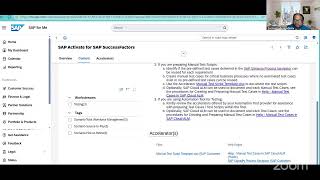
In this instructional session Dr. Niladri Bihari Nayak guides project managers, solution architects, and consultants through the end‑to‑end approach for implementing intelligent transformation programs focused on succession planning in SAP SuccessFactors. He emphasizes that successful deployments depend not only on configuration but also on governance, data quality, change management, and executive sponsorship. The lecture walks through the SAP Activate methodology (Discover, Prepare, Explore, Realize, Deploy, Run) as applied to succession management, detailing required workshops, requirement‑capture activities, critical data objects (employee, position, org, talent rating, skills, readiness), calibration and talent‑review tools, and the importance of a Transformation Management Office. Dr. Nayak showcases how to use SAP Cloud ALM (and optionally Notion) to track phase‑by‑phase deliverables, and assigns a homework to download the full SAP Activate material, build customized templates, and apply them to the provided banking and manufacturing case studies.
Chapters
Welcome everyone. So welcome back to our, the new sessions on succession planning. So let me then get started with sharing my screen. And what we have covered so far is, if you have already seen those topic and the 3 days program, the bootcamp part is a part of our series. And if you're watching in the YouTube or if you're watching from our platform, Already in the previous session we talked about section configuration, okay? So this is something we will talk about. So section implementation strategy. So next part is— this is the next concept, and in this concept we will be talking about the next concept, that is your implementing intelligent transformation programs, okay? This is primarily relevant for everyone, although it looks like a management terms, management topic. As a project manager is very, very— it is very, very important for project manager. But even if you're a solution architect or a consultant also, you have to understand your track, your work, okay? How it will be doing every step by step, we will talk about it. So this is a purely strategy point of view, from understanding point of view. Many times we know that the— you must be knowing that so project succeed while others— some SuccessFactors projects succeed but other fail even after spending a lot of money, right? So why? Because there is, because SuccessFactors, any module if you talk about, it's not about only the technology and configuration. There's a lot of business from a strategy point of view, from a governance point of view, from a data point of view, from a change management point of view, from executive sponsorship point of view. A lot of other factors also required. Okay, so it is typically not an HR project, but it's an entire transformation project. Okay, you must have seen that there are organizations who are also doing a transformation management initiative. Okay, TMO. So just like a project management office is also required, the transformation management office also is required. So it is actually some of the organization I have seen, I have also, they are actually utilizing separate office for this. All type of transformation, they track it with the help from Enterprise Architect, Business Architect, those kind of people, along with the project managers. Okay, both are required, by the way. So that is something we will see, okay, in this. So this is a very typical, you must be already knowing the methodologies which SAP is utilizing across the suite. We call SAP Activate if you're utilizing SAP SuccessFactors. And you have your own methodology if you're utilizing Workday or Oracle or Zoho People or similar kind of a tool, right? So these are the 6 steps which you already were aware of. I'm sure you— these are the different 6 steps: discover, prepare, explore, realize, deploy, and run. Okay? And I'm not going to deep dive it, but this is from a success point of view what other things are required. Because whenever you are having especially directly, we do not jump into the configuration, right? We take all, understand the clients, what they require, what is the transformation goals, and capture all the requirement, right? So the discover phase, we talk about what is the strategy, leadership continuity strategy. The explore phase, we talk about the nomination process, the different workshop we can do. And actually, after conducting, understanding those all concept, you will be going to the realize phase where exactly your configuration will start. Then you will be having— you will be talking about typically your succession system realization, realize the realize phase. Then you deploy, that will be training people to all kind of managers who are equally required. Then run actual entire— the monitoring the entire talent pipeline. So there is a definite, um, all this work. So what kind of workshop you should conduct, okay, especially from succession management point of view, you have to understand the process. So that's the first thing. Then after that you have to conduct what kind of talent review those people do. So you can also merge one or two workshops in a single day, okay? So if you're having technical people, maybe you can consider in a different workshop, like data workshop and integration workshop. So what kind of data readiness your people are having, because the entire quality of implementation depends upon all this quality of the workshops, okay? So pretty much these are very much required, we cannot ignore. Maybe all the 5 things you can— if it's a small company, they don't have that much kind of requirement, even it can be done 2 hours, 3 hours also. All these things can be done, okay, 2 to 3 hours duration, okay. If it is a very complex one, it can also go up to 2 to 3 days also. Different, different workshop you can conduct different point of time, right? So this is what exactly from a workshop point of view you have to understand, what other things workshop we can conduct and all. Now this is what you have to capture. So basically whenever you're taking the business requirement, so you have to understand the requirement capture properly. Whether it's the city from a talent review process, what kind of nomination methods, what is relevant for them, what are the best practices, uh, from a reporting permissions integrations point of view, what are the actually, uh, things that require. So you have to explain the role readiness form just like I have explained to you in the previous sessions, right? And if you have not finished those tasks, just go and finish, okay? Otherwise it will not very helpful. So do not watch this video like a Netflix. So just to finish all the tasks and activities, okay? Similarly, skills-based planning. So already we talked about the Talent Intelligence session. So these are all solutions we have. So we have to understand the business thing, and for, again, for that business need, what kind of solution offering is there? Those kind of mapping, those, just the example I given, most of the things are covered here, but we have to talk about that as well. Okay, and never, never copy another organization. You might have already completed your implementation section. Do not copy other organization process because every organization have its own unique method, unique culture, unique structure, and workforce maturity point of view. So never, never copy from one organization to another organization from a requirement point of view, right? So this is, uh, now coming to the data part of it. From a data point of view, exclusively from SuccessFactors section management point of view, these are the data, okay, required. So if you talk about— I'm talking about analogy here, okay? So let's say if you're having Google Maps Okay, so whenever most of us, we use it, but if the road is itself wrong, right, definitely Google Maps is not going to be helpful. The road is, you know, not properly maintained, and roads are not properly maintained, and this is actually deeper going. Maybe you may not be get the maximum benefit out of it. Similarly, from HR data point of view, if the data itself is wrong, if you're not having proper quality data, right, if you're having duplicate employees, missing positions— these are the common data issues, by the way. Okay, so you have to talk about the DQ issue here. So data quality is very, very important. So then only this modules will be working properly. Okay, and if you're having very much outdated org structure, the managers are not maintained, the talent rating also is very much inconsistent. So AI analytics, they will be work good unless— means if you are having a quality data. So for the reason, data quality is one of the key thing before we move to the any other modules. Okay, so all the 6 varieties of data, whatever we talked about here, especially the critical data types: employee, position, org data, talent rating, skills, readiness data. So all these 6 varieties of data you have to ensure you have properly maintained, okay? And calibrations point of view, whenever you are doing this kind of decisions, and it has to be fair and consistent across. And also we can talk about those modules, those calibration tools, whatever we are having, whether it's a talent review meetings, whether it is a performance potential grades or talent metrics calibrations, okay? So talent review meetings, if you talk about, uh, this is something we will be finding here. Typically you must have seen those things also during the performance management cycle. Okay, calibration, okay, calibration meetings and everything, right? So you can see that there are calibration settings are there. You can create calibration sessions, okay? So these are the 4 configurations you have to check. Manage calibration sessions, manage calibration templates. Can see these are all calibration related topic, okay? So you can go and verify all of those settings. So calibration session, if you want to go, you can create all of those things. So these are different, different steps you have. Similarly, Uh, these details we will not be going now, okay? You will be doing in your boot camp activities or during the hackathon depending upon your availability. But I'm just talking about, I'm just giving awareness for exactly what we're doing here. The calibration also, we'll be seeing the managing your calibration sessions here. So this is the creating the calibration. These are different calibrations point of view. You can see that there are different possible calibrations you can do, okay? You are managing the calibration session. Similarly, we have— go to the, your templates. There are templates available for your calibrations. You can find out here, okay? And you can have your own calibrations also, okay? Talent review calibration. There are so many calibrations you are having, okay? You can go and create your calibration templates, and based on your requirement, you can— okay, this is a role readiness calibration, something like that you can create, okay? So this is what exactly we'll talk about. So these are the different options available. And also we have a, the creed we're talking about, right? So 9 creed, although it is, I will, I suggested that in the earlier session, it is going to be outdated in the sense, but it is not so soon because there are still organization, they will be still adopting that. They'll, they will still leveling people based on their role. It is not going away very soon, right? Just like we talked about continuous performance management, every organization is not going to adopt that, right? Easily. Okay. So it will take some time. That requires a cultural shift also. So, but if you talk about succession management here, directly succession, we will be having here all the details. So you will be finding here the performance potential matrix, how versus what matrix, that is your objective to competencies as well as your performance. So these are different, different tools for you. Okay, so this is what exactly you will be having your different, different tools for your how versus what matrix, the competency to objective. Similarly, Performance vs. Potential Matrix also, it will be helpful for you. Okay, so these are different tools we have exclusively for we are doing this kind of a matching. Okay, so I will highly recommend go through detail all about it. So these are the different tools available. These are the GREEDS and Talent Matrix calibration sessions. Okay, without calibrations. Okay, so you can see calibration is one of the way, another is without calibration, other calibration tools also. Available so that you can make sure you are doing it proper decisions. Okay, so this is what actually I would recommend to go through. Then governance is also very, very important. Who will be taking the ownership? Okay, and who will be responsible for what? This is something you have to also take care, right? So change management, governance, and changes are very— and their topic which actually people ignore, but this is also during implementation point of view, these are very, very important, right? So strategy point of view, data, strategy, data, change management, process, governance, technology, all 6 things are equally important, right? So this is not about only configuring the screen by screen, but actually architecting the entire future readiness and continuity of the enterprise. So if you talk about the practicality of it, so I would recommend to go through the SAP Activate methodology thoroughly. So you'll be finding in that me.sap.com/roadmap video. I'm sharing the link in the chat. If you're watching live, or otherwise you'll be finding in the, our learning material itself. Okay, so you'll be finding here, and based on that you can see that there are different phases of the project like Discover, Prepare, Explore, Realize, Deploy, and Run. Okay, and every phase has its own set of sections. Okay, so first of all, in the Discover phase, you have to identify the scenario, scope definition, organization change management. Preparation, you have to do all of the tenant access. Okay. So here every model is there, but you have to identify your model. So you can also identify your product also. So we can go here, I think you have to identify this one, SuccessFactors and Development. Okay, so simply click that. Okay, and you'll be finding what exactly required. You can see that the best practices for talent. Okay, you'll be finding and initial system access for SuccessFactors, develop to grow. This is the best practice content you'll be finding. And if you're utilizing SAP Cloud ALM, these are pretty much doable. It will be you'll be able to do that. And also we talked about the Opportunity Marketplace also, right? It is a different license and you can also find out those details also, right? So just to filter it out from here, but in general other things also required, okay? So these are the specific material for this, but there are certain general materials, okay? So you apply the filter, then after removing the filter you can access preparation stage. You have to do all of these things like a Cloud ALM access, tenant access, self-enablement, all the project standard project. And these are mostly, these are change project management activity, quick to start. So how do How do you prepare data preparation and development strategy, learning need analysis, content development tool, prepare phase closer sign-off. These are key things which you do in the preparation stage. You can see there is a lot of things are here. Similar in the explore phase, you, you have to do the entire communication plan, executing the monitoring the project, fit to standard workshop, all the documentations, all this planning, design, okay. Whatever is relevant, you have to do, continue with this. Similarly, realization phase, where to identify the develop to grow. This is our typical strategy for especially the content for this module, section management, developers, all these things you have to continue. There is testing, there is— it covers almost every module, but the thing is you have to see whatever is relevant. Solution walkthrough, there are certain activities which you do it for every module, okay? You have to prepare for solution walkthrough, content solution walkthrough, there are timeline-based, okay? So these are all the detailed things are already there, pretty much available, okay? If you're already having access to me.sap.com, your SAP support portal, roadmap view and you check it out. Okay, if you're a project manager watching this, follow this to the T, okay, and engage your team accordingly. So do not go by randomly, okay. So follow this and also use SAP Cloud ALM to make the— make it everything sorted because everything will come there and you can also track it. So if you do not have it, uh, skill, then you learn and complete those SAP Cloud ALM training, okay, then only come to this, okay. It's a mandate for all the project managers It's also for solution architects. Everybody should follow it. So project management is not only responsible for only the manager, is also responsibility for all the team members to also understand all these topics. Okay, so in each stages you have certain deliverables, so we cannot ignore those also, right? So if you're talking about a test preparation, right, so we have to prepare a test case. Nowadays SAP Cloud ALM is covering everything, and also NCOE also capturing this process navigation, all the SAP Signavio process navigator, everything is there. So that also we are actually navigating and you are actually verifying all of this. Those script template, there are different accelerators available. Okay, do not reinvent the wheel. Okay, already those things are there in your SAP tool and you will be finding them easily. And you go through those, you know, your processes standard, pretty much, pretty much available. You can see this based on the business scenario, you'll be finding all these are available. Solution process, solution scenario. Okay, business process, business scenario, capabilities, everything is here. Okay. You can see that, and all these tools are already pretty much available. Okay? And you can apply those filters, and based on your requirement, you can basically go and verify module-wise. You have all of these things pretty much. Okay? There are 1,000+ materials available. Solution process, solution scenarios. Okay? You can go here and you can apply filter. Okay? Then based on that, you will be finding all of them. So there are 4,000+ solution process. Okay? All of these things you will be finding here based on Dr. Niladri Bihari Nayak So I'm not going into detail about it. This is a purely project management class for everybody's required, you know, as I say. But here too, I'm just pointing out the resources where exactly we find it. So leverage all of these resources and make your project successful. Okay, with that note, we will stop here. Before I move to the next segment, the next topic we will be covering here in the next segment is AI and the future of intelligent intelligence. Okay, so that is what exactly we talk about. Okay, so stay tuned, complete all the, uh, this activity. Your homework for today is download the entire SAP Activate, uh, those methodology which I was talking about. You can download it, you can export it, all of this entire thing. Okay, a document, this is use activity. Okay, and you have to go through that thoroughly. Okay, so I would recommend and go through this entire process, complete Okay, the download the entire template and make it ready for your, your part of the case studies you'll be receiving. I would, I would like to see those things in your system, okay, in your templates, filling customized for your case study, whether you are doing a banking case study or manufacturing case study in this boot camp, okay. So you have to complete those SAP Activate, okay, entire thing, okay, in a proper way. Okay, so that is what actually the expectation Okay, so this is the SAP Activate dashboard which I have created, okay, from my project point of view, okay. You can check it out. So for every phases, discover, prepare, okay. So this is the way you have to document. If you're utilizing Notion, it's okay. Otherwise you can utilize any of the tools. So explore, and you have a realize. We have for each and everything, you can prepare such a kind of a step-by-step deploy. Then we have a run, okay. So in this way, the SAP entire SAP Activate phases, you can see this is how it will be looking like, okay. I'm using Notion for that, but SAP Cloud ALM, you will be able to see all of these things, each and every stages, okay? You will be able to find out the entire project board, you will be able to access, and for each and every pages, what exactly you have to do, you have to find out, okay? So discover page, what are the stages, what are the steps, okay? So document everything, each and everything, okay? And it will be very much helpful for you, okay? So you can see that how we will do this activity task by task, okay? So this is what you, uh, you can see that if I discover page, okay, whatever activity is done, we just mark it here, okay. So discover page, all of these things you can see. It's pretty much, this is the case study which you have already seen in the earlier bootcamp, Florida Real Estate. But this time we have given a banking case study in India and global, uh, for US and all, we have given a manufacturing case study, okay. Every time in bootcamp we start with a new case study, so I recommend to go through it. So stay tuned and we will be continuing with the next session with the next topic. That is your, as I suggested,
More from Dr.

SAP Procurement with SAP LeanIX x SAP Signavio Webinar | Architecting the Future of Procurement

Global Compliance Navigator by Dr. Niladri Bihari Nayak | SAP LeanIX Sep 2026 Contest Entry

SAP LeanIX to SuccessFactors integration Webinar | Architecting the Future of Work

2027 Leadership for Enterprise Architects : What Changes ? | Architecting the Inner Transformation


Reporting in SAP LeanIX Webinar | Architecting the Future Autonomous Enterprise



20 SuperLabs for Architecting the Future Autonomous Enterprise (Business Arch & Enterprise Arch)

