Designing your curriculum
Amy Guy walks through designing a curriculum by starting with student transformation: what learners need to become. Map backwards from outcomes through onboarding, delivery, assessment with case studies, and aftercare. Use a lesson-plan template with objectives, assessment, activities, and reflection, then iterate based on feedback.
Chapters
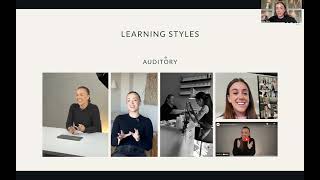
Okay, so now we're going to look at designing your curriculum. And curriculum is a very long, posh word. All that basically means is the content that goes inside your course. So essentially I'm teaching a curriculum right now inside this business program. I will teach a curriculum on my educator diploma course. I will teach a curriculum if I am teaching you a masterclass. Right. And it's exactly the same for whatever experience you're going to be creating for, for your ideal students as well. So what can happen is you'll have this idea for a course that you want to create, but you'll be so overwhelmed by the thought of actually creating it that you don't do anything at all. And that's what I do not want you to do. I don't want you to be put off by the hard work that is involved in bringing a course or a learning experience to life. Because it seems like it's a mountain to climb. But I'm going to help you in this lesson here to break it down. So rather than looking up at the mountain and thinking, I've got to climb that, actually we just look at the face step. What's the first step? Well, it's just putting our walking boots on and then it's walking to the foot of the moment and then it's getting to the first stage. Okay, so that's what we're going to do now. We're going to break it down, make it easy for you to follow. And if you use the last lesson to come up with sort of what, what course or experience you want to focus on, I want you to be thinking about that and have that the forefront of your mind as we go through this lesson as well. So where do you start? You've got this amazing idea. You want to do a one to one or a beginner's course or a masterclass or something like that, but you just don't know where to start in actually mapping it out. So the first thing you want to do is rather than focus on what it is that you want to teach, you want to focus on the student that's walking through the door and the transformation that they're going to get one. So from what to do to what. So I'll give you some examples. Let's say we're talking about a beginner's course. Then your student is going to walk in as a complete beginner. They're going to leave as a confident and knowledgeable nail tech. Then let's say you were teaching an online nail art course or an in person nail art masterclass, the transformation is that the person is going to walk in as a confident gel nail technician and they're going to walk away as a competent nail artist with all of the tools and skills and knowledge that you have given them. And then let's say if you are doing a accredited course in builder gel, they're going to walk in as a competent gel nail tech. They'll already be qualified in gel nails, they're going to walk away as a confident builder gel nail tech, so they're going to have another string to their bow, so to speak, and another skill that they can go away with. And then lastly, let's say, for example, you are doing a online masterclass in French manicure and you're going to sell this on Instagram. When people pop on your page, that's sort of like the passive course that you're going to be selling. Well, then the transformation is that they start off as a gel nail tech and then they leave the master class feeling confident and skilled in French manicure. Okay, so you want to think about now, what is the transformation that I am going to be offering my student? Now, once you have that transformation, I want you to lay it out in a timeline like this. So you have the person they are at the beginning, at the at the start. Then you have the person they are at the end, at the end. And then you want to walk through this roadmap as if you are the student. And the exciting thing is you probably once have been the student because the reason why you're so passionate about teaching whatever it is that you're teaching is likely because you're an expert in it yourself. But every expert as we know was once a beginner. So I want you to imagine that you had lost all of your knowledge to do with that topic. And for this example here, I'm using a gel polish beginners course. So I want you to imagine that everything you know to be true about gel nails right now has been erased from your mind and you are back as a beginner. And then I want you to start to walk through this roadmap and start to break down the things that will be important to you if you were going to learn it all again. Okay, so first of all, in this instance we've got like a pre course on boards and so as soon as the person is booked on, what onboards and information are we giving them and then after that do they need any kinds of information or welcome pack or maybe the welcome pack will be waiting for for them when they walk in the room, if it's an in person course or what does that sort of look like, then are we going to give them a kit or are we going to give them a shopping list? What would feel best for you? Maybe we'll strategically add that in at that step and then the next step will just be actually the day. Right. So they will come to the day and they will arrive. What will happen on arrival? Will they walk straight into the salon and take a seat? Will they come in to some music and a little bit of a networking half an hour at the beginning to get to know each other? Will they walk into a breakfast spread and a little bit of like a, a circle where everybody shares why they're there, like what does the course date arrival actually look like? And then the next step is like, okay, what are we going to cover? We're going to cover theory and practical and what are both of those things look like? What do we want to incorporate? And then you can add in any of your own touches, anything that might make you unique, anything you might have thought about throughout this program, then the review or the next step. So when they get to the end of the day, what do they need to go away with? What do we need to share with them? What do we need to tell them about? Do we need to add them into any groups or anything like that? And we need to tell them what happens next. Then maybe you expect them to do a number of case studies. So we usually do around four case studies for our students. So you will be taking in the case studies, you will be giving them feedback, you'll be marking them all. And then lastly the aftercare. So once they are qualified and they've got their certificate, what aftercare are we providing them? Is it a Facebook or a WhatsApp group? Is it your email address? They can email you anytime. Do they stay inside sometimes of container with the other students on the course? Like what does that look like? So that's kind of mapping out like the, the idea of the course, right. And, and how we want it to run, how many days it might be over or whatever else. And then you can do the same thing with the actual course content. Okay, so let's imagine we're just focusing now on theory and practical. Let's imagine we're at the beginning of the day. Everyone's got to know each other. I've onboarding information, I've got the kit if I needed it. What would be the first thing that I would want to learn if I was relearning everything again. So would it be health and safety? Would it be nail anatomy? Would it be science of gel? Like what would be that we would want to focus on? Or would you want to focus on the practical first? Or would you want to show them the tools that we use first? Like how do you want this experience to pan out? And what order would you feel most comfortable if you were the students? Or what did you find useful when you were the students? And you will start to see your curriculum map out in front of you. This is what I do with every single course masterclass learning experience that I create. I map it out from start to finish with the transformation in mind. So you are always thinking about how do I want this student to feel, what do I want this student to go away with, and what are the steps in order to make sure they achieve that. So in essence, you work in backwards from the result that you are given this student. Okay, now there are a couple of things to consider then when you are mapping out your curriculum. So first of all is that all of your learners will come to you with completely different learning styles. And it is up to you as the educator to make sure that you are reaching each of these learning styles in the education you are providing. So a bit of an example. You will notice that in this business program there is text. If you prefer written training, there are videos like these. If you prefer, you know, sort of visual learning, there are also images and things like that throughout that you can also tie yourself to. You can also listen to these videos if you're out on a walk, if you prefer more audible. So in this business program, it's a fine example of how we have reached out to different learning styles. And you need to make sure that you are doing that too. Even if it's an online course, just like this one is, you can still reach out to different learning styles. So here's some examples. In order to make sure you are incorporating some visual learning for your students, you want to think about how you can do this. So if it's an in person course, you could have slides that are up on a computer or a huge screen or a projector or something like that. You might also want posters around the room, diagrams, things for people to follow. If it's an online course, maybe it's illustrations, diagrams, these can all be labeled so it's easy to follow. And also demonstrations are really helpful for visual learners. So either videos of showing how it's done or in person demonstrations where you have people as close to you as possible, and you show them how you do the technique and things like that. So you've got images, slides, diagrams, illustrations and demos, all will reach your visual learner. Now, not only do you want to make sure you incorporate at least one of these things, you also want to think about your auditory learners as well. So again, how are your students who learn from actually taking in the information and absorbing it and actually giving it a go themselves? How are we going to reach those people? So maybe we're going to give them time to actually practice and receive variable feedback throughout the day. Maybe we're going to give them videos that are easy to follow and deliver instructions, or maybe we're going to deliver instructions to them in person. Maybe we are going to have group discussions. So maybe we're going to have more than one person all involved in a discussion. And rather than teaching the subject, maybe you want to ask questions that encourages the students to give you the answers. So lots of different ways that you can reach the auditory learner, but I just want you to start to think about how you're going to do that and see that it is possible, regardless of whether this is in person or online. And then lastly, you've got your kinesthetic learners. So these are the ones that like to see workbooks, that like to write things down, that like to have a go themselves. So it's where you're providing opportunities for this. And as you can see, this can be done online, it can be done in person. You can do physical workbooks, you can do online workbooks. As long as you are guiding your students through a process and sharing with them exactly what you expect and how to get the best from the course, depending on each of the learning styles, then you are going to offer something for everyone and they are going to feel super comfortable in your course. Remember, people will remember how you made them feel long after they will remember what you did or what you taught them. So the whole point of this is making them feel seen, comforted, listened to. If you've got a learner that just simply cannot absorb words on a screen, you have to be providing them with other options. Otherwise they are not going to feel great whilst on their on your course. They're not going to feel like they are successful. They're not going to feel like they're achieving something, they're going to feel like they're failing, they're going to be finding it hard, they're going to be uncomfortable, comfortable. And we don't want to remember, we don't want our students to Remember your courses in that way. So thinking about how we can bring this to life in multiple different learning styles. Now to make this easier and helpful for you, you should remember this from your qualification that you obtained when you got your Level 3 or your AET or whatever teaching qualification you have. But this is a layout of a lesson plan and when you are mapping out your curriculum, you also want to map out your lesson plan. Now this is something for you to follow. So as you're teaching a lesson you can have this next to you and it's got really important pieces of information in so things like the learning objectives, making sure that you are sharing with the students at the beginning of a module or a lesson or a day, what are the objectives, why are we actually here and what are you going to go away with? And you'll notice that I do that throughout the business program. Like in today's lesson, this is what you're going to cover and it gives the student peace of mind that they're in the right place. Then you've also got things like the initial assessment. How are you going to assess where your student is currently at in their transformation? So you might be doing a beginner's course, but actually there might be someone in the room who's been self taught nail tech for three years and this is not the first time that they have picked up a nail brush. So you want to do a bit of an initial assessment just to understand your learners existing knowledge and just so that you can read the room, know what you're dealing with and then you can adapt the training to them. Then you've got educator and student activities. So how are you going to share the practical demonstration with the students and how are they going to have a go at doing that and then how are you going to assess them in the process? So how are you going to give them feedback? Will that be verbal feedback? Are they going to get an email afterwards? Are they going to get a written piece of feedback? Are you going to write it in their workbook? Are you going to give it to them on a sheet? Like what does that look like? And then lastly there is an educator reflection section. So you can use this space to reflect on what went well and what needs adjustment for future sessions. So it might be that you get to the end of your phase one to one, you followed this lesson plan and you're like, you know what, it actually went on a little bit long at the beginning. So in my one to ones I don't want to spend half an hour getting to know the person I want to spend 10 minutes. So I'm going to build that into the next lesson plan. Or it might be that the in person beginners course ran over by an hour. So it's like, okay, next time I am going to ask them not to bring a model because that took up quite a bit of time welcoming the models and all of that. I'm going to put them into pairs and I'm going to ask them to do their practical on each other and just do one hand instead of two, right? So you will be constantly learning. Something I always say to my students is the teacher learns the most, right? When you are in the zone, when you are teaching your courses, you will be learning so much from your students, from the situations you're put in, from the circumstances you come across. It's just as you become an effective nail tech, I can almost guarantee the stuff you learned at the nail desk was probably a lot more than what you learned on your nail course. Because when you learn on the job, that is what shapes you into the nail tech that you end up becoming. Right? Same with being an educator. You will be shaped, you'll be twisted, you'll be turned throughout the process and it's up to you to continue to reflect on that. Because if we don't, things will just keep happening and we won't be actually being intentional with how we are using those experiences. Last but not least, whenever you are creating a learning experience, you always want to make a space for your students to give you feedback. After every course, you want to ask, how did you find it? Your student will tell you if they felt something was too fast, too heavy, something was unclear, they struggled more with one thing than another. If you give them the opportunity to tell you, then they will. And again, you can take that information and use it to adapt your experiences moving forward so that you can continue to refine. And over time, your training will evolve. Your curriculum should grow with you just like your business does. The beginner's course that I am teaching right now inside the Nail tech Org is nothing like the very first beginners course that I released. Right? That's because it's grown with me. It's because I've learned along the way. It's because my students have taught me so much that I've now applied to my sessions. And you will do the same. So actually, there's no point in waiting to launch your courses until they are absolutely perfect, because they never will be. Your courses a work in progress, you're always going to be tweaking them. You're always going to be adding stuff in the industry is forever going to be evolving, Right? So you'll never have a finished curriculum, but what you do want is a curriculum that you're happy with. And if you wear that customer, that students, and you went through this process, would you feel happy with the transformation that you were given and that you were sold? And ultimately, that's what a good curriculum is. So I will leave you now to map out your transformation, to map out your curriculum, to start creating little to do lists within your transformations. And I can't wait to see what you.