Team Meetings
Amy Guy provides a practical guide for running effective team meetings for small businesses (salons). She recommends short, regular meetings (e.g., 10–15 minute weekly huddles), monthly 30–60 minute deep-dives, and annual/quarterly goal reviews; stresses clear agendas, delegated leadership, celebrating wins, reviewing KPIs, documenting actions, and using off-site meetings or rotations to build morale and buy-in.
Chapters
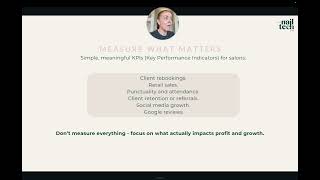
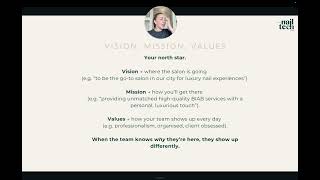
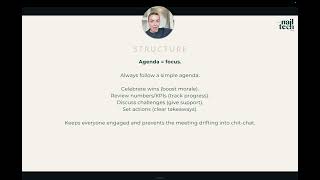
So if you currently have a team, then you might be thinking, I know I should be running team meetings, but I just don't know what to use them for. I'm a little bit nervous, I feel a little bit overwhelmed by it. Or maybe you're currently running team meetings and you just want to know that you're being as productive as possible and you're including as much as you possibly can to help the growth of your business, to help team morale, team culture and things like that. So I really wanted to put this lesson in here so we could discuss team meetings, discussion structure of them, the consistency of them and things like that, and also touch on like what's most important because as an in team meetings can sometimes feel like it's just going to take up more and more of your time. And what I want you to do is make sure that this time is actually productive. So again, less can be more. Sometimes if you don't really have a clean flow to your meetings right now, let's start small and we can introduce more meetings as you get more confident. But let's talk about that now and dive straight in. So even if you have just one person working with you, you are still a team, right? You are still more than one person working towards one vision. And it's important that you communicate with each other regularly so that you can control your outputs, so that you can control what is actually happening off the back of you both turning up to work day in, day out. Now, they don't have to be long, they don't have to be boring, they don't have to be awkward, but they do need to be done team meetings, right? And if they are done right, they bring your team together, they keep your salon run smoothly and they actually motivate your team. Your team likes to spend time with you a lot of the time. So I want to talk about how to structure them so that they actually work. So first of all, let's think about how often you should be doing team meetings. Now short and regular meetings will beat long meetings that are very rare, right? So once in a blue moon, having a one hour meeting that runs over to three hours and then not having one again until someone goes, why don't we have in the next team meeting, right? So if right now you don't have any meetings at all or you're doing what I've just explained there, I want you to think about putting in place some short regular meetings that allow you to create a bit of a rhythm within your team. And when I say rhythm, I want you to think of like, imagine like. That's how we want your team and your salon to be running right now. But if you've got sporadic team meetings, one to ones happening here, there, but not consistently and things like that, you don't have a rhythm, or maybe you do, but it's like, and how could we follow a rhythm like that? How are your team supposed to stay on track, stay motivated, stay leading your vision? It becomes so much harder. So we need to create a rhythm that they can rely on and that they feel safe in. Okay, so maybe it's a weekly huddle. So maybe at the start of every week you want to take 10 to 15 minutes to just check in on the priorities of the team. If you feel like weekly is going to be too much, then maybe you might want to put in a monthly deep dive. So a 30 to 60 minute meeting for big picture planning and training. Now, something I really like to do when I had my salon was actually just go to the pub one day a month and have dinner together and discuss whatever it was that we had going on. And I found that coming out of the salon environment and going somewhere away from the salon, away from all the products, away from the clients and all of those things allowed us to just think and speak a little bit more freely. It allowed the team to let their guard down, to feel relaxed and it allows us to just communicate in a way that felt really good. And I remember those team meetings at the pub and were some of the times when we made huge shifts as a team, when we really came together and come up with some brilliant ideas. And that is something that I would say if right now you are running team meetings and you don't feel like they're productive or you feel like they could be better, consider going to an environment that might feel a little bit nicer than just sitting in your salon. So even like to the coffee shop down the road or maybe you want to go and do like a bit of a team activity to together or something like that and combine it with an hour meeting. But big picture planning and training and stuff like that, when you include those in the meetings, they can be so beneficial. And then also you might like to add in an annual or a quarterly review for goal setting and growth conversations. Now I would say at least once a year you want to get together with your team, go back over the vision, the mission, the values, and come up with some really clear goals as a team that you want to work towards because it gives them something to do, it gives them something to aim for, it gives them something to be a part of and you can then keep them motivated within that, reward them at different milestones as you get there. So maybe like, you know, you might set the goal at the start of the year. We Want to have 10005 star Google reviews by the end of the year or you know, something like that. And then when as you're getting there, let's say in a month, you have 100 reviews. Well, if you were to do that every month, you would meet your goal. So if we get 100 reviews in a month, we'll go to the pub instead of stay in the salon for our next team meeting. All of a sudden for them it's like I really love to go in the pub and having our dinner together and stuff like that. So let's try and get these reviews in. And it gives them something to motivate them, something to look forward to and something that they know is going to help the vision and work towards. Consistency is better than cramming things in here. So the reason that I've given a few different options is, you know, it would be great if you are a bigger team to be doing all of these. It will be great if you're a bigger team to get together for 10 to 15 minutes on a Monday morning, to once a month meet for a 60 minute meeting and to annually or quarterly review your goals together and have growth conversations. That is what I would say would be a really effective structure for team consistency. If you are running a bigger team. If you're running a smaller team, then I would at least say pick one or two of these and make sure you do them consistently rather than trying to cram all of them in and you will get much more success. The structure of your team meetings needs to be clear. So what you don't want to do is just all go to the pub, have your dinner and realize we haven't spoken about anything important. You want to turn up with a clear agenda or focus. This is also something. If you have people working on your team like a salon manager, you could give them this them as a form of delegation and say I want you to come up with the structure of our team meetings again. That takes it off you. Right now at the Nail Tech Org we run monthly team meetings. I am not responsible as a CEO for the structure of those meetings. The team is and every single person gives their input as to what things they've been working on, what support they might need and things like that. And that creates a team Meeting rather than it always needing to be on me. And I just give a company and a business overview. So you want a clear agenda and a clear focus. You might want to think about things like every team meeting, we're going to celebrate wins, we're going to review our numbers or our KPIs, which I'm going to talk about in the next lesson and track our progress. So it might be our social media has grown by X amount this month, but we've, we've, you know, fallen down on the client bookings or we've had this many of clients retention this month, but we've fallen down on the upsells of retail and things like that. So you want to keep your team updated on what's happening, discuss any challenges. So, you know, I've noticed that we've had three, three complaints this month. Do you need any support? What, what were the complaints about? How can we stop this from happening again? And also set actions with clear takeaways. So if you do set an action, make sure it's clear whose responsibility it is to bring that action to life. Or if you have an action, split it into tasks and give those tasks to members of the team who will be responsible for those roles. Doing this keeps everyone engaged and it stops the meeting from drifting into things like chitchat or talking about, you know, what people are doing on the weekends instead of actually having growth conversations. Make sure you listen to every voice in your meetings. Just because you're the CEO doesn't mean what you say goes. And actually having a little bit of humility and understanding that you're not always going to get it right and that actually there might be people in your team who are in the salon more than you are, who have good ideas. And these people in your team should be given space to listen. So it doesn't mean you have to go with every single suggestion, but if they make a suggestion, thank them for that and don't make them feel silly or like their opinion or their voice doesn't matter. So make space for each of your team members to have a chance to share something. So it might be, you know, we're going to go around the group. I want you to share one thing that went really well for you this month and one thing that maybe you would like support with or maybe that you would like to do differently next month or, you know, what's one win from your week or what's one thing that we could do but better. This builds buy in. It makes your staff feel valued. If they are heard and it encourages them to continue speaking up. You can use simple tools to keep this clear. So you could have a running agenda Doc. So for example, Google Docs or a notebook, if you've got Google Docs account, you can have your minutes on there. You can type them in on your laptop or on your phone, or get a team member to record your minutes every time. And then you can store those so that there's a, you know, a folder in your Google Drive that you can come to and look back on if you want to. So at the start of every team meeting, you could bring up the last team meeting and say, just as an overview, last month we discussed xyz. This month our agenda is xyz. And then you store this month's information again. You can use a shared WhatsApp group or Trello Notion boards track your actions. So if you're discussing projects, make sure they are transferred into your project management tool if you use one so that not only are you discussing great things, but they're actually being done. And rotate who takes the notes or leads part of the meeting. So give different people different responsibilities. Maybe you've got a nail tech on your team who you know wants to step up a little bit and maybe have more responsibilities. If that's the case, then say to that person, okay, this month I want you to lead the team meeting. I want you to come up with the agenda. I want you to get XYZ together. It will make them feel valued and make them feel a part of something. Team meetings should feel energizing and not draining. You want to keep them short, keep them structured, keep them consistent, and your team will always know what's working, what needs improving, and what's expected. It shouldn't be a surprise to your team what is happening in your business. Having clarity is what keeps the salon moving forward, is what keeps the salon focused, is what keeps the salon consistent as well. And when you think about building a brand that's speaks without you being in the room, you need consistency amongst your team in order to create that. So I hope this helped. And I'll go into KPIs on the next lesson, which is also something that you can add into your team meetings.