Mastering SOPs and Playbooks for Salon Success
Amy Guy breaks down SOPs and playbooks: SOPs are step-by-step procedures for tasks like rescheduling in Acuity Scheduling, while playbooks capture techniques and communication standards. Both create consistency, speed up training, and let your salon run smoothly without you.
Chapters
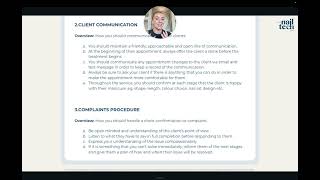
So in this lesson, we're going to cover what are called SOPs and playbooks. Now, you might have never heard of this before, you might have heard of it before if you've maybe worked in a corporate job or something like that, but either way it does not matter. I'm gonna explain this to you in a way that is really clear and easy to understand. And essentially what it comes down to is helping you to manage your team and get the most from your team members as well. So as we dive in, I just want you to think about how you feel right now, if you are managing a team or how you want to feel, if you are about to step into that. And if you feel like you are constantly repeating yourself, chasing people, fixing mistakes, or things are being done in a way that you aren't on board with or don't want them to be done, it's probably because you don't have clear systems in place. And if you have any problem within your business or within your team, it's either a people problem or, or a process problem, right? And I want you to first of all revert to process before you revert to people, because sometimes you will have the right person in the right seat, but you're just not setting them up for the success that you want. And that's where as leaders we have to step back and have the humility at times that, okay, maybe we just haven't given this person the resources and the tools that they've needed in order to be successful. We can't expect them to know exactly what we want and if it's inside our head, right? So SOPs and playbooks are the secret to running a salon that is consistent, that is professional, and is stress free. And I'm going to tell you exactly what they are with examples right now. So an SOP is a standard operating procedure, which is basically a document that outlines the exact steps needed to be taken in order for a task to be completed. So imagine you are off work, sick, or if you are on holiday and someone needs to fill in for you. SOP would allow them to do the job to the same standard as you. So think about the tasks that you do in your business right now. It might be booking somebody in, it might be doing a set of nails, it might be paying an invoice. Every single task that you do has a standard operating procedure behind it. It has a way that you do it, steps that you take. So if you were going to book somebody in, first of all, you would open up the booking system Then you would log in. Then you would go to the required day and time. Then you would maybe check that you know what time you have. Then you would click to book them in. Then you would store their email address and their telephone number so you would follow a clear process. And if you wanted somebody else to do it, you would need to tell them each of these steps. If you record it and write it down, then it becomes an sop. Okay, so it's the process of something that you do day in, day out, written down. A playbook is all the little nuances and techniques or strategies that make your service amazing. So, like the sprinkles on top that make what you do, how you do it, so amazing. So, like your guides and principles. So maybe you do B app in a certain way. Maybe you use a liner brush to go around the edges, or maybe you make sure that you dehydrate with acetone before you apply the product. Or maybe there's certain things that aren't necessarily don't have to happen, but you do them that way because that's how you like them to be done, or that's what you like the finish to be to be. And you have boundaries about what you want as a part of these processes. So maybe also there are certain things that you have acceptable that you talk about to clients and that you don't. So maybe it's like, you know, we don't discuss politics with clients, we don't discuss other clients with clients. And that's just how I like things to be done. If you were to write that down, that will become a playbook for how you want communication to be within your salon. Okay, so that's the difference between an sop. An SOP is a clear step by step by step, step process of how you want them to be done. A playbook is more like the sprinkles on top of the things that you might want to, you know, add into things to make them special or to make them your way of doing them. So here's an example of an SOP which might be changing a client's appointment. So you could give this to someone in your salon and they could follow this exact process step by step and do it in the way that you want it to be done. So an overview of this SOP is that this procedure will walk you through how to reschedule a client's appointment within the mobile app Acuity Scheduling. Okay? So you will open the app, you'll locate the appointment that you want to reschedule, you'll then select the appointment to open up the details. You'll press the pencil icon. So see how it literally walks you through step by step. So if you're coming in as someone doing this for the first time, you know exactly what to do. Okay, then you might also have an appointment etiquette playbook. So this is an example of how the summer they should present themselves and at all times when they are in your salon hosting an appointment. So first of all, there will be personal presentations. So you want them to always have a clean and professional appearance. You want them to always make sure that they wear all black. You want them to always make sure they have their hair neatly tied back. And you want them to wear minimum jewelry. Okay, then you might have a section in your playbook for how you want them to communicate. So maybe you would say that you want them to maintain a friendly, approachable and open line of communication. You want the beginning of their appointment to always offer the clients a drink before they start. So can you see how these are things that aren't necessarily a step or a process, but they're more how you like things to be done. And if someone's coming into your space, these are your expectations and almost like a tick list of things that they should include in every service. Okay. Also things like complaints. So there's no one size fits all for a complex complaints procedure. You couldn't really do an SOP for that because every complaint would be different. But you can do a playbook for how you would want somebody to handle a situation like that and almost like do's and don'ts of that thing. Okay, when should you give SOPs? Well, first of all, you should give them when you are on boarding anybody into your business. So if you're hiring a new team member, you're getting somebody new on board. You want to set them up for success. New hires quite often feel lost because they don't know what's expected of them. They don't know what their roles are. But SOPs will give them a clear roadmap. It also saves you from constantly repeating how we do things. So if you feel like you're like a broken record, you constantly having to say the same thing over and over again to different people, how easy would it be to say, here you go, here's the SOPs on how I want things to be done, spends an hour looking over these. Or if you add a folder that anybody could access at any time. So if somebody calls up to reschedule appointments and you've got a new Nail tech, they don't know how to do it. Rather than coming and asking you, they can just go to the folder and they can watch a video or read an SOP on exactly how to do it. The result is faster training, more confidence, and fewer mistakes. You want to have a full portfolio of SOPs and playbooks in place for your salon. If you are hiring a team so that people understand exactly what to do and how to do it this way will create consistency. So this is when your customers start to get the same experience every time. And that's what turns you from a business into a brand. SOPs mean that every client gets the same high standard, no matter who serves them, because everybody has read and understood the process. It builds client trust and a strong sell on reputation. Because they know what to expect, they have a clear rhythm that they can rely on and. And an example of this might be greeting clients, prep and workstations, handling payments. All of these things you can put an SOP behind so that you create consistency within your business. Now the last thing you want to do is make sure that this is a living resource, not something that just gathers dust in a drawer. Make sure you're reviewing and updating your SOPs regularly as your salon evolves, as you bring in new processors or new team members. And make sure you involve your team as well. It doesn't need to be your job to create every single sop. If you've got people, people in your team right now, maybe nail techs or receptionists or salon managers, ask them to start mapping out their own SOPs, the things that they do day in, day out, and get their input on what works best in practice. Because you don't always know best, they might know best too. And what this means is, let's say, for example, your salon manager, who you rely on so much, goes off sick. There should be a folder of all their SOPs so you can put somebody else in place to do their roles and responsibilities and know exactly how this person does it. Sops and playbooks might sound like something that you would only see in the corporate world, but I promise they're actually your freedom as a salon owner. They mean that your salon will run smoothly whether you're there or not, whether individual team members are there or not. And you can start with just one, like an open and checklist and just build from there. The more you systemize the things in your business, the less you have to firefighter. And that means that your energy is saved for growing the business instead of just being there to tackle problems every day.