Writing your manuals
Amy Guy walks through writing educational manuals from scratch: map what learners need to transform into, reverse-engineer your lessons from that goal, break it into tasks with real deadlines, and ship a first version. Update every six months. Copying others creates legal risk. Tie everything to what you actually know.
Questions this video answers
Every six months.
About four months (13 weeks).
13 items.
Chapters
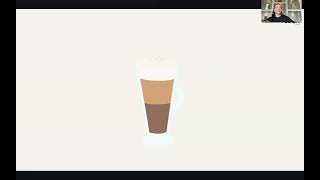
Okay, so now we've got the idea for the learning experience that you want to put out there. You've also got an idea of the steps you want your students to take in terms of your curriculum. It's now time to write your manuals. And I know from experience that this can be such an overwhelming part of the process of becoming an educator. Launching your own academy, launching your own courses. And that's why, as I explained in previous videos, it's so important to focus on one learning experience at a time, so, so you can write a manual that you are proud of. One thing I will say at this point is that your manual will never feel complete because the industry is constantly evolving. You're always learning new things, you're always going to want to add to it and tweak it and things like that. So that's why I'm going to show you a really watertight process of how to write your manuals that you can stick to. Okay? Every six months, you can review your manuals, add in any extra information, but do not procrastinate on getting these out there. And once you create the plan in the way I'm going to show you right now, you need to stick to that plan. And if you get any new ideas, okay, great. We're still going to stick to the plan that we've got. We're still going to launch this. And in six months time, we can add in the new bits that we've thought of. Six months after that, we can add in the new bits that we've thought of. But if you continue to add to the manual as you are creating it, let me tell you, you will never end up launching it, or you will launch it a year after you were supposed to, because you're procrastinating on getting out there because you've just got so much that you want to add. We are not going to do that. Okay, so I'm going to take you through a process now of creating your manuals. But first I want to cover something important. When you're writing your manuals and your courses, it is so important that you don't copy from other training centers and that all content is your own. I say this for so many reasons. Number one is the fact that if it was written, oh, what? I'm gonna leave that in there because I don't know what just happened. If you copy your manuals from someone else, a spider will appear on your screen. And I actually pressed the letter S by accident on my keyboard and that's what happened. Who knew? Anyway, one of the reasons why I say do not copy somebody else's content is because if it was written by someone else, then it is naturally protected by copyright laws. Okay? So you could get yourself into a situation that you do not want to be in. Secondly, you do not know 100% that their information is correct. It might sound legitimate, it might sound like they say it with confidence, but their information could be incorrect, and that affects your reputation. You need to make sure that all information you put out there has been created and written by you so that you can trust yourself and you do not have to trust anybody else. Because putting the trust of your brand in somebody else's hands is a very, very dangerous thing to do. And lastly, if you want to make your academy successful, you should know by now at point in the business program that you are the key. If you are authentic in the information that you put out there, then your academy has no choice but to be successful because it is so sustainable, it is so linked to you and your values that other people are going to see that and going to be drawn to it. You'll become a magnet rather than trying to chase those sales. Okay? This part is important in order to not only create your successful academy, but also to sustain it, too. So we are not going to copy anyone else's manuals. We are not going to go back to the course we originally did when we became nail technicians or we did certain master classes and copy their manuals. Absolutely not. You are better than that. You are going to write your own. And as I said, if that feels overwhelming, do not worry. I am here to help you. And this is a quote by the lovely Kim Kardashian. Now, I am not one to quote the Kardashians. However, this is a quote that I have to add in here. You can steal the recipe, but the sauce won't taste the same. Okay? If you are teaching somebody else's program, it is never gonna land like it was if you were teaching your own program. Because the passion, the meaning behind the words, the fulfillment behind all of that is not going to be there. And that's just in your energy as a whole. And that's a fact. Okay? That is science. Therefore, don't even try. So first of all, let's visualize why you're. Why your courses need to be a of you, your story, who you are, what you believe in, your mission, vision and values. And that's because you are like a cup of coffee. So I want you to imagine that you are walking into your Favorite coffee shop. And not only do they have a choice of coffee, so they might have like latte, cappuccino, flat white, you know, all of those things. Then they might have the opportunity to have a strong coffee, a weak coffee, a regular coffee. Then they might have the opportunity to add a certain milk. Maybe you want oat milk, almond milk, all of the different things, right? And then they might ask you to want chocolate or sprinkles on top. Then they might ask you, do you want syrup? Right? So we get to design our own coffee. Well, your courses are pretty similar to that. So this is what your courses should be a natural blend of. First of all, you've got your coffee at the bottom. And this should be your knowledge, nobody else's your knowledge. And you will have accumulated this over time, depending on what courses you've done, depending on what videos you've watched, depending on what experience you have faced behind the nail tech, behind the nail desk that no other nail techs could have experienced because they were in the moment with you and your clients. So the coffee should be a huge blend of your own knowledge and everywhere that you've picked that up over time, then the milk should be your vision, right? The milk should be what you envision for your academy, for your courses. So let's say you have a vision of creating courses that are accessible for neurospicy individuals. Okay? So we should be able to see that in the blend of your manuals. How do they support people who have certain needs? How do they support people that not every course out there is currently focusing on supporting? Or maybe your vision is to provide gold standard education in build a gel that you don't believe has ever been created before. Well, we should feel and see that in your manuals. And lastly along the top, you add your values, your beliefs, the little extra sprinkles that make you you. So this could be positive affirmations throughout the program. This could be little quotes that you really believe in throughout your manuals. This could be certain parts of like goal setting or setting up a business that you feel like you never had the support with that you'd like to add into this program that you're building. So this is like your magic moments throughout the course, throughout the manuals that you want to add in that the student wouldn't necessarily get elsewhere. And that will be linked to your values and your knowledge as well. So that is what we're going for in your manuals. Are you going to be able to copy that from somebody else? Absolutely not. And this is how you're going to do it. You're going to come back to the transformation that we spoke about earlier on in this module and I'm going to just take a beginner's course as an example. So remember, the transformation was a complete beginner to a confidence and knowledgeable nail tech. And then you are going to imagine that all of your knowledge has been erased from your mind and you are going to walk step by step through the process of becoming this and add in anything that you would like to learn along the way in the order that you would like to learn it. So as an example, I've maybe popped in here that you would like to start with some intention setting and some goal setting. So as a complete beginner, what are your intentions for this program? What would you like to walk away with? What are your goals for whilst you are taking part in this learning experience? Okay. Then we move on to the learning. So maybe it's like nail anatomy, the curing process, the science of gel polish. Then we're going to go on to health and safety. So we're going to include contraindications and allergies and legislation and insurance. Then we're going to go on to salon hygiene consultations. We're going to move into the practical stuff and the application process. And then we're going to cover goal setting at the end again so that this student gets to leave the course, have them set clear goals for what is next for them. Maybe it's to complete X amount of cases of these, maybe it's to get X amount of clients through the door. Right? So this is how you're going to map out your manual. It's everything you would want to learn in the order you would want to learn it if you were walking through this process again as an individual. Once you have mapped this out, you get to take all of these things that you have written down here and you get to put them into a list. This is now your to do list. Okay? So these are all the things that you need to create or turn into a lesson or a section of your manuals. So once you have that, you want to double check, okay, against the transformation. Does this give them everything that they need to go from this to this? And if it does, then this is now your contents for your manual. Okay? This is everything that's going to be included in your manual along the way. And once you are happy with this, that's when you lock it in and that's when you put a complete by date against Each one of these and you break it down. You imagine this is the mountain that you're climbing and this is every step. So this is you putting your shoes on, this is you putting layers on so you don't get cold as you go up the mountain. This is you getting in your car. This is you driving to the foot of the mountain. This is you taking your first step, right? So you're going to walk step by step. By the end here, you'll be at the top of that mountain admiring the view. But in order to do that, we need to take this step by step. So if you're somebody who takes one day a week to work on your business, then let's say you're going to take one day per week to work on each of these. So let's see how many there are. There are 4, 8, 12, 13. Okay, so let's imagine you cover one of these a week. So that means one month, two months, three months. So realistically, by a maximum of four months you should have this completed. So if we're going to do this in the next four months fixing on one a week, then let's put some dates next to them. Okay, so this is how you're going to map out exactly what you need to do when you need to do it and have a realistic end date for your manuals. These are going to take time, but the more you procrastinate on these manuals, the longer they will take. The more you actually make these set goals and water type them with an end date for each one, the better it's going to be. And you cannot let these dates pass you by. Okay, this needs to be like a light bulb depth situation that we need to get each of these done by the dates we set. Now some top tips for you as you move through this. Number one, you want to set an end date for the entire project. So you want to, after you've filled in each of these, see where that takes you to give yourself another couple of weeks to tie everything together and give yourself a nice clean end date for when this entire process is going to be completed by make sure the deadlines that you set individually for each topic are realistic and timely. So for example, let's say this takes you up until, I don't know, December and then, you know, you've got a really busy month. Maybe we don't set any deadlines in December. Maybe we just spend that time being present with family and friends and with our clients and then maybe we pick it back up again in January. And we give ourselves a break of that. Maybe we know this is going to be over summer and we are going on holiday. So maybe we give ourselves a two week break so that we can go on holiday and enjoy ourselves. That's what I mean by realistic and timely. Actually think about where you're at in your journey and let's make this achievable. Rather than saying we're going to complete all of this within month, finding it really hard and then just failing and stacking up evidence that we can't do the things that we say we're going to do. This is us keeping promises to ourselves. In order to do that we need to make it realistic. And lastly, my top tip is just to get it done. Remember your manuals will never be finished. So once you've completed this, this gets to be your first version of your manual. Get it out there, launch your courses. There's nothing to say that you don't you're not going to add to this in another six months time. But if you keep adding as you you will never get it finished. As long as you know your customer, your student is confidently moving from this to this then your manual is ready to put out there. You do not need to put any more on yourself at this point. I have every faith in yeah, I cannot wait to see the manuals that you create. And don't forget if you are a graduate of the NTO Educator Diploma program, you do have the option if you don't want to do this to utilize the manuals that we give you inside NTO approved so you can opt in for NCL Proof where we create all of the manuals for you. But if not, I have every faith get them done and you will be so so proud of yourself when you do.