How to Connect Marketing Activites to Business Results
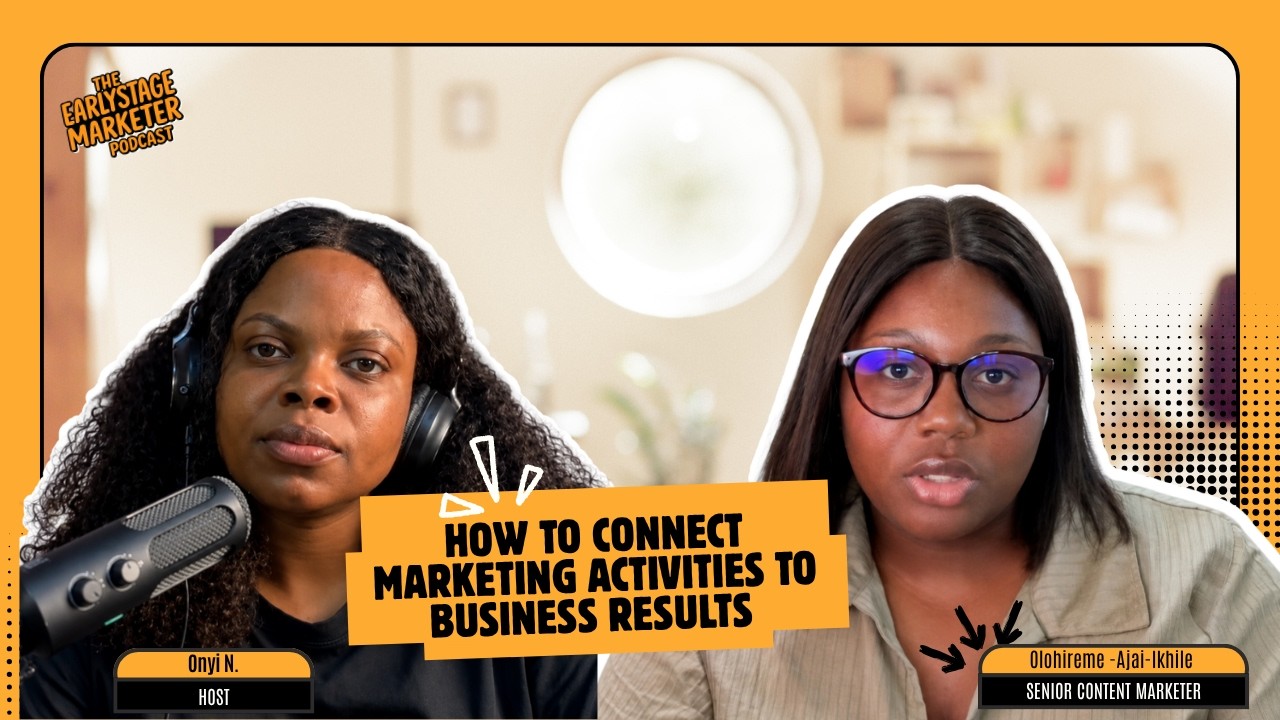
In this episode of the Early Stage Marketer Podcast, Remy shares how he moved from reporting simple activity metrics to demonstrating concrete business impact. After his head of marketing left, Remy was forced to answer the CEO’s questions about revenue contribution, which led him to develop a practical three‑stage framework called TRACE (Trace, Translate, Tell). The Trace stage involves reverse‑engineering the marketing funnel from the desired business outcome, identifying middle‑of‑funnel actions (e.g., LinkedIn profile views) that lead to demos. The Translate stage converts raw metrics into business‑focused language, linking content pieces to specific ICP pain points and quantifying lead quality. The Tell stage tailors the narrative for different stakeholders—CEO, sales leaders, CFO—showing pipeline value, spend, and ROI. Remy also highlights tools that support the process: Claude for brainstorming, Amdahl for AI‑driven insight extraction from CRM data, and Surf S for one‑click LinkedIn‑to‑CRM enrichment. He emphasizes calculating pipeline value (e.g., $300 k per month) rather than vanity metrics like follower counts, and argues that mastering this skill transforms marketers from cost centers into strategic value creators. The episode concludes with rapid‑fire insights, including the tiny habit of reporting outcomes instead of activities.
Chapters
My father doesn't want to hear we got 100 more LinkedIn followers this month. He's not going to celebrate that.
Yes.
He's gonna— he's going to celebrate the fact that all the work you are doing led up— like, you can actually still present those metrics, but yeah, that pipeline metric should be there regardless.
Practically every marketer should try as much as possible to calculate how much pipeline we are bringing in Hi, welcome to the Early Stage Marketer Podcast, where I speak to marketers in the trenches doing the work. In just 20 minutes, you hear the story of one challenge they faced, how they navigated it, and what they learned from it. If you enjoy this, please subscribe and share with a friend.
I'm so happy you're here, and I'm even more excited about what you want to talk about. It's Such an interesting topic, communicating the impact of your work. So, yeah. Okay. Yeah. So let me start with going back to the moment, that moment when you realized that you weren't adequately, or maybe you weren't even communicating the impact of your work. Right. So what, what was happening? Was there like a moment when you realized, oh my God, I'm not communicating? It's like, I'm just working in, I'm operating a task-based system. There's something I like to call a task-based system where you say, I posted on LinkedIn. I sent out the email. So was there a story around where this stuff clicked that you weren't talking about the impact of your work? What was happening at that time?
There was definitely a, there's definitely a story behind it.
And yeah, we want to hear it.
Like, so pretty much I wouldn't say I was operating in like task-based, like reporting. I definitely wasn't saying. I posted on LinkedIn or I sent out this email, but I was more like, I was communicating like content results and not necessarily business results.
Impact.
And at the time I was working under a head of marketing and it was pretty much the head of marketing's job to communicate all of that. Like, yeah, all of the, like basically like tying your like content and the actual work we were doing to business impact. At the time it was not my business. My business was to do the work.
Yeah.
Right. And then call it, yeah, do the work. These were our open rates. This were our, you know, impressions, engagement rates, yada yada yada, all of that on LinkedIn and so on. Then my manager left, my head of marketing left, and the CEO started asking me questions that I didn't have answers to, right? So I would say the situation kind of forced me to figure out a way because at the time, like, I don't know if anyone listening has ever been in a situation where like there was kind of a Like somebody in your team leaves and it just kind of looks like there's a whole restructuring in the company and like, oh, you're not really sure what's going on anymore. Is my role even still safe? Is leadership going to wake up one day and realize that they don't need me anymore and stuff like that? So when my manager left, that was kind of how I felt. I was like, oh, I don't have anybody to advocate for me anymore. I don't have anybody to do the whole translation of like, yes, the marketing team did this this week, but then this is what it's, you know, led to in terms of business impact. I didn't have anybody to do all of that.
Yeah.
All of that was my responsibility, or I wouldn't be able to communicate that I was actually doing something in the company. You can't tell your CEO that, oh, I posted 5 times on LinkedIn this week, or, oh, we got, yeah, we got 2 viral posts on LinkedIn this week. We got our engagement rates increased from 10% to 20%. Who cares? Yeah. Right? So I, yeah, that was pretty much the situation that forced me into thinking in business impact and not thinking in like content results.
Yeah.
Okay. One thing you told me when we were trying to agree on what we're going to talk about was that you kind of created this framework to help you, you know, improve your reporting. So can you share this framework? So I want, I want, in fact, this question is quite tactical because when I was thinking about, of course, with help from ChatGPT, full disclosure, when I was thinking about how to structure the questions, I wanted to niche down or hammer on your frameworks? Because I was thinking if someone listens to this and then they aren't doing this yet, or they're struggling with communicating their work in terms of business impact, I want them to leave with a framework of, okay, this is what Remedy did, 1, 2, 3, and I'm going to try this next week and see how it works out for me. So can you walk me through your framework? Like, are there stages? What do you do at each one?
Yes.
And then you can just cap it with giving us an example of running a marketing an activity through all this framework and through each of the stages.
Sure. Makes sense.
Okay.
Okay. So yes, I do have a framework.
Mm-hmm.
And with the help of Claude, I kind of just like brain dumped what I do and Claude helped me structure it into something that sounds amazing, right?
Yeah.
So I would say there's like 3 stages. There's one called trace. The second one is called translate, and then the third one is called tell.
Okay.
I'll spend the most time on the trace one because that's where the bulk of the work really is. And then for the trace one, I would first tell everybody to imagine or visualize a marketing funnel, a typical marketing funnel, or top of the funnel, middle of the funnel, bottom of the funnel. Visualize a typical marketing funnel. Now let's invert that funnel and then let's think about whatever your business wants to achieve that quarter, that year, that month, whatever it is. Right. Let's say your business wants to achieve, like as a marketing, let's say as a marketing department, your job is to come up with qualified leads, transfer to sales, and then sales tries to convert them into customers. Let's say you're working in that kind of like B2B space, and that's typically what you need to do.
Yeah.
So in that funnel, your own bottom of the funnel, well, like I said, is inverted. So we're starting from the bottom now. We're basically like reverse engineering what we're trying to do.
Right.
So we're starting from those leads. Now think about what your job entails. What are the things you do that would typically, like, what do you describe, you know, leads as in your, at your company? What are the things you would do that would probably lead to someone becoming a lead? A very good example, when I was at React Squad, um, at the time, yes, my job was to come up with leads. Leads were, we would describe a lead as someone that signs up for a demo.
Mm-hmm.
Right. So how would someone get to subscribe for a demo? It gets like, you know, ask them, how would someone get to sign up for a demo? They would have to get to the website first. So like, yeah. Then how will somebody get to the website? What are the different marketing channels that I'm responsible for that could potentially lead someone to the website? At the time I was handling my founder's LinkedIn, I was also overseeing his personal brand on YouTube. So the person to As the things I'm directly responsible for, they're either coming from LinkedIn to the website or they're coming from YouTube to the website. What would push them to get to the website from whatever LinkedIn content or YouTube content? And that's how things would typically go, right? An impression, somebody watches the video or somebody sees a LinkedIn post. Maybe from then on they comment. Somebody comments, somebody did, somebody does. On LinkedIn, they go to your profile.
Yeah.
And then of course, in your founder's profile, in his, his about section, the link in his LinkedIn bio, right under his headline, maybe even in the header, everything has reactsquad.io, React Squad, the link, everything. It's all right there. So you're trying to get profile views mostly. You're trying to get people to pay attention to your content enough that they're curious enough to be like, oh yeah, who's this guy anyway? This guy, what this guy is saying kind of sounds like it makes sense. And then they're clicking on his profile and then they're seeing what he's about and then they're probably going to the websites, right? So like reverse engineering stuff like that. Now you've come up with like the trace, like you've done the trace work. You've come up with your own funnel of what you have to do to get someone to book a demo on the website.
Yeah.
Somebody else that is like an SEO manager, or let's even say a proper traditional content marketer, because I'm a content marketer, but I've not worked on a blog in a while. Like I've mostly been focusing on like LinkedIn, founder personal brands, YouTube in the past couple of years of my career. But let's say traditional content marketer, you're working on SEO, you're working on the blog. Somebody would have to look at your blog posts, find your blog post interesting enough to probably click on the CTA or click through other blog posts, yada, yada, yada. And then go to the part of your website so that they can book a demo. That's probably or likely what is going on there. Pretty much the same thing.
Yeah.
It's like your funnel from blog posts to CTA click to demo. Then LinkedIn, from viewing your posts to viewing your profile to clicking on the CTA, then demo.
Yep.
Pretty much same thing on YouTube. So now you've traced all of that, that middle of the funnel, the kind of metrics that you now need to track alongside your actual metrics on LinkedIn, things like profile views. Yeah, right. Like, you can— when you, when, when you are trying to explain how much impact a post is getting, you cannot think about like impressions, engagement. You can see a lot of that, like, oh yeah, these things are increasing, which is a good sign. But I don't know, that's not very— like, your CEO does not care that you have 10 million impressions on LinkedIn if, if his calendar— like, my CEO used to handle sales himself. If my calendar is— if his calendar is empty and there are no sales calls on there, yeah, it's not his business that You know, there are 10 million impressions on LinkedIn or whatever. He cares that people are booking sales calls. How are people going to book sales calls? They're going to go to your profile first, very likely, right? So you can now report things like profile views and profile views are very easy to tie into. Oh, if 10,000 people are going to your profile, maybe you are working on having a conversion rate of at least 10%. You say, okay, if 10,000 people are at least 100 people book a demo. Stuff like that, right? So pay attention to that metric that is at that middle of funnel, pretty much.
Okay.
Then what you would do next is you will translate. So when I say translate, it's pretty much trying to organize your thoughts and make sure that whatever metrics that you are— like I said, you can't tell your CEO, or rather your CEO probably doesn't care that you're getting 10 million impressions or whatever comments on LinkedIn. So you're basically trying to translate what you're doing into like Business language. So instead of saying things like we published four blog posts this month, you are saying things like we published four blog posts that target our top three ICP pain points. Two of them are now ranking page one on LinkedIn. They have blah blah blah, and then we've you know tracked that the people that viewed those blog posts have gotten to our demo page. Yada yada yada. Different different activities, and that's why part of what I'll say there's a framework yes, but then. I can't lie, tools also matter and I'll get to that. And then the last one is like tell. So basically you're trying to now explain like whatever you are seeing or whatever you are, you know, the metrics they're talking about, depending on who it is you're talking to. If you're talking to your CEO, like I said, you are, you are going straight to like results. Like, okay, this particular, I know that this particular post brought in 3 leads. This particular post brought in 4 leads. If you're talking to a head of sales, He wants to know the quality of the leads. He wants to hear things like, we switched our strategy to target this particular pain point and this particular pain point so that these are the kind of leads that you are getting and not these other kind of leads that are probably not beneficial to the business or probably won't close, right? A CFO wants to know about how much you're spending on all of these things.
Money.
Oh yes, exactly. This is how much we spent. on this influencer collaboration on LinkedIn and blah, blah, blah, blah, blah. And viewing the results, we would calculate the pipeline generated from this post at this amount of $300,000 or whatever. You say, oh yeah, an influencer collaboration on LinkedIn generated $300,000 in pipeline and you spent $5,000 on the LinkedIn post. Your CFO is smiling at you.
Mm-hmm.
Right? So yeah. That's pretty much what I would say. Um, to give like a full, fully fledged example, like I said, I was mostly running LinkedIn content for my founder. So if you run it through TRACE, the goal is PAI.
Yeah.
The goal is PAI. Like create content that made qualified people aware of us and interested in us. And how did we, like I said, we'll talk about tools. So I had LinkedIn, I had done the whole TRACE work and everything, and I had figured out the whole profile views thing. People that viewed our profiles. Or whenever we create a very direct, specific ICP pain point post and an ICP profile comments like an agreeable comment, or they react on the post, then I know that person is interested. I know that's someone that I need to strike up a conversation with, or I know that's someone that I might, you know, add to our CRM that like, let's enrich this lead and set up like an outreach campaign to this person. Because for this person to have viewed the profile from this post, Mm-hmm. then this person is interested in what we're doing or what we're talking about here. So like I said, I started from all of that and then, um, I would create posts talking about specific founder pain points. For example, Chor is an operations service for startups.
Okay.
And under operations service, there are a bunch of different services that Chor renders. There's HR, there's US compliance, like filing your taxes, doing all of those things. There's hiring, all of those things that Chur does, right? And then I would create posts based on these different pain points. I still had a tool that would help you with this because we had this tool called Amdahl that was connected to our CRM that you could ask questions like—
Amdahl?
Amdahl, A-M-D-A-H-L, that was connected to our CRM that you could ask questions like, what are the 3 top services that we've closed the fastest for this quarter or something? And then Amdahl will tell you. Yeah, I've analyzed 15 of your sales calls and the ones that close the fastest, and I found out that most of them come in because they're having trouble with payroll. So then I know that we need to create posts about payroll cuz it's like founders are really struggling with payroll, right? Yes. So pretty much create posts about payroll. So I know any founder that kind of like likes the post, comments on the post, views my founder's profile from that post is probably struggling with payroll.
Mm-hmm.
add the person to our CRM using— there's like this plugin called Surf S.
Okay.
You can connect it to your CRM, whether you're using Pipedrive or HubSpot, all the major CRMs, but we're using Pipedrive. Connect it to your CRM so that anytime you see like somebody's profile on LinkedIn, all you have to do is like a Chrome extension. So you can just like click a button and it automatically adds the person to your CRM and also enriches the person's profile on your CRM as a lead. So from LinkedIn, you also get the person's email, probably phone number if your company does like cold calls and stuff like that. You get the person's phone number as well and get the person's email. Then from there, you can now add notes about the person. So if I see the person has viewed my founder's profile, I can strike up a conversation with the person, ask them about their business, ask them about like how they currently run payroll. I can now add all of those notes about the kind of conversations we've had and the kind of responses the person has given me using Surf to the CRM. And then I can like tag a salesperson. So a salesperson can pretty much like take it off from there. Their email is right there. They've clearly told me what they're struggling with or what their pain point is.
Mm-hmm.
Or rather they've told my founder.
Sorry to interrupt, Remi.
Right.
Yeah.
Go ahead.
The conversation from LinkedIn, like LinkedIn comments, when you say you add the conversation you guys have had, are you referring to comments they left on your LinkedIn posts or sales conversations?
So, so usually I was proactive enough to reach out to people after they comment. If they comment something that's like, oh my God, such a valuable post. I've been like struggling with payroll right now and this really helped me. I would definitely DM them because that's someone that needs sure. So then I would add both the comments and the DM, the direct message conversation to our CRM so that our salesperson can see what's exactly like, can see the context pretty much. And then they know how exactly to reach out to this person so that they hit that pain point to make the person convert like as fast as possible.
Right.
So all of these things were kind of calculating. We know how much like the average deal value is. Eventually they get to actually bring the person on a sales call. Then we know what the actual deal value is. We know, then we were able to calculate the value of the pipeline that I brought in pretty much. Like, you know, let's say our average deal value is like $5,000, right? Or let's say $5,000 times 12. Let's say the person is a customer for a year, $60,000. And I bring in like 5 of those people every month. You can say I'm bringing in like $300,000 in pipeline. By the time you think about like how much my salary is versus that $300K I'm bringing in pipeline, it's like, this girl is really valuable to us because look at all the stuff she's doing just from posting on LinkedIn. And those are the kind of things that my founder wants to hear. My founder doesn't want to hear, we got 100 more LinkedIn followers this month. He's not going to celebrate that with you. He's going to, he's going to celebrate the fact that all the work you are doing led up to, like you can actually still present those metrics. But that pipeline metric should be there regardless. I feel like practically every marketer should try as much as possible to calculate how much pipeline— I'll say pipeline, pipeline is more of like a B2B thing for a B2B marketer, but calculate how much pipeline you're bringing in directly from like the activities you're doing. If you're creating blog posts, even if you're posting Instagram content, all of those things, try as much as like use AI, talk to Claude or ChatGPT or whatever and ask like, this is what I do, this is what my company does, how can I calculate pipeline for the account? Like at the end of every Monday when we're doing standup and we're talking about our activities the week before, I'm not saying things like we got 10 new followers last week. I'm saying things like we had 3 inbound inquiries this week, or 3, we had 3 inbound leads, people that just out of the blue DM'd my founder because they knew that this is what he does.
Mm-hmm.
And they wanted this kind of service. And, you know, we've qualified those leads and we've figured out that those leads are this amount of money in pipeline. Sometimes you don't even have to go as far as calculating this amount of money in pipeline, but if you just say the amount of leads, it's cool. Calculating the money mostly just makes it sound like an even bigger achievement.
Mm-hmm.
Because you can, if you're, if you're, if you're working for a company that has like an expensive service or an expensive tool. Saying like, oh, we got 3 leads last week can sound, you know, crazy, but then you might end up calculating the pipeline and find out that those 3 leads could be like $50,000 in pipeline or $100,000 in pipeline. And that sounds better than saying 3 leads. So like I said, as much as possible, everybody needs to learn how to, you know, calculate all of that. So yeah, that's pretty much, I would say in a nutshell, the kind of framework I came up with.
Thank you, Remy. Very tactical stuff. Okay. So this is our last question before we go to our rapid fire questions. So you said something, you said, let me read it out. This skill is what separates marketers who go into leadership from those who don't. So what does this skill unlock for marketers? So let's say there's marketer A and there's marketer B, and they are all starting from the same place. And then this person learns how to, you know, speak the business language. So what skill does it unlock for this person? And that's the first thing. It's just a kind of 2-in-1 questions. And then. What tiny change can someone make towards building this skill, assuming they have, they have none of it right now?
So pretty much I would say the skill is moving from reporting, like giving activity-based reports to results-based reports. Or I'll even go a step further and say business results-based reports, because you could say results is like higher email open rates or click rates or something. And that the business doesn't care about that. per se. So, um, and I would say what it unlocks is that you, you move from becoming a cost center or something the business has to spend money on. Yeah, a, like, a strategic asset for your business. A value center. Yes, a value center. Thank you for your business. That's pretty much what it looks like. Like, if you are an email marketer, for example, you are constantly running email campaigns, or maybe you're using this expensive email tool, or you're a lifecycle marketer using this expensive tool, running email campaigns, blah, blah, blah. Your company right now is thinking of you like, if they don't know the impact behind what you're doing, if you're not reporting it, they're thinking of you like, this is just this person I have to pay their salary every month and we don't know what they're doing. Like when it's time to lay off people, you can be one of the people they lay off because they're like, you know, we're not really sure, you know, what the impact of what this person is doing is.
Thank you.
Very insightful answer. And then there's one thing you didn't touch. Let me just pull you back to it. So if someone—
Oh, the tiny change you have to make, right? Yes.
Just one.
Yeah. Very Tiny baby change, baby step you can take this week?
I would say, like, to put it in plain terms, to stop reporting what you did and start reporting what happened because of what you did.
You did. I like that. Stop reporting what you did and start reporting what happened because of what you did. Very perfect. Yeah.
So instead of like, I posted 10 LinkedIn posts last week.
Yeah.
I posted 10 LinkedIn posts last week and here is what happened. Here's what moved because I posted 10 LinkedIn posts last week. That would— yeah, that would help you. That's a good place to start.
All right, thank you, Remy. Very cool stuff. Okay, let's get to the good parts. I'll wrap it for your questions. So there is no wrong answer, there is no right answer. It's just— I don't want to call it hot takes, but it's just your POV, a hill you're willing to die on. I think we— the first question, we must have answered it one way or the other in the course of this conversation. But I guess your answer would just be this one line. Yeah, so the first one is, what's one thing that instantly makes a marketer look junior?
Reporting activities instead of impact.
Perfect. Okay, should every marketer— okay, before I ask you this question, right, I'm going to kind of provide— now this is not rapid fire anymore, but let me give you the background, the background why I'm asking this. You know, when you do some brand campaigns Sometimes there's no direct correlation to revenue. For instance, if you set up Facebook ads, there is a direct line to revenue. You can measure it. But when you run some brand campaigns, it's— you— there's no, no like straight line to revenue. Okay. Brand campaigns. So should every marketer be accountable for revenue?
Accountable?
Yes.
Solely responsible?
No. Okay. I love that. If I ask you to drill deeper, it's no longer rapid fire. question. So maybe when I post it on LinkedIn, I will tag you so you drill deeper because this is, this is a good one. Okay, a book or podcast or person who has shaped how you think about marketing. In fact, bonus points if they're not a marketer that has shaped and influenced how you think about marketing.
Unfortunately, the person is a marketer. Um, I would say Amanda— like, I hope I'm not murdering her Her last name. Yeah, I think it's called— I think she's called Amanda Natividad or Natividad.
Oh yeah, SparkToro.
Yes, exactly. SparkToro, zero-click marketing. Yeah, yeah, yeah, yeah, yeah, yeah. Really, really, really shaped how I thought about marketing because, I mean, before I really— anyway, it's not rapid fire again, full stop. Yeah, because of zero-click marketing. Yeah, maybe not diving. Yeah.
Oh my God, thank you. There are just 3 of them. Remember, I've had fun. I've had fun talking to you.
It was such an easy conversation.
But most importantly, I learned so much talking to you. So thank you for giving me your evening. Thank you so much.
Thank you too. Yeah, it's been nice talking to you as well. This was very fun.
Yes. Yeah, it was enlightening. We'll be in touch. Take care. Good night. No worries.
Yeah. Bye. Good night.
Bye. Good night.
Thank you for listening to the Early Stage Marketer Podcast. I hope today's story gave you something to reflect on or even something to try in your own work. If you enjoyed it, please subscribe, leave a comment, and share it with someone who might find it helpful. See you next time!
More from Onyi




Tips to Get a Marketing Raise/Marketing Promotion: Every Marketer Should Add This in their Reports