Navigating a Leadership Role without Prior Marketing Experience
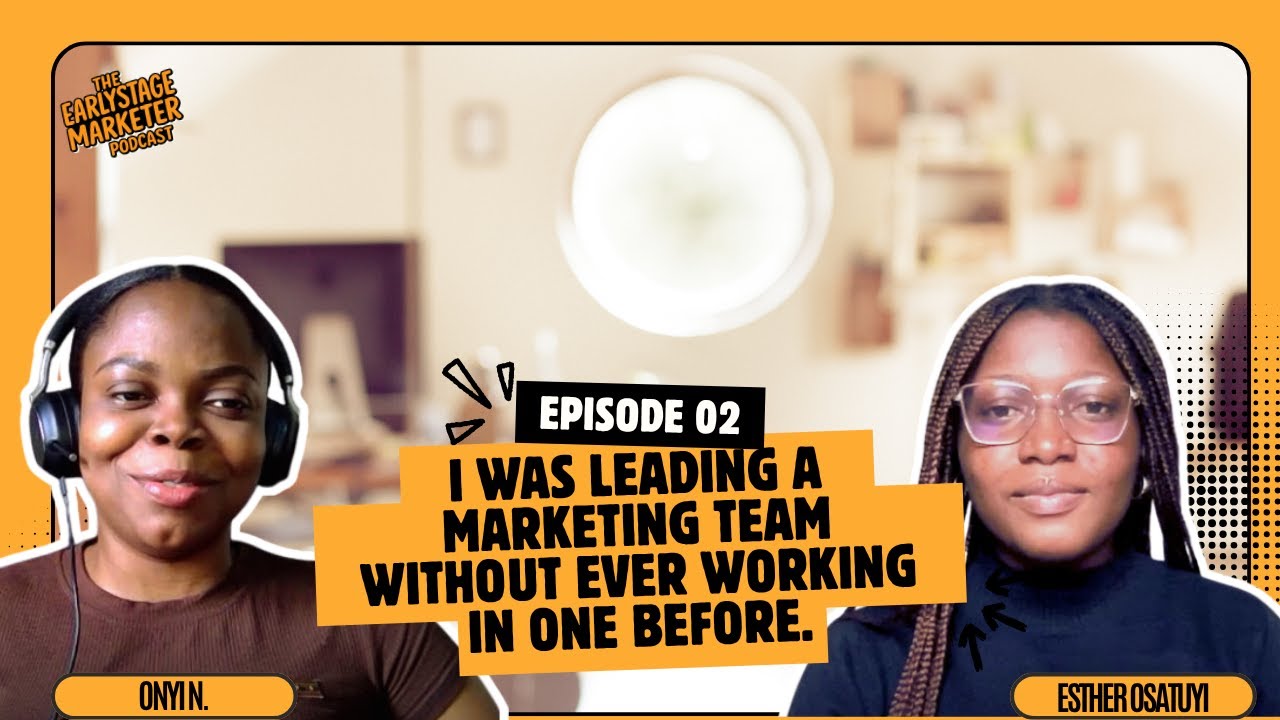
In this episode of the Early Stage Marketer Podcast, host SPEAKER A interviews Esther about her two‑year stint as head of marketing despite having no prior marketing team experience. Esther describes the steep learning curve of coordinating designers, developers, and marketers, managing client expectations, and grappling with unrealistic timelines. She turned to Harvard Business Review articles and management books to fill gaps in leadership knowledge, yet still felt unable to critique marketing strategies or confidently defend her team in client meetings. A pivotal moment arrived when revenue pressures, missed deadlines, and a lack of core marketing expertise made her realize she was not the right fit for the role. After an honest conversation with her boss, she chose to leave, confronting feelings of failure but reframing the departure as a strategic career move. The conversation distills several take‑aways: only accept roles where you have transferable skills, assess stretch assignments against your current capabilities and support structures, and prioritize positions that accelerate learning rather than burn you out. Esther’s story offers practical guidance for early‑stage marketers thrust into leadership without a solid foundation.
Chapters
Hi, welcome to the Early Stage Marketer Podcast, where I speak to marketers in the trenches doing the work. In just 20 minutes, you hear the story of one challenge they faced, how they navigated it, and what they learned from it. If you enjoyed it, please subscribe and share with a friend. Hi Esther, welcome to the Early Stage Marketer Podcast. Whenever I introduce the podcast, I like to say I talk to marketers in the trenches doing the work, where they just share one thing they struggled with, how they navigated it, the lessons, in just 20 short minutes. So we've spoken before on WhatsApp, and I mean, you shared something really interesting that I also can relate to, because I feel like if someone asks me to talk about my career, I would say I was also pushed into a head of marketing role, a leadership role, prematurely. But the only difference is that I had a bit of prior experience as an ICP, and I struggled in that. In fact, shortly after I left that role, I swore that I was never going to touch a leadership role with a 10-foot pole because that role scared me. But I learned a lot. So that's why I really loved your story, and I could really, you know, resonate with it. So you said something, you said you were in this role. you know, for 2 years where you were just— it was almost like post-college, post-university. The first job you had was to just come and lead this marketing team. You know, you've never even worked in a marketing team before. You've never seen how it's done. So you're just like a baby learning to walk. So you're in this role for 2 years. So I want to just— so before we just go into all that lessons and whatnot, I just want to still understand How you navigated this role for 2 whole years. How did you, you know, walk through that day-to-day challenges of managing people? Especially if managing people on the norm is hard, but now I know it's a new level of hard when you don't even have that expertise. So how did— and then you also mentioned that some people misled you about the scope of their work and how long it would take. So how did you navigate that? That day-to-day of managing these people.
Okay. Uh, thank you.
Yeah.
Right. So when I first started, it didn't feel like there was quite a lot, you know, to do. I mean, is it not just to get everybody to do their job and let's submit and expectations? So that was what it felt like when I took it up. So I didn't have a big picture, a, a big picture of what the role was going to like kind of become. So when I got into the role and I realized, okay, because I also asked questions because during my interview, I asked questions from the, you know, the recruiter, the CEO of the company that, oh yeah, so I'm not yet a full-fledged marketing professional now. So how do I navigate the whole process of having to work with people who are marketers, people who are designers, people who are— You know, web designers and developers and all of that. And he was like, okay, these guys are experts. They know their job very well. You know, all you just need to do is to coordinate. You just need somebody to make sure that everybody's working together in, you know, in like a team. So that was the thing I was told. So when I got on the job, you know, I think the whole thing started from client expectations versus what could produce. Of course, the team was up to the task, but you know, there is always clients wanting extra, wanting this and that. So there was that dynamics of navigating how to do client relationship. Then now, you know, now manage teams to deliver what they needed to do. So I started reading up, like how to manage, how to communicate, how to— I read a lot of HBR articles because at some point it just felt like maybe I I would be a managerial person, you know, I was thinking that. So I had to read a lot of books, a lot of HBR articles, you know, on how to manage, how to lead in the workplace. So a bit, I would say they were not useful, right? They helped me, but the gap that was missing for me was not being able to know how effective a strategy is. Say, for example, when a marketer says, oh yeah, This strategy is going to work. I've come up with this. It's going to work for these guys. Right. I don't have that deep knowledge to be able to critique it and say, hey, I don't think this will fly. It's my son. Oh, this is so good. The idea. But you know, you are not as a manager, right? If you're managing a marketing team, if they are proposing a solution, you need to be able to like, you know, speak to it. Be objective.
Yes.
That would this work or wouldn't, I mean, or will it not work? So I didn't have context. So it was a bit of struggle, you know, and then sometimes when I get into client meetings, I stutter. At some point that starts bringing, yes, people like the marketing, the marketing teams themselves, the designers into the room.
Yeah.
So for example, if I had to travel, because it was a remote team at the time, it was not located in, uh, a lot of our clients in Lagos who were in Ibadan. So I would sometimes have Lagos to meet the clients and then have to bring one, this one marketing person.
Yeah.
Yeah. Yeah. To come and speak, you know, to what they've created. So I just make sure that conversation between the two of them, that the company is not in the, um, is on the good side, you know, at advantage to trying to do for the client. So that was how I was able to, but then it is not as, it's just really not as when you know the field very well. do. And then I wasn't able to like really support my team very well, especially in that aspect. Yeah, but the lesson for me in that whole experience was at least—
No, you're jumping to— you're going too fast, Esther. We'll get back to the lesson, but there's something I wanted to ask you.
Okay, so that was how I really like navigated that moment, you know, bringing them into the meeting themselves. come and talk and defend what they've created. Yes, yes, yes. And then, yeah, pull everybody together. So that was how I got them that time.
Okay, you said something really interesting. You said, oh, you had to read HBR. And me too, I actually read HBR. I had to read Managing— okay, first of all, I read Managing Oneself a long time ago, but did I read it or not? But I remember that HBR, how they had series for new managers. But for you, what was that? Can you remember? If you don't remember, it's also fine. That specific thing that happened in that day-to-day navigating this role that made you go pick up a copy of HBR? What were you just like feeling like, oh my gosh, I'm over my head? What's— what just propelled you to go get a copy of HBR on leadership? Or managing a team.
Okay. Um, I think there was a time that, um, somebody gave me feedback, right?
Yeah.
Although it was not to me, I think it was through my boss at the time that I was, I was not being realistic with timeline.
Oh yeah.
To take 2 weeks and I say, oh, you guys, let's do this in 1 week. Let's do this. So some of them feel like I wasn't being realistic just because I wanted better communicate to the clients that this is what they should expect, right? Of course, we have timelines. Like, for example, if we were doing like a full package of, you know, digital marketing service where, yeah, you also have your website or your landing page to run your campaigns and all of those things, right? We have times. And then for clients that are still not very digital savvy, because at that time it was still— digital marketing was still new to a lot of businesses.
Yeah.
So at that time, I would, you know, um, you have to like create, um, different things and some, some clients that would come and then you would need to like first build your website so that you have at least a platform for marketing.
Yeah.
So, you know, and then you give a developer and say, okay, this thing needs to be ready in 2 weeks. And then, you know, the expectation was now like you promised client that client is going to take 2 weeks and then developers are running out. Like they can't meet the timeline, say they need one more week. So it's like that's getting that feedback that was just unrealistic. And then I had to like start, okay, how do I set, how do I manage these people better? How do I make sure they don't feel bad about how I manage them? So I had to start reading how to manage stakeholders, how to manage client relationships, and how to, uh, get people to do their job. I think that was— one of the things that I was really looking for, how to get people to do their jobs. Yeah.
Okay, thank you. I like that. Then just one something else, a follow-up question before we move to the next one. So remember when we spoke prior to this, you said that at a point you realize that you actually just have to leave that role. So I just want to get a bit of— I don't know the right word, but just understand what finally led you to that aha moment, you know, that you just realized, no, I need to get out of this, and then I need to just go and do something else? And why I'm asking this is because we're brought up in a culture— well, there's the culture part, and then there's the part of all that help, self-help books, motivational speaking, that tells us to hold on, to be resilient, to be tenacious. We know all that, that sometimes even giving up is perceived as a failure, right?
Yeah.
So how did you get to that decision when you understood that actually leaving this role, this leadership role, to go learn content marketing and maybe even start from the lowest rung of the ladder is not a failure? So how were you able to, you know, how do I put that word, just know that it's the right thing for you and then reframe it not as a failure but what as what is best fit for you at that point in time.
Okay, so, um, um, it got to a point where— and you know that something about digital marketing is, especially if you're an agency, you need to keep servicing your client and they need to keep getting— for them to keep using your service.
Yeah.
So if your client gets to a point where, oh, I don't know if this is working, I just don't want to proceed, Yeah, so it's your, your— it starts to start to tell on revenue. And yeah, so we're already kind of experiencing that, you know, at that point. And then I was— so everybody was on their toes to, okay, how do we bring clients on board? How do we do this and that? And then there was a lot of dragging, you know, in terms of building, creating, and stuff for clients. So It just felt like everything was over my head. I couldn't really picture it. I couldn't really tell exactly where the issue was from, right? And I think it was, you know, required that you start thinking revenue.
Mm-hmm.
My role then was a project manager kind of. So, and when you work in a small company like that, a startup, let me say, virtually everybody has to be thinking about revenue.
Yeah.
So I was just not, it was just not something my mind was cut out for yet at that point in time, because I had not even figured out what exactly I wanted to do. So I saw that the company was, everybody was tense. And I felt that we needed somebody who understands the field very well to be able to guide the team because of your, I mean, the marketing team, The salespeople, the business— I'm not sales, we call them, we call them business developers at the time, right? Everybody was trying to bring clients in, trying their best, but the effort was just not— Had enough to do. What was needed to sustain the business. So we had to start— what are the different other ways to source for our clients, to retain our clients, which I didn't have the skills for. So I just had to have an honest conversation with myself. I didn't want it to get to the point, you know, when you get, you get to the point where they start pointing fingers, you know, this person needs to go, this person needs to go. That part, because I knew that what they needed at that time was just not me. So I had to like, we, my boss and I had to like sit down and have that honest conversation that, okay, this is it, um, this is what I want to do with my time, and I don't think I have an excuse for this yet. And he also acknowledged it. We had that mutual understanding that, yeah, it is just best for us to like kind of part ways.
Yeah, just a quick question, Esther. Yeah, did you ever feel like you have failed when you left? Did you feel like— let me ask bluntly— did you ever feel like a failure? Like, oh my God, I failed. Did you have that feeling?
To be honest, I really felt that way because I, I felt like I couldn't help. And then I was also thinking of what others felt about me, you know, at the time. So difficult. But I, I think somehow I was also able to like put it aside because that was not exactly what I wanted to do.
Yeah, so, so is this—
I passed time in that season, right? So I, I, I, I was— I just, I just said, okay, my— I mean, my next step would tell me whether this— whether I am actually really like a failure or not.
Yeah, so I think what actually helped you not to remain in that feeling for long is that you had a plan or maybe clarity around what you were going to do next, right? And I really like that. Okay, then something else I also want us to talk about is what you had said to me when we're talking about this. So you had said that one primary thing you learned from that experience is you'd never ever take a role where you do not have transferable skills. Okay?
Yeah.
So now what, what does that mean for you? What I mean is How can someone figure out if they are? I think that's one of the questions I asked you early today, right? Because again, one thing I've realized is there is a thin line between stretching yourself and stretching yourself to the point of breakage. And also, interestingly, we know that if we ever want to grow, you're going to do so many uncomfortable things, so many things you feel unprepared for. So what I want to know is How can you tell, okay, this is a stretch assignment that is going to be really very challenging, but it's going to help me grow versus this is going to be the death of me? I am not just— so how can I— I don't know if you get what I'm saying. How can you pick, differentiate between something that would stretch you? On paper, you may not look qualified, you may not have the skill set, but if you get into it, apply yourself, You're going to come out stronger versus something that honestly you have no business even doing, even though it's still an opportunity for growth, but it's just too far beyond you right now. So how can you differentiate between both of them?
Right, I'll speak to what I've experienced in that direction. Yeah, that answers the question, right? So I think I think the, the, um, how to really know is if you have somebody that you can report to or that you are accountable to in that space. So if you take, for example, they want to, they want to get you, probably they look at it and say, okay, maybe because of your previous work, they now say, okay, I think you're now qualified to become a head of marketing.
Yeah.
You need to be sure while you are in that role, at least maybe there's somebody that is a bit slightly higher than you within that role that can tell When you're doing well. Because I'll use an example. For me, I was pretty much doing content, right, in my company. And then later on, I was put— I was, you know, invited, or let me say, how do I— I don't know what's the right word.
Invited.
I did marketing, right, while I was content marketing. And that was because, for one, there is somebody that was in that role before that was, you know, just like, okay, um, let's trial you on this role and see if you're able. That's one way you can test. And then if that doesn't even work, I mean, or maybe probably even interning under somebody that is within that role to know whether you're really prepared for it. Because I, I, I'm trying to look for the, the, the best way to provide like Can I step in, Esther?
Let me ask you, using your experience, what, what you just said to me. So here you were, a humble team member of the content marketing team, and then someone was leaving and they told you, Esther, come and step in as a leader. So it wasn't even as though you were actively gunning for a leadership role or you were rehearsing. Yeah, it was just like the opportunity was presented to you. So let's just use you now as a case study.
Okay.
How did you navigate it? Did you have this moment where you felt, okay, I am not— I don't feel like I'm qualified for this role? Or did you have a moment where you were hesitant, but then you checked maybe 1, 2, 3, 4, 5, and you're like, okay, based on these things I have considered, I may actually even be qualified for this. I have the capacity to do this, even though I wasn't on the lookout for this kind of roles. What was it like for you when you made that transition?
You know, uh, when I got the, the invitation for the role, like, I was— I just thought about it. I've been in a managerial role before, and now— and the difference between now is because then I didn't have marketing experience. Now I have marketing experience, marketing teams, right? And I also considered what possibility would be required of me for this new role.
Yeah.
So the reason I even went for it is because I understand that I am not supposed to be doing what— I mean, I'm not supposed to do other people's jobs for them, right? There are other professionals team who are, you know, social media manager, who are part of partnership, who are in sales, who understands, like, who understand all these things. So I am just there to coordinate all the different ideas, different corners into one and make sure they are able to drive our business goals. So that is the reason.
Yeah.
That was, those are the things that I actually like thought about. to make my decision to like, okay, take up the role. Do you understand? So yeah, things really there, I wouldn't have considered it because that would mean that if I don't know what those other people are doing, or if there are no other people like doing that kind of job, let's— I'm supposed to now take the role up and then others have to depend on me to be able to do that. For example, say, let's say they are interns, they don't understand a lot.
Mm-hmm.
come and lead that, I wouldn't have been able to take it up because they would be so dependent on me to lead them. And right, and I don't have that much understanding, you know, of the core skills that they have. So if those things were not in place, trust me, I wouldn't have. So good to consider the context and the kind of help and support you're To be able to navigate that role.
Yeah, I like it. In fact, if I mean to pick out— in fact, the most important thing for someone to vet roles they feel unprepared for is to look at it in the context of what is required. And based on 1, 2, 3, 4, 5 that is required, I think I can do XYZ. So even if you can't do everything, at least the ones you feel you can do should be more, or at least on par, at least 50%, 60% of the ones. And then again, the kind of support you get in that room. Okay, very fantastic. And then to our last lesson, our last question for the day, which is around the lesson you learned around this. Okay, so what if someone— um, comes to you and says, oh, um, this is the reality right now, maybe I'm in a role I feel I shouldn't even have taken on in the first place, what's that one thing you tell them?
Okay, um, I think what I'm saying is, I mean, weigh the options, right? Um, because long run, your career is the most important thing. As, as much as you're trying to to do the company or the job. You also need to know that if— I mean, they're not making revenue, especially for, for a marketing person, they will ask you to go. So if—
Yeah.
On the job is not— it's stressing you out, you're not learning as much as you do, and it doesn't— like, in the next 6 years, 6 months, 1 year, you'll be able to hold up to something tangible, like, this is the result of me people in this role, then I think that person has, you know, been in that job. There's a friend that recently said something that everybody should aim to work with the best people in their field so that you can get exposure. So for you, as a— as whether the person is a first marketer in a startup, right, what is important is that your job brings you the kind of speed exposure that you need to accelerate your career. If the job is not giving you that, you're burning out, you're doing multiple— first, people— multiple— I mean, uh, multiple jobs, right, in one, and the growth is just stunted, I think it's just best to quit and move to another thing.
I like that. Don't waste the years. Yeah, the earlier the better, right? Thank you so much, Esther. This has been such— yeah, it's been such an eye-opening conversation and I mean, I've also learned a lot, especially around what you just said now before we wrapped up. So thank you so much for hanging out with us today. I hope that someday we'll get to do this again very soon.
Yeah, absolutely. Yeah, I would like to.
Same here.
Bye.
Have a lovely evening.
All right. Bye.
Thank you for listening to the Early Stage Marketer Podcast. I hope today's story gave you something to reflect on or even something to try in your own work. If you enjoyed it, please subscribe, leave a comment, and share it with someone who might find it helpful. See you next time!
More from Onyi




Tips to Get a Marketing Raise/Marketing Promotion: Every Marketer Should Add This in their Reports