Templates and Systems Thinking for Navigating Your Marketing Job.
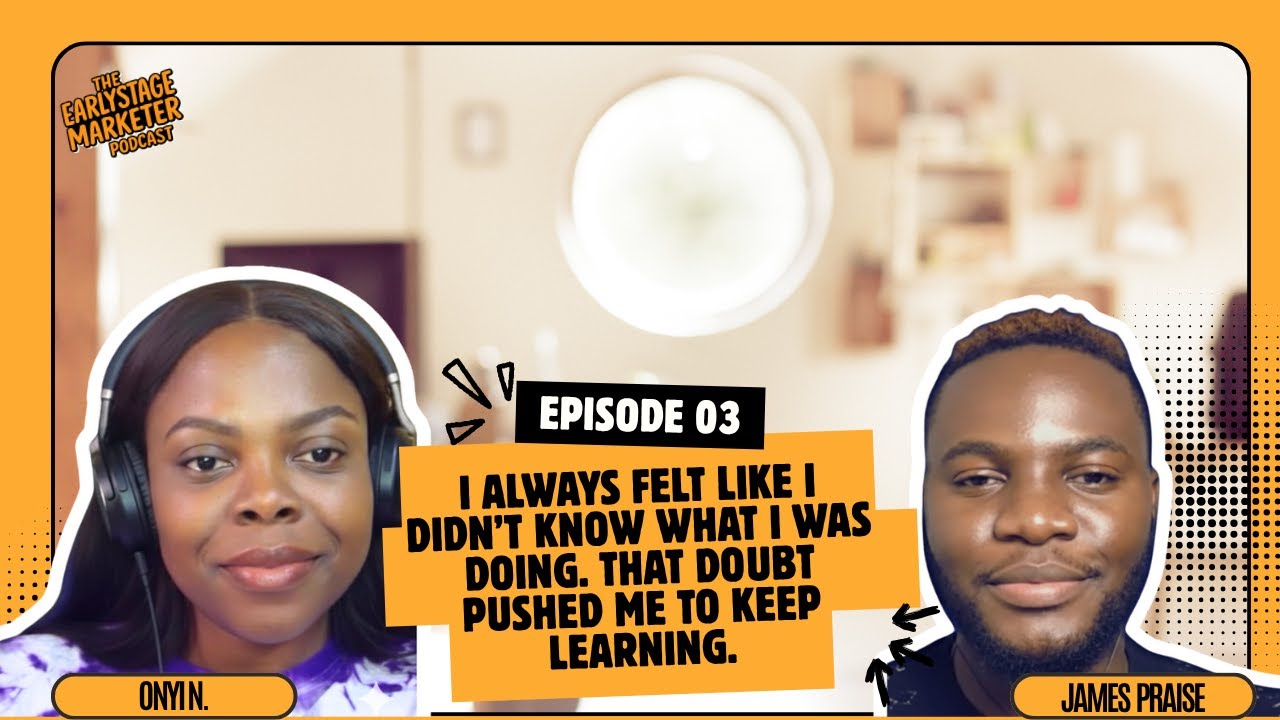
James, a first-hire marketer at multiple startups, moved from using generic templates to building personal systems by obsessively documenting what worked. He advises new marketers to join communities, develop taste through experiments, and focus the first 90 days on the company's critical metric instead of chasing motivation.
Chapters
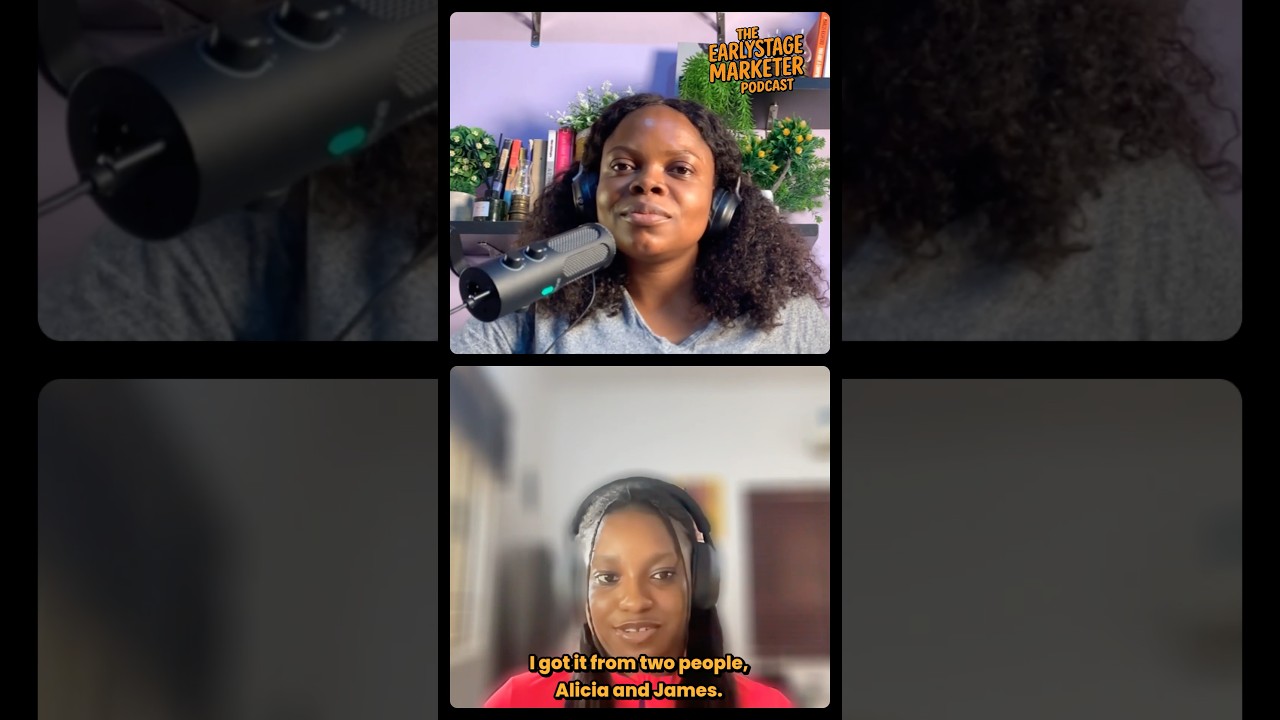
Hi, welcome to the Early Stage Marketer Podcast, where I speak to marketers in the trenches doing the work. In just 20 minutes, you hear the story of one challenge they faced, how they navigated it, and what they learned from it. If you enjoy it, please subscribe and share with a friend. Yeah, so hi James, welcome to the Early Stage Marketer Podcast. Okay, and thank you. You're welcome. And I first— this is actually the first time we're talking. You know how it is in this internet age, most times your work precedes you. So I first knew you from Marketing in Action. I think Clade shared your newsletter one time ago, and then I went through and then I saw it has all these very tactical templates that someone can use and get stuff done. Now when you told me what you would like to talk about in this podcast It's now made sense to me why your newsletter— I know again now you're kind of diversifying, but before then it made sense to me why a lot of things you were doing were around templates. It sounds as though templates saved your life when you were starting out. So yeah, sure. So I love what we're going to talk about, being the first marketer in a startup. And again, I know most times it would probably be very Like early-stage startups, less than 0 to 5 years old. And I love, I really love this topic because one, I have been the first marketer in 2, I think I have been the first marketer 2 times in very early stage, in very early startups. And I know it's a wild, wide ride. So I'm really looking forward to this conversation because I know whoever is going to listen to this podcast eventually would learn something that would stop them from going insane. So welcome again. So thank you very much. You're welcome. So I wonder, you've told me, okay, you want to talk about what your experience was being the first marketer in a startup. Okay, now for me, now if I have to kind of think about my experience, I would say it's really an emotional journey. So let's just come back to you again. What was it like So I think I'll put it this way. What was the emotional journey for you? Was there a moment when you had epic self-doubt? I mean, where you thought what? In fact, for me, then I'll mostly just wake up and say, "Oyinie, who sent you?" That's usually what I wake up every morning thinking. But now, for you, was there a moment where there was real self-doubt, where there was burnout? Can you remember something that really to doubt in that moment, and how did you push through?
So I would say, like, I can go— like, I can try and go back, like, quite early to, like, the actual first, let me say, corporate job I took out. Um, like, quickly after— out of school, right? That was in 2018. Um, we'd barely just, like, submitted our project or something. I don't think we've submitted— we just finished, like, but we've not submitted projects. Yeah, we just did like project defense, you know, the whole thing in final year.
Mm-hmm.
Um, that was in Unilag. So I got a job very quickly, like the next week I got a job. It was like client service-ish. I didn't really know what things were about, right? So I was like very blank slate. Um, I just knew that I was like, you know, smart kid in school and all of that, but I was not very familiar with like corporates or what like job roles and responsibilities were properly. So, um, basically what I'm trying to say is like I've always had doubts in my abilities, especially when I know honestly that I don't know what I'm doing, right? Yeah. So I mean, those were the times when I did not know when I— what I was doing. So I mean, that job did not even last. I think it was like 3 months-ish. So I was not even a stable employee at the time. So I mean, after that I went to Um, I went to Serve and I came back to— oh no, no, sorry, before then, um, even after the job, I got another one. I got a job at Jumia. So I also did that for a bit, for I don't know how many months again, but it was not— yeah, it did not take long as well because I had to go for NYC. And that was— so I've just been— But in all of these places I was, it was always like these things were just fascinating to me, especially Jumia. It was really fascinating how they ran all these very complex operations with different teams and people Um, there was a bunch of marketing going on. Even though I was in CS, I had friends in sales and stuff like that. So I really always wanted to figure out, you know, how were these— how are they getting all these things done? Even though they only trained us in like, um, they trained us in general stuff and then in our core, um, team stuff. I, I saw that there was like really a method to all of this madness, but I did not understand that method, right? So I went on to start to take courses, you know, HubSpot, Google Digital Marketing Fundamentals, um, and all of them. And then it started to make um, sense, um, little by little. But I also— so when I went for NYSC, came back to Lagos, blah blah, I got a job digital marketing in a travel agency. So this now, this was—
Were you the first hired?
No, I was not the first hired, but I was the one that had to manage digital properly. You know, other people, they were involved more in the operational side of business, like travel and tourism and like visa processing and stuff like that. So me, I was supposed to focus on like digital, social media, email marketing, blogs, and stuff like that. It was really confusing. So yeah, I mean, and at that time I was still taking all these courses at the same time, so I was not very sure of myself, right? Because I, I felt like I did not have enough knowledge of these things, so I could not really perform as much, right? So those were, those were some of the, the times that I really struggled, um, in these things, like I don't know what I'm doing, man. So, but like, I was— because I did not know what I was doing, I was also like, that was things that were pushing me, motivating me to go and learn, right? Basically, I feel like, let me just learn stuff, let me just learn stuff, right? Um, I didn't even know or have like network that I could reach out to people to put me through properly. So I was just taking courses, uh, from all of these big institutions like Google and the rest, right? So yeah, there were a lot of doubts in my early, earlier years, right? Um, but by the time I spent more years in the, in the field, um, and then when I switched to start to work in tech properly, um, I already like read too many things, I've taken too many courses, I knew a bunch of things. So it's just more of a thing of like implementation now. So I need to implement now. Um, but there's also a challenge with implementation, right?
Okay.
Which is like, yeah, like how do you actually do this thing even though you know how to do it? Like, but how do you get it done fast? Right? And that's where like all of these templates now become useful. So, and then HubSpot was really big on templates and, you know, lead magnets basically. But templates, they have templates for a bunch of different things. Like, okay, if you want to do like maybe social media calendar, blah, blah, blah. So those things help you to get started faster, right? So if you download the Excel sheet or the Google Sheet or whatever, you already have like your canvas is no longer black. You can just fill it with your own context and use case, and you can proceed to get your work done.
Let me, let me jump in. There's something you've said, I mean, you've, you've really walked me through 2 career journeys right now. So I wanted to just jump in and ask a question right before we continue. So the first is, I mean, there's this, um, I think there's a job at client services, so I won't even talk about it. And then I'm going to talk about, then there's Jumia. Maybe I shouldn't talk about it because again, it wasn't really pure marketing. So let me start from this travel agency job, which was— which marked your foray into marketing, even though it wasn't like SaaS. But in that travel agency job, again, you still weren't— in fact, what I even picked up from what you said so far is honestly all that voices in your head, the self-doubt. You're not a nutcase. It's just part of—
Yeah.
Because when I was starting out, I'll come to LinkedIn and everyone is posting happy stuff. looking like they have their act together and I'm the only one. So I think the first lesson here is those voices in your head, I mean, it's normal. If, if it even shows that you're human and you want to learn, because someone who doesn't have those voices in there, maybe they are normal, but some other times they can also be abnormal. But what I want to pick out from is, in— if you look at maybe the job in the travel agency, can you just think of one moment where felt overwhelmed, where you felt like out of your depth? What am I doing? I don't know what I'm doing. Like, is there a memory that comes to mind? And then can you think of how you were able to talk yourself off the ledge, if I'm to use that word?
Yeah, so I think I'll think of— there's one or two things that I remember, um, one of it being the fact that now I had this implementation gap because I'd like these were a bunch of new things I needed to figure out, right? So the approach I would take is, oh, I want to go and take this course. I think I believe like, oh, if I finish these courses that do like SEO content, blah blah blah, I'll know what to do here, right? But at the same time, your job is not necessarily waiting for you to complete all your—
Yeah.
Online courses before you get something done, right? At least let them see you doing one or two. So I think that was a challenge for me. I'm Um, at the time I was kind of a person that just— I like to figure the whole thing out before I put a foot forward. Like, I want to be sure that what I'm doing is right. Um, I was not used to all this, you know, fail fast, fail forward methodologies.
Yeah.
Logical ways to approach things, you know.
Yeah.
And iterate and stuff, right? So that was one thing for me. Then there was another thing about pressure of comparison. Um, not LinkedIn like you in your case, it was more of like I, I heard that somebody had worked there before, right? And she was really good at, you know, all of these things. I'm like, ah, so it's like, okay, there's already some, some level of expectation.
Yeah.
That has already been set before me that I have to kind of, um, meet up to. I mean, now that I'm older in this thing, I think some of, some of something I should have done is probably find a way to reach out to that person and say, yeah, please, I need help, right? But I did not know all of these then. I was really naive and young.
Okay, cool, cool. So you said something about templates again. I know I've said before that I know your deep love for templates. Okay, so, so you mentioned, I mean, you had to start with templates before now you move to now creating your own. So can you think of maybe an example where— in fact, there's something I usually like to say about templates, right? They are really cool. But as time goes on, sometimes you'd realize that they are somehow inflexible. They can't really contain— in fact, when I want to describe my early experiences working with templates, when I was quite inexperienced, I'll be like, if I look at this template, it doesn't look like it was made for me. Somehow I can just fill in all the gaps, but it doesn't feel like me. Okay, so let's start with you. Okay, you started with templates and then you moved to— creating yours. So can you first maybe give me an example of the first time you worked with a template? I mean, how did it help you move from point A to point B? And then when did you hit a snag that now led you to become this— okay, when did you hit a snag that led you to start creating your templates and now become this template master that we know today?
Yeah, so, okay, yes, I think it's many points. It's not just like one time I just got Eureka! One single eureka moment. But like I said, I'd always used, um, HubSpot.
HubSpot, yeah.
Yeah, for like basic like digital marketing stuff, like, um, content calendar, social media, um, stuff like that. And use that to just get started basically. But I think there's also something that, that is also true about me, and this is even longer before marketing or everything. Like, these are some of the things that I mean, looking back, you see that a lot of things connect in life generally, um, and kind of shape who you are as a person. Yeah, yeah. So for me, I've always been someone that, um, takes notes, right? So I've always like— I always take notes. Even like, you cannot give me, um, any finished work without me— for— so for me to— for me to use it and for me to connect to it, I kind of need to make it uh, mine in a way, right? And sometimes that means me rewriting the whole thing, even if I'm just writing it word for word. Um, that's how I process it, and it becomes like something that is now true to me. So this has been my way of doing things from, I'll say, secondary school. Um, I would always stick— like, write my own notes from like textbooks. I would like break it down into my own notes. When it also comes to, um, I used to do some stuff like comp— I go for competitions and do a bunch of things, but like I would always take very detailed notes, right? So I started writing notes like pen and biro and all, uh, biro and paper, whatever. Um, and then over when cloud became a thing too, I started to like do more with documents, Google Docs.
Yeah.
Um, Sheets and all of that, right? So I'd always been doing this note-taking thing. So even when I get templates, I still like modify them. to just so that I actually know, know what is there. Because it's like you're just handing something to me and I don't really know much about it if I have not, you know, applied myself to basically work with it, right?
Yeah.
Um, I did this in university as well too. I created notes for all different courses and then I gave it out to people for free. I also like taught different departments and even my mates, um, at the time because I was taking a lot of notes. So that note-taking thing had actually like still translated into like my general marketing career. Even when I was doing all these HubSpot, Google digital marketing fundamental courses, I was taking a lot of notes. Um, I still have some of those higher educations here even though I don't use them anymore now. Everything—
You need to keep them for your children.
Yeah, so you see that I was using it, right? So yeah, I'd always taking notes. So basically, so I, I don't necessarily— so that, um, problem of a template being inflexible, um, I don't think it necessarily applies because by default I've always been someone to modify stuff that I use, right? And you cannot basically— I don't think you can— well, maybe you can too. I'm trying, I'm trying to see if, if what I'm saying is right. Like, you cannot template everything in life or in marketing or whatever.
You need to explain what you mean because This is, this is a powerful statement and I think you need to break it down. What do you mean by you can't template everything?
Yeah, you can't template everything, um, except like things that have happened in the past or things that are like, you've, you've, if you're, except you've already passed through everything possible, then you probably can template it. You can document, okay, this is what happened in when I was doing SEO or when I was working with like Google Ads or Facebook or this product launch or whatever. But there will always be differences and nuances, right? That apply to all of these projects and tasks. So the way around that for me is like, there's a higher layer to the templates thing. I think templating is like the, the last bit of this, um, uh, what's it called? This solution, right?
Yeah.
So the way I actually look at it and model it is that you need to understand systems first. Right? You need to know how things work. What is the input of this system? What is the output? So if you want to get a particular outcome, what do you need to do? Do you need to add more to the input? You need to change the tools that connect to give you the output. So if you understand the system, then maybe you can model that system, right? So you maybe build a blueprint, um, that basically just abstracts the workings of that system. Then there is also like—
Yeah.
the more specifics, which is like frameworks, right? So frameworks are a way to just basically think about, um, doing a thing, right? So that's like the simplest way I can say it, like a framework of doing something.
Mm-hmm.
But the framework now allows you to go beyond just the one-off templates to, okay, now we are doing something entirely different, right? Or not even entirely different, but one of the major variables in this project has changed. Right? So this template is not 100% applicable anymore, but we can modify the template because we understand the framework that helped us to come about this template, right? So if you modify that template framework, we can create another template that now applies to our use case, right? So you cannot necessarily— like, that's what I'm saying, like, you cannot necessarily template everything, but you can develop like the systems thinking and understand the frameworks that led to the creation of that template.
Mm-hmm.
That, that way you can work on anything, right? Once you understand like the foundations and the underlying principles for these things. So that's basically it for me. Did I miss something?
Okay. No, no, you did not, but I just have a quick follow-up question around this. Okay. So, so what you've said now is quite deep. And, and as I was, excuse me, listening to you, I realized that you know all this now because you are now more experienced. Okay, yes. So I'm— I bet that when you, when you, when you had that job in that agency, you did not know this. Now I'm thinking about someone— I love the honesty. Yeah, so now I'm thinking about someone who is just starting out, maybe someone who just finished school and got their first job in this startup. And then you know how startups can be, nobody has the time to tell you anything. I was about to say tell you shit, so let me just say nobody has the time to do that now. And this person, maybe this person, they say, oh, go and do product launch, and then they go and Google product launch templates, and then they see something online. So how can the person— so can you just maybe, let's just condense it, maybe 3 steps, right? How can this person move from using what's available right now? Remember, this person hasn't developed all these systems thinking frameworks thinking, piecing everything together. How can they move from working with what they can see online? So it's sufficient enough to get the job done. Now to now move into this advanced level where they can connect the dots, modify things, you know, improve on these templates, improve their— so how can they just move from this is the skeletal template, let me use it and begin, but at the same time I'm adding to this template so that it's begins to serve me better. So how can they make this progression?
So yeah, there's, um, a few things that like someone earlier in their career will probably need to do. One of them is basically just getting access to people that can give you correct information, right?
Yeah.
And that's where like being part of communities is important.
Yeah.
And Because even if you are not like I was then, like I could not reach out to the, to the person that they mentioned that was doing very well at my job. But if probably I had access to a marketing community at the time, I could just, you know, go and ask a general question and maybe somebody would be able to help, um, to just tell me what to do and maybe provide, um, like the templates that I would use to get the work done faster, right? So I think that's, that's where it's key.
Join communities.
So that's one, um, side of it. Another part is that you're going to develop a taste from experience, right?
Yeah, I love that.
You're going to get better. You're going to know what to do once you've passed through a bunch of these situations, um, and you will not be very like— you will not be daunted by new projects or tasks because you've seen a bunch of them in the past. Even if they're new, um, you'll still be like, it's nothing, right?
Yeah, this is interesting. So the last question, the last question, and the last question. Okay. Um, so let's just imagine there's a market again, newbie, very new, first job out of school, and here they are, the only person, and then they're feeling overwhelmed. I think we may have just covered this anyway in all the things we've been saying here and there, but let's just cover it a little more before we just go. So what's that single most important piece of advice you're going to give to them, you know, to help them make their first 30 days a success and just get out of their own way and feel better about themselves? What would you say?
Okay. Yeah, even though it's a nuanced debate, I'll just give like something that will generally apply. So first 90 days, um, that applies to everybody, even if you're senior. in any, um, place of work, organization, where you have to like make an impact. So I think one thing that's very important is to understand what impact matters first to the company or to your employer, depending on, um, who you're reporting to, right?
Right.
So if you can find what that thing is, then everything you're doing should align around, okay, this is what is important. Maybe it's acquisition, for instance. Let's assume that it's SaaS. Um, uh, you know, um, and there's another thing is me personally, I don't like motivation, right? Because I feel like it's just fluff, it's not applicable, it's not actionable, right? Um, so aside from just getting the motivation, no, this is, this is like, okay, how exactly am I going to implement this right now, right?
Yeah.
Which is the, the reason why I do all of these templates. Like, this is like the now, now, now, this is what you need to do part of the whole equation. Right. But, you know, first ask the right question. Yeah. You find out what impact is that matters to the company, right?
Mm-hmm.
So you're asking the right questions and then you ask a question to your community or to your mentor or to your, um, whoever is like, you can, you get access to and you can reach out to that will help you, um, to figure that out. Right. But if you don't have that, you also need to be more, you know, take ownership yourself. Um, and just try to start to figure those things out. And like just document your learnings. Um, take notes, right? So this is what I'm doing, this is what I did, this was the outcome. Um, even though those— the outcome might not be like success when you look at like your objective, but that outcome is still very valid, it's still very useful. Like it's a learning, because there's this growth mindset of experimentation and learning, right? So even if your experiment fails, it is still a valid result. Yeah, that tells you, okay, now we will not do this next time, we'll try something else, right? So if you take all of those learnings, it also helps you to begin to build taste. Like I mentioned, like, you now have taste of, okay, it's not going to work. Um, you can confidently think, even though sometimes you might be wrong, but at least most times, yeah, you'll be right because you've seen the data, right? You've been recording your own data, and then you can apply that to like newer use cases. And when you take on more stuff Um, over the course of your career. So obviously, yeah.
Thank you so much, James. There's one last thing I want to say before we call it a day. Just one. You can just answer with a one-liner. We've talked of, oh, these are the things you would do to succeed or have a fighting chance. Now on the flip side, what is that one mistake they should avoid so they don't drown? Or even if they don't try, so they don't become unhappy and wake up every morning Questioning their city. What's that one thing they should avoid doing?
Okay, I want to say like it doesn't even have to be over.
Okay, say two things. It doesn't even have to be like marketing, marketing, marketing. It can even be as simple as don't do negative self-talk. Yeah, just okay. Let's say the two things you have in mind.
Let me say. Let me just say like. take it easy on yourself, right?
Give yourself—
yeah, give yourself a break, right? So for instance, maybe like just basic, take your weekends, right? Go and have fun, do some other things with your life, um, and come back refreshed, come back with a different perspective.
Yeah.
Um, because if you don't rest forever, you will probably burn out, right? Um, like this— and this is a mistake I made— I never took my, um, leaves. I mean, even when I took leaves I will still be working on leave period, right? I'll still be on, yeah, maybe some calls. I'm still like tending to something as if the whole company will crash if I was not there. And this has been—
the company was resting on your shoulders.
It's not just one thing. This has benefits in that, yeah, you become valued, you get referrals, you get all of that. But I mean, yeah, do it as much as you can, but don't, don't do it to the detriment of your health, right?
Yeah.
Um, yeah.
I like it.
So go and be lazy.
Balance. Yeah, work hard. Yeah, but take the occasional rest. Yeah. Thank you so much, James. I mean, this— in fact, whenever I talk to people, it's almost as though they're talking to me. Like, I'm always picking out gems, really insightful things I can apply to my own life right now. And it was the same here. So thank you so much for stopping by. I hope one day we'll do it again. Yeah, have a lovely evening. All right, bye. Yeah, bye. Thank you for listening to the Early Stage Marketer Podcast. I hope today's story gave you something to reflect on or even something to try in your own work. If you enjoyed it, please subscribe, leave a comment, and share it with someone who might find this helpful. See you next time.
More from Onyi




Tips to Get a Marketing Raise/Marketing Promotion: Every Marketer Should Add This in their Reports