Why Marketers Struggle With Stakeholder Management (And How to Fix It)

A product marketing manager shares why early-stage marketers feel invisible to stakeholders and founders. She fixed it with three changes: documenting projects and impact company-wide, tying every task to revenue goals, and running interactive workshops with sales and product. Small visibility tactics like broadcasting launches and sharing customer insights also help.
Chapters
Seek the validation over reports, over do. Like, just— yes, just do it, right? Um, yeah, because for me, I would say that the consequences kind of just like, they should trump like the feeling, right?
Yeah.
Yeah, it's just, just, just do the thing. At the end of the day, you stand to gain more from doing it.
Yeah.
Than Just not doing it. Yeah, you don't have anything to lose, right?
Hi, welcome to the Early Stage Marketer Podcast, where I speak to marketers in the trenches doing the work. In just 20 minutes, you hear the story of one challenge they faced, how they navigated it, and what they learned from it. If you enjoyed it, please subscribe and share with a friend.
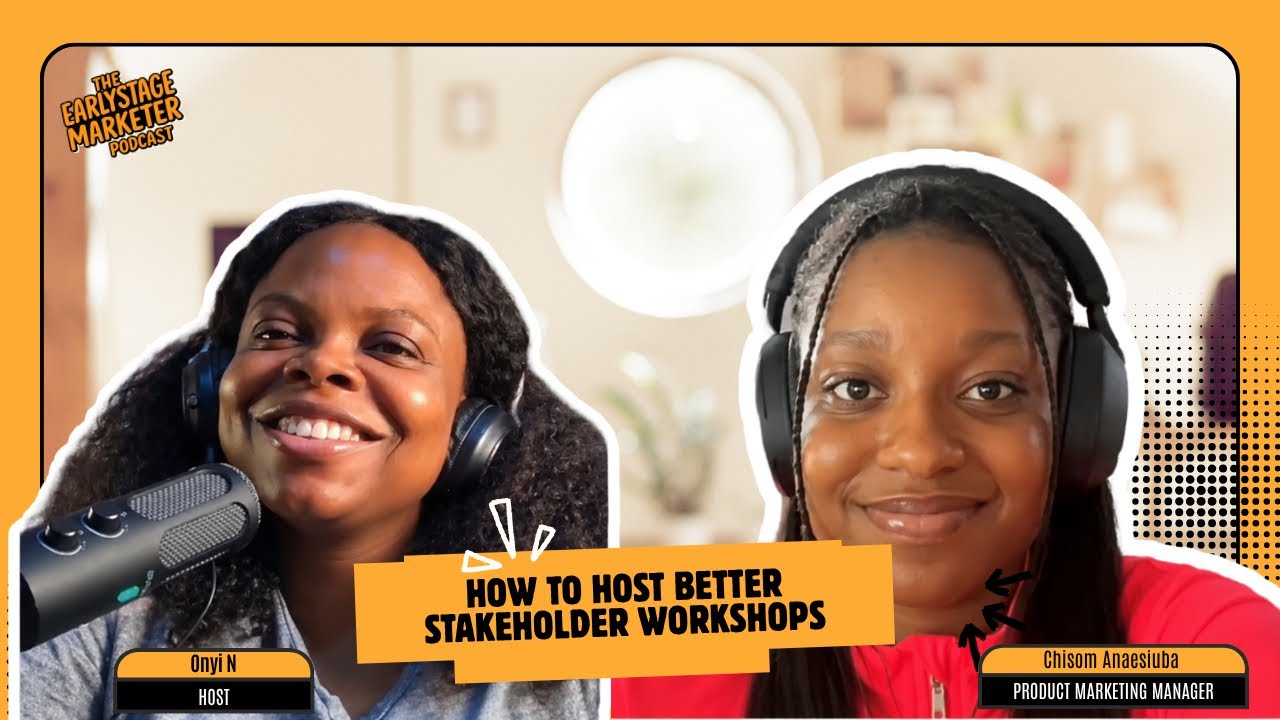
Hi, Chisom, welcome to the podcast, to the Early Stage Yeah, Marketta, it's such a pleasure to talk to you again. So yeah.
It's a pleasure to be here as well. Thank you. Yeah.
Thank you. You're welcome. Before we even dive into it, just a very quick question. I saw this feature with Tech Cabal where you have this stuff. Is it Juice Bus? I hope that's the right name, right? Where you kind of pull inspiration of—
Yeah, it's Juice Bus. Yeah.
Yeah. I was keeping something like that on Notion, but I kind of fell off the way. But what was the inspiration? Why did you decide to? do something that's cool?
First off, thank you for thinking of Juicebox as cool. It was at an interesting time where I felt like I wanted to like do more, like just like beyond my job, right? Um, um, I think I was working on a go-to-market, um, for a feature that we're launching and I was like scrambling for like resources, just like all over the place, inspiration and all of that. And I was like, yeah, I put together like some resources and I was like, oh yeah, like This thing is definitely like something that like product marketers need because they're always like driving launches and things like that. In fact, I kind of just like got inspired in general by the things that I was seeing, um, emails and a bunch of other, and I found that I really like, I genuinely enjoyed going through like such resources. So I decided to make it like also like accessible to like other product marketers that might be doing like go-to-market and things like that. Um, so yeah, that's pretty much like the whole background and like inspiration behind JuiceBox.
Okay. So let's get into our questions for the day. You told me you wanted to talk about stakeholder management. So I am curious, tell me about a time, was there really— in fact, I feel something must have prompted you to realize that you need stakeholder management skills. So my question is about a time when you were doing solid work as a product marketing manager, but it wasn't visible to your stakeholders or to the people who, who mattered. So what was happening? What was, I like to call it the wake-up call. So what was this wake-up call that showed you that you need to build stakeholder management skills? And did it cost you anything? What did it cost you, if any?
Okay. So I would say that like PMMs, like product marketing managers, product marketers, um, do a lot of like do a lot of work actually, a lot of like, in some cases invisible work or work that might not be the most obvious because I think the first thing is that the role is seen as more commercial, right? But I discovered at the time that there was an opportunity for like more strategic work. Product marketers could be like more strategic. The role was even like a whole lot more strategic than it's usually like seen at face value, right? Um, and yeah, like at the company that I was at, it was a startup at the time. There was no knowledge of like our ICPs, right? It kind of felt like we're working blind. Um, and I wanted to, I saw the opportunity to just like, um, make that bit, like just to, I guess, bridge that gap and that knowledge gap and all of that. Um, because it was not only going to help me as the PMM on the team. but also like the sales team, um, um, the product team as they were building. Definitely we need to know who we're building for. We need to know that they can afford and like all the— afford the product and like all the things that the features that we're building, um, are actually like solving something for them, right? Solving a pain, um, and offering like value at the end of the day. Um, so what I did was I took on like the task of like building out like our ICPs, that like for that work I had to talk to customers, right? So I consider like our best fit customers. And that was like, it was not, it was knowledge that I had also just like come into in a sense. Like I just like learned about it and I understood like the value of it. And I saw that that was like missing for us. I decided to like do pick up that bit. What it cost me, I would say, was that it seemed like there was like a misalignment between just like my team, like what we were trying to like, and my team and just like the, the business goals, I guess. Um, there was like a bit of like misalignment because the expectation was different from like, I mean, the expectation from like a founder level, just like understanding that, oh, like they're trying to like Um, ensure that, I mean, we're hitting revenue goals and all of those things. Even if all of that work is also like driving us towards that goal at the end of the day, it's pushing us towards that goal. Exactly. It starts like revenue at the end of the day. It's like, yeah, but like, I'm not seeing the money right now. Right. So, um, I think that was like the thing that it cost me. It was like, oh, like, I'm not sure that your team is really like doing the things that like need to be done to like hit like the revenue goals and all of that. So, um, so yeah, I think that was like the main. cost factor. And that was like the wake-up call for me that, um, yeah, like founders, they've hired me for like a reason, right? There still like needs to be like some education, actually, if they don't understand like this aspect of like being like a PMM. Yeah.
I, I love this answer. So in essence, it's like the way I'm interpreting it is it's almost like maybe you were hired and people thought, oh, all we brought her in for is to do launches, think of campaigns, launches, and they don't know that what actually drives this launch is, is this whole work around ICPs. And so it's like they wanted you to do campaigns and here you were digging into who your best fit customers are and it created misalignment.
Okay. Yes. And it's not like— that's the interesting thing, right? That's the interesting thing. That wasn't like, it wasn't solely like ICP work that was happening. Um, there was other work happening, but it was just like, I'm not sure that this thing is really that exciting.
Important. Yeah. Okay. All right. So how did you get them to see the value of this work? So what changes did you have to make? Did you build system? Did you build new habits, change behaviors? So I'm basically trying to understand how you moved from point A, which is they didn't understand what this work was about, thereby creating misalignment, to how you moved to this place where you made this work and its importance visible to them. So what, what was that process?
Yeah. Um, something else just to go back a bit on like the, what it cost me was just like, I guess the doubt as well that, um, that my team now had to like face just on like capabilities and some of that thing. So yeah, we got to like touch on that. So it was more, I think the doubts than like the alignment bits. Um, but yeah, to answer your question, systems and just things I put in place, just like, um, Taking from like my experience, right? And how I was able to approach that at the time, even as, um, a PMM that was pretty much like new in the role and like it was like, yeah, I was pretty, I was pretty young as if like when this, when I experienced this, but yeah, like some, I think some changes. So like I'll touch on 3 specific changes.
Okay.
Or just like things that I did. So. At the time, right, I was, I just like observed how like the product team would work, right? There was a way that they brought, like, just like got everyone involved in what's like was in what was like happening, the product they were building, the feature they were building. And I thought that, um, there's an opportunity to like lean into, um, that approach, um, to solve some of like the problems just when I like thought about it, because at the end of the day, most times the founders will be involved in that process as well. Um, and One thing I picked from them was, for example, documentation, right? It wasn't something that I was familiar with at the time. You know, I was like young, new, and I didn't have like that management. Yeah. So, um, documentation was like the first thing. Products, the product managers typically like documents. Like there's like a whole lot of documentation around like the stuff that they're going to build. People like read it, review it, um, give like their feedback on all of that, get some like inputs. So that was like the first thing that I took from them, which was like documentation. So like for projects. Campaigns and things I thought would be valuable to the business. Um, I'll start with like, try like documenting it, documenting why it mattered, um, documenting who, like how it was going to like drive their business's goals as well. So like all of that documentation was stuff that I implemented. Um, and just like sharing it like company-wide so that everyone was brought into like the process and brought into like the thinking. So like, yeah, yeah, not on the marketing team, but you know what is happening and you know what's like prioritizing, let's say, this quarter and different things we're prioritizing. Um, I think the second bit was seeking alignment, right? I know I talked about alignment before, but now seeking alignment, right? Um, alignment in this case is pretty much, um, ensuring that like whatever the marketing team was doing tied at the end of the day to like the business goals. I mean, like figuring out your ICP and just like other things like is good. And yeah, like you already know, like go-to-market campaigns is like part of the PM role, but like what matters is, is it actually like, how does it contribute to like the business's goals, right? So just ensuring that there's some level of like alignment. And I'm going to, I guess, pick from, so like I'm doing like my CIM and stuff that I've learned recently is what we call cascading objectives, right? So that's pretty much like how the alignment side comes into play. So it's like, there's like specific like objectives or goals that the company is trying to like hit. And as a marketer, it's like, what am I doing? How am I contributing to like these goals? Like what role am I playing? And what are the things that the team is doing to ensure that we're hitting like those goals, right? So maybe it would involve like some ICV work or it would involve maybe like figuring out like your buyer personas and like things like that, right? But all of those things at the end of the day should tie to like the business's goals. And key stakeholders should be aware of how like they tie to the goals. I think the third thing was I explored like workshops, setting up workshops and sessions with like Stakeholders as well. So having it be just like an exercise versus like just something that was like thought within the team made it more like engaging and more involving such that they were involved in like the marketing process without it feeling a bit. Yeah, they were just like a bit more like involved in the marketing process. They became a part like they could see some of the work that was happening and why like it mattered. So I mean, getting a piece from like sales. testing, for example, could inform like positioning and messaging work, even like the founders who like typically like talk to like customers as well, because they are, um, they're, they stay close to the product, right? They stay close to like customers as well. So like all of those things, um, were things that I explored to like just solve this problem of, um, I mean, like the doubts and just like ensure that, yeah, like. The team is actually like focused on driving like the business's goals, right? So I found a way to just like manage the managers. So that's the best way to put it. Just like you kind of have to like manage like the top level people in a sense. So yeah.
Okay.
Yeah, I think that covers it pretty much.
Yeah, it does. I, before we move to the next question, I just want to dig a bit deeper into just one thing you said. You talked about workshop. So if someone wants to host a workshop for stakeholders just with the same, with the same objective in mind, how would, what tips, what advice would you give them to help them host their first successful workshop?
That's a good question. Because all things considered, it can be very like, it can be difficult to bring people together, especially when they're like more like senior level, right? But I think the first thing is that you need to They need to know like what is happening and why it matters so that they know that, oh yeah, they're actually like playing a role here and this is not going to be a waste of their time.
Yeah.
The second thing was that, um, it was an, I made it into more like an exercise where there was actually like a worksheet that they could work on. So it was very like interactive. It wasn't like a, oh, like I'm just talking, asking questions and all of that. So it was interactive and everyone was like very involved in the process. And at the end of the day, like sharing like the outcome of that session, right? Like they could see like how, um, yeah, like the session really like was important. It was valuable. It was useful. Um, and they can see like the insights that were gotten from like the, um, the insights discovered from just like that session and, um, how it's like plays out in like real life, um, how we apply it. Um, on the marketing side, on like the sales side and like all of those things. Um, so yeah, like those were like the, I think, 4 workshops. Um, and of course finding a time that works for everybody that also doesn't feel like it's just like eating into their time. Um, so yeah, I think those 4 things were, yeah, that's how I like, I went about like the workshop pretty much.
Yeah. Okay. Then something else I'm curious about is, okay, before I ask you this, let me just make a statement from something I heard from a podcast. Ahrefs podcast. I think their chief marketing officer was interviewing Storyline. Storyline, this interactive demo tool, was interviewing their chief marketing officer. And he said something striking. He said marketers have the worst case of lack of confidence. I don't know if I phrased this correctly, but he was trying to say a lot of marketers tend to have this thing where they don't have confidence around their work. So why do you think many PMMs kind of stay invisible? Do you think it's that lack of confidence issue that this guy mentioned in the podcast? So why are many product marketing managers, marketing folks invisible even when they are really working hard? I think the question is twofold. So why do you think they still remain invisible? And then what do you think is that tiny change they can make to move from invisibility To visibility.
Why do I think?
Yeah.
So I don't think that it's a, I mean, lack of confidence. Is that what it is? I don't, I don't think it's a lack of confidence. I think that just that the expectations of like the role can be very like, puts like, I don't know, you're placed in some kind of box in a sense. So like sometimes the expectations don't match like what the role can actually like. The reality. Deliver. Um, yeah, like just my curiosity, it doesn't match like how much like the role can like deliver or what like the person can do. Um, so like, um, it's like, um, it's genuinely like, let's say, um, a founder or just like stakeholders like have certain expectations of what the role is meant to do. Maybe that's like, oh, they want you to like run ads, they want you to like post on social media and all of that. Um, and then there's like, Oh yeah, these things are kind of like vanity metrics. They're vanity metrics. And there's like more, there's just like more stuff to do. And that mismatch would cause like, first of like doubts. That's, I guess, like the first thing on the side of like, let's say like the founder. And that creates some level of like, I don't know if I should call it fear or like it's built, it's, that's where the lack of confidence now comes from because like you want to do, you know, like you should be doing XYZ, what is expected of you is. something else. Um, and even if you like, you want to, I guess you want to like please and you want to just do the thing at the end of the day, that if the, let's say like the posting is not like driving like the results, it'll still come back to you like, oh, I probably didn't XYZ. Like, this is the thing. Like, why is it not like hitting the goals? But you knew at the end, like initially that it wasn't going to like do anything. Like, it wasn't going to like have any like significant like impact. Right. Mm-hmm. Um, but yeah, you, so I think like that's, um, that mismatch can, um, cause like The ripple effect is just like a lack of confidence, um, over time. Yeah. Um, I think there's also like in a, yeah, there's also the bits of, um, some, it can sometimes be a personality thing when it comes to like being invisible. Um, sometimes people can tend to like just like be a bit like more introverted and feel like, oh, I'm already doing the work. I don't necessarily need to like show myself so much and all of that.
Yeah.
But yeah, like these steps, you asked me about steps, right?
Yeah, I did.
Is that tiny steps? Little steps? Small steps? Yeah. Baby steps, baby steps. Um, just, um, having just, um, sharing with the company, maybe like, I mean, something that we do at my company at the moment is when there's like a launch, you kind of just like share it, like it's on the general channel. It's a small thing, but like letting everybody know that, oh, like we just went live with this thing. And then just like, if there's like new insights, I mean, as a PM, you kind of have to like observe the industry and observe, let's say, competitors and yeah, just like all of those things, things that you discover, you can like share it on, let's say, like a channel so people can also, I mean, whatever knowledge it is that you're, um, Mm-hmm. that you're getting, they can also like take from that. Like they can just like see how you're paying attention to like the industry, the market, and all of those things. And see, I think those are like small steps. Yeah.
Yeah.
Yeah.
I like that.
Not be hidden, not be invisible as a PMF. Yeah.
I like, I like the last thing you said, because when you talked about sharing launches, my first thought was, oh, what if you're not launching anything this month? How, what do you do? But I liked what you said about sharing insights. And let me just add my 1 cent or 2 cents to that. So if you're wondering, oh, how can I keep abreast of all the insights? You can just use AI. So what I do is then I used Zapier. Then it's actually like last year, but now I'm trying to explore ChatGPT agents here to just build this insight agent that for me, it was twofold, monitor all the conversations our ICPs were having in subreddits. that are focused around what we deliver, and then I push it to my Slack or to my email. And then if I find anything really interesting, I just screenshot the conversation, share to the general Slack channel, and add my own. I don't just show them, I kind of try to interpret it and synthesize it. So it's, it's just like a buildup, just trying to contribute and expand on what he said. Okay, that's fine. Then how do you—
Yeah. That's very valuable. I'm going to actually like take from that as well. Like, yeah. Cause I think for me it was more like setting up like Google Trends with like keywords. But yeah, like using AI. Yeah. That makes a lot of sense. Yeah.
Yeah, it does. Then let me come back to what you said about personalities. Right. So if, and I think, okay. Yeah. Let me, let me note. talk too much. Let me come back to what you said about personality. So if someone who is a bit on the introvert, introverted side, or who's a bit of an introvert wants to do this, and then they're worried, oh, wouldn't I come across as needy, performative, or like I'm trying to seek approval or validation? So how can they just navigate this line between healthy visibility and over-reporting? That waste everybody's time or makes you seem as though you're overly seeking approval or validation? Or does it even matter? Do you even think this is— this should matter at all?
Yeah, honestly, I would say that if you ask me. Um, yeah, like, seek the validation. I can't believe I'm the one saying this, right? Yeah, but like, seek the validation over reports. overdo. Like, just, yes, just do it, right? Um, yeah, yeah. Because for me, I would say that the consequences kind of just like, they should trump like the feeling, right? Yeah, yeah. It's just, just, just do this thing. At the end of the day, you stand to gain more from doing it.
Yeah.
Than just not doing it. Yeah. You don't have anything to lose, right? Other than— and over time you kind of just like overcome, you overcome the feeling as well. Just like the more you do it, right? Maybe people will find you like annoying in the company, but yeah, like your team is seen as like impactful. You're seen as impactful within the company.
Embrace cringe, be cringe, don't worry. And a lot of times if you're even starting from zero, You wanted to say honestly what?
Yeah, like, no, I was, I was saying that, like, I'll wait for that. Honestly, like, no one has ever died from cringe. That's literally the truth. Like, there's literally nobody that has died from cringe. So yeah, and honestly, like, that's what I'm saying, that it's interesting that it's coming from me because this is— it's still kind of a struggle a bit, and I'm trying to overcome it. But yeah, just No one has died from cringe.
Yeah, from being cringe. So yeah, okay, all right. So before I let you go, I can't believe we've come to the end, but I am happy we have. Before I let you go, I know I told you this stuff about rapid-fire questions where I kind of just ask you 3 questions. You, you just have 20 seconds to answer each of them. If your first answer is your best answer, no overthinking, whatever comes to your mind. It's probably the right answer. So are you ready? All right.
Mm-hmm. I am. Okay. I think so.
All right. What's the best marketing advice you've ever gotten and who gave it to you?
Best marketing advice, talk to your customers. I got it from 2 people, um, Alicia and James, I guess. They're kind of like my, I look up to them when it comes to like creative writing. So yeah, like Yeah. Yeah. Um, talk to your customers. It's really important. Um, yeah. 20 seconds. So that's my answer.
Okay. All right. A marketer, dead or alive, you'd want to spend a day shadowing?
I'm a huge fan of women. So there's 2 people that come to mind for this one. So April Dunford, she's a positioning expert. Yeah. Yeah, she's a positioning expert and I was reading her book, obviously awesome. So yeah, that's one person. And then another one is Emily Kramer. She has a YouTube account.
Yeah, MKC1.
MKC1. Yes, exactly. So I think those 2 people, yeah, like I think I'll shout out to them. Yeah, those 2, at least for now.
Yeah, they're really fantastic people. Very fantastic.
Okay.
Then the last one, one book, one podcast, every person, like you think every PMM should, should read at least once in their life. What is it? A book, a podcast, or person every product marketing manager, especially an early stage product marketing manager should be paying attention to right now?
This one is a tough one, but I would I think Product Marketing Insider is a general one to pay attention to. I didn't start with Product Marketing Insider, but like here as a PMM, I think there are a lot of conversations that happen on Product Marketing Insider podcast. So yeah, I think that's the one that I would like recommend. Yeah.
Okay. Thank you. I haven't heard of Product Marketing Insider, so I'm going to check it out. Thank you for that. And We have come to the end of our podcast against all odds. Thank you so much.
No worries. You're welcome. It's been fun having this session with you. Thank you as well for bringing me here.
Thank you.
Thank you for listening to the Early Stage Marketer Podcast. I hope today's story gave you something to reflect on or even something to try in your own work. If you enjoyed it, please subscribe. Leave a comment and share it with someone who might find this helpful. See you next time!
More from Onyi



Tips to Get a Marketing Raise/Marketing Promotion: Every Marketer Should Add This in their Reports