Dan & Manda: The Season, the Summer, the Seth

In this episode of the Stories of Freedom podcast, hosts Amanda and Dan welcome Seth, a pastor‑turned‑Freedom in Christ (FIC) staff partner, for a faith‑centered conversation about personal transformation, the importance of identity in Christ, and how the Freedom in Christ ministry equips believers to live free and fruitful lives. The dialogue weaves personal testimonies of overcoming perfectionism and “lie‑based thinking,” a theological discussion on the corporate versus individual understanding of the body of Christ, and a detailed preview of the upcoming “Becoming the Church God Imagined” course—including its production timeline, fundraising needs, and the vision of teaching the church as a family. Throughout, the hosts emphasize prayer, humility, remembrance of one’s identity, and practical application of the Steps to Freedom in daily life. The episode closes with a call for financial partnership with FIC.
Chapters
Welcome, friends, to Stories of Freedom, a podcast about discovering and embracing who you are in Christ. On each episode, we'll visit with people who have overcome obstacles, gained freedom, and found abundant life in Christ. These conversations will highlight the goodness of God woven throughout the lives of his people and teach us as his children to appreciate that very same goodness in our own lives. We will journey together growing to better understand how to live this life free and fruitful in Christ. Pray after we start recording.
That's right.
Or we especially pray after we start recording.
Although last time, as I was saying, dear Jesus, we submit to you and resist the devil, my whole thing shut down.
His whole system went down.
We consecrate all of this equipment to you and dedicate it for your I can—
yeah, exactly. And so Sue and I are doing the very spiritual thing and we're still here.
Oh, that's great.
He said his last word was, "We're just gonna pause before you—" He takes a deep breath. He takes a deep breath and then it's just silence. And so it's just, you're looking, you're like, "Yep, we're pausing." And then we go on.
Is this a John Eldredge 3-minute pause? 5-minute pause? 10-minute maybe?
And then Sue's like, I see her look up and then look back down and I'm like, hey Sue, I don't think he's still with us. And so to say that anyone could do this, I mean, I just think potentially almost anyone could.
Okay. I struggle just to show up and have a conversation sometimes. So let's pray. That is good. And we'll jump in. Father, we are so grateful that you do have a great sense of humor. Amen. But, Lord, even greater, we acknowledge your sovereignty. We acknowledge you are all-powerful and everywhere present. So, Lord, you are with us in this mix across 3 states, many miles, and all the connections in terms of computers and lines and everything that goes into this that we don't even understand. But Lord, thank you that we especially are connected by your Holy Spirit as brothers and sisters in Christ. So Lord, we do consecrate ourselves and our equipment to you for your use. We pray you'll fill us with your Holy Spirit. We submit to you, Jesus, and we resist Satan, and we say that he's gotta flee from us. This is your time, Lord. This is a conversation dedicated to you and your goodness. What you've done and what you desire to do. And so, Lord, we just, we just commit it all to you in Jesus' name. Amen. Amen. Well, welcome, Seth, to Stories of Freedom. It is always great to see you and wonderful to have you back as a guest on the podcast. Yeah, thanks for having me, guys.
Yeah, lots of fun for us today. Yeah.
Well, we've got a lot we want to talk about, and we will work through it. We talked about in the show title, the season, the summer, the Seth. The Seth. And so I am super grateful for you, Seth. I know that, you know, you are You just, you are a blessing to many. You're an inspiration to me. I'm grateful for your friendship. Even just, Amanda, you know, one of the things Seth and I were, we were sitting at Lake Genaliska on the bench after walking around the lake, about a 2-mile walk, and we were just talking life and family and just chatting together. And then we sat on the bench and we were We started talking business, you know, started talking Freedom in Christ business. And these two older gentlemen walked by and I just said, "Seth, that's us in 30 years." And so he's like, "I'm in." So if Jesus doesn't return in 2056, let's walk Lake Genaliski. I look forward to many years of service and friendship together. But Seth, you were—
As long as we're wearing khakis and white New Balance walking shoes.
I love this. Your hands need to be behind your back when you're walking too. Like, there's maybe one behind your back, one on a stick. You got to have a good lean.
I'll be doing about 1 mile an hour on flat ground at that point.
This will be the best. I love this. Hey, can I tag along? Along. I have so much fun tagging along. Um, oh my goodness. Hey Dan, so last episode it was you and I and Sue, and in that episode you and Sue talked about how y'all have been friends for 20 years, known each other, had kids, you know, like raised kids in the same church, worked, you know, like in that same— and so how long have you known Seth, have you known Seth a long time?
Well, it's probably been 8 years now, 7 or 8 years. I mean, I've been in my position now for 7, started in 2019. And did you go through your practicum, was it 2018 or '19, somewhere in there?
2019, but the first time you and I chatted on the phone was the summer of 2018 because I was on sabbatical from the church and inquiring more about Bringing the Message of Freedom in Christ to the church, and you called me in your role, I believe, at that time as the Northeast Director of Ministry Relationships, yeah.
Yes, yeah, and actually, you know, that was actually on my mind. I don't know if we talked about it the first time you were on, but at that point it was called the Regional Director of Expansion, which we've intentionally changed to a longer title, Regional Director of Ministry Relationships, right, because we didn't want to send the message that, hey, we are taking over We want to expand our work. No, we want to partner with churches and leaders in churches to help their people, them as leaders and their people, walk free and fruitful to accomplish the vision and mission God has placed on their hearts, right? So we build relationships toward that end. So we've intentionally changed that title from Expansion to Ministry Relationships. And so, yeah, so I was serving as the Northeast Director pastor at that point. It was just a few months later that the board then interviewed me and hired me for this position. And so yeah, I was reaching out to Seth as a pastor in West Virginia in the church that he had planted and served in for, was it 17, 18, 19 years, something like that? Yeah, right about that.
So that's awesome. I think Seth, I think when you went through your practicum in 2019, I think that's when we might have met. Did you and Val go through your practicum together? Am I making up details? Did you go like the spring of 2019 to Tennessee? Was your practicum in Tennessee? Okay. Yes, that was the one. And maybe Dan was in England. Maybe Dan and Craig were gone. They weren't at the practicum. Mm-hmm. I think, I don't know, but I have, I have some kind of memory that you and Val, Val being my husband, uh, both went through your training at the same time. Yeah. Yeah.
I remember being at a practicum that Val was at. I, my practicum was in the spring of 2019, and then I came back as a coach in the fall of 2019 in Syracuse. Yeah, but, uh, I do remember being with Val at his practicum.
He's only been to one and it was his. Um, and so, yeah, yeah, that would have been that one. Yeah, that's so cool.
Yeah, I was over in England at the second Transform retreat. Right. So that's where, that's where I was at that point, not able to make that practicum.
So yeah, so that's scared. He was scared. The Lord was, you know, just easing him in slowly to all of our big personalities like Seth's.
That's right.
Yeah, this should be a lesson to Dan. Go away and see what happens.
All the good things, duh! That's right.
That's right. The Lord does amazing things when we rest in him. That is a great lesson and one I can remind myself of often. Well, and Seth, you know, One of the things that we were chatting about earlier is just, you know, you actually moved from full-time pastoral ministry into full-time work with Freedom in Christ. Mm-hmm. A lot of times when people experience that personal transformation through the biblical principles and practices that we teach in Freedom in Christ, there are people that say, "Hey, I want to help others to experience this free and fruitful walk as well. Can you tell us a little bit about that? Like, what was the personal transformation? And I know you touched on that, or we talked about that a lot in your episode, but remind listeners what was your personal transformation and then what made you say, hey, I want to dedicate my life to serving with Freedom in Christ as a ministry?
Yeah, I mean, the message and ministry of Freedom in Christ served a huge role in helping me to overcome based thinking in the area of perfectionism and drivenness. And a friend of mine, a local Christian counselor, encouraged me through the Steps to Freedom in Christ 10 to 12 years ago now. I lose track of time, and I experienced a tremendous amount of freedom through that appointment, obviously One thing that I've come to recognize is that our enemy observes us for our entire lifetime and he understands and he sees what has worked in the past before, and so he continues to attack me actually in that very same area. But Freedom in Christ Ministries and the message has given me the tools to apply to my life in the moments when I'm being attacked in that area so that I can continue to walk in my freedom. From perfectionism and drivenness. And you're right, like once I got it, and I'm not just talking about my own personal freedom, but the whole idea of applying the Scriptures to our lives in this way, I became very passionate about helping the people around me. It was huge just to want to see loved ones, friends, family, congregation members experience their own freedom in Christ through an understanding of their identity in Christ, how to overcome lie-based thinking in a truth-based approach to spiritual warfare through a lifestyle of repentance and faith. I became very passionate about it. Actually, I couldn't shut up about it. There are probably people in my life who were going a little bit batty with how much I wanted to talk about freedom in Christ. But yeah, it was so very helpful, and so yeah, the next logical step was to partner with the ministry as a pastor to bring it to my local congregation and help as many people at Southridge Church as I possibly could. And so that passion remained for several years, and I actually during that time was getting more and more involved in volunteering for this ministry as a side hustle. Just finding ways to serve the ministry while continuing to pastor the church. And then I just kind of felt like the Lord spoke to me, and it wasn't an audible voice, but it was a very devotional one, and it was one that I was hearing continually through my times with the Lord, my walks with the Lord. And he was just saying, you know, "Focus on this. Be laser-focused on this for a season." I had shared in my podcast, I'll share again, that I loved what the Apostle Paul had to tell the Corinthians in 1 Corinthians chapters 1 and 2 where they're squabbling over who their leader is, they're squabbling over who they follow, and Paul's trying to dispel some of that. And so he says, "You know what? When I was among you, I wanted to know nothing among you except for Jesus Christ and Him crucified." Amen. Come on. I read that passage in a season of my life, and I just sensed the Lord was saying, "Be laser-focused with the people around you in the spheres you're in regarding the message of freedom in Christ," and that really led me on a journey toward going on staff with the ministry eventually.
Amen.
Yeah.
Yeah. Yeah, and I'm, I'm super grateful that the Lord led you in that direction, and as I mentioned, we've had a lot of fun working together. So one of the things that sometimes people think about freedom in Christ is, well, it's really only for those who are the down and outs, the addicted, those really hurting, those who are struggling badly. You were actually a very successful church planter and pastor growing the church to, in West Virginia, in a small town in West Virginia, to about 1,000 people on 2 campuses. And Freedom in Christ was very helpful to you. What would you say to kind of dispel that wrong thinking that Freedom in Christ is only for a certain population rather than, hey, are biblical principles and practices for every believer?
That's such a great question and one I'm very passionate about because, um, I think we, we all need this message. Amen. And not, not only this message for a season in our life or for, uh, a time when, when we may need to, uh, overcome something in our lives, but as a lifestyle, really. In fact, one of the things that I am most passionate about is that we not look at the ways in which we minister with Freedom in Christ as a one-off event, or speak about it in the context of an encounter. We talk in Freedom in Christ all the time about freedom appointments and freedom encounters, and oftentimes that's in context to walking through the Steps to Freedom in Christ, either in a one-on-one personal or group environment. And we say, I mean, we say this, right? You all have said it before, Any freedom gained today must be maintained. You know, we use that language in our discipleship process. But I love to think about the truths we teach and the steps we encourage people through as a lifestyle to practice rather than an event that we go through. And that has been so true about my life. Life. Like, I can succumb, and maybe I'm the only one, maybe you guys don't struggle with this at all, but I can succumb to stinking thinking on occasion. I can be overcome by spiritual attack and not recognize it for several days, if not several weeks. But if I understand my identity in Jesus Christ, I understand how to identify lie-based thinking and apply the truth to that lie-based thinking and move on from there, if I understand the power of God's kindness to lead us toward repentance and I can practice that hour by hour, day by day, month by month, I can walk in my freedom. And I can recover from those times when stinkin' thinkin' is seeking to make its way into my life. And so, I love, even with regard to the steps, I love to get on my stump every once in a while. I love to get on my soapbox and talk about how these are steps that we can take on the go with us. You know, I can get in an argument with my lovely wife, Stacy, and I can leave the house to run an errand. I can recognize my need to forgive her, even if I might have mostly been at fault. And I can walk through the forgiveness process on my drive home so that I can enter the house and reengage with her relationally the rest of the evening. So good. You know, pride, how, you know, I don't know how many times I've gone through the Steps to Freedom in Christ. I do know that when I get to the pride step, I often have to check a lot of the boxes. I do know that I have to repent of pride. And so why not do that on the go? I don't need to wait. I don't need to wait for my next Freedom appointment to go through the pride step. I can take that on the road with me. I can do it as I'm going about my daily life. And I love the idea of applying these principles on the go. We talk all the time about the Great Commandment of Jesus Christ, "Therefore go and make disciples." And a good teacher of the Great— or I'm sorry, we talk all the time about the Great Commission of Jesus Christ, "Go therefore and make disciples of all nations." And a good teacher will come alongside of the Great teaching on the Great Commission say that "Go therefore" means in your going, in your daily life, make disciples. I think it's the same with freedom and the message of freedom in Christ. We can live out and we can profess the message of freedom in Christ in our going, and that's a message that I find myself most passionate about these days.
Amen. Yeah. Amen. Um, I, I have a, an off-the-wall question that came up, um, because I was listening to a pastor talk, pastoring, right? And he's, and he's talking about things, and he was maybe saying, um, that you don't need to really know who you are in Christ. That in order to accomplish God's will for your life. And that a little bit, potentially, if I'm understanding him right, that it's almost selfish to center yourself in the daily conversation of trying to understand who we are in Christ and then walk like it. Like, we're paying too much attention to ourselves. Here's just another way we're being selfish. And I would offer that thought back to you, and I would— if that a person thought that, what would you say to that?
I'd say a key and resounding message that we come across in the scriptures over and over and over again is remember. Do this in remembrance of me. And one of the reasons why we are told to remember things so often in the scriptures is because we can be forgetful. I be forgetful of who God says I am, even on my worst days. I can be forgetful about who I am in Jesus Christ. And so I don't know that we can overemphasize our true identity in Jesus Christ, because it is not only the basis from which we live a full and abundant life in Jesus Christ, John 10:10, it's also in how we do spiritual warfare against our enemy mentioned in John 10:10 who is out to steal, kill, and destroy. And he really is out to steal, kill, and destroy any remembrance we have of who we are in Jesus Christ. And so my response would be, you know what, I can't speak for everybody, but I am a very forgetful person. The Scriptures tell me to remember things all the time,. And one of the things I need to remember is that I am who God says I am, even on my bad days.
Amen. Amen.
I have a couple additional thoughts, if I may share, because I think that's a great point that we've heard time and time again, is why so much focus on your identity and making— don't make it all about you. Well, I completely agree with that. Don't make it about us, right? This is not— we just talked about the pride versus humility. Step. Yes. I love the definition of humility within that step. It says humility is actually confidence properly placed in God. Amen. Right? The focus is not on me. The focus, when we think about our identity in Christ, the focus is actually on who Jesus is and what he accomplished, right? Because in Christ, I'm a new creation. I was dead in my sin. Now I'm alive to God in Christ Jesus. I was in the kingdom of darkness, and now I'm in the kingdom of the Son that God the Father loves, right? I was darkness. I literally, Ephesians 5, was darkness. Now I'm light in the Lord. The transition, the transformation from who I was before Jesus to who I am now just makes me say, "Glory to God. Thank you for salvation. You're amazing." And the other thing it helps me to do is say, if I forget who I am in Christ, then my focus actually gets back on what do I need to do to gain God's good graces or favor in this moment, especially after a moment of bad behavior or prideful thinking or wrong thinking. Or an attack of the enemy or subjecting myself to what the world teaches. And so what knowing who I am in Christ does for me is allows me to confess and repent immediately and say, Father, my only access to you is because I'm new in Jesus because of what he has done, and by faith I receive every point of access to you that I have as a result of what Jesus has done. Amen. Thank you for that. And it allows me to reconnect with him in the moment because otherwise I'm relying on my own strength, power, and wisdom instead of the wisdom of God available to me through the Holy Spirit, through his word, and through all the provision that Christ has purchased for us. So I get a little passionate about that, but I think— That's so good. That's such a key to what we teach, right? And even Seth, as you were talking about it, is, you know, you kind of jokingly said, I don't know if I'm the only one who struggles with, right, like going back to those flesh patterns that, hey, I grew up for decades living in a certain flesh pattern and buying the lies of the world. They don't disappear immediately. And it reminded me of that Romans 12:1 verse where Paul says, I urge you,— in view of God's mercy, to offer your bodies as living sacrifices, holy and pleasing to God. You know, and I heard somebody say once, the problem with a living sacrifice is it keeps crawling off the altar, right? And so when I crawl off the altar, what Freedom in Christ has taught me to do is, is re-present myself as that living sacrifice because Jesus paid the price. He is my atoning sacrifice. He has made atonement so I can go back to God at any moment in time. Anyway, that's just a few.
Let me throw this in because when Seth was talking about remembering and how often we forget, the scripture that, you know how it does, that popped into my mind was James 1. And in James 1:2, it's the scriptures that, dear brothers and sisters, when troubles of any kind, so it's that, right? So it starts there. Faith produces all of the things,, right? Like, blah, blah, blah. But it says in 5, uh, if you need wisdom, ask our generous God and he will give it to you. He will not rebuke you for asking, but when you ask him, be sure your faith is in God alone. Do not waver, for a person with divided loyalty is as unsettled as the wave of the sea that is blown and tossed by the wind. It reminded me of the double-minded man who sees himself in a mirror and goes away and forgets himself. Like these things. And so we do need to, we do need to, to keep going to the Lord to remember, you know, who he's shown us to be, who, what our reflection really is in Christ, potentially. I don't know. Um, but because when I do feel like that person who walks away and is like, oh wait, in any given situation, who am I right now? And I have to remember, I have to steel myself often enough. And anyway, I find that to be such great conversation. Thank you both for weighing in on that.
Yeah, I have one more thing to say to that, too, and that is that I don't know how one can focus in faith, one can focus on their identity in Christ and not land in Christ. In other words, the whole idea is wrapped up in the phrase "in Christ." If I'm focusing on my identity in Christ, I'm always coming back to him. I remember one of our colleagues in Freedom in Christ pointing me to a talk talk that, and I will give her credit, Sadie Robertson gave at a conference a couple years back where she was making the point about the power of living from our identity in Christ, but she said, "But it really doesn't matter what we believe about our identity in Christ if we don't know the truth about who our Father, Son, and Holy Spirit is. In other words, the identity flows from somebody that is trustworthy, is faithful, is sovereign, is all of these things, and therefore that's what gives our identity in Christ power. Amen. And it just reminds me of that quote from A.W. Tozer. He wrote in The Knowledge of the Holy, what comes into our mind, when we think about God is the most important thing about us. Amen. And so I just think that this idea of understanding who we are in Christ and that quote tie nicely together is all. Beautiful. Beautiful.
Yeah, I mean, it even— and I don't want to belabor the point, but that whole idea that I was in Adam, right? And every person on earth is either in Adam, unsaved, or in Christ. And to recognize, like you're saying, who God is, how much he loves us, what he did to restore that relationship of union together through and placing us in Christ. And it's, that is powerful how you put that. It reminds us of who God is.
And I found the right scripture reference. I do, as you know, I— it's all so good, and duh, it's all your favorite, and it all is so beautiful, and it applies to itself, right? Especially in the same chapter. What I missed was the verses that, um, start in, um, it's chapter 1, verses— starts in 21. So get rid of all filth and evil in your lives and humbly accept the word God has planted in your hearts, for it has the power to save soul. But don't just listen to God's word. You must do what it says, otherwise you are fooling yourselves. For if you listen to the word and don't obey it, it's like glancing at your face in a mirror. You see yourself, you walk away, and you forget what you look like. But if you look carefully into the perfect law that sets you free, and if you do what it says and don't forget what you heard, then God will bless you for doing it. Okay, thank you, Lord, for tying that. Thank you, boys, for letting me get there so now I can cut the other. And I can sound like I had all my thoughts together.
Well, and as we're talking, I mean, we're talking about practicing this individually, but the reality is that we are together the body of Christ, new creations together in him, the family of God. The body of Christ, the church. And so, Seth, I want to move into, A, why is this so important for leaders to grasp themselves so that they can help their people walk in freedom and fruitfulness? But also, B, then I want you to tell us about the project that you're working on that helps the church move in that direction? Yeah, so why is this so important for the leaders to grasp, and then what is it you're working on to help the church move in that direction?
Yeah, yeah, to answer that first part, I think, you know, I get the opportunity to talk with Christian leaders all of the time. Locally, I get to talk with them. I get to talk with them as a part of my role with Freedom in Christ Ministries. Series, and one of the things that is true of most all the Christian leaders I get the opportunity to talk with is they long for spiritual fruit. Amen! They really desire to see God do amazing things among them, and sometimes we just don't know how to get there. It's not that we don't understand or know the Scriptures. In fact, most of the Christian leaders that I'm in touch with locally and through Freedom in Christ know their Scriptures very well, but sometimes we haven't grasped them in context in such a way that, that we can get to where we want to go. Um, and so, and I was there. I was there. I had been a pastor for, I don't know, uh, 13, 14, 15 years before, uh, coming to a realization about how I could experience my victory from perfectionism and drivenness. So I think that Christian leaders have a great desire to see spiritual fruit. I think that they have a great desire to be fruitful themselves. I have a great— they have a great desire to see their congregations be fruitful where God has placed them, and it's hard to get there without first experiencing it for yourself. And so I do think that we as leaders have a responsibility to experience something for ourselves before we can bring it to others effectively. Amen.
And as you said, go ahead. Sorry to interrupt, but as you're talking about that, I'm just reminded of my own story, which I shared earlier in the season, of how honestly Christian leadership can be brutal. Like it can be really difficult, especially if I'm like I was evaluating my worth, my identity based on my performance and what other people think of me and what other people thought of the work that I was doing, right? And so, man, that drove me to do things that were trying to gain the approval of people instead of serving in ministry as God had called me and designed me to do out of a position of already being accepted by God because of Jesus, already having a significant past path laid out ahead of me, that the works he prepared in advance for me to do, if I abide in him and walk in his ways, right? And walk with him, and he will produce that fruit. And from that security of the relationship, that eternally I'm secure in him no matter what. And that's a whole different approach to serving in ministry than trying to achieve all those things through performance and approval of others. And I know you experienced some of that too. But you were going to say, sorry, I cut you off.
No, I, yeah, I was just going to kind of transition to answering the second part of your question. Yeah. This, the segue to this course we're working on and, and really, really, I think, well, how, how, how can I launch into this? I think I think that a lot of us Christians in the Western world, we read the Scriptures through an individualized lens. Mm. When we are reading through the epistles in the New Testament in our quiet times, we are reading the "you" as if it's me. And when we go to church on Sunday and we sit under the teaching of our pastor we are thinking, "What can I get out of this and apply to my life?" And what we have to realize if we're going to study the Scriptures with integrity is that the epistles were written to churches, not to individual people, and that our individual identity in Christ and all the imperatives of Scripture were provided to us through teaching to a corporate body. And so, really, it's my conviction these days that we ought to start with the corporate body and move to the individual rather than start with the individual and make our way to the corporate body. And so what do the Scriptures have to say about our our corporate identity in Jesus Christ. What do the Scriptures have to say about who we are in Christ together? And what do they have to say about how our enemies, the world, the flesh, and the devil, are seeking to attack that corporate body and even divide that corporate body into individuals so that there is a greater likelihood for falls and fallout and destruction and fleshly activity and sin. And what does it look like then for the corporate body to practice a lifestyle of repentance and faith that provides an overflow of grace and blessing to the individual as they are a part of that body. And so this is really what the course that we are all about, we are working on now is all about is, and I'll read you the passage of scripture here in Ephesians 1, beginning in verse 4. It says, "For he chose us in him before the foundation of the world to be holy and blameless in love before him." He predestined us to be adopted as sons through Jesus Christ for himself, according to the good pleasure of his will, to the praise of his glorious grace that he lavished on us in the beloved one. In him we have redemption through his blood, the forgiveness of our trespasses, according to the riches of his grace that he richly poured out on us with all wisdom and understanding. He made known to us the mystery of his will according to his good pleasure, measure that he purposed in Christ as a plan for just the right time to bring everything together in Christ, both things in heaven and things on earth. In him, in him we have also received an inheritance because we were predestined according to the plan of the one who works out everything in agreement with the purpose of his will, so that we who have already put our hope in Christ might bring praise to his glory. And it goes on and on. It's just one— actually, in the Greek, it's my understanding this is just one long sentence without any grammatical punctuation. It's a run-on sentence. But the point that I would make here is, first and foremost, all the times we bump into "us" and "we" in that passage rather than "you," rather than you as an individual or me as an individual. And then also, just with that verse that I began with, "For He chose us in Him before the foundation of the world," that He had the corporate body, the church, in mind before He created the world. And so the emphasis of becoming the church God imagined is to bring the teaching of freedom in Christ to the corporate body. What does it look like for us to focus on who we are in Christ together? What does it look like for us to practice repentance and faith as a corporate body? What does it look like for us to experience victory over our enemies, the world, the flesh, and the devil as they come at us as a corporate body? And I think that this was God's intent all along. And so I think that it's a timely message for the church, maybe specifically in the West where we're quite a bit more individualized in our approach to faith.
Right, right. It hits, it sounds amazing. Some of the themes, even as you're talking about it, remind me, Dan, of our time with Rod when we were talking about his new freed to flourish together, correct? But also this sense that, not that I'm trying to tie those together, but that it seems to be obvious that the Lord is working around the camp to testify to this, right? It's not just, it's not, this isn't a gospel for lone rangers, right? It's meant to bring the lone ranger into unity with Christ, to no longer be alone. Unity with Christ, being built up together in a body, right? Being fashioned together, living stones. Like, these are the pictures that we're getting. It is a corporate situation, um, while also being made up of important individuals to God, right? Um, and so he is a God— it reminds me, even as I'm listening to you talk about, uh, just the way he organizes the cells in the human body, that, that it goes from small to larger to larger to large. And, um, each part being important, but also the whole, the whole is very important. It will be saved together as the whole, right? Like, it'll be brought together, bride as, as the whole. And so I think that some of those pictures are also really, really beautiful. Um, having, having hit on, on that, I want to ask you kind of just nuts and bolts, um, because the process actually takes a really long time, it feels like, in the background to me. It feels like we've been talking about this or praying for this and listening to updates from your team for a little while. It takes a little while to put something in production. Where do you think you are when you're saying we're working on this? Where do you kind of think you are and what does it kind of look like? Do you think projection-wise, if somebody's listening to this, like, that's awesome. I want that. I need that. When is that coming? Could you have any kind of an answer for a person asking those kind of questions?
Yes, of course. I can do my very best to provide a clear answer to you about that. The honest truth is that this course has been a long time coming. Every course we work on, by the time it makes it out to the world, has been a long time coming. It's just a lengthy process. Process. There were some delays along the way because of some of the other courses that were on the tarmac that the ministry was working on. You know, we released the Grace Course a couple years ago; that too was a timely process, and when it came time to launch that, it was all hands on deck. And the marriage course has been a lengthy process, full of ebbs and flows, And this course is no different than that. So some of the delay has simply been the ability for our ministry as a whole to focus on the delivery of these very powerful discipleship resources to the world. Where we're at with the "Becoming the Church God Imagined" project is that we have put a filming week on the calendar for October of this year to film the main course for this process. And so right now we are editing our material and preparing it for the presenters. The presenters have been selected, and we're going to begin presenter practices later this summer in preparation for that filming week in October. And so all of the admin that goes along with that, visas to bring the international presenters into our country, and all of that is happening behind the scenes. Fundraising is beginning toward that project so that we can complete the work with the help of the professionals we are hiring to help us complete work. Um, we're thrilled about a partnership with Illuminate Films out of Nashville, Tennessee. They did our marriage course as well. They've been terrific to work with. I'm really excited about having them back for our filming of The Main Course in October. And then we've got, uh, some other things that we have made decisions on related to this particular project that will need to take place after the filming of The Main Course as as well. For example, we have this idea of doing, instead of doing a bunch of kind of buffet-style testimonies for this particular course, we've decided with an approach called impact stories, where we will have one impact story per main session of the course, and that impact story will be weaved in out of the main course presentations, uh, each session, that will align perfectly with the main lesson for each session. And, um, and, and we've got some, uh, inspiring stories lined up. Uh, Illuminate Films will have to help us go and film those impact stories, like document— like really short documentaries, and then they'll be weaved in with the main sessions. And then of course there's always the post-production work that has to be done with regard to leader's guides and putting it into practice manuals and stuff like that. But that's to come after we get past this filming.
If you had just a bunch of darts in your hand and the game were hit the— like, get as close to our target date. If we had to throw it out there, we think spring 2024.— we're in 2026 right now, right? Spring 2027, we think summer 2027, fall. Does it take longer than that? I mean, most people listening will not have done this, right?
Like, so, and quite frankly, this is my first time at it as well. Good. So yeah, I think that it always takes longer than you would hope it would. Yes. It's kind of like that. It's kind of like hiring a contractor to do work on your house. If they say, oh yeah, we can take care of that project in 2 weeks, expect a month and a half, you know, kind of a thing. And this kind of work is kind of like that. If we're filming the main course in October of this year as planned, Lord willing, we'll say, right? Then, then probably a year from that point, I would say for release of the course. Awesome. And, and that's not based on any experience I have. I've just been watching the rollout of our other courses. Right. Right, right. And I know how much work that takes, yeah.
And I don't want to miss it, and it seems that I bring this up because I do the intro and outro, and it happened to come up in Sue's episode, but Freedom in Christ is a donor-based ministry. Like, don't miss this. There are no just secret coffers or secret lines to, you know, parties or agendas. Like, this is the Lord-funded. So the Lord leads our listeners partners and people who partner with— to partner with us financially. Like, just even like in this, when Dan and I and Sue were on, I was like, I think everyone in here is support-raised, you know. And so even as the work that we do, we're so impassioned that we're willing to say, Lord, we'll go, you send it in. Here, in a lot of this, in the work that you're doing and producing, there's no vat of money and people are like, oh, I have so much money, just figure out a way to spend it. No, you're leaning on the Lord for inspiration and calling that together and just really sitting with him and going through the process, trusting the whole while, Lord, you are going to send the partners, you are going to send the vision, you are going to send the inspiration, you are going to bring it together. So since I have you here and, and we know that funding is actually being raised, do we have needs for more funding? Are we fully funded? Is there a way if a person was like, hey, this sounds like good work and I want to be involved in good work. How could they partner with us in the good work?
Yeah, well, first, thank you for bringing it up. We are just beginning the fundraising process for this project. So if I was to round up or down, I would say we don't have any money for this project.
And how much do we need? I mean, to do a project like this, how much do we usually usually need or spend? What's the projected spend on it?
Based on past projects, I would say somewhere around $100,000. Okay. Yeah, based on past projects. Yeah. And it's important to note here, none of that money is going to any of the Freedom in Christ workers on the project. Right, right. Our own people. No, it is not going to any of our own people. Nobody's receiving a paycheck out of that amount. That is all what is necessary to bring the product or resource to the world. It's the filming costs, it's the travel for those who are doing the professional filming, it's the— Production, material production costs. It's all the post-production work and all of that stuff.
Absolutely right. Those are very— I think that that's really important. Also, I'll just say, because evidently I'm just walking in this boldness from the Lord, talk about money. But I mean, seriously, there are kingdom-minded people who have been given monies to steward to kingdom work. And so I don't want to be bashful and miss the opportunity. There are many opportunities. If you are sitting out there and you want to get messy, like messy in good, real work, productive work. If you want to jump into the fields in all kinds of, uh, all kinds of good ways, please do reach out. Uh, Dan, what's our website? How would they go? Because they could partner with any one of us individually. There are all kinds of missionaries—that's what we work as in this world, right—who work with Freedom in Christ and raise their support and need partnership. And I don't know if this is the place for it, But I don't know, I'm feeling so good in my job, so secure in my job and just having the conversations. So why don't you take it from there with the real stuff? What do they do if they want to partner?
Yeah, Freedom in Christ Ministries website here in the US is ficm.org. So the first letter of Freedom in Christ Ministries, ficm.org. And then at the top right of that main webpage is a button that they can click called Give or Donate. And so that's where they could go to select the fund dropdown menu. We'll need to make sure that that is in place by the time this is released. Beautiful. I'll work on that, but yeah, they could select Becoming the Church God Imagined or any one of the missionaries that serve with Freedom in Christ, both here in the US and some of our US-based people are serving doing in other places around the world, and of course in our general fund because we do a lot of work behind the scenes to support the work that's going on out front. We do have an independent audit every year so that we can submit and be approved by the Evangelical Council of Financial Accountability, by the state of Tennessee, and all those rules and regulations that go along with And in fact, our back office amount of money that we spend in our budget compared to the amount of money that goes out into the field, we're doing a wonderful job of stewarding those dollars. It's, I think it's less than 10 cents on the dollar is spent in the back office marketing, things like that. That, if I'm remembering correctly. There's a lot of sheets in our budget. Sure, sure, sure.
All grace, but I appreciate us just taking a minute to— the money part is Kingdom business. It is no less spiritual, and I pray that the Lord has given people of means mission-mindedness, right? Like in whatever He's doing in wants with you. If it's not us, praise Jesus. If it is us, praise Jesus. Come on. Yeah, right. Like, there's plenty of work going on over here. There's plenty of good to be connected with and supporting. So we can move past that.
Well, and I think the reality too that we want to reassure people of is we are making very real differences in the lives of individuals. Individuals and entire church bodies and even countries around the world. I mean, because this is the gospel of Jesus Christ. I was just talking to, I was on a Zoom call a couple weeks ago and mentioned that one of our leaders says, "I believe we actually see more people than we recognize or know about coming to Christ for the very first time as they go through the Steps to Freedom because it's the time they've actually submitted their life to God in full. And one lady on the Zoom call said, "I'm one of those. I came to Christ just a couple years ago in my first walking through the Steps to Freedom." And now she's serving in the church, she's serving in the ministry, but it happens all the time. Not only that, churches get healthier. You know, Seth, you talk about a culture of freedom, this culture of encouraging one another in the gospel reality of what Jesus has done and who we are because of him, right? And that affects our relationships. It affects the health of the church, the conversations, the communication, which then of course flows out into the community, right? As that church experiences unity amongst itself as a body, body, and then even with other churches in the community. And we see that expand out into countries around the world. So we can reassure those who, again, I love to think about it as, hey, we have a relationship with people horizontally this way, but God is our provider. If they worship God through giving and he connects their worship of God through giving with our provision, we're so grateful. Amen. If he chooses to use them in other ministries, we're grateful. Grateful for their loving obedience to him in that way as well. But yeah, that is a real part of the ministry, so thanks for bringing that up, Linda.
I want to, as we're transitioning into other parts of the conversation, I was thinking as I was listening to y'all talk about our highlight for the month of June, Dawson Stories. Who is our US Director, right? 'Cause Seth, you just said it changed US across the board. US Director of Transform, right? And in his personal highlight through his stories last month, his pitch to me of what his story was, was this everyday average Joe freedom.— in another way to say it— freedom for the everyday average Joe, right? Which is, you know, and then even in Mother's episode, she talked about growing up with a very practical God, right? She, you know, your needs were really practical. God very practically met your needs. And I was thinking of Dawson and his testimony and how it, it just really, as he was going, as he's been living his whole life, the Lord has been there. And he had— he didn't— he said he didn't really have these spectacular, you know, maybe highs or plunging lows, but that the Lord had been with him through the whole thing and, and changed his very life, right? And that testimony, I was sitting here listening to y'all and it made me think of Neil T. Anderson's, but it's because of the quality of men, you know, that I find myself surrounded by. I know that there's a lot of talk in Christendom right now about men and women and who does what and who's made for what and how are we built and what are our roles and what that looks like. And without jumping off— Dan, don't get scared, right? Without jumping off into the middle of that, I find myself constantly aware when those conversations are coming up of the quality of Christian men, manhood, Christian male leadership that I am surrounded by and what that looks like up close. Um, so before we get off, I have to tell you guys, uh, this that is on the show, that's not fake. We are really connected in real life, genuinely care for these guys, genuinely, um, feel like I've spent hundreds of hours sitting in their hearts for their Lord, like just in the testimony of the hearts and watching them walk with the Lord. And I just bless the Lord. We talk about, you know, um, who's taking classes. Even last episode, Dan, we talked about who's, who's signing up for our classes and about how there's a drop-off with the men, or potentially a drop-off with the men. And I just have to affirm the fact that the Lord has many men, many good men, actively and already stationed in their homes, stationed in their community, stationed in their local churches, stationed in the corporate, uh, communal bodies that we share. There are good men who love Jesus actively out there serving right now. And I just want to tell everybody, I think y'all are a couple of them, and I super appreciate getting to walk this out, getting to learn who I am in Christ and to grow and to walk that out alongside of men, uh, who are doing that same thing. And that, and that I find that there's room enough for, for both of us and for all of us to be fit together is a really cool experience. So I don't even know what I'm, you know, where I was going with all of that, but I don't want to miss the chance to tell you.
Yeah, and thank you for that, but I also want to turn that into two more questions for Seth as we wrap up because you reminded me of one that actually another good man asked me one time because he worked for a corporation, right? And you used the word about the church, the corporate body, the corporate entity that we call a church. So for men and women who have worked for corporations and kind of cringe at that word corporate applied to the church, what do you mean by that? Can you define that? And then I have one more question for you to wrap up.
Well, I suppose I could have gone with Holy Catholic Church.
I was thinking that same thing.
I would have had to explain that as well. We're so— I just love. I think the word that, I think the word that comes to my mind is family. Amen. Um, when, when God, as Ephesians chapter 1, verse 4 says here, when, when it says he chose us in him before the foundation of the world to be holy and blameless in love before him, he was making a decision vision in advance of his creation to add to his family. Mm-hmm. Yes. Yes. And now that the church has been added to his family, we are children of God. Amen. And so family, I think, for me personally, is a word that captures that idea of corporate body, you know, body of Christ. We could talk about body of Christ. Amanda's kind of all— she's already alluded to the fact that I can't pluck a molecule from Amanda's body and call it Amanda, right? Amanda is made up of a lot of molecules.
Of a lot of Amanda-ness.
But so we could go with body. We could go with— I mean, from a scriptural standpoint, we could go with army. We could go with all kinds of— flock. Yeah, but I think the one that flows to the top for me every time is family, and it's also a major emphasis of the Becoming the Church God imagined project as well, that idea of family.
Well, and I love it that you went there because it actually leads right into that second question, which is following on Amanda's talking about, you know, you are in a lot of ways, you are your average Joe. I mean, we think you're above average, of course, but in so many ways, you know, you're another picture of an average Joe, right? And you're married to Stacy, 25, just celebrated 25 years. And you have 3 young adult kids, and they are at a few different stages from high school to college to looking at marriage to on mission already. And how did your encounter with God through Freedom in Christ help you as a man?
Mm. Yeah. Well, I would say the, the biggest difference, um, was to focus on my being over my doing and to focus on the being of the people around me over the performance of the people around me. Around me. Uh, so even in our discipleship approach with our kids, it was, uh, less about their performance, much less about their performance, much less about their doing, much more about who they really are and whether they were living from that or not living from that at any particular moment. So, you know, it's interesting that you ask. I got a text from our daughter Ella yesterday, and she was just notifying me that she lives in Managua, Nicaragua now as a missionary with Young Life, and she was telling me in the text that she has an opportunity to teach a devotion coming up here real soon, and the emphasis of that devotion is based on overcoming lie-based thinking through the, the, the being transformed through the renewing of our minds, Romans chapter 12, verses 1 and 2. And she's providing everybody in the devotional with the Who Am I statements that we give out on bookmarks. And so it was just this funny, it was this moment where as a parent and as a dad, I get to say, okay, something stuck. Amen. And then I got to follow that up with, well, you know, we have bookmarks in Spanish as well. I can get you some of those if you'd like.
I know a guy. You know a guy. Yeah.
But anyway, it was a, you know, just this— I think that so much of our discipleship, and I'm speaking generally of just discipleship in the church today, so much of our discipleship with, and rightly so, an emphasis on practical teaching. Can lead toward behavior modification instead of transformation of our being. And when we're focused on transformation of our being, the behavior will follow. And I've seen that in my own life, and I'm now getting to see that in my kids and And that's fun.
Yeah. Wonderful. Well, and as you say that, it just reminds me of when we walk by faith in a regular walk of confession and repentance, connected with the Lord, filled with His Spirit, we exhibit the fruit of the Spirit, right? Which is described in Galatians 5, and what a blessing that is. To our wives and kids, you know, to those we lead in other capacities, those we relate to in every way. And that is the same chapter that begins with the verse that we love to close with: It is for freedom that Christ has set us free. Thank you, Seth, for being a model to all of us of what it looks like to walk in freedom, for fruitfulness fruitfulness, all to the glory of God and the good of those you serve. We're grateful for you. Amen.
Thanks for having me, guys.
All right, boys, that's what we call work around here, right? To do this, brush off our pants, right? We'll go get something cool and find a shady spot, right?
You deserve a milkshake. You deserve a milkshake. I deserve a milkshake.
I love this plan. This is my favorite. Awesome. Well, I'll talk to y'all later. Thank you, everybody. All right. Thanks for listening to this episode of Stories of Freedom. If these conversations have blessed you and you want to partner in the work that we're doing, we would love that. Freedom in Christ is a donor-based ministry. Ministry, and so we need people to feel led by the Lord to join us in the work He has us doing. Could that be you? Go to ficm.org/give to see and find out.
More from Neil

FREED TO FLOURISH TOGETHER - ESSENTIAL READING FOR CHURCH AND CHRISTIAN LEADERS

*A Kind Rewind* Freed to Flourish Together: Growing a Healthy Church in Freedom and Unity



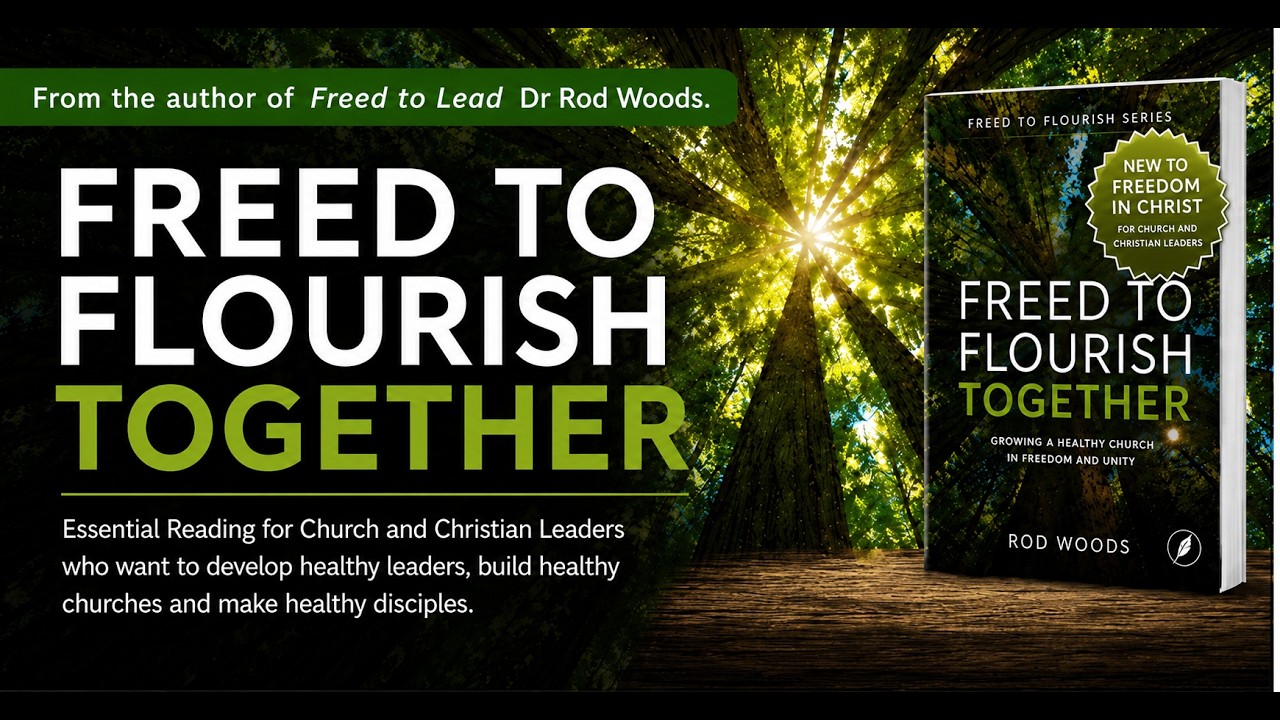
NEW from Dr Rod Woods comes Freed to Flourish Together - for church and Christian leaders