Free to Face Our End: the Kerry Barkley Stories

Carrie Barkley describes surviving severe childhood abuse, decades of trauma, and multiple surgeries, and how faith and discipleship became central to her healing. She shares her journey to salvation, her time as a chaplain's assistant in the Army, and what it means to face mortality with God.
Chapters
Welcome, friends, to Stories of Freedom, a podcast about discovering and embracing who you are in Christ. On each episode, we'll visit with people who have overcome obstacles, gained freedom, and found abundant life in Christ. These conversations will highlight the goodness of God woven throughout the lives of His people and teach us as His children to appreciate that very same goodness in our own lives. We will journey together, growing to better understand how to live this life free and fruitful in Christ.
Amanda, we're going to need to do a disclaimer at the beginning of the podcast for anybody who's sensitive to these kinds of triggers and that children may not want to be in the room for some of this just because we want to be sensitive to our hearers.
Absolutely.
Well, how about if I start us, Amanda? You ready for that?
I love it. I love it. I'm so excited. My loose title. And so I'm— I want— I want— I want to tell you all this because I want us all to see where the Lord takes the conversation, because I don't know, right? But my loose title at the time when I was praying about inviting Carrie, um, was Free to Face Our End. Um, and I think that, that there's many contexts for that, right? There's many things for that. Uh, but Carrie is part of our Friday Morning, This Is Not a Class, and has been with us for, for years, uh, because she was in the role, you know, she, she joined the group. And, um, being able to walk with her and watch as she walked with the Lord through the last couple of years since our, uh, North Central practicum— these have been some especially hard years and some especially hard conversations between her and the Lord. And, um, and I And I thought those were some conversations I thought would benefit people to have free people talk about, right? Someone— I mean, even we, like this, free, right? With the measure of freedom. But, um, yeah, your story, Carrie, is grand and sweeping, right? In its scope. Devastation and spectacular redemption, right? Both included in all kinds of ways.
And so, We have an amazing God in his ability to redeem. It's spellbinding. And one of the things I've always thought was amazing about my life, and not just because it's my life, I mean, but to watch. I mean, I've heard people, you know, you get feedback on your own life. You really do. And it's like, I've had so much tragedy, so much loss, so many hard things to deal with in different areas. I mean, Amanda, we've talked about that. You know, you can come at my life from so many different angles. You know, you have the horror story of child abuse. You have 42 surgeries as an adult. I mean, each one of those is like its own category. But no matter where you come from, the final word on it is God's redemption. He redeems that. He brings it to a level of healing, a level of joy, a lightness that is like amazing. Amazing. And that is, you know, this great God that we have, that he can do that. And that, um, it brings it to the point that it's like, wow, that's a story people need to hear. And that I've been through it. Sometimes I'm like, it seems like a different person. I mean, when I think of some of the things I've been through, I would not want to sign up for that. I wouldn't want to say, gee, I'll take that in the future. Because it sounds difficult. It sounds— and yet I know I've had a great life. I mean, I look back on it and I don't immediately grasp onto, oh God, this has been hard. Yeah, it has. It's been tough, you know. And if I focus on those things, they're very tough. But I always think I've had a lot of fun. I've met a lot of crazy people. I've done a lot of crazy things. And it's that same, like, standard that takes you to the point of experiencing those kind of really hard things. And God walking you through those and getting you past them and compensating for some of that, that brings you to other things that are the opposite end of it. Just like experiences that other people also don't have, you know, that, and so you can get to the point that you're at in life and, you know, you can be told you've got X amount of time or you're going through these things like I'm going through now. And you can look back and you can say, you know, I've had a really good life and somebody else is hearing, you know, you've had 42 surgeries, you were tortured as a kid, you know, you've had to compensate for this and that, you're missing a finger, you're missing part of your shoulder and everything. You've had a what? You know, and you can see, yeah, I've had a really good life. I mean, God has just done miraculous things. You know, you're laughing and you're smiling and they're thinking you're either nuts or I want to hear about this God you got because it's, he's that redemptive. He's that And last Good Friday was so special to me because I had just found out, I mean, just gotten word like on Thursday that I had still yet another heart problem they had just found and it was inoperative and it would probably be the thing that would take me out and probably relatively quickly. And it was like, oh, and you know, it really brought meaning to Good Friday because, you know, we're thinking of Jesus on the cross and we're going through this Holy Week of where we're kind of trying to walk through what he walked through. And it was like, I have suffered so much loss and so much pain. And I could relate to that. And it was like, yet all I could think of was how much more he suffered and how much more loss he did. And he did it for me without, like, I'm invested in my life. You're invested in your life. You know, we, we kind of are so limited as humans and so selfish, you know, it's like, we don't mean to be what we just are. We just want to know, you know, what's in it for me. I mean, we don't want to be that way, but if you really cut it down to it, we kind of sometimes are. It's like, okay, if your wife and your kids are involved, you might extend that to them. All right. But it's sort of like, well, kind of scared to do that. Kind of, you know, this is hard. This is this. And it's like, I'm facing the end and it's like, I love my family and stuff, but I'm going to be the one going through this. Okay. And. How do I feel about this? And it was like, that's a big subject. You know, facing the end is a big subject. But I thought, but I've been through so much and God's always been there. Even when I didn't know it, even when I didn't know him, even when I was mad at him, even when I was being very bad. Um, and all the, you know, things that life entails, you know, I was not raised in a Christian home. And I mean, and for a long time, I think one of the big issues I've talked to you about this, Amanda, is that I've always felt, you know, rejection or lack of acceptance was a big issue because you didn't belong anywhere. And I always feel like when I listen sometimes, and Dan, I hope you don't shoot me for this as the president, but a lot of Christian testimonies are, they have this beautiful package to bring to people. They're just these beautiful gifts and they got, you know, maybe their ribbon's broken or their bow's offset and they're just, they bring this beautiful gift. And I come and I'm like a dump truck. Yeah, I just, I just have loads of things to bring and it's like, you know, you'll say God loves you, prove it, you know, I don't think so. And it's like, I'm such a complex person and I bring so much complexity that, you know, it's just like, I have felt sorry for everyone who's known me that's tried to get me to walk with Christ and then to lead me to salvation and then helped me to find freedom because I'm so complex. But when I think of people out there, I think, God, I needed God so bad. And I needed all these wonderful people. And God has always provided just along the way. There's always been somebody to meet me right where I'm at and to take me to the next step. It's no matter, matter how grimy or slimy or messy my life was, or I was, or I was making it, or somebody else was making it, didn't matter. God always provided.
Amen.
Always. And that's the redemption of God. He always is there to redeem it. No matter what it is, no matter who he has to provide, no matter how sloppy you are, he will come into that and he will redeem it. And it's true right up till the end, right up till the end. And I, you know, I can say full-heartedly that facing the end really is no different than facing your current problem because you're not alone in it. And it's really not the end. It's another transition. So, yeah.
So I have a few questions and I'd love to just jump on in if we can.
Hold on, hold on, hold on. I'm going to pull the reins just for a sec. Okay. Cause I am so excited, guys.
I'm so excited.
Um, but Dan, you need to introduce her and tell everybody who she is, tell them her name and welcome her to the show. Like, but then we'll get in it.
Then no rains, right?
Then no rains because it's already so good. I'm going to just use that as the intro part, like what you've already done. It's just, thank you, sister, for coming on and doing my work for me.
So I just figured you'd rearrange it according to how you want. So this is great.
It's already so beautiful. I'm already crying and like Where did I put the tissue box?
What's happening?
That's what sleeves are for.
Sure.
That's when I was a kid.
I wore my short ones.
That's great.
Okay. All right.
Church packet to the rescue.
That's great. Oh, I love y'all.
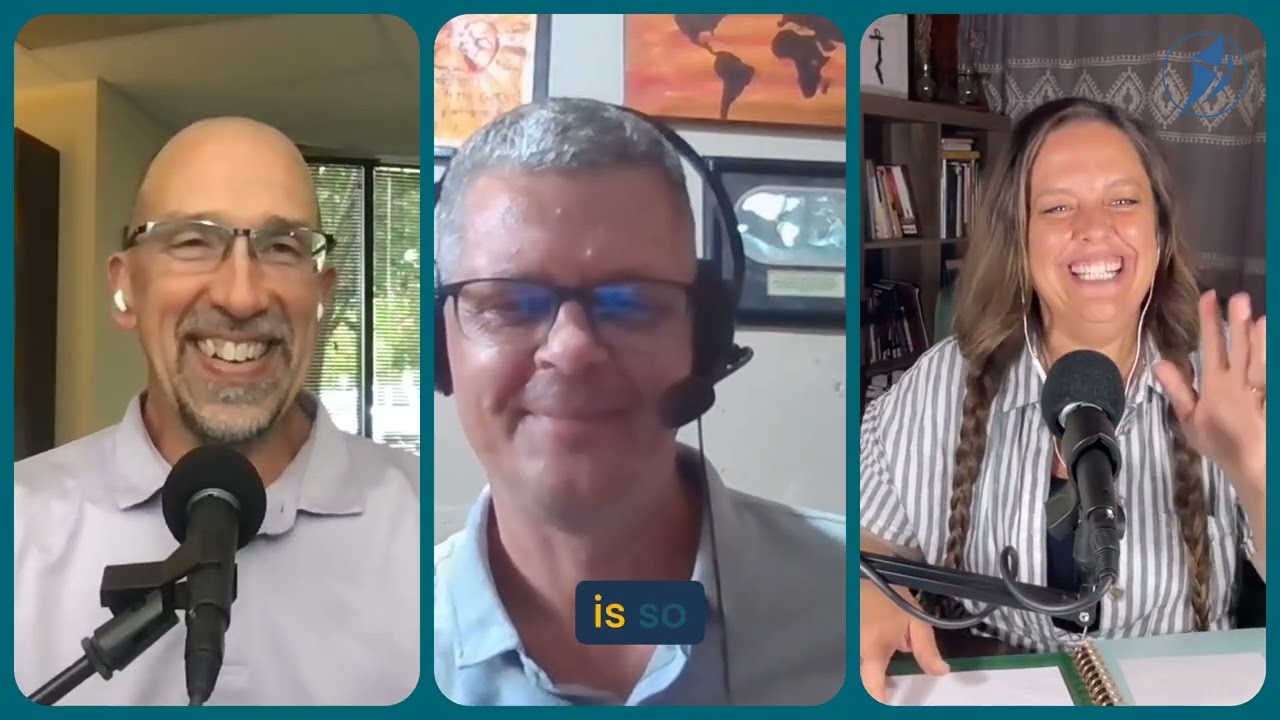
Well, Carrie, welcome to Stories of Freedom. It is a joy to have you join us from Wisconsin where you are experiencing a blizzard here in mid-March as we record. Thank God for warm, dry shelter and for this connection that across the miles allows us to have this conversation. Thank you for being with us and for being willing to share your story with our listeners. You know, you live in Wisconsin. You've been part of our North Central leadership team, leading there in prayer until health issues forced you to say, "Hey, I need to step down from that." Part of what you've already started talking about, part of what we will talk about is how you've navigated that and how Christ has made a difference in your life in the midst of all that. So thank you for being with us, Carrie.
I'm glad. Thank you for having me.
So if you were to summarize in, say, 2 or 3 sentences what you hope our audience hears or sees from your life, how might you summarize that?
I guess it would have to be that no matter how hard it is, no matter how dark it is, no matter how deep it is, God is big enough for it and he can redeem it. He can bring light into the darkness. He can bring healing to the wound. He can bring the softest salve to the deepest, rawest pain. He can redeem that. He can bring joy and love and peace, even if you never had it before. He can redeem it and he can bring it. And I know that for me, the childhood abuse left such gaping wounds, just gaping, gaping wounds all my life, all my life. Even now, the wounds of that are so gaping, and he can bring healing to that. He can bring redemption to that. He is the God of redemption, and he resurrects the dead areas of your life. And I think that no matter who you are, no matter where you are, I think that's a message we need to hear. We always need to hear it. We're never done hearing it because we're never done needing it. Yeah.
Boy, that reminds me of when Jesus, in the Sermon on the Mount, we know from Matthew 5, was saying, "Blessed are those who," and he listed a number of characteristics, right? Those who mourn, those who are persecuted, those who are poor in spirit, for they, and then he talked about the ways that they would specifically experience God's ministry to them. And part of what I hear you saying is that, you know, Jesus would say, blessed are you, though you've been abused, for you will experience the comfort of Jesus' presence in the pain. You know, things like that. And is there a way that you would say that differently, or maybe say to someone who's experienced abuse, What can they, when they turn to Jesus, what can they expect to receive instead of more abuse? What will they see in him?
I think that it's important that they know when they turn to Jesus that they have to be willing and get good, accurate, truthful information that they can be honest with God. I think because of just the dynamics of abuse where there's so much manipulation and fear element involved that they have to know that God wants them to come to him honestly, and they can expect him to have the character that they haven't had before. And so, um, and that's difficult. And so the dynamics of abuse right away, you know, you, you— a lot of times abuse is especially like in childhood abuse where it's can be the father, and then to come to God the Father, that's quite a transition. So I think that you have to know that you've got this person that whether they're an adult or still dealing, you know, like if they get pulled out of the home and now they're a teenager or something, that they're coming to God fearful. You know, it was a father that did this and it was a man that did this, whether they're a boy or a girl, and God is, you know, the father image. And they haven't been able to deal with truth because it would have got them in more trouble and they're fearful and they don't think they can maybe approach honestly. And that's not true. God, you can approach honestly. You can be very expressive with the anger, with the pain, with the hurt. And God is big enough to take that. And if they're willing to make space in their lives to investigate who God is, they're going to be very happy with who God is, and they're going to have the answers they need. And it isn't going to be stock answers, and it isn't going to be what other people are telling them. God will show them himself who he is. He's in his word. He's available to them. He wants to have a relationship with people. He doesn't, you know, it's like I've always thought it was very interesting that You don't ask somebody else to go on vacations for you. You don't ask somebody else to live your life for you or have fun for you. Why would you ask someone else to share with you the relationship, most important relationship you have, and tell you who God is? Ask God himself who he is. Ask God. And that has been what I think has made God so real for me is from very young. Even in the abusive situation without much exposure to God, not growing up as a Christian. I went right to God. I'm like, if you're really there, you know, talk to me, prove it, show me. And I remember not being in a church very much or anything, but I remember these little hints of God at the time that, you know, didn't mean much to me. It was kind of weird stuff. But when I was going back later and saying, you know, if you're really there and where were you and, and I was very angry. You know, you can almost hear it today. I was very angry with God. I mean, you know, you don't just come to God and say, gee, I was abused. Can you help me? It's like, where were you? Why? If you're a loving God, you know, all these big, big questions that you have, because that's not a little thing. And God is big enough. He's big enough to not only take it, but he can answer that. And I could go back and think of that little kid and those little things. And they meant so much because God was letting me know, yes, I was there. And yes. And, and then the people, and I think, oh yeah. And like, I can remember, you know, I can't remember where the car keys are half the time. And now I can't remember, was that Tuesday or was that Wednesday? Was it this week or last week? But I can remember my 6th grade teacher writing in my autograph book, when your time on earth is ended. And these paths no more you trod. May your name in gold be written in the autograph of God. And that was a similar timeframe to when I saw my brother got a Bible when he was confirmed that had his name in gold on the Bible. And so, oh, God wrote his name on the Bible and he's that little crud ball. I want my name written on the Bible in gold like that. I want God to write my name on the Bible, okay? And you know, we didn't, you know, there was nobody I could say, hey, hey, who wrote his name on the Bible? Okay. And so, you know, these little cliques, and I remember I couldn't sing at all. And I remember marching down the street, skipping and hopping, singing, you know, God is our Father, brothers are all we, let me walk with my brothers in perfect harmony. Let there be peace on earth, the peace that was meant to be. We were singing it in choir in school. Now you're not allowed to sing that in school. So here was this really, you know, a kid that had this awful home life. And yet at school I was learning about God through a song, watching it on TV because the, you know, my favorite show, uh, you know, with a name like Barkley, The Big Valley, their name was Barkley. Nobody else, unless you're, you know, entering your golden years would know the show, but it was fabulous. They were going to church and I thought, oh, I should probably be doing that. And I, you know, I'm a kid, you know, and my parents, you know, um, the few experiences I had in church weren't But they go, I go back and I look at that and I think God was always there. God was sending out, you know, feelers. Yeah. So when you approach God, approach him honestly, you can do that and let him speak for himself through his word. Don't let somebody else go on your vacation. Don't let somebody else introduce you to God. Introduce yourself. Say, okay, got it. You know, I got to have a talk here. You know, well, I've heard, I don't care what you've heard. You know, he, so what? Let God introduce himself. The word of God is so real and so lively and so inner. It introduces his character. And I think this holds whether you've been abused or not. It holds for all of us. The word of God is such a vast, amazing thing. And if you make space for that, you'll know who God is. You'll know his character. And if you spend time with sisters and brothers in Christ, The healing is there. The victory is, the victory is God's and how he develops that and how he unfolds it for each person might look different, but it's there and it's there for you. And, and that's just so real. And everybody I talked to, it doesn't matter if you, you know, had a really sweet Christian upbringing. I mean, only in church can you get along with people so vastly different. And, and in the Christian environment, we come from like Freedom in Christ, you come from all over. You have all different backgrounds. You can sit down with somebody you've never met before and have these wonderful conversations about anything.
Anything. Sure. Agreed.
Because you're on a common level, because you have, you know, you have a common understanding about God because you went to the word to get it. God spoke to you and you can share all this. And for the abused kid, that's that much more because we need so much more. We had so much less and now we have so much more and we have these big gaps. And God can fill them. God will fill them. And you can't go back and forget the abuse never happened. And there is pain. There's pain there. And, um, Carrie, let, let, uh, let me jump in, babe. Jump in, please.
Okay, great. All of this is gold. Let us help you open the door. Let us help you open it a little.
Okay. Okay. Yes, please.
So I feel like, like the Lord has given us double portion. With you today, sister. That's how I feel, like there's so much good.
Dumb truck.
Not, not in that way. In, in my way, in, in my mind visual, it was a fountain. It was a multi-tier fountain.
Oh, I like that visual.
That the water— that you can't just fill the bottom because you need enough water for all the things, right? And so we're— I feel like we're in the stage where we're setting up and we're filling it, and the Lord, it's just It's just coming out and it's so good. Okay, take us back if you would, um, because we've already begun to allude to it. And since there are some paths that you and I both have shared, right, um, let's go ahead and set the stage. Okay, so instead of just talking about the abu— you know, like referencing people who have been abused, let's go back to those early years. Tell us who you are, where you're from, when you're from. Kind of paint us a picture of how you came to be and what that looked like.
Okay. Well, I was born in the early '60s. And so my dad was a very successful attorney. And he had everybody as friends— governors, lawyers. He had the police chief was his best friend, et cetera, et cetera. So he was a very powerful man. And he was very abusive. And I was, I had 3 older brothers and I was the first girl in the family. And I was a strong little character, but he was mean. He was a mean dude. And things changed dynamically when I came because up until when I was born, all four grandparents were in the picture. And I think they kept him at bay. And I also think his drinking problem did not become as serious until that was— and it was like when I came, the floodgates opened. And plus I was a girl, which opened new avenues of abuse that they don't believe my brother suffered. Okay. So my parents were separated for a while when I was about 5 and they ended up getting back together because my mother actually got pregnant with my sister. And so I was about 7 when the narrative of the sexual abuse began, when they were getting back together. And that was just really tough. And I have an excellent memory of all the abuse. I have the details and what have you. Whereas other people in our family just, they don't remember half their childhood. Okay. So he was a physical abuser. He was, but he was charming on the outside. He was famous as a negotiator across the country. He was, um, fabulous, like I said, a fabulous attorney. He held great positions. You would see him on television news. You would see him in the newspaper. So I knew I didn't stand a chance of ever saying anything to anybody. And we had crazy things. There might have been mental illness that was undiagnosed there. And it was also the heritage of women didn't count, girls didn't count. When my father was 10, he got a pony as a gift. And it was his sister's job to take care of it. And so like when my grandfather came across, they took a picture of him, but not his sisters. That way, if the boat sank, there was a record of my grandfather, but who cared about his sisters? It was, so there was some of this, you know, girls were men, women were, you know, men. It was just part of the attitude of the '60s that has since, thank God, eroded a lot. Okay. So it was a very abusive time. I was, um, No, I knew it was to stay quiet. You couldn't talk about it. And I was, I knew it was wrong. I didn't like it. I hated it. And I tried to say no. And the first time it was like, okay, my mother didn't get food money. So I would listen to my mother just crying that she needed money. She worked too. The children needed food. And he made it very clear that there was no food money. And then he would come to me and say, well, now, you know, that's because you would not cooperate. So if you cooperate, your mother will have food money. So then she would, you know, in the morning I'd say, well, you know, did you get food money? And she'd be like, yes. And he gave me some extra money to buy you kids treats. And, you know, I'm just like, oh, okay. And then I was like, finally, like, no. And then the fighting meanwhile is going on with everybody in the family, very aggressive fighting. And so then, then it escalated to where he pulled out a gun. He showed us how he loaded it to make sure we understood it was loaded and he could use it. And if you don't think that's living in fear. That you have a man that's aggressive and angry and now he's drunk and now he has loaded a gun. So now you're living with the fact that anyone you love could be killed anytime, any day of the year and at any whim. And it could even be an accident because he's not completely in charge of his facilities. And now I'm saying this to you as someone who's 65 years old. I'm dealing with this as a 7, 8, 9, 10-year-old kid. So my coping skill levels are as a 7, 8, 9, 10-year-old kid. They're not as an adult person with full facilities. And since the '60s, when we knew as a society very little about any of this, we have learned that kind of trauma that's over and over and, you know, death-defying, like the Vietnam veterans taught us so much about trauma and, you know, being shot at every day and being afraid for your life every day. That affects your brain chemistry. That affects how you process life. Well, that is equally true and maybe even more so for 7-year-old children who are frozen at the coping skill level of 7-year-olds. You know, think of your own kids. How do they react at 7 when you traumatize them about, you know, the ice cream parlor is closed on Saturday and I'll traumatize them that I'm going to kill your mother if you don't give me sexual favors. I'm going to make the baby starve to death if you don't do what I tell you. And yet I would say no. And yet I would try to hide. I would do things. I just was not wanting to cooperate. So this was very difficult. At about 8 and a half, 9, my little sister was sitting in her bassinet or cradle or something. And I just said no. And I just screamed, no, just kill me. Just kill me. I just did not want to do this. And he did the gun thing. And I said, I don't care. Kill me. Just kill me. And he started laughing and like, almost like he appreciated my resistance, but he pointed the gun at my sister and he said, um, well then I will just kill her and you will get blamed and you will go to an insane asylum for the rest of your life. And he had made me watch shows on what that was, so I'd know where I'd end up if I ever questioned him. And I, I bought in hook, line, and sinker. And I didn't want to go there. I did not want to go to those kinds of places. And I was scared. And I was told how I had an aunt there. And, you know, that crazy people go there. And I was scared. And I— that stigmatism lived with me the whole time that I was responsible for everybody in the family, the baby, you know, staying alive, my mother getting food money. And this just continued and it was torture. And so when I say I had torture as a childhood and I had the abuse and the neglect and everything, I had the whole ball of wax. And so It was not just physical. It was not just, you know, the yelling, adding the screaming. It was not just aggression. It was not just people being thrown down the stairs, your head slammed into everything. That was the mild stuff. I mean, this gun being loaded and, and I still have the cartridge to the gun with a couple of bullets in it to remind me that I never should forget where I came from, that somewhere out there, some kid needs to be protected. Some kid is scared every day that someone they love could be hurt. And then God gave me the grace to get through that. And I need to remind myself that it's not just about me. Somewhere out there, somebody's counting on us.
Amen.
So that's what it was like.
Oh, um, Carrie, I, I'm so sorry. I mean, it hurts my heart to hear that, you know, and, and as a man, I, I just want to say I'm so sorry. That, um, thank you, that you went through that at the hands of a man.
Um, some tough stuff.
Yeah. Yeah. And Amanda, we're going to need to do a disclaimer at the beginning of the podcast, uh, for anybody who's sensitive to these kinds of triggers and, uh, that children may not want to be in the room for some of this just because we want to be sensitive to our hearers.
Absolutely.
But I thank you for sharing your experience. It grieves me to know that a man, a dad, could do that to his family. You know, with 4 kids, 3, well, 2 sons-in-law and a daughter-in-law and a daughter-in-law to come and 2 grands and more on the way. I can't imagine. I cannot imagine. And what I want to say though is what was, what you described and what you said earlier about how those who've been abused and have those gaping wounds, they're used to when they speak truth, Or when they try and walk in the light and in what's right and good for others, often get more abuse. That makes it difficult for them to come to God. But what you're saying to people is, no, do it. Come to God. Go to his word. Understand that in the Holy Scriptures, we have an accurate picture of who God is and what his character is like, and it's nothing like what you have described. I mean, Jesus said in Matthew 11, "Come to me, all you who are weary and burdened, and I will give you rest. Take my yoke upon you and learn from me, for I am gentle and humble in heart, and you will find rest." for your souls, right? So he describes himself, he's gentle, he's humble. That's completely opposite of what you experienced. Or in Matthew 10, or in Mark 10, where he says, I have not come to be served but to serve and to give my life as a ransom for many, right? That's one of the other things Jesus said. And what you're describing is a man who just like Satan from the beginning said, I will put myself in God's place and everybody exists here to serve me, as opposed to our loving Father who sent his Son and has provided his word and his Spirit to us today to say, I love you and I'm here to provide everything you need for life and godliness as you come to understand me, your Lord and Savior. And Jesus is the perfect representation of our Father. I hope that makes sense, but boy, I just— that was a lot you went through.
And that's what I think is such a vital message that doesn't always get through. Because if you haven't been through that, if you haven't been through that, it's hard for people to understand why you don't get the message that Jesus loves you. Why don't you get the message that God is truth? Why don't you get this message? Because I mean, I would look at this man on television that, you know, he is the final voice in big negotiations over big things. He's trusted to be the authority. He's trusted to be the person people look up to. He rode with the police chief during the riots. He's called by this state and this state to come and do their negotiations. Um, our, you know, this state does this, and here is this wonderful, you know, held on a pedestal man that everybody can trust and that everybody looks up to. And I know the deep, dark secrets, okay? I know what he cannot be trusted to do. And now you're going to put God in his place and say God can be trusted. God is the authority. God is all these things. Okay, well, over here I have my father's all these things according to every media and every, you know, authority placing thing there is. And now you're going to put God there and I'm supposed to trust him and I'm supposed to this. And people that haven't been through something like that don't understand why you don't get it. They don't understand why you're not just willing to take this respect of your father and put it on this man. Well, I know the deep, dark secrets. So now you tell me God's this, and I'm like, well, what are his deep, dark secrets? And I can't just take a trust that doesn't exist and put it somewhere. And I'm saying this is true of all of the people that have been through these heavy situations that if you haven't been through, are very hard to understand because you don't go up to people and you don't say, hi, my name is Carrie and this is what I went through.
Right, right. So, Carrie, let me ask you, how did you come to that place of trusting Christ as your Savior and Lord? How did you come to that place of trusting God as one who doesn't have deep, dark secrets or is not going to abuse you when you're honest with him? Can you walk us through a little bit of that?
I can't. Well, coming to salvation was one part of it. I mean, salvation to me, in all fairness, was more like life insurance. I didn't want to go to hell. I'd already been there. Okay. So accepting God as my savior. And, and I think that God puts a part of himself in us. I think we want hope. I think we want to, to our very last breath, believe there's something good somewhere in the world. I think we want that. And so I wanted to believe in a God. I wanted to have something different in my life than what I'd experienced. So salvation offered that, but walking out being a Christian and having a relationship with God, that doesn't instantly come at salvation. Now we know as seasoned Christians and after being in relationship with Christ for a while, we understand being a new creation at salvation. But being able to walk in being a new creation and salvation and knowing it are different. Okay. So to me, salvation came at one point and that was through— I was, um, yes, tell us that story.
Tell us that story. How did you come to Christ?
The first part of the story is—
how old were you?
Okay. At 17, I ran away and I traveled all of America on a Greyhound bus. Okay. And I was scared to death, but what I did is I bought a pass. Then, so I would sleep on the bus at night and I would travel and I would check out America during the day. And that, I mean, I thought, well, I can't do this forever because the pass is only good for 30 days. So I had to go back home. But then at 18, I joined the army and I wanted to be an assassin because I wanted to rid the world of evil people. Well, they didn't make me an assassin, but I must have had a Christian recruiter and not know it because he asked why I wanted to be an assassin and I told him and he said, oh yeah, well, we don't have any openings, but I have a job just as good. I'm gonna make you a chaplain's assistant. Okay, now this is someone that doesn't own a Bible and didn't grow up in a church. Okay. But I would help rid the world of evil because I would be a chaplain's assistant. And basically I just had to light candles and things like that. And it sounded like a sham job. And I thought, well, I'm joining the army just to get away from home and to get some education later so I can be a great writer and all this junk, right? So I'm like, I'm in. So I ended up being a chaplain's assistant. And when I was stationed in Europe, right before I was going to go, there was this little church group. And I loved being a chaplain's assistant. I loved learning learning about God and this sort of thing. But I kind of felt like I was a Christian because at 14, some kid said, you want to be a Jesus freak? I said, yeah. That lasted about 2 days. But I don't think I accepted Jesus. But if I did, it was with no understanding and no meaning. And it did— it probably was like, if it did, it was like way deep in the dirt. And it was like— but in the Army, when I was getting ready to leave as a chaplain's assistant, which I love doing, but I really— I didn't even own a Bible. This small Christian group sat down and explained to me what salvation was. And it was right near Easter. And I accepted Christ as my Savior. And they baptized me in somebody's bathtub on Easter Sunday. And I thought that was so significant that I was being resurrected. My life was being resurrected on Easter and everything was going to be perfect. And then I went home to the same dysfunctional family I came to, came, came from. And then I went, actually was stationed in the States then. And, um, I went to a chapel with all Christians and this is hard to say, but this is also part of the real world. I met some of the nastiest Christians I've ever met. And I turned off to the Christian walk immediately. And I was brand new saved. And I thought, I don't want to be like these people. I just don't want to be like them. And so, but I like God and I like that. So I was reading the Bible. On my own. I worked in a church. I was a chaplain's assistant. So I was hearing sermons whether I wanted to or not, because I was working there. And I loved God and I kind of loved some people. And so I wanted to be godly and I read his word and I worked this deal out with him. He didn't work it out with me. He had no commitment to it, but I thought he did because I worked it out. And I was still of that frame of mind that, you know, all right, God, here's the deal. I'll read the Bible. I'll love you. I'll try to be decent. I'll try to do these things. I understand, like, you know, I won't mess around until I'm married. And I won't steal and I'll behave myself, but I am not loving people because, you know, they're, they're not lovable. But I will read your word and I go to church and that I work here, but this will have to do for now. Okay. And you know, I'm thinking he's in on this deal, but he wasn't, of course, but I was in on it. And he probably thought, listen, I'm getting that out of you. I'll take it for now. And so that's what I did. And that was my idea of salvation. And then But I read that Bible. I read that Bible every day. And I kept learning like, oh, that's interesting. But then I'd hear something and I'd think, wow, I wonder if that's what that means, you know. And I really didn't have a lot of discipling, which I think is vital. And that's what I also love about Freedom in Christ Ministries. We really emphasize truth and discipling, and you need that. That really makes a difference. But I was in the Bible again, in the Bible, in the Bible, in the Bible. So It was like 10 years later, I was at a, um, weekend away where it was really quite spiritual and they had a call to the altar and I went up and I thought, now I'm going to do it. I'm going to do this thing right. And I was out of the army and stuff by then. And then I went up and that's when I said, okay, I'm going to go to church whether I like it or not. And I did. And I got involved in groups and then I just started just, oh my gosh, I was in groups all the time. Whatever. Even that didn't do it. It was one day I was in a Bible study at my church. I was very involved in my church, but I was in a Bible study and they were talking about the Ten Commandments, honor thy father. And I was pretty sure their idea of honoring thy father was forgive him for not giving you the car keys when you're 16. My idea of honoring what happened to me, I didn't know what that meant. And that was too hard on me. And they were just like, no, you have to honor him no matter what he did. And I'm thinking, my no matter what he did looks a whole lot different than your no matter what he did. And I was going to walk away from all of it, church, God, and everything. Well, there was a lady in that group that knew me through things. And she sat down and she said, either you're coming to my house or I'm coming here. She just was aggressive about mentoring me. She admitted she's still very different. She was at my party Saturday and she said, I was just like, oh God, she said, I prayed so hard. Why me? I have nothing in common with this woman. Now, this was one of those pretty packages with maybe a little rip in the ribbon. Christian her whole life, Christian husband, Christian kids. And he says, mentor this one. And she's like, why?
Why me?
What have I done to deserve this? And I'm like, you know, no, you know. And so we sat down with Freedom in Christ book. And I was like, it was a book that talked a little bit about the military and how Christ's army is like the military army. And there's like spiritual warfare. And I was like, yeah, yeah, yeah, I can do this. And then we did, you know, Victory Over the Darkness and The Bondage Breaker a couple times each. And then I'm buying everything Neil T. Anderson and Freedom in Christ on eBay. I'm buying things that went out of business before I came in. And I'm learning about— I'm reading these bookmarks and I'm like, oh, that one will have to wait. God loves you. Yeah, but he doesn't like me. And I'm like, oh, you're not supposed to do that. She wouldn't let me do it. She'd make me write. And I'm thinking, I'm not 3. But she— and then she would write me letters and I could tell she cried when she was writing them about, Carrie, you can't let this take you away from God. You have to be strong. You have to. And we did what the Bible says. We renewed the mind. And it's like She explained things and the Freedom in Christ material explained like rut thinking. For, you know, 50 years I'm hearing what a loser I am. And I'm, every time I make a mistake, I'm telling myself, see, you're a loser. See, you're not part of the Christian family because you could never be because these are holy people and you are so dirty and so evil and so awful. Okay, that's renewing your mind to what's wrong and to sin. That's not, but I learned, no, I have to fight that. I'm, you know, those are the lies. I am a child of God and he does love me and he loves me in a healthy way, the way a father should love a child. And I let myself learn things like play is important and I never got to play as a kid. So I confess, this is like the ultimate confession. I actually own a Hoppity Hop. My family is scared to death that if I ever get on that and try to do it, I'm gonna end up in traction or dead then and there. But I have hopes of getting well enough to ride that Hoppity Hop because I always wanted one and never had one. So I got this big smiley emoji hoppity hop last year for myself. And my niece is like, well, whether you live through it or not, when you're done with it, can I have it? I'm like, yeah, you know. So, you know, you gotta play in life and you gotta go back and be a kid. And God is for that. He will give you opportunities to regroup some of that loss and you gotta allow that. So I do believe that we have to just do what we're told, renew your mind. And that's what I did.
Well, and Carrie, I wanna help people flesh that out a little bit for what that means for them, right? You, you kind of said real quickly you learned about rut thinking. Can you just describe what you mean for people? And then I have a follow-up question.
Okay. So for like the rut thinking is obviously in this abusive home, you're a loser, you're lousy, you're never going to be loved. You're never going to do anything right. We're sorry we had you. Just this. You are just everything bad. And so you go out in the world, you're, you're not able to do things function and do things normally because you just haven't had that chance. So that proves it. And then your boss is like, I'm sorry, we can't keep you because you just— everything you touch is a menace. And, and you're telling yourself this over and over. See, I'm a failure. I'm a failure. I'm a failure. And it becomes a rut. And like, we think of like Freedom in Christ uses the example of like a truck in the mud and the truck just keeps going in the mud till, you know, you don't even have to drive the truck. It knows to stay in the mud. Well, we just naturally— that becomes our default thinking. I'm a loser. I'm a failure. I'm no good. Nobody could love me, you know, yada yada. Well, what we learned from God is that that's rut thinking and that's wrong thinking. And those are the lies the evil one has put in us, that it might have come to us from school, schoolmates, teachers, thoughtful, you know, thoughtless people saying thoughtless things. Or it could— in my case, it was abuse. Okay, it can be something you mistake or think about yourself. Because I'm such an idiot, I can't believe I did this, or that was a stupid thing I did. And now you just keep telling yourself, see, here's another thing I did. See, I am stupid. And create these lies that the devil is more than glad to tell them to you, and then you'll tell them to yourself, and they become a rut, and the car just steers itself right into that rut.
Yeah, and then you just stay stuck in that thinking.
You stay stuck.
Yeah, that was part of what Freedom in Christ taught me is that as a believer, I'm not to be passive in my reception of salvation based on faith in Christ, right? I have to actively choose to believe what God says as true because of who he is and because of what he's done in Jesus over my own thinking. And so I actively have to take my thoughts captive and make them obedient to Christ, 2 Corinthians 10:5 says. And I have to actively, Romans 12:2, be transformed by renewing my mind. And I have a responsibility to think about what I think about, and to think about what I think about myself, right? And is it true and accurate according to what God has done in Jesus Christ? And what I hear you saying is that all that abuse taught you to see yourself in a very, very negative light. And sometimes we've heard that a rut is just a grave with the ends knocked out, right? I don't know if you've heard that, right?
I have not heard that. That's Very true though.
Yeah, it's a position. It's death, right? The mind— Romans 8 says that the mindset on the flesh is death, but the mindset on the spirit is life and peace. And so what you're describing is saying, am I going to believe a fallen, sin-controlled, power-hungry, appearance-oriented abuser Or am I going to believe the eternal, all-knowing God of the universe who loves me and gave his life for me so that I could have life with him both today and on into eternity? And he's provided that through Jesus, right? And so you're submitting yourself to the truth of God's word and you're experiencing freedom and life as a result. Is that what I hear you say?
And it takes time because you like with the truck and the run, It has to get out of that rut and it doesn't do it naturally. You have to put the effort in and steer it and, and you might even have to rev it a few times to get it up and out. Well, it's the same with the Word. The Word of God is the truth. You first have to make that decision. You want to get out of the rut and then you're going to have to rev it up to get out of the rut. And that comes from repetition, the renewing of the mind. And that's where discipleship comes in. Commitment comes in. And that is where someone that's abused versus someone that isn't is going to need more patience, more time and discipleship and freedom in Christ. Provides that material. And my friend studied with me and we went through, like I said, Victory Over the Darkness bundle multiple times. Right. And then I ate it up myself and buying the material and stuff. So that is what saved me from the abuse and helped me through and continues to help me through. And like, I still read our bookmarks once in a while and I learned to do our stronghold busting. And it wasn't, I mean, it it wasn't just Freedom in Christ. I mean, no one ministry, no one thing is the answer. I think our ministry is the greatest. I certainly have leaned into it more than any one thing in the last, you know, 15 years, and it has made that radical difference. But there are so many good things out there that reaffirm that it all goes back to the Word of God. We're just a great tool he's utilized over and over again and continues to. But the bottom thing is the Word, and the Word says you renew your mind. We have great tools to help you learn to do that. The word says, you know, you turn to the Lord and you say, you know, I always use this word and it's not in the Bible. And there's a great quote I'm thinking of, and hopefully one of you can think of it. When you tell the Lord to evaluate you, fillet me, you know, look at me, tell me, Lord, what I'm doing. Help me to see these weaknesses, point out to me, you know, but it's me and know me and see if there's any Yeah, anxious, right? And, you know, come before, you know, come before him and say, you know, I'm struggling with this, God. I want, I know you're saying this. I'm feeling this and feelings, feelings are huge. I had to learn that my feelings were not accurate. I had to learn that my feelings weren't the bottom line of everything because for so long you're not allowed to feel. And so now you want to feel everything and your feelings become so powerful and then to find out they're all lies. And they're not necessarily the truth, that feels like you're being insulted again. First, you're not allowed to have feelings. Now you have feelings and now you're not allowed to have them again because they're wrong. And that's not true. Your feelings are powerful and they're real, but the real is in there. Real is in that they're your feelings. That doesn't mean they're accurate or they're true. They're just what you feel. And then you have to learn what God says about feelings and the truth about that. And so there's so much to learn that you didn't learn. And you do feel handicapped coming into life totally unprepared and you got these things.
And one thing real quick, Amanda, as you're talking about that, Carrie, I'm just reminded of even the tense of the words used in Romans 12:2, where it says we're to be transformed by the renewing of our mind. And the indication there is that God has initiated this. And we have a response that's required so that we can be renewed. But he's the one who transforms us. He's initiated it, we have a response, and he transforms us. So when you talk about there's a lot to learn, I also don't want people to feel like, well, it's too much, I can't. All you had to do in those moments was be willing to say, God, I'm willing to engage with you right now, today, in what you have me facing, and I'll trust you for the rest in the future. I'm not going to worry about that.
So, yeah, I'm looking back on all this. At the time, it was so palatable. It was not, oh, I can't do this. You know, if I sat down and said, okay, this is what I'm going to have to do to feel like I feel now, I would have never taken that on. It was like, I just needed to get through the next breath. I mean, it was like, oh my gosh, how am I going to do life? How am I going to make it through the amputation? How am I going to make it through this? And he was just, he made everything doable in that moment. And it was all of a sudden I'm laughing, all of a sudden I'm enjoying life. I called my mentor, I was 51 years old, and I called her crying. And I said, I let the dogs out this morning and I'm standing out on the porch. And every morning I let the dogs out and I would stand there and I'd say, thank you, God, for another day. And thank you for the air. And thank you for You know, is it okay to thank him for the sunrise every day? Because it looks so different most days, you know, it's this, it's an, it's still the sunrise, but it's a new sunrise. And I said, thank you for life. Thank you for my life. And it was like, I was already in my 50s before I could be happy to be alive, but I could. And it was worth it, even though I was in my 50s. And so the first 50 years, obviously, I wasn't all, you know, life wasn't all that like, gee, I'm happy to be alive, aren't you? You know, other kids are that way at 12. They're happy to be alive. I was 50. But even in that moment, being so happy to be alive for the first time, being able to say thank you for my life was so rewarding and so good and so fulfilling. In that moment, if you'd asked me, well, was it worth it? The answer was absolutely yes. And then when I was, um, just 3 years ago when the health, you know, when the heart went and the health hit so bad, I was working in Freedom in Christ. I was, like you said, as North Central prayer director, we were doing a practicum, which was just phenomenal, wonderful. So I was doing some extra duties with Freedom in Christ to help support that. I was working in my church. I was a CR ministry leader. I was doing different things to serve the Lord. And there was just a window there in which I was so incredibly happy and just felt like the Lord was just— I couldn't believe how good life could be. And I would have told you, and I will tell you till the day I die, that those 3 years or 4 years in that window would have made up for every single second, everything that went bad. And that's if I'd had no good along the way. And I had a lot of good along the way. I look back at all the fun I had, all the people I met. There was joy in my life. From the moment I was born. Okay, from the moment I was born, there was joy in my life. In spite of all the pain, I have a lot of weird, good, fun memories too. I mean, we did horribly fun things as children that we— they were probably bad. And if we'd have got caught, we might have done juvenile time. But we had a lot of fun. And it was a different time in America. And, you know, you'd have to do a podcast for 20 years. But the thing is, it wasn't all this horrible torture. It wasn't all, you know, it wasn't. There was beauty and joy and God was in every moment of it. And one thing I do want to say that really helped me to feel good about God is God is not indifferent to the pain of life. He hurts with us. And you have to get really deep to understand why he allows that. And there's not really room for that today. But God is like a loving father. And he, when a child falls and hurts their knee, even if it's their own fault, they were told not to go out and try to get on the two-speed without the, you know, training wheels, and the kid does it anyhow, and they fall and they hurt their knee. God still feels bad, even if it's your own fault, and you have this great bleeding knee and you did it to yourself. God is going to hold you and he's going to love you and he's going to help you clean your knee. And, you know, he feels bad, even though it's a consequence of your own stupidity. God loves you. He's your loving the father you should have, and he loves you, and he hurts with you for the pain in your life. He's not indifferent to pain. That's very important. Yeah.
Well, and Amanda, I thank you, Carrie. I mean, there's so much richness in here. I'm reminded of that 2 Corinthians 4 passage where There's so many verses from verse 7 onward that talk about like what you're talking about. We have this treasure in jars of clay. So the life of Christ, even if we're wasting away, even if we're dying, like the life of Christ can be portrayed, can be exhibited through our life. And one of the things that Paul said, and Paul suffered some significant things too over the course of decades, right? While having having fun while serving God, while leading people to Christ. But he also had some sufferings that were significant. He said, "Our light and momentary troubles." And like, that just feels like an oxymoron to me in this, because I don't want to in any way communicate to someone that what they've gone through, like you went through, is light. In the perspective of all God is doing in eternity, what I hear you saying is that that abuse, the misrepresentation of your dad of who God truly is, is compared to who Christ is and what he's done for you, light and momentary. And he is worth He is worth the attention of getting to know because it says they're actually— those things are pushing us toward him and achieving for us an eternal glory that far outweighs them all.
Absolutely.
Yeah, and so again, I don't want to in any way downgrade or say that that what you or someone else who's been abused feels light or even momentary, but God wants to use those to say, come to me to see what a loving Father really is like.
A man like the one you're getting to know. And that's not to say that on the front side, God chose abuse for us to push us towards him. Someone of free will made choices to walk apart from God and to bring that apartness into our lives, those who have been abused, right?
Yeah, yeah.
Thank you for that.
And oh, oh yeah, and hey, Dan, I know you, right? We've walked many miles, and you have apologized to me. I remember it as poignant. I watched it, uh, Carrie, as he listened to your story, um, And then because, because I think when I came on here and told my story, Dan apologized to me in much the same way.
It means a great deal.
It was the first time. It was the first time. It was the first time.
Yeah.
Not that someone was sorry for me. Many people. But Dan substitutionarily, on for my benefit alone, for my benefit alone, he substituted himself in a place where I never received Right? Where we never receive a sorry. And, uh, and he just said, I'm sorry. I'm so sorry. And you think some people might think that doesn't matter. I'm here to tell you, you don't know what you're talking about.
It does matter. It just does matter.
It does matter.
Especially with stories like ours. Um, a lot of times people don't want to hear it because it's painful. They just don't want to hear it. They want you to shut up.
Because it's ugly and it's messy and it shows the worst of who you can be.
And they don't know what to say.
Yeah.
I mean, what an uncomfortable thing to hear that a kid went through. I mean, what do you say? I mean, and they just want you to go away. You're a bother. You're, you know, you're evidence that the world is imperfect.
Or at least it feels that way.
Or at least it does feel that way.
And that's how it feels on the inside.
And yeah, and it feels, and you know, there's still a lot of the stigma of you shouldn't talk about things like this. You know, you keep your dirty laundry to yourself and you know, that sort of stuff. And you know, it's really important we do talk about it because I think we're doing everybody a disservice. I think the people that do this sort of stuff, they need help too. You know, I don't think When I, when I started looking into why this sort of stuff happened, uh, you know, it doesn't come out of nowhere. There's a lot of like generational things. There's a lot of things, right? A lot of people out of there that if they were offered help, they might have got it before it got that far. If they could talk about things going on in their life. I mean, you have people that maybe would go for help sooner if they knew they could talk about what happened to them. Okay. So I think it's important and I think it's important for us as God-loving Christians that want to share the message, that we know it's out there. Because what we don't want to do is we don't want to close the door on somebody that really wants to find the Lord, but doesn't realize it might be a little more difficult. Or they may have— if I'd have went— honestly, if I'd have stopped with the Christians I first met, When I got stationed stateside, I'd have never been a Christ-following Christian. I'd have had maybe heaven insurance, but I never would have been a Christ-following Christian. And I think I would have had a very sad life compared to the great one I've had because I've really gotten to know the Lord and the victory has been just incredible. And I've really had a good time and a good life.
And Thank you for listening to this part of a much more in-depth conversation. Continue on with us in the next episode. Thanks for listening to this episode of Stories of Freedom. If these conversations have blessed you and you want to partner in the work that we're doing, we would We love that! Freedom in Christ is a donor-based ministry, and so we need people to feel led by the Lord to join us in the work He has us doing. Could that be you? Go to ficm.org/give to see and find out.
More from Neil

FREED TO FLOURISH TOGETHER - ESSENTIAL READING FOR CHURCH AND CHRISTIAN LEADERS

*A Kind Rewind* Freed to Flourish Together: Growing a Healthy Church in Freedom and Unity




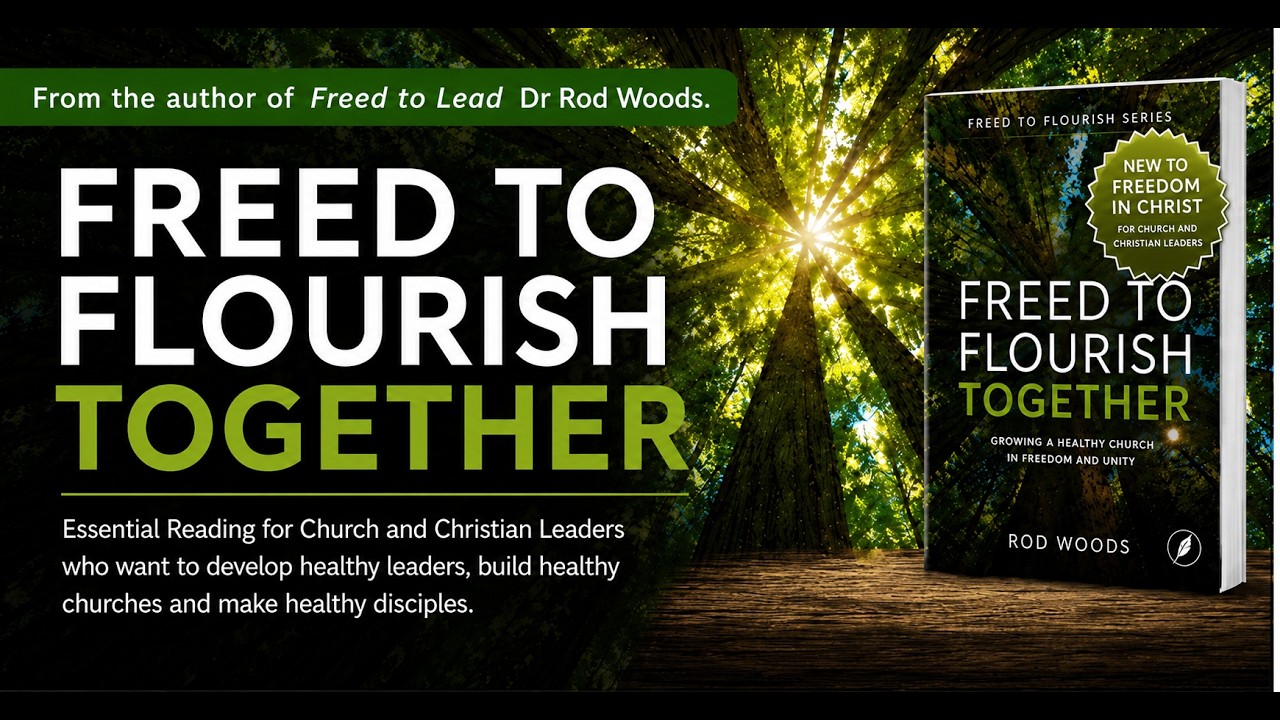
NEW from Dr Rod Woods comes Freed to Flourish Together - for church and Christian leaders
